Connect with us

News

Governors vs NNPC: Tension rise over alleged $42bn oil revenue shortfall

Published

on

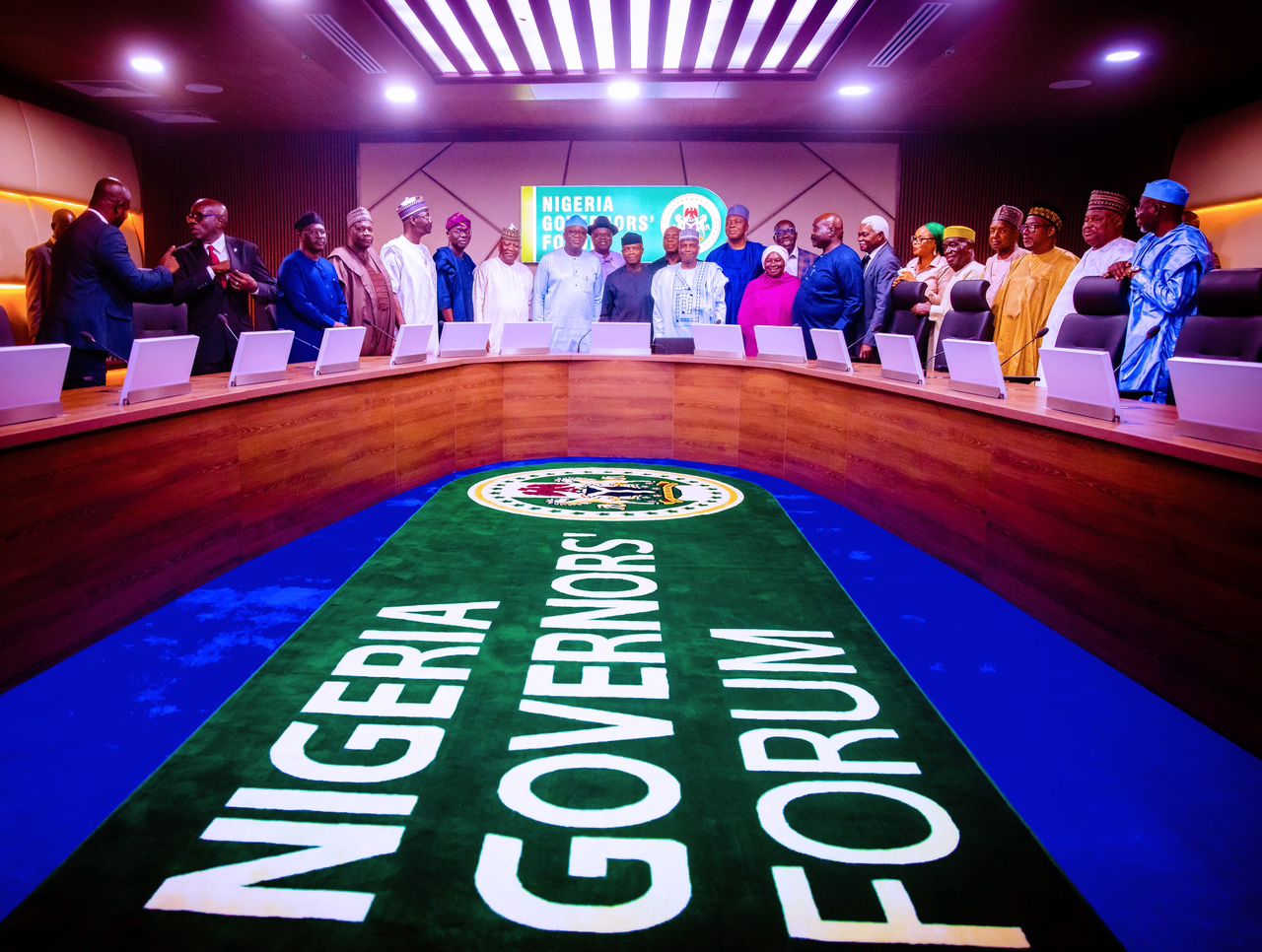
A renewed clash has emerged between the Nigerian National Petroleum Company Limited and Periscope Consulting, the audit firm hired by the Nigeria Governors’ Forum to examine an alleged under remittance of oil revenue totalling $42.37bn (about N12.91tn) to the Federation Account between 2011 and 2017.

The dispute, revived by fresh submissions from both sides, has forced the Federation Account Allocation Committee to mandate a joint reconciliation session to determine the true state of remittances and resolve the long-running impasse.

This was disclosed in the Federation Account Allocation Committee’s post-mortem review for November 2025, which detailed fresh exchanges between both parties over the alleged unremitted fund. The document was obtained by our correspondent on Tuesday.

Recall that in October, The PUNCH reported an extension of the ongoing probe and reconciliation of payments made by revenue-generating agencies, including the Nigerian National Petroleum Company Limited, to December 2024, following unresolved discrepancies in remittances. It also examined allegations that NNPC Limited failed to remit $42.37bn (about N12.9tn) in oil revenue to the Federation Account during the 2011–2017 period.

The review follows findings by Periscope Consulting, a firm engaged by the Nigeria Governors’ Forum, which had earlier accused the state oil company of withholding crude oil proceeds and other statutory revenues due to the Federation Account during the period.

But in the new document, the FAAC Sub-Committee confirmed that NNPCL had formally rejected the audit findings, insisting that no outstanding revenue is owed to the Federation Account for the period under review. The national oil company maintained that all crude oil proceeds and associated earnings were fully accounted for, disputing Periscope’s claims of significant underpayment.

But Periscope Consulting flatly disagreed with NNPC Limited’s defence, maintaining that its audit uncovered substantial gaps in remittances and that the alleged $42.37bn shortfall remained unresolved.

The report read, “UPDATE ON NNPC’S ALLEGED UNDER REMITTANCES TO FEDERATION ACCOUNT OF $42,373,896,555.00.

“NNPC Limited submitted their response regarding $42,373,896,555.00 under remittance to the Federation Account as contained in the report of Periscope Consulting. Recall that Periscope Consulting was the Consultant engaged by the Governors’ Forum to examine NNPC Limited under remittance to the Federation Account.

“NNPC Limited responded that all revenues due to the Federation have been properly accounted for and no outstanding amounts for the period under review.”

See also  Renowned Evangelist Uma Ukpai Dies at 80

This disagreement has pushed both sides into a stalemate, with the consultants accusing the oil company of providing explanations that do not reconcile with the audited data.

The FAAC sub-committee, noting the conflicting positions, directed that NNPCL and Periscope Consulting must meet jointly to harmonise records and “close out” the matter. It added that the reconciliation process remains ongoing.

“Responding, Periscope Consulting disagreed with NNPCL’s position; hence, the Sub-Committee directed that there should be a joint meeting with the two parties to close out on the issue. This assignment is work in progress,” it added.

The controversy marks the latest chapter in a prolonged dispute between state governments and the national oil company over transparency in oil revenue flows. In February 2025, FAAC suspended its monthly meeting due to a dispute between state governments and NNPC Limited over outstanding remittances.

The dispute over an estimated N1.7tn in revenues raised concerns over potential delays in revenue disbursement to states, which rely on FAAC allocations for budgetary commitments.

The Governors’ Forum commissioned Periscope Consulting amid complaints that NNPCL’s remittance practices, including handling of crude sales, domestic allocation, subsidy deductions, and JV cash calls, were opaque and inconsistent with expected inflows.

With oil receipts forming the backbone of FAAC disbursements, any alleged shortfall threatens state and local government finances, already strained by rising inflation and shrinking real revenue.

NNPC Limited, now operating as a limited liability company under the Petroleum Industry Act, has consistently defended its processes, claiming improved accountability and asserting that independent audits often misinterpret commercial and regulatory procedures governing its operations.

The latest face-off underscores deepening mistrust on both sides and places renewed pressure on FAAC to reconcile the books in the interest of fiscal stability.

Commenting on the issue, renowned Professor Emeritus of Petroleum Economics, Wumi Iledare, said the alleged $42.37bn under-remittance recorded between 2011 and 2017 reflects long-standing flaws in Nigeria’s pre–Petroleum Industry Act regime.

According to him, the former Nigerian National Petroleum Corporation operated with overlapping roles that made revenue reconciliation cumbersome and frequently disputed. Iledare described the controversy as a “legacy problem,” stressing that similar discrepancies can be avoided only through disciplined implementation of the PIA, real-time monitoring, and continuous independent audits.

He added that with transparent data and clear fiscal rules, future remittance disputes should not recur. Speaking in an interview, he said, “The alleged $42.37bn under-remittance from 2011–2017 simply reflects the weaknesses of the old pre-PIA system. The former NNPC had overlapping roles that made revenue reconciliation difficult and prone to disputes.

See also  Power rotation debate heats up as North reviews Tinubu’s scorecard

“The lesson is clear: fully implement the PIA, strengthen real-time monitoring, and enforce continuous independent audits. With transparent data and clear rules, issues like this should not arise again. It is a legacy problem. The future depends on disciplined implementation of the PIA.”

The Post-Mortem Sub-Committee further queried the NNPC Limited over gaps in its reporting on the utilisation of the 30 per cent Frontier Exploration Fund, a statutory deduction introduced to finance oil and gas exploration in frontier basins.

According to the committee’s review, NNPCL submitted utilisation records for the frontier exploration fund covering the period 2008 to 2024, spanning both the pre- and post-Petroleum Industry Act eras.

However, the sub-committee noted that the documents did not provide project-specific details, including a breakdown of expenditure for each basin where exploration activities were carried out. As a result, the committee wrote to NNPCL requesting a proper reconciliation that links each exploration project to the exact amount spent.

The sub-committee said it is still awaiting the company’s updated submission, adding that the reconciliation remains a work in progress. It explained, “The NNPCL had submitted the utilisation of the frontier exploration fund from 2008-2024, covering both the Pre and Post PIA. However, the Sub-Committee observed that there were no specifics on expenditure incurred on the exploration activities carried out in each of the funds.

“The committee had written to NNPCL requesting it to tie each project carried out within the Basins to the amount expended. The Sub-Committee awaits NNPCL’s response. This assignment is still a work in progress.”

The scrutiny follows a government-led probe into the 30 per cent Frontier Exploration Fund, aimed at ensuring transparency and proper utilisation of billions earmarked for oil and gas exploration across Nigeria’s frontier basins.

In a related development, the committee also reviewed outstanding liabilities owed by NNPCL to the Federal Inland Revenue Service and the Nigerian Upstream Petroleum Regulatory Commission for the period June to December 2023. The outstanding payments, totalling N2.03tn, are to be accounted for by the Office of the Accountant-General of the Federation.

The sub-committee confirmed that the amount has been incorporated into the ongoing reconciliation being handled by the Stakeholders Alignment Committee, which is expected to submit its final report to the Federal Ministry of Finance to conclude the matter.

See also  Lawyer - Natasha to resume Senate after London trip

Data from FAAC documents show that the outstanding obligations comprise N1.19tn in NUPRC royalties and N843.28bn in FIRS taxes, accumulated over the seven months. Monthly breakdowns indicate the largest liability was recorded in August 2023, amounting to N470.25bn, followed by payments due in October and November.

The World Bank has accused NNPCL of failing to fully remit oil revenues to the Federation Account, thereby undermining fiscal transparency and macroeconomic stability.

The bank noted that while the company was corporatised in 2021 to operate as a commercial entity, it still retains monopolistic control over crude oil sales and foreign exchange inflows, leading to persistent gaps between reported earnings and actual remittances.

“NNPCL has remained a key source of revenue leakages,” the World Bank stated, urging the government to “strengthen oversight, ensure full disclosure of oil proceeds, and improve transparency in federation revenue management.”

The institution said the state-owned company has only been remitting 50 per cent of revenue gains from the removal of the Premium Motor Spirit subsidy to the Federation Account. It said out of the N1.1tn revenue from crude sales and other income in 2024, the NNPCL only remitted N600bn, leaving a deficit of N500bn unaccounted for.

“Despite the subsidy being fully removed in October 2024, NNPCL started transferring the revenue gains to the Federation only in January 2025. Since then, it has been remitting only 50 per cent of these gains, using the rest to offset past arrears,” the World Bank stated.

Since assuming office, the NNPCL Group Chief Executive Officer, Bayo Ojulari, has consistently pledged to entrench transparency, efficiency, and accountability in the company’s operations. He has repeatedly assured Nigerians and the global investment community that the company’s books would be transparent and that its dealings with the Federation Account would be fully compliant with fiscal rules.

However, despite these assurances, legacy issues from previous years, particularly allegations of under-remittance running into tens of billions of dollars, continue to cloud the company’s transparency drive.

punch.ng

FOLLOW US ON:

FACEBOOK

TWITTER

PINTEREST

TIKTOK

YOUTUBE

LINKEDIN

TUMBLR

INSTAGRAM

Continue Reading
Click to comment

Leave a Reply

Your email address will not be published. Required fields are marked *

News

Trump says Iran’s new supreme leader alive but ‘damaged’

Published

on

President Donald Trump said that he thinks new Iranian Supreme Leader Mojtaba Khamenei, whose father, the former supreme leader, was killed ​on the first day of the US and Israel’s war on Iran, is alive but “damaged.”

Khamenei has not been seen ⁠by Iranians since his selection on Sunday by a clerical ​assembly, and his first comments were read out by a television ​presenter on Thursday.

“I think he probably is (alive). I ​think he is damaged, but I think he’s probably alive in some form, ‌you ⁠know,” Trump said in an interview on Fox News’ “The Brian Kilmeade Show.”

His remarks were published by Fox News late on Thursday.

In Khamenei’s first comments, he vowed to keep the Strait of ​Hormuz shut and ​called on ⁠neighboring countries to close US bases on their territory or risk Iran targeting them.

The US and ​Israel began attacks on Iran on Feb. 28. ​

Iran ⁠has responded with its own strikes on Israel and Gulf countries with US bases.

As the war approached the two-week mark, having ⁠killed thousands ​and shaken financial markets, the leaders ​of Iran, Israel and the United States all voiced defiance and have vowed to ​fight on.

Reuters/NAN

punch.ng

FOLLOW US ON:

FACEBOOK

TWITTER

PINTEREST

TIKTOK

YOUTUBE

LINKEDIN

See also  Renowned Evangelist Uma Ukpai Dies at 80
Continue Reading

News

Terror attacks: Tinubu approves fresh military hardware after security talks

Published

on

President Bola Tinubu has approved the procurement of new equipment for the armed forces and other security agencies to enhance the fight against terrorism and banditry across the country, the Minister of Defence, Gen Christopher Musa (retd.), has disclosed.

Musa, who briefed State House correspondents after a nearly two-hour security meeting at the Presidential Villa, Abuja, on Thursday, said the President remained committed to supporting security agencies in their operations against insurgents.

“The President has promised more equipment for us to be able to protect the nation, and we assure victory,” Musa stated.

However, he did not specify the type or quantity of equipment approved by the President.

Rather, he explained that the meeting, which was the first attended by the new Inspector General of Police, Tunji Disu, since his appointment, was convened to brief the President on the current security situation following recent attacks on military formations.

“The mission of the meeting actually is just for us to review events. We came in here for the services to brief Mr President on the current situation on the ground.

“You know that there have been a series of attacks, and the security forces have actually risen to the occasion,” he said.

He disclosed that the briefing was necessary to ensure the President had accurate information about ongoing operations, noting that media interpretations sometimes did not reflect the full picture.

“We know sometimes interpretation, especially through the media, has not been too direct.

“We felt we should put this record straight, which we have done, and we are glad that Mr President has continued to support the armed forces and other security agencies in the fight against insurgency,” Musa stated.

See also  Scientist James Watson, who co-discovered double-helix of DNA and said black people are less intelligent than white people, di£s

The Defence Minister appealed to Nigerians not to be discouraged by reports of attacks, assuring that terrorists and bandits were suffering more casualties than security forces.

“Our appeal to Nigerians is not to get tired, not to be discouraged, because sometimes when you hear the news, you think it is just what is happening, but it is not. It’s far from that.

“The terrorists, the bandits, are taking more casualties. Their commanders are being killed,” he said.

Musa acknowledged that Nigeria had lost courageous officers and men in recent operations, describing the casualties as “highly regrettable.”

The former Chief of Defence Staff said, “We have lost a number of very, very courageous officers and men. Highly regrettable, but we want to assure Nigerians of the commitment we are putting on the ground to ensure that Nigeria is safe and secure.”

In recent weeks, insurgents have intensified attacks on military positions in Borno State, including assaults on Ngoshe, Konduga, Marte, Jakana, and Mainok, resulting in casualties among security personnel and civilians.

In the past week alone, the military lost at least three commanding officers in charge of forward operations bases following a surge in attacks on security formations and personnel.

The attacks prompted strong responses from both President Tinubu and Vice President Kashim Shettima, who vowed to deploy overwhelming force to end the insurgency.

Musa attributed the recent spike in terrorist activities to the Ramadan period, explaining that insurgents believed dying during the holy month would guarantee them paradise.

“It is normal with terrorists during the Ramadan period. For them, they feel when they die, they are going to heaven, so they are ready to commit any offence or to get killed, because they feel they have a reward to do,” the defence minister explained.

See also  Senegal passes law doubling penalty for same-s3x relations to 10 years in prison

He assured Nigerians that the military had adjusted its strategies and was recording successes against the terrorists.

“As I said, we have adjusted our strategies. You can see in the past few days, we’ve taken over those locations. We’ve killed their commanders, we’ve taken over their assets. We’ll continue to do more,” Musa stated.

When asked about the persistent insecurity despite military efforts, the minister said war naturally involves fluctuations but assured that the tide was turning in favour of security forces.

“As I said, it is war. And you know, war comes in and out. But Mr President has approved so many things that are coming on our line, and we’re working together as a team.

“You can see all members of the security forces are here to assure Nigerians and to assure Mr President that we’re on track and will succeed,” he said.

The Thursday meeting, which lasted nearly two hours and ended at approximately 5:10 pm, was attended by all service chiefs and heads of security agencies, marking the first such gathering since Disu assumed office as IGP on February 28, 2026.

Our correspondent observed that the security chiefs arrived at the Villa without their usual official vehicles, making identification difficult, but they were spotted as they departed the forecourt after the meeting.

In attendance were the Directors-General of the National Intelligence Agency, Mohammed Mohammed; Department of State Services, Mr Adeola Ajayi; Chief of Army Staff, Lt Gen Waidi Shaibu; Chief of Defence Staff, Gen Olufemi Oluyede; Minister of Defence Gen Musa (retd.); National Security Adviser, Nuhu Ribadu; Inspector General of Police, Tunji Disu; Chief of Air Staff, Air Vice Marshal Sunday Aneke; Chief of Naval Staff, Rear Admiral Idi Abbas, and Chief of Defence Intelligence, Lt Gen Emmanuel Undiandeye.

See also  Police Arrest UK-Based Blogger, Maureen Badejo Over Petitions By Olukoya, Apostle Suleman

The meeting comes amid heightened security concerns across the country, particularly in the Northeast, where Boko Haram and Islamic State West Africa Province insurgents have maintained pressure on military positions.

During an Iftar dinner with service chiefs on March 6, President Tinubu had assured the military of his administration’s commitment to defeating terrorism despite the Borno attacks.

Vice President Shettima, in a statement by his spokesman, Stanley Nkwocha, also declared that the administration would end the insurgency with overwhelming force.

punch.ng

FOLLOW US ON:
FACEBOOK

TWITTER

PINTEREST

TIKTOK

YOUTUBE

LINKEDIN

Continue Reading

News

Disu: Egbetokun, I never dreamed of becoming IG

Published

on

The Inspector-General of Police, Olatunji Disu, on Thursday paid glowing tribute to his predecessor, Kayode Egbetokun, recalling their early professional relationship while serving under President Bola Tinubu during his tenure as governor of Lagos State.

Disu spoke at the pulling-out ceremony held in honour of Egbetokun at the Force Headquarters in Abuja, marking the retirement of the former police chief after decades of service in the Nigeria Police Force.

In his remarks, Disu described Egbetokun’s career as one marked by dedication, professionalism and strong leadership, noting that a defining chapter in the former IG’s career was his service as Chief Security Officer to the Lagos State Governor at a time when Tinubu was in office.

He said it was during that period that their professional paths first intersected.

“A defining chapter in his professional life was his service in Lagos State Government House, where he served as Chief Security Officer to the Governor of Lagos State, at a time when His Excellency, Senator Bola  Tinubu, now President of the Federal Republic of Nigeria, was Governor.

“It was during that period that our professional paths intersected in a most memorable way.

“While IGP Egbetokun (retd.) served as Chief Security Officer to the governor, I had the honour of serving as Aide-de-Camp to the same governor.

“Working together under demanding circumstances, we shared the responsibility of ensuring the safety and security of the Governor and the Government of Lagos State,” Disu said.

The police chief said neither of them could have imagined at the time that years later, Egbetokun would rise to become the Inspector General of Police and that he would eventually succeed him in the same office.

See also  Senate mourns as Rivers senator Mpigi dies at 64

According to him, the development reflected how years of service and dedication sometimes align in unexpected ways.

“At that time, neither of us could have imagined that years later, destiny would place him at the helm of the Nigeria Police Force as Inspector General of Police, and that I would have the honour of succeeding him in that office.

“It is indeed one of those remarkable coincidences of history that reminds us how the threads of service sometimes weave themselves across time in unexpected ways,” he said.

Disu noted that throughout his career, Egbetokun rose steadily through the ranks, serving in various command, operational and training capacities across the country.

He highlighted Egbetokun’s leadership roles, including commanding the Rapid Response Squad in Lagos, Police Mobile Force operations, and serving as Area Commander in Osogbo and Gusau.

The IGP also commended Egbetokun’s contributions to police training and capacity development, citing his service as Commandant of the Police Training School, Ikeja, and later as Deputy Commandant of the Police College, Ikeja.

He said Egbetokun’s tenure as Inspector General was guided by a vision to build a professionally competent, service-driven, rule-of-law-compliant and people-friendly police force.

According to him, the former police chief implemented reforms to strengthen operational efficiency, enhance professionalism, improve personnel development, and deepen public trust in policing.

Disu added that Egbetokun emphasised intelligence-driven policing, strengthened training and reinforced institutional values such as discipline, accountability and service.

He further noted that Egbetokun’s leadership style, characterised by calmness, intellectual depth, and strategic foresight, helped guide the Nigeria Police Force through complex security challenges during his tenure.

See also  Bayelsa deputy gov sues Assembly over impeachment plot

In his speech, Egbetokun highlighted key reforms and institutional improvements achieved during his tenure as the Inspector-General of Police.

According to him, his administration pursued reforms to reinforce professionalism, promote merit-based advancement, and strengthen intelligence-led policing.

He noted that as part of the reforms, the Intelligence Bureau was expanded and upgraded to a full department headed by a Deputy Inspector-General of Police, while the Legal and Medical units were elevated to directorate status to improve institutional efficiency and service delivery.

Egbetokun also said the Force further developed its cybercrime centre into a sophisticated facility capable of monitoring Nigeria’s cyberspace and supporting modern investigations.

He added that investigative and operational capacity was strengthened through improvements to the National Criminal Database and enhanced professional training for operators across commands up to the divisional level.

The former police chief said operational presence was expanded through the establishment of additional Police Mobile Force squadrons, new Area Commands and Divisions, as well as the creation of the Special Intervention Squad, which he said had recorded notable successes across the country.

He also said progress was made in improving police infrastructure, including the completion of barracks redevelopment projects in Kano and Kaduna and the commissioning of modern state command headquarters in Ogun and Adamawa states.

Egbetokun, who was appointed on June 19, 2023, by President Tinubu, resigned on February 24, paving the way for the appointment of Disu.

In 2024, the IG’s continued stay in office sparked widespread controversy after Egbetokun officially reached the mandatory retirement age of 60 on September 4.

See also  US withdrawal from WHO makes world ‘unsafe’ — Official

However, his stay in office was extended following the amendment to the Police Act.

punch.ng

FOLLOW US ON:
FACEBOOK

TWITTER

PINTEREST

TIKTOK

YOUTUBE

LINKEDIN

Continue Reading

Trending