Connect with us

News

Governors vs NNPC: Tension rise over alleged $42bn oil revenue shortfall

Published

on

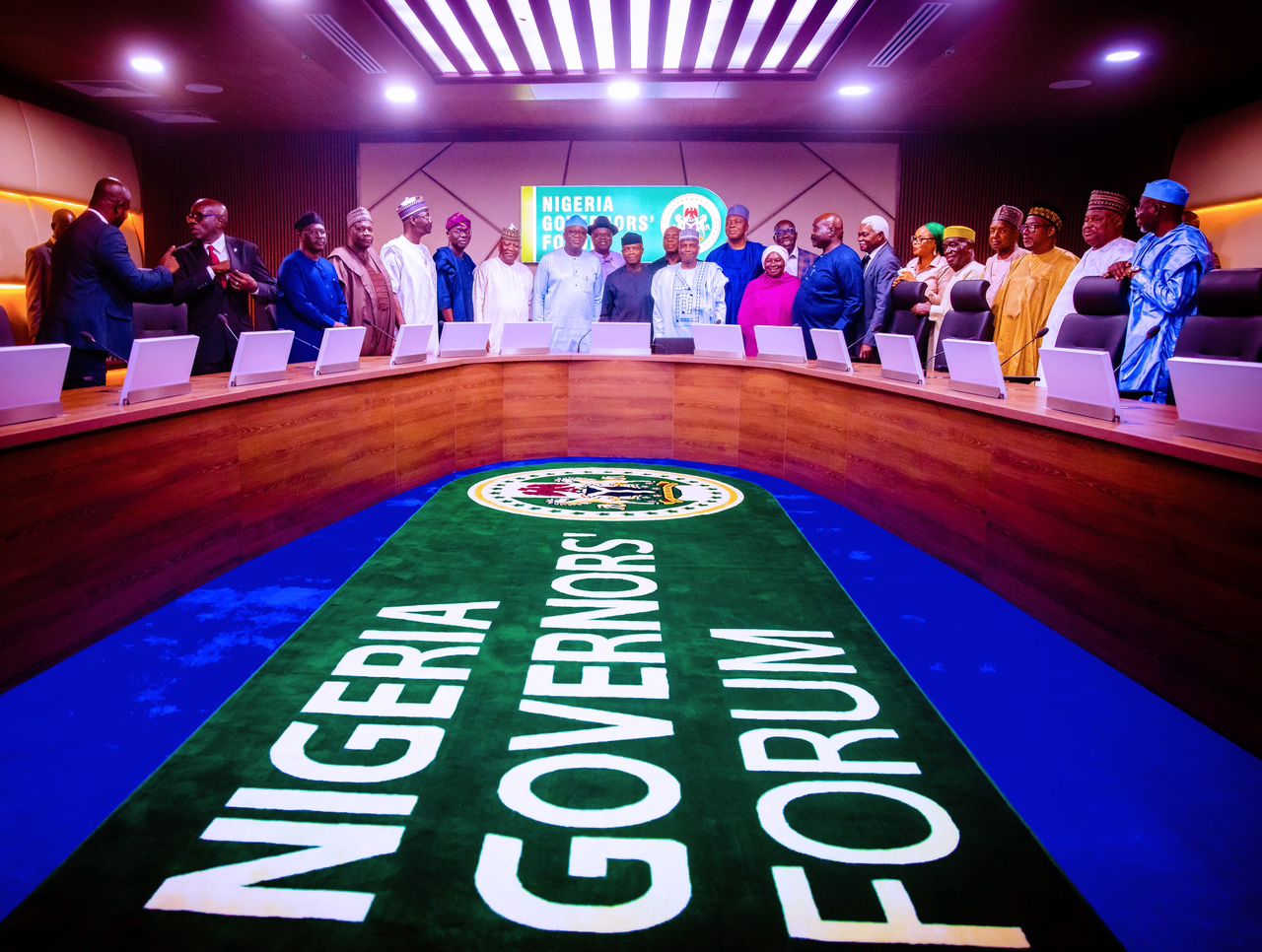
A renewed clash has emerged between the Nigerian National Petroleum Company Limited and Periscope Consulting, the audit firm hired by the Nigeria Governors’ Forum to examine an alleged under remittance of oil revenue totalling $42.37bn (about N12.91tn) to the Federation Account between 2011 and 2017.

The dispute, revived by fresh submissions from both sides, has forced the Federation Account Allocation Committee to mandate a joint reconciliation session to determine the true state of remittances and resolve the long-running impasse.

This was disclosed in the Federation Account Allocation Committee’s post-mortem review for November 2025, which detailed fresh exchanges between both parties over the alleged unremitted fund. The document was obtained by our correspondent on Tuesday.

Recall that in October, The PUNCH reported an extension of the ongoing probe and reconciliation of payments made by revenue-generating agencies, including the Nigerian National Petroleum Company Limited, to December 2024, following unresolved discrepancies in remittances. It also examined allegations that NNPC Limited failed to remit $42.37bn (about N12.9tn) in oil revenue to the Federation Account during the 2011–2017 period.

The review follows findings by Periscope Consulting, a firm engaged by the Nigeria Governors’ Forum, which had earlier accused the state oil company of withholding crude oil proceeds and other statutory revenues due to the Federation Account during the period.

But in the new document, the FAAC Sub-Committee confirmed that NNPCL had formally rejected the audit findings, insisting that no outstanding revenue is owed to the Federation Account for the period under review. The national oil company maintained that all crude oil proceeds and associated earnings were fully accounted for, disputing Periscope’s claims of significant underpayment.

But Periscope Consulting flatly disagreed with NNPC Limited’s defence, maintaining that its audit uncovered substantial gaps in remittances and that the alleged $42.37bn shortfall remained unresolved.

The report read, “UPDATE ON NNPC’S ALLEGED UNDER REMITTANCES TO FEDERATION ACCOUNT OF $42,373,896,555.00.

“NNPC Limited submitted their response regarding $42,373,896,555.00 under remittance to the Federation Account as contained in the report of Periscope Consulting. Recall that Periscope Consulting was the Consultant engaged by the Governors’ Forum to examine NNPC Limited under remittance to the Federation Account.

“NNPC Limited responded that all revenues due to the Federation have been properly accounted for and no outstanding amounts for the period under review.”

See also  Ibadan convention: PDP delegates arrive amid Saraki’s cancellation move

This disagreement has pushed both sides into a stalemate, with the consultants accusing the oil company of providing explanations that do not reconcile with the audited data.

The FAAC sub-committee, noting the conflicting positions, directed that NNPCL and Periscope Consulting must meet jointly to harmonise records and “close out” the matter. It added that the reconciliation process remains ongoing.

“Responding, Periscope Consulting disagreed with NNPCL’s position; hence, the Sub-Committee directed that there should be a joint meeting with the two parties to close out on the issue. This assignment is work in progress,” it added.

The controversy marks the latest chapter in a prolonged dispute between state governments and the national oil company over transparency in oil revenue flows. In February 2025, FAAC suspended its monthly meeting due to a dispute between state governments and NNPC Limited over outstanding remittances.

The dispute over an estimated N1.7tn in revenues raised concerns over potential delays in revenue disbursement to states, which rely on FAAC allocations for budgetary commitments.

The Governors’ Forum commissioned Periscope Consulting amid complaints that NNPCL’s remittance practices, including handling of crude sales, domestic allocation, subsidy deductions, and JV cash calls, were opaque and inconsistent with expected inflows.

With oil receipts forming the backbone of FAAC disbursements, any alleged shortfall threatens state and local government finances, already strained by rising inflation and shrinking real revenue.

NNPC Limited, now operating as a limited liability company under the Petroleum Industry Act, has consistently defended its processes, claiming improved accountability and asserting that independent audits often misinterpret commercial and regulatory procedures governing its operations.

The latest face-off underscores deepening mistrust on both sides and places renewed pressure on FAAC to reconcile the books in the interest of fiscal stability.

Commenting on the issue, renowned Professor Emeritus of Petroleum Economics, Wumi Iledare, said the alleged $42.37bn under-remittance recorded between 2011 and 2017 reflects long-standing flaws in Nigeria’s pre–Petroleum Industry Act regime.

According to him, the former Nigerian National Petroleum Corporation operated with overlapping roles that made revenue reconciliation cumbersome and frequently disputed. Iledare described the controversy as a “legacy problem,” stressing that similar discrepancies can be avoided only through disciplined implementation of the PIA, real-time monitoring, and continuous independent audits.

He added that with transparent data and clear fiscal rules, future remittance disputes should not recur. Speaking in an interview, he said, “The alleged $42.37bn under-remittance from 2011–2017 simply reflects the weaknesses of the old pre-PIA system. The former NNPC had overlapping roles that made revenue reconciliation difficult and prone to disputes.

See also  Nigeria needs new Constitution, not amendments – Ezekwesili

“The lesson is clear: fully implement the PIA, strengthen real-time monitoring, and enforce continuous independent audits. With transparent data and clear rules, issues like this should not arise again. It is a legacy problem. The future depends on disciplined implementation of the PIA.”

The Post-Mortem Sub-Committee further queried the NNPC Limited over gaps in its reporting on the utilisation of the 30 per cent Frontier Exploration Fund, a statutory deduction introduced to finance oil and gas exploration in frontier basins.

According to the committee’s review, NNPCL submitted utilisation records for the frontier exploration fund covering the period 2008 to 2024, spanning both the pre- and post-Petroleum Industry Act eras.

However, the sub-committee noted that the documents did not provide project-specific details, including a breakdown of expenditure for each basin where exploration activities were carried out. As a result, the committee wrote to NNPCL requesting a proper reconciliation that links each exploration project to the exact amount spent.

The sub-committee said it is still awaiting the company’s updated submission, adding that the reconciliation remains a work in progress. It explained, “The NNPCL had submitted the utilisation of the frontier exploration fund from 2008-2024, covering both the Pre and Post PIA. However, the Sub-Committee observed that there were no specifics on expenditure incurred on the exploration activities carried out in each of the funds.

“The committee had written to NNPCL requesting it to tie each project carried out within the Basins to the amount expended. The Sub-Committee awaits NNPCL’s response. This assignment is still a work in progress.”

The scrutiny follows a government-led probe into the 30 per cent Frontier Exploration Fund, aimed at ensuring transparency and proper utilisation of billions earmarked for oil and gas exploration across Nigeria’s frontier basins.

In a related development, the committee also reviewed outstanding liabilities owed by NNPCL to the Federal Inland Revenue Service and the Nigerian Upstream Petroleum Regulatory Commission for the period June to December 2023. The outstanding payments, totalling N2.03tn, are to be accounted for by the Office of the Accountant-General of the Federation.

The sub-committee confirmed that the amount has been incorporated into the ongoing reconciliation being handled by the Stakeholders Alignment Committee, which is expected to submit its final report to the Federal Ministry of Finance to conclude the matter.

See also  Terrorism: Police tighten S’East security as Kanu knows fate today

Data from FAAC documents show that the outstanding obligations comprise N1.19tn in NUPRC royalties and N843.28bn in FIRS taxes, accumulated over the seven months. Monthly breakdowns indicate the largest liability was recorded in August 2023, amounting to N470.25bn, followed by payments due in October and November.

The World Bank has accused NNPCL of failing to fully remit oil revenues to the Federation Account, thereby undermining fiscal transparency and macroeconomic stability.

The bank noted that while the company was corporatised in 2021 to operate as a commercial entity, it still retains monopolistic control over crude oil sales and foreign exchange inflows, leading to persistent gaps between reported earnings and actual remittances.

“NNPCL has remained a key source of revenue leakages,” the World Bank stated, urging the government to “strengthen oversight, ensure full disclosure of oil proceeds, and improve transparency in federation revenue management.”

The institution said the state-owned company has only been remitting 50 per cent of revenue gains from the removal of the Premium Motor Spirit subsidy to the Federation Account. It said out of the N1.1tn revenue from crude sales and other income in 2024, the NNPCL only remitted N600bn, leaving a deficit of N500bn unaccounted for.

“Despite the subsidy being fully removed in October 2024, NNPCL started transferring the revenue gains to the Federation only in January 2025. Since then, it has been remitting only 50 per cent of these gains, using the rest to offset past arrears,” the World Bank stated.

Since assuming office, the NNPCL Group Chief Executive Officer, Bayo Ojulari, has consistently pledged to entrench transparency, efficiency, and accountability in the company’s operations. He has repeatedly assured Nigerians and the global investment community that the company’s books would be transparent and that its dealings with the Federation Account would be fully compliant with fiscal rules.

However, despite these assurances, legacy issues from previous years, particularly allegations of under-remittance running into tens of billions of dollars, continue to cloud the company’s transparency drive.

punch.ng

FOLLOW US ON:

FACEBOOK

TWITTER

PINTEREST

TIKTOK

YOUTUBE

LINKEDIN

TUMBLR

INSTAGRAM

Continue Reading
Click to comment

Leave a Reply

Your email address will not be published. Required fields are marked *

News

FG begins N4tn GenCos debt repayment with bonds

Published

on

The Federal Government has begun the process of repaying the N4tn debt owed to Power Generation Companies with the launch of a N590bn first-tranche bond issuance.

The initial tranche, part of a wider N4tn NBET Finance Company Plc Bond Programme, is guaranteed by the Federal Government. It comprises N300bn in cash bonds to be issued to the market and N290bn in non-cash bonds to be directly allotted to GenCos on identical terms.

The PUNCH learnt that details contained in the bond term sheet obtained by our correspondent on Tuesday revealed that the Series 1 bond will be issued between November and December 2025. CardinalStone Partners Limited is serving as the lead issuing house and financial adviser.

According to the term sheet, “Series 1 Tranche A involves N300bn issued to the market for cash, while N290bn under Tranche B is allotted to the GenCos on identical terms. The bond will be issued between November and December, with a seven-year tenor on a fixed-rate coupon, redeemed on an amortising basis and paid semi-annually in arrears.”

The bond issuance marks a major step by President Bola Tinubu’s administration to resolve what experts describe as one of the most crippling financial crises in Nigeria’s power sector. The Series 1 bond carries a seven-year tenor, a fixed coupon rate, and semi-annual interest payments, and will be amortised over its lifespan.

It will be listed on the Nigerian Exchange and the FMDQ Securities Exchange, and will qualify under the Trustee Investment Act, making it eligible for investment by pension fund administrators, banks, asset managers, insurers and high-net-worth investors.

The issuer also retains the discretion to absorb oversubscription of up to N1.23tn, creating room for additional non-cash bond allocations to GenCos if required.

The term sheet added, “Pricing will be based on the yield of the seven-year FGN bond plus a spread, and the issuance will be conducted through a book-build process. The minimum subscription is N5m, representing 5,000 units at N1,000 each, with additional subscriptions in multiples of N1,000.

See also  Police present ₦33.8m to families of fallen officers in Kebbi

“Proceeds from the issuance will be used to settle outstanding liabilities owed to GenCos. The instrument is guaranteed by the full faith and credit of the Federal Government, enjoys CBN liquidity status, meets PenCom compliance requirements, qualifies under the Trustee Investment Act, and will be listed on both the Nigerian Exchange Limited and the FMDQ OTC Securities Exchange.”

It further noted that “oversubscription may be absorbed at the discretion of the issuer up to a maximum of N1,230,000,000,000 approved for Phase 1 of this transaction. The issuer reserves the right to increase the size of the non-cash bonds to be issued to the GenCos under any Series or accommodate additional allotments as may be required.”

Nigeria’s power sector has been weighed down for years by NBET’s inability to settle GenCos’ invoices due to chronic under-remittance by electricity distribution companies (DisCos).

GenCos have repeatedly complained that mounting debts, currently estimated at N4tn and projected to reach N6tn by year-end, have crippled their operations, weakened gas supply contracts, and forced several power plants to run far below capacity.

This liquidity shortfall has contributed significantly to recurrent grid collapses, poor generation output, and unstable electricity supply nationwide. The bond is fully guaranteed by the Federal Government, enjoys Central Bank liquidity status, and meets PenCom requirements for pension fund investments.

Repayment will be funded primarily through the national budget, with NBET’s recoveries from DisCos serving as a secondary source. CardinalStone Partners Limited, the lead issuing house and financial adviser for the forthcoming Federal Government-backed Electricity Bond, has invited institutional investors to an investor forum ahead of the planned.

See also  Opposition slams govt as states’ IGR soars by 50%

In a mail notice to investors, the firm said the seven-year bond, with a coupon range of 16.25 per cent to 16.75 per cent, is designed to support ongoing electricity market reforms, with proceeds directed toward strengthening the power sector.

The instrument carries a full sovereign guarantee and will be listed on both the Nigerian Exchange Limited and FMDQ Securities Exchange.

The mail read, “Dear Valued Investor, Trust this email finds you well. In Furtherance of the upcoming FGN-backed Electricity Bond, which is scheduled to open soon, with a tenor of 7 years and a coupon range of 16.25 per cent–16.75 per cent. The bond programme is structured to deliver direct impact to the power sector, with proceeds applied towards strengthening electricity market reforms.

“It also carries a full sovereign guarantee, providing comfort comparable to traditional FGN bonds. The bond notes will be listed on both the NGX and FMDQ and will benefit from the PenCom waiver. While recognition by the CBN for repo and collateral purposes is yet to be obtained, feedback on this will be available shortly.”

The firm added that the bond would also benefit from the National Pension Commission waiver, although approval from the Central Bank of Nigeria for repo and collateral eligibility was still being processed.

CardinalStone noted that the Presidential Power Sector Debt Reduction Committee, chaired by the Minister of Finance and Coordinating Minister of the Economy, would lead the engagement with investors at a virtual forum scheduled for Wednesday, December 10, 2025.

The session is expected to bring together banks, pension fund administrators, asset managers, insurance firms, and other major stakeholders to provide clarity on power sector reforms and encourage market participation in the N1.23tn bond issuance under the Power Sector Multi-Instrument Issuance Programme.

See also  Boost climate action funding, Tinubu urges World Bank, IMF

Registration for the event, which will be held via Zoom, is compulsory, the notice added.

“Based on the above,  the Presidential Power Sector Debt Reduction Committee, under the distinguished leadership of the Honourable Minister of Finance and Coordinating Minister of the Economy, in collaboration with our firm we are pleased to invite you to the Investor Forum for the N1.23tn Power Sector Bond Issuance (“the Issue”) under the Power Sector Multi-Instrument Issuance Programme (“the Programme”).

“The forum will convene key institutional investors in the Nigerian Capital Market, including Banks, Pension Fund Administrators, Asset Managers, Insurance Companies, and other power sector stakeholders.

“Our goal is to provide clarity on ongoing power sector reforms, outline the planned bond issuance, and foster strong market participation. You are invited to join this engagement as a critical stakeholder in shaping the future of the Power sector in Nigeria,” the notice concluded.

An official familiar with the development, who spoke on condition of anonymity due to lack of authorisation to speak on the matter, said the power generation companies had been invited to a meeting scheduled for Wednesday, likely to discuss details of the planned electricity bond. The source added that the bond issuance had so far raised “more questions than answers” among sector stakeholders.

“Gencos have been invited for a meeting tomorrow. The meeting will most likely be to discuss the details of the bond. The bond issuance actually raises more questions than answers,” the official said.

Continue Reading

News

NLC plans protest over the following reasons…

Published

on

The Nigeria Labour Congress has announced plans for a nationwide protest on Thursday, 17 December 2025, to demand urgent government action on a series of pressing national crises, including escalating insecurity, the deteriorating tertiary education system, the ongoing health sector strike, and concerns over political interference in the Labour Party.

The announcement followed the union’s National Executive Council meeting, held at the NLC Sub-Secretariat in Yaba, Lagos, on Thursday, 4 December 2025.

In the communiqué released after the meeting, the NEC expressed “very serious concern” over the worsening security situation in the country, citing the abduction of 24 girls from a boarding school in Kebbi State on 17 November 2025, during which two staff members were killed.

The NEC condemned the withdrawal of security personnel before the attack, describing it as a “dastardly and criminal action” and warning that “the surge in kidnappings targeting school children in Nigerian schools has reached an alarming level and requires immediate action by the Nigerian government.”

Approximately 139 million people are living in poverty in Nigeria as of 2025, according to the World Bank’s Nigeria Development Update report released in October 2025. This figure represents about 61-62 per cent of Nigeria’s total population, indicating a sharp increase from previous years and highlighting that poverty has deepened despite ongoing economic reforms.

The NLC called on the Federal Government to take immediate steps to protect schools, particularly those in remote or high-risk areas, and demanded a full investigation and prosecution of all individuals responsible for lapses in security.

See also  FCT doctors vow to continue strike until demands are met

The NEC also expressed deep concern about the ongoing crisis in Nigeria’s tertiary education sector. University infrastructure continues to deteriorate, teaching and research resources remain outdated, and staff allowances are often unpaid.

The NLC criticised the Federal Government’s use of divide-and-rule tactics, which it said undermined unity among unions and stalled negotiations. The union urged the government to halt these strategies and implement a fair and uniform remuneration framework for all categories of university workers, while recognising the peculiarities of different professional groups.

The NEC reviewed the ongoing strike by the Joint Health Sector Unions, which began on 14 November 2025. The union expressed concern over the withdrawal of nurses from the industrial action and warned that if negotiations with the Federal Government failed, the NLC and all its affiliates would join the strike in full solidarity.

In addition, the NEC directed the revival of the Labour–Civil Society Coalition, originally formed under the leadership of Comrade Adams Oshiomhole, to strengthen collaboration between labour organisations and civil society in addressing national issues.

The union also addressed concerns regarding the Labour Party, noting that it had been hijacked by mercantile interests, particularly through the conduct of members of the Nenadi Usman-led Caretaker Committee.

The NLC resolved to withdraw its members from these committees and to begin building coalitions with political parties whose ideologies align with working-class principles, while continuing to engage with the Labour Party where possible.

The body concluded that the planned mass mobilisation on 17 December 2025 is necessary to draw attention to the failures of the government in addressing insecurity, economic hardship, industrial disputes, and political integrity.

See also  Opposition slams govt as states’ IGR soars by 50%

The union reaffirmed its commitment to protecting workers’ rights, improving living and working conditions, and defending Nigerian citizens. It called on all workers and citizens to remain united, steadfast, and resolute in the collective struggle to safeguard national stability and promote socio-economic justice.

punch.ng

FOLLOW US ON:

FACEBOOK

TWITTER

PINTEREST

TIKTOK

YOUTUBE

LINKEDIN

TUMBLR

INSTAGRAM

Continue Reading

News

Nigeria must address poverty, insecurity to stop coups in W’Africa – Falana

Published

on

Senior Advocate of Nigeria Femi Falana says Nigeria cannot lead regional efforts against coups without first addressing internal drivers of instability.

He made this position known as West Africa confronts another round of military takeovers.

Speaking on Channels Television’s Politics Today on Tuesday, the human rights lawyer said Nigeria must confront socioeconomic and political conditions that fuel unrest.

“If we want to have political stability in Nigeria, you must address the crisis of the economy, address poverty, tackle illiteracy, and curb insecurity of lives and property,” he said.

Falana said civic freedoms must be strengthened and warned against treating criticism as a crime.

“You must show that the political space will not shrink as it is now. You have a shrinking of the political space, and that must stop. There must be freedom of expression.

“You cannot be charging people with all manner of offences for expressing their views about the affairs of their country,” he said.

He also urged the Independent National Electoral Commission to widen participation.

“More importantly, INEC must open the political space and allow ideological political parties to be registered to challenge the status quo. Right now, INEC is not prepared to open the political space,” he said.

Falana said many citizens are “unhappy” with current policies and argued that democratic leaders in Africa frequently constrain the opposition.

According to him, Nigeria must avoid practices that weaken pluralism.

“Nigeria clearly has its job cut out. If you want to stop coups, you must allow political pluralism in Nigeria.

See also  PDP convenes emergency meeting after court halts convention

“You cannot have a situation where the country is moving towards a one-party state, and you want to export democracy. Nigeria has to put its house in order to align with political pluralism” he asserted.

He added that credible elections depend on competitive opposition, saying ruling parties across Africa often render rivals “impotent” through direct or indirect restrictions.

Asked if more coups should be expected, Falana said, “It won’t be the last. I’m familiar with the political terrain. Once you put opposition leaders in jail, send them into exile, or kill them, you cannot have political stability.”

Citing similar trends in Benin Republic, he urged Nigeria to “show leadership in stabilising the region.”

His remarks follow Sunday’s failed coup attempt in Benin, during which soldiers led by Lt. Col. Pascal Tigri seized the state television station in Cotonou and announced President Patrice Talon’s removal.

The uprising was quashed within hours by Nigerian troops and the ECOWAS standby force.

Authorities said several people were killed, at least 14 suspects were arrested, and Tigri remains at large. The plotters cited grievances over security, military promotions and restrictions on political freedoms linked to the 2026 election.

The African Union, United Nations, European Union and ECOWAS condemned the coup.

Meanwhile, the Nigerian Senate has approved President Bola Tinubu’s request to deploy troops to Benin Republic.

Continue Reading

Trending