
Connect with us

Business

Without Ooni’s Intervention, Refinery Couldn’t Have Been Built — Dangote

Published

on

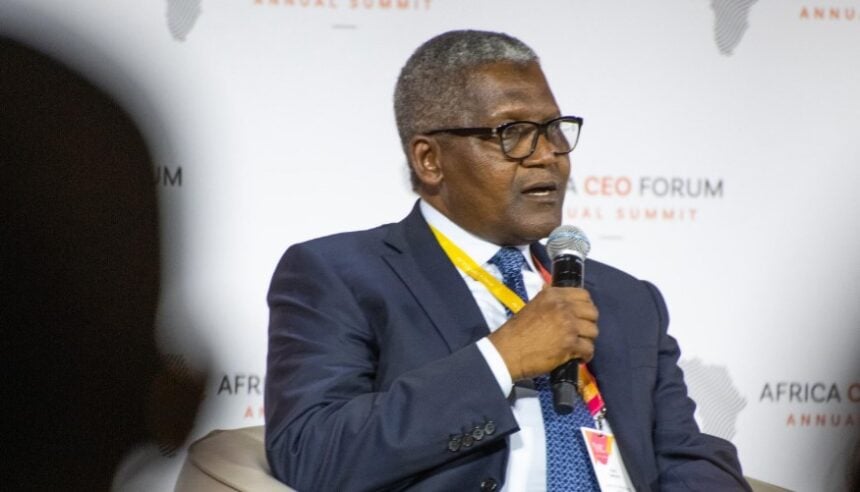
Businessman and President of Dangote Group, Aliko Dangote, has credited the Ooni of Ife, Oba Adeyeye Ogunwusi, with making the construction of his multi-billion-dollar refinery possible by intervening to remove 19 shrines from the project site.

Speaking in a video shared by The Cable via X on Friday, the billionaire industrialist revealed that construction workers were unable to proceed with the project in Ibeju-Lekki, Lagos, due to the presence of numerous shrines.

Dangote said, “I must recognise and thank the Ooni of Ife for enabling the building of our factory. What happened was that when we got there, there were over 19 shrines at the site. Nobody was able to go near there to do anything.”

The business mogul explained that the traditional ruler personally visited the site and boldly ordered the removal of all the shrines, despite the spiritual implications.

“But Ooni went there, stood there and said ‘remove all of them. Let the gods come and talk to me’. Your Royal Majesty, I want to thank you from the bottom of my heart because without that singular act of yours, I don’t think we would have been able to build the refinery,” Dangote stated.

PUNCH Online reports that the Dangote Refinery, located in the Dangote Industries Free Zone in Ibeju-Lekki, is the world’s largest single-train refinery with a capacity of 650,000 barrels per day.

The industrialist had earlier disclosed that he paid $100 million to the Lagos State Government for the massive land, but construction faced significant delays due to community issues surrounding the shrines.

See also  FG pledges support for South-South youths in agriculture

The refinery, which began operations in 2024, is expected to transform Nigeria’s petroleum sector by ending decades of fuel importation and creating thousands of jobs for Nigerians.

FOLLOW US ON:

FACEBOOK

TWITTER

PINTEREST

TIKTOK

YOUTUBE

LINKEDIN

TUMBLR

INSTAGRAM

Continue Reading
Click to comment

Leave a Reply

Your email address will not be published. Required fields are marked *

Business

CBN delists non-compliant BDCs

Published

on

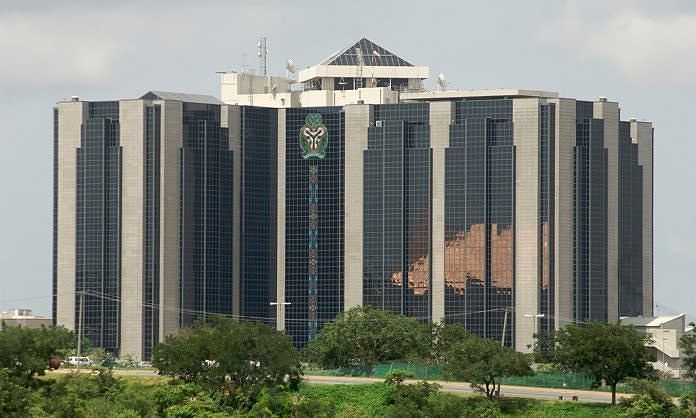
The Central Bank of Nigeria has announced that all legacy Bureau De Change operators who failed to meet its new licensing requirements by 30 November 2025 have automatically lost their licences, effectively ceasing to operate as BDCs in the country.

This was disclosed in a Frequently Asked Questions document on the current reform of the bureau de change, published on Tuesday on the CBN website.

The PUNCH reported that the CBN confirmed on Monday that only 82 Bureaux De Change have been licensed to operate, having met its new guidelines.

The development follows an extended compliance window granted by the apex bank. Under the revised BDC Guidelines, existing operators were initially given six months, from 3 June to 3 December 2024, to satisfy the new regulatory conditions. The CBN later granted an additional six-month extension, which elapsed on 3 June 2025, to allow more operators to align with the updated standards.

According to the document, the CBN has now enforced the final cutoff, declaring that any BDC that did not meet the requirements by the end of November is no longer recognised.

“The Guidelines provided a transition timeline of six months from the effective date, 3 June 2024, with a deadline of 3 December 2024, for all existing BDCs to meet the requirement of the new Guidelines or lose their licence(s). However, the management of the CBN graciously extended this deadline by another six months, which ended 3 June 2025, to give ample time for as many legacy BDCs desirous of meeting the new requirements to do so.

See also  N20,000 monthly transfers can cut poverty, says W’Bank

Consequently, any legacy BDC that failed to meet the requirements of the new Guidelines as of 30 November 2025 has ceased to be a BDC, as its licence no longer exists. Please visit the CBN website for the updated list of existing BDCs in Nigeria,” the apex bank said.

The CBN added that it would continue to receive applications on its Licensing, Approval and Requests Portal from prospective promoters, and those that meet the criteria will be considered for a licence. However, the CBN reserves the right to discontinue the licensing of BDCs at any time.

The new measures form part of broader efforts by the CBN to strengthen transparency, compliance, and stability within Nigeria’s foreign exchange market.

The new CBN regulatory framework for BDCs, introduced in February 2024, mandated BDC operators to meet higher capital requirements. Tier-1 operators are required to meet a minimum capital requirement of N2bn, while Tier-2 operators must meet N500m as MCR.

punch.ng

FOLLOW US ON:

FACEBOOK

TWITTER

PINTEREST

TIKTOK

YOUTUBE

LINKEDIN

TUMBLR

INSTAGRAM

Continue Reading

Business

NNPC sets 36-year oil production record at 355,000bpd

Published

on

The Nigerian National Petroleum Company’s upstream subsidiary, NNPC Exploration and Production Limited, has recorded its highest daily crude oil production in more than three decades, hitting 355,000 barrels per day on December 1, 2025.

The milestone, confirmed in a statement issued on Tuesday by NNPC Limited’s Chief Corporate Communications Officer, Andy Odeh, marks the company’s biggest output since 1989 and signals renewed momentum in Nigeria’s upstream recovery efforts.

According to the statement, NNPC E&P Limited’s average daily output has surged by 52 per cent in just two years, rising from 203,000 barrels per day in 2023 to 312,000 barrels per day in 2025, a performance the company attributed to strengthened operational systems, disciplined asset management and structured field development.

“On December 1st, 2025, NNPC E&P Limited, the flagship upstream subsidiary of NNPC Limited, achieved a record production level of 355,000 barrels of oil per day, its highest daily output since 1989. The milestone marks a significant step forward for Nigeria’s upstream sector and reflects the company’s ongoing transformation anchored on efficiency and discipline.

“The figures show genuine transformation: average daily production surged 52 per cent, rising from 203,000 barrels per day in 2023 to 312,000 in 2025.

“This record growth is no coincidence; it stems from a clear strategy anchored on operational excellence, strong asset management, and structured field development,” the statement said, stressing that the achievement reflects a “genuine transformation” underway within the company.

Commenting on the achievement, the Group Chief Executive Officer of NNPC Limited, Bayo Ojulari, described the accomplishment as fresh evidence that Nigeria’s energy revival “is not a dream but already happening.”

See also  FG pledges support for South-South youths in agriculture

Ojulari noted that by exceeding its own production benchmarks, NNPC E&P has demonstrated that the essential building blocks needed to scale national output are being firmly established.

“By showing its ability to exceed its own production benchmarks, NEPL confirms that the essential building blocks for scaling national output are being firmly established. The achievement signals that the machinery of production, equipment, processes, capabilities, and partnerships can be driven with commercial discipline to produce real and positive outcomes.

“The achievement converts national ambition into measurable momentum. The presidential targets of two million barrels per day by 2027 and three million by 2030 have often appeared aspirational. NEPLs’ delivery brings them closer to reality,” he added.

Ojulari said the accomplishment boosts investor confidence and reassures global partners that Nigeria remains committed to reclaiming its place as a stable, dependable crude supplier.

The Executive Vice President, Upstream, Udy Ntia, said the milestone represents more than a production figure, stressing that NEPL’s growth is anchored on responsible and sustainable operations.

“In a sector where shortcuts can yield short-term wins but long-term damage, NEPL is making a different point: sustainable progress must rest on responsible operations. This ensures that scaling production does not compromise worker safety, community wellbeing, or environmental protection. It reinforces a shift away from extraction at any cost towards sustainable value creation, a core requirement for any modern energy company seeking global relevance,” Ntia said.

According to him, the company’s approach ensures that scaling output does not undermine worker safety, environmental protection or community wellbeing.

Similarly, the Managing Director of NNPC E&P Limited, Nicolas Foucart, said the new production record reflects the broader transformation sweeping through NNPC Limited.

See also  OPay secures double honours at Tech Innovation Awards

“This is a story shaped by leadership that charts a clear course; by partnerships built on alignment and accountability; and by a workforce whose hard work is turning goals into measurable progress. Our people, our processes, and principles are the real engines behind this success. We are building for tomorrow, not just celebrating today,” Foucart noted.

He added that the gains translate into increased national revenue, stronger energy security and a more resilient economic foundation.

“For Nigerians, this accomplishment means far more than increased barrels; it translates into greater national revenue, stronger energy security, and a more resilient economic foundation. NEPL has not only produced more hydrocarbons; it has reignited belief in what Nigeria’s energy sector can achieve with the right systems, culture, and dedication.”

Nigeria’s crude oil sector has struggled over the past decade, with output frequently dropping below OPEC quotas due to pipeline vandalism, crude theft, underinvestment, deferred maintenance and declining performance of mature fields.

At several points between 2021 and 2023, the country’s production fell to multi-decade lows, raising concerns about revenue losses and the long-term viability of the industry.

Reforms under the Petroleum Industry Act, the unbundling of NNPC into a commercial entity and renewed upstream interventions have aimed to reverse the decline.

President Bola Tinubu’s administration has set ambitious production targets of two million barrels per day by 2027 and three million barrels per day by 2030, goals industry players previously considered optimistic.

NNPC E&P Limited, a wholly-owned subsidiary responsible for several joint venture and production-sharing assets, has been positioned as a critical driver of this revival. The company has implemented field optimisation strategies, renewed contractor alignment, strengthened governance structures and ramped up previously underperforming assets.

See also  Nigerians To Experience Blackout As PENGASSAN’s Strike Cripples Thermal Plants

The latest 355,000 bpd performance, the company’s highest since 1989, is a significant step toward stabilising national output and rebuilding investor confidence in Nigeria’s oil industry.

punch.ng

FOLLOW US ON:

FACEBOOK

TWITTER

PINTEREST

TIKTOK

YOUTUBE

LINKEDIN

TUMBLR

INSTAGRAM

Continue Reading

Business

NNPC / Heirs Energies ends gas flaring at OML 17, seals deals with offtakers

Published

on

The NNPC / Heirs Energies OML 17 Joint Venture on Tuesday signed Gas Flare Commercialisation Agreements under the Nigerian Gas Flare Commercialisation Programme and approved Non-NGFCP frameworks.

At the ceremony held in Lagos, the JV said the event marked a significant transition from regulatory approvals to structured commercial execution, enabling flare gas volumes across OML 17 to be captured and deployed for productive use, including power generation, industrial applications, cooking gas and compressed natural gas, in alignment with Nigeria’s gas development priorities and energy-transition objectives.

The agreements brought together Heirs Energies, as operator of the OML 17 Joint Venture, and approved flare gas offtakers under frameworks designed to eliminate routine flaring while converting previously wasted resources into economic value.

The offtakers are AUT Gas, Twems Energies, Gas & Power Infrastructure Development Limited (PCCD) and Africa Gas & Transport Company Limited.

Speaking at the ceremony, the Chief Upstream Investment Officer of NNPC Upstream Investment Management Services, Seyi Omotowa, representing NNPC Limited, described the milestone as a practical demonstration of Nigeria’s commitment to gas-based development.

“For us at NNPC Limited and NUIMS, flare gas commercialisation is not a compliance exercise; it is a strategic pathway to improving energy availability, deepening gas-based industrialisation and strengthening Nigeria’s position as a responsible energy producer. OML 17 has become a practical model of this vision, moving decisively from approval to delivery.”

He commended Heirs Energies for disciplined execution and investment, noting that the JV continues to set benchmarks for operational delivery and gas development within Nigeria’s upstream sector.

See also  FG pledges support for South-South youths in agriculture

The Nigerian Upstream Petroleum Regulatory Commission Chief Executive, Gbenga Komolafe, who was represented at the ceremony by the Senior Manager, NUPRC, Mr Ojo Olalekan, reaffirmed the commission’s commitment to supporting the implementation of flare gas commercialisation projects and ensuring that operators and offtakers are enabled to deliver bankable, environmentally responsible gas-to-market solutions in line with the Petroleum Industry Act 2021.

“This ceremony demonstrates Heirs Energies’ commitment to eliminating routine gas flaring across OML 17 and aligns fully with the commission’s Gas Flare Commercialisation Programme and national energy and emission-reduction objectives,” he said.

Heirs Energies’ Chief Executive Officer, Osa Igiehon, noted that the agreements reflect the company’s broader gas-led strategy and brownfield excellence approach, focused on creating long-term value for Nigeria.

“Gas sits at the heart of Nigeria’s development journey. Through disciplined investment, partnership with regulators and credible offtakers, and a clear execution focus, we are converting waste into value, strengthening domestic energy supply and supporting responsible operations across OML 17,” he noted.

Igiehon added that the NGFCP and Non-NGFCP flare gas projects build on recent operational progress by the OML 17 Joint Venture, including a significant increase in gas delivery to the domestic market through brownfield interventions and infrastructure optimisation.

“The JV has also continued to deepen its host-community partnerships through targeted healthcare interventions, education support and skills-development programmes across its areas of operation.

“With the symbolic signing completed, the flare gas offtakers are expected to progress into full project implementation, working closely with the JV, regulators and communities to deliver commercial, environmental and social outcomes.

See also  NAFDAC bans sachet and small-bottle alcohol in Nigeria

“The OML 17 NGFCP initiative reinforces Nigeria’s position as a gas-led economy, supporting domestic power generation, industrial growth and responsible resource development while advancing the country’s energy-transition objectives,” he stated.

punch.ng

FOLLOW US ON:

FACEBOOK

TWITTER

PINTEREST

TIKTOK

YOUTUBE

LINKEDIN

TUMBLR

INSTAGRAM

Continue Reading

Trending