Connect with us

Business

FG earmarks N1.7tn in 2026 budget for unpaid contractors

Published

on

The Federal Government has budgeted the sum of N1.7tn in the 2026 Appropriation Bill to settle outstanding debts owed to contractors for capital projects executed in 2024.

A breakdown of the proposed 2026 national budget shows that the amount is captured under the line item titled “Provision for 2024 Outstanding Contractor’s Liabilities,” signalling official recognition of delayed payments to contractors amid recent protests over delayed settlements.

This budgetary provision follows mounting pressure from indigenous contractors and civil society groups who, in 2025, raised alarm over unpaid contractual obligations allegedly exceeding N2tn.

Some groups under the All Indigenous Contractors Association of Nigeria had also staged demonstrations in Abuja, lamenting the severe impact of delayed payments on their operations, with many contractors reportedly unable to service bank loans taken to execute government projects.

Earlier, Minister of Works David Umahi had promised to clear verified arrears owed to federal contractors before the end of 2025. However, only partial payments were made amid revenue constraints, prompting the inclusion of the N1.7tn line item in the 2026 budget as a catch-up mechanism.

In addition to the N1.7tn for 2024 liabilities, the government has also budgeted N100bn for a separate line item labelled “Payment of Local Contractors’ Debts/Other Liabilities”, which may cover legacy debts from previous years, smaller contract claims, or unsettled financial commitments that were not fully verified in the current audit cycle.

The total N1.8tn allocation is part of the broader N23.2tn capital expenditure in the 2026 fiscal plan, which seeks to ramp up infrastructure delivery while cleaning up past obligations.

See also  US emerges top supplier of crude to Nigeria — Report

Nigeria’s contractor debt backlog has been a recurring fiscal issue, worsened by delayed capital releases, partial cash-backing of budgeted projects, and underperformance in revenue targets.

Speaking with journalists at the entrance of the Federal Ministry of Finance in December 2025, the National Secretary of the All Indigenous Contractors Association of Nigeria, Babatunde Seun-Oyeniyi, said the government’s failure to release funds after multiple assurances had forced contractors to resume protests. He said members of the association were owed more than N500bn for projects already completed and commissioned.

He explained that despite recent assurances from the Minister of Finance, Wale Edun, no payment had been made. “After the National Assembly intervened, they told us that they will sit the minister down over this matter.  And we immediately stopped the protest,” he said.

According to him, repeated follow-up meetings with the minister had produced no tangible progress. “They have not responded to our request,” he said. “In fact, more than six times we have come here. Last week, we were here throughout the night before the Minister of Finance came.”

Oyeniyi said that although some payment warrants had been sighted, no funds had been released. “Specifically, when we collate, they are owing more than N500bn for all indigenous contractors. We only see warrants; there is no cash back.”

He accused officials of attempting to push the payments into the next fiscal year. “The problem is that they want to put us into a backlog. They want to shift us to 2026; that 2026, they are going to pay,” he alleged. “They will turn us into debt, and we don’t want that. We won’t leave here until we are paid.”

See also  Port Harcourt Customs Record N247bn Revenue In 10 Months

However, The PUNCH observed that earlier in August 2025, the Federal Government claimed that it had cleared over N2tn in outstanding capital budget obligations from the 2024 fiscal year, with a pledge to prioritise the timely release of 2025 capital funds.

The Minister of Finance and Coordinating Minister of the Economy, Wale Edun, disclosed this at a ministerial press briefing in Abuja, where he also declared that Nigeria is “open for business” to global investors on the back of improved economic stability.

“In the last quarter, we did pay contractors over N2tn to settle outstanding capital budget obligations. That is from last year,” Edun said. “At the moment, we have no pending obligations that are not being processed and financed. And the focus will now shift to 2025 capital releases.”

By December 2025, The PUNCH reported that President Bola Tinubu expressed “grave displeasure” over the backlog of unpaid federal contractors and set up a high-level committee to resolve the bottlenecks and fund repayments.

Briefing State House correspondents after the Federal Executive Council meeting in Abuja, Special Adviser on Information and Strategy, Bayo Onanuga, said the President was “upset” after learning that about 2,000 contractors are owed. “He made it very, very clear he is not happy and wants a one-stop solution,” Onanuga told journalists.

Tinubu directed the setting up of a committee to verify all claims from federal contractors. The new budget’s provisions are expected to draw from the outcome of that verification exercise and may be disbursed in tranches based on confirmed and certified claims.

See also  After N2.83trn Loss, Analysts See Stock Market Staying Cautious This Week

The total proposed 2026 national budget stands at N58.47tn, with N23.2tn earmarked for capital expenditure, N15.9tn for debt servicing, N15.25tn for recurrent spending, and N4.09tn for statutory transfers.

punch.ng

FOLLOW US ON:

FACEBOOK

TWITTER

PINTEREST

TIKTOK

YOUTUBE

LINKEDIN

TUMBLR

INSTAGRAM

Continue Reading
Click to comment

Leave a Reply

Your email address will not be published. Required fields are marked *

Business

EFCC Begins Probe Of Ex-NMDPRA Boss After Dangote’s Petition

Published

on

The Economic and Financial Crimes Commission (EFCC) has commenced an investigation into a petition filed against the former Managing Director of the Nigerian Midstream and Downstream Petroleum Regulatory Authority (NMDPRA), Farouk Ahmed, by the President of Dangote Group, Aliko Dangote.

It was gathered that Dangote formally submitted the petition to the EFCC earlier this week through his legal representative, following the withdrawal of a similar petition from the Independent Corrupt Practices and Other Related Offences Commission (ICPC).

Dangote had initially approached the ICPC, asking it to investigate Ahmed over allegations that he spent about $5 million on his children’s secondary education in Switzerland, an expense allegedly inconsistent with his known earnings as a public officer.

Although the petition was later withdrawn, the ICPC had said it would continue with its investigation.

Confirming the new development, a senior EFCC officer at the commission’s headquarters in Abuja, who spoke on condition of anonymity because he was not authorised to speak publicly, said the petition had been received and investigations had commenced.

“They have brought the petition to us, and an investigation has commenced on it. Serious work is being done concerning it,” the source said.

In the petition signed by Dangote’s lead counsel, Dr O.J. Onoja (SAN), the businessman urged the EFCC to investigate allegations of abuse of office and corrupt enrichment against Ahmed and to prosecute him if found culpable.

The petition further stated that Dangote was ready to provide documentary and other evidence to support claims of financial misconduct and impunity against the former regulator.

See also  New tax regime: What’s true, what’s not

“We make bold to state that the commission is strategically positioned, along with sister agencies, to prosecute financial crimes and corruption-related offences, and upon establishing a prima facie case, the courts do not hesitate to punish offenders,” the petition read, citing recent court decisions.

Onoja also called on the EFCC, under the leadership of its chairman, Olanipekun Olukoyede, to thoroughly investigate the allegations and take appropriate legal action where necessary.

When contacted, the EFCC spokesperson, Dele Oyewale, declined to comment on the matter but promised to respond later. No official reaction had been received as of the time of filing this report.

FOLLOW US ON:

FACEBOOK

TWITTER

PINTEREST

TIKTOK

YOUTUBE

LINKEDIN

TUMBLR

INSTAGRAM

Continue Reading

Business

IMPORTANT NOTICE REGARDING MONEY TRANSFERS IN NIGERIA (2026)

Published

on

Starting from *January 2026*, please ensure that *any money you send* to anyone — including me — comes with a *clear description* or *payment remark*. This is *very important* for tax purposes.

Use descriptions like:

– *Gift*
– *Loan*
– *Loan Repayment*
– *House Rent*
– *School Fees*
– *Feeding*
– *Medical*
– *Support*,
– School fee etc.

*Why this matters:*

In 2026, any money entering your account *without a description* may be treated as *income*, and *IRS (or relevant tax authority)* could tax it — or even worse, ask you to explain the source.

The *first ₦800,000* may be *tax-free*, but after that, any unexplained funds might attract up to *20% tax*, or in extreme cases, lead to legal issues.

So please:

– *Always include a payment remark.*
– *Avoid using USSD or apps that don’t allow descriptions.*
– *Ask the receiver for the correct description BEFORE sending.*

As for me, *do not send me any money* without discussing it with me first.
And no, I don’t want to hear “Sir/Ma, I used USSD” – if you can’t add a description, *hold your money*.

From now on, *I will tell you exactly what to write in the payment remark.*
Let’s all form the habit of *adding payment descriptions now* to avoid problems later.

FOLLOW US ON:

FACEBOOK

TWITTER

PINTEREST

TIKTOK

YOUTUBE

LINKEDIN

TUMBLR

INSTAGRAM

See also  SEC creates insurance recapitalisation desk, pledges 14-day approval
Continue Reading

Business

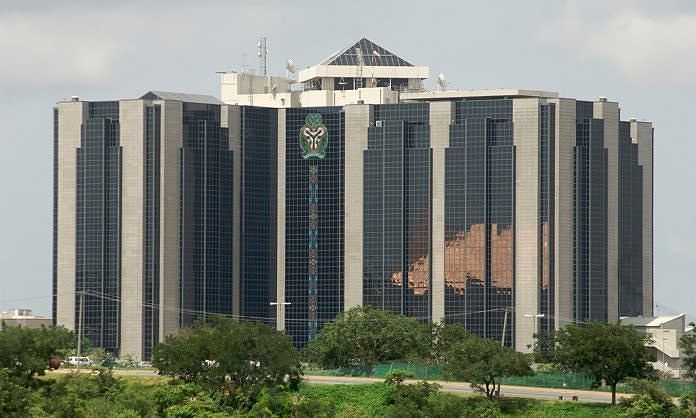
Petrol to hover around N905/litre this year – CBN

Published

on

The Central Bank of Nigeria has projected that the pump price of petrol would hover around N950 per litre in the year 2026. The CBN stated this in its 2026 Macroeconomic Outlook for Nigeria.

In its outlook for the domestic economy, the bank made what it called baseline projections predicated on assumptions like crude oil price at an average of $60 per barrel in the fourth quarter of 2025 and $55 per barrel in 2026 and the Nigerian Foreign Exchange Market exchange rate at an average of N1,451.63/$ in Q4 2025 and N1,400/$ in 2026 (supported by a more efficient foreign exchange market, higher capital inflows, a current account surplus, and a broad-based improvement in economic activity).

The CBN stated that domestic crude oil production is assumed to be at about 1.5 million barrels per day throughout the forecast period, as premium motor spirit is expected to sell around N950, an amount higher than the current pump prices.

“The baseline projections are predicated on the following assumptions: crude oil price at an average of $60/barrel in Q4 2025 and $55/barrel in 2026 (consistent with the US EIA’s outlook that rising global crude oil inventories and supply glut would moderate prices); NFEM exchange rate at an average of N1,451.63/$ in Q4 2025 and N1,400/$ in 2026 (supported by a more efficient FX market, higher capital inflows, a current account surplus, and a broad-based improvement in economic activity).

“Furthermore, domestic crude oil production is assumed at about 1.5 mbpd (excluding condensates) throughout the forecast period. PMS price is expected to hover around N950 per litre in 2026. Government expenditure is projected to follow the 2025-2027 MTEF/FSP path, reflecting an expansionary fiscal stance aimed at supporting the $1tn economy initiative. MPR and CRR are assumed at 27.00 and 45.00 per cent, respectively. The baseline projections were generally supported by the assumption of continued improvement in business optimism and stronger investor sentiment,” the CBN said.

See also  Port Harcourt Customs Record N247bn Revenue In 10 Months

The PUNCH reports that the pump price of petrol was around N900 and above before the Dangote refinery crashed gantry rates from N828 to N699/litre in December.

Following this, the refinery enforced a pump price of N739/litre through its partner, MRS Oil. As MRS filling stations started selling petrol at N739 in mid-December, other filling stations were forced to drop prices in order not to lose their customers.

Recall that the Dangote refinery has been consistent in dropping petrol prices since it commenced operations in 2024, though this always comes at a huge loss to both the refinery and fuel importers.

On Monday, the Dangote refinery warned that petrol pump prices could rise to as much as N1,400 per litre if Nigeria relies solely on fuel imports, stressing that large-scale domestic refining has become a critical stabilising force in the downstream petroleum market.

In a statement, the refinery said, “Recent price movements further highlight an uncomfortable reality. In the absence of the Dangote Petroleum Refinery, fuel importers would continue to operate without restraint, with petrol prices potentially escalating to levels estimated at up to N1,400 per litre in a post-subsidy environment. The refinery’s operations have therefore served as a critical stabilising force in the downstream petroleum market.”

In its outlook, the CBN added that gains from increased investments by the private sector, especially the Dangote refinery, are expected to further brighten the growth outlook for 2026.

It added, “Increased crude oil production, underpinned by improved security around oil assets, especially with the launch of the production monitoring command centre and expansion of domestic crude oil refining, and stable energy prices are expected to drive growth further in 2026.”

See also  After N2.83trn Loss, Analysts See Stock Market Staying Cautious This Week

However, the CBN said petrol prices would decline as a result of the competition among traders in the midstream sector. The apex bank also expressed optimism that headline inflation is projected to further decelerate to 12.94 per cent in 2026 from 21.26 per cent estimated for 2025.

“The anticipated moderation would be driven by declining food and PMS prices. The expected deceleration in PMS prices would be driven by the increasing competition within the midstream segment of the oil industry,” it was stated.

It was added that global commodity prices are expected to moderate by 5.52 per cent in 2026, influenced by weakening demand and improving supply conditions.

Similarly, CBN said global “energy prices are projected to fall by 6.99 per cent in 2026, mainly due to lower oil prices as Brent crude is expected to average approximately $61/barrel in 2026.”

Metal prices (excluding precious metals) are expected to drop by 3.29 per cent in 2026, while agricultural commodities are anticipated to fall moderately by 3.18 per cent in 2026, reflecting weak demand and easing supply pressures in key grain and food markets.

punch.ng

FOLLOW US ON:

FACEBOOK

TWITTER

PINTEREST

TIKTOK

YOUTUBE

LINKEDIN

TUMBLR

INSTAGRAM

Continue Reading

Trending