Connect with us

News

Counter-insurgency campaigns: US votes $413m for security operations in Nigeria, others

Published

on

The United States plans to spend  N587 billion ($413.046m) on counter-insurgency operations in Nigeria and other African countries in 2026 amid worsening security conditions across West Africa.

The allocation is contained in the US National Defence Authorisation Act for Fiscal Year 2026, obtained by The PUNCH on Thursday. The funds were approved under Title XLIII – Operation and Maintenance.

The security budget for the US Africa Command comes against the backdrop of the Christmas Day attacks on terrorists’ hideouts in Sokoto State by the Donald Trump administration.

On Tuesday, AFRICOM delivered a consignment of military equipment to Nigerian security agencies as part of ongoing efforts to strengthen security operations across the country.

The NDAA 2026 is a comprehensive bill that outlines defense policy priorities and authorises $901 billion in annual military spending, with a 4 per cent pay raise for troops. AFRICOM requested $413.046m and the same amount was authorised, but the Act did not provide a breakdown of how the funds would be spent.

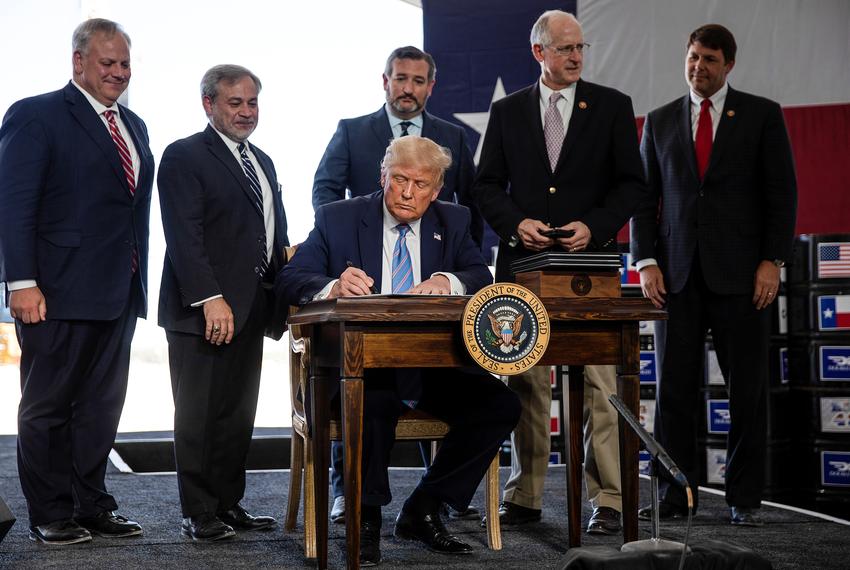
The Act was signed into law by President Trump on December 18, 2025, marking the 65th consecutive annual authorisation.

The $413m budget for security operations comes as West Africa continues to grapple with insurgency, banditry and violent extremism.

In Nigeria, insurgency in the North-East and banditry in the North-West persist, even as piracy and other maritime crimes remain concerns in the Gulf of Guinea.

Mali is under persistent attacks by jihadist groups, while northern Benin has witnessed a spillover of violence from the Sahel.

Other commands and activities listed under the operation and maintenance category of the NDAA include the United States European Command with a $385.744m budget, United States Southern Command with $224.971m, US Forces Korea with a $77.049m allocation, Cyberspace Activities (Cyberspace Operations),  $331.467m and Cyberspace Activities (Cybersecurity), $550.089m.

The subtotal for operating forces under operation and maintenance in the Act stands at $39.999b.

The Act also provides for the establishment of an Assistant Secretary for African Affairs within the US Department of State.

The office, according to the Act, will oversee matters relating to sub-Saharan Africa and coordinate the implementation of US foreign policy in the region.

In addition, the Appropriation Act establishes a Bureau of African Affairs, to be headed by the Assistant Secretary, to manage US foreign policy implementation and assistance to sub-Saharan Africa.

“(5) BUREAU OF AFRICAN AFFAIRS. (A) ESTABLISHMENT: There shall be in the Department of State a Bureau of African Affairs, which shall perform such functions related to implementation of United States foreign policy and assistance to sub-Saharan Africa as the Under Secretary for Political Affairs may prescribe.”

‘’(B) HEAD: The Assistant Secretary for African Affairs shall be the head of the Bureau of African Affairs.

‘’(9) ASSISTANT SECRETARY FOR AFRICAN AFFAIRS: (A) ESTABLISHMENT. There shall be in the Department of State an Assistant Secretary for African Affairs who shall be responsible to the Secretary of State, acting through the Under Secretary for Political Affairs, for “(i) matters relating to sub-Saharan Africa; and “(ii) such other related duties as the Secretary may from time to time designate.

“(B) Responsibilities: In addition to the responsibilities described under subparagraph (A), the Assistant Secretary for African Affairs shall maintain continuous observation and coordination of all matters pertaining to implementation of United States foreign policy in sub-Saharan Africa,” the Act partly read.

See also  Insecurity: Nigeria bleeding, confused, minority reps lament

The Act further mandates assessments of Russia’s military strategy, objectives and force posture affecting African countries.

This includes a review of Russia’s overseas military basing, logistics capabilities and infrastructure used to project power on the continent, as well as the implications for US contingency plans under AFRICOM, US Central Command and US European Command.

“An assessment of the military strategy objectives and force posture of Russia that affect countries in Africa;  A description of Russia’s overseas military basing, military logistics capabilities, and infrastructure to project power.

“An analysis of the impact of such an action on the ability of the Armed Forces to execute contingency plans of the Department of Defence, including those in the area of responsibility of United States European Command or in support of operations and crisis response in the areas of responsibility of United States Central Command and United States Africa Command.’’

“The reduction of the risk of executing contingency plans of the Department of Defence, including contingency plans conducted by United States Central Command and United States Africa Command,” the Act stated.

Commenting on the development, a security analyst and Chief Executive Officer of Beacon Consulting, Kabir Adamu, said the funding and policy moves reflected growing geopolitical rivalry in Africa, driven largely by economic interests.

Adamu said Africa, particularly West Africa and the Sahel, had become a strategic arena due to insecurity, weak state control and the presence of critical resources.

According to him, Russia and China have expanded their influence across Africa through military cooperation and economic engagement, forcing the United States to reassess its posture on the continent.

‘’First, if you look at the Monroe Doctrine, the US area of influence is its immediate neighbourhood, particularly South America and related regions.

“That is why it moved against Venezuela and also issued threats to Cuba. The other aspect relevant to this discussion is the geopolitical rivalry between the US and Russia.

“In almost all locations where the US has economic interests, Russia and China are already ahead of it. The same applies to Africa. What the US is now trying to do is to catch up.’’

“Russia and China have, in practical terms, taken over much of Africa through their economic interests. In China’s case, it uses loans and other forms of financial assistance to keep Africa within its sphere of influence. The challenge for the US is how to come in and catch up, and it is unlikely that Russia and China will remain passive while the US attempts to do so.’’

The counter-intelligence and security risk consultant predicted intense rivalry among the US, China and Russia.

“We are, therefore, going to see an intense period of geopolitical rivalry among these three countries. We do not yet know where the United States intends to establish this bureau. If I were to hazard a guess, Nigeria is a likely option, given the renewed US interest in the country.

See also  Gombe Commissioner seeks protection of northern water resources

“Nigeria offers strategic advantages for the United States. Beyond its resources, Nigeria allows the US to monitor neighbouring countries, particularly Sahelian states such as Niger, especially because of uranium deposits there. Not long ago, the US had to leave Niger.

“If the US can establish a presence in Nigeria, it would still be able to keep an eye on developments in the Sahel. If not Nigeria, other possible locations are in East Africa. Congo is an example, especially given recent efforts to negotiate a peace agreement there.’’

He added, “Overall, until we know the exact location where the bureau will be established, it will be difficult to draw firm conclusions about the nature of the geopolitical rivalry that will emerge. However, wherever the US chooses to engage in Africa, China and Russia are already ahead in terms of economic interests.

“As stated in the budget, the US will also attempt to assess Russia’s current involvement. Part of that assessment will likely be to develop its own strategy to gain advantages.

“This can force countries to capitulate, but it may also trigger local pushback, and these are issues we should be watching closely. My view is that the primary interest is economic, not military.

“The rivalry is driven by economic interests, particularly access to rare earth minerals such as lithium. There may be other narratives, including claims about stopping Christian genocide in Nigeria, but the Nigerian government has been clear that such a narrative is false and that there is no Christian genocide.

“If you analyse what happened on December 25, the attacks occurred in locations without significant Christian populations. If the aim were to protect Christians, one would expect action in places like Plateau State or Benue State. In fact, officials in Benue have said that after the Sokoto attack, bandits began moving into the state as a result.

“So, the notion of intervention to end Christian genocide is flawed. The interest is economic. One key issue journalists and the National Assembly must raise when it resumes is the nature of any agreement entered into with the American government. Nigerians deserve to know the contents of such agreements.

“We need clarity. If the agreement is economic, it should be made public. If it is military, it should also be made public. “

Adamu, however, stressed that the rivalry was largely economic, noting that access to critical minerals and long-term influence, rather than direct military confrontation, remained the primary drivers of engagement by global powers in Africa.

He said, “Finally, Nigeria’s foreign policy is based on strategic autonomy. This means Nigeria keeps itself open to relations with any country that offers strategic advantages. Given the current global order and recent US policies, we should expect a rise in what I would describe as multilateral diplomacy.

“This will involve different approaches by the three global powers across different continents. The US will act as it does in its backyard and in Europe, but Russia and China will not remain silent. We are likely to see a complex geopolitical rivalry among these powers, including in Africa.”

Security analyst Chidi Omeje pointed out that the evolving relationship between Nigeria and the US should be viewed strictly through the lens of partnership and collaboration, rather than dominance or repression.

See also  See how a Nigerian man hacked US varsity, stole $235,000

Omeje said the current engagements with the US, including through AFRICOM, reflect mutual respect and dignity, noting that this aligns with Nigeria’s long-standing demand to be treated as an equal partner in addressing security challenges.

According to him, many of Nigeria’s security threats are linked to global terrorist networks, stressing that groups operating in the Sahel and Lake Chad regions are not purely local, but part of wider international movements.

He argued that such transnational threats require international cooperation, making partnerships with global powers necessary.

“The key issue here now is that we are now on the level of partnership, not on invasion or any kind of dominance, so we are talking about partnership. The other day, AFRICOM sent some materials to the Nigerian armed forces. This is about partnership and no longer the issue of threats or repression or display of supremacy and the like, so whatever we are doing with them that is based on respect and dignity and partnership is always welcome.

“The issues we are dealing with are actually problems associated with the global terrorist network, and if it is a global terrorist network, partnership and collaboration are welcome.”

Omeje expressed reservations about Russia’s growing security engagements in Africa, saying Moscow lacks the reach and capacity to effectively address Nigeria’s security challenges, given its ongoing war in Ukraine.

Army-US cooperation

In a related development, the Chief of Army Staff, Lt. Gen. Waidi Shaibu, has called for deeper strategic cooperation between the Nigerian Army and the United States Army to effectively address Nigeria’s evolving and complex security challenges.

The COAS stated this on Wednesday when the US Defense Attaché to Nigeria, Lt. Col.  Semira Moore, paid him a courtesy visit at the Army Headquarters in Abuja.

Shaibu commended the United States Government for its enduring partnership and sustained support to the Nigerian Army, noting that the NA has benefitted significantly from American military professionalism and institutional expertise.

The COAS stressed that the Nigerian Army remains eager to leverage the extensive experience of the US Army in both kinetic and non-kinetic operations.

He, therefore, advocated the expansion of cooperation in areas aimed at enhancing operational effectiveness, institutional capacity, doctrine development, and strategic capability.

According to him, international military partnerships remain critical in complementing Nigeria’s internal security architecture and advancing sustainable peace and stability across the country.

Moore expressed appreciation for the cordial and mutually beneficial relationship between the two armies. She reaffirmed her commitment to strengthening existing ties while exploring new areas of collaboration, particularly in capacity building, intelligence sharing, and joint operational planning.

The Defense Attaché also disclosed that the United States remains committed to supporting the Nigerian Army in key non-kinetic areas, including humanitarian assistance and troop welfare initiatives, which she noted are essential for sustaining morale and operational effectiveness in the field.

punch.ng

FOLLOW US ON:

FACEBOOK

TWITTER

PINTEREST

TIKTOK

YOUTUBE

LINKEDIN

TUMBLR

INSTAGRAM

Continue Reading
Click to comment

Leave a Reply

Your email address will not be published. Required fields are marked *

News

Police comb forest after terrorists abduct NECO students in Borno

Published

on

The Borno State Police Command has deployed security operatives to Lassa community in Askira/Uba Local Government Area following the abduction of an unspecified number of students writing the National Examinations Council examinations by suspected terrorists.

PUNCH Online had earlier reported that the attackers stormed the school at about 9 a.m. on Monday, shooting sporadically before abducting students and women selling food items within the school premises.

Confirming the deployment to PUNCH Online, the spokesperson for the Borno State Police Command, Nahum Daso, said security operatives confronted the attackers, preventing a larger-scale abduction.

“Around 9 a.m. in the morning, ISWAP attacked Lassa Day Secondary School. They shot sporadically. An unspecified number of students have been abducted.

“Security forces confronted them. For now, we have an unspecified number of students who were abducted. The CP deployed the Area Commander in Askira/Uba. They are currently combing the bush,” Daso said.

The Special Adviser to Adamawa State Governor, Ahmadu Fintiri, on Media and Strategy, Mr Solomon Kwamagar, a resident of Lassa, also confirmed the incident to PUNCH Online on Monday morning.

He disclosed that the attackers arrived on motorcycles and invaded the school.

“Today is Lassa market day. I was informed that they came through the market on motorcycles and went to Government Day Secondary School, Lassa. They shot and killed one teacher and took away all the students who were in their classrooms,” he said.

Kwamagar added, “Lassa in Borno State is predominantly inhabited by my people, the Margi. We are in both Adamawa and Borno states. I am from Lassa, but I chose to reside in Madagali Local Government Area of Adamawa State.”

See also  El-Rufai: DSS detains five over airport incident, N1bn suit hangs

He further said, “I’m still making contacts to ascertain the total number of students and teachers who were kidnapped from the school.”

Earlier, the President of the Borno South Youth Alliance, Samaila Kaigama, told PUNCH Online that the attackers wore military and forest guard uniforms.

“Yes. There was an attack on students writing NECO exams. The terrorists came around past nine. They passed the military checkpoint. They wore military and forest guard attire. They shot sporadically,” he said.

Kaigama said one teacher was killed while another sustained gunshot injuries.

“They killed one teacher from Chibok. They shot another, but not dead yet. They also kidnapped some students and women selling on the school premises. The numbers are not yet out,” he said.

When contacted, the Chairman of Askira/Uba Local Government Area, Mada Saidu, declined to comment.

“I am very busy now. We are in a situation,” he said.

Efforts to obtain comments from the state Commissioner for Information and Internal Security, Usman Tar, were unsuccessful as he neither answered calls nor responded to messages.

However, residents who spoke to PUNCH Online claimed that two teachers and one student were killed during the attack.

“They killed two teachers and one female student. The student was shot in her mouth,” a resident who requested anonymity said.

On May 16, PUNCH Online reported that 42 students and pupils were abducted after suspected Boko Haram terrorists attacked Mussa Primary and Junior Secondary School in Askira/Uba Local Government Area.

The senator representing Borno South, Ali Ndume, had said the abductees comprised four students of Government Day Secondary School, 28 primary school pupils and 10 children abducted from their homes.

See also  Conference committee must retain electronic transmission – Dickson

punch.ng

FOLLOW US ON:

FACEBOOK

TWITTER

PINTEREST

TIKTOK

YOUTUBE

LINKEDIN

Continue Reading

News

NASS sends state police bill to 36 states’ assemblies

Published

on

The National Assembly is set to transmit the Constitution Alteration Bill seeking the establishment of state police to the 36 state Houses of Assembly this week, marking the next critical stage of one of Nigeria’s most far-reaching security reforms.

The development comes days after the Senate passed the landmark constitutional amendment, with lawmakers now racing to secure the approval of at least 24 state legislatures before the bill can be transmitted to President Bola Tinubu for assent.

Chairman of the Senate Committee on Media and Publicity, Yemi Adaramodu, disclosed the development in an exclusive interview with The PUNCH on Sunday, saying all the necessary arrangements had been concluded for the transmission.

According to him, the state legislatures and governors were already awaiting the bill following consultations held ahead of its passage by the National Assembly.

“The bill for the creation of state police will get to the states this week. The states’ speakers have met and are awaiting the bill from the National Assembly.

“The state governors are expecting it too, even with their presence in the Senate chamber when the bill was being considered and passed,” Adaramodu said.

The planned transmission signals the beginning of the final constitutional hurdle for the proposed amendment, which requires endorsement by not less than two-thirds of the 36 state Houses of Assembly in line with Section 9 of the 1999 Constitution before it can become law.

Momentum has continued to build behind the proposal since the Senate approved the amendment after a clause-by-clause consideration of the report presented by the Senate Committee on the Review of the Constitution, chaired by Deputy Senate President Barau Jibrin.

The legislation seeks to establish a dual policing structure that will empower state governments to establish and maintain police services within their jurisdictions while preserving the constitutional responsibilities of the Nigeria Police Force over national security matters such as terrorism, border security, cybercrime, arms trafficking and other federal offences.

To address longstanding concerns over possible abuse by state governments, lawmakers incorporated several safeguards into the bill, including provisions prohibiting state police authorities from targeting individuals or groups for criticising governments and empowering the Federal Government to intervene in cases involving threats to national security, breakdown of public order or violations of fundamental human rights.

See also  See how a Nigerian man hacked US varsity, stole $235,000

The proposed reform has received unprecedented backing from governors, speakers of state legislatures and major political stakeholders across the country.

The Conference of Speakers of State Legislatures in Nigeria had earlier endorsed the bill, with its Chairman and Speaker of the Delta State House of Assembly, Emomotimi Guwor, assuring Nigerians that all state houses of assembly would give the proposal diligent consideration.

Several governors have also welcomed the amendment, describing it as a timely response to worsening insecurity across the federation.

Among them, Benue State Governor, Hyacinth Alia, described the Senate’s passage of the bill as a landmark step towards strengthening Nigeria’s security architecture, arguing that state police would possess a better understanding of local terrain and community dynamics, thereby improving intelligence gathering and response to criminal activities.

Similarly, the Forum of Progressive Speakers of State Legislatures under the All Progressives Congress pledged to facilitate speedy ratification in APC-controlled houses of assembly while promising robust oversight mechanisms to ensure professionalism and respect for human rights.

The Labour Party also threw its weight behind the proposal, describing the Senate’s action as a significant milestone in the quest to strengthen internal security through community-based policing.

Though it acknowledged concerns over possible abuse by governors, the party expressed confidence in the constitutional safeguards embedded in the amendment.

The proposal also attracted opposition from the Peoples Redemption Party, which questioned the timing of the initiative and urged Nigerians to reject it, arguing that the current administration lacks the credibility to oversee such a fundamental restructuring of the country’s policing system.

Despite the reservations expressed by critics, the planned transmission of the bill to the states this week is expected to trigger deliberations across the 36 Houses of Assembly, where lawmakers will conduct public hearings, stakeholder engagements and legislative scrutiny before voting on the constitutional amendment.

If at least 24 state assemblies endorse the proposal, it will pave the way for President Bola Tinubu’s assent, potentially ending decades of debate over the decentralisation of policing and ushering in what many stakeholders believe could be the most significant reform of Nigeria’s internal security architecture since the return to democratic rule in 1999.

See also  Ebola alert - FG tightens airport, border screening

Meanwhile, the Senate on Sunday defended the passage of the state police bill, insisting that its passage, which 84 senators supported, is a response to Nigeria’s worsening security challenges.

The upper chamber said the bill emerged from years of consultations, public engagements, and broad national consensus, stressing that it would be wrong to delay the proposal for political calculations ahead of the 2027 general election.

The position comes amid growing debate over the constitutional amendment bill, with supporters arguing that decentralising policing will improve security at the grassroots, while critics fear that state police could be abused by governors to intimidate political opponents.

Defending the Senate’s decision in a statement issued by his media office on Sunday, the Leader of the Senate, Opeyemi Bamidele, said the proposal was “purely a child of necessity and not of political expediency as well as a product of national consensus and not of cynicism.”

He maintained that the establishment of state police had become a matter of urgent national importance that should not be sacrificed because of anyone’s political ambition.

According to him, the process leading to the passage of the bill did not begin recently but evolved through extensive constitutional review engagements involving key stakeholders across the country.

Despite some dissenting views, Bamidele said observations had shown that Nigerians largely welcomed the passage of the bill with the belief that it would significantly improve security at the sub-national level.

He said, “The state police proposal was part of memoranda submitted to the Senate Ad hoc Committee on the Review of the 1999 Constitution. The memorandum had been subjected to a rigorous process and multi-tiered consultation across the federation due to its sensitive nature.

“During this process, the National Assembly broadly consulted the executive, the Nigeria Governors’ Forum, the Conference of Speakers of the State Legislatures of Nigeria and the leadership of the Nigeria Police, among others.

“In July 2025, the National Assembly conducted public hearings in all geopolitical zones, and the participants overwhelmingly approved it.

“At each level of our consultation, nearly all stakeholders embraced the State Police Bill in the light of stark realities we are facing today.”

The Senate Leader said the Nigerian Police actively contributed to the drafting of the constitutional amendment by offering recommendations that helped lawmakers build safeguards against potential abuse of state police by political actors.

See also  Reps slam poor funding of Auditor-General’s office

According to him, those recommendations formed part of accountability and oversight mechanisms embedded in the legislation to ensure that state police operate within constitutional limits.

He added that the willingness of the Nigerian Police to support the proposal underscored its strategic importance in addressing insecurity at the local and state levels.

Beyond the contributions of the police hierarchy, Bamidele said the bill was subjected to extensive debates in both chambers of the National Assembly before its eventual passage.

He noted that support for the legislation cut across party lines.

He said: “Even though the APC is the majority, there are members of opposition parties – PDP, ADC, NDC and Labour Party – that exercised their discretion in favour of the Bill, mainly in the national interest and not on a parochial basis.

“In the Senate, for instance, 84 out of 109 members voted clause by clause in support of the Bill. This accounted for 77.06 per cent approval at the Senate alone.”

Bamidele argued that security should transcend political affiliations, noting that countries facing security threats often unite behind reforms aimed at strengthening national safety.

Globally, he said, security “is a collective public good that benefits citizenry across ethnic, political and religious divides.

“Political actors elsewhere always throw off their togas of partisanship and parochialism to support initiatives that will boost and reinforce national security.”

He, therefore, urged opposition parties to contribute constructive ideas that would strengthen peace and stability across the federation rather than oppose initiatives solely on political grounds.

Bamidele also challenged opposition parties and leaders to come forward with ideas that would deepen the peace and stability of the federation.

“Even when they disagree on some grounds, they are under obligations to provide credible and useful ideas that can make our nation better and greater. Unfortunately, they have not passed this critical test of opposition democracy,” Bamidele said.

punch.ng

FOLLOW US ON:
FACEBOOK

TWITTER

PINTEREST

TIKTOK

YOUTUBE

LINKEDIN

Continue Reading

News

Chaos as flooding shuts Lagos airport temporary terminal

Published

on

There was chaos at the temporary terminal of the Murtala Muhammed International Airport, Lagos, on Sunday after heavy rainfall caused severe flooding at the facility.

The departure hall, boarding gates, airline temporary offices, and other sections of the makeshift terminal were submerged. The situation forced the Federal Airports Authority of Nigeria to shut the terminal abruptly, as airlines operating from the facility could no longer process passengers.

As a result of the flooding, airlines, including Air France-KLM, Ethiopian Airlines, and Fly Gabon, were relocated from the terminal. According to officials, the terminal’s powerhouse was also flooded, forcing the authorities to switch off electricity.

Consequently, all airlines operating from the facility were moved to Terminal Two of the MMIA. FAAN officials alleged that the flooding was caused by blocked drainage channels, which they attributed to the Chinese company currently reconstructing the old international terminal.The incident came just months after FAAN shut the old MMIA terminal for a major reconstruction project estimated to cost more than N600bn. A few months ago, a fire also broke out at the old terminal, damaging parts of the facility.

Sources said the ongoing reconstruction of the old terminal by the Chinese contractor has caused several disruptions at the airport.

Reacting to Sunday’s flooding, FAAN spokesperson Henry Agbebire confirmed the incident, attributing it to the ongoing construction work at the airport.

According to Agbebire, the construction temporarily affected the drainage system, resulting in flooding. He said, “It was the construction works that affected the drainage. And for operational reasons, we have moved airlines operating from that terminal to Terminal 2, and the development has not really affected their operations.

See also  UN urges stronger action to end violence against women, girls

“There were no cancellations at all. We have taken immediate action to fix that problem to the extent that it doesn’t happen again. You can rest assured of that.”

punch.ng

FOLLOW US ON:
FACEBOOK

TWITTER

PINTEREST

TIKTOK

YOUTUBE

LINKEDIN

Continue Reading

Trending