Connect with us

News

FG prioritises infrastructure in N87.31bn aviation budget

Published

on

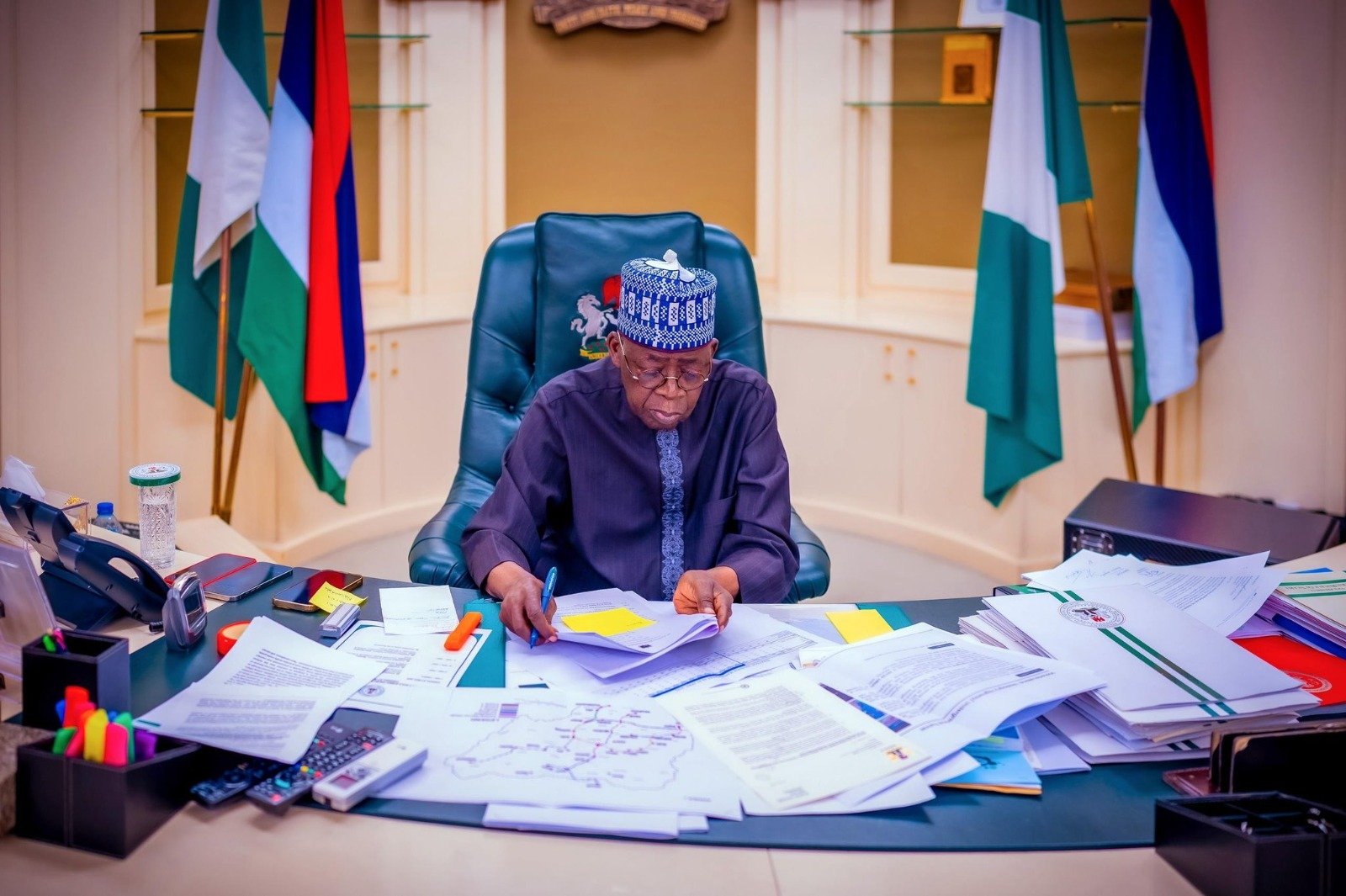
The Federal Government has proposed a total allocation of N87.31bn for the Ministry of Aviation and Aerospace Development and its agencies in the 2026 Appropriation Bill, with the bulk of the funding directed towards capital expenditure.

Details of the budget proposal show that N70.19bn, representing more than 80 per cent of the total allocation, is earmarked for capital projects. At the same time, N14.78bn is set aside for personnel costs and N2.34bn for overheads.

The document contained no provisions for retained independent revenue or aid and grant funding.

The Federal Ministry of Aviation and Aerospace Development received the highest allocation of N50.65bn, with N48.55bn for capital projects. Personnel and overhead costs were budgeted at N1.35bn and N745.74 million, respectively.

The Nigerian Meteorological Agency was allocated N11.84bn, with personnel costs accounting for N9.15bn, overheads N393.73m, and capital expenditure N2.29bn, highlighting the agency’s labour-intensive operations.

Similarly, the Nigerian College of Aviation Technology, Zaria, is to receive N11.28bn, comprising N4.28bn for personnel, N464.44m for overheads, and N6.54bn for capital projects.

The Nigeria Airspace Management Agency was allocated N6.3bn, entirely for capital expenditure, with no provision for personnel or overhead costs in the budget breakdown.

Also, the Nigerian Safety Investigation Bureau is expected to receive N7.24bn, with N734.09m for overheads and N6.51bn for capital projects, again with no allocation for personnel costs.

The strong tilt towards capital spending aligns with the position of the Minister of Aviation and Aerospace Development, Festus Keyamo, who has consistently argued that infrastructure renewal remains critical to improving safety, efficiency and service delivery in the aviation sector.

See also  War: Federal govt begins evacuation of Nigerians from Iran

On 22 January 2025, the ministry formally presented its 2025 budget to the Joint National Assembly Committee on Aviation and Aviation Technology at the National Assembly Complex. During the presentation, Keyamo emphasised the ministry’s commitment to transparency and accountability in the management of public resources.

He provided a breakdown of the ministry’s 2024 budget performance, noting that capital appropriation achieved a utilisation rate of 30.9 per cent, personnel costs were fully utilised at 100 per cent, while overhead expenditure recorded a near-complete utilisation rate of 99.97 per cent.

The minister told lawmakers that the proposed 2025 budget of N71.12bn for the ministry reflects its strategic priorities in advancing the aviation and aerospace sectors. The proposal comprised N69.22bn for capital expenditure, N1.16bn for personnel costs and N745.74m for overheads.

According to Keyamo, the capital-heavy structure of the budget is designed to support infrastructure upgrades, enhance service delivery and strengthen safety oversight across the sector.

Continue Reading
Click to comment

Leave a Reply

Your email address will not be published. Required fields are marked *

News

Ex-military chief gives reasons bandits kidnap people

Published

on

Former Field Commander of Operation Safe Haven, OPSH, Maj. Gen. Anthony Atolagbe, rtd, says bandits kidnap people to use them as human shields from the military.

General Atolagbe made this revelation on Tuesday when he featured in an interview on Arise Television’s ‘Prime Time’.

He was speaking about the rising insecurity confronting the country.

“The bandits have a pattern of taking people into their enclave, just to use them as sex slaves, but also as shields for negotiation.

“What I can say also is that I will not be able to dwell on specifics. But in Sambisa, some abducted people were freed. In fact, the first thing that happened was that over 100 of them escaped, based on the heat that was brought on the adversary.

“Now, what is playing out is that these guys are being dislodged, and when they are dislodged, and they lose contact with all these women and these men that are running, who are sex slaves and liberals for them within the theater or wherever they are in their enclaves, what happens is that they try to move to other locations where they think they will be safe.

“And the next thing is to start looking for who they can also grab and bring into their new locations.

“The other side is that it is also another strategy by those that are expecting the arrival of the military that are coming into their enclaves to come and chase them out by using some of these people as human shields when the military approach their location.

See also  Tinubu nominates Bernard Doro as minister

“So you see that the analysis has brought it out that they have a pattern that they always want to take people into their enclave, not just to use them as slaves or whatever, but they will also want to use them to negotiate,” the retired military officer said.

FOLLOW US ON:

FACEBOOK

TWITTER

PINTEREST

TIKTOK

YOUTUBE

LINKEDIN

TUMBLR

INSTAGRAM

Continue Reading

News

War: Federal govt begins evacuation of Nigerians from Iran

Published

on

The Federal Government has commenced the evacuation of Nigerians who wish to leave Iran, escorting them across the Armenian border to ensure their safety as tension continues to escalate in the Middle East.

The development was disclosed on Tuesday by the Chairman and Chief Executive Officer of the Nigerians in Diaspora Commission (NiDCOM), Abike Dabiri-Erewa, in a post shared on her X handle.

According to her, officials of the Nigerian Embassy in Tehran are coordinating the evacuation process and assisting Nigerians willing to depart the country.

The evacuees are being escorted to the Armenian border where arrangements have been made to facilitate their safe passage.

The evacuation comes amid growing concerns over the security situation in the region following a series of coordinated military strikes on Iran by the United States and Israel on February 28.

The strikes reportedly triggered retaliatory missile and drone attacks across parts of the Middle East, raising fears of a broader regional conflict.

Despite the rising tension, Dabiri-Erewa reassured that no Nigerian in Iran has been affected by the ongoing hostilities.

She also noted that embassy officials remain stationed at the border to receive and assist Nigerians who decide to leave the country.

“Willing Nigerians being escorted across the Armenian border by officials of the Nigerian embassy in Iran for safe passage. No Nigerian in Iran has been affected by the war as officials remain at the border to receive all who want to leave,” she wrote.

This comes due to the ongoing military strikes between U.S, Israel and Iran.

See also  APC seeks cancellation of Kano by-elections over violence

FOLLOW US ON:

FACEBOOK

TWITTER

PINTEREST

TIKTOK

YOUTUBE

LINKEDIN

TUMBLR

INSTAGRAM

Continue Reading

News

Insurgency: FG knows every terrorist by name, says Gumi

Published

on

Kaduna-based Islamic scholar Sheikh Abubakar Gumi has stirred debate by claiming that the Nigerian government already knows the identities and hideouts of terrorists across the country. Speaking in a recent DRTV interview, he said his interactions with armed groups are coordinated closely with security agencies.

Gumi addressed rumours that he negotiates with bandits on his own, stressing the involvement of police, military, and other officials. “The government knows every terrorist by name and by location. I don’t go alone to negotiate I go with the police, military, and other security agencies,” he said.

The cleric revealed that some of his efforts take him deep into forests and remote communities, sometimes even accompanied by local women. “I would go to the Emirs. In fact, when we went to one forest, I even went with women into the bush,” he added.

Gumi has long advocated dialogue as a tool to reduce violence, often sparking controversy for interacting with groups considered enemies of the state. He argued that these efforts complement security operations rather than replace them, highlighting the importance of negotiation alongside law enforcement.

Observers note that Gumi’s approach underscores the complexity of addressing Nigeria’s insecurity, where military action alone may not suffice. His collaboration with traditional leaders and security agencies demonstrates a hybrid strategy aimed at curbing violence and encouraging disarmament.

Despite these efforts, insecurity remains high in several northern states, prompting debate on whether dialogue initiatives have tangible results. Critics argue that without accountability and transparency, negotiations could inadvertently legitimise armed groups.

See also  Dangote refinery, engineers on warpath over fresh redeployment

Gumi’s statements have reignited national conversations on counterterrorism strategies, with many Nigerians discussing the balance between dialogue, intelligence gathering, and military action. His insights suggest that tackling terrorism in Nigeria may require innovative approaches that merge community engagement with formal security measures.

thesun.ng

FOLLOW US ON:

FACEBOOK

TWITTER

PINTEREST

TIKTOK

YOUTUBE

LINKEDIN

TUMBLR

INSTAGRAM

Continue Reading

Trending