Connect with us

News

Affordable housing key to police welfare, says IG

Published

on

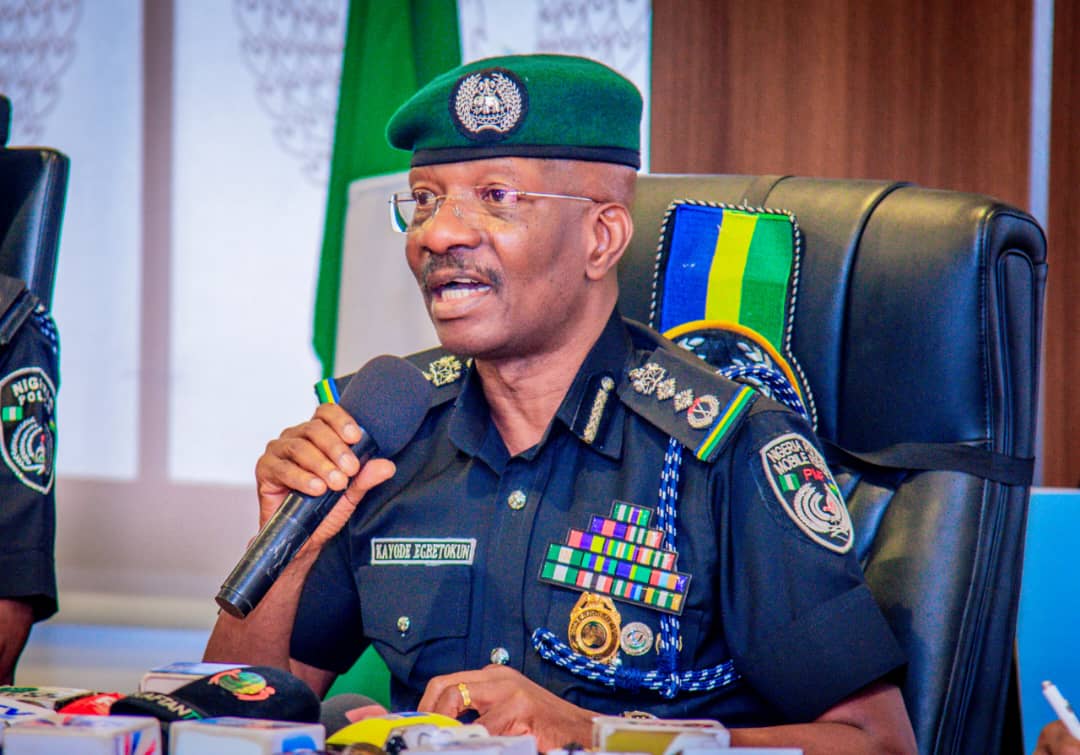
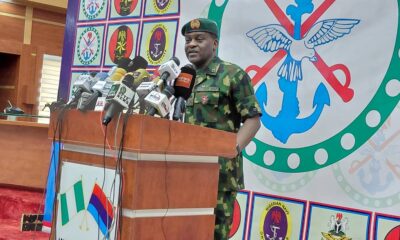
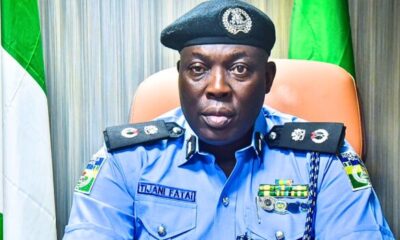
The Inspector-General of Police, Kayode Egbetokun, has said that access to affordable housing is critical to improving the welfare, morale and productivity of officers of the Nigeria Police Force.

According to the IGP, providing sustainable and affordable housing for police personnel remains a priority under his leadership, noting that officers who are assured of decent living conditions are better motivated to carry out their constitutional duties.

A statement released on Wednesday by the Force Spokesman, Benjamin Hundeyin, said Egbetokun stated this on Tuesday while receiving the Managing Director of the Federal Mortgage Bank of Nigeria, Shehu Osidi, and his management team during a courtesy visit to the Force Headquarters in Abuja.

He described the visit as timely, stressing that stronger institutional partnerships between the Police Force and key housing agencies such as FMBN are essential to achieving long-term welfare goals for serving officers and retirees.

“IGP Egbetokun welcomed the FMBN leadership, describing the visit as timely and a significant step toward elevating the partnership between both organisations. He noted that such institutional alliances are vital to achieving the Force’s objective of providing sustainable housing solutions for its workforce.

IGP Egbetokun further reaffirmed that the welfare of all police personnel remains a top priority under his leadership. He stressed that providing affordable housing is essential to boosting the morale of officers who continually put their lives on the line in the service of the nation.

“The Nigeria Police Force remains committed to fostering strategic partnerships that ensure the dignity and well-being of its officers, both during and after their dedicated service to the country, ” the statement partly read.

See also  PHOTOS: Veteran Bollywood actor Dharmendra passes away at 89

Earlier, the Managing Director of FMBN, Osidi, commended the Nigeria Police Force for its cooperation, describing it as one of the Bank’s most strategic institutional partners.

He called for deeper collaboration to ensure that police personnel can access mortgage and housing benefits without administrative bottlenecks or disputes.

Osidi also reaffirmed the Bank’s commitment to expanding housing access for police officers through tailored mortgage products and improved service delivery.

The welfare of police personnel, particularly access to affordable housing, has remained a longstanding challenge within the Nigeria Police Force, with many officers relying on rented accommodation throughout their service years.

In recent years, the Force has intensified efforts to improve staff welfare through partnerships with key institutions, including the Federal Mortgage Bank of Nigeria, to expand access to mortgage financing and home ownership.

Continue Reading
Click to comment

Leave a Reply

Your email address will not be published. Required fields are marked *

News

US allies gather as Trump kicks off Board of Peace

Published

on

MUS President Donald Trump on Thursday gathers allies to inaugurate the “Board of Peace,” his new institution focused on progress on Gaza but whose ambitions reach much further.

Around two dozen world leaders or other senior officials have come to Washington for the meeting — including several of Trump’s authoritarian-leaning friends and virtually none of the European democrats that traditionally sign on to US initiatives.

The “Board of Peace” came together after the Trump administration, teaming up with Qatar and Egypt, negotiated a ceasefire in October to halt two years of devastating war in Gaza.

The United States says that the plan has now entered its second phase with a focus on disarming Hamas — the Palestinian militant group whose unprecedented October 7, 2023, attack on Israel triggered the massive offensive.

Gaza’s health ministry, which operates under Hamas authorities, says at least 601 people have been killed by Israeli forces since the truce began.

At the “Board of Peace” meeting, Trump is expected to detail pledges of more than $5 billion for Gaza, where the vast majority of buildings lie in rubble and the property-mogul-turned-president has improbably suggested developing resorts.

The meeting will also look at how to launch the International Stabilization Force that will ensure security in Gaza.

A key player will be Indonesia, the largest Muslim-majority country, which has said it is ready to send up to 8,000 troops to Gaza if the force is confirmed.

Indonesian President Prabowo Subianto will take part in the inaugural meeting in Gaza, after joining the launch event at the World Economic Forum in Davos, Switzerland, last month.

See also  DAWN, SWDC partner to boost South West development

– Progress on Gaza? –

US officials including Steve Witkoff, Trump’s friend and roving negotiator, have insisted that solid progress is being made and that Hamas is feeling pressure to give up weapons.

Israel has suggested sweeping restrictions including seizing small personal rifles from Hamas.

“The heavy weapon, the one that does the most damage, is called an AK-47,” Israeli Prime Minister Benjamin Netanyahu said recently.

“That’s the main weapon, and that has to go,” said Netanyahu, whose government will be represented by the foreign minister.

Jeremy Issacharoff, a strategic affairs expert at Israel’s Reichman University, acknowledged that disarming Hamas would not be a “simple task” but said that for Israel, a credible pathway would be key to determining “whether this exercise can get off the ground.”

In one step towards a new Gaza, a technocratic committee was formed last month to handle day-to-day governance of Gaza headed by engineer and former official Ali Shaath.

Hamas spokesman Hazem Qassem told AFP that the “Board of Peace” should compel Israel to “stop its violations in Gaza” and to lift its long siege of the territory.

– ‘Ambition and narcissism’ –

The meeting will take place in the building of the US Institute of Peace, a longstanding institution that studied conflict resolution whose staff was fired by Trump, whose name was then chiseled on the entrance.

Under terms laid out by the White House, Trump will wield veto power over the “Board of Peace” and can remain its head even after leaving office, and countries that want to stay on permanently rather than enjoy a two-year stint will need to pay $1 billion.

See also  Satguru Maharaj Ji promises to help free Nnamdi Kanu if Biafra can do the following...

US officials say Thursday’s meeting is about Gaza but have also spoken of the “Board of Peace” in broader, amorphous terms, saying it can address other global hotspots.

“It’s a confused mix of ambition and narcissism, unleavened by any effort at intellectual coherence,” said Bruce Jones, a senior fellow at the Brookings Institution.

The effort comes as Trump thumbs his nose at the United Nations, scaling back funding and withdrawing the United States from key bodies.

– Friends and suitors –

The inaugural meeting will bring ideological allies of Trump including Hungarian Prime Minister Viktor Orban, who is facing a tough reelection battle, and Argentina’s President Javier Millei.

Other leaders in attendance include some eager for US attention, such as Pakistani Prime Minister Shehbaz Sharif, who has courted Trump for support in his country’s conflict with India.

But major historic allies of the United States are not participating, including France and Canada.

Japan, usually among the most stalwart US allies, has not decided whether to join the board and will send an envoy handling Gaza.

Brazilian President Luiz Inacio Lula da Silva declined an invitation, saying the board should be limited to Gaza and “include a seat for Palestine.”

Lula last month dubbed Trump’s board “a new UN where only he is the owner.”

AFP

punch.ng

FOLLOW US ON:

FACEBOOK

TWITTER

PINTEREST

TIKTOK

YOUTUBE

LINKEDIN

TUMBLR

INSTAGRAM

Continue Reading

News

3,345 BVAS deployed, movement restricted ahead of FCT poll

Published

on

The Independent National Electoral Commission has said the Bimodal Voter Accreditation Systems would be deployed in all polling units for the Federal Capital Territory area councils election, while results would be uploaded to the Result Viewing portal to enhance transparency.

This was disclosed by the Chairman of the electoral commission, Prof Joash Amupitan (SAN), at a high-level stakeholders’ forum on Wednesday.

At the stakeholders’ forum, Amupitan outlined the commission’s preparations for the polls and reaffirmed its commitment to a peaceful, transparent and credible process.

He specifically noted that operatives of the Economic and Financial Crimes Commission and the Independent Corrupt Practices and other Related Offences Commission would be on the ground to deter vote trading and other electoral offences.

“Any individual found buying or selling votes will be apprehended and dealt with in accordance with the law,” Amupitan said.

He added that 1,132 vehicles, 620 motorcycles and 14 boats would be deployed to facilitate the movement of personnel and materials, stressing that there must be no logistical lapses on election day.

Amupitan noted that INEC remained neutral in the contest.

“INEC does not have a political party and does not have a preferred candidate. Our mandate is clear: to provide the enabling environment for residents of the Federal Capital Territory to freely choose their representatives,” he said.

Amupitan called on political parties, candidates and their supporters to conduct themselves peacefully, while urging security agencies to remain professional and impartial throughout the exercise.

This comes as the commission is set to deploy no fewer than 11,288 ad hoc personnel for Saturday’s area council elections, as the Nigeria Police Force announced a territory-wide restriction of movement to bolster security during the exercise.

See also  Protest in Kaduna over Dangote–PENGASSAN face-off

The electoral body fixed February 21, 2026, for the conduct of the election into the FCT area councils.

Findings by The PUNCH show that 2,822 polling units have been designated across the FCT’s six area councils, with four officials, a Presiding Officer and three Assistant Presiding Officers assigned to each unit in line with the commission’s standard procedure.

Supervisory Presiding Officers will also coordinate activities at ward centres, while sensitive materials, including ballot papers, Bimodal Voter Accreditation Systems and result sheets, are scheduled for early deployment to council offices to prevent delays on election day.

With 2,822 polling units and four officials assigned to each, the commission is expected to deploy at least 11,288 ad hoc personnel for the exercise.

INEC said voting would take place in 2,822 polling units, supported by 3,345 BVAS devices to facilitate accreditation and result transmission.

The INEC chairman noted that 89 observer groups and 700 journalists have been accredited to monitor the exercise, adding that multiple security agencies would be deployed to ensure order.

A top official of the commission responsible for monitoring the Area councils election disclosed the preparations to The PUNCH.

The official said sensitive materials, including ballot papers, BVAS and result sheets, would undergo “thorough checks on Wednesday and be moved to the councils’ offices on Thursday.”

The early deployment of materials, another official at the FCT INEC office indicated, was aimed at “enhancing the electoral process and preventing delays on election day to ensure a seamless voting experience.”

For the successful conduct of the election, the FCT police command deployed personnel across the territory, as it announced a restriction of movement across the FCT from 6:00 am to 6:00 pm on election day.

See also  DAWN, SWDC partner to boost South West development

Only essential service providers and election officials were granted exemptions.

In a statement on Wednesday, the command spokesperson, Josephine Adeh, said the deployment, carried out under a comprehensive operational order, involved a coordinated effort with sister security agencies, including the Nigerian Army, Nigerian Air Force, Nigerian Navy, the Department of State Services, and the Nigeria Security and Civil Defence Corps.

The statement read, “The Federal Capital Territory Police Command has deployed personnel across the FCT as part of its comprehensive operational order for the February 21, 2026, FCT Area Council Elections.

“This massive deployment has enjoyed a rich exchange of operation and human resources from sister security agencies, comprising the Nigeria Army, Nigeria Air Force, Nigeria Navy, Department of State Services, Nigeria Security and Civil Defence Corps, among others”

Announcing the restriction of movement, Adeh urged residents to cooperate with security personnel and comply with security guidelines during the period.

She assured voters that adequate measures have been put in place to enable them to exercise their civic responsibilities peacefully and without fear.

Adeh said, “The public is hereby informed that there will be a restriction of movement across the FCT from 6:00 am to 6:00 pm on February 21, 2026, except for essential service providers and election officials.

“Consequently, FCT residents are urged to cooperate fully with security personnel and comply with security operations guidelines during this period.

“The command also uses this opportunity to enjoin all residents of the FCT to remain law-abiding and come out to exercise their civic responsibility peacefully and without fear, as adequate security measures have been put in place.”

See also  Senate didn’t reject e-transmission of results, Abaribe clarifies

The police spokesman added that the Commissioner of Police, FCT Command, Miller Dantawaye, directed all deployed officers to maintain professionalism and ensure adequate security at polling units and collation centres to guarantee a peaceful, free and fair electoral process.

“The Commissioner of Police, FCT Command, CP Miller G. Dantawaye, charged all deployed officers to maintain the highest level of professionalism and ensure adequate security coverage at all polling units and collation centres in order to guarantee a peaceful, free, and fair electoral process.

“He further warned that officers must remain vigilant, impartial, and courteous in the discharge of their duties, while respecting the rights of all citizens,” Adeh said.

As the election approaches, campaign activities have intensified. Already, 17 political parties fielded 637 candidates to contest for 68 elective positions across 62 political wards, with 1,680,315 registered voters expected to participate.

The polls will be held in Abuja Municipal Area Council, Bwari, Gwagwalada, Kuje, Kwali and Abaji, where chairmen and councillors will be elected.

Political actors have described the exercise as a dress rehearsal for the 2027 general elections.

Major parties, including the All Progressives Congress, the Peoples Democratic Party, the Labour Party, and the Social Democratic Party, are engaged in keen contests, particularly in the Abuja Municipal Area Council and Bwari.

The African Democratic Congress and smaller parties are also seeking to make electoral gains.

Continue Reading

News

Presidential panels rack up N13bn bill

Published

on

President Bola Tinubu and Vice President Kashim Shettima have inaugurated at least 46 committees since assuming office in May 2023, with budget allocations and documented spending on these panels crossing N13bn in less than three years.

Analysis of budget documents from 2023 to 2026 and government payment data obtained from GovSpend, a public finance transparency platform, shows that N12.99bn has been allocated for the running of long-standing presidential committees, while at least N105.97m in traceable disbursements have been made to individuals and companies servicing specific ad hoc panels.

The N13.1bn represents approximately 62 per cent of the N21.17bn spent over seven years between 2018 and 2025 under the previous administration, according to an analysis by The PUNCH.

For the period under review, committee-related spending was N4.37bn per year, significantly higher than the N3bn annual average recorded between 2018 and 2022 under the previous administration.

The data showed that most of the Tinubu-era committees were special-purpose or ad hoc committees set up to address specific policy challenges with defined lifespans.

The rest are long-standing statutory panels with permanent secretariats that receive annual budget allocations.

Budget documents show consistent annual allocations for these long-standing presidential committees under the Office of the Secretary to the Government of the Federation.

In 2023, the Presidency allocated N3.73bn for these panels, covering political officers and standing committees, the Presidential Advisory Committee, the Presidential Technical Committee on Land Reforms, the Presidential Advisory Committee on the Prerogative of Mercy, the Presidential Enabling Business Environment Council, the Presidential Standing Committee on Private Jetties, and the Presidential Standing Committee on Inventions and Innovations.

In 2024, total allocations amounted to N2.96bn.

The breakdown included N2.58bn for Political Officers and Standing Committees, N50m for the Presidential Standing Committee on Private Jetties, N89.29m for the Standing Committee on Inventions and Innovations, N10.73m for the Presidential Advisory Committee, N221.3m for the Presidential Technical Committee on Land Reforms, and N9.8m for the Advisory Committee on the Prerogative of Mercy.

See also  Hundreds storm EFCC headquarters, demand El-Rufai prosecution

The 2025 appropriation rose to N3.24bn, with the Presidential Technical Committee on Land Reforms alone drawing N478.45m, more than double its 2024 allocation.

Other line items included N2.58bn for Political Officers and Standing Committees, N65m for the Standing Committee on Private Jetties, N89.29m for Inventions and Innovations, N15.38m for the Presidential Advisory Committee, and N8m for the Prerogative of Mercy committee.

In 2026, the allocation stood at N3.06bn, comprising N2.58bn for Political Officers and Standing Committees, N418m for the Land Reforms committee, N45.5m for Private Jetties, and N15.37m for the Presidential Advisory Committee.

Aside from the budget allocations, GovSpend data reveals six specific payments made for the operations of ad hoc presidential committees between May 2023 and December 2025, totalling N105.97m.


The earliest entries, both dated May 31, 2023, weeks after the President’s inauguration, revealed payments of N46.64m to Shale Atlantic Intercontinental Services Limited and N21.72m to Good News Creative Ideas Limited, both described as consultant fees for the Presidential Committee on Salaries reviewing the 2014 and 2012 white paper reports.

On December 26, 2023, the Secretary to the Government of the Federation disbursed N5.02m to a project accountant for the purchase of toners, office consumables, and photocopying services to enable the Presidential Committee on Trade Malpractices to carry out its mandate.

Four days later, on December 30, 2023, the National Agency for Science and Engineering Infrastructure paid N19m to Muhammed Salisu as honorarium for members of the Presidential Committee on the Transfer of Technology.

The Federal Ministry of Justice paid N7.52m to Charvid Digital Printing Press Limited on March 15, 2024, for the printing of reports of an unnamed presidential committee, following approval by the SGF on February 26, 2024.

On December 31, 2025, a payment of N6.07m was made to Francis Emmanuel Ukpong as project accountant to the Presidential Committee on Trade Malpractices for administrative and operational costs.

See also  Divorced father found de@d surrounded by more than 100 empty bottles of beer (Photos)

However, the figures represent only what is traceable through the government’s payment infrastructure.

Since taking the oath of office on May 29, 2023, Tinubu and Shettima have turned to committees as a default governance mechanism across virtually every major policy challenge.

On June 19, 2023, barely three weeks in office, the President constituted a steering committee to address organised labour’s demands following the abrupt removal of petrol subsidies.

The committee was mandated to produce a workable framework within eight weeks.

On July 7, 2023, the President established the Presidential Committee on Fiscal Policy and Tax Reforms, appointing former PwC partner Taiwo Oyedele as chairman. The committee was inaugurated in August.

In the same month, the Federal Government created the Presidential Steering Committee on Palliatives to forestall a looming nationwide labour crisis.

On September 14, 2023, Tinubu established the Presidential Committee on Implementation of Livestock Reforms, which eventually led to the creation of a new Ministry of Livestock Development.

On October 10, 2023, he set up the Presidential Committee on Flood Mitigation, Adaptation, Preparedness and Response, directing immediate action to mitigate nationwide flooding. Then-Kogi State Governor Yahaya Bello chaired the committee, which submitted a roadmap on November 23.

Six days later, the Federal Executive Council, chaired by the President, created the Presidential Council on Industrial Revitalisation Roadmap, with Tinubu himself as chairperson.


On November 1, 2023, following a meeting of the Nigeria Police Council, the President established a special committee to assess constitutional shortcomings and enhance coordination and technology resources for the police.

A week later, he inaugurated the National Coordination Committee on Civil Registration and Vital Statistics System alongside the National Geospatial Data Repository.

On November 10, 2023, Vice President Shettima constituted an ad hoc committee to harmonise Nigeria’s agenda at the COP28 Climate Change Conference in the United Arab Emirates.

Ten days later, Shettima established a multi-sectoral committee to drive the Federal Government’s Human Capital Development programme, which was inaugurated in May 2024.

On December 21, 2023, the National Economic Council, chaired by the Vice President, created two committees on Economic Affairs and Crude Oil Theft and Management, headed by Kwara State Governor, AbdulRahman AbdulRazak and Imo State Governor, Hope Uzodimma, respectively.

See also  DAWN, SWDC partner to boost South West development

In 2024, the administration created at least 25 additional committees covering sectors including steel development, school feeding, social investment programmes, explosives regulation, minimum wage negotiations, emergency food intervention, farmer-herder clashes, state police, agricultural credit, flood prevention, economic coordination, the Oronsaye report, consumer credit, youth development, ambassadorial nominations, the National Single Window Project, CNG adoption, cholera response, sanitation campaigns, poliovirus eradication, dam integrity, minors’ detention, and electricity reform.

In 2025, the pace continued with the creation of committees on economic and financial inclusion on February 10, digital public infrastructure in May, the Museum of West African Art dispute in November, and APC conflict resolution ahead of the 2027 elections in December.

The Presidential Committee on Fiscal Policy and Tax Reforms produced a comprehensive overhaul of Nigeria’s tax architecture that resulted in four Tax Reform Acts signed into law in 2025.

The Tripartite Committee on the National Minimum Wage delivered the new wage framework eventually adopted.

The committee on state police produced the framework that opened legislative action on the subject.

However, critics argue that the committee habit has become a costly form of political patronage.

“I think it is all about political patronage because none of the committees has led to anything significant,” Deji Adeyanju, a sociopolitical activist and former leader of the Concerned Nigerians Advocacy Group, told The PUNCH in an interview.

He said, “There’s always this policy flip-flop. That is money down the drain in several committees like that.”

The Special Adviser to the President on Information and Strategy, Bayo Onanuga, had not responded to queries on the matter as of press time.

Continue Reading

Trending