Connect with us

Business

Meter costs spark DisCos–FG showdown on tariffs

Published

on

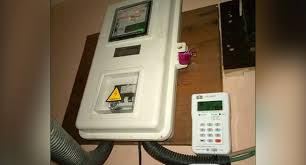
The Bureau of Public Enterprises, an agency of the Federal Government, has said that electricity consumers will pay for the ongoing free meter installation through their tariffs.

The disclosure comes amid a row with electricity distribution companies over who is responsible for covering the cost of the prepaid meters being rolled out under World Bank–funded programmes.

The PUNCH reports that the Federal Government and electricity distribution companies have been at loggerheads over who bears the cost of prepaid meters being rolled out by the Federal Government.

The disagreement erupted after the Minister of Power, Adebayo Adelabu, directed that prepaid meters procured under the World Bank–funded Distribution Sector Recovery Programme must be installed for electricity consumers free of charge, warning that any official or installer found collecting money would be prosecuted.

However, electricity distribution companies expressed doubt over the directive, insisting that although customers may not pay cash upfront, the meters would still be paid for by the DisCos over a period of 10 years, raising concerns about cost recovery, installation expenses, and the financial implications for operators.

Reacting to the controversy, the Director-General of the Bureau of Public Enterprises, Ayo Gbeleyi, dismissed claims that the DisCos were being asked to pay for the meters over a 10-year period, regretting that the Federal Government’s free metering programme was receiving pushback from the DisCos.

Speaking in Lagos at the N501bn bond issuance signing ceremony to settle power sector debt, Gbeleyi expressed concern that the DisCos were giving a wrong narrative as far as the free metering initiative was concerned.

Addressing claims by DisCos that they were expected to repay the cost of the meters over a decade, the BPE boss said such assertions were inaccurate and misleading. He noted that meter costs are embedded in tariffs over time, just like transformers, feeders, and other investments of the DisCos.

“We’ve had pushback where some have said, ‘No, the DisCos are paying for the meters over 10 years.’ The truth is, every component of investment that goes into the DisCos gets recouped through the tariff structure. So, whether it is a feeder pillar, whether it is a transformer, or whether it is a meter, we as consumers will ultimately pay for those pieces of equipment through the tariff design,” he said.

See also  Mr President, don’t punish Nigerians again with 15% fuel import tariff

Gbeleyi’s clarification shows that meters are not given to customers at no cost, as they would pay for them through their tariffs. He added that the DisCos often failed to mention the concessional nature of the Federal Government’s intervention, which he said was to be repaid over 20 years.

“However, what they are not telling you is that the Federal Government’s major intervention is indeed one of the best loan transactions today extended to the power sector. It is a 20-year loan facility. It comes with a five-year principal moratorium and a two-year interest moratorium to the DisCos. We have never seen any capital lending to that sector of that magnitude in the history of the power sector in Nigeria,” Gbeleyi said.

He insisted that suggestions that DisCos were paying for the meters were unfounded. “So, for anyone to then suggest that they are paying over 10 years, or that the DisCos are paying for it, that’s absolutely not the case. So we are taking this opportunity to provide that clarity to Nigerians,” he added.

According to him, the Federal Government had embarked on the Distribution Sector Recovery Programme, which is a $500m loan intervention from the World Bank to assist distribution companies to strengthen their infrastructure and improve governance, as well as enhance liquidity.

“In this regard, a total of about 3.22 million meters are being made available to the DisCos,” Gbeleyi said.

Clarifying the status of the metering initiative, he said that the meters were being given to consumers free of charge.

“At this juncture, permit me to also elaborate and clarify that, last week, together with the Minister of Power, we were at the Apapa Port to inspect the recent batch of meters that are coming to the country. In total, out of the initial contract of about 1,437,500 units of meters, we have received over 600,000 meters. And we have also installed close to 75,000 meters, free of charge indeed, to consumers.”

Gbeleyi stressed that electricity consumers were not required to pay for the meters, noting that the intervention was targeted at addressing Nigeria’s wide metering gap.

“Let me reiterate that customers are not meant to pay for these meters. The meters are meant to be given, especially to the unmetered customers. We have about 5.9 million unmetered customers in the country today,” he said.

See also  Tanker drivers’ strike will not cause fuel shortage – Dangote Refinery

According to him, the World Bank–supported programme would only partially bridge the gap, with another intervention already in place to complement it.

“In order to bridge that gap, there is a programme to implement 3.22 million meters. There is another programme that is being led by the Office of the Special Adviser to the President on Energy under the Presidential Metering Initiative, which will also deliver another batch of 2.61 million meters to the DisCos,” Gbeleyi stated.

Earlier, power distribution companies had raised concerns over the minister’s directive, describing it as politically motivated and lacking proper stakeholder consultation.

Operators, who spoke anonymously due to the sensitive nature of the matter, said Adelabu’s announcement failed to consider the role of meter installers and manufacturers, as well as the question of who would bear installation costs.

Last Thursday, the Federal Government banned electricity distribution companies and installers from collecting any form of payment for meters, with Adelabu issuing the warning during an on-site inspection of newly imported smart meters at APM Terminals, Apapa, Lagos.

The minister said the meters were procured under the World Bank–funded Distribution Sector Recovery Programme and must be installed for consumers free of charge, regardless of their tariff band.

“I want to mention that it is unprecedented that these meters are to be installed and distributed to consumers free of charge—free of charge! Nobody should collect money from any consumer. It is an illegality. It is an offence for the officials of distribution companies across Nigeria to request a dime before installation; even the indirect installers cannot ask consumers for a dime. It has to be installed free of charge so that billings and collections will improve for the sector,” Adelabu said.

Despite this, DisCo operators maintained that the cost burden would still fall on them over time. They said the meters tagged as free by the Federal Government would still be paid for by the DisCos within a period of 10 years, adding that it was unclear why DisCos were expected to bear installation costs.

“Those meters you see, someone has to pay for them, and the government expects the DisCos to bear the cost of the so-called free meters. They said the DisCos can pay it over 10 years,” an official with a distribution company stated, but Gbeleyi described this as untrue.

See also  ‘Pilots, Biologists’ — UK Removes Over 100 Occupations From Skilled Worker Visa List (See Full List)

The official warned that such costs must be recognised in tariff calculations. “When you ask the DisCos to pay for any capital expenditure, we call it allowable capex. You have to allow it when computing their tariffs; otherwise, it makes their balance sheets toxic,” the source said.

Another operator questioned the role of installers in the arrangement. “We need to know that meter installers are not staff of the DisCos. They are already asking who will pay them if the consumers do not pay. Did the minister consider all those? You said the people should not pay the installers; who should pay them? We, the DisCos, are not the ones installing meters,” the operator said.

The operators described Adelabu’s comments as populist. “The statement was just a populist statement from a politician. We are not sure if the President sent him that message. He said everything should be free; where is the position of cost recovery? Anything you do in the power sector, you have to first consider who bears the cost. Somebody has to bear the cost to avoid debt piling up,” one source stated.

They added that wider consultation was needed to avoid misleading the public. “The government ought to sit with the DisCos and the meter manufacturers to seek advice if the plan is to make sure the people don’t bear any cost, and we will come up with our various contributions.

“But instead of doing that, the government would go and make unrealistic promises to the public. For instance, the meters are coming in batches, but you have made the masses believe that there are enough meters for everyone. That’s not the reality,” another source said.

The standoff testifies to the persistent tensions between regulators and operators in the power sector, even as the Federal Government insists that the metering intervention is designed to protect consumers and improve billing efficiency.

punch.ng

FOLLOW US ON:

FACEBOOK

TWITTER

PINTEREST

TIKTOK

YOUTUBE

LINKEDIN

TUMBLR

INSTAGRAM

Continue Reading
Click to comment

Leave a Reply

Your email address will not be published. Required fields are marked *

Business

Asian stocks hit by fresh tech fears as gold retreats from peak

Published

on

Asian stocks took a hit on Friday amid fresh worries over vast investments in artificial intelligence, gold and silver tumbled after hitting multiple record highs, and oil retreated on hopes for an easing of US-Iran tensions.

Markets have endured a rollercoaster ride this week as traders weathered a weaker dollar, Donald Trump’s threats against Tehran, a resumption of tariff warnings and a possible US government shutdown.

Fresh optimism in the tech sector about the future of AI has provided support, however, with healthy earnings from companies including Meta, Samsung and SK hynix providing much cheer.

However, the positivity took a hit on Thursday after Microsoft announced a surge in spending on AI infrastructure and revived concerns that companies could take some time before seeing a return on their investments.

There are also fears that firms’ valuations may be a little too stretched and markets could be in a bubble, having soared in recent years to record highs on the back of a tech-fuelled rally.

“Microsoft suffered its worst session since the COVID‑era crash, falling 12 percent and accounting for over two‑thirds of the S&P 500’s decline,” wrote National Australia Bank’s Rodrigo Catril.

“Concerns centred on rising investment spending, slower Azure (cloud service) growth, and a longer runway to monetising AI.”

– Trump Fed pick –

Wall Street ended mostly in the red, with Dow the only advancer.

Asia also struggled amid speculation Trump will pick Kevin Warsh, a former Fed governor and a man considered more hawkish on interest rates, as the next boss of the central bank. The president has said he will name a successor to Jerome Powell on Friday morning US time.

See also  Airlines face uneven fuel costs as currencies weaken — IATA

Hong Kong, Shanghai, Tokyo, Sydney, Singapore, Taipei and Bangkok were all down. Seoul, Manila and Wellington rose.

Paris was flat as data showed France’s economy grew slower last year than 2024. London opened lower but Frankfurt rose.

Jakarta rose after a two-day rout sparked by index compiler MSCI calling on regulators to look into ownership concerns.

The compiler said: “If insufficient progress is made towards achieving necessary transparency enhancements by May 2026, MSCI will reassess Indonesia’s market accessibility status.”

It warned this could result in “a weighting reduction in MSCI Emerging Markets Indexes for all Indonesian securities and a potential reclassification of Indonesia from Emerging Market to Frontier Market status”.

Gold was also in retreat, sitting around $5,150 an ounce, a day after topping out above $5,595. Silver was at $106 from a peak of more than $121.

The precious metals were also weighed by a slight uptick in the dollar, having tumbled on Trump appearing to be happy to see the world’s reserve currency weaken despite the potential risk of pushing up US inflation.

Investors are keeping tabs on developments in the Middle East after the US president sent an “armada” to the region and warned Iran of possible strikes if it did not reach a fresh nuclear deal.

Both main contracts were down more than one percent, having spiked as much as five percent Thursday.

Still, concerns remain about a conflict in the crude-rich region, which would send prices soaring, also putting upward pressure on inflation.

In Washington, the US Senate edged closer to a vote on a funding deal to avert a government shutdown following a bitter standoff over Trump’s sweeping immigration crackdown.

See also  ‘Pilots, Biologists’ — UK Removes Over 100 Occupations From Skilled Worker Visa List (See Full List)

Current government funding lapses at midnight on Friday.

– Key figures –

Tokyo – Nikkei 225: DOWN 0.1 percent at 53,322.85 (close)

Hong Kong – Hang Seng Index: DOWN 2.1 percent at 27,387.11 (close)

Shanghai – Composite: DOWN 1.0 percent at 4,117.95 (close)

London – FTSE 100: DOWN 0.2 percent at 10,150.97

West Texas Intermediate: DOWN 1.7 percent at $64.32 per barrel

Brent North Sea Crude: DOWN 1.6 percent at $68.50 per barrel

Euro/dollar: DOWN at $1.1940 from $1.1962 on Thursday

Pound/dollar: DOWN at $1.3781 from $1.3800

Dollar/yen: UP at 153.74 yen from 153.04 yen

Euro/pound: DOWN at 86.63 pence from 86.67 pence

New York – Dow: UP 0.1 percent at 49,071.56 (close)

AFP

punch.ng

FOLLOW US ON:

FACEBOOK

TWITTER

PINTEREST

TIKTOK

YOUTUBE

LINKEDIN

TUMBLR

INSTAGRAM

Continue Reading

Business

IMPI projects Nigeria’s GDP to hit 5.5%

Published

on

The policy group, the Independent Media and Policy Initiative, has projected that Nigeria’s Gross Domestic Product (GDP) will reach 5.5 per cent in 2026, driven by what it describes as the new economic model deployed by President Bola Tinubu.

This was disclosed in a policy statement signed by its chairman, Dr Omoniyi Akinsiju, maintaining that its 5.5 per cent GDP growth projection would trump that of the World Bank and the International Monetary Fund.

The PUNCH reports that the IMF forecasts a 4.4 per cent growth for Nigeria in 2026 on stabilising macroeconomic trends.

IMPI said, “We made it clear that the Nigerian economy under the current administration had engendered a paradigm shift from perennial dependency on crude oil earnings to policy-driven economic facilitation. This refers to the deliberate use of governmental policies, regulations, and institutional frameworks to reduce obstacles, lower costs, and speed up economic activities, particularly in trade and investment. The facilitation, in this context, aims to foster sustainable, inclusive growth by improving efficiency and reducing red tape.

“Seven months after that questionable projection by the International Monetary Fund, we have seen a volte-face. In an epiphany-like realisation, the IMF now speaks of a resurgent Nigerian economy as reflected in the global multilateral institution’s revised Nigerian economic outlook to a projected 4.4 per cent economic growth for 2026.

This is the highest GDP growth projection by the IMF over the last 17 years, a real expression of confidence in the Nigerian economy.”

The think tank also referenced the general consensus on Nigeria’s growth prospects, which it attributed to the economic model adopted by the Tinubu administration.

See also  APC’s gov candidate slams Otti’s ‘harsh’ tax hike on Aba traders

“Beyond the IMF’s new GDP projection, we have observed a consensus around a higher than 4 per cent economic growth performance expectation of the Nigerian economy by virtually all known individual and public economic commentators.

“While the Nigerian government projected 4.68 per cent growth in 2026, the Lagos Chamber of Commerce and Industry projected a massive seven per cent, 1.5 per cent higher than the Nigeria Economic Summit Group’s 5.5 per cent for the year. PwC sustained the conservative threshold by projecting a 4.3 per cent growth conditioned on higher oil prices, while the World Bank also revised its earlier 3.7 per cent projection to 4.4 per cent.

“The agglomeration of these positive economic growth outlooks by domestic and global institutional players points to an emerging economic paradigm that emphasises increased production and productivity momentum, foreign exchange stability, disinflation, galvanised foreign direct investment and inflow, and an unobtrusive regulatory environment, anchored in policy-driven economic facilitation,” it added.

punch.ng

FOLLOW US ON:

FACEBOOK

TWITTER

PINTEREST

TIKTOK

YOUTUBE

LINKEDIN

TUMBLR

INSTAGRAM

Continue Reading

Business

FG’s N9tn domestic loans surge drains lifeline from businesses

Published

on

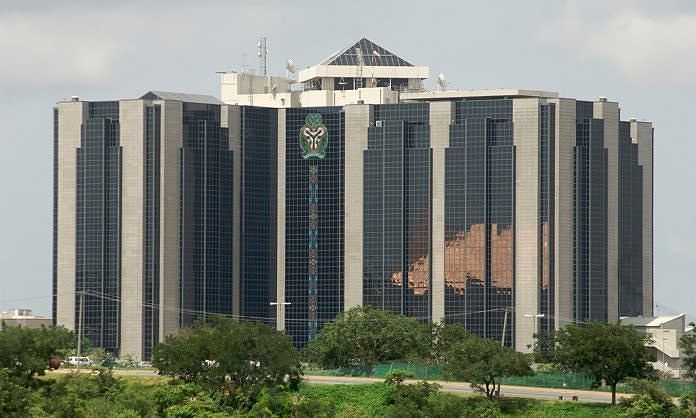
The Federal Government’s domestic borrowings from financial market operators rose sharply in 2025 despite high interest rates, widening the gap between public and private sector access to credit, according to data obtained from the Central Bank of Nigeria on Thursday.

An analysis of money and credit statistics showed that credit to the Federal Government outpaced private sector borrowings by N9.19tn, representing a 695.6 per cent swing in 2025, reflecting heightened fiscal pressures and increased reliance on local funding sources.

In contrast, net credit to the private sector declined by N1.543tn in 2025, highlighting the challenges faced by businesses amid tight monetary conditions and elevated interest rates. This divergence underscored a growing imbalance in the allocation of financial system resources, with the public sector absorbing a larger share of available liquidity.

The trend points to a classic crowding-out effect, as rising government demand for funds limits banks’ capacity to extend credit to the productive sector, while many organised businesses increasingly prioritise settling existing debts rather than taking on new borrowing.

The PUNCH reports that in monetary and financial statistics, credit to government refers to funds extended to the Federal Government by the domestic financial system, mainly through the purchase of government securities such as Treasury bills, bonds, and other debt instruments, as well as direct lending by banks and other financial institutions.

This form of credit is typically used to finance budget deficits, refinance maturing obligations, support capital and recurrent expenditure, and manage short-term cash flow gaps when government revenues fall short of spending needs.

Credit to the private sector, on the other hand, represents loans and advances granted by banks and other financial institutions to businesses, households, and non-government entities. It is primarily used to fund working capital, business expansion, investment in plant and machinery, trade, agriculture, services, and consumer spending. Growth in private sector credit is widely regarded as a key indicator of economic activity, as it supports production, job creation, and overall economic growth.

In practice, when government borrowing from the financial system rises sharply, especially in a high-interest-rate environment, it can reduce the pool of funds available for private sector lending, a phenomenon often described as crowding out. This dynamic can raise borrowing costs for businesses and slow investment, even as the government secures financing to meet its fiscal obligations.

An analysis of CBN money and credit statistics obtained showed that credit to the Federal Government rose by N9.192tn in 2025, while credit to the private sector declined by N1.543tn over the same period.

The data highlight intensifying concerns over crowding-out effects, as the government’s rising appetite for domestic funds coincided with shrinking credit to businesses and households.

According to the CBN data, credit to the public sector increased significantly in 2025, rising from N25.03tn in January to N34.22tn by December, translating to a N9.19tn increase within the year. It also represented an increase of N5.57tn, or nearly 154 per cent, compared with the N3.62tn government credit recorded in 2024.

A month-on-month breakdown revealed that government credit stood at N25.03tn in January 2025 before rising by N2.08tn, or 8.3 per cent, to N27.11tn in February. This was followed by a contraction of N2.52tn (9.3 per cent) in March to N24.59tn, and a further dip of N655bn (2.7 per cent) in April to N23.93tn. Borrowing eased again in May, falling by N946bn (4.0 per cent) to N22.99tn, and declined by another N1.33tn (5.8 per cent) in June to N21.66tn, marking the lowest level for the year.

Government credit rebounded in July, increasing by N2.03tn (9.4 per cent) to N23.69tn, before slipping by N740bn (3.1 per cent) to N22.95tn in August. The upward trend resumed in September, with credit rising by N1.21tn (5.3 per cent) to N24.16tn, followed by a N629bn (2.6 per cent) increase in October to N24.79tn. In November, borrowing grew further by N1.57tn (6.3 per cent) to N26.35tn, before surging sharply in December by N7.87tn, or 29.9 per cent, to close the year at N34.22tn.

In contrast, net credit to the private sector contracted by N1.54tn in 2025, reflecting tight liquidity conditions and elevated borrowing costs. Private sector credit declined from N77.38tn in January to N76.26tn in February, representing a N1.12tn or 1.4 per cent drop. This was followed by a marginal decline of N276bn (0.4 per cent) in March to N75.98tn.

See also  ‘Pilots, Biologists’ — UK Removes Over 100 Occupations From Skilled Worker Visa List (See Full List)

Borrowing rebounded in April, rising by N2.09tn (2.7 per cent) to N78.07tn, before easing slightly by N100bn (0.1 per cent) to N77.97tn in May. Credit fell sharply in June by N1.84tn (2.4 per cent) to N76.13tn, but edged up in July by N598bn (0.8 per cent) to N76.72tn. August recorded another contraction of N841bn (1.1 per cent) to N75.88tn, followed by a steep decline of N3.36tn (4.4 per cent) in September to N72.53tn, the lowest point for the year.

Private sector credit recovered modestly in October, increasing by N1.88tn (2.6 per cent) to N74.41tn, and edged up by N220bn (0.3 per cent) in November to N74.63tn. In December, borrowing rose by N1.20tn (1.6 per cent) to close the year at N75.83tn, still well below the January level.

For context, government borrowing from the financial system increased by N3.62tn in 2024, far lower than the N9.19tn expansion recorded in 2025, while private sector credit grew by N1.54tn in 2024 but reversed into a contraction of N1.543tn in 2025.

A comparison of borrowing from the domestic financial system showed that government credit accelerated sharply in 2025 compared with 2024, beginning from January, when credit to the Federal Government rose to N25.03tn in 2025, up from N23.52tn recorded in January 2024.

In January, government credit stood at N25.03tn in 2025, up N1.51tn or 6.4 per cent from N23.52tn recorded in January 2024. By February, credit rose to N27.11tn, representing a sharp N8.69tn or 47.2 per cent increase compared with N18.43tn in February 2024.

However, in March, government borrowing moderated to N24.59tn, still N4.54tn or 22.6 per cent higher than N20.05tn in March 2024. In April, credit stood at N23.93tn, an increase of N3.96tn or 19.8 per cent over N19.98tn in April 2024.

In May, CPS declined year-on-year, falling to N22.99tn in 2025, which was N5.39tn or 19.0 per cent lower than the N28.38tn recorded in May 2024. The downward trend continued in June, with credit at N21.66tn, down N2.27tn or 9.5 per cent from N23.93tn in June 2024.

Government borrowing also trailed 2024 levels in July, standing at N23.69tn, which was N3.87tn or 19.5 per cent higher than July 2024’s N19.83tn, reflecting a rebound. In August, credit dropped sharply year-on-year to N22.95tn, a decline of N8.20tn or 26.3 per cent from N31.15tn in August 2024.

In September, CPS stood at N24.16tn, representing a steep N15.31tn or 38.8 per cent drop compared with N39.47tn recorded in September 2024. October followed a similar pattern, with government credit at N24.79tn, down N14.60tn or 37.1 per cent from N39.39tn in October 2024.

In November, credit rose to N26.35tn, but was still N13.26tn or 33.5 per cent lower than N39.62tn recorded a year earlier. By December, however, borrowing surged to N34.22tn, exceeding N27.14tn in December 2024 by N7.08tn or 26.1 per cent, driving the overall annual increase of N9.19tn in 2025.

Private sector borrowing showed a contrasting pattern. In January 2025, credit stood at N77.38tn, up N898bn or 1.2 per cent from N76.48tn in January 2024. However, in February, borrowing dropped to N76.26tn, a sharp N4.97tn or 6.1 per cent decline compared with N81.22tn recorded in February 2024.

In March, private sector credit stood at N75.98tn, N4.55tn or 6.4 per cent higher than N71.43tn in March 2024. April also recorded an increase, with credit rising to N78.07tn, up N5.15tn or 7.1 per cent from N72.92tn a year earlier.

By May, borrowing rose to N77.97tn, an increase of N3.66tn or 4.9 per cent over N74.31tn in May 2024. In June, credit stood at N76.13tn, up N2.94tn or 4.0 per cent compared with N73.19tn in June 2024.

The trend reversed in July, as credit eased to N76.72tn, marginally N1.22tn or 1.6 per cent higher than N75.51tn in July 2024. In August, borrowing declined to N75.88tn, N1.15tn or 1.5 per cent higher than N74.73tn in August 2024, indicating stagnation.

In September, private sector credit fell sharply to N72.53tn, down N3.31tn or 4.4 per cent from N75.83tn in September 2024. October followed with N74.41tn, a slight N339bn or 0.5 per cent increase over N74.07tn in October 2024.

See also  APC’s gov candidate slams Otti’s ‘harsh’ tax hike on Aba traders

In November, borrowing slipped to N74.63tn, N1.33tn or 1.8 per cent lower than N75.96tn in November 2024. By December, credit stood at N75.83tn, representing a N2.19tn or 2.8 per cent decline from N78.02tn recorded in December 2024, culminating in a N1.54tn net contraction for 2025.

Commenting on behalf of the Organised Private Sector and the manufacturing industry, the Director-General of the Manufacturers Association of Nigeria, Segun Kadir Ajayi, said credit data from the financial system point to a clear crowding-out of private sector borrowing by government demand.

In a telephone interview on Thursday, Ajayi said the trend reflects the preference of commercial banks and other financial institutions to lend to government, given prevailing interest rates and perceived lower risk, to the detriment of productive sectors of the economy.

The MAN DG said, “The data is a trend that proves something. Usually when you see such trends, it is indicative of the private sector being crowded out in terms of borrowing. Because when you borrow, you would repay and so the rate at which you borrow is critical for your operations and when commercial banks and financial institutions find it a lot easier to lend to government rather than to the private sector.”

Ajayi noted that the manufacturing sector has been particularly affected, with many firms scaling back borrowing for expansion and raw material sourcing amid high costs and weak economic conditions.

According to him, the slowdown in private sector credit is consistent with the broader lack of economic buoyancy, including weak consumer demand and limited liquidity in the system.

“You also have discovered that the manufacturing sector has been challenged and so borrowing for expansion and raw material sourcing has been low keyed.  So you would expect less credit because there has been no bouyancy in terms of purchases and in terms of the funds available. So you should expect this type of trend. Many manufacturers are simply not in a position to take on expensive credit,” he added.

He, however, said the development underscores the need for deliberate policy intervention to stimulate industrial growth through targeted financing.

“But what this means is that government should be intentional with about making low cost credit available to the sector, so that you can stimulate their appetite for borrowing and work to expand, scale and not working to pay the banks. This is just the simple explanation,” he advised.

Economist reacts

In his expert comment on the issue, Muda Yusuf, renowned economist and Chief Executive Officer of the Centre for the Promotion of Private Enterprise, warned that rising Federal Government borrowing from the domestic financial system is increasingly crowding out the private sector, as banks favour low-risk, high-yield government securities over lending to businesses.

Yusuf noted that while the private sector still accounts for a larger share of total outstanding credit in absolute terms, the direction of credit flow is a growing concern.

“The increase in credit to the government can be attributed to a number of factors. The government has been raising money to finance the deficit. So this financing of deficit has led to the issuance of bonds, treasury bills and so on, which banks also buy. The rate is also very attractive and it’s more attractive to them than to be lending to the real sector,” Yusuf said in a telephone conversation with our correspondent

According to him, the surge in government borrowing is largely driven by the need to finance widening fiscal deficits, which has translated into increased issuance of Treasury bills, bonds and other government securities. Yusuf noted that the prevailing interest rate environment has further tilted banks’ preference towards government instruments.

“The second point is that the risk of lending to government is extremely very low because it is a sovereign debt and government can’t come back to you and say they won’t pay back. It won’t happen. Except for those local contractors. But if it is through the financial system, they raise funds through government bonds. So the risk is low, rates are very attractive and the banks normally prefer this option because they are more comfortable,” he said.

See also  World Bank dismisses Nigeria’s single-digit inflation target

He added that, unlike private sector lending, government borrowing through the financial system carries minimal default risk. “If it is through the financial system, funds are raised through government bonds. The risk is low, rates are attractive, and banks are more comfortable with that option,” Yusuf said. “Lending to the private sector is riskier for them.”

As a result, he said the private sector is increasingly unable to compete with the government for credit. “To that extent, you can say the government is gradually crowding out the private sector,” he stated. “They cannot compete with the government when it comes to credit. The risk for bonds is low, but the interest rate is high.”

Yusuf said this dynamic has intensified calls for the government to moderate its borrowing. On the private sector side, Yusuf pointed to persistently high interest rates as a major deterrent to borrowing and investment. He explained that while the government can raise funds by issuing bonds without negotiating loans with banks, private businesses face tougher conditions.

“There is a bit of crowding-out, and that’s why some people are arguing that government should borrow less, so that they don’t crowd out the private sector.

“The second point on the private sector side is that the interest rate is still high. So there is no business you can do with credit facilities of up to 30 per cent. The Monetary Policy Rate is still at 27 per cent. But for the government, they only have to issue bonds, they won’t have to meet banks for loans, only the state government meet government for loans and pays back through FAAC allocations. These are some of the issues,” he said.

Commenting on what declining private sector credit signals about the economy, Yusuf said it should be a major concern for policymakers.

“Of course, it indicates that something is not right in the economy. It should be a concern for the government, because with the interest rate at that level, how do you want to promote investment? It should be a concern. The private sector borrows to invest, so if it’s not there, it will affect growth. The government is only borrowing to finance the deficit.

“We want the banks to support the private sector more than they are doing now. You can also do some comparison with what other banking institutions are doing in other countries. You would observe that it is low compared to other countries. Our credit to the private sector compared to Gross Domestic Product shows the level of the financial system is supporting the sector,” he warned.

The economist also noted that Nigeria’s private sector credit levels remain weak compared to peer economies. On solutions, Yusuf said restoring balance in credit allocation would require a combination of lower interest rates, reduced government borrowing, and stronger revenue mobilisation.

He added that improved revenue generation would ease pressure on the financial system. “The only solution is to move the economy in a way that the interest rate is lower for borrowing. Recapitalisation can help to support big investment, but the interest rate has to come down. Inflation has to come down. The government should borrow less and focus on revenue, so the funds can go to the private sector,” Yusuf concluded.

The surge in government borrowing comes amid persistent fiscal pressures, including rising debt servicing costs, revenue shortfalls, and increased spending obligations following fuel subsidy reforms and exchange rate adjustments.

At the same time, the CBN’s tight monetary stance, anchored on elevated interest rates to rein in inflation, has raised the cost of borrowing across the economy, disproportionately affecting the private sector.

With inflationary pressures persisting and interest rates remaining high, stakeholders say a rebalancing of credit allocation will be critical to support growth, job creation, and industrial expansion.

As Nigeria navigates ongoing fiscal and monetary reforms, the widening gulf between public and private sector borrowing is expected to remain a key indicator of the health, or strain, within the financial system.

punch.ng

FOLLOW US ON:

FACEBOOK

TWITTER

PINTEREST

TIKTOK

YOUTUBE

LINKEDIN

TUMBLR

INSTAGRAM

Continue Reading

Trending