Connect with us

News

Reps urge teaching hospitals to prioritise research

Published

on

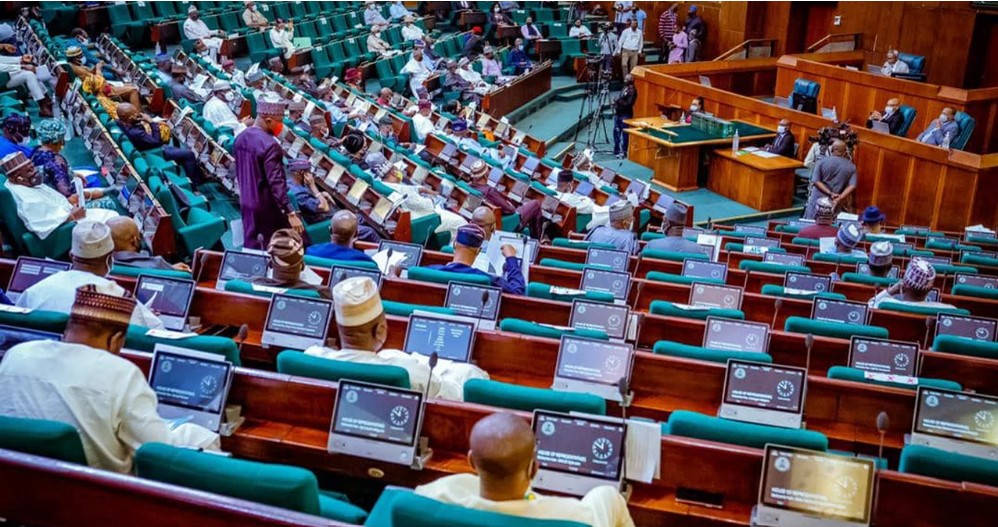
The House of Representatives has called on Nigeria’s tertiary health institutions, particularly university teaching hospitals, to urgently refocus on medical research, warning that the sector’s continued neglect of research undermines national health security and preparedness for public health emergencies

The call was made on Tuesday during the 2025 budget defence session involving federal university teaching hospitals, federal teaching hospitals and federal medical centres.

The Chairman of the House Committee on Health Institutions, Patrick Umoh, expressed concern that most teaching hospitals have drifted from their statutory mandate as centres of medical research, innovation and specialist training, and are now functioning largely as general hospitals.

Umoh criticised Chief Medical Directors for allocating less than one per cent of their annual budgets to research, describing the figure as unacceptable for institutions meant to drive evidence-based medicine and policy.

“Teaching hospitals are supposed to be centres of research. Yet you have never raised the issue of research funding during budget preparations. Instead, you focus almost entirely on infrastructure. That makes you part of the problem,” he said.

He noted that Nigeria’s health system was exposed during the COVID-19 pandemic, when the country relied heavily on external research and foreign solutions.

“The pandemic caught us all unprepared. Let me mock you a little by saying that traditional medicine practitioners appeared to be doing better. I have carried out several oversight visits, but no teaching hospital has ever taken me to a facility and said, ‘This is our research centre,’” Umoh added.

Teaching hospitals occupy a critical position in national health systems worldwide, serving as hubs for clinical research, disease surveillance, innovation and the training of health professionals.

See also  Boko Haram: Zulum meets COAS, says ‘the worst’ is over

In countries with resilient health systems, breakthroughs in diagnostics, vaccines and treatment protocols are often driven by sustained research activity within teaching hospitals.

In Nigeria, however, chronic underfunding, weak research infrastructure and limited political prioritisation have constrained the ability of teaching hospitals to fulfil this role.

As a result, the country remains heavily dependent on foreign research outputs, even for diseases prevalent within its borders.

Health experts have repeatedly warned that without deliberate investment in research, Nigeria risks being perpetually reactive to health crises, rather than proactive.

Responding on behalf of the Committee of Chief Medical Directors, the Secretary of the Committee and Chief Medical Director of the Jos University Teaching Hospital, Prof Pokop Bupwatda, acknowledged the poor funding of research but blamed systemic budgetary constraints.

According to him, although teaching hospitals make provisions for research, usually around one per cent of their budgets, these allocations are often removed during the final stages of the budgeting process.

Bupwatda appealed for increased overall funding for the health sector to enable adequate recruitment of skilled personnel and improved staff welfare, which he said are essential to curbing the growing “japa syndrome.”

He disclosed that many federal health institutions are severely understaffed, particularly with medical doctors, noting that even when recruitment approvals are granted, few doctors apply. Despite these challenges, he said existing personnel have continued to provide quality healthcare services and deserve recognition.

He also expressed concern that public discourse frequently highlights isolated failures in the sector while overlooking progress that has attracted foreign patients to Nigeria’s health facilities.

See also  US Senate votes to block President Trump from further military action in Venezuela

Bupwatda further lamented that only about 30 per cent of the 2025 budget allocation has so far been released to federal tertiary health institutions, despite interventions by the House of Representatives to improve funding levels.

He identified power supply as a major operational challenge, explaining that hospitals require uninterrupted electricity to run life-saving equipment and provide effective patient care.

He noted that most federal hospitals are currently on Band A electricity tariffs, significantly increasing their operating costs, alongside heavy spending on diesel for generators.

He welcomed proposals to deploy solar mini-grids in teaching hospitals and federal medical centres, describing the initiative as a critical intervention.

He further appealed to the committee to approve take-off grants for about seven newly established federal health institutions, warning that without such support, they would struggle to commence effective operations.

punch.ng

FOLLOW US ON:

FACEBOOK

TWITTER

PINTEREST

TIKTOK

YOUTUBE

LINKEDIN

TUMBLR

INSTAGRAM

Continue Reading
Click to comment

Leave a Reply

Your email address will not be published. Required fields are marked *

News

Russia denies recruitment of Nigerians for Ukraine war

Published

on

Russia has denied any government-backed programme to recruit Nigerians to fight in the war in Ukraine, insisting that any such activity, if it exists, is not connected with the Russian state.

The Russian Ambassador to Nigeria, Andrey Podyolyshev, stated this on Tuesday in Abuja while responding to reports that Nigerians had been recruited to fight on the frontlines.

Reports and videos have alleged that some Nigerians and other Africans were recruited under the pretext of security jobs in Russia and later deployed to the war front after brief training.

Denying any official involvement in this, Podyolyshev said, “There is no government-supported programme to recruit Nigerians to fight in Ukraine. If there are illegal organisations or individuals trying to recruit Nigerians by unlawful means, this is not connected with the Russian state.”

He said Moscow was ready to investigate any credible information.

“If anybody has this information, we are ready to send it to Russian law enforcement authorities so they can investigate those cases,” he added.

Podyolyshev also questioned reports by Western media, including a recent CNN investigation, which alleged that some Nigerians were deceived into joining the conflict.

“You are receiving information from Western sources. Their main task is to demonise Russia. If you want to know the real situation, you should send journalists to Russia to understand what is really happening,” the Ambassador said.

While acknowledging that some Nigerians may be in the conflict zone, he maintained there was no official Russian policy behind it.

See also  Boko Haram: Zulum meets COAS, says ‘the worst’ is over

“There are such Nigerians, I know, but there is no government-supported programme to recruit them. If there are agencies, including Russian agencies, violating Russian law, we are ready to transmit this information to our law enforcement authorities,” he said.

On Security and military cooperation, he said Russia and Nigeria were discussing closer defence ties, including arms supplies and training.

“We are discussing the possibilities of supplying Russian weaponry and training military personnel in Russia, maybe here in Nigeria. We are ready to develop cooperation with Nigeria in the military field to the extent the Nigerian side wishes.

“This strengthens Nigeria’s ability to fight terrorism and piracy,” he said.

The ambassador also called for stronger economic engagement between both countries, noting that the last session of the Russia–Nigeria Intergovernmental Commission on Economic Cooperation was held about 10 years ago.

“We need the support of our governments if we want to realise some big projects. Without that support, it is very difficult to move forward,” he added.

Podyolyshev also outlined Moscow’s broader foreign-policy view of Nigeria, describing the country as a strategic partner and a potential global centre of influence in a multipolar world.

“When we speak about Africa, we must speak about Nigeria. Nigeria is one of the key states on the continent and the leading link in West Africa. It has major political and economic weight in Africa and globally.

“Nigeria is the most populous country in Africa and one of the continent’s largest economies. It is a major OPEC member and a key regional energy player,” he said.

See also  BREAKING: Kwara Gov confirms release of 38 abducted worshippers in CAC Eruku

On politics and security, he praised Nigeria’s leadership role on the continent.

“Politically, Nigeria is a regional leader, playing a pivotal role in security in West Africa and making a significant contribution to the work of the African Union,” he said.

“For Russia, Nigeria is a partner of strategic importance. Cooperation with Nigeria largely shapes our prospects in West Africa,” he added.

Podyolyshev also highlighted Nigeria’s influence within ECOWAS and the African Union, recalling its peacekeeping roles in Liberia, Sierra Leone and The Gambia.

“Nigeria showed readiness to take responsibility for regional stability. Within ECOWAS, Nigeria is the core of the organisation in terms of population, economy and military potential,” he said.

On bilateral relations, he said Russia–Nigeria ties, which date back to Soviet times, were entering a new phase.

“On November 25, 2025, we marked the 65th anniversary of diplomatic relations. Today, bilateral cooperation is entering a new phase, driven by our mutual wish to diversify international ties,” he said.

Education, he added, remains a key pillar of the relationship.

“Thousands of Nigerians studied in the Soviet Union in engineering, medicine and other fields, and this continues today. Each year, Nigerian students enter Russian universities on state quotas. Russian diplomas are highly valued in Nigeria,” Podyolyshev said.

In the energy sector, he disclosed that both countries were working on long-term projects, including nuclear cooperation.

“An intergovernmental agreement has been signed on building a Centre for Nuclear Science and Technology in Nigeria with a research reactor and, in the longer term, a nuclear power plant,” he said.

Looking ahead, Podyolyshev described Nigeria as a future global power.

See also  Tinubu laying strong foundation for long-term prosperity — Minister

“Demography, resources and regional leadership give Nigeria a real chance to become one of the global centres of power in the multipolar world.

“Russia is interested in Nigeria’s rise, and as Nigeria’s influence grows, the scope for a global Russia–Nigeria partnership will expand,” he said.

Speaking further, he linked Russia’s foreign-policy vision to a broader push for a multipolar international order.

Stating that the essence of multipolarity is to ensure development without domination.

Adding that, “An international order free from dictatorship and neo-colonialism creates conditions for stability, development and security for all.”

Continue Reading

News

Natasha: Akpabio congratulates senators over Appeal Court judgment

Published

on

Senate President Godswill Akpabio has congratulated senators following the Court of Appeal judgment upholding the six-month suspension of Senator Natasha Akpoti-Uduaghan in March 2025.

Akpabio made the remarks at the commencement of an emergency plenary session on Tuesday.

The Court of Appeal in Abuja ruled that the Senate acted within its constitutional powers in suspending Senator Akpoti-Uduaghan over alleged misconduct.

In a unanimous judgment, the three-member panel of the appellate court held that Akpoti-Uduaghan’s parliamentary privilege and constitutional rights were not breached by the suspension.

Addressing senators, Akpabio said, “Your rules derive from the Nigerian Constitution, and the Standing Orders of the Senate must always be adhered to.

“Any community without law and order will live in anarchy, and so the suspension that you handed over to one of your colleagues for unruly behaviour in the Senate was confirmed by the Court of Appeal.

“So, I will say it was judicially confirmed by the Court of Appeal as the court went forward to say that you have the powers to discipline any erring officer of government.

“So, I said I should just mention that; congratulations, and that we also applaud the judiciary for their firmness.” (NAN)

See also  BREAKING: Kwara Gov confirms release of 38 abducted worshippers in CAC Eruku
Continue Reading

News

Electoral Act : El-Rufai backs protest, blasts senate

Published

on

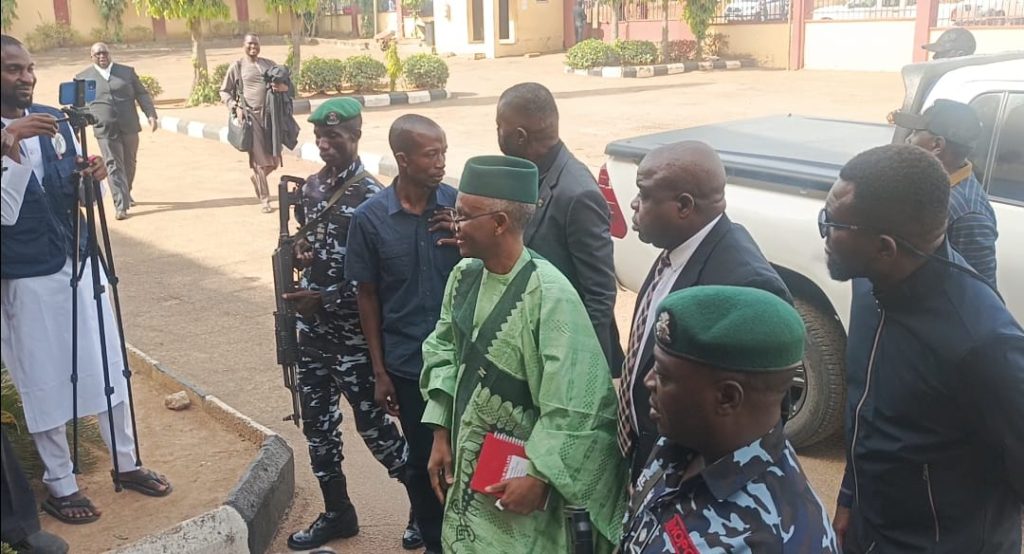
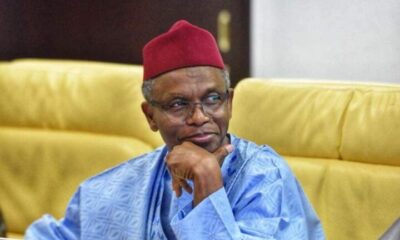
A former Kaduna State Governor, Nasir El-Rufai, has said he would have joined the protest led by former Labour Party presidential candidate, Peter Obi, against the National Assembly if he had been in the country.

El-Rufai, who spoke during an interview on Trust TV on Monday, faulted the Senate for altering provisions on electronic transmission of election results in the proposed Electoral Act amendments, insisting that real-time transmission is essential to preventing manipulation.

According to him, the delay and resistance surrounding the reform are politically motivated and aimed at preserving electoral advantages.

“It’s unfortunate I have not been able to return to Nigeria, I would have joined Mr. Peter Obi and other party leaders in protesting to the National Assembly to restore the real-time and mandatory transmission of results from the polling unit,” El-Rufai said.

He argued that adopting real-time electronic transmission would significantly reduce rigging and improve the credibility of elections, accusing the ruling party of opposing the measure for survival reasons.

The former governor also noted that while the House of Representatives had aligned with the reform, the Senate was yet to fully embrace it.

PUNCH Online had reported that Obi on Monday led hundreds of protesters to the National Assembly Complex in Abuja to oppose the Senate’s decision to remove the phrase “real-time” from provisions on electronic transmission of results in the Electoral Act Amendment Bill.

The protest, tagged “Occupy the National Assembly,” was organised by members of the Obidient Movement and pro-democracy groups, who said the lawmakers’ action was a calculated move to weaken electoral transparency ahead of the 2027 general elections.

Last week, the Senate passed the Electoral Act 2022 (Repeal and Reenactment) Amendment Bill, 2026, through third reading. However, controversy followed the deletion of the words “real-time” from sections dealing with electronic transmission of results, a development critics believe opens the door to post-election manipulation.

See also  See how Abia gov restores power to 33 communities after nine-year blackout

Although the Senate later issued explanations claiming it did not scrap electronic transmission entirely, protesters insist that removing “real-time electronic transmission” creates loopholes that could be exploited.

During the protest, demonstrators marched from the Federal Secretariat to the National Assembly, chanting solidarity songs and displaying placards reading, “Our votes must count,” “No to electoral robbery,” and “Protect democracy now.”

Security operatives drawn from the Nigeria Police Force, the Nigerian Army and the Nigeria Security and Civil Defence Corps blocked access to the complex, forcing the protesters to hold their rally outside the main gate.

Addressing journalists at the venue, Obi warned that democratic progress in Nigeria was under threat and stressed that credible elections remain the backbone of national development.

“We must dismantle this criminality and prove that we are now a nation that shows light in Africa,” he said.

The former Anambra governor also called on lawmakers to guarantee electronic transmission of results by law.

“The danger was clear. We have suffered the danger. That’s what we have suffered before. We don’t want any glitch again. This is finished. We want things to come back to normal. No more glitch,” he added.

punch.ng

FOLLOW US ON:

FACEBOOK

TWITTER

PINTEREST

TIKTOK

YOUTUBE

LINKEDIN

TUMBLR

INSTAGRAM

Continue Reading

Trending