Connect with us

Lifestyle

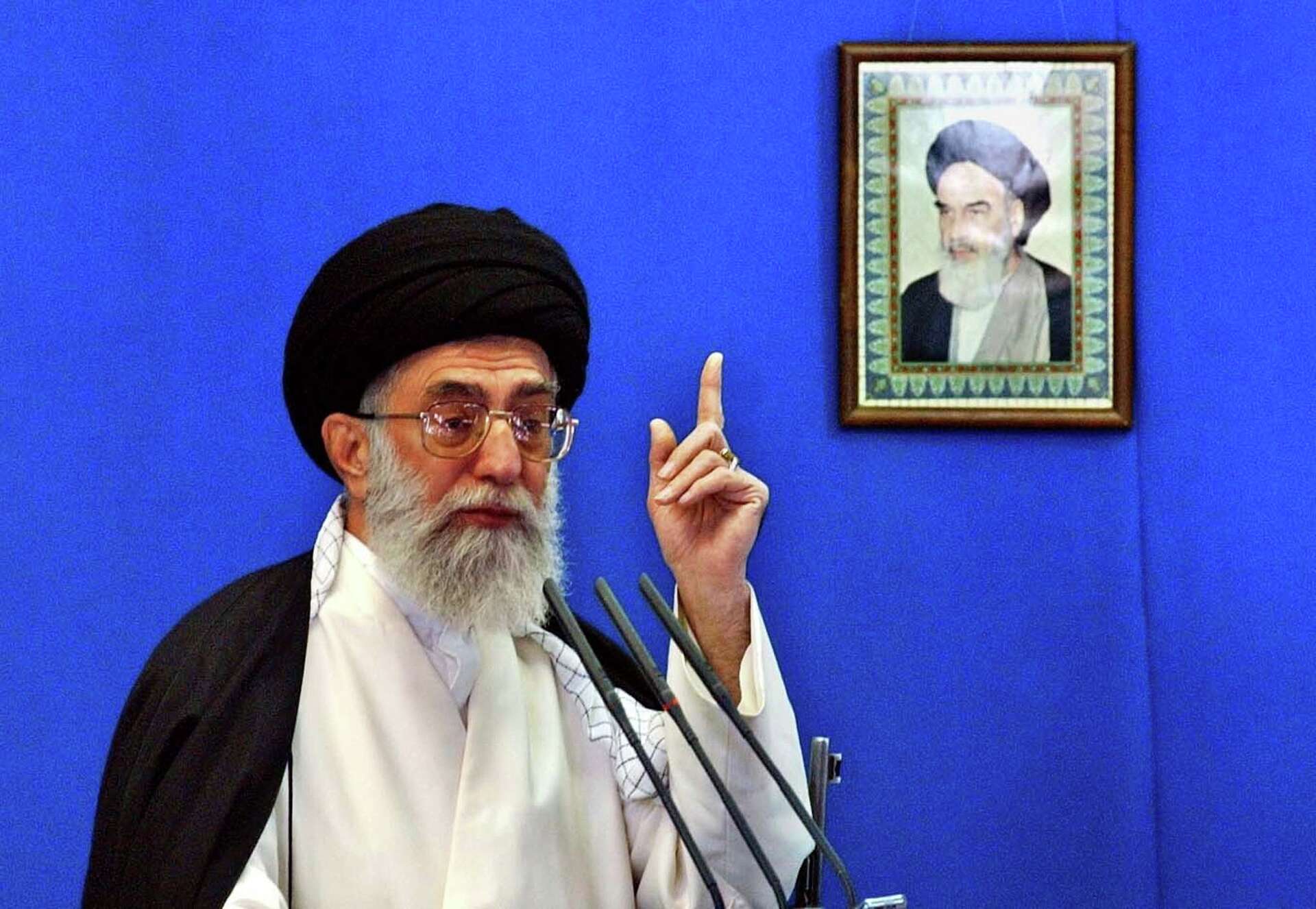
Who Is Ayatollah Arafi? 10 Key Things To Know About Iranian Supreme Leader

Published

on

Iran’s interim leadership council has appointed Ayatollah Alireza Arafi as the clerical member of the body now exercising the powers of the late Supreme Leader, Ayatollah Ali Khamenei.

Arafi officially assumed the role on March 1, 2026, in accordance with Article 111 of the Iranian Constitution, which provides for a temporary leadership structure pending the selection of a new Supreme Leader by the Assembly of Experts.

Article 111 stipulates that in the event of the death or incapacitation of a Supreme Leader, a temporary leadership council assumes the responsibilities of the office until a permanent successor is chosen.

With Khamenei’s death, the interim council has now begun overseeing the functions traditionally exercised by Iran’s highest political and religious authority.

Arafi’s appointment places him at the centre of this sensitive transition, as the country navigates a period of political uncertainty.

As a senior Shi’a cleric, Arafi is widely regarded as a figure with influence across Iran’s major institutions, including the military establishment, the judiciary and the religious seminaries.

Until the Assembly of Experts concludes its deliberations and selects a permanent Supreme Leader, Arafi and other members of the interim council will collectively exercise the constitutional powers attached to the office.

Ten key facts about the acting Iranian leader:

1. Born in 1959 in Meybod, Yazd Province, Arafi rose through Iran’s clerical ranks over several decades.

2. Ayatollah Alireza Arafi practices Islam, follows the Twelver Shi’a denomination, adheres to Ja‘fari jurisprudence, and upholds the Usuli creed.

3. In Qom, he completed his primary school education. At the same time, he began his seminary courses and preliminary courses. Later, he also attended seminary courses and learned Arabic and English. Furthermore, he studied mathematics and philosophy. (Qom is widely regarded as Iran’s religious capital and a major centre of Shi’a scholarship).

See also  Tiger Head Batteries: A Legacy Brand with Deep Roots in Nigeria

4. Arafi has attained the rank of mujtahid because of his expertise in Islamic jurisprudence and philosophy, and he has authored and co‑authored numerous works on these subjects — including the book Education Jurisprudence (Al‑Fiqh Al‑Tarbawi). Some of his academic articles, published in Iranian journals, cover topics such as Islamic jurisprudence, educational law, and social issues.

5. Between 2008 and 2018, he was President of Al-Mustafa International University, an institution that trains clerics and religious scholars from Iran and abroad.

6. He has served as the Friday Prayer Imam of Qom since 2015.

7. Since 2016, Arafi has headed Iran’s nationwide seminary system, overseeing religious education nationwide.

8. Arafi holds the religious title of Ayatollah, a rank accorded to high-level Shi’a clerics with advanced theological scholarship.

9. He has served as a member of the Guardian Council since 2019, a powerful constitutional body responsible for vetting legislation and supervising elections in Iran.

10. He has also been a member of the Assembly of Experts since 2022, a clerical institution constitutionally mandated to appoint and oversee the Supreme Leader.

FOLLOW US ON:

FACEBOOK

TWITTER

PINTEREST

TIKTOK

YOUTUBE

LINKEDIN

TUMBLR

INSTAGRAM

Continue Reading
Click to comment

Leave a Reply

Your email address will not be published. Required fields are marked *

Lifestyle

LACK OF TRUST IN MARRIAGE

Published

on

A marriage can survive difficult times, financial struggles, and disagreements—but when trust disappears, the relationship begins to lose its foundation.

When a husband no longer trusts his wife, or a wife no longer trusts her husband, even innocent actions can become suspicious. A simple phone call becomes a question. Coming home late becomes an accusation. A private conversation becomes a source of fear and jealousy.

Lack of trust creates emotional distance.

It produces constant suspicion, arguments, insecurity, resentment, and sometimes secretive behaviour. Instead of feeling safe with each other, couples begin to feel like enemies living under the same roof.

Trust is not built by controlling your spouse, checking their phone every minute, or constantly demanding explanations. Trust is built through honesty, faithfulness, transparency, consistency, and keeping your word.

If trust has been broken, don’t pretend everything is fine. Talk about it. Admit mistakes. Forgive where possible. Set healthy boundaries. And be willing to rebuild what has been damaged.

Remember: love may bring two people together, but trust helps keep them together.

💔 Don’t allow suspicion to destroy what communication and honesty can repair.

BUILD TRUST. BE FAITHFUL. BE HONEST. PROTECT YOUR MARRIAGE.

“Wherefore putting away lying, speak every man truth with his neighbour.”
— Ephesians 4:25 (KJV)

FOLLOW US ON:

FACEBOOK

TWITTER

PINTEREST

TIKTOK

YOUTUBE

LINKEDIN

INSTAGRAM

See also  Why I did BBL surgery — Uche Ogbodo
Continue Reading

Lifestyle

LACK OF OPENNESS IN MARRIAGE

Published

on

A marriage can look beautiful on the outside and still be struggling on the inside when there is no openness between husband and wife.

When couples stop communicating honestly, keep secrets, hide their feelings, or are afraid to discuss important issues, emotional distance begins to grow. What starts as “I don’t want to cause a problem” can eventually become mistrust, resentment, loneliness, and constant misunderstanding.

Openness does not mean telling your spouse everything in a hurtful or careless way. It means creating a safe relationship where both partners can honestly talk about their feelings, concerns, mistakes, finances, expectations, struggles, and dreams without fear of unnecessary humiliation or condemnation.

A strong marriage requires:

• Honest communication — Talk about problems instead of allowing them to grow in silence.
• Trust and transparency — Avoid unnecessary secrecy that can damage confidence in the relationship.
• Active listening — Listen to understand, not simply to respond or attack.
• Emotional vulnerability — Let your spouse know when you are hurting, worried, disappointed, or afraid.
• Respect — Honesty should never become an excuse for insults, threats, or emotional abuse.
• Forgiveness — When mistakes are acknowledged, work together toward healing and restoration.

The Bible says:

“Where no counsel is, the people fall: but in the multitude of counsellors there is safety.” — Proverbs 11:14 (KJV)

And:

“Let every man be swift to hear, slow to speak, slow to wrath.” — James 1:19 (KJV)

Marriage should be a place where two people can feel safe enough to communicate, honest enough to admit their weaknesses, and humble enough to work through their differences.

See also  T. M. Aluko: The Nigerian Engineer–Novelist Who Bridged Tradition and Modernity

Don’t allow silence, secrets, and suspicion to build walls between you and your spouse. Talk. Listen. Understand. Forgive. Grow together.

❤️ Openness builds trust. Trust strengthens intimacy. And healthy communication helps build a stronger marriage.

FOLLOW US ON:

FACEBOOK

TWITTER

PINTEREST

TIKTOK

YOUTUBE

LINKEDIN

INSTAGRAM

Continue Reading

Lifestyle

THE EFFECT OF LAYING CURSES ON YOUR CHILDREN

Published

on

Be careful with the words you speak to your children.

A child should not grow up hearing, “You will never succeed,” “You are useless,” “Nothing good will come from you,” or “You will suffer in life.” Words spoken repeatedly by a parent can deeply affect a child’s emotions, confidence, and relationship with the family.

Even when spoken in anger, such words can become negative messages that a child may carry for many years.

SOME EFFECTS OF CONSTANTLY CURSING YOUR CHILDREN:

1. It can destroy their confidence.
Children need encouragement and guidance. Constant insults and negative declarations can make them believe they are not good enough.

2. It can create fear and insecurity.
A child who is constantly threatened or cursed may become afraid of making mistakes, expressing themselves, or trying new things.

3. It can damage the parent-child relationship.
Instead of seeing the parent as a source of love and protection, the child may grow resentful, distant, or bitter.

4. It can affect their emotional well-being.
Repeated humiliation, rejection, and negative words can contribute to sadness, anxiety, low self-worth, and emotional distress.

5. It can influence how they see themselves.
Children often believe what the people closest to them repeatedly tell them. Speak to the potential you want them to develop—not the failure you fear.

6. It can teach them to use hurtful words themselves.
Children learn from what they experience. If they grow up hearing curses and insults, they may eventually speak to others in the same way.

CORRECT YOUR CHILDREN, BUT DON’T DESTROY THEM.

See also  Why I did BBL surgery — Uche Ogbodo

Discipline is necessary, but discipline should teach—not humiliate. Correct their mistakes, set boundaries, explain consequences, and show them how to do better.

The Bible says:

“Death and life are in the power of the tongue: and they that love it shall eat the fruit thereof.”
— Proverbs 18:21 (KJV)

And:

“And, ye fathers, provoke not your children to wrath: but bring them up in the nurture and admonition of the Lord.”
— Ephesians 6:4 (KJV)

Your child may make mistakes today, but that does not mean their future is ruined.

Don’t curse your children. Correct them with wisdom. Pray for them. Encourage them. Bless them. Speak words that build their character, strengthen their confidence, and remind them that they are loved.

YOUR WORDS CAN LEAVE A SCAR OR BUILD A FUTURE.
CHOOSE YOUR WORDS WISELY.

FOLLOW US ON:

FACEBOOK

TWITTER

PINTEREST

TIKTOK

YOUTUBE

LINKEDIN

INSTAGRAM

Continue Reading

Trending