Connect with us

News

Starmer slams Man United’s co-owner Ratcliffe over immigration comments

Published

on

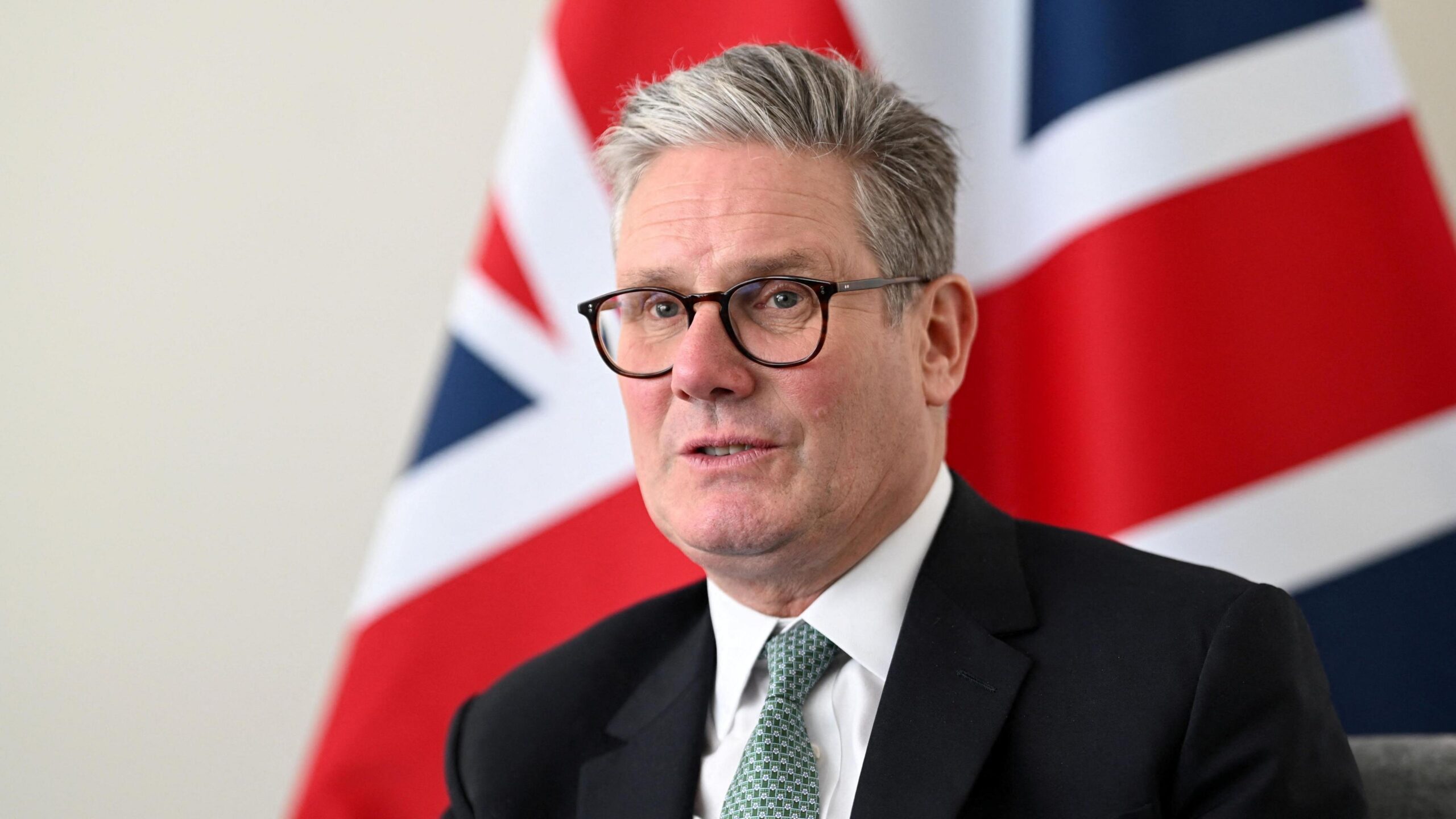
British Prime Minister Keir Starmer has described comments about immigration made by Manchester United co-owner Sir Jim Ratcliffe as “offensive and wrong”, after the billionaire businessman said the UK had been “colonised by immigrants”.

Sir Jim, founder of chemicals giant Ineos, made the remarks during an interview with Sky News at the European Industry Summit in Antwerp, Belgium.

He argued that high immigration and rising welfare costs were placing pressure on the country’s economy.

“You can’t have an economy with nine million people on benefits and huge levels of immigrants coming in,” he said. “The UK has been colonised by immigrants, really, hasn’t it?”

He also claimed the UK population had risen from 58 million in 2020 to 70 million today.

However, the Office for National Statistics estimates show the population was 66.7 million in mid-2020 and 69.4 million in mid-2025 — an increase of about 2.7 million.

As reported by the BBC, responding on Wednesday evening, the prime minister said Britain was “a proud, tolerant and diverse country” and called on Sir Jim to apologise.

A Downing Street spokesperson said the comments “play into the hands of those who want to divide our country”.

Sir Jim also suggested that political leaders would need to be prepared to take unpopular decisions to address immigration and welfare.

“If you really want to deal with the major issues of immigration… you’re going to have to do some things which are unpopular, and show some courage,” he said, adding that the prime minister faced a “tough job”.

The remarks prompted criticism from across the political spectrum. Liberal Democrat leader Sir Ed Davey described them as “totally wrong” and “out of step with British values”. Labour MP Stella Creasy said Sir Jim did “not seem to understand the contribution” immigrants make to the country.

See also  Tinubu appoints Olumode as new Controller-General of Fire Service

Reform UK leader Nigel Farage said Britain had undergone “unprecedented mass immigration” that had changed many communities, adding that while Labour may “try to ignore that”, Reform would not.

Fan groups linked to Manchester United also condemned the comments. The Manchester United Supporters Trust said no supporter should feel excluded because of their race, religion, or background, adding that senior leadership should unite fans rather than marginalise them.

The Manchester United Muslim Supporters Club said it was “deeply concerned”, arguing that the term “colonised” echoed language used in far-right narratives that portray migrants as invaders.

Anti-racism organisations Kick It Out and Show Racism the Red Card described the remarks as divisive. At the same time, The 1958 Group of supporters called them “very ill-advised” and criticised Sir Jim for commenting on UK affairs while living in Monaco.

Sir Jim, 73, acquired a 27.7% stake in Manchester United in 2024 and has overseen significant restructuring at the club, including hundreds of redundancies and managerial changes.

He acknowledged some of his decisions had been unpopular but said they were necessary to “get the big issues sorted out”.

According to the Sunday Times Rich List, Sir Jim is the seventh richest person in the UK, with an estimated net worth of £17bn. He reportedly moved to Monaco in 2020.

The BBC has approached Ineos and Manchester United for comment.

punch.ng

FOLLOW US ON:

FACEBOOK

TWITTER

PINTEREST

TIKTOK

YOUTUBE

LINKEDIN

TUMBLR

INSTAGRAM

Continue Reading
Click to comment

Leave a Reply

Your email address will not be published. Required fields are marked *

News

Iran hit US oil tanker in Gulf – Report

Published

on

Iranian state television said Iran had struck a US oil tanker in the Gulf with a missile on Thursday, the latest Iranian attack on the energy industry in the region.

The ship “was hit by a missile in the north of the Persian Gulf” and “is currently on fire”, Iran’s Revolutionary Guards said in a statement reported by state television.

The incident, which has not been independently confirmed, came as the Guards said they had “full control” of the Strait of Hormuz, which connects the Gulf to the Indian Ocean and is a vital oil and gas transit route.

Meanwhile, Iranian Foreign Minister Abas Araghchi had earlier accused the United States of committing an atrocity by sinking an Iranian navy ship off Sri Lanka and warned it would “bitterly regret” the precedent set.

“The US has perpetrated an atrocity at sea, 2,000 miles away from Iran’s shores. Frigate Dena, a guest of India’s Navy carrying almost 130 sailors, was struck in international waters without warning,” he posted on X.

“Mark my words: The US will come to bitterly regret the precedent it has set”, he added.

AFP

See also  Tinubu appoints Olumode as new Controller-General of Fire Service
Continue Reading

News

Africa exposed to Middle East war – Experts

Published

on

Africa hosts military bases within reach of Iranian missiles and is feeling the impact of rising oil prices and threats to shipping, as the continent again suffers from events largely beyond its control.

The continent is “structurally exposed” to the Middle East war, said Hubert Kinkoh, senior researcher at the CARPO think tank.

“Energy imports, foreign military bases, and its proximity to maritime chokepoints mean the war’s effects reach African shores quickly.”

– Targets –

The Horn of Africa includes possible targets for Iranian strikes, notably the 4,000 US military personnel at Camp Lemonnier in Djibouti.

It lies less than 100 miles (160 kilometres) from Yemen, where Houthi rebels have an arsenal of ballistic and anti-ship missiles and drones, courtesy of Iran.

The Houthis have not engaged in the conflict despite vowing to do so, but have previously caused major trade disruption with attacks on Red Sea shipping during the Israel-Hamas war.

Somaliland, just south of Djibouti, could also be a target as it hosts a major port and military base at Berbera run by another Iranian enemy, the United Arab Emirates.

Israel recently became the only country to recognise Somaliland’s independence from Somalia, and a Western diplomat told AFP that it may already have troops in Somaliland.

“Berbera is not a confirmed target, but its location (near the southern entrance to the Red Sea) leaves it vulnerable, particularly as Iran‑aligned groups widen the range of facilities they view as linked to US or allied operations,” said Kinkoh.

See also  Senator decries prolonged incarceration of inmates over inability to pay fines

– Economic impact –

Economically, the war is terrible timing for Africa, just as a weaker dollar and lower interest rates offered some breathing space for its many deeply indebted nations.

The war is disrupting global trade, diverting ships from the Suez Canal to the pricier route around the Cape, and hiking prices across the board, including for energy and food.

An oil producer like Nigeria might have benefited, but it locked in low prices for its exports in long-term contracts and remains a net importer of refined fuel because of its limited refining capacity.

Pump prices in Nigeria were up around 14 per cent this week.

Nigerian think tank SBM Intelligence said the new crisis has exposed its government’s “wait-and-see” approach to international affairs, which leaves its “economic interests subject to forces beyond our control” — a criticism that could be levelled at many on the continent.

African economies also rely on remittances from the hundreds of thousands of migrant workers in the Gulf that are now threatened. Previous crises in the Middle East have revealed the near-total lack of evacuation planning or even emergency hotlines for them.

– Diplomatic fallout –

While some African countries have done too little, others are accused of over-reach.

South Africa is perhaps the most exposed diplomatically, having already riled the United States with its opposition to Israel, and hosted Iranian warships for naval exercises in January — even if the government has since disavowed its involvement and said the military acted against presidential orders.

“South Africa will want to reinforce the signalling to the world that it is a non-aligned neutral actor. That is a message it’s going to really struggle to sell, given that Iran was so active in the exercise,” said Timothy Walker, of the Institute for Security Studies.

See also  INEC trains staff to tackle misinformation ahead of 2027 elections

William Gumede, professor of public management at the University of Witwatersrand, said South Africa’s geopolitical posturing was ill-advised and could now trigger US sanctions against members of the government.

“Our economy is so vulnerable… We do not have a luxury to try to grandstand globally,” he said.

– Geopolitics –

In the longer term, the war is bound to play into the shifting geopolitics of the region, which have seen Turkey, Saudi Arabia, the United Arab Emirates and others expand their reach into Africa — building ports and infrastructure, supplying drones, establishing military bases and drilling for oil, especially in East Africa.

Gulf powers have been accused of fomenting conflict in places like Sudan, Ethiopia and Somalia, and so some hope the new war may have positive consequences.

“A UAE forced to concentrate on defending its own airspace and territory may reduce its footprint in African conflicts, creating space for African-led peace processes to function more effectively,” said SBM Intelligence.

AFP

Continue Reading

News

Party infighting, litigations disrupt election planning — INEC

Published

on

The Independent National Electoral Commission has raised concern over what it described as “unnecessary litigations” and persistent internal leadership crises within political parties.

It warned that the trend is undermining its commitment to democratic consolidation.

The Chairman of the commission, Prof Joash Amupitan (SAN), expressed concern on Wednesday at a technical workshop on the revision of INEC regulations and guidelines for political parties, organised in partnership with the Westminster Foundation for Democracy, in Ikot Ekpene, Akwa Ibom State.

The technical workshop was organised to align party guidelines with changes introduced in the Electoral Act 2026 (as amended).

The National Assembly passed the Electoral Act on February 18, 2026, and it was signed into law by President Bola Tinubu on February 19, 2026.

Amupitan, speaking at the event, lamented that rather than serving as vehicles for national transformation, political parties were witnessing a disturbing pattern of leadership disputes and internal conflicts.

“Our collective commitment is being challenged by leadership squabbles and judicialised politics.

“In the last cycle alone, INEC was joined in scores of suits that could have been avoided by simple adherence to party constitutions.

“As an independent body, we remain neutral, but we are no longer passive observers,” he said.

Amupitan added, “Political parties in Nigeria face a crisis of internal democracy. Of grave concern is the quality of party primaries.

“As we move towards the primary window of April 23 to May 30, 2026, we must enforce a level playing field.

“The quality of internal party democracy has a direct bearing on the secondary election conducted by INEC.”

See also  Tinubu appoints Olumode as new Controller-General of Fire Service

The commission boss also lamented the trend of leadership squabbles and infighting in political parties.

“We are currently witnessing a disturbing trend of leadership squabbles and infighting that threaten to turn political parties into theatres of permanent strife rather than vehicles for national development.

“These frequent leadership tussles do more than dilute party ideologies; they spill over into our courtrooms, resulting in a deluge of unnecessary litigations where INEC is routinely joined as a party.

“Each day spent defending these intra-party disputes is a day diverted from our primary mandate of election planning,” he added.

The INEC chairman expressed confidence that the workshop would analyse key provisions of the new Electoral Act and identify necessary amendments to existing regulations and guidelines for political parties.

In his goodwill message, the Country Director of the Westminster Foundation for Democracy, Adebowale Olorunmola, said the guidelines must be strengthened to align with changes introduced in the new Electoral Act.

“The 2022 edition of the INEC Regulations and Guidelines served us well in the conduct of the 2023 general elections and subsequent elections.

“However, current realities are no longer what they were four years ago. Today, we are tasked with bridging the gap between the letter of the 2026 Act and the practical, day-to-day operations of our political parties,” he said.

Earlier, the Resident Electoral Commissioner in Akwa Ibom State, Obo Efanga (SAN), described the workshop as strategic and timely, noting that the review of the Regulations and Guidelines for Political Parties, 2022, was necessary to reflect the provisions of the Electoral Act 2026.

See also  Lagos-Calabar highway section to open December 2025 – FG

Efanga explained that the document regulates the registration, statutory compliance, administration, conduct and monitoring of political parties and their activities, making its review essential to strengthening the electoral process.

punch.ng

FOLLOW US ON:
FACEBOOK

TWITTER

PINTEREST

TIKTOK

YOUTUBE

LINKEDIN

TUMBLR

INSTAGRAM

Continue Reading

Trending