Connect with us

Education

FG threatens closure of Almajiri centres violating standards

Published

on

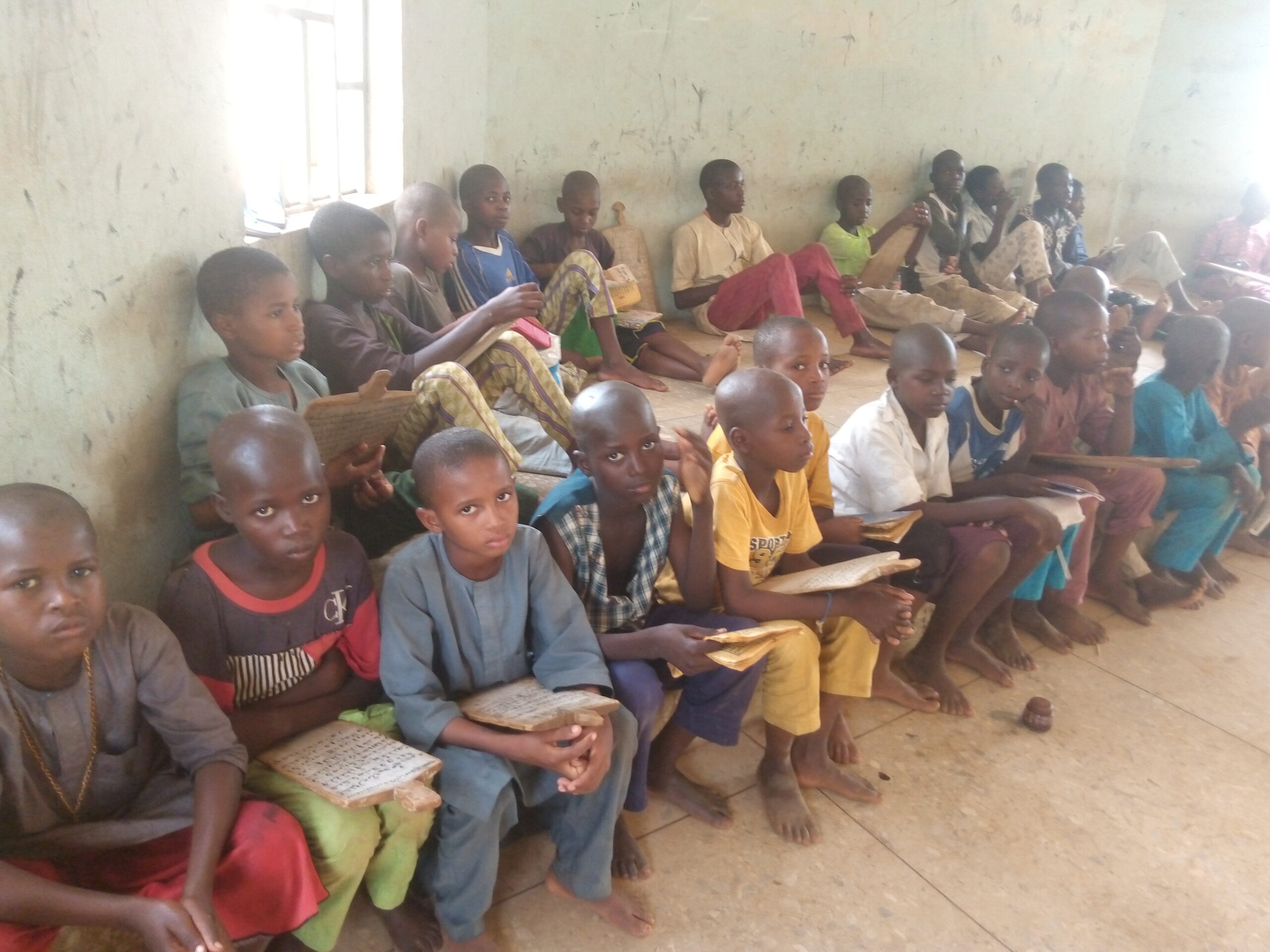
The Federal Government has tightened enforcement measures in Almajiri learning centres nationwide, warning that non-compliance with newly established operational standards will attract sanctions, including closure.

Details of the measures are contained in the National Policy on the Enhancement of Almajiri Education in Nigeria, released by the Federal Ministry of Education last month and obtained by our correspondent on Tuesday.

The policy covers operations and management of all Almajiri learning centres, males and females, across the country.

At the centre of the policy is a set of mandatory standards that all learning centres must meet or risk suspension after a probation period of three to six months.

The framework, to be implemented by the National Commission for Almajiri and Out-of-School Children Education, introduces stricter regulation of the system, long criticised for neglect and abuse.

Under the new rules, all Almajiri centres are required to register with relevant state or local authorities and maintain comprehensive records of learners, including biometric data, to enhance monitoring and accountability.

Operators must also submit periodic reports and allow routine inspections by government agencies.

“Any learning centre that fails to comply with the provisions of this policy shall be given a probation period of three to six months; thereafter, appropriate action shall be taken, such as sanction from operation,” the policy report stated.

It explicitly bans the practice of sending learners to beg on the streets, a long-standing feature of the system.

“Any registered learning centre that sends learners out to beg shall face appropriate action, such as a sanction from the operation,” it added.

See also  Secondary Schools with unqualified teachers to lose WAEC and NECO accreditation – FG

In addition, the government has set minimum welfare and health standards.

Learners and facilitators are now required to undergo periodic medical checks at recognised public health facilities, while centres must be linked to nearby healthcare providers and equipped with basic first aid kits.

“New entrants shall have the following basic needs as conditions for enrolment: a minimum of three items of clothing; two pairs of footwear; an eating plate and cutlery; writing materials as applicable or appropriate,” the policy outlined.

Clear age limits have also been introduced, restricting enrolment in day centres to children aged four to 18, while boarding facilities are limited to those between 12 and 18 years.

Adult learners, the policy states, must be taught separately.

To address concerns over poor learning outcomes, the government has mandated a uniform but expanded curriculum.

“Literacy and Numeracy shall be infused into the curriculum of the Almajiri teaching and learning. Relevant digital skills shall be included in the training of the facilitators and learners.”

Infrastructure requirements have also been standardised.

“At least one toilet for a population of not more than 25 Almajiri/Almajira learners. Adequate water supply to the Learning Centre. Learning centre shall be adequately ventilated,” it added.

The policy also introduces gender-sensitive provisions, mandating separate learning spaces for male and female learners.

“There shall be a separate learning space for male and female learners,” it stated, adding that operational guidelines now require centres to adhere to approved academic calendars and open their operations to oversight.

“Learning centres shall open doors for supervision and monitoring by the appropriate LGA, state/FCT or federal authority as may be required.”

See also  Ekiti approves N165m for rehabilitation of two schools

Officials said failure to comply with any of these provisions would trigger enforcement actions, stressing that the sanctions regime is designed to compel adherence and eliminate exploitative practices.

The government noted that the reforms build on earlier interventions by the National Commission for Nomadic Education and the Universal Basic Education Commission, but acknowledged that gaps in regulation and implementation have allowed the system’s challenges to persist.

It added that while the policy does not seek to take over Almajiri learning centres, strict enforcement of the new standards is necessary to safeguard learners, improve education quality and address the growing number of out-of-school children linked to the system.

The Almajiri system, which dates back several centuries in northern Nigeria, traditionally involves young boys leaving their homes to study the Quran under the guidance of a Mallam (teacher).

Learners often live with their Mallam or in small communal hostels, relying on alms or contributions from the community for food and basic needs.

Over time, the system has faced widespread criticism for exposing children to poverty, neglect, street begging, and exclusion from formal education.

Previous attempts to regulate Almajiri centres have met with limited success due to inconsistent oversight, inadequate funding, and, in some areas, cultural and religious resistance. Advocates for reform argue that formalising the system, integrating modern education, and enforcing welfare standards are essential to protect vulnerable children and reduce the number of out-of-school youths across northern Nigeria.


Continue Reading
Click to comment

Leave a Reply

Your email address will not be published. Required fields are marked *

Education

UNICAL first female SUG president graduates with First Class

Published

on

A former President of the Students’ Union Government of the University of Calabar (UNICAL) Blessing Alims, has called on Nigerian youths to embrace discipline and the spirit of resilience as essential tools for success.

Alims, who gained admission in 2020, said she funded her studies through menial jobs, including shoemaking and fashion designing at the Cross River Garment Factory, while volunteering with the Girls’ Power Initiative in Calabar.

She graduated as one of the best graduating student recently at the university’s 38th convocation.

Speaking on Tuesday in Calabar, Alims stressed that while the country presents numerous challenges, young people must resist the temptation to solely blame external factors for their setbacks.

According to her, discipline remains the defining factor that separates successful individuals from those who remain stagnant despite having opportunities.

She added, “You must be consistent and focus. In my 300 level, I broke barriers as the first female SUG President, leading over 45,000 students. During my tenure, I improved campus transportation with five mini buses, awarded N1,000,000 to the best graduating student, sponsored 50 students through the SUG President scholarship scheme, secured a solar-powered borehole to improve hostel water access and championed advocacy that led to the university’s first gender policy”.

The union leader also highlighted the importance of education, skill acquisition, and entrepreneurship, urging young Nigerians to invest in personal growth and development.

She further encouraged students and graduates to be intentional on discipline and make productive use of digital platforms, describing the internet as a powerful tool for learning, networking, and economic empowerment.

See also  SSANU, NASU issue strike notice over unpaid allowances

“Discipline is not just about avoiding distractions; it is about making the right choices daily, even when it is inconvenient. The internet is a powerful tool for learning, networking, and economic empowerment. Utilize it effectively.”

“In 2020, I got admitted; in 2024, I made history as the first female SUG President in UNICAL since 1975. In 2026, I graduated with a First Class. Let my story inspire you.

“Today, I am the number six overall best graduating students  at the University of Calabar 38th Convocation and the overall best from my faculty, department  and LGA”, she said.

punch.ng

FOLLOW US ON:

FACEBOOK

TWITTER

PINTEREST

TIKTOK

YOUTUBE

LINKEDIN

Continue Reading

Education

Abia compresses six years primary education into three, read details

Published

on

To accelerate Basic Education Programme as part of efforts to expand access to learning for adults and out-of-school residents, the Abia State Government announced it has compressed six years of primary education into three years.

The programme which is being implemented by the state Agency for Mass Literacy, Adult and Non-Formal Education, is targeted at individuals who were unable to complete their basic education.

The State Information Commissioner Prince Okey Kanu, announced this to journalists at Government House Umuahia Monday evening after the state executive council weekly meeting which the state governor Dr Alex Otti presided over.

Commissioner Kanu also disclosed that Abia State has been selected as one of the beneficiary states of a $250 million World Bank Health Security Grant, attributed it to the ongoing development reforms in the sector, noting that there had been no reported cases of major public health diseases such as Lassa fever, Mpox, diphtheria, yellow fever, cholera and rabies during the review period.

Commissioner Kanu therefore urged the concerned citizenry to take advantage of the initiative to obtain their first school-leaving certificate.

He said “the Abia State Accelerated Basic Education Programme that is aimed at running the six years primary school curriculum in three years has commenced. Abians and residents who could not conclude their basic education should take advantage of this opportunity to sit for and obtain their first school-leaving certificate in the State”.

According to Commissioner Kanu, Abia State happens to be one of the states that are running this programme for those who missed out in their early years and do not have the opportunity to obtain their first school-leaving certificate.

See also  PHOTOS: 200-level Niger State varsity d!es after collapsing in her off-campus residence

“So this programme makes it possible for all such people to take advantage of this programme”, he added

On the ongoing recruitment of additional 4,000 teachers in the state , Commissioner Kanu further disclosed that the results of the oral interviews for Batch Two candidates in the teachers’ recruitment exercise, who were shortlisted after the Computer Based Test (CBT), are currently being compiled, and assured that all successful candidates will be duly notified in due course.

The Commissioner also disclosed that over 7,280 candidates scored above 40 per cent in the Computer-Based Test, assuring that the process would remain transparent and merit-driven.

“In line with the standards of the transparent process and the fairness of the recruitment process in the state, everybody will be given a fair chance based on his/her performance”, he remarked.

He informed that the 2026 Association of Nigerian Physicians in the Americas (ANPA), Medical Mission to the state will commence on Tuesday, April 14, 2026 with a formal the opening ceremony at the Michael Okpara Auditorium, Umuahia, by 10 a.m.

He said that the exercise will feature no fewer than 1,500 consultations and 100 specialised surgeries to residents across the state.

The Commissioner explained that while consultations and surgeries would take place at Aba General Hospital, those for Eye Care would be handled at the Abia Specialist Hospital and Diagnostic Centre in Umuahia, those for sexuality and reproductive health services attended to at Ogbonnaya Onu Polytechnic, Aba

According to the state Health Commissioner Professor Enoch Uche, the AbIa/ ANPA initiative is a rare opportunity for residents to access world-class medical services locally.

See also  Secondary Schools with unqualified teachers to lose WAEC and NECO accreditation – FG

He argued ” instead of people having to travel to America, they will just travel from their locations across Abia State and go to Aba or Umuahia to get these free Medicare services during this period”,

He attributed the return of ANPA to Abia within a short period after the last exercise, to the present governor Alex Otti administration’s commitment to healthcare reform, adding that beyond treatment, the medical mission would focus on capacity building for local health workers.

It was also made known to journalists that Abia State has domesticated the Rural Emergency Services and Maternal Transport Programme under the Maternal Mortality Initiative (MAMI) in three local government areas of Bende, Obingwa and Ukwa East, which have been identified as having high maternal mortality rates, and that the main objective of the programme is to provide access to emergency care in order to reduce maternal, child and neonatal mortality.

punch.ng

FOLLOW US ON:

FACEBOOK

TWITTER

PINTEREST

TIKTOK

YOUTUBE

LINKEDIN

Continue Reading

Education

Security beefed up at JAMB exam centres – Police

Published

on

The Nigeria Police Force has deployed a rapid response team across examination centres nationwide ahead of the 2026 Unified Tertiary Matriculation Examination conducted by the Joint Admissions and Matriculation Board (JAMB).

This is as the police dismissed circulating rumours about threats to candidates’ safety as unfounded.

In a statement on Tuesday, the Force Public Relations Officer, Anthony Placid, said the police were aware of “recent unfounded rumours” concerning the safety of some centres in a North Central state, but stressed that such claims had no basis.

“The Nigeria Police Force wishes to categorically state that these claims are without basis.

“While the NPF does not act on rumours, the concerns raised by members of the public have been duly noted as it concerns the safety, education and future of our children and wards,” the statement noted.

He said the police had taken proactive measures to ensure a secure environment for candidates sitting the examination scheduled to commence on Thursday.

“To this end, extra security has been deployed at examination centres nationwide, both overtly and covertly, to prevent any untoward incidents.

“This includes routine patrols, perimeter checks, and rapid response teams stationed at strategic locations,” the statement added.

Placid added that the police were working closely with other security agencies to monitor and respond to potential threats.

“The Nigeria Police Force is collaborating closely with sister security agencies to monitor and address potential threats effectively.

“Any individual or group attempting to disrupt the examination process will be swiftly identified and brought to justice,” Placid stated.

See also  PHOTOS: 200-level Niger State varsity d!es after collapsing in her off-campus residence

The police spokesperson reassured candidates, parents and the general public of adequate protection throughout the examination period, urging candidates to comply with guidelines.

“Candidates are encouraged to arrive early at their centres, adhere to examination regulations, and report any suspicious activities or persons to on-site security personnel,” he said.

He also cautioned the public against spreading unverified information on social media, advising them to rely on official updates from the police and JAMB.

“The Force remains committed to maintaining peace, security, and public confidence in all national activities, including the JAMB examinations,” he said.

The PUNCH reports that the 2026 UTME is scheduled to hold from Thursday, April 16, to Saturday, April 25, 2026.

punch.ng

FOLLOW US ON:

FACEBOOK

TWITTER

PINTEREST

TIKTOK

YOUTUBE

LINKEDIN

Continue Reading

Trending