Connect with us

Business

Nigeria Emerges Africa’s 2nd Largest Solar Energy Importer, Ahead Of Egypt

Published

on

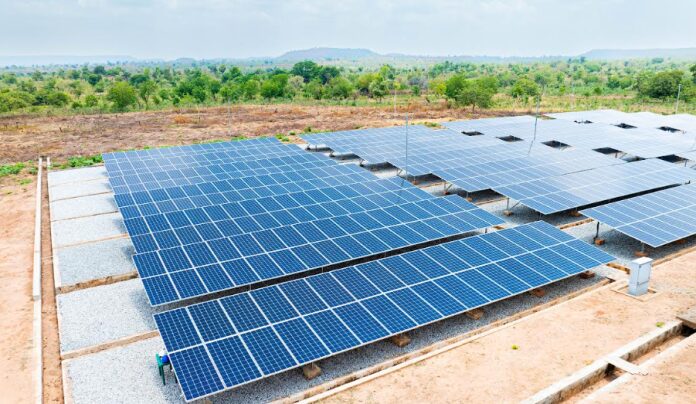
Nigeria has stepped up ahead of Egypt as Africa’s second-largest importer as solar energy and battery storage provide a practical and affordable alternative to diesel generators and unreliable grid power.

The gradual removal of diesel subsidies in Nigeria in the past two years also has helped accelerate adoption of solar energy. The policy was implemented sector by sector to cushion its impact, making diesel increasingly expensive and nudging businesses and households toward solar.

Last September, Nigeria announced plans for a 1 GW solar panel factory, the largest in West Africa. Similar facilities are under construction in Egypt, South Africa and Ethiopia.

Historically, South Africa dominated solar imports in Africa, at one point accounting for roughly half of all panels shipped to the continent. The latest data show its share has slipped below a third as demand surged elsewhere. Last year, 20 African nations set new annual records for solar imports, as 25 countries imported a total of at least 100 megawatts of capacity, according to report by the Africa Solar Industry Association.

In Algeria, solar imports soared more than 30-fold year-on-year. Imports also surged in Zambia and Botswana.

At least 23 African countries, including South Africa, Tunisia, Kenya, Chad and the Central African Republic, are now generating over 5 per cent of their electricity from solar energy, the report said.

Prices have fallen both for solar panels and batteries, mostly from China, enabling households and businesses to rely on solar plus batteries for round-the-clock electricity, the report said. Battery storage costs in Africa fell to $112 per kilowatt-hour in 2025 from an average of $144 per kilowatt-hour in 2023 as improved technology made storage systems more flexible and longer lasting.

See also  IMPI projects Nigeria’s GDP to hit 5.5%

Africa was the world’s fastest-growing solar market in 2025, defying a global slowdown and reshaping where the momentum in renewable energy is concentrated, according to the report.

The continent’s solar installed capacity expanded 17 per cent in 2025, boosted by imports of Chinese-made solar panels. Global solar power capacity rose 23 per cent in 2025 to 618 GW, slowing from a 44 per cent increase in 2024.

“Chinese companies are the main drivers in Africa’s green transition,” said Cynthia Angweya-Muhati, acting CEO of the Kenya Renewable Energy Association. “They are aggressively investing in and building robust supply chains in Africa green energy ecosystem.”

Some of that capacity has yet to be rolled out. Africa has only 23.4 gigawatts peak (GWp) of working solar capacity even though nearly 64 GWp of solar equipment has been shipped to the continent since 2017. A gigawatt peak represents 1 billion watts of maximum, optimum power output under ideal conditions.

“Africa’s growth is driven by changing policies and enabling conditions in a number of countries, “said John Van Zuylen, CEO of the Africa Solar Industry Association.

“Solar energy has moved beyond a handful of early adopters to become a broader continental priority,” he said recently on the sidelines of the Inter Solar Africa summit in Nairobi. “What we are seeing is not temporary. It is policies aligning with market dynamics.”

“This ever-decreasing price of storage has game-changing implications for Africa, which has a dire need for stable and baseload power,” said Van Zuyken.

As Africa moves to build its own manufacturing capacity, the industry is looking to China to transfer knowhow to help alleviate Africa’s dependence on imported equipment and technology.

See also  GenCos deny NLC’s ‘extortion’ claims, warn of looming power crisis

“The solar jobs boom is occurring in services including installation, maintenance, distribution and financing, where thousands of small and medium enterprises are emerging to meet rising demand,” Van Zuylen said.

FOLLOW US ON:

FACEBOOK

TWITTER

PINTEREST

TIKTOK

YOUTUBE

LINKEDIN

TUMBLR

INSTAGRAM

Continue Reading
Click to comment

Leave a Reply

Your email address will not be published. Required fields are marked *

Business

Pure Water producers announce increment in price of bag

Published

on

The Kano State chapter of the Association of Table Water Producers (ATWAP) has announced an upward review in the price of sachet water, popularly known as “pure water,” citing rising production costs.

In a statement, the Public Relations Officer of the association, Anas Idris Hassan said the price of a bag of sachet water, previously sold at N220 has now been adjusted to a minimum of N300 across the state.

Hassan explained that the decision followed what he described as an unsustainable increase in the cost of essential production materials, which he said has risen by about two-thirds.

According to the association, the price of printing film used for packaging has climbed to N3,700, while the cost of gas and fuel has reached N1,500 per litre.

The association also noted that the persistent lack of stable electricity has forced most factories to depend heavily on generators, further increasing operational expenses.

Hassan described the review as a last-resort aimed at ensuring the continued availability of safe drinking water for residents of the state.

ATWAP Chairman, Ahmad Bala Hudu said the adjustment was necessary to prevent the collapse of the sachet water production industry in the state.

Despite the price increase, Hudu warned producers against compromising on water quality, stressing that all members must maintain strict purification standards.

He said reverse osmosis systems and other water treatment processes must be properly maintained to ensure the safety of consumers.

The chairman added that the association is working closely with health authorities to conduct inspections of production facilities across the state.

See also  Counterfeit empire: Lagos electronics market where fake products sustain luxury

He warned that any producer found violating health regulations or bypassing approved standards would be handed over to the appropriate law enforcement agencies.

The association appealed to residents to show understanding over the price adjustment, particularly as the development comes during the ongoing holy month of Ramadan.

FOLLOW US ON:

FACEBOOK

TWITTER

PINTEREST

TIKTOK

YOUTUBE

LINKEDIN

TUMBLR

INSTAGRAM

Continue Reading

Business

Iran strikes Israel, Gulf nations as oil prices fluctuate

Published

on

Iran unleashed a wave of attacks against Israel and Gulf nations on Wednesday, including targeting a Saudi oilfield, as reports of a proposed record release of oil reserves helped calm markets and prices.

The war sparked by United States-Israeli strikes on Iran has spread across the region and beyond, causing spiking energy costs, fuel rationing and even school closures.

G7 leaders will meet by video conference later on Wednesday to discuss the war’s economic consequences, particularly the “energy situation,” the French presidency said. The International Energy Agency will decide on a proposal for its largest-ever oil reserve release, the Wall Street Journal reported.

The United States on Tuesday said it was hitting Iranian ships capable of mining the Strait of Hormuz, the crucial passageway for oil that has been effectively closed by Iranian threats.

The US military posted video footage of Iranian boats blasted apart, saying it had destroyed 16 minelayers near the strait, through which one-fifth of the world’s oil passes.

“If for any reason mines were placed, and they are not removed forthwith, the military consequences to Iran will be at a level never seen before,” President Donald Trump wrote on social media.

Trump faces mounting political risks over the surging cost of oil, months before US elections. Crude prices spiked five per cent late Tuesday before turning lower on Wednesday after the reserve release report.

Trump said the US military could accompany tankers through the strait, but his administration acknowledged that a post by the energy secretary announcing a first such escort was untrue.

See also  Recapitalisation hurdle: Pension firms hunt for N277bn lifeline

Early on Wednesday, the UK maritime agency said a container ship off the coast of the United Arab Emirates had been hit by an “unknown projectile,” illustrating the ongoing risks to transport through the region.

With an eye on jittery markets, Trump on Monday said the war would be short, although his Defence Secretary, Pete Hegseth, said Tehran would be hit by unprecedented fire on Tuesday.

’Not seeking ceasefire’

The Israeli-US attacks came weeks after Iranian authorities ruthlessly crushed mass protests, although the United States and Israel said they were not necessarily seeking to topple the Islamic republic.

Iranian authorities warned against dissent at home, with the country’s police chief saying protesters would be viewed and dealt with as “enemies.”

“All our forces are also ready, with their hands on the trigger, prepared to defend their revolution,” national police chief Ahmad-Reza Radan said in comments aired by IRIB.

Tehran also intensified its assault on targets in the region, with the government announcing it carried out its own “most intense and heaviest” salvo, firing missiles for three hours at cities across Israel.

AFP journalists heard air raid sirens and explosions in Jerusalem. Emergency services reported no immediate injuries, although Channel 12 said several people were hurt in Tel Aviv. New salvos were reported early on Wednesday, with no reports of injuries.

Iran’s Revolutionary Guards said they also fired on Bahrain and Iraqi Kurdistan, both of which have a heavy US military presence, and also targeted a US air base in Kuwait, Iranian media said.

See also  NNPCL secures N318bn to fund new oil exploration

Kuwait said it had downed eight drones, without offering further details.

Drones and ballistic missiles were also intercepted elsewhere in the Gulf, including multiple drones heading to the Shaybah oilfield in Saudi Arabia, its defence ministry said.

Earlier, Iranian parliament speaker Mohammad Bagher Ghalibaf, a former top commander in the elite Revolutionary Guards, said in an English-language post on X: “Certainly we aren’t seeking a ceasefire.”

“We believe the aggressor must be punished and taught a lesson that will deter them from attacking Iran again,” he added.

Seven US military personnel have been killed and about 140 injured since the start of the war, according to the Pentagon.

**Fright in Tehran**

The United States and Israel launched the war on February 28 with an attack that killed Iran’s veteran leader, Ayatollah Ali Khamenei. His son, Mojtaba Khamenei, has been named his successor, though he has yet to appear in public.

In Tehran, one woman in her 40s said she found some reassurance in her impression that the bombings “don’t target ordinary buildings.”

“The noise of the bombings is extremely disturbing,” she said.

Iran’s health ministry said on March 8 that more than 1,200 people had been killed and over 10,000 civilians injured.

The conflict has spread as far as Sri Lanka, where US forces torpedoed an Iranian ship, and Australia, which said on Wednesday it had granted asylum to two more members of the Iranian women’s football team.

Iraq and Lebanon, both home to Iran-backed fighters, have become proxy battlegrounds in the war.

In Iraq, Iranian-linked groups said on Tuesday that five of their fighters died in strikes they blamed on the United States.

See also  Nigerians lose millions in dashed Umrah dreams due to US-Iran war

In Lebanon, hundreds of people have been killed and hundreds of thousands have fled their homes following Israeli air strikes and ground operations targeting Iran-backed Hezbollah.

New Israeli strikes were reported in Beirut’s southern suburbs on Wednesday, with the health ministry saying another five people had been killed in the southern town of Qana.

An Israeli strike also hit a central Beirut neighbourhood on Wednesday morning, state media reported.

Iran complained to the United Nations that four of its diplomats died in a strike on a seafront hotel in central Beirut on Sunday, which Israel said was aimed at “key commanders” from Iran’s Revolutionary Guards.

The effects of the war are being felt globally, with the UN trade and development agency warning of rising costs for essentials such as fuel and food hitting the world’s most vulnerable people.

In Egypt, which increased the cost of fuels by up to 30 per cent, mother-of-six Om Mohamed fretted about the future.

“We were barely getting by as it is. I don’t know how people will manage,” she told AFP at a Cairo market.

AFP

punch.ng

FOLLOW US ON:

FACEBOOK

TWITTER

PINTEREST

TIKTOK

YOUTUBE

LINKEDIN

TUMBLR

INSTAGRAM

Continue Reading

Business

Reps query foreign airlines’ N18.98bn debt, give FAAN two-week recovery deadline

Published

on

The House of Representatives Committee on Finance on Tuesday directed the Federal Airports Authority of Nigeria to recover the N18.98bn owed to the Federal Government by foreign airlines operating in the country within two weeks.

The directive was issued by the Chairman of the Committee, James Faleke, when officials of FAAN, led by the Managing Director, Olubunmi Kuku, appeared before the panel as part of its ongoing revenue monitoring exercise.

Lawmakers expressed displeasure over what they described as the growing debt profile of international airlines operating in Nigeria, insisting that the situation was unacceptable.

Faleke noted that the accumulation of such liabilities, despite clearly defined payment timelines for airport service charges, raised serious questions about revenue enforcement in the aviation sector.

Earlier in her presentation, the FAAN managing director explained that airlines operating in Nigerian airports are required to settle their service charges within two weeks.

She, however, disclosed that a number of operators had exceeded that window, with some liabilities stretching beyond 30 days, 90 days and, in certain cases, more than one year.

Kuku also presented a breakdown of the outstanding debts owed by several international carriers.

Among the airlines listed were Qatar Airways, Lufthansa, British Airways, Virgin Atlantic, KLM, EgyptAir, Ethiopian Airlines, Air France, Royal Air Maroc, Turkish Airlines and Africa World Airlines.

She explained that the figures represent charges for services provided by FAAN and collected through the settlement platform of the International Air Transport Association.

According to her, Qatar Airways currently owes about N1.5bn, while Lufthansa’s outstanding liability also stands at approximately N1.5bn.

See also  Recapitalisation hurdle: Pension firms hunt for N277bn lifeline

She further stated that Virgin Atlantic owes about N1.35bn, while KLM, EgyptAir and Ethiopian Airlines each owe over N1bn in varying categories of current and outstanding payments.

Other airlines listed in the debt profile include Air France, Royal Air Maroc, Turkish Airlines and Africa World Airlines, with liabilities ranging between N700m and N1bn.

The FAAN boss told the committee that the total outstanding amount owed by the airlines currently stands at N18.98bn.

Lawmakers, however, queried why the airlines were allowed to accumulate such debts despite the stipulated two-week payment window.

A member of the committee asked FAAN why operators who fail to meet their obligations within the approved timeframe were not sanctioned or barred from operating at Nigerian airports.

“Why would you allow an airline to owe beyond the two weeks allowed?” the lawmaker queried.

The committee also demanded to know whether airlines that eventually settle their obligations after the deadline are required to pay interest on the outstanding sums, warning that persistent delays could amount to negligence.

Members further questioned why certain airlines were allowed to continue operations despite carrying debts exceeding 90 days or even one year, stressing that such practices could undermine revenue enforcement.

Responding, Kuku explained that international airline payments are often processed through a global clearing system operated by IATA, which sometimes results in settlement delays.

She noted that the system allows airlines to make payments through a centralised platform used globally for aviation ticketing and financial settlements.

According to her, FAAN closely monitors the ageing of airline debts and intensifies engagement with operators once liabilities exceed 30 days, while debts above 90 days attract stronger enforcement measures.

See also  Nigerian Stock Market Soars with N27Tr Gain

She also revealed that FAAN had, on some occasions, grounded airlines that failed to meet their payment obligations, particularly domestic operators that do not operate under the same global credit structure as international carriers.

Despite the explanation, lawmakers insisted that stricter enforcement mechanisms must be introduced to prevent the continued accumulation of debts.

The committee subsequently directed FAAN to provide detailed addresses and documentation for all the airlines listed as debtors.

It also warned that the affected operators would be invited to appear before the House to explain the outstanding liabilities if they fail to clear the debts within the stipulated period.

“We need every kobo that belongs to this country,” Faleke said, warning that airlines found violating their financial obligations would be held accountable.

Foreign airlines operating in the country are required to pay a range of statutory charges for the use of airport facilities and services provided by FAAN.

These include passenger service charges, landing and parking fees, aeronautical service charges and other operational levies.

PUNCH Online reports that over the years, the recovery of such charges has occasionally been complicated by the global settlement structure used in the aviation industry, where airlines process payments through the International Air Transport Association’s clearing system.

Under this arrangement, airlines operating in multiple jurisdictions settle certain charges through centralised platforms that aggregate payments before disbursement to airport authorities and service providers.

However, Nigerian lawmakers have repeatedly raised concerns that the system should not be used as a basis for prolonged delays in settling debts owed to government agencies.

See also  IMPI projects Nigeria’s GDP to hit 5.5%

The latest directive by the House Committee on Finance forms part of a broader effort by the National Assembly to strengthen revenue collection by federal agencies and block leakages in government income streams, particularly in sectors considered critical to national economic growth.

punch.ng

FOLLOW US ON:

FACEBOOK

TWITTER

PINTEREST

TIKTOK

YOUTUBE

LINKEDIN

TUMBLR

INSTAGRAM

Continue Reading

Trending