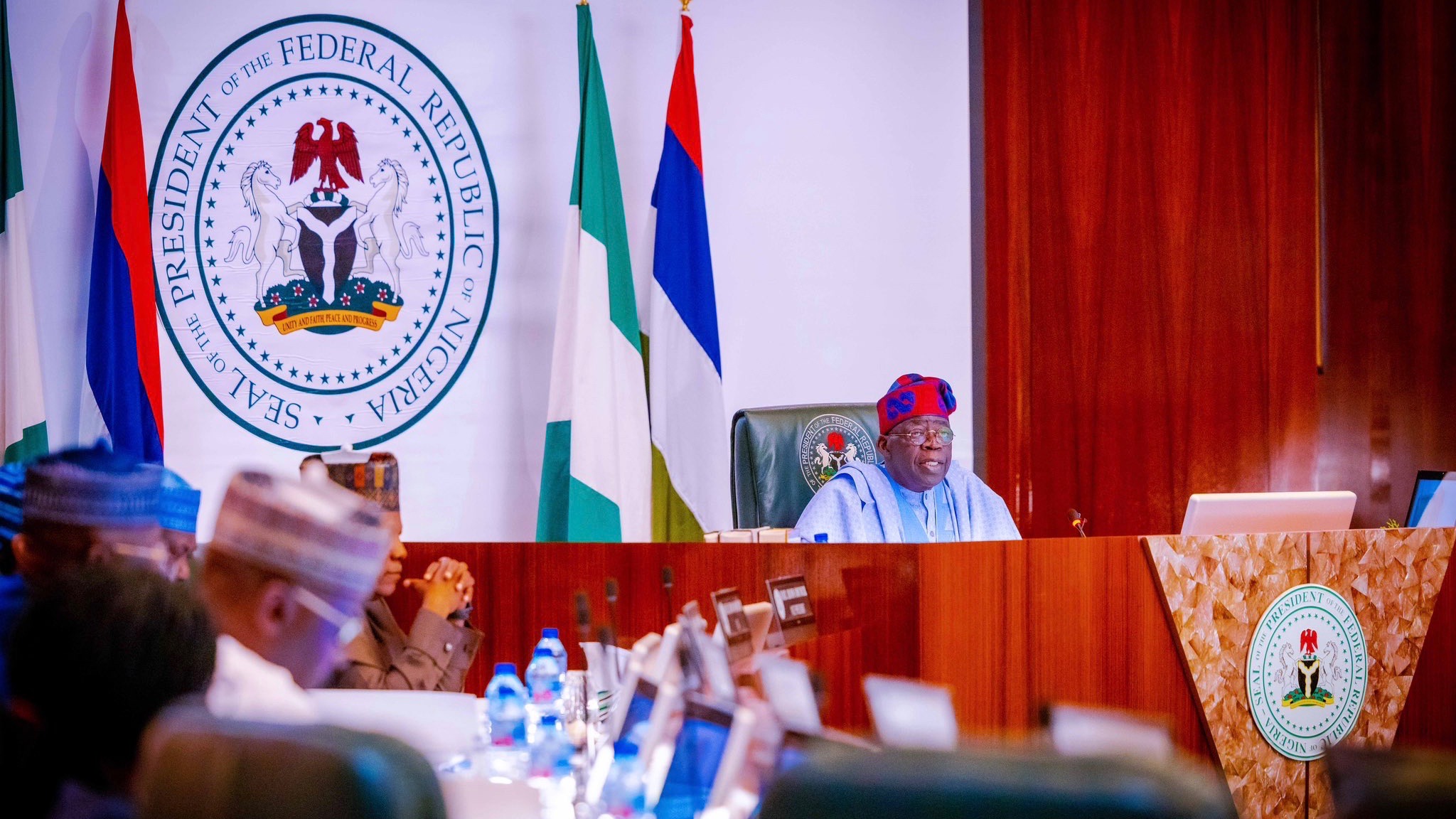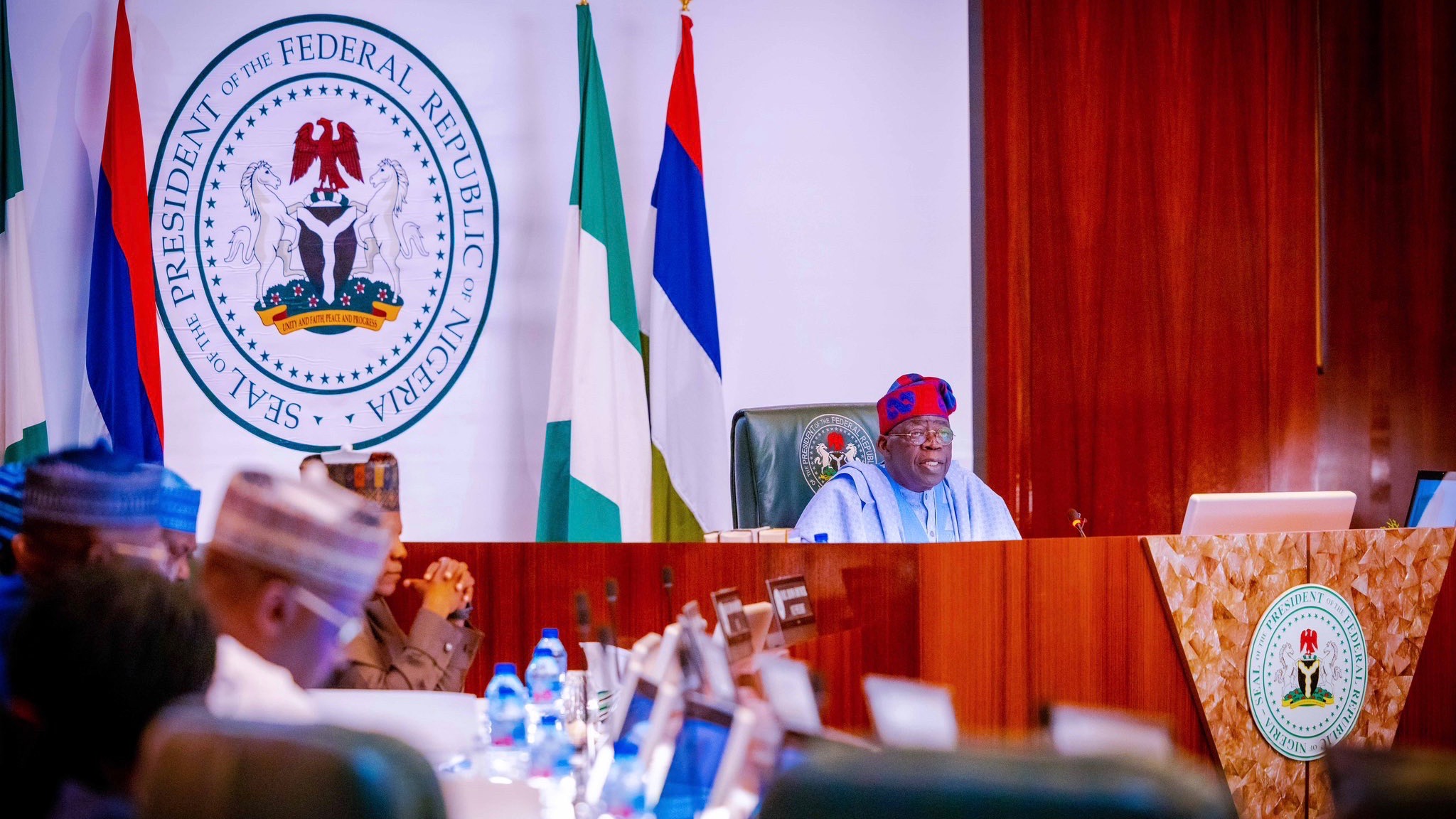
President Bola Tinubu and Vice President Kashim Shettima have inaugurated at least 46 committees since assuming office in May 2023, with budget allocations and documented spending on these panels crossing N13bn in less than three years.
Analysis of budget documents from 2023 to 2026 and government payment data obtained from GovSpend, a public finance transparency platform, shows that N12.99bn has been allocated for the running of long-standing presidential committees, while at least N105.97m in traceable disbursements have been made to individuals and companies servicing specific ad hoc panels.
The N13.1bn represents approximately 62 per cent of the N21.17bn spent over seven years between 2018 and 2025 under the previous administration, according to an analysis by The PUNCH.
For the period under review, committee-related spending was N4.37bn per year, significantly higher than the N3bn annual average recorded between 2018 and 2022 under the previous administration.
The data showed that most of the Tinubu-era committees were special-purpose or ad hoc committees set up to address specific policy challenges with defined lifespans.
The rest are long-standing statutory panels with permanent secretariats that receive annual budget allocations.
Budget documents show consistent annual allocations for these long-standing presidential committees under the Office of the Secretary to the Government of the Federation.
In 2023, the Presidency allocated N3.73bn for these panels, covering political officers and standing committees, the Presidential Advisory Committee, the Presidential Technical Committee on Land Reforms, the Presidential Advisory Committee on the Prerogative of Mercy, the Presidential Enabling Business Environment Council, the Presidential Standing Committee on Private Jetties, and the Presidential Standing Committee on Inventions and Innovations.
In 2024, total allocations amounted to N2.96bn.
The breakdown included N2.58bn for Political Officers and Standing Committees, N50m for the Presidential Standing Committee on Private Jetties, N89.29m for the Standing Committee on Inventions and Innovations, N10.73m for the Presidential Advisory Committee, N221.3m for the Presidential Technical Committee on Land Reforms, and N9.8m for the Advisory Committee on the Prerogative of Mercy.
The 2025 appropriation rose to N3.24bn, with the Presidential Technical Committee on Land Reforms alone drawing N478.45m, more than double its 2024 allocation.
Other line items included N2.58bn for Political Officers and Standing Committees, N65m for the Standing Committee on Private Jetties, N89.29m for Inventions and Innovations, N15.38m for the Presidential Advisory Committee, and N8m for the Prerogative of Mercy committee.
In 2026, the allocation stood at N3.06bn, comprising N2.58bn for Political Officers and Standing Committees, N418m for the Land Reforms committee, N45.5m for Private Jetties, and N15.37m for the Presidential Advisory Committee.
Aside from the budget allocations, GovSpend data reveals six specific payments made for the operations of ad hoc presidential committees between May 2023 and December 2025, totalling N105.97m.
The earliest entries, both dated May 31, 2023, weeks after the President’s inauguration, revealed payments of N46.64m to Shale Atlantic Intercontinental Services Limited and N21.72m to Good News Creative Ideas Limited, both described as consultant fees for the Presidential Committee on Salaries reviewing the 2014 and 2012 white paper reports.
On December 26, 2023, the Secretary to the Government of the Federation disbursed N5.02m to a project accountant for the purchase of toners, office consumables, and photocopying services to enable the Presidential Committee on Trade Malpractices to carry out its mandate.
Four days later, on December 30, 2023, the National Agency for Science and Engineering Infrastructure paid N19m to Muhammed Salisu as honorarium for members of the Presidential Committee on the Transfer of Technology.
The Federal Ministry of Justice paid N7.52m to Charvid Digital Printing Press Limited on March 15, 2024, for the printing of reports of an unnamed presidential committee, following approval by the SGF on February 26, 2024.
On December 31, 2025, a payment of N6.07m was made to Francis Emmanuel Ukpong as project accountant to the Presidential Committee on Trade Malpractices for administrative and operational costs.
However, the figures represent only what is traceable through the government’s payment infrastructure.
Since taking the oath of office on May 29, 2023, Tinubu and Shettima have turned to committees as a default governance mechanism across virtually every major policy challenge.
On June 19, 2023, barely three weeks in office, the President constituted a steering committee to address organised labour’s demands following the abrupt removal of petrol subsidies.
The committee was mandated to produce a workable framework within eight weeks.
On July 7, 2023, the President established the Presidential Committee on Fiscal Policy and Tax Reforms, appointing former PwC partner Taiwo Oyedele as chairman. The committee was inaugurated in August.
In the same month, the Federal Government created the Presidential Steering Committee on Palliatives to forestall a looming nationwide labour crisis.
On September 14, 2023, Tinubu established the Presidential Committee on Implementation of Livestock Reforms, which eventually led to the creation of a new Ministry of Livestock Development.
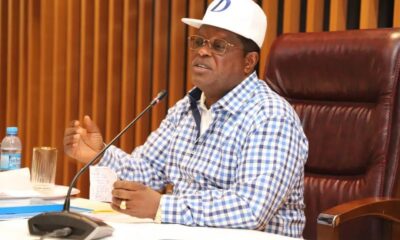
On October 10, 2023, he set up the Presidential Committee on Flood Mitigation, Adaptation, Preparedness and Response, directing immediate action to mitigate nationwide flooding. Then-Kogi State Governor Yahaya Bello chaired the committee, which submitted a roadmap on November 23.
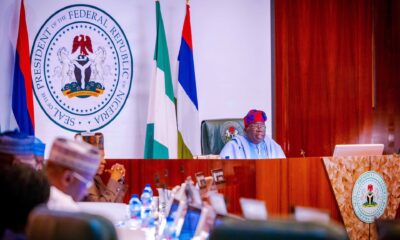
Six days later, the Federal Executive Council, chaired by the President, created the Presidential Council on Industrial Revitalisation Roadmap, with Tinubu himself as chairperson.
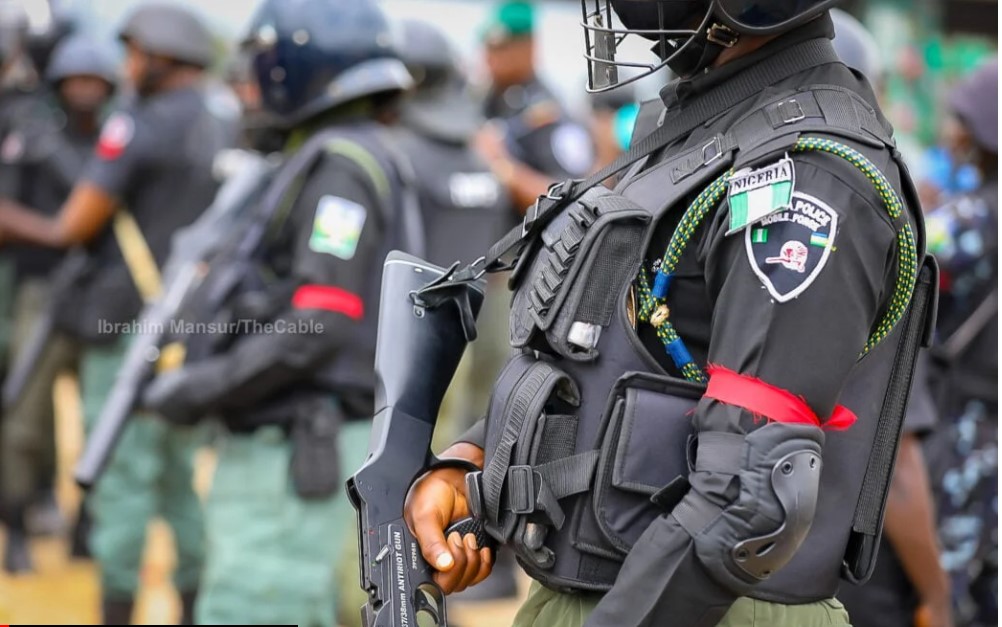
On November 1, 2023, following a meeting of the Nigeria Police Council, the President established a special committee to assess constitutional shortcomings and enhance coordination and technology resources for the police.
A week later, he inaugurated the National Coordination Committee on Civil Registration and Vital Statistics System alongside the National Geospatial Data Repository.
On November 10, 2023, Vice President Shettima constituted an ad hoc committee to harmonise Nigeria’s agenda at the COP28 Climate Change Conference in the United Arab Emirates.
Ten days later, Shettima established a multi-sectoral committee to drive the Federal Government’s Human Capital Development programme, which was inaugurated in May 2024.
On December 21, 2023, the National Economic Council, chaired by the Vice President, created two committees on Economic Affairs and Crude Oil Theft and Management, headed by Kwara State Governor, AbdulRahman AbdulRazak and Imo State Governor, Hope Uzodimma, respectively.
In 2024, the administration created at least 25 additional committees covering sectors including steel development, school feeding, social investment programmes, explosives regulation, minimum wage negotiations, emergency food intervention, farmer-herder clashes, state police, agricultural credit, flood prevention, economic coordination, the Oronsaye report, consumer credit, youth development, ambassadorial nominations, the National Single Window Project, CNG adoption, cholera response, sanitation campaigns, poliovirus eradication, dam integrity, minors’ detention, and electricity reform.
In 2025, the pace continued with the creation of committees on economic and financial inclusion on February 10, digital public infrastructure in May, the Museum of West African Art dispute in November, and APC conflict resolution ahead of the 2027 elections in December.
The Presidential Committee on Fiscal Policy and Tax Reforms produced a comprehensive overhaul of Nigeria’s tax architecture that resulted in four Tax Reform Acts signed into law in 2025.
The Tripartite Committee on the National Minimum Wage delivered the new wage framework eventually adopted.
The committee on state police produced the framework that opened legislative action on the subject.
However, critics argue that the committee habit has become a costly form of political patronage.
“I think it is all about political patronage because none of the committees has led to anything significant,” Deji Adeyanju, a sociopolitical activist and former leader of the Concerned Nigerians Advocacy Group, told The PUNCH in an interview.
He said, “There’s always this policy flip-flop. That is money down the drain in several committees like that.”
The Special Adviser to the President on Information and Strategy, Bayo Onanuga, had not responded to queries on the matter as of press time.