Connect with us

Business

Recapitalisation: Banks raise N4tn ahead of March deadline

Published

on

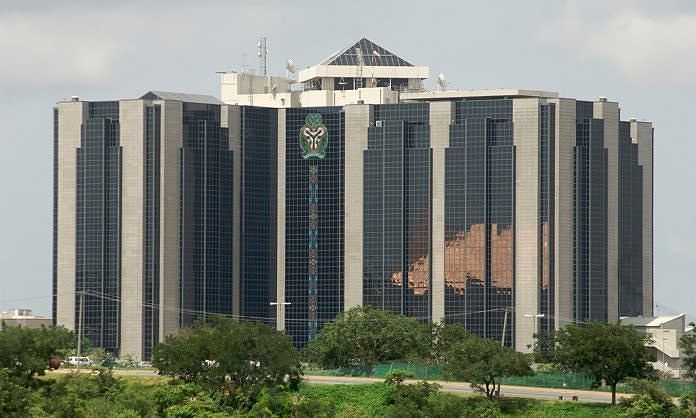
Banks have raised N4.05tn in verified and approved capital ahead of the March 31, 2026, recapitalisation deadline set by the Central Bank of Nigeria.

The CBN Governor, Olayemi Cardoso, disclosed this on Tuesday during the Monetary Policy Committee briefing in Abuja, saying, “As of February 19, 2026, total verified and approved capital raise stands at N4.05tn.”

The PUNCH observed that this figure was nearly double the N2.4tn reportedly raised as of April 2025. Cardoso said N2.90tn of the amount, representing 71.6 per cent, was mobilised domestically, while N1.15tn, equivalent to 28.33 per cent, came from foreign participation.

“In summary, 71.67 per cent is domestic mobilisation and 28.33 per cent is foreign participation. This balance, in my view, represents a mix of domestic and foreign, which signals broad investor engagement and confidence in the sector,” Cardoso said.

He recalled that he had earlier hinted at strong foreign investor appetite for Nigerian banks. “Several MPCs ago, I did mention that when I went abroad, and I met with some of the investor community, they had a very, very strong interest in investing in banks. So, I’m glad that that has come out in a very positive way,” he added.

On compliance status, the governor said, “To date, 20 banks have fully met the new minimum capital requirements, and a further 13 are at the advanced stage of their capital raising processes.”

He expressed optimism that the banks still raising capital would conclude within the stipulated timeframe. Cardoso noted that some institutions under regulatory intervention were operating under specific legal and structural considerations that influenced the sequence of their recapitalisation actions.

“We remain, as a Central Bank of Nigeria, actively engaged with all relevant stakeholders to ensure that they have an orderly and credible outcome while maintaining financial stability,” he said.

He assured depositors that “Depositor funds in these institutions remain secure, and operations continue under close supervisory and regulatory oversight of the central bank.”

In March 2024, the CBN directed banks with international licences to raise their minimum paid-up capital to N500bn, while those with national authorisation are required to meet a N200bn threshold before the March 31, 2026, deadline.

Regional commercial banks and merchant banks are expected to have a minimum capital base of N50bn, while non-interest banks must hold N20bn for national licences and N10bn for regional licences.

See also  World Bank projects Brent crude to average $60

The recapitalisation policy is aimed at strengthening the resilience of the banking sector and positioning lenders to better support economic growth and absorb potential shocks.

Beyond recapitalisation, Cardoso highlighted developments in the external sector, stating that Nigeria’s gross external reserves rose to about $50.4bn as of mid-February 2026. “Just a point of correction. These aren’t net reserves, it’s gross reserves. And the gross reserves, as of the middle of February, is about $50.4bn, which is the highest figure that we’ve had in 13 years,” he said.

According to him, the reserve build-up was supported by favourable trade developments, a healthy current account surplus, rising non-oil exports, and increased diaspora remittances.

“There’ll be favourable trade developments. The current account is in a healthy surplus, and of course, the non-oil exports have also gone up. It’s something I talk about all the time, which is the issue of diaspora remittances, which again is going up very strongly indeed,” he said.

He attributed the gains to improved market confidence. “Underpinning all this, quite frankly, is market confidence. Without market confidence, no matter what you do, you’ll find you will significantly sub-optimise,” Cardoso stated.

He added that the CBN had engaged widely with international investors, made commitments, and ensured policy consistency to engender positive market sentiment.

On sustainability, the governor cautioned that risks remained. “There will always be risks to any outlook. We cannot underestimate the potential global shocks that could come our way,” he said, citing uncertainties around oil prices and global tensions.

He also warned that pre-election spending and fiscal deficits could pose risks if not properly managed. “Importantly, pre-election spending, if not properly contained, can destabilise the stability we’ve accomplished,” he said. Nevertheless, Cardoso expressed confidence in the current direction of policy.

On inflation, he dismissed suggestions that the CBN could relax its guard following the Monetary Policy Committee’s decision to cut the Monetary Policy Rate by 50 basis points to 26.5 per cent. “That hasn’t changed, to be frank. Caution is our watchword in the central bank,” he said, stressing that the apex bank remained conservative in order to protect the economy.

He noted that headline inflation, which was about 34 per cent when the current management assumed office, had declined to slightly above 15 per cent. “Inflation at that time, 34 per cent, we’ve brought it down to where it is slightly over 15 per cent. We’re encouraged by that,” Cardoso said, adding that tight monetary policy had been necessary.

See also  Lagos Unveils N214.8bn Bond Offers To Fund Infrastructure, Climate Projects

He emphasised that sustaining the gains would require collaboration across fiscal and monetary authorities. “It will take a lot of discipline from all the stakeholders. This is not something that will be central bank alone,” he said.

On digital finance, the governor said the CBN recognised the importance of innovation but would ensure that risks to financial stability were properly managed. “We are advancing work already on a very comprehensive framework for digital assets,” he said, noting that the process would involve consultation and scrutiny to ensure transparency and long-term resilience.

He disclosed that there are over 430 licensed fintech operators in Nigeria and described the segment as systemically important, adding that the CBN was strengthening supervisory oversight to address cyber threats and other emerging risks.

The Group Chief Economist and Managing Director of Research and Trade Intelligence at Afreximbank, Dr Yemi Kale, earlier said that the ongoing bank recapitalisation exercise is a critical engine required to bridge Africa’s staggering $80 to $120bn annual trade finance gap.

Speaking at the Ecobank Customer Forum, Kale, who was Nigeria’s former Statistician General, highlighted that Nigeria’s journey toward a $1tn economy hinges on its ability to transform from a raw material exporter into a competitive industrial hub. However, this transition requires “muscle” in the financial sector that currently does not meet the scale of the continent’s ambitions.

He said, “Recapitalisation of the banks is important.” You cannot lend to businesses to grow, expand or import machinery if you do not have enough capital to do so. How do Nigerian banks support deepening intra-African trade if they do not have enough capital?

“By increasing recapitalisation, you increase the ability of banks to lend more to domestic businesses and exporters. There are significant benefits for the Nigerian economy, especially in improving intra-African trade.”

The PUNCH in April 2025 reported that the Securities and Exchange Commission said that the ongoing banking sector recapitalisation exercise is a testament to the strength and resilience of Nigeria’s capital market.

SEC Director-General Dr Emomotimi Agama disclosed this in Abuja while highlighting key provisions of the Investments and Securities Act 2025, describing it as a transformative law that will further deepen market activities and drive economic growth.

See also  Court orders NNPC to disclose details of $3bn crude-for-cash loan

He said, “The capital market is strong enough to provide the much-needed funding for various sectors of the economy. It is one of the strongest you can think about; our ROI was one of the best in the world for last year. When you look at what the capital market has already done with the bank recapitalisation, which is still ongoing, you can agree with me that our market is strong.”

Also, the Deputy Governor, Economic Policy, CBN, Dr Muhammad Abdullahi, while speaking on a panel at the launch of the 2026 Macroeconomic Outlook of the Nigerian Economic Summit Group in Lagos, said that the recapitalisation programme was designed to build stronger banks capable of supporting Nigeria’s ambition of becoming a trillion-dollar economy.

“I think that even at the inception of the capitalisation programme, the major focus is on how to ensure that we have stronger banks that can support our drive towards a trillion-dollar economy? And the only way to get there is through the credit-review sector, to SMEs, to businesses that require funding at good rates. So as we close up towards March, I mean, the efforts have been quite impressive. We have about 20 banks that have already met it. A number of banks are meeting it every day.

They’re huge. It’s very busy within CBN today, tomorrow, and through to March, as you can imagine.”

However, he stressed that recapitalisation alone was not sufficient, warning that the focus must now shift from bigger balance sheets to productive and sustainable lending.

“The focus that we really are turning our attention to, especially from the financial system stability side, is that we ensure that a strengthened capital base translates into credit that is productive, that is well-targeted, and that is sustainable,” he said.

He said the CBN has spent the past year strengthening its regulatory capacity through technology to ensure that the benefits of recapitalisation are transmitted to priority sectors of the economy.

punch.ng

FOLLOW US ON:

FACEBOOK

TWITTER

PINTEREST

TIKTOK

YOUTUBE

LINKEDIN

TUMBLR

INSTAGRAM

Continue Reading
Click to comment

Leave a Reply

Your email address will not be published. Required fields are marked *

Business

FG uncovered 45,000 ghost workers via BVN integration – Former Minister of Finance, Kemi Adeosun

Published

on

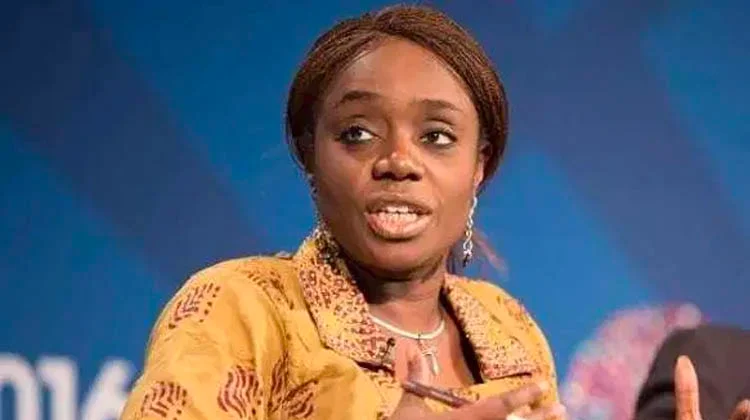
Former Minister of Finance, Kemi Adeosun, has revealed how the Federal Government used technology to eliminate large-scale payroll fraud, uncovering 45,000 “ghost workers” through the integration of the Bank Verification Number (BVN).

Speaking at the Citadel School of Government Dialogue series in Lagos, Adeosun explained that prior to the reform, the federal payroll was the government’s largest expenditure and was plagued by inefficiencies that earlier biometric efforts failed to resolve.

She noted that previous attempts to sanitise the payroll using biometric systems often stalled due to resistance from paramilitary institutions such as the Police and Army, which were reluctant to adopt centralised processes.

To overcome this, her team leveraged the existing BVN database instead of introducing a new biometric system.

“The payroll was our biggest cost,” Adeosun said. “Previous biometric efforts had stalled because paramilitary groups refused to cooperate. We bypassed this by using BVN data. We ran the federal payroll against the BVN database, and the result was staggering: we found 45,000 ‘ghost workers.’”

Clarifying the nature of the fraud, she explained that the term “ghost worker” often concealed simpler issues tied to weak systems and individual exploitation rather than highly organised networks.

“In many cases, it wasn’t a ‘ghost,’ but one person’s BVN linked to multiple salaries,” she said. “It wasn’t always a cartel. Sometimes it was inefficiency—people who had died or transferred but were still receiving salaries.”

FOLLOW US ON:

FACEBOOK

TWITTER

PINTEREST

TIKTOK

YOUTUBE

LINKEDIN

See also  Lagos Unveils N214.8bn Bond Offers To Fund Infrastructure, Climate Projects
Continue Reading

Business

Oil Price Hits $120 As OPEC+ Raises Output By 206,000 Bpd

Published

on

Eight members of OPEC+ have agreed to increase oil output quotas for May by 206,000 barrels per day, even as ongoing geopolitical tensions continue to disrupt global supply.

It was reports that the decision was reached during a virtual meeting held on Sunday, according to a statement released by the oil alliance.

However, despite the announced increase, industry observers say the additional supply may remain largely theoretical due to production constraints affecting key member countries.

Findings indicate that the modest quota increase may not translate into actual output, as major oil producers are grappling with disruptions linked to the ongoing U.S.-Israeli war with Iran.

Several top producers have seen their capacity hampered, with infrastructure damage and security concerns preventing meaningful increases in supply.

Meanwhile, a separate panel of the alliance, the Joint Ministerial Monitoring Committee, also met on Sunday and raised alarm over persistent attacks on oil infrastructure.

The committee noted that such attacks are “expensive and time-consuming to repair,” warning that they continue to weigh heavily on global supply.

The situation is further complicated by disruptions in the Strait of Hormuz, widely regarded as the world’s most critical oil transit route.

The waterway has effectively remained shut since late February due to the conflict, significantly cutting exports from key producers including Saudi Arabia, United Arab Emirates, Kuwait, and Iraq.

Although Iran stated on Saturday that Iraq could freely transit the strait, and shipping data showed a tanker carrying Iraqi crude passing through on Sunday, uncertainty persists.

“It remains to be seen if more vessels will take the risk involved,” a source familiar with the development said.

See also  Afreximbank drives $4bn funding for Dangote refinery

Global crude oil prices have surged to nearly $120 per barrel, marking a four-year high, as supply disruptions continue to tighten the market.

The spike has triggered a ripple effect, with transport fuel prices rising sharply and putting pressure on consumers and businesses worldwide. Governments are also beginning to take steps aimed at conserving dwindling supplies.

Analysts warn that prices could climb even higher if the situation persists. Investment bank JPMorgan Chase projected that oil prices may exceed $150 per barrel if disruptions in the Strait of Hormuz extend into mid-May.

Despite the quota adjustment, the additional 206,000 barrels per day accounts for less than two per cent of the estimated supply lost due to the Hormuz closure.

Sources within the alliance told Reuters that the move primarily signals readiness to ramp up production once conditions stabilise and the key shipping route reopens.

Sanctions, Infrastructure Damage Hinder Output

Beyond the Gulf region, other producers are also facing challenges.

Russia, for instance, has been unable to increase production due to Western sanctions and damage to oil infrastructure linked to its ongoing conflict with Ukraine.

The scale of the current disruption is unprecedented, with estimates suggesting that between 12 million and 15 million barrels per day, up to 15 per cent of global supply, have been cut off from the market.

This marks one of the largest oil supply shocks on record.

It was reports that the May increase mirrors the 206,000 bpd adjustment agreed for April during the alliance’s previous meeting on March 1, just as the conflict began to impact oil flows.

See also  Lagos Unveils N214.8bn Bond Offers To Fund Infrastructure, Climate Projects

OPEC+, which comprises 22 member countries, has in recent years relied on a core group of eight nations to make monthly production decisions.

These countries had collectively increased output by about 2.9 million barrels per day between April and December 2025 before pausing adjustments from January to March 2026.

With the next meeting scheduled for May 3, attention will be on whether the alliance can respond effectively to the evolving crisis.

FOLLOW US ON:

FACEBOOK

TWITTER

PINTEREST

TIKTOK

YOUTUBE

LINKEDIN

Continue Reading

Business

Bank recapitalisation: Local investors provide 72% of N4.6tn

Published

on

The Central Bank of Nigeria (CBN) on Wednesday said domestic investors accounted for the bulk of funds raised under its banking sector recapitalisation programme, contributing 72.55 per cent of the N4.65tn total capital secured by lenders.

The apex bank disclosed this in a statement marking the conclusion of the exercise, which began in March 2024 and saw 33 banks meet the new minimum capital requirements.

The statement was jointly signed by the Director of Banking Supervision, Olubukola Akinwunmi, and the Acting Director of Corporate Communications, Hakama Sidi-Ali.

According to the CBN, Nigerian investors provided about N3.37tn of the total capital raised, underscoring strong domestic confidence in the banking sector, while foreign investors accounted for the remaining 27.45 per cent.

“Over the 24-month period, Nigerian banks raised a total of N4.65tn in new capital, strengthening the resilience of the financial system and enhancing its capacity to support the economy,” the statement said.

Commenting on the outcome, the CBN Governor, Olayemi Cardoso, said, “The recapitalisation programme has strengthened the capital base of Nigerian banks, reinforcing the resilience of the financial system and ensuring it is well-positioned to support economic growth and withstand domestic and external shocks.”

The bank confirmed that 33 lenders had met the revised capital thresholds, while a few others were still undergoing regulatory and judicial processes.

“The CBN confirms that 33 banks have met the revised minimum capital requirements established under the programme,” it stated.

“A limited number of institutions remain subject to ongoing regulatory and judicial processes, which are being addressed through established supervisory and legal frameworks.

“All banks remain fully operational, ensuring continued access to banking services for customers.”

See also  Toyota hikes profit, sales forecasts despite US tariff impact

The regulator stressed that the recapitalisation exercise was completed without disrupting banking operations nationwide, noting that key prudential indicators, particularly capital adequacy ratios, had improved and remained above global Basel benchmarks.

Minimum capital adequacy ratios were pegged at 10 per cent for regional and national banks and 15 per cent for banks with international licences.

The CBN added that the exercise coincided with a gradual exit from regulatory forbearance, a move it said improved asset quality, strengthened balance sheet transparency, and enhanced overall system stability.

To sustain the gains, the apex bank said it had strengthened its risk-based supervision framework, including periodic stress tests and requirements for adequate capital buffers.

It added that supervisory and prudential guidelines would be reviewed regularly to improve governance, risk management, and resilience across the sector.

“The successful completion of the programme establishes a stronger and more resilient banking system, better positioned to support lending, mobilise savings, and withstand domestic and global shocks,” the statement added.

Meanwhile, data from the National Bureau of Statistics showed that foreign capital inflows into the banking sector rose by 93.25 per cent year-on-year to $13.53bn in 2025 from $7.00bn in 2024, reflecting strong investor interest during the recapitalisation drive.

However, the Centre for the Promotion of Private Enterprise has cautioned that despite the strengthened banking system, credit to small businesses remains weak, warning that the benefits of the reforms are yet to fully impact the real economy.

punch.ng

FOLLOW US ON:

FACEBOOK

TWITTER

PINTEREST

TIKTOK

YOUTUBE

LINKEDIN

Continue Reading

Trending