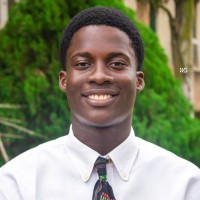
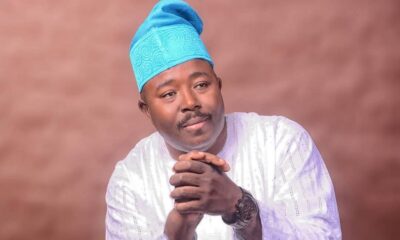
David Fetuga is the best-graduating student of the Department of Accounting, Landmark University, Kwara State, for the 2024-2025 academic session. A chartered accountant (ACA) at age 19, he graduated with a Cumulative Grade Point Average (CGPA) of 4.94 on a scale of 5.0, making him the second-best graduating student of the university. In this interview by KINGSLEY ALUMONA, he speaks about his academic feat, Nigeria’s new tax law, among other issues.
Your near-perfect university performance and results show that you are brilliant. Were you this brilliant in secondary school? What were your results like in secondary school, especially in WAEC and JAMB?
The turning point for me came when I was writing my common entrance examinations. My dad decided that I should attempt the exams when I had just concluded primary 3, and I failed woefully. I remember the principal of the secondary school at that time giving a speech on how I had done terribly. However, my parents decided that I stayed home and tried the exam again after a year. It was during this period that my mother ensured that I prayed and fasted as instructed by my spiritual father, Bishop David Oyedepo, with a focus on kingdom advancement prayers and endeavours. This period was also a period of consistent and intense studying. Then, after a year, I took the entrance exam to Covenant University Secondary School and scored 99.5 per cent.
It was then I learnt that if I sought God’s kingdom first, and also studied to show myself approved, that anything was possible, and I could actually do emerge as a star. I continued in this line and won numerous prizes in secondary school. Fast forward to JAMB, where I scored 311 over 400, which was the highest in my school, and I had all distinctions in my WAEC result.
It is believed that those who study accounting love money so much. Was this your thinking when you decided to study the course?
I have heard the stereotype that accounting students love money, but that was not the determining factor for me. Growing up, I always had debates and discussions with my dad as to which course really mattered and aligned with me, as I was always curious and liked solving problems. It was during these conversations that I began to see the uniqueness of accounting, and I gradually began to develop an affinity to the course. Another determining factor was the fact that I loved and appreciated mathematics and calculations. So, the movement of numbers attached to values intrigued me.
Among all the universities in Nigeria, why Landmark University?
Landmark University was never in my plan, and it seemed to me more of a divine intervention. I had chosen the University of Lagos (UNILAG) as my first choice and had gained admission to study accounting there. However, during the screening process, I was informed that I would not be able to continue as I fell short of the required age by only a few days. Everything seemed bleak during this period, and it was almost certain that I was going to stay a year at home.
However, in events that seemed like a miracle, my mother saw a flier stating that Landmark University was still accepting students and that I could still gain admission. What baffled me most in the entire process was how the resources to attend a private university came seamlessly. God blessed my parents in such a way that it can only be seen as a miracle. And that was how I ended up in one of the best universities in Nigeria.
What did you do differently to graduate with a CGPA of 4.94/5.0? And what did it feel like having such a result?
I believe that I was able to attain such a feat with the help of God and by putting his kingdom first. However, any faith that makes God absolutely responsible is an irresponsible faith. I paid my dues through consistent studying, even throughout my ICAN professional exams and school academics. Another factor was the fact that I understood how I assimilated things. I didn’t do things because everyone did them. I also had the best set of lecturers from the Accounting Department of Landmark University. Lastly, I would say that I had good friends.
It felt very good to have such a result, and it’s a testament that God rewards stewardship and hard work. My parents and siblings, as well as my friends, were all proud of me. I felt very good.
In the course of your programme, which area(s) or aspect(s) of Accounting interested you more and why?
In the course of my study, the areas that interested me the most were the generic areas of taxation and auditing, as well as how financial policies and institutions impact the economy of nations. Another part that really drew my interest was the role of artificial intelligence (AI) in accounting and auditing, and how AI is revolutionising the financial sector.
What is your final-year project about, and what are its major findings and its significance to society?
My final year project was on artificial intelligence and audit practice in registered audit firms in Lagos state, Nigeria. The summary and insights from this research show that AI is revolutionising the financial industry and that a modern-day accountant must learn to be conversant with AI and technology to maintain job relevance and uphold their financial duties, as well as provide accurate and reliable information that would allow for sound business decisions and positively impact society at large.
In the course of your undergraduate studies, what would you say were your social, entrepreneurial, and leadership achievements?
The notable achievements in my undergraduate days include contesting and being elected as the president of the accounting association (NUASA LMU chapter).
Other notable events include the fact that, on a personal basis, I love football, and as the president of my association, I was one of the leaders of the team that led my department to win two competitions as we brought the gold trophy home, not once but twice, within my tenure.
This was one of the factors that led to creating a movement and a product that would transform African football, beginning with Nigeria and would standardise and strategically restructure football on this continent as we know it (@baskngr on social media platforms).
Why are most accountants, with their accounting degrees and know-how, not rich? Most even struggle financially,while helping the rich make and protect their money? In this light, what kind of accountant do you want to become, and what kind of impact would you like to make in the financial sector?
At this juncture, I would like to state that being rich is subjective and that some individuals. And, in this case, accountants are satisfied with meeting their basic needs and living a comfortable life. Having said that, a degree in accounting would inform an individual of the technicalities and standards of the financial world, and this alone does not make one rich in a monetary sense. Strategic planning, building structures and the ability to maximise opportunities, as well as problem-solving, all complement each other in becoming rich and not just the technicalities.
I am in the process of becoming an accountant who contributes and adds value wherever I find myself and also puts into perspective my technical background, as well as a strategic outlook to achieve my end goals. I am working towards becoming a key figure in reforming the financial sector of Nigeria to uphold integrity, accountability and forward movement of the economy and the nation.
In your LinkedIn bio, you stated that, “I am driven by a strong interest in finance, taxation, audit, and strategic business decision-making.” As someone knowledgeable in tax matters, how would you advise Nigerians on the new tax laws initiated by President Bola Tinubu and effective January 2026?
With the tax reforms introduced under President Bola Tinubu, my advice to Nigerians is to prioritise compliance and financial documentation. Whether individuals or small businesses, proper record-keeping is now more critical than ever.
Citizens should seek credible tax education, understand allowable deductions, and avoid informal practices that could attract penalties. Businesses should endeavour to transition toward structured accounting systems and professional guidance. Compliance is no longer optional in a reform-driven economy; it is a strategic necessity.
If you were to solve three national problems facing Nigeria with your accounting expertise, which problems would they be, and how would you go about solving them?
First, public sector financial mismanagement — by strengthening audit systems and enforcing transparent reporting.
Second, small and medium businesses’ mortality rates — by improving financial literacy and cost management advisory.
Third, tax inefficiency — by promoting simplified tax education and digital compliance systems.
Accounting is not just about figures, but also about providing information to make sound decisions and solve problems.
What advice do you have for common Nigerians on how to grow and manage their money and make better financial decisions this year?
Track expenses diligently. Separate consumption (daily expenses) from investment. Build emergency savings before pursuing high-risk ventures. Avoid debt without a clear repayment structure. Prioritise financial knowledge and application, as applied knowledge equals outstanding financial growth. Financial growth begins with disciplined budgeting and informed decision-making.
If you were given a fully funded postgraduate scholarship to study in any university in the world, which course would you study, at which university, and why?
I would pursue a master’s degree in financial economics or business analytics at the University of Oxford. The institution’s global research strength and policy influence would provide exposure to international fiscal systems and advanced financial strategy. My objective would be to gain insights transferable to emerging economies like Nigeria, particularly in governance and sustainable financial reform.
tribuneonlineng.com
FOLLOW US ON:
FACEBOOK
TWITTER
PINTEREST
TIKTOK
YOUTUBE
LINKEDIN