Connect with us

Politics

PDP factions open peace talks as Wike denies split

Published

on

The two Peoples Democratic Party factions have restarted the faltering peace process ahead of the March 29-30, 2026, national convention being championed by the bloc led by the Minister of the Federal Capital Territory, Nyesom Wike.

The bloc headed by Tanimu Turaki (SAN) and supported by the party governors confirmed on Wednesday that a fresh reconciliation process aimed at uniting aggrieved factions within the party had commenced.

Turaki, who disclosed this while addressing newsmen in Abuja, explained that the reconciliation, which was kick-started on Tuesday night, is yielding some results.

He stated, “In obedience to the advisory of the Court of Appeal, Ibadan, a few weeks ago, that parties in the suit should explore reconciliation to save the party from further strife and provide a platform for aspirants to seek elective offices in the coming elections, the Board of Trustees of the party, ably led by His Excellency, Sen. Adolphus Wabara, constituted a high-powered committee to interface with our estranged party members, with a view to resolving outstanding issues and repositioning the party for the elections.

“In furtherance of this, the National Working Committee immediately issued a notice postponing the National Executive Committee and National Caucus meetings earlier scheduled to be held two days later, as a demonstration of good faith. We also de-escalated combative communication on all fronts. ‘’

He adds, “While we expected a reciprocal gesture, what we have witnessed instead is the weaponisation of hurtful rhetoric and the issuance of derogatory statements.”

Turaki said they were mindful of the dispute’s implications amid the tight Electoral Act timelines and urged the other faction to act in the party’s overall interest.

“I can unequivocally confirm that, as of today, leaders on both sides have broken the ice and are exploring various pathways towards a lasting resolution. We urge our supporters across the board to immediately de-escalate high-tempered communications and actions, so as not to jeopardise the ongoing peace efforts.

“To all aspirants who have stood with us thus far, we assure you that, by the grace of God, our party will field candidates for all elective offices, in compliance with Article 6(2) of the Constitution of the PDP (as amended in 2017).

“As we are aware, democracy is not merely about the periodic conduct of elections; it also requires a virile opposition and an active civil society to hold government accountable. As Nigeria’s only surviving legacy party in the current republic, with the rare privilege of having led this country for 16 years, we remain committed to defending and consolidating our democracy, even as an opposition party.”

See also  LASU professor reveals how to stabilize governance in Nigeria

Turaki expressed confidence in the Wike faction, noting that reconciliation is still possible.

“We have confidence that we can still work together and that this reconciliation will work. In life, there are times to fight, and there are also times to make peace. But even when you choose to fight and go to war and win the war, you also need to win the peace. So, if you have a pathway to winning the peace without necessarily going to war, why not take peace and forego the war?

“Let me also add that we understand that in human life, every time something good is coming your way, there are people from unimaginable and unbelievable quarters; sometimes, those you think are friends or family who will be the first to rise and truncate those good things coming your way.

“I am not saying there are no good elements on both sides whose sole intention is to prevent peace in this country. I am saying some people are fighting so that this party will go down. From last night, these two elements have been identified and flushed out in the discussions between the two sides.”

The party leader vowed to deploy all available means to achieve peace and promised that all the court cases would be withdrawn once the reconciliation is concluded.

He noted, “Matters in court continue. Even as I speak, there are cases filed by both parties, including appeals at the Court of Appeal. Some appeals have been filed by them, others by us, though some have not been taken.

‘’As a senior lawyer, I can say that the best judges would advise parties to explore out-of-court settlements whenever possible.

“In Nigeria, once parties go to court, more issues emerge, and relationships rarely recover. We have chosen the path of peace in the overall interest of party members, particularly our teeming supporters who want PDP to remain an effective platform for the forthcoming elections.

‘’As soon as we reach agreeable terms, which we will honour even in the Court of Appeal, we will willingly withdraw all cases whether at the Federal High Court, Court of Appeal, Supreme Court, or elsewhere to give peace a chance. All cases will give way to peace as soon as we reach that point.

See also  Ekiti poll: APC adopts consensus as Oyebanji’s rival withdraws

Asked if his bloc was willing to compromise for the peace process to succeed, he responded, “On the issue of compromise, we are willing to bend as far as our necks and backs allow. We are ready to make all sorts of sacrifices in the overall interest of the party. PDP will not die. Everything possible will be done to make this reconciliation work; nothing is impossible.

‘’Issues such as attendance at the convention are among those to be discussed. Once these matters are deliberated, the parties and delegates will decide whether the convention needs to continue. These issues are on the table and will be considered carefully.”

Meanwhile, the FCT minister has dismissed reports of a split within the PDP, insisting the party remains united as it prepares for its national convention.

Wike spoke to journalists in Abuja on Wednesday, after inspecting several ongoing and completed infrastructure projects across the capital city.

Addressing speculation about internal divisions, he maintained that disagreements among members do not amount to factionalisation.

“We have only one PDP, no faction,” he said. “I don’t know which camp you are talking about. There is only one PDP. Some individuals may not be happy, yes, but there is no faction.”

The minister noted that while some grievances may exist, reconciliation efforts are still ongoing and can proceed alongside preparations for the convention.

“That there is a convention does not mean there will be no reconciliation. Everything has its own time,” he said.

Wike’s claim comes against the backdrop of a protracted leadership crisis plaguing the party.

Governors of the PDP had earlier backed the Ibadan convention held on November 15, which produced Kabiru Turaki and other members of the National Working Committee for a four-year tenure.

However, a faction loyal to Wike later formed a 13-member Caretaker Committee, naming Mohammed Abdulrahman as Acting National Chairman and Senator Samuel Anyanwu as Acting National Secretary, among others, with a 60-day mandate pending a substantive convention.

Attempts by both factions to hold meetings at the PDP National Secretariat on November 18 descended into chaos, prompting the Nigeria Police Force to seal the secretariat.

Legal battles followed, culminating in a February 12 hearing at the Court of Appeal. On March 9, the court ruled that the Ibadan convention violated the Electoral Act, the Constitution, and the party’s constitution, nullifying the convention that produced Turaki and his committee.

See also  Tears, drama, strategies, What you missed on first week of BBNaija S10

During the inspection tour, Wike reiterated the commitment of the FCT Administration to ensuring quality and timely delivery of projects.

“In our usual programme, we make sure we go round to see what the contractors are doing and the quality of jobs they will hand over,” he said.

He disclosed that a bridge project near the Fire Service in Abuja is nearing completion, with contractors projecting delivery within five months.

“From what we have seen, it is a very quality job. I commend the company,” Wike stated.

The minister also confirmed that the N5 road project, handled by Julius Berger, has been completed and will be inaugurated as part of activities marking President Bola Tinubu’s third anniversary in office.

At the Nigerian Law School, Wike expressed satisfaction with the completion of 10 staff bungalows, describing them as fully furnished and ready for use.

He also assessed ongoing hostel projects, commending progress on the female hostel while raising concerns about delays in the male hostel.

“I am quite impressed with the female hostel, but I am not impressed with the level of work on the male hostel. They were awarded at the same time,” he said, noting that contractors have pledged completion by October or November.

Describing the intervention as unprecedented, Wike said the government’s effort marks a significant milestone for the institution.

“This is the first time a government is trying to provide basic infrastructure for the Nigerian Law School,” he stated.

On funding and project execution, the minister attributed the administration’s performance to prudent resource management and political will.

“It is not about the amount of money, but commitment. You can have all the money and still not achieve results if you are not committed,” he said.

According to him, the FCT relies largely on internally generated revenue and avoids awarding contracts it cannot fund. “Projects we don’t have money for, we will not award them,” Wike stressed.

He credited the pace of development to the support of the president, saying, “The momentum we are getting is because we have a President who believes in providing infrastructure. That support makes the difference.”

Wike assured residents that all ongoing projects would be completed as scheduled, reaffirming the administration’s commitment to improving infrastructure and service delivery across the FCT.


Continue Reading
Click to comment

Leave a Reply

Your email address will not be published. Required fields are marked *

Politics

NDC pegs presidential form at N60m, primaries hold May 29

Published

on

The Nigeria Democratic Congress (NDC) on Tuesday released the schedule for the conduct of its primary elections, with presidential hopefuls expected to pay N60m to secure their Nomination and Expression of Interest forms ahead of the 2027 general elections.

NDC National Chairman, Moses Cleopas, disclosed this in a statement made available to journalists in Abuja.

Cleopas announced that the sale of forms will commence from May 13 to May 18 as the basic step to its internal electoral process ahead of the next general elections.

The party also advised aspirants to attend the planned screening exercise with their relevant credentials and supporting documents.

The statement read, “The sale of nomination forms will commence immediately after the screening exercise from Thursday, May 21 to Saturday, May 23, 2026, while completed forms must be submitted on or before Monday, May 25.

“Appeals arising from the screening process will be entertained on May 25 and 26, while primary elections for various elective offices are scheduled to be held on May 27 and 28, 2026.

“The presidential primary election is slated for May 29, 2026, in Abuja.”

Continuing, Cleopas clarified that aspirants who seek tickets for state Houses of Assembly would be screened in their respective states, while screening for National Assembly and presidential aspirants would take place at the party’s national headquarters in Abuja.

According to him, every aspirant will be required to sign an undertaking in line with the party’s guidelines and code of conduct.

He said, “The party also announced that it would adopt the ‘open secret ballot’ system for its primaries to guarantee credibility, fairness, and internal democracy.”

See also  Tinubu declares state of emergency on insecurity as NASS rejects bandit negotiations

An open ballot system is a voting method in which voters vote openly, in contrast to a secret ballot, where a voter’s choices are confidential.

The NDC argued that its approved nomination fees remain among the lowest when compared with those charged by other major political parties in the country.

Under the approved fee structure, aspirants for the state Houses of Assembly are expected to pay N2.5m for both the expression of interest and nomination forms, while those for the House of Representatives will pay N6m.

In the Senate category, aspirants are to pay N8m for both forms, while governorship hopefuls will pay N30m.

“For the presidency, aspirants will pay N20m for the expression of interest form and N40m for the nomination, bringing the total cost to N60m.

“Meanwhile, female aspirants and persons living with disability are to pay 50 per cent and 25 per cent of the fees across all categories.

“The party reaffirmed its commitment to a transparent and credible primary election process capable of producing competent candidates for the 2027 general elections,” Cleopas added.

punch.ng

FOLLOW US ON:

FACEBOOK

TWITTER

PINTEREST

TIKTOK

YOUTUBE

LINKEDIN

INSTAGRAM

Continue Reading

Politics

Makinde may join 2027 presidential race on Thursday

Published

on

Oyo State Governor, Seyi Makinde, may formally declare his presidential ambition during a rally billed for the ancient Mapo Hall in Ibadan South-East Local Government Area of the state, on Thursday.

The event, tagged “Unity Mega Rally Ibadan 2026,” is expected to serve as the official launch of Makinde’s anticipated 2027 presidential bid, alongside the unveiling of a political alliance between the Peoples Democratic Party and the Allied Peoples Movement in the state.

Aside from declaring his presidential bid, Makinde is also expected to unveil aspirants seeking state and national elective positions on the platform of the APM.

Recall that there was a wave of resignations by political officeholders in the state, especially those seeking positions in the 2027 elections, from the PDP to the APM.

Among those expected to be unveiled on the APM platform are former Commissioner for Finance in the state, Bimbo Adekanmbi, as the party’s governorship candidate; Stanley Olajide, Olufemi Ajadi and Shina Peller as senatorial candidates.

House of Representatives and House of Assembly candidates of the party are also expected to be unveiled.

The declaration rally is expected to be preceded by the signing of an agreement between leaders of the APM and the Taminu Turaki faction of the PDP on the terms of the alliance.

A credible PDP source said, “We will sign forms of alliance with APM, involving its national chairman and our own side, led by Taminu Turaki.

“Governor Seyi Makinde will declare his presidential bid on the platform of the APM.”

See also  APC engaging Wike to resolve Rivers crisis, says Basiru

Ahead of Thursday’s rally, preparations have intensified, with party leaders from both camps expected to begin arriving in Ibadan on Wednesday.

Another source said, “The May 14 rally is expected to attract political stakeholders, youth groups, community leaders, traditional supporters and allies from across the country, particularly individuals believed to align with Governor Makinde’s leadership style and political vision.

“Although the governor is yet to make an official public statement regarding his intention to contest the presidency in 2027, support groups and political associates have continued to intensify calls for him to join the race.

“Several grassroots mobilisers, political associates and loyalists of the governor are reportedly making strategic moves as consultations over a broader political structure continue to gather momentum.”

The sources added that the moves formed part of a broader strategy aimed at strengthening grassroots structures across the state and beyond while consolidating Makinde’s growing influence within the national political space.

Recall that Makinde, following a January 2026 meeting with President Bola Tinubu, reaffirmed his loyalty to the Peoples Democratic Party, advocated for a “bipartisan approach” to governance in Nigeria’s national interest, particularly on issues like security and poverty.

He stressed that bipartisanship does not mean defecting to the All Progressives Congress.

Continue Reading

Politics

Tension mounts as APC panels disqualify over 150 aspirants in the Pre-primary screening

Published

on

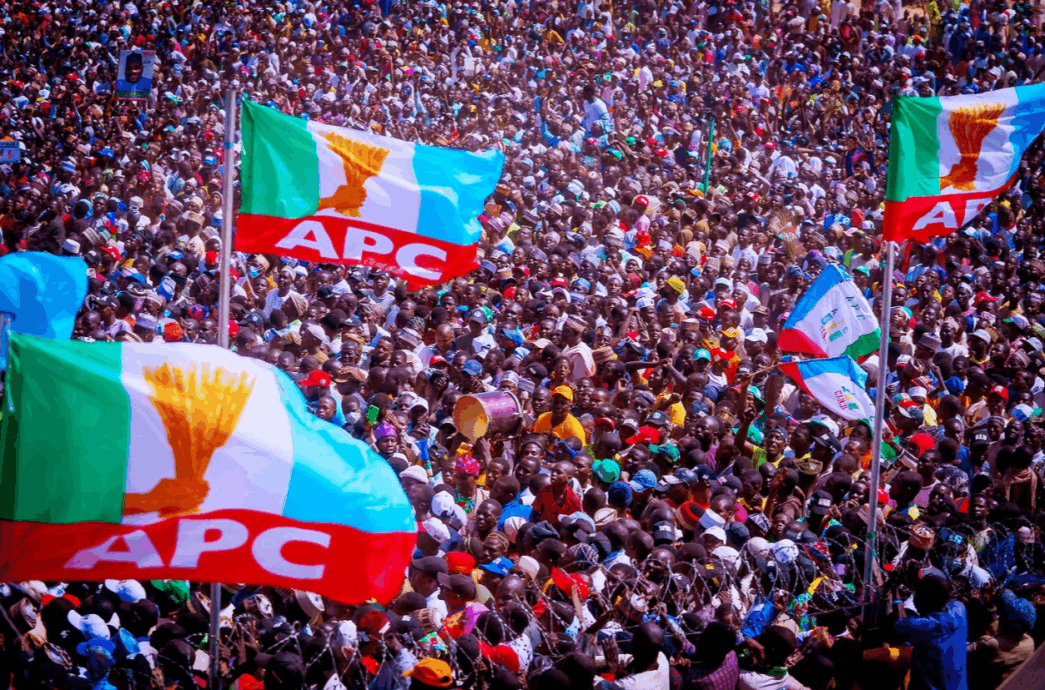
Petitions, protests, legal threats and accusations of imposition have trailed the ongoing screening of aspirants by the ruling All Progressives Congress (APC) across several states ahead of the 2027 general elections, exposing widening cracks within the party over the use of consensus arrangements and the disqualification of aspirants.

Investigations by The PUNCH revealed that aggrieved aspirants in states including Taraba, Kano, Jigawa, Anambra, Benue, Kogi, Kaduna, Ebonyi, Rivers, and Plateau are mobilising petitions and possible legal challenges over the outcome of the party’s screening exercises.

The screening exercise forms part of the APC’s nationwide process aimed at reducing the number of aspirants ahead of the party primaries. However, the exercise has already generated controversy in several states, with disqualified aspirants expected to seek redress through appeal committees.

In some states, protests have already erupted, while in others, party stakeholders warned that attempts to impose candidates could trigger defections, anti-party activities and deepen internal divisions ahead of the primaries.

In Taraba State, the endorsement of incumbent lawmakers, reportedly backed by party stakeholders after the screening exercise, sparked fierce backlash, particularly in Taraba North Senatorial District, where youth groups and stakeholders openly rejected the endorsement of Senator Shuaibu Isa Lau.

A stakeholder from Karim Lamido Local Government Area, Paul Penuel, described the senator’s tenure as “a complete failure,” insisting that there was “no record of impactful projects, no policy footprint, and nothing measurable” to justify another term.

Another constituent, Dickson Kwinde, warned that repeating what he called a “costly political mistake” could alienate voters.

“A mistake like this must never be repeated. The people of Taraba North cannot continue to be taken for granted,” he said.

Similarly, the Coalition of Concerned Youths and Voice of the Proletariat in Karim Lamido rejected the senator’s endorsement.

“We categorically state that we do not support Senator Shuaibu Isa Lau for any position. As far as we are concerned, he has nothing to show for his years in office and does not deserve another mandate,” the group stated through its convener, Godwin Karim.

Party sources disclosed that some aggrieved aspirants had begun preparing petitions against the screening outcome, alleging procedural irregularities, manipulation by political godfathers and attempts to impose consensus candidates without adequate consultation.

Some aspirants were also said to be considering protests and legal action if the appeal process failed to address their grievances.

Efforts are reportedly ongoing to reconcile the aggrieved members and prevent possible defections or anti-party activities ahead of the 2027 general elections.

In Kano State, no fewer than 20 aspirants seeking Senate, House of Representatives and State Assembly tickets were screened out despite earlier consensus arrangements.

Among those affected were former Head of Service, Usman Bala; former lawmaker, Sha’aban Sharada; Muhammad Zango; Danyaro Yakasai; Abbas Abbas; Shehu  Driver and A.A. Zaura in the Kano Central Senatorial contest.

However, the state APC Publicity Secretary, Auwal Soja, confirmed that six aspirants in Kano Central eventually stepped down for former Governor Ibrahim Shekarau following a high-level reconciliation meeting.

“The six aspirants stepped down for Shekarau in the interest of unity and peace in Kano State,” he said.

Despite the arrangement, protests continued to trail the process. A group operating under the Coalition for Better Kano faulted the endorsement of Shekarau, arguing that loyalty and consistency should not be sacrificed for political expediency.

“The principles of political justice demand that loyalty must be rewarded. To bypass a foot soldier that stood firm for the party in favour of a newcomer, no matter how prominent, would send the wrong message,” the group said.

Efforts by Governor Abba Yusuf to reconcile aggrieved aspirants reportedly suffered setbacks after some stakeholders boycotted the reconciliation meeting convened to calm tensions.

Observers also expressed concern over the absence of key figures, including ALGON chairperson, Hajiya Sa’adatu Soja, and aggrieved aspirant, Salisu Yusha’u, warning that the development could weaken peace efforts within the party.

In Jigawa State, the fallout from the screening exercise resulted in resignation and defection.

Former Speaker of the Jigawa State House of Assembly, Isah Idris, resigned from the APC after he was disqualified and replaced by another aspirant.

In his resignation letter, Idris lamented what he described as the party’s departure from its founding principles.

“As a founding member and former Speaker, I had hoped that the APC would remain true to the principles on which it was established. However, I now believe it is time for me to move on,” he wrote.

See also  Dangote names N739 as new petrol pump price

The former speaker subsequently defected to the Peoples Democratic Party.

Another former speaker, Idris Garba, and serving lawmaker, Abubakar Sadiq, were also edged out during the exercise, heightening fears of deeper cracks within the state chapter.

Party insiders warned that failure to reconcile aggrieved stakeholders could destabilise the APC ahead of the primaries.

“You cannot push out key mobilisers and expect them to work for the same people that sidelined them,” a party insider warned.

In Benue State, about 40 aspirants were reportedly disqualified during the screening of House of Assembly hopefuls conducted in Makurdi.

The disqualifications have already generated discontent among supporters who accused the party of violating zoning arrangements and excluding certain blocs from representation.

A supporter of one of the affected aspirants, who identified himself simply as Amos, warned that the development could hurt the party electorally.

“It is our turn in Gboko to produce the state Assembly member because stakeholders had micro-zoned it to our area. People contributed money for the aspirant to purchase forms. If this is not corrected, it will be to the detriment of the party during the election,” he said.

In Kogi State, protests and accusations of authoritarianism followed allegations that nomination forms were selectively distributed to preferred aspirants under what critics described as a “Commando arrangement.”

A party chieftain, Chief Femi Olugbemi, accused the state leadership of abandoning democratic principles.

“Democracy within the APC in Kogi has been reduced to directives from above,” he alleged.

He further claimed that aspirants with strong grassroots support were deliberately excluded from the process.

“Forms that should be open to all qualified members are being shared selectively, and many of us with strong followings have been locked out,” he stated.

The controversy has fuelled fears of mass defections and legal disputes within the state chapter.

Similarly, in Anambra State, the APC expelled 30 members, including aspirants for Senate and House of Representatives seats, for instituting legal actions against the party.

The state Publicity Secretary, Valentine Iyiegbu, said the decision was taken in line with the party constitution.

“No fewer than 30 members of the APC in the state have been expelled following their litigations against the party,” he stated.

According to him, the only reprieve available to the expelled members would be the withdrawal of their court cases.

“It is only when the matters are withdrawn from the court that the party can consider listening to them,” he added.

In Kaduna State, although the House of Assembly screening reportedly ended without disqualification due to consensus arrangements brokered by party leaders, controversy erupted over moves to impose consensus candidates for National Assembly positions.

The crisis is particularly intense in Kaduna Central Senatorial District, where former lawmaker and activist, Shehu Sani, is reportedly being favoured as a consensus candidate.

The arrangement has been rejected by former Speaker Yusuf Zailani and activist Yarima Shettima.

“We strongly reject the so-called consensus arrangement in its entirety. Kaduna Central cannot be sacrificed on the altar of political manipulation and backroom deals,” Shettima declared.

Zailani’s camp also warned against imposing candidates on party members.

“Politics belongs to the people, not to one person alone. Just because someone is endorsed does not mean he has already won the election,” his Campaign Director, Musa Aliyu Khalid, stated.

The same scenario appears to be playing out in Ebonyi as disqualified candidates expressed dissatisfaction with the process.

An aspirant for the Ebonyi Central Senatorial District seat, Chief Christian Nwali, resigned in protest from the APC.

The PUNCH reports that Nwali, an ally of the Minister of Works, David Umahi, was among the aspirants who lost out in the consensus arrangement adopted by the Ebonyi APC.

In a letter addressed to the state APC Chairman, Ekpelu Ward in Ikwo LGA, he stated that his resignation was “with immediate effect.”

“This serves as an official notice of my formal withdrawal from party activities and responsibilities,” the letter read in part.

In Rivers State, no fewer than 65 aspirants were disqualified by the Rivers State House of Assembly Screening Appeal Committee of the APC.

The panel confirmed that 33 aspirants were cleared during last weekend’s screening ahead of the party’s primaries.

Chairman of the panel and human rights lawyer, Dr Abdul Mahmud, disclosed this at a news briefing at the APC Secretariat in Port Harcourt on Tuesday.

See also  Minister says no automatic ticket for APC defectors

Mahmud said both the number of cleared aspirants and those disqualified have been affirmed by various committees.

While noting that he is not a member of the APC, Mahmud disclosed that he is a private legal practitioner but that the leadership of the party chose him to head the screening appeal in the state because of the confidence reposed in him.

He disclosed that as of the time of the briefing, his appeal panel had received 19 petitions from aspirants, of which none had been treated. The panel chairman said the committee will continue sitting till Wednesday, 13th May.

He commended the aspirants who submitted petitions for their peaceful conduct and for turning out early before the panel arrived for its first sitting on Tuesday.

“We salute the appellants. They were already here when we came. It has been peaceful since we started. What we are doing is just straightforward. It is not a penalty shootout.

“Appellants have written to the chairman of the party, who has forwarded their petitions to us to consider. Some portions were received last night. The bulk of it was received this morning as soon as we came in.

“To my left, you’ll find the untreated petitions. We are calling each one after the other.”

He said the panel has also received the report of the screening committee on arrival.

“We have received a report from the screening panel. It’s a two-stage process. The screening panel met with them and scrutinised them.

“The report was also served on us because it also has to guide us on the infractions the aspirants may have committed that made the screening panel not clear them.

“Perhaps, some lessons can be drawn. I need to say it. But the bulk of the complaints that we have heard, not stated in their petitions, but in their oral presentations, were that the non-clearance decisions were not communicated to them.

“All of them pointed to the fact that they read their non-clearance on Facebook. Perhaps next time the party must learn from this experience,” Mahmud stated.

He advised the party, “When you clear and don’t clear aspirants, the people have telephone numbers. They should be able to send them text messages or WhatsApp messages that you have not been cleared for this reason.”

On the petitions, he said, “We have treated nine so far. Those cleared are 33, cleared by different committees, and 65 were not cleared. The report we have has a list of 98 aspirants. We have received 16 appeals so far. We have treated nine. The time of my limit ends on the 13th of May 2026. I will be here till 5 pm tomorrow.”

He disclosed that disqualified aspirants who appeared before the panel without documents were asked to bring such documents and present them before the panel.

“We need to see the document and sight the document.  I’m not interested in your factions. It is your document I speak to,” he added, while warning disqualified aspirants against contacting him via text messages or any other means.

The APC in Plateau State is preparing for possible fallout from the screening of House of Assembly aspirants, following reports that several contenders were screened out ahead of the official release of results.

Party sources told The PUNCH in Jos on Tuesday that the screening committees had completed their assignment, although the national leadership of the party had yet to publish the outcome. The delay, insiders said, has heightened anxiety among aspirants and supporters, with growing fears that the exercise could deepen existing divisions within the state chapter.

When contacted, the Plateau APC chairman, Rufus Bature, declined to disclose the number of aspirants allegedly disqualified or comment on the mood within the party.

“What I can tell you for now is that we have screened all the aspirants, but the result of the screening committee is not yet out,” Bature said.

“We are still waiting for them to release the results. So, nobody will tell anything further until the result is made public. And sure, very soon, the committee will do that,” he added.

However, some aspirants told The PUNCH that they had been verbally informed of their disqualification without receiving any formal communication from the party. A number of them accused the screening panels of irregularities and lack of transparency, while others disclosed plans to file petitions challenging their exclusion.

See also  I won’t betray your trust, Adeleke assures supporters

Party insiders warned that the appeal process could reopen long-standing factional disagreements within the Plateau APC if grievances are not properly managed.

“The concern is that some of these aspirants have strong local structures and political influence. If they feel unfairly treated, it could create fresh tensions within the party,” a source familiar with the process said.

As of Tuesday evening, the national leadership of the APC had yet to release the consolidated list of cleared and disqualified aspirants for the state House of Assembly elections.

Meanwhile, the Imo State chapter of the APC said the list of cleared House of Assembly aspirants would be released on Wednesday (today).

The state APC Publicity Secretary, Dr Jones Onwuasoanya, disclosed this on Tuesday, explaining that the screening committee, chaired by Chief Judith Enanutor, screened a total of 106 aspirants at the party secretariat.

He denied knowledge of any disqualified aspirants, insisting that only the official publication would determine the final status of contestants.

“The list of qualified aspirants will be published. As of now, there is no list of qualified or disqualified aspirants. May 13 is the scheduled date for publication of names of qualified aspirants,” Onwuasoanya stated.

“The correct number of House of Assembly aspirants is 106,” he added.

He further reiterated that the screening committee had concluded its assignment and urged aspirants to wait for the official release of the list before concluding.

Amid the growing tensions, reconciliation efforts are ongoing in several states as party leaders move to prevent possible defections and anti-party activities.

While some states, such as Sokoto and Kebbi, recorded relatively calm exercises under consensus arrangements, political analysts warned that the wave of grievances emerging from many APC chapters could threaten party cohesion if not properly managed before the primaries.

According to analysts, the increasing resort to consensus candidacies, screening controversies and disqualifications has exposed the difficult balance between party control and internal democracy within the ruling party ahead of the 2027 elections.

In Abia State, the screening of House of Assembly aspirants commenced on Monday and was still ongoing as of Tuesday evening. The state Publicity Secretary of the APC, Uche Aguoru, said the process would be concluded on Tuesday, while acknowledging that disagreements may follow the release of the final list.

According to him, the party remained committed to constitutional provisions guiding direct primaries where consensus fails.

“Earlier, the party insisted that there would be no adoption or consensus aspirant unless parties to the position agree. In the event of disagreement even by one person, the constitutional provision of direct primaries will be used,” Aguoru stated.

In Gombe State, the APC also confirmed that the screening of House of Assembly aspirants was still ongoing.

The exercise, which is taking place at the APC Square in Gombe metropolis, attracted aspirants from the state’s 24 constituencies.

Speaking in a telephone interview with The PUNCH, party official Moses Kyari said the process had not been concluded.

“We are yet to conclude the process. I will personally confirm the number of those screened and disqualified, if there are any, tomorrow (Wednesday) when we complete it,” Kyari said.

The Zamfara state screening committee for the House of Assembly has sold 114 forms for the state assembly, which has just 22 seats.

Addressing journalists after the screening exercise, the state APC spokesperson, Alhaji Ibrahim Magaji, explained that only 105 out of 114 candidates who filled the forms have shown up for screening.

He said,” The screening commenced yesterday, Monday and will end on Wednesday. Those who are yet to show up can still come here from now to Wednesday this week, and if at the end of the exercise, they do not come, it means they are disqualified.”

Speaking to The PUNCH, an APC stalwart in the state, Dr Sani Shinkafi, said there would be a primary election if the consensus arrangement fails.

Additional reporting: Maiharaji Altine, Ikenna Obianeri, Salisu Kabuga, Toheeb Omotayo, Esha Aliku, John Charles, Godwin Isenyo, Adeyinka Adedipe, Gbenga Odogun, Animasahun Salman, James Abraham, Uche Okere, Chima Azubuike, Chigozie Chigozie and Patrick Odey

punch.ng

FOLLOW US ON:

FACEBOOK

TWITTER

PINTEREST

TIKTOK

YOUTUBE

LINKEDIN

INSTAGRAM

Continue Reading

Trending