Connect with us

Crime

Five terrorists jailed, FG expedites 500 suspects’ trials

Published

on

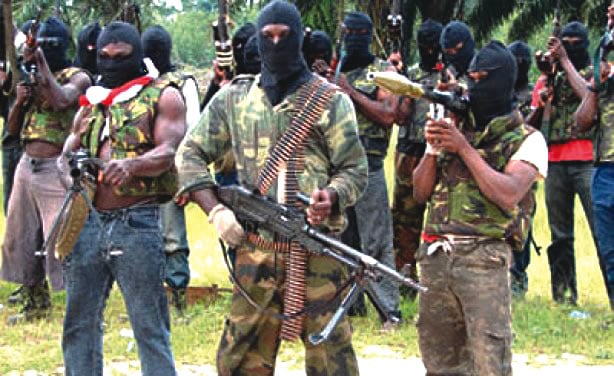
The Federal High Court in Abuja on Tuesday sentenced five terrorism convicts to various jail terms, including 20 years imprisonment.

The court also remanded another suspect who pleaded not guilty to terrorism charges, as the Federal Government began a fresh phase in the mass trial of 500 suspects.

Justice M. O. Olajuwon remanded Babagana Umar in the custody of the Department of State Services, after he denied a three-count charge bordering on alleged support for Boko Haram.

Umar was accused of “knowingly rendering support by supplying spare parts to Boko Haram,” as well as supplying firewood to the terrorist group in Sambisa Forest in 2022, contrary to Section 13 of the Terrorism (Prohibition and Prevention) Act, 2022.

He was also alleged to have had “information about the whereabouts and activities of Boko Haram, which would have led to apprehension and prosecution of these persons… but did not disclose to any law enforcement agency,” contrary to Section 16 of the Act.

The court adjourned Umar’s trial to the next sitting.

In a separate case before the same court, Justice Olajuwon convicted Yusuf Tuggar Abacha to 20 years’ imprisonment after he pleaded guilty to professing membership of Boko Haram, withholding information about a member of the group, and participating in attacks.

The court struck out a count relating to an agreement to receive AK-47 handling training before proceeding to conviction.

“I hereby sentence him to 20 years imprisonment on each count, to run concurrently, and he is to be rehabilitated and de-radicalised after serving his term,” Justice Olajuwon ruled.

See also  US-based Nigerian correctional officer arrested for public intoxication in Texas

Meanwhile, in related proceedings before Justice Binta Nyako, four other defendants were convicted and sentenced in separate cases.

In FHC/KMJ/CR/583/2026, a defendant who pleaded guilty to membership of Boko Haram, provision of material support, and handling of funds linked to the group was sentenced to 10 years on each of four counts, to run concurrently.

“I hereby sentence the convict to a term of 10 years imprisonment for each count charge from the date of his arrest to run concurrently… He is to undergo rehabilitation and de-radicalisation,” Justice Nyako said.

Isa Ali was sentenced to 10 years for providing logistical support to Boko Haram, with a membership count struck out following a not-guilty plea.

Similarly, Auwal Bello received 10 years for facilitating terrorism financing, including exchanging about N750,000 and paying N20,000 to the group.

Shehu Bukar was sentenced to 20 years for supplying cattle and goats to Boko Haram.

Justice Nyako described his offence as “so gruesome” and rejected defence pleas for leniency.

“I hereby sentence him to a term of 20 years imprisonment from the date of his arrest. He is also to undergo rehabilitation and de-radicalisation,” she said.

All convicts were directed to undergo rehabilitation and de-radicalisation, with the Ministry of Interior determining the correctional facilities where they will serve their terms.

The Federal Government’s fresh mass trial, in its ninth phase, is being handled by 10 judges sitting during the court’s Easter vacation to fast-track proceedings.

Attorney General of the Federation and Minister of Justice, Lateef Fagbemi (SAN), confirmed that although 500 suspects are slated for trial, 227 were taken before the courts on the first day.

See also  Roseline Ajesola: Nigerian Lady Arrested In North Carolina Over Alleged $247,000 Fraud

“Don’t forget this is an Easter period. Ordinarily, the judges are not supposed to be here… but they have been so patriotic, and they have put their service to the nation.

“For phase nine, we have 500 in all, and it will last to either Friday or Saturday,” Fagbemi said.

The suspects face allegations of participating in attacks, particularly in northern Nigeria, leading to more than 2,000 deaths, as well as financing terrorism, supplying arms, ammunition, food, and other logistics.

Fagbemi said the trials were moved to Abuja for logistical convenience, rather than the usual practice of ferrying the judges to Kainji or Maiduguri to conduct the trials.

“Whether in Kainji or Maiduguri, the people to try terrorism suspects are judges of the Federal High Court.

“For logistic problems, it is not convenient to go to Kainji… the availability of multiple courtrooms here makes it possible for several judges to sit simultaneously,” he said.

He stressed that the proceedings were being conducted openly, with local and international observers, including Amnesty International, United Nations Office on Drugs and Crime, and members of the Nigerian Bar Association present in the courts.

“It is in the open. It’s not a secret trial. You will see where confessions are made, where proof is given. Everything is in the public glare,” he said.

Our correspondent reports that security was heightened around the court premises, with suspects transported in trucks under heavy guard by personnel of the Department of State Services, as well as officers of the Nigeria Police and the Nigerian Army.

See also  Nine internet fraudsters jailed in Kwara

Speaking on the defence’s role, Director-General of the Legal Aid Council, Aliu Abubakar, said the defence’s job was “made easy” as many suspects admitted to the charges.

“The thing with terrorism trials is that it is made easy a little… because the majority of the suspects admit to committing the crime. This has been our experience over the years, and today’s trial is not different,” he said.

He added, “A large number of them are also convicted for association with Boko Haram. Some of them are not active participants… but they are being convicted… association is as grievous as committing an offence.”

Abubakar also noted that some suspects were discharged and acquitted.

“Happily, I can say that one or two of them have been discharged and acquitted… for somebody who has been in detention for four, five years… to be acquitted, it shows that the trial has some level of transparency,” he said.

He confirmed that pre-trial interviews were conducted in Maiduguri and Kainji to ensure due process:

“Yes, we did. It is a prerequisite of the law… we had an opportunity to talk to them… before the main trial taking place today,” he said.

The trials are expected to continue on Wednesday, April 8, 2026.

punch.ng

FOLLOW US ON:

FACEBOOK

TWITTER

PINTEREST

TIKTOK

YOUTUBE

LINKEDIN

Continue Reading
Click to comment

Leave a Reply

Your email address will not be published. Required fields are marked *

Crime

EFCC busts Chinese-linked illegal refinery in Ogun

Published

on

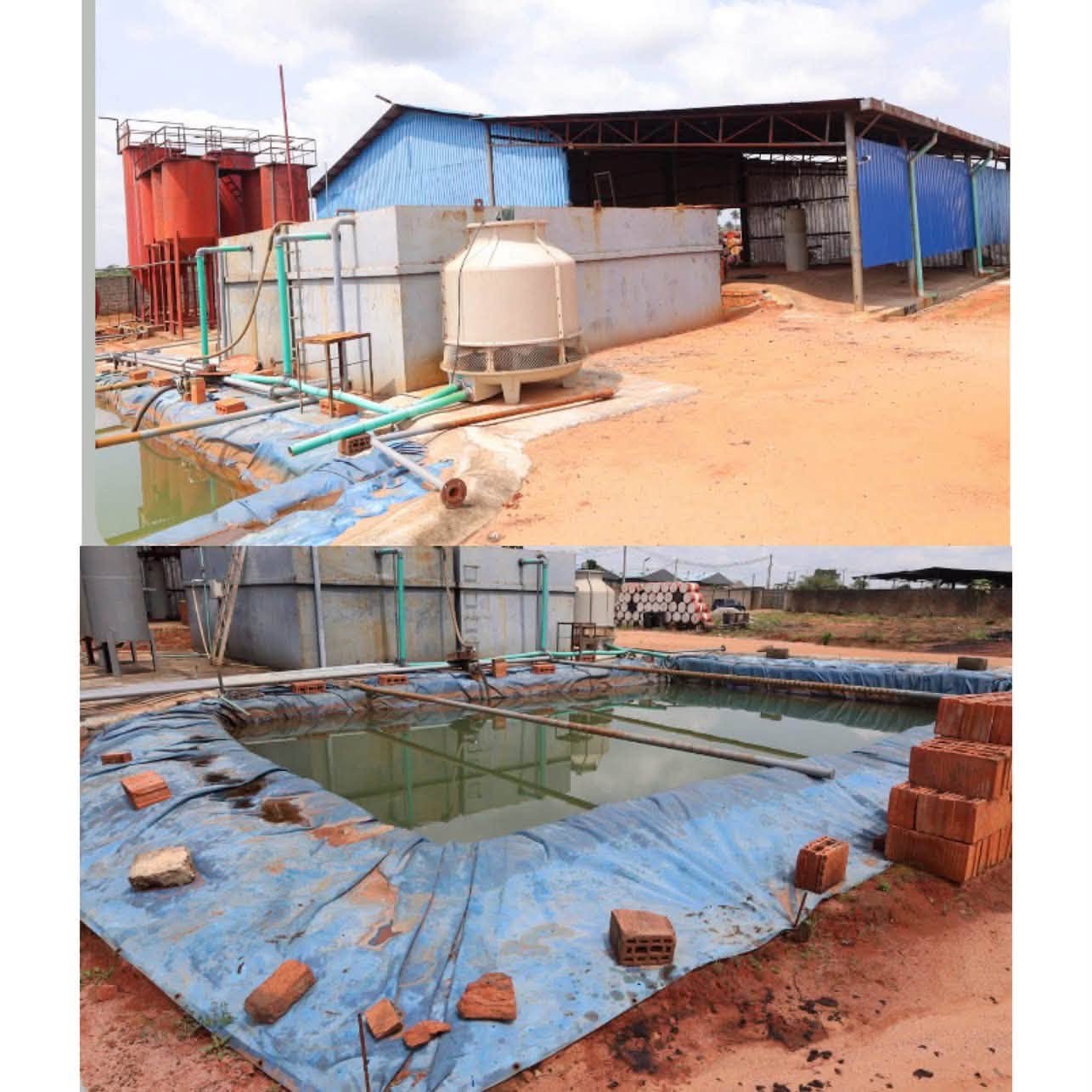
The Economic and Financial Crimes Commission (EFCC) has uncovered an illegal oil refinery allegedly operated by Chinese nationals in the Ogere area of Ogun State.

The commission said the facility was discovered on Saturday, October 31, 2026, by operatives of its Lagos Zonal Directorate 2 following intelligence and surveillance on the activities of illegal sludge oil refiners.

The EFCC disclosed this in a statement issued on Tuesday by its Head of Media and Publicity, Dele Oyewale.

Oyewale said the facility was deserted when operatives stormed the premises, following an earlier crackdown on four illegal lithium processing plants in the area.

However, he said operatives discovered waste products from the refining process and underground tanks suspected to have been used for heating and processing sludge oil.

The statement read, “The Economic and Financial Crimes Commission uncovered an illegal oil refinery operated by Chinese in the Ogere area of Ogun State.

“The operation, conducted on Saturday, October 31, 2026, by operatives of the Lagos Zonal Directorate 2 of the EFCC, followed credible intelligence and surveillance by the commission on the activities of the illegal sludge oil refiners.

“The refinery was found deserted when EFCC operatives stormed the premises, following the commission’s earlier clampdown on four illegal lithium processing plants in the area. However, waste products from the refining process were discovered at the location.”

Oyewale said during the raid, underground tanks believed to have been used for heating and processing the sludge oil were also discovered.

“Two of the underground tanks inspected contained substances suspected to be Automotive Gas Oil (AGO), otherwise known as diesel.

See also  Lagos mechanic lured with car repair job killed inside bush

“Preliminary investigations revealed that the operators sourced sludge oil, also known as black sludge, from Warri, Delta State, and Port Harcourt, Rivers State, and transported it to the illegal facility in Ogere for processing,” Oyewale added.

He said the operators subjected the sludge oil to intense heat, allowing lighter petroleum components to pass through chambers and filters in a process believed to produce diesel for sale in the Nigerian market.

“Personnel at the facility told EFCC operatives that the Chinese operators never disclosed their identities nor the name of the company behind the facility.

“Consequently, operatives of the Lagos Zonal Directorate 2 of the EFCC have since taken over the premises as investigations continue to establish the identities of the operators, the ownership of the facility and the full extent of the suspected illegal activities and economic sabotage,” he added.

Source: punchng.com

FOLLOW US ON:

FACEBOOK

WHATSAPP CHANNEL

TWITTER

PINTEREST

TIKTOK

YOUTUBE

LINKEDIN

INSTAGRAM

Continue Reading

Crime

Oyo boxer, KBlaq stabbed to death during street fight

Published

on

An amateur boxer identified simply as Kehinde and popularly known as KBlaq has been stabbed to death during a street fight at Olodo Garage in Ibadan, Oyo State.

PUNCH Metro learnt on Monday that the incident occurred on Sunday, sparking outrage among social media users, who called for justice for the deceased.

According to accounts circulating online, the deceased was not initially involved in the fight, while the suspect allegedly appeared after the confrontation had ended and stabbed him in the neck with a broken bottle.

Kehinde, who was described by acquaintances as a boxer, reportedly succumbed to his injuries.

Several social media users expressed shock over the killing, with some claiming that the suspect was not among those involved in the initial fight.

An X user, @MVKAY2, wrote, “The person who stabbed him was not even involved in the fight, and they had stopped fighting already. Just one of those vile men wey the matter no concern came from nowhere and stabbed him.

“Before una start dropping different narratives, I wish he was with Z second. I wish he was never there.”

Another user, @omononaolapo, wrote, “Funny enough, this guy that stabbed him was not even among those that they were fighting.”

Similarly, @Tunde, who described the deceased as his brother, wrote, “Na my brother o. Ajeh. Olodo bike men can be very mean sometimes, and they were all there watching them fight.”

Another user, @Fela, added, “This was why I made this tweet earlier today. This boxer is my younger brother’s friend. I got to church yesterday and my brother told me someone killed his friend. I was shocked when he told me.”

See also  PHOTOS: Four Women Arrested, Newborn Rescued As Security Operatives Dismantle Child Trafficking Syndicate Running Fake Pregnancy And Baby Sale Scheme In Cross River.

Also, @Pelumifundz, who described Kehinde as the younger brother of a friend, wrote, “This guy is a twin and my friend’s junior brother. He’s so gentle and doesn’t cause trouble. I would really love to know what happened that made the bikeman stab him in the neck. Anyways, rest in peace, Kenny. I know you won’t go without having justice. We will definitely get it for you.”

Confirming the incident on Monday, the spokesperson for the Oyo State Police Command, Olayinka Ayanlade, told our correspondent during a telephone interview that an investigation was ongoing.

Source: punchng.com

FOLLOW US ON:
FACEBOOK

WHATSAPP CHANNEL

TWITTER

PINTEREST

TIKTOK

YOUTUBE

LINKEDIN

INSTAGRAM

Continue Reading

Crime

Terrorists abduct 14 Islamic school students in Niger

Published

on

Suspected terrorists have abducted 14 students in a Niger State Islamic school.

The incident reportedly happened on Saturday in Pandogari in Rafi Local Government Area.

The PUNCH learnt that the students were abducted while harvesting maize in their teacher’s farm when the terrorists invaded the farm.

The teacher was also reportedly kidnapped during the incident.

The spokesman of the Niger State police command, Wasiu Abiodun, confirmed the incident on Monday, saying that the number of abducted students was 14 and not 50 as reported.

He also said a joint security mission was on a rescue mission, assuring that the abducted students would be rescued.

“On 31/10/2026 at about 12.30 pm, suspected bandits invaded Tungan-Bako village via Rafi LGA and abducted some persons working on the farm.

“The report further indicated that the abducted victims were about 14 students of an Islamiya helping their Mallam to harvest maize on the farm before the incident.

“However, joint security rescue efforts are ongoing; further developments will be communicated,” he said.

Meanwhile, the spokesman of the Social Democratic Party governorship candidate, Jonathan Vatsa, speaking on the incident, condemned Governor Mohammed Bago over his handling of the security situation in the state.

He lamented that the governor was busy with electioneering and had failed to protect lives and property.

“The security agencies in the state lack operational vehicles and other necessary equipment to confront the situation.

“The government is only there to issue statements either condemning every attack or condole with the people over the death of their loved ones without any cogent step to address the situation,” Vatsa said.

See also  Nine internet fraudsters jailed in Kwara

Source: punchng.com

FOLLOW US ON:

FACEBOOK

WHATSAPP CHANNEL

TWITTER

PINTEREST

TIKTOK

YOUTUBE

LINKEDIN

INSTAGRAM

Continue Reading

Trending