Connect with us

Politics

Mark-led ADC survives as S’Court voids Ibadan PDP convention

Published

on

The Supreme Court on Thursday delivered two major judgments that dramatically reshaped the internal leadership battles in the African Democratic Congress (ADC) and the People’s Democratic Party.

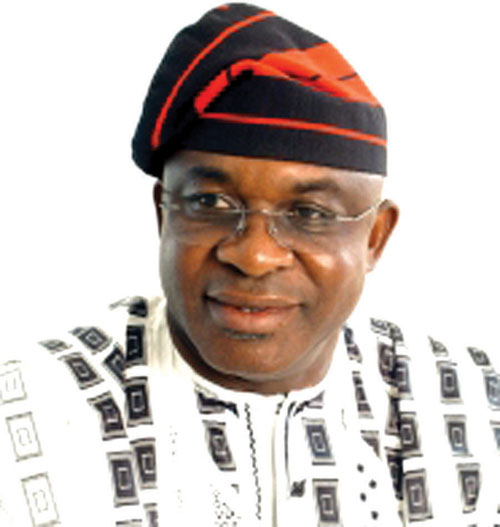
The apex court invalidated the PDP’s controversial Ibadan convention while restoring the ADC leadership structure headed by former Senate President, David Mark.

Hours after the judgment, key leaders of the PDP, including Governors Seyi Makinde (Oyo) and Bala Mohammed (Bauchi), alongside members of the Board of Trustees and the National Executive Committee, held an emergency closed-door meeting in Abuja.

The meeting, which was held at the Bauchi House, Asokoro, Abuja, was ongoing as of the time of filing this report last night.

The high-level meeting had in attendance members of the BoT, the National Assembly Caucus, the National Executive Committee, the National Caucus, state chairmen and ex-officio members.

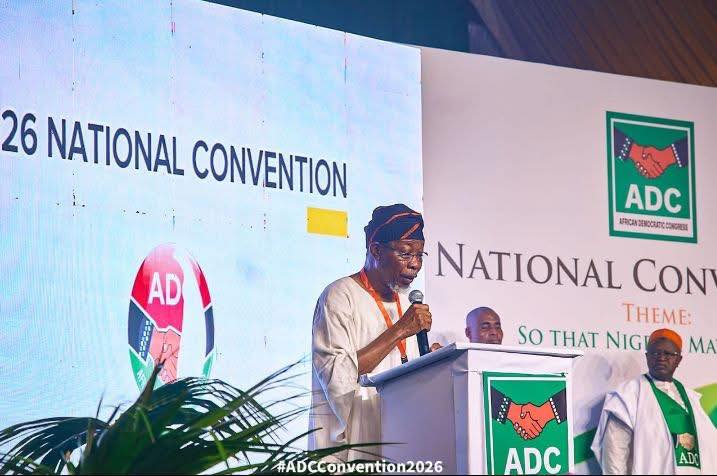
In the judgment delivered by Justice Mohammed Garba, the apex court restored the ADC leadership structure headed by David Mark and former Osun State governor, Rauf Aregbesola, as National Chairman and National Secretary, respectively.

The dispute arose after a suit was filed seeking interim and interlocutory injunctions restraining the INEC from recognising Mark and Aregbesola as officers of the party pending the determination of the substantive suit.

The plaintiff also sought orders restraining the duo from parading themselves as party officers, occupying the ADC national headquarters and carrying out functions connected to the disputed offices.

Proceedings reviewed by the apex court showed that when the ex parte application came up on September 4, 2025, the trial court declined to immediately grant the reliefs and instead ordered that the respondents be put on notice.

According to the proceedings cited by Justice Garba, the trial court held that “the interest of justice would be met by putting the other parties on notice” to show cause why the application should not be granted.

An appeal was later filed challenging the orders made by the lower court, including directives that parties should maintain the “status quo ante bellum” pending determination of the dispute.

However, the Supreme Court held that the trial court neither granted nor refused an application for an injunction, but merely issued procedural and preservative directions.

Garba ruled that section 241(1)(f)(ii) of the Constitution, which provides for appeals as of right in certain interlocutory matters involving injunctions, did not apply in the circumstances of the case.

The justice held that because the appeal did not arise from an actual order granting or refusing an injunction, leave of court was required before a valid appeal could be filed.

“The competence of the notice of appeal goes to the jurisdiction of the court,” the justice held, adding that failure to obtain the necessary leave rendered the appeal incompetent.

The apex court also clarified the legal scope of “status quo ante bellum” orders, describing them as preservative measures aimed at preventing parties from foisting a fait accompli on the court during pending proceedings.

Garba held that courts possess inherent jurisdiction to make preservative orders but stressed that such powers can only be exercised while proceedings remain alive.

According to him, once proceedings have been “fully, faithfully, conclusively and finally concluded,” there would be “nothing left for that court to preserve.”

The apex court consequently allowed the appeal, set aside the status quo ante bellum order and directed that pending processes before the lower court be determined in accordance with the law.

The ADC National Working Committee, National Publicity Secretary, Bolaji Abdullahi and a Presidential aspirant, Mohammed Hayatu-Deen, welcomed the judgment. They used the moment to renew their call for the resignation of the Independent National Electoral Commission Chairman, Prof Joash Amupitan, citing concerns around electoral integrity and institutional neutrality.

The ADC described the decision as a validation of its leadership and a confirmation that INEC’s de-recognition of the Mark-led leadership was wrong.

The statement read in part, “Today’s decision is an unequivocal affirmation that our party, its structures, and its leadership under our National Chairman, Senator Mark, and our National Secretary, Ogbeni Aregbesola, are legitimate. It lays to rest all contrived disputes and manufactured uncertainties, and reinforces the principle that the rule of law, not political manipulation, must guide the affairs of our democracy.

“We commend the five-man panel of the Supreme Court, whose unanimous judgment has today done great credit to the judiciary in our country and our political system. However, while we welcome this judgment, we do not mistake it for the end of the struggle.’’

The ADC urged all its members, supporters, and democratic stakeholders nationwide to stay vigilant.

“In light of this ruling, the ADC reaffirms its long-standing position that Prof. Joash Amupitan, the Chairman of the Independent National Electoral Commission, must resign. The circumstances surrounding this matter, now clarified by the Supreme Court, point to either a grave failure of judgment or a deliberate act of bad faith.

See also  Rivers assembly halts impeachment proceedings against Fubara

‘’Whichever it is, the outcome is the same: the integrity and neutrality required of the office have been compromised. Nigeria’s democracy cannot afford an electoral umpire whose actions raise legitimate questions about impartiality.

“INEC must now restore the recognition of the David Mark-led leadership on its website, and in all formal channels of communication.”

On his part, ADC presidential aspirant Hayatu-Deen, in a statement issued by his media office, said the judgment represents a significant affirmation of the rule of law and the primacy of due process in Nigeria’s democratic journey.

In the PDP case, the apex court nullified the party’s national convention held in Ibadan, Oyo State, on November 15 and 16, 2025, stating that the exercise was conducted in defiance of a subsisting court order.

A five-member panel of the apex court, in a split decision, dismissed the appeal filed by a faction of the party led by former Minister of Special Duties, Taminu Turaki (SAN), and affirmed the concurrent decisions of the Federal High Court and the Court of Appeal, which nullified the Ibadan convention.

Delivering the lead judgment in appeal number SC/CV/164/2026, Justice Stephen Adah held that the appellants acted in flagrant disobedience of a subsisting order of the Federal High Court restraining them from proceeding with the convention pending compliance with earlier directives of the court.

“The disobedience of the court order is not disputed,” Adah declared, adding that what transpired amounted to “a threat to the administration of justice in Nigeria.”

The apex court consequently dismissed both the appeal and cross-appeals and ordered parties to bear their respective costs.

The dispute stemmed from the controversial convention organised by the Taminu Turaki-led faction despite pending court orders and unresolved disputes over congresses conducted in several states.

Aggrieved party members had approached the Federal High Court in Abuja, arguing that the organisers failed to comply with statutory requirements under the Electoral Act and the PDP constitution before proceeding with the convention.

The trial court subsequently restrained the party from conducting the exercise pending compliance with its directives.

Despite the order, however, the convention went ahead in Ibadan and produced a factional leadership structure, triggering fresh litigation and accusations of forum shopping within the party.

In its judgment, the Supreme Court strongly condemned what it described as deliberate attempts by political actors to undermine judicial authority by obtaining conflicting orders from courts of coordinate jurisdiction.

Instead of obeying the subsisting order of the Federal High Court or pursuing lawful appellate remedies, the jurist said the appellants allegedly approached another High Court in Ibadan to secure orders enabling them to proceed with the convention.

“The appellant did not go on appeal but went to another High Court where they secured orders overriding the existing order of the Federal High Court and carried on with the party convention,” the justice affirmed.

The apex court described the conduct as “an unparalleled abuse of court process” which struck “at the very roots of the administration of justice system.”

Adah warned that continued disregard for court orders by politicians posed grave dangers to constitutional democracy and the rule of law.

“The rule of law is not an ornament, revoked, destroyed or discarded in practice. It is the fundamental architecture on which the legitimacy of governance rests,” he stated.

He added that once political actors begin to treat lawful judicial processes as optional, “the very essence of constitutional democracy is imperilled.”

The court further pointed out that political parties, though voluntary associations, derive their legal existence from the Constitution and must therefore operate within constitutional and judicial limits.

Relying on sections 221, 222 and 229 of the 1999 Constitution, the apex court averred that political parties remain constitutional institutions established for participation in governance and elections and are therefore bound by lawful court orders.

Adah also upheld the findings of the lower courts that abuse of court process had been established after the PDP faction obtained what was described as a counter-order from a court of coordinate jurisdiction in Ibadan.

The Court of Appeal had, in its March 9 judgment, affirmed the earlier decision of the Federal High Court and held that the convention violated subsisting judicial orders and established legal procedures.

Dissatisfied, the Turaki-led faction proceeded to the Supreme Court seeking orders validating the convention, but the apex court rejected the appeal in its entirety.

Reacting, the bloc led by Governor Makinde declared that the PDP is currently without a defined leadership following the ruling of the Supreme Court. It expressed confidence that the party’s constitutional organs would swiftly step in to rescue the situation and reconstitute its leadership.

See also  Naira could hit N1,100 to $1 in 2026, says Dangote

The group’s National Publicity Secretary, who stated this in a statement on Thursday, claimed that the split judgment also upheld the Court of Appeal’s suspension of Kamaldeen Ajibade (SAN), Anyanwu, and others.

The bloc argued that three Justices (Chioma Nwosu-Iheme, Stephen Adah, and Garba) based their ruling on the disregard of a valid, subsisting Federal High Court judgment and held that, being in contempt, the appellants could not be heard by the apex court, leading to the dismissal of the appeal.

The statement read in part, “However, the minority judgments by Justices Haruna Tsammani and Abubakar Umar held that the two appeals emanate from matters which are internal affairs of the PDP and are, therefore, non-justiciable. The case at the FHC was not challenging any act or decision of any federal government agency but the leadership contest of the party, and is therefore not justiciable.

“Furthermore, they held that it is not the duty of the court to fish out matters to execute the case for the respondent, because the majority judgment undertook the duty of raising matters suo motu without calling on the parties to address them. This is against the position of the apex court, wherein parties must be allowed to address the court on matters raised suo motu.’’

It further noted, “With this split judgment, which also upheld the Court of Appeal’s suspension of Ajibade, SAN, Anyanwu, and others, this effectively leaves the PDP as a party without a defined leadership.

“To this end, we are certain that the existing organs of the party will take the necessary steps to salvage the party and confer leadership on it going forward. This leads the vehicle of our party towards a dangerous bend, which, if not carefully navigated, may not only affect the party but also multi-party democracy in our country.”

Reacting, Ini Ememobong, the National Publicity Secretary for the bloc led by Makinde, in a statement, declared that the PDP is currently without a clear leadership, insisting that the relevant party organs will have to step in to restore order and determine the next line of action.

In an interview with our correspondent, Ememobong vowed that they would not leave the party for the faction led by the FCT Minister, Nyesom Wike.

The Makinde camp’s publicity secretary stated, “So, the relevant organs of the party will step in and decide the best approach to follow through the process. The purpose of the cross-appeals, particularly in relation to the suspensions and related appearances, was considered, and the appeals were dismissed. So what this means is clear.

“We are not leaving the party for Wike’s group, and the party remains intact. Nigerians should expect that the uncompromised PDP will continue to fight for the soul of the party. It is high time Nigerians took their destiny very seriously, including their political destiny, because the economy and development are tied to political choices.’’

Speaking on the situation, the PDP Board Trustees Chairman, Adolphus Wabara, in a statement on Thursday, said the organ has immediately assumed leadership of the PDP as a constitutional step to promote reconciliation, stabilise the party, and restore its political strength.

The statement read, “It is with the utmost sense of duty and responsibility that the Board of Trustees of the Peoples Democratic Party assumes leadership of our great party today, Thursday, 30th April, 2026, pursuant to the empowering provisions of the Constitution of the PDP (as amended in 2017). This constitutional intervention of the BoT is to ensure that there is no leadership vacuum at the national level of our party following the judgment of the Supreme Court.

“Sadly, the Supreme Court today delivered an unpleasant judgment against our party in which it pronounced the invalidation of the 15th to 16th November 2025 National Convention of the PDP held in Ibadan, Oyo State, which produced the Kabiru Tanimu Turaki-led National Working Committee of our party.

“While the Supreme Court invalidated the Ibadan Convention, it also, in a unanimous decision of the five Justices on the panel, upheld the suspension of Senator Samuel Anyanwu, Hon. Umar Bature, and Kamaldeen Ajibade as National Secretary, National Organising Secretary, and National Legal Adviser, respectively, from the party.

“The implication of today’s judgment by the Supreme Court is that all actions taken by Senator Samuel Anyanwu, Hon. Umar Bature, and Barr. Kamaldeen Ajibade, including the appointment of Abdulrahman Mohammed as Acting National Chairman, the composition of the National Caretaker Working Committee, and the conduct and outcome of the March 29th, 2026 Convention in Abuja, are illegal, null, and ab initio void.”

See also  Dissolution of Kano executive committees stands — NNPP

Wabara explained that the invalidation of both the Mohammed-led and Turaki-led working committees places the responsibility of leadership on the BoT as the party’s second-highest organ, in line with section 32(5) of the PDP Constitution (as amended in 2017).

He continued, “Against this backdrop, the BoT hereby immediately assumes responsibility of the national working leadership of the PDP as an immediate constitutional remedial step to foster genuine reconciliation, salvage, stabilise, and return the party to good political health.

“In light of the foregoing, an emergency meeting of the National Executive Committee, pursuant to the provisions of section 31 of the Constitution of the PDP, will be summoned to, among other things, appoint an Interim National Working Committee to take charge of the National Secretariat of our party and pilot the affairs of the party at the national level to meet all the timelines in the Electoral Act, 2026, and ensure that the PDP fields candidates and also emerges victorious in all elective positions in the 2027 general elections.

“Consequently, all staff of the PDP are hereby directed to resume at the National Secretariat of the party under the leadership of the BoT ahead of the appointment of the Interim National Working Committee.

“The BoT commends the courage, effort, and resilience of our governors, Bala Mohammed and Seyi Makinde, the National Assembly caucus, the National Ex-Officio members, the Forum of PDP State Chairmen and State chapters, the Youth and Women Wings, and other organs and bodies in the PDP for standing strong for the party at this trying time.”

The BoT called on all party leaders and members to drop personal and group interests and unite as one family in the interest of the party, democracy, and the well-being of millions of Nigerians who depend on the PDP.

“The PDP has suffered enough; the painful victims of this unfortunate episode are the Nigerian people. The time has therefore come for us to make sacrifices, sheathe our swords, and embrace genuine reconciliation for lasting peace and chart a new course for our party,’’ it added

The PDP faction led by the FCT minister described the verdict as a major validation that further solidifies the position of Abdulrahman Muhammad’s National Working Committee and strengthens its authority within the party structure.

The bloc’s spokesman, Jungudo Mohammed, contended that the Supreme Court has done justice, adding that it has brought an end to the factional crisis in the PDP.

“Yes, it is a well-delivered judgment. Justice has been done. The Supreme Court upheld the judgment of the Federal High Court and the Court of Appeal, and this further solidifies the leadership of Abdulrahman Muhammad as the authentic and only leader of the PDP. From today, the Supreme Court has brought an end to the issues of factions in the PDP. Nobody should claim any faction, and nobody should ascribe any position to himself.

“The judgment today has strengthened our belief that adherence to the rule of law, adherence to and playing politics by the rules, by adhering strictly to party rules, party guidelines and other extant laws, is the only way to go about it.’’

On Ememobong’s statement that the PDP is now without leadership, Mohammed retorted, “This is laughable, and Ini Ememobong is only trying to console himself and his other followers. The Supreme Court never mentioned anything like that. The Supreme Court only dismissed the appeal and did not make any order or consequential order.

“This is how they have been misinterpreting the judgments upside down to the extent that the Supreme Court frowned at what they have been doing, disobeying valid court judgments.

“The crux of today’s judgment lies in the fact that the court found them wanting in disobedience to a valid court judgment, and what led them into doing that is reading the judgment upside down and then saying things that will suit them and equally suit their followers.’’

After months of prolonged internal conflict, the PDP split into two main factions, one aligned with Governors Makinde and Mohammed and Tanimu Turaki (SAN), and the other backed by Wike under the leadership of Mohammed and Senator Samuel Anyanwu.

Similarly, the ADC also fractured into three factions: the coalition group led by Mark, the camp of the party’s 2023 presidential candidate, Dumebi Kachikwu, led by Kingsley Ogah, and the faction headed by Nafiu Gombe.

The apex court judgments are expected to significantly reshape political calculations within both opposition parties ahead of the 2027 general elections.


Continue Reading
Click to comment

Leave a Reply

Your email address will not be published. Required fields are marked *

Politics

Tinubu’s directive triggers new power play in Rivers ahead of 2027

Published

on

In this report, DENNIS NAKU writes on the uncertain political situation in Rivers State, Governor Siminalayi Fubara’s chances of securing re-election in 2027, and President Bola Tinubu’s directive placing governors above lawmakers, among other related issues

The mood in Rivers State over the past year has been politically calm on the surface, yet uncertain and confusing beneath. There is no gainsaying that the fallout from the political crisis triggered by the disagreement between Governor Siminalayi Fubara and his estranged political godfather, now Minister of the Federal Capital Territory, Nyesom Wike, still hangs over the governance of the oil-rich state.

It is surprising that even after the widely publicised reconciliation between the two political gladiators, following President Bola Tinubu’s repeated intervention, all is still not well, as mutual suspicion continues to linger among the key actors.

Wike’s repeated remarks that the “mistake of 2023 will not be repeated in 2027”—a veiled reference suggesting he may not support his successor’s second-term ambition—has further placed Governor Fubara in a politically tight corner.

Interestingly, apart from the 2023 governorship candidate of the All Progressives Congress in the state, Tonye Cole, who has once again picked the party’s nomination form to test his popularity in 2027, no other major political figure has openly declared interest in the Rivers governorship race — a notable departure from previous election cycles.

There are indications that Governor Fubara may soon obtain the party’s form to contest for re-election, amid speculations that Wike has reportedly tipped his kinsman from Obio/Akpor Local Government Area and Minority Leader of the House of Representatives, Kingsley Chinda, as his preferred successor.

Chinda, who is said to be edging closer to clinching the Peoples Democratic Party governorship ticket, has remained silent on the 2027 race, unlike the Executive Director of Finance and Administration at the Niger Delta Development Commission, Chief Boma Iyaye—an ally of the FCT Minister—who recently denied any governorship ambition after his name surfaced in political discussions.

Previously, another name had also featured in succession speculations. It was alleged that another close ally of Wike, currently the Executive Director of Projects and Works at the South-South Development Commission, Marcus Nle-Eji, could also be considered for the race.

Although Nle-Eji has not publicly indicated any interest in occupying the state’s top office, a viral photograph showing him shaking hands with President Tinubu in Aso Rock, with Wike standing beside the President, recently stirred political interpretations.

Meanwhile, Wike, while hosting some politicians from the state in his Abuja residence, stated that he has not endorsed anyone to succeed Fubara, insisting that Rivers elders would play a crucial role in the decision. However, his perceived preference for Hon. Chinda continues to strongly resonate within political circles.

However, the lull in political activities in the state has been described as disturbing, with watchers attributing it to Wike’s political style, coupled with his “Rainbow Coalition”— a strategy he adopted to unite members of both the PDP and APC in the state in support of President Bola Tinubu’s second-term bid.

But despite the so-called Rainbow, which Wike prefers to describe as a “Joint Coalition,” and his emphasis on “loyalty” in determining who succeeds Governor Fubara, the state chairman of the African Democratic Congress, Chukwudi Dimkpa, recently faulted the claim, insisting that no individual has the unilateral power to determine who becomes governor.

Similarly, the open endorsement of Fubara by the National Secretary of the APC, Ajibola Basiru, during a visit to Rivers State earlier in the year appears to have lost relevance, given unfolding political developments. This is especially so as the party has yet to formally integrate Fubara into its structure, unlike other sitting governors who defected to the ruling party.

Since his reported alignment with the APC, Fubara has remained somewhat peripheral in the party’s activities. This was evident during the APC zonal congress in Delta State, where none of his loyalists secured positions, while two allies of his predecessor — Chief Victor Giadom and Dr. Samuel Nwanosike — emerged as APC Vice National Chairman (South-South) and APC Zonal Publicity Secretary (South-South), respectively.

With political activities gradually gathering momentum ahead of 2027, Fubara’s situation evokes comparisons with the 2023 epic film Gladiator, starring Russell Crowe, in which the emperor describes the protagonist, Maximus, as a gladiator who defies authority, adding: “And everyone wants to know how the story ends.”

The recent directive by President Tinubu placing governors above lawmakers in their respective states appears, on the surface, to favour Fubara. However, unfolding political realities in Rivers State suggest that its implementation may prove difficult, marking what could be a bumpy political path ahead.

Fubara’s relationship with the Martin Amaewhule-led Rivers State House of Assembly remains frosty, despite President Tinubu’s clear directive urging both sides to halt impeachment-related tensions.

See also  VIDEO: Enugu Governor, Peter Mbah Joins APC

Since their reinstatement in September 2025, following the lifting of the state of emergency, the lawmakers have not been sitting regularly. In fact, they have met fewer than five times in 2026, with their last sitting in March, when they considered a list of commissioner-nominees forwarded by Governor Fubara. Of the nine nominees, four were rejected while five were confirmed.

Notably, of the 29 members of the House, 10 belong to the PDP, while the majority are members of the APC. However, three lawmakers who had aligned with Fubara during the crisis, under the then factional Speaker Victor Oko-Jumbo, are yet to return to the House seven months after the end of the emergency rule. They have also not been acknowledged in plenary by Speaker Amaewhule and his colleagues.

A public commentator working with the Rivers State Government, who spoke on condition of anonymity, commended the presidential directive, describing it as a boost to the authority of incumbent governors. He noted that, however contentious it may appear, lawmakers may have little choice but to align with the state chief executive.

He further argued that the directive also serves as a form of political recompense for Governor Fubara’s perceived role in ensuring the state’s alignment with the APC, although some analysts believe the governor was persuaded into leaving the PDP to facilitate the party’s takeover of the state.

The analyst said, “Rivers State is in a dicey situation now because the options are very clear. Either the lawmakers will heed the directive of their leader and return to the PDP to form a formidable opposition, or they will align with the prevailing political realities.”

“As it stands now, for the Wike-backed lawmakers to stomach their pride and return to the governor will be a very delicate political decision. So the expectation in the days ahead is whether they will comply with the directive of their political leader, the FCT Minister, who to a large extent still controls the political barometer of Rivers State.

“As the be-all and end-all of Rivers State politics, he (Wike) may seek to swing the pendulum in his favour using every available means, which could prove contentious to the established order. Although he is not an official member of the APC, one way to secure loyalty remains his strong influence within the PDP structure, which he still largely dominates.”

On the composition of the House, where some lawmakers belong to the APC and others to the PDP, the analyst described the situation as a political “permutation.”

“So, in the event that one political bloc weakens or collapses, they go back to the drawing board—what some describe as ‘third-degree tactics’—to realign and rebuild a working base. As it stands, the 2027 political equation in Rivers State appears to favour the governor, largely because governors traditionally control the hierarchy of their parties at the state level.

“So there is little likelihood that they will sideline him, especially given the political value attached to the delivery of Rivers State to the APC,” he added.

For his part, an ally of the governor and former member of the House of Representatives, Hon. Ogbonna Nwuke, said the President’s directive aligns with the constitution of the ruling party.

Nwuke, who represented Etche/Omuma Federal Constituency in the House of Representatives, added that Tinubu’s directive should not be viewed through the prism of Rivers State alone, stressing that it underscores the important role governors play as leaders of their parties in their respective states.

He further argued that the President’s intervention was aimed at fostering cooperation between governors and lawmakers, which he described as the right approach, while also describing Governor Fubara as a man of peace and understanding.

The former Commissioner for Information and Communications in the state stated, “There is nothing more to say about the fact that the President has indeed upheld the provisions of his party’s constitution and met the expectations of the Nigerian Constitution as well.

“So it is not strange that governors have roles to play in the emergence of candidates in their domains. What the President has done is to encourage collaboration—he is essentially saying, go and work together and demonstrate that you can work together.

“If that is the case, then I do not see any difficulty in a person seeking re-election consulting his governor. And this is not limited to Rivers State; the directive applies nationwide where the APC is in power. It is the right thing to do.

“Also, the governor is a man of peace and understanding. I believe that within the spirit of peace and cooperation, he will do what is necessary to find common ground on who should represent Rivers State,” he added.

See also  “Let us stop rigging Election & arm!ng thugs” - Senator Adams Oshiomole tells his colleagues and other politicians

But Chimenen Wodi, a loyalist of the FCT Minister and Legal Adviser to the Federal Commissioner to the President on Christian Pilgrimage, holds a different view. He argued that, while the President’s proclamation may appear sacrosanct, there are exceptions to the rule, especially given the peculiar nature of politics in oil-rich Rivers State.

Wodi stated: “Yes, well, the obvious thing is that, from what we have seen in the hierarchy of political leadership in Nigeria, the President is the Alpha and Omega. In our political system, whenever there is a crisis, the President becomes the ultimate reference point. You cannot take that away. When he (Tinubu) speaks, it carries weight.

“Having said that, this does not mean lawmakers will not engage in politics. Some of them are also very strong actors when it comes to individual political calculations.

“The President may have spoken, but when they return to their various states, there are political actors and godfathers operating within the legislative space. Remember, in every state, there are influential political figures who play the role of godfathers.

“Another issue is structure and compliance. You may say the governor is the leader, but in some states, there are entrenched powers you cannot ignore. When the President speaks, they may appear to comply, but they often recalibrate based on local realities. The President is in Abuja, but practical politics is played at home, where father figures and godfathers wield significant influence.”

Wodi added, “Even when directives are issued, practical politics is what determines implementation. It depends on who is involved and where the instruction is coming from. In some states, such directives will be obeyed strictly, while in others, compliance may be partial or even resisted.

“Rivers State, in particular, is in a complex political situation. The politics here is fractured. At this point, it is not even clear who the main actors for 2027 will be. Everybody is playing underground politics. Despite directives, real alignments are still being made.

“In some states there will be total obedience, while in others there will be either overt or covert resistance. However, people will still be cautious because there are those who have direct access to Mr. President and those within his inner political circle.

“The President may have issued directives, but there are always actors who may influence or reinterpret such decisions. In Rivers State, for instance, there are individuals whose political weight and influence mirror that of the President locally. Their body language often reflects presidential authority, and many legislators operate as their political appendages,” he said, in a veiled reference to Wike’s influence over lawmakers in the state.

Wodi, who is also a chieftain of the PDP, further argued that some of the President’s directives could be subject to alteration in practice. He said:

“You know, in politics, it is often like that. What about the body language of godfathers who, in this context, act as representatives of Mr. President?

“They often go back to their caucus or ‘kitchen’ meetings, and during ad hoc consultations they may say, ‘Look, this directive may not work as it is; if implemented that way, it could affect our interests.’ Some governors are very powerful and even act independently. In some cases, they are not fully subservient to the President.

“So when there is political resistance, actors tend to cherry-pick directives. In some instances, what is directed from above may not work, even when the governor insists, ‘this is the way it should be done.’

“This raises the question: do some of them actually exercise full control in their states? So, in my view, these are political realities that make certain directives ineffective in some states, while in others they work perfectly.

“In some cases, such directives may even serve to check the excesses of legislators. But we must also ask: how many of them are truly independent of the governor? How many are subservient to state governors? Ultimately, it is one of those political dynamics being played out, with Rivers State as a reference point.”

On her part, a political activist and former Publicity Secretary of the PDP in the state, Chief Kate Mgbor, said the President’s directive was not out of place, describing it as a reinforcement of existing political realities in the states.

Mgbor, a veteran journalist and political activist, however cautioned that allowing lawmakers easy returns or automatic tickets could make them susceptible to control by political leaders.

“I don’t think what the President has done is out of place because governors have always been in charge. However, in the case of Rivers State, given the current situation, I do not support the idea of automatically returning the present lawmakers.

See also  Dissolution of Kano executive committees stands — NNPP

“I don’t know how they intend to reconcile with the governor, especially since they are not on good terms. However, I believe that anyone who wants to contest elections should go ahead and do so on their own merit.

“You don’t need to be endorsed before you seek office, so that you are not controlled when you get there. That way, people will have independent minds.

“In Rivers State, where one man appears to control the legislature and decisions are largely dictated, I do not see that as democracy. If the President says governors are in charge, then it only confirms what has always existed: governors have always played a central role.

“When Dr. Peter Odili was governor, he was firmly in charge, and the same applied to successive governors who controlled party primaries,” she said.

She further illustrated her point with a personal experience, saying:

“I remember when I wanted to contest for the State Assembly. The governor at the time, Rt. Hon. Chibuike Amaechi, advised me to step down and allow the incumbent to complete a second term. And when such a position is taken, if you still go ahead to contest, you are unlikely to win.”

“So I like what the President said because of the situation in Rivers State; otherwise, what he said is what has been happening in other states as well,” she added.

She also made a case for Governor Fubara’s re-election, arguing that former Governor Nyesom Wike was not denied a second term and should therefore not become an obstacle to his successor’s political advantage.

According to her, “I have never seen a situation where a governor will not go for a second term or will not take control of the election process. The governor is the leader of the party in the state, so he controls the primaries.

“When Wike was here as governor, he did the same thing, so why should this one (referring to Fubara) be different? So I am happy with what the President said.”

Also, speaking, the state Publicity Secretary of the APC, Chibike Ikenga, debunked claims of a strained relationship between Governor Fubara and the lawmakers, insisting that peace now reigns in the state.

Ikenga maintained that the political crisis in Rivers State had since been resolved, with all parties reconciled, adding that the President’s directive does not pose any challenge to the current arrangement.

He stated, “Are you hearing of gunshots in the state? The fact that people belong to different political parties and hold different views does not amount to crisis. People will naturally think differently. Does that translate to instability in a state?

“Those who belong to the same party and share the same interest will ultimately deliver on the mandate they represent. That is what politics is about.

“Why should the President’s directive affect them when they are in the same political party? They have reconciled. Are we still going back to the old problem? People disagree to agree.

“They may have disagreed before, but they have now come back together to work,” the APC spokesman added.

On his part, a lawyer and co-convener of a Non-Governmental Organisation, Access to Justice, Asim Adams, said the President’s directive could be counterproductive given the political realities in Rivers State.

Adams noted that while Governor Fubara is in the APC, his political alignment remains unclear, unlike that of the FCT Minister, Nyesom Wike, who he said maintains firm control of the PDP structure in the state.

“That directive, for me, is going to be counterproductive, especially with respect to Rivers State. Even Governor Siminalayi Fubara—what faction of the APC does he belong to? Is it the Emeka Beke faction or the Tony Okocha faction?

“If it is the Emeka Beke faction, how is he going to align with them? But if it is the Tony Okocha faction, I don’t think he can even fully operate under that structure. So it is already creating complications.

“The governor, by his body language, cannot independently endorse Assembly members or build consensus without the influence of these factions and key actors. You have the FCT Minister, Nyesom Wike, on one side, while the Tony Okocha-led APC faction appears to have stronger control in Rivers State.

“So, the President’s directive, as it stands, could be counterproductive and may further deepen tensions between the governor and the FCT Minister—unless there is a coordinated political understanding.

“Alternatively, despite the directive, the governor and the FCT Minister may still need to come together to agree on representatives in the House,” Adams said.

punch.ng

FOLLOW US ON:

FACEBOOK

TWITTER

PINTEREST

TIKTOK

YOUTUBE

LINKEDIN

INSTAGRAM

Continue Reading

Politics

Olawepo-Hashim urges Tinubu, INEC to shift primaries to September

Published

on

A former presidential candidate and energy entrepreneur, Gbenga Olawepo-Hashim, has called on President Bola Tinubu to intervene in the nation’s electoral process by supporting a shift in the timetable for political party primaries to September, in line with provisions of the Electoral Act 2026.

Olawepo-Hashim made the call in an open letter addressed to the President, warning that the current rush toward early primaries could undermine internal party democracy and weaken the credibility of the 2027 general elections.

According to a statement issued by his media office and made available to PUNCH Online on Thursday, the former candidate stressed that Section 29(1) of the amended Electoral Act provides a broader window for parties to conduct their primaries up to mid-September.

He argued that adherence to this timeline would enhance transparency, inclusiveness, and fairness in the electoral process.

“The current timetable constrains the latitude of political parties to conduct their primaries. There is a need to allow sufficient time, as envisaged by law, for parties to organise credible and participatory primaries,” he stated.

Olawepo-Hashim expressed concern that compressing the primary election process could fuel disputes within parties, disenfranchise aspirants, and ultimately diminish public confidence in the electoral system.

He also warned that actions capable of producing a non-competitive electoral environment could pose serious risks to Nigeria’s democratic stability.

He recalled that Nigeria’s democratic gains were built through sacrifices made during the struggle against military rule, stressing that safeguarding political pluralism remains essential to sustaining those gains.

The letter further urged the President to promote reforms that would strengthen electoral credibility, including a review of contentious provisions in the Electoral Act and measures to ensure a level playing field for all political actors.

See also  Dissolution of Kano executive committees stands — NNPP

He also called for steps to enhance confidence in electoral institutions, noting that trust in the system is critical to peaceful and credible elections.

According to him, allowing political parties adequate time to conduct primaries would not only reduce tensions but also deepen internal democracy and improve the quality of candidates that emerge for elective offices.

He maintained that adjusting the timetable to align with the Electoral Act would demonstrate a commitment to due process and help avert avoidable political disputes ahead of the polls.

The former presidential candidate expressed hope that the President would consider the recommendations in the interest of political stability and national cohesion.

He added that ensuring a transparent and inclusive primary process remains a key step toward credible elections and the consolidation of democracy in Nigeria.

Continue Reading

Politics

AGF supports legal action against non-performing political parties

Published

on

The Attorney General of the Federation has thrown its weight behind a suit seeking the deregistration of some political parties, including the African Democratic Congress, over alleged constitutional breaches.

The position of the AGF was contained in a notice filed before the Federal High Court in Abuja in suit number FHC/ABJ/CS/2637/2026, according to documents obtained from Tribune Online.

The defendants in the suit are the Independent National Electoral Commission, the Attorney General of the Federation, African Democratic Congress, Action Alliance, Action Peoples Party, Accord, and Zenith Labour Party.

In the notice filed pursuant to Order 15 Rule 1 of the Federal High Court (Civil Procedure) Rules, 2019, the AGF, listed as the second defendant, said it admitted the plaintiff’s suit “to the extent of its constitutional responsibility.”

The AGF stated that it was “the custodian and protector of the Constitution of the Federal Republic of Nigeria” and had a duty to support actions aimed at enforcing constitutional provisions.

“It is the constitutional responsibility of the Attorney General of the Federation to bring, defend or support any action for the observance of the provisions of the Constitution of the Federal Republic of Nigeria,” the filing read.

The AGF further argued that by virtue of Section 150(1) of the Constitution, it was responsible for the execution of laws, including the Electoral Act regulating elections in the country.

The notice stated, “The 2nd Defendant has dual role as both an advocate for the state and defender of citizen rights, must act in public interest in supporting the Plaintiff’s case for the promotion of justice and ensure that laws are interpreted and applied correctly.”

See also  Naira could hit N1,100 to $1 in 2026, says Dangote

It added that the office of the AGF was “enjoined to collaborate with other government agencies and citizens to ensure that laws are effectively enforced.”

According to the filing, supporting the suit aligned with the constitutional mandate of the AGF in “protection of the provisions of the Constitution.”

The AGF also argued that access to justice remained a fundamental aspect of democracy, adding that many citizens lacked the means to challenge constitutional violations.

“The Attorney General’s support helps bridge the gap in facilitating access to justice for Plaintiffs who seek to challenge violation of their constitutional rights,” the notice stated.

The AGF maintained that supporting the case would help reinforce constitutional supremacy and accountability.

“By backing Plaintiff herein, the 2nd Defendant contributes to the establishment of legal precedent that reinforces the supremacy of the Constitution, thereby fostering a culture of accountability and respect for the law,” the filing stated.

The AGF further submitted that the plaintiff possessed “sufficient interest to question constitutional infractions in the electoral system.”

It stated that Section 225A of the Constitution was introduced to address ballot paper clogging which has complicated the voting process.

The notice argued that INEC had “no residual discretion to retain the registration of political parties that have clearly failed to satisfy the minimum threshold prescribed under Section 225A of the Constitution.”

According to the AGF, “The continued existence of nonperforming political parties will inflate the ballots, burden public funds, complicate election administration and undermine the constitutional intention behind Section 225A of the 1999 Constitution.”

See also  Anambra Decides: Election peaceful, hitch-free says Bianca Odumegwu-Ojukwu

The AGF added that “any failure or refusal” by INEC to deregister the affected political parties constituted “a continuing breach of constitutional duty” that could be challenged through public interest litigation.

The case is part of a fresh legal battle over the status of political parties and the powers of INEC under the Constitution and Electoral Act.

punch.ng

FOLLOW US ON:

FACEBOOK

TWITTER

PINTEREST

TIKTOK

YOUTUBE

LINKEDIN

INSTAGRAM

Continue Reading

Trending