Connect with us

Education

How I bagged PhD at 27, won UT Dallas’ Outstanding Graduate Student award — Nigeria’s Muneer Yaqub

Published

on

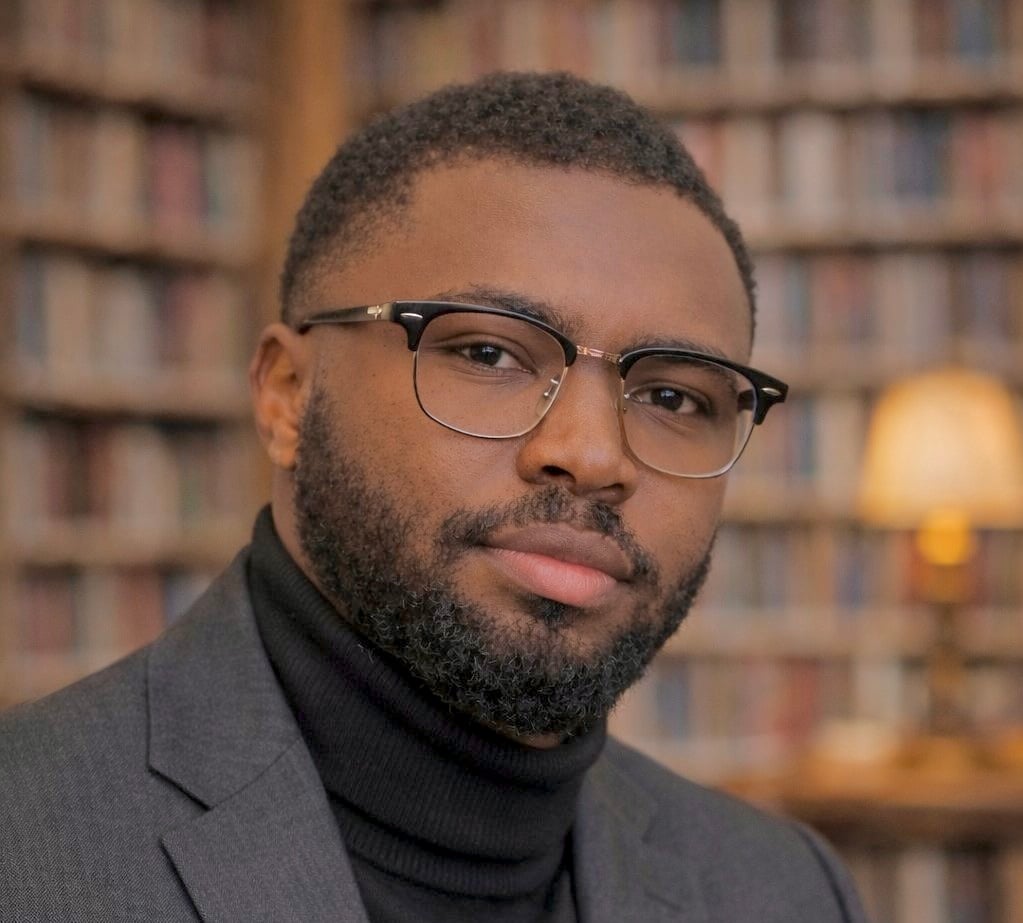
Muneer Yaqub, a Nigerian researcher and PhD graduate of the University of Texas at Dallas, United States, recently earned recognition as the Outstanding Graduate Student (PhD) selected from across six schools at the institution. He specialises in antimicrobial resistance, with research focused on highly drug-resistant, hospital-acquired pathogens at the Dillon Lab. In this interview with ADAM MOSADIOLUWA, he speaks on his academic journey from Usmanu Danfodiyo University, Sokoto (UDUS), to a fully funded doctoral programme in the United States, the challenges of adapting to a new academic and cultural environment, his leadership roles and mentorship initiatives for international students, and the perseverance required to complete a PhD at 27.

CAN you take us through your journey from studying Microbiology at Usmanu Danfodiyo University, Sokoto (UDUS), to becoming a PhD student at the University of Texas at Dallas in the United States? What drove that ambition, and what were the biggest hurdles along the way?

I studied Microbiology at Usmanu Danfodiyo University, Sokoto, and that was really where my interest in infectious diseases started to take shape. At the time, I didn’t have some grand, fully formed plan to do a PhD abroad. I was just curious especially about why some infections don’t respond to treatment the way we expect.

Over time, that curiosity turned into something more intentional. I started looking into opportunities outside Nigeria, partly because I wanted access to better research infrastructure, and partly because I wanted to challenge myself. The biggest hurdles were honestly information and access. It wasn’t always clear what the process looked like or what was required. You’re figuring things out as you go, often without guidance.

There were also structural limitations as an international student funding, eligibility, things like that. But once I understood the system better, it became more about positioning myself properly and staying consistent.

Immediately after your first degree at UDUS, you secured a fully funded fellowship to pursue your PhD in the US. What did that process look like, and how challenging was the transition from Nigeria to life as a doctoral student abroad?

Getting a fully funded PhD wasn’t a straight line. It was a lot of trial and error understanding how applications work, how to present your story, and what programs are actually looking for. Moving to the University of Texas at Dallas was a big shift. Academically, you’re expected to be much more independent. No one is holding your hand—you have to think critically, design experiments, defend your ideas. Outside the lab, it was also an adjustment new environment, new culture, building a support system from scratch. I think the hardest part was learning the “unwritten rules” how to communicate with professors, how to navigate opportunities, and how to advocate for yourself. That takes time.

See also  Strike: FG, ASUU in high-stakes talks

You were recently named the Outstanding Graduate Student (PhD) at UT Dallas, selected from among nominations across six schools. How challenging was it to finish your PhD at 27, and what does this recognition mean to you personally, and maybe as a Nigerian as well?

It means a lot, honestly. A PhD can be a very quiet journey most of the work happens behind the scenes, and progress is often slow and uncertain. So to have that work recognized at the level of the university is special. Finishing at 27 wasn’t easy. There’s pressure to perform, to produce results, to stay on track, even when things aren’t working. And in research, things often don’t work. As a Nigerian, it also means something more. You’re aware of where you’re coming from, and you know that there are many people back home with the same potential but fewer opportunities. So it feels like representation in a way.

The award recognises academic excellence, service, and perseverance in the face of challenges. Which of these would you say was the most demanding to demonstrate?

Perseverance, easily. Excellence is something you work towards. Service is a choice you make. But perseverance is tested when things are not going well when experiments fail, when results don’t make sense, when opportunities don’t come through. There were stretches where progress felt very slow. Staying consistent during those periods that was the hardest part.

Your research focuses on highly drug-resistant, hospital-acquired pathogens, a subject with serious real-world implications. What drew you to antimicrobial resistance, and what is your work at the Dillon Lab aiming to solve?

I work in the Dillon Lab, and my research focuses on antimicrobial resistance, particularly in Acinetobacter baumannii, which is a major hospital-acquired pathogen. What drew me to this field is how real the problem is. These are infections that are becoming harder to treat, even with our best antibiotics. A big part of my work looks at cases where bacteria appear susceptible in the lab but still survive during treatment. That gap between what we measure and what actually happens in patients is something we’re trying to understand better.

You have presented your research at major conferences, including ASM Microbe and Cold Spring Harbor Laboratory. How important has it been to take your work beyond the lab and into wider scientific conversations?

See also  NUC Approves 13 New Courses For Universities In Nigeria (Full List)

Presenting at conferences like those organized by the American Society for Microbiology and Cold Spring Harbor has been very important for me. It pushes you to explain your work clearly, and it exposes you to how others are thinking about similar problems. You get feedback, you refine your ideas, and sometimes you see your work from a completely different angle. It also reminds you that science is not just about your lab it’s a larger conversation.

You served as the first Graduate Student Representative for the Department of Biological Sciences and as the pioneer President of the UTD Global Ambassadors programme for international students. What motivated you to take on these roles alongside a demanding doctoral programme?

I took on those roles because I saw gaps that needed to be addressed. As an international student, I understood how confusing the system can be. Serving as Graduate Student Representative and leading the Global Ambassadors program gave me a chance to help improve that experience for others. It was definitely a balancing act with research, but it also gave me a sense of purpose beyond the lab.

I’m aware you founded Temple of Scholars to help international students secure funded graduate scholarships in the US. Where did that mission come from, and what impact has it had so far?

Temple of Scholars, now ScholarshipHQ, came directly from my own experience. When I was applying, I struggled to find clear, reliable information. There are many talented students, but they don’t always know how to navigate the process. I wanted to create something that makes that journey easier for others. Over time, it’s grown into a platform that has helped a lot of students secure funded opportunities, which has been really rewarding to see.

Greener Pasture: How to Secure a Fully Funded Master’s and PhD Scholarship in the US is a book you authored on securing fully funded scholarships. What do you think is the single most important misconception Nigerian and African students have about the scholarship application process?

That it’s just about grades. Grades matter, but they’re not enough. What really matters is how you present yourself your experiences, your goals, and how well you align with the program. A lot of strong students miss out because they don’t tell their story effectively.

Your writing has appeared in outlets such as The New York Times and Science Magazine, which is rare for a doctoral scientist. How did that aspect of your career develop, and how do you see journalism and research intersecting in your work?

See also  Wigwe varsity seeks NDDC’s partnership, as Ogbuku assures support for schools

Writing started as a way for me to process my experiences and communicate ideas beyond the lab. Publishing in The New York Times and Science came from engaging with topics that sit at the intersection of science and real life. I see writing and research as connected. Research answers questions, but writing helps bring those answers to people in a way they can understand and relate to.

Doctoral research is known to be mentally and emotionally demanding. Were there moments when you genuinely struggled to keep going, and how did you navigate those periods?

Yes, definitely. There were times when experiments failed repeatedly or when I wasn’t sure if I was on the right track. That’s a normal part of research, but it doesn’t feel normal when you’re in it. What helped was stepping back when needed, talking to mentors, and reminding myself that setbacks are part of the process not a sign that you’re not capable.

Who or what has kept you motivated over the years? Is there a person, a memory, or a belief that sustains you when things get difficult?

A mix of things. My background plays a role I’m aware of the opportunities I’ve had and the responsibility that comes with them. But also, I just genuinely enjoy understanding how things work. That curiosity has carried me through a lot.

What do you enjoy doing when you are not studying or writing papers?

I read a lot mostly books that go beyond science into philosophy, history, and storytelling. I also enjoy writing. It’s a different way of thinking and helps me make sense of my experiences.

You have built an impressive profile across research, leadership, writing, and mentorship. Where does Muneer Yaqub see himself after completing PhD?

I see myself continuing in research, but in a way that connects more directly to real-world applications. Whether that’s in academia or industry, I want to work on problems that translate into actual impact.

What would you say to a young Nigerian university student who envisions a future like yours but has no idea where to begin?

Start where you are. You don’t need to have everything figured out, but you need to be intentional. Look for information, build experience, and be consistent. And don’t count yourself out too early. A lot of opportunities feel out of reach until you actually understand how they work.

tribuneonlineng

FOLLOW US ON:

FACEBOOK

TWITTER

PINTEREST

TIKTOK

YOUTUBE

LINKEDIN

INSTAGRAM

Continue Reading
Click to comment

Leave a Reply

Your email address will not be published. Required fields are marked *

Education

OAU has fulfilled founding fathers’ vision, says TETFund boss

Published

on

The executive secretary, Tertiary Education Trust Fund, Sonny Echono, has said the Obafemi Awolowo University (OAU), Ile-Ife, Osun State, has lived to the ideals of its founding fathers, breeding experts in various fields of human endeavors.

Echono, while delivering a lecture to mark the 65th anniversary of Obafemi Awolowo University, Ile-Ife, Osun State, also said investment in research and innovation systems will generate practical solutions suited to local realities.

The TETFUND boss, in the copy of the paper obtained in Osogbo on Friday, paid glowing tributes to the pioneer and successive Vice Chancellors of the university for sustaining the legacies of the university’s founding fathers.

“The Great Ife has remained a symbol of commitment and purposeful leadership. Expectedly, the university has lived to the ideals of its founding fathers as the breeding ground for erudite scholars, legal luminaries, successful businessmen, diplomats, accomplished technocrats and administrators, including its legion of Nigerian National Merit Award Winners, who are contributing to national development, and have continued to uphold the reputation of the university,” he said.

Speaking on the concept of research and innovation, Echono noted that research and innovation remain key drivers of national development, saying nations that have achieved sustained economic growth and technological advancement have done so through deliberate investment in knowledge generation, scientific inquiry, and practical innovation.

He added that in present day global economy, development does not depend on natural resources, but on the capacity to create, apply, and commercialize knowledge.

“Research and innovation remain key drivers of national development. Nations that have achieved sustained economic growth and technological advancement have done so through deliberate investment in knowledge generation, scientific inquiry, and practical innovation.

See also  Banditry: Kwara closes schools in four LGs, demands military base

“In today’s global economy, development does not depend on natural resources but on the capacity to create, apply, and commercialize knowledge. Nigeria’s developmental challenges, though significant, also present opportunities for innovation-driven transformation.

“Addressing issues such as unemployment, insecurity, hunger, healthcare limitations, industrial underdevelopment, and technological dependence requires sustained investment in research and innovation systems that generate practical solutions suited to local realities,” Echono said.

Commending President Bola Tinubu for focusing on research and innovation that can provide solutions to challenges peculiar to the country and her people, Echono also stressed that building a fully functional and innovation-driven economy requires deliberate efforts to address issues of funding constraints, insufficient infrastructure, inadequate motivation, limited academia-industry collaboration, and challenges in commercialising research outputs.

He emphasised that the role of TETFund in enhancing the capacity of tertiary institutions in the country for research and development through its interventions activities has become increasingly strategic for strengthening Nigeria’s research and innovation ecosystem.

He further said that by supporting research funding, academic capacity development, innovation hubs, commercialisation initiatives, and entrepreneurship programmes, TETFund has been repositioning institutions in the country as active contributors to national development.

He declared that Nigeria’s “Sustainable development largely depends on how effective we are at leveraging knowledge, innovation, and technology to grow national economy, expand opportunities, create jobs and wealth, develop new products and services and improve the well-being of its people. This is essential for national growth, competitiveness, and long-term stability.”

Earlier, the Vice Chancellor of the university, Prof Simeon Bamire, said the institution has been recording steady growth since it’s establishment about 65 years ago and commanded the sacrifices and commitment of staff members and students towards sustaining legacies of excellence OAU is reputed for.

See also  PHOTOS: New Abuja school turns ghost site as Teachers show up once a week, pupils hopeless

The PUNCH reports that Bamire announced plans to unveil the N10bn President Bola Ahmed Tinubu Centre of Excellence in Intercultural Dialogue and Youth Empowerment on June 8 as part of activities marking the institution’s 65th anniversary.

Bamire said the centre was designed to serve as a platform for research, dialogue, leadership development, innovation and youth empowerment.

punch.ng

FOLLOW US ON:

FACEBOOK

TWITTER

PINTEREST

TIKTOK

YOUTUBE

LINKEDIN

INSTAGRAM

Continue Reading

Education

UNIPORT names ex-Rivers health commissioner new vice-chancellor

Published

on

The University of Port Harcourt has approved the appointment of Professor Princewill Chike as the 10th Vice Chancellor of the institution.

Chike was the Rivers State Commissioner for Health during the administration of Governor Nyesom Wike.

He will succeed the outgoing Vice Chancellor, Prof. Owunari Georgewill, whose tenure will elapse on July 13.

Georgewill, who is the 9th VC of UNIPORT, will preside over his last convocation ceremony scheduled for Friday, June 5 and Saturday, June 6, 2026.

The university, in a statement issued in Port Harcourt on Thursday, said Chike’s appointment was approved by the institution’s governing council following a selection process.

The statement titled ‘University of Port Harcourt Appoints Professor Princewill R. Chike as 10th Vice-Chancellor was signed by the Public Relations Officer of UNIPORT,  Dr  Sam Kpenu.

The statement reads, “The Governing Council of the University of Port Harcourt has approved the appointment of Professor Princewill R. Chike as the 10th Vice-Chancellor of the University.

“The appointment was made by the 17th Governing Council following the successful conclusion of the selection process.

“The process was conducted in strict compliance with the provisions of the Universities (Miscellaneous Provisions) Act and the University of Port Harcourt Act.

“It involved the constitution of a Search Team and a Joint Council-Senate Selection Board, which carried out their responsibilities in accordance with the extant laws and regulations governing the appointment of Vice-Chancellors in Nigerian universities.

“The Pro-Chancellor and Chairman of the Governing Council, Senator Mao Ohuabunwa, congratulated Professor Chike on his appointment and expressed confidence in his ability to provide visionary leadership for the continued growth and development of the university.

See also  PHOTOS: New Abuja school turns ghost site as Teachers show up once a week, pupils hopeless

“Professor Princewill R. Chike is expected to formally assume office as the 10th Vice-Chancellor of the University of Port Harcourt on 13 July 2026.”

Continue Reading

Education

ASUP gives 21-day ultimatum to poly over poor welfare

Published

on

The Academic Staff Union of Polytechnics (ASUP), Federal Polytechnic Ngodo-Isuochi chapter, Abia State, has issued a 21-day ultimatum to the institution’s management over alleged non-implementation of staff welfare demands and breach of statutory obligations.

The ultimatum was contained in a letter addressed to the Rector Dr. Pdi Ndubuisi, dated May 26, 2026, which was jointly signed by the ASUP chairman in the institution, Mr Ador Osundu; and secretary, Mr Onyeneke Arrhenius.

In the letter sighted on Monday, the union’s executive stated that repeated efforts through dialogue, congresses, and official correspondence to draw the attention of the institution’s management had failed to yield action, creating “industrial tension, eroding trust, and threatening the stability of the institution”.

ASUP warned that failure to resolve the issues within 21 days would compel it to activate “all lawful trade union mechanisms, including industrial action”.

The body added that the ultimatum, adopted at the union’s congress on May 22, 2026, takes effect from the date of receipt of the letter (May 26).

ASUP listed six unresolved issues, citing violations of Nigerian labour, health, and anti-corruption laws.

The union accused management of failing to invite the National Housing Fund (NHF) officials for staff sensitisation and enrolment in violation of the National Housing Fund Act, which mandates employer cooperation in deductions and remittances.

Management was also faulted for not facilitating the National Health Insurance (NHIA) enrolment for staff, denying access to affordable healthcare guaranteed under the National Health Insurance Authority Act 2022 and the National Health Act 2014.

ASUP equally raised concerns over alleged diversion of funds approved for a borehole project into a personal account.

See also  Wigwe varsity seeks NDDC’s partnership, as Ogbuku assures support for schools

“We call for an independent audit of the project fund, failure to do that will force us to petition the Independent Corrupt Practice Commission and the Economic and Financial Crimes Commission,” the lecturers stated.

The union decried what it called a chronic shortage of essential drugs and medical supplies at the health centre, describing it as a failure of the institution’s duty of care. It demanded immediate restocking and engagement of competent medical personnel.

The union expressed dissatisfaction over management’s failure to remit deducted check-off dues from February 2026 till date, calling it a violation of the Trade Unions Act and Section 40 of the 1999 Constitution.

“The union remains open to negotiation until the ultimatum expires, should management invite its leadership for talks.

“As we await management’s action, ASUP reaffirms its commitment to industrial peace, staff welfare, and institutional progress,” the letter stated.

When contacted the Public Relations Officer of the Polytechnic Dr Mrs Anukaenyi Blessing, said she cannot comment on the petition because she is not a member of the management board of Institutions.

punch.ng

FOLLOW US ON:

FACEBOOK

TWITTER

PINTEREST

TIKTOK

YOUTUBE

LINKEDIN

INSTAGRAM

Continue Reading

Trending