Connect with us

Business

FG cancels $717m World Bank power loan amid blackouts; read details

Published

on

The Federal Government has cancelled $717.7m in undisbursed World Bank financing for Nigeria’s troubled electricity sector, effectively terminating the remaining portion of a $1.52bn power sector recovery programme amid mounting tariff shortfalls, worsening financial pressures, and persistent implementation challenges across the industry.

Documents obtained by The PUNCH from the World Bank website on Monday showed that the cancellation followed a formal request by the Federal Government and a joint decision by both parties to discontinue financing under the Power Sector Recovery Performance-Based Operation due to evolving sector realities and the inability to achieve key reform milestones.

According to the World Bank restructuring paper, the cancelled amount represents the entire undisbursed balance remaining under the programme. “The restructuring will result in the cancellation of the entire undisbursed balance in the amount of $717.7m equivalent, and no further disbursements will be made under the Program following approval of this restructuring,” the bank stated.

The bank also disclosed that the programme’s closing date had been brought forward from June 30, 2027, to May 31, 2026, effectively ending the operation more than a year ahead of schedule. The cancelled facility formed part of a broader World Bank intervention designed to revive Nigeria’s struggling power sector.

The original Power Sector Recovery Performance-Based Operation was approved on June 23, 2020, with financing of about $752.5m equivalent. The programme was structured to improve electricity supply reliability, strengthen the sector’s financial and fiscal sustainability, and enhance accountability among key institutions in the electricity value chain.

Following initial progress recorded under the programme, the World Bank approved an Additional Financing package of approximately $763.5m equivalent on June 9, 2023, to consolidate earlier gains and support a new phase of reforms. The financing became effective on June 19, 2024, and extended the project’s closing date to June 30, 2027.

Together, the original financing and the additional facility amounted to about $1.52bn.

However, while the parent programme achieved substantial results and largely disbursed its resources, the additional financing struggled to meet critical reform conditions, resulting in limited disbursements and eventual cancellation of the remaining funds.

The World Bank noted that Nigeria’s electricity sector continues to face deep-rooted structural challenges despite years of reforms and significant financial support.

The report stated that the sector still suffers from weak distribution performance, transmission bottlenecks, underutilisation of available generation capacity, and persistent financial imbalances.

According to the bank, high technical, commercial, and collection losses across the distribution segment, combined with inadequate cost recovery, have created a recurring mismatch between revenues generated by the sector and its actual operating costs.

“These constraints have created recurrent financing gaps, most notably in the form of tariff shortfalls, which generate liquidity pressures across the value chain and weaken the operational and financial performance of sector institutions,” the report said.

See also  Tinubu approves N3.3trn to settle power sector debt

The Federal Government developed the Power Sector Recovery Programme as a framework to restore the sector’s financial viability and reduce its fiscal burden on public finances.

The programme included plans to progressively eliminate tariff shortfalls, improve operational performance among power sector institutions, and strengthen regulatory oversight and accountability mechanisms.

According to the World Bank, implementation of the original operation delivered notable results. The report stated that tariff shortfalls fell by 71 per cent between 2019 and 2022, declining from N581bn to N166bn.

During the same period, regulatory cost recovery improved significantly from 56 per cent to 94 per cent, while annual electricity supplied to the distribution grid increased by 13 per cent between 2018 and 2021.

The bank said all standard disbursement-linked indicators and global indicators attached to the original programme were fully achieved. “Implementation of the parent operation was satisfactory, brought substantial results, and fully disbursed the PforR component as all DLRs were achieved,” the report stated.

Encouraged by those gains, the World Bank approved the additional financing package to address remaining structural weaknesses and deepen reforms under the Power Sector Recovery Programme.

The new facility was expected to support the development of a sustainable financing framework for the sector, improve operational performance through implementation of performance improvement plans, and strengthen governance arrangements among electricity institutions, particularly the Transmission Company of Nigeria.

However, the anticipated reforms failed to materialise within the expected timeframe. The World Bank attributed much of the setback to major macroeconomic developments that dramatically altered the operating environment.

According to the report, the liberalisation of Nigeria’s foreign exchange market in June 2023 triggered a sharp depreciation of the naira, leading to a substantial increase in the cost of natural gas used for electricity generation.

The bank explained that more than 70 per cent of electricity supplied into Nigeria’s national grid is generated using natural gas, whose pricing is denominated in United States dollars.

“The liberalisation of the foreign exchange market in June 2023 led to a significant depreciation of the local currency Naira, which resulted in a big increase in prices of natural gas used to produce above 70 per cent of electricity injected in the national power system,” the report stated.

At the same time, electricity tariffs for most consumers remained largely unchanged despite rising generation costs. The World Bank noted that electricity tariffs had effectively been frozen since early 2023, except for Band A customers, whose tariffs were adjusted to cost-reflective levels in April 2024.

See also  Iran not planning to attend talks with US in Pakistan

This widening gap between actual electricity production costs and revenues collected from consumers resulted in a sharp increase in tariff shortfalls. According to the report, annual tariff shortfalls rose from a low of N140bn in 2022 to approximately N1.9tn in both 2024 and 2025.

“Due to the mismatch between the electricity generation costs and the sector tariff revenues, the tariff shortfalls increased sharply in the last 3 years, moving from a low of N140bn in 2022 to a high of N1.9tn per year in 2024 and 2025, putting serious pressure on the limited Federal Government of Nigeria’s fiscal space,” the World Bank said.

The report explained that the sharp deterioration in sector finances prevented Nigeria from achieving key global indicators attached to the additional financing package.

The bank noted that the required indicators were not achieved in 2023, 2024 or 2025 because authorities failed to establish a credible and fiscally sustainable financing plan capable of addressing the growing tariff deficits.

According to the report, the absence of a comprehensive financing framework and a declining trajectory of tariff shortfalls made it impossible to satisfy major programme conditions.

The bank stated, “Recent financing plans have not fully identified sufficient sources of funding to cover tariff shortfalls, nor established a credible trajectory for their reduction.”

Apart from financing challenges, implementation delays also contributed to the programme’s difficulties. The World Bank cited delays in aligning performance improvement plans with eligible expenditures, particularly those involving the Transmission Company of Nigeria, as well as challenges linked to verification requirements for key sector institutions.

“These constraints have limited the ability to trigger disbursements even where elements of progress have been achieved,” the report stated.

As a result, broader disbursements under the additional financing arrangement failed to materialise as expected. The World Bank disclosed that overall implementation progress under the additional financing remained “Moderately Unsatisfactory.”

Financial data contained in the restructuring document illustrates the extent of the programme’s underperformance. Under the International Bank for Reconstruction and Development component, the World Bank had committed $449m. However, only $41.24m had been disbursed, leaving $407.76m undisbursed and a disbursement rate of just 9.18 per cent.

Under the International Development Association component, $754.82m had been disbursed out of a total commitment of $1.063bn, leaving $308.53m undisbursed. The bank further noted that while about 95 per cent of the parent operation had been successfully disbursed, only around nine per cent of the additional financing package had been released.

“Of the AF combination of a loan and a credit totalling $763.5m equivalent, only 9 per cent, corresponding to prior results of the PforR, have been disbursed,” the report stated.

The World Bank concluded that the programme’s original design had become increasingly misaligned with prevailing realities in Nigeria’s electricity sector. “Taken together, these developments point to a misalignment between the design of the operation and the evolving implementation context,” the report stated.

See also  Oyebamiji meets Sanwo-Olu, Aiyedatiwa, Akande, South-West APC leaders ahead of Osun poll; read details

According to the bank, achieving the programme’s objectives required coordinated progress across fiscal, policy, and operational dimensions, conditions that proved difficult to realise within the expected timeframe.

The Accountant-General of the Federation, Dr Shamseldeen Ogunjimi, earlier warned that Nigeria may reject loan facilities from the World Bank if delays in approval and disbursement persist, saying prolonged timelines could undermine the country’s willingness to proceed with such arrangements.

The warning was contained in a press statement last week by the Director of Press and Public Relations at the Office of the Accountant-General of the Federation, Bawa Mokwa.

Ogunjimi, who spoke in Abuja during a courtesy visit by a World Bank delegation led by Mrs Treed Lane, stressed that Nigeria expects timely processing of funding requests, given that the facilities are loans and not grants.

He said, “If approvals take more than six months, the Nigerian Government may no longer honour such arrangements,” highlighting concerns over bureaucratic delays in accessing development financing.

The AGF noted that as a responsible borrower, Nigeria should not be subjected to prolonged approval processes that could affect project execution timelines and broader development objectives. He therefore urged the World Bank to “expedite the approval and disbursement of project funds to Nigeria” to support the country’s priorities.

Ogunjimi emphasised that the loans carry repayment obligations, making it imperative that disbursement processes align with project schedules and fiscal planning frameworks.

However, the Senior External Affairs Officer at the World Bank, Mansir Nasir, earlier told The PUNCH that funds for projects financed by the institution were not disbursed at once but in instalments, depending on the nature of the project and financing instruments.

The PUNCH further learnt that Nigeria retained its position as the International Development Association’s third-largest borrower in the first quarter of 2026, despite a slight decline in its exposure to the World Bank’s concessional lending arm from $18.7bn in December 2025 to $18.5bn as of March 31, 2026.

The latest IDA financial statements showed that only Bangladesh, with $22.7bn, and Pakistan, with $19.2bn, ranked ahead of Nigeria, whose exposure accounted for about eight per cent of the institution’s $230.8bn loan portfolio.

However, on a year-on-year basis, Nigeria’s exposure rose by $1.2bn, or 6.9 per cent, from $17.3bn in March 2025, underscoring the country’s continued reliance on concessional World Bank financing.

punch.ng

FOLLOW US ON:

FACEBOOK

TWITTER

PINTEREST

TIKTOK

YOUTUBE

LINKEDIN

INSTAGRAM

Continue Reading
Click to comment

Leave a Reply

Your email address will not be published. Required fields are marked *

Business

FG to end regulated gas pricing in 2028

Published

on

Nigeria is set to end regulated pricing in the domestic gas market by September 24, 2028, as the Nigerian Midstream and Downstream Petroleum Regulatory Authority targets a transition to a fully established willing-buyer, willing-seller framework.

The Chief Executive of NMDPRA, Rabiu Umar, disclosed this on Thursday at the Gas Market Maturity Workshop organised under the Decade of Gas initiative at the Petroleum Technology Development Fund, Abuja.

Umar said the transition would be based on measurable conditions that demonstrate the maturity of different segments of the gas market, in line with the provisions of the Petroleum Industry Act.

“Gas must be affordable for Nigerians while supporting President Ahmed Tinubu’s investment reforms. This transition is in line with the Nigeria decade of gas goal to become a gas-powered economy by 2030,” he stated.

He said the PIA envisaged a shift from a market largely coordinated through regulation to one driven increasingly by commercial contracts between willing buyers and willing sellers.

“Invariably, this is the first time that we have been bold enough to set a clear target for our gas market transition,” he noted.

According to Umar, the authority was targeting a 24-month period to establish the conditions required to declare the market a fully functioning willing-buyer, willing-seller market.

“The journey we are starting should lead us to a place where we should target a 24-month at best period within which we will be able to declare the market to be truly a willing-buyer, willing-seller market.”

He stressed that the transition must not be based on broad statements of intent but on clearly defined indicators, thresholds and safeguards.

Umar identified supply availability and diversity, the number and quality of buyers and sellers, access to transportation infrastructure, strength of contracts, payment reliability, delivery obligations, market information and credible price signals as key indicators of market maturity.

See also  FBI asks US court to keep records on Tinubu drug trafficking probe secret

The NMDPRA boss, however, said Nigeria’s domestic gas supply remained tight despite the country’s vast gas resources, stressing that infrastructure development must be matched by sufficient gas molecules to utilise the infrastructure.

“If you look at supply, for example, on the domestic side, it is still tight, no matter how you look at it. We have a lot of work to do in our infrastructure space,” he said. “The focus right now is not just delivering the infrastructure, but ensuring that we have enough molecules to fill the pipeline,” he added.

Umar specifically stressed the need to ensure that major gas infrastructure projects, including the Ajaokuta-Kaduna-Kano pipeline, had sufficient gas supply to make them commercially useful.

He said the role of the regulator would also evolve as the market developed, with greater emphasis on establishing market rules, ensuring fair access, protecting competition and monitoring market conduct.

The NMDPRA chief executive disclosed that the authority had commenced consultations on draft regulations on anti-competitive practices, aimed at translating the competition provisions of the PIA into enforceable regulatory rules.

He also called for a realistic assessment of the different segments of the Nigerian gas market, noting that they were at different stages of development.

According to him, the sequencing of the transition would require determining which market segments were ready to move first, the thresholds they must meet and the safeguards required before liberalisation.

Umar further disclosed that the authority was nearing the conclusion of the process for the issuance of gas distribution licences, with the exercise expected to be completed in the coming weeks.

He said qualified companies would be issued gas distribution licences in the fourth quarter of 2026.

See also  PHOTOS: Agege Food Hub To Strengthen Lagos Food Distribution Network, Says Gov. Sanwo-Olu

The NMDPRA boss also said the authority was working to deepen domestic utilisation of liquefied petroleum gas and liquefied natural gas, stressing that increased domestic utilisation of the country’s gas resources would be an important indicator of economic growth.

He said the government was also seeking to expand the use of compressed natural gas, while several LNG and gas-to-power projects were being developed across the country.

According to him, greater domestic gas utilisation could support power generation, reduce dependence on imports and minimise transmission losses associated with moving electricity over long distances.

He added that the authority was committed to creating a predictable, coherent and transparent regulatory environment capable of attracting long-term investment into the gas sector.

Umar said gas projects required substantial upfront investment and long-term contracts before investors and financiers could commit capital.

“For you to take an FID in a gas investment, you need to have a long-term contract,” he said, adding that the authority was willing to engage with individual projects to identify regulatory measures that could support their development.

Also speaking, the Coordinating Director of the Decade of Gas Secretariat, Ed Ubong, said Nigeria could achieve a willing-buyer, willing-seller gas market before the end of the first horizon of the Decade of Gas programme in 2030.

Ubong said the programme had identified clear markers for achieving the target, including increasing gas supply to 12.6 billion cubic feet per day by 2030.

He said 16 key infrastructure projects were expected to support the growth of the gas market, while more than 60 projects capable of creating about 15 billion cubic feet per day of gas demand had been identified on the demand side.

See also  Nigeria’s exports fall 5.3% in Q4 2025, imports rise – NBS

He noted that a mature gas market would also require the development of a successful gas-to-power market and greater access to cooking gas.

In her speech, the President of the Nigerian Gas Association, Engr. Mrs Yetunde Taiwo, said the transition to a willing-buyer, willing-seller market must be driven by clearly defined milestones.

Taiwo said the NGA had consistently advocated for a commercially driven gas market but stressed that the transition must be properly sequenced to avoid moving either prematurely or too slowly.

“As NGA, what we would like to see really is to see those goalposts, those milestones that have been set, that makes it a realistic journey for us to say we have achieved a willing buyer, willing seller status.”

According to her, Nigeria had made significant progress in the gas industry over the past decade, but substantial work remained to be done.

She called for stronger collaboration between government, regulators and industry, with government providing clear policy direction, regulators establishing predictable rules, and industry continuing to invest, innovate and execute projects.

Taiwo said the ultimate objective should be a gas market capable of attracting investment, encouraging greater participation and delivering reliable gas to industries, businesses and consumers.

Source: punchng.com

FOLLOW US ON:

FACEBOOK

TWITTER

PINTEREST

TIKTOK

YOUTUBE

LINKEDIN

INSTAGRAM

Continue Reading

Business

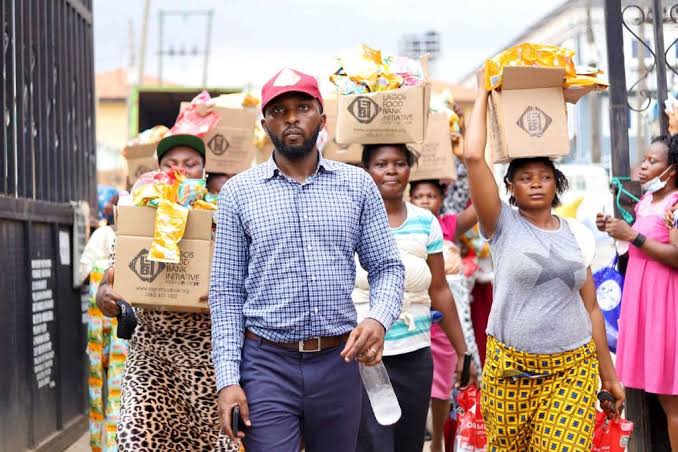
State police will tackle food inflation – Lagos Food Bank founder reveals

Published

on

Founder/Executive Director of Lagos Food Bank Initiative, Dr Michael Sunbola, tells FELIX OLOYEDE how the not-for-profit organisation is helping Lagos residents overcome hunger

What inspired the Green Harvest Agri-food Initiative?

Green Harvest, of course, is an additional layer of the solution to hunger and malnutrition in Nigeria. On the broad spectrum, I’ve had a journey of being a humanitarian and a food system activist. That journey spans over 10 years already. What brought me to the development and humanitarian space still boils down to my childhood experience. And, of course, experiencing food insecurity, going to school, and not having lunch in school. And, of course, that kind of had an impact. In the sense that I was not interested in school; I felt I should be somewhere else rather than school. And I look at what impact that might actually be having on several families right now, several children. And, of course, that gave birth to the Lagos Food Bank, which then translated into serving families. And thereafter, the Green Harvest Agri-Food Initiative started to create a more sustainable pathway for beneficiaries to fend for themselves. Because we realise that the truth is we cannot distribute our way out of hunger. There has to be a more sustainable pathway for beneficiaries to fend for themselves, earn a decent income, become more economically viable, and grow healthy food by themselves while improving their income. So, that is what Green Harvest is about. I must also mention that Green Harvest focuses on curbing food waste.

Through the Agricultural Recovery Programme under Green Harvest, we partner with local farmers to recover surplus post-harvest produce. And then we, of course, have that redistributed to beneficiaries who are mostly in need of their daily meals. So instead of having a whole lot of food go to waste on the farms, what we do is partner with these local farmers and recover surpluses from them.

Do the farmers from whom you collect waste give it to you for free, or do you pay them?

We collect these items from them for a stipend. For instance, they might have sold a bunch of farm produce for maybe N500,000, and we pay them N50,000. Because instead of it going to waste, they could use that money to buy seedlings. So, it’s a stipend. It can’t be compared to the value. But if they don’t even get that, the entire produce goes to waste.

We see it as a way of supporting the farmers. So at least, it won’t be a total loss for them.

So, they can still buy seedlings; they can still do some basic things while we capture the rest and redistribute them.

How does this initiative plug into the initial objectives you had when you started the Lagos Food Bank 10 years ago?

The Green Harvest Agri-food initiative is the future of what we are doing at the Lagos Food Bank. Because we are now looking at food production, we are looking at empowerment for beneficiaries and getting them out of the hunger line. We are looking at also using the initiative to empower more families on a large scale. Also going to large-scale food production. So, most of what we are doing currently, while we understand it, still kind of focuses on interventions that are more into consumption. This focuses more on production, covering food waste and empowerment. We are also looking at smart agriculture. And some other innovations that are still coming in agriculture, like the Black Soldier Fly and all of that. All of it comes under Green Harvest Africa, Green Harvest Agri-Food Initiative.

In the short term, like five years, how much are you thinking of investing in this initiative?

In the next five years, I might not be able to give a specific figure for what would go into an investment. Because it is not a limited liability company, it is still a non-profit. But in terms of investment, we are still looking at how we are going to work with other development partners and how they can plug into investing. We might not be able to project value accurately, but we know we’ll be working with a lot of development partners.

See also  Nigeria’s external reserves hit $53.11bn, near 2009 record

What size of farm are you targeting?

We, of course, are looking at having farms. Right now, we are starting in the South-West.

Oyo State, Ogun State and the like. And the idea is for us to kind of control the supply chain for Lagos Food Bank. And we call that backward integration, where instead of getting some of this food, buying it, we could actually be producing it and then also serving it. It’s more like an initiative that helps us control our supply chain and helps improve income for beneficiaries. Because we are controlling our own supply chain through backward integration, we are also going to work with beneficiaries to empower them to grow their own food through backyard farming. There’s one for Lagos Food Bank, and there’s one for beneficiaries, like decentralised kind of farming where beneficiaries have their own farm in their backyards. It’s all part of the Green Harvest Aagri-food Initiative.

The United Nations, one of its agencies, said about 35 million Nigerians are facing hunger. What do you think is responsible for this large number of hungry people in the country? And how do you think we can tackle it holistically?

Hunger in Nigeria is widespread. It boils down to economic policies, the high cost of living, and the cost of fuel and other essential commodities. And when people can barely earn enough to make a living and sustain themselves, it, of course, leads to hunger and poverty. The NBS report, I think in 2023 or 2024, corroborates the fact that more than 60 per cent of our population are multidimensionally poor. Poverty breeds hunger and hunger breeds malnutrition.

I know there are short-term plans and there are long-term plans. We still have to look, in the short term, at how we can create more economic opportunities for people to earn a decent living. And how can the government look at some of its policies that would, of course, have a long-term impact on reducing the economic burden on the average person? And then we need to invest more in agriculture. We need to look at opening the borders, reducing the cost of food, and empowering more farmers to produce more food. It’s a matter of demand and supply. Food inflation is around 25 per cent or so. And we have the overall food inflation and headline inflation basically. So, if we are looking at all of this put together, they are major drivers of the high cost of food basically. Food prices should be reduced so the average person can afford food and, of course, eat decently and nutritiously.

The Family Farming Programme, under the Green Harvest Agri-food Initiative, focuses on training households in farming techniques. What successes have you recorded so far?

So far, we’ve empowered close to 6,000 families, women and youth. Families or households? Women, basically women and youth.  Because women, of course, empower the family. They produce and help the families in the long run. We’ve done direct beneficiaries over 6,000. And as we speak, they have their farms in their backyards; they have livestock; they are growing vegetables. But mainly, much of the income they make comes from livestock. Chickens, snails and the impact of our backyard farming is widespread as we speak.

And we are able to partner with a number of corporate organisations and institutional developments and institutions as well to kind of scale the Backyard Farming Programme. This is one of the most impactful programmes we currently run under the Green Harvest Agri-Food Initiative. And of course, you can look it up where you see the impacts are there.

See also  PHOTOS: Agege Food Hub To Strengthen Lagos Food Distribution Network, Says Gov. Sanwo-Olu

The country still faces high post-harvest loss. How is the Agricultural Recovery Company of the Green Harvest working to rescue these losses?

So, essentially, we work with local farmers, smallholder farmers. And we also work with large-scale commercial farms to recover their surpluses, to cut food waste and to reduce the impact of the amount of food that goes into landfills. This, of course, drives climate change. But the most important thing is: how do we reduce food waste across the entire agricultural value chain? From the farmers, from the food processing companies, or from the entire value chain, basically. Food loss and waste happen across the value chain. And what we do is we partner with these farms. They call us, “We have excess; come and pick it up.” We do the cleaning, we do the harvesting, we do everything. Because we have the manpower to work with over 45,000 volunteers to achieve some of these recoveries from the farms.

We also work with corporates in large-scale food processing. They also call on us, and we can recover a lot of kilos.

Like last year, can you give me a figure of tonnes of food you were able to recover through this initiative?

Last year, working across the entire value chain with farmers and food processing companies, we were able to recover at least 45,000 kg. Yeah. No, kg. Could you convert this to tonnes and let’s see what we have? 45, to be small.

What is the black soldier fly all about?

Black soldier fly farming helps convert organic waste into livestock feed, using one of the most innovative agricultural practices. And working with smallholder farmers to support them with livestock feed. For us, it is still in the early stages. In the next two to three years, we ought to have scaled this black soldier fly farming so we can produce more livestock feed and convert more organic waste, helping farmers with livestock feed.

You once said there is a need for government to give tax incentives to corporates who support food, who make food available for people. Why do you think government should give incentive to them?

What the government can do basically is to provide as much incentive for corporates who have taken it upon themselves to provide through their corporate social responsibilities, some form of support for vulnerable people. And the way it is done in other climes, when the corporate organisations put their resources together, they get incentive, they get tax returns, and such support is not treated as an income or expense, and you don’t tax expenses. But here, a whole lot of corporates that still do corporate social responsibility, they struggle to get such incentive from the government and tax bodies do not exempt that expense. So, if it’s not exempted, it’s part of profit which will be taxed. But if it’s an exempted expense, then it will not be, that way, they can get their returns. They won’t bear the burden.

So, that is even the least we’re expecting that the government could do or work with an organisation like ours to give such relief or exemptions to corporates that are supporting. But just to kind of give a bit of context to what I said earlier, the government creates the enabling environment; it creates support for farmers; it creates economic opportunities for people to fend for themselves. And then gives enough incentive to those who support.

How is insecurity threatening some of your agricultural initiatives?

It means that our current production cannot meet the demands of our population. So, what that implies is that it becomes a major driver of high food costs or food inflation. Because I think our issue here in Nigeria is kind of complex, in the sense that we are not just looking at how to increase yields or farmers’ production; we are dealing with a calculated effort as a result of insecurity towards farmers. When they attack farmers, they are not just afraid to go to the farm; production drops, and demand rises. So, it’s a major driver, and I believe one of the things I feel I think is high time the government implement is the state police. They’ve been on it for more than, for over a decade; in fact, more than two decades. The conversation around state police, I think, is that it’s high time it should be implemented.

See also  Ezekwesili slams N’Assembly’s constitutional amendment as charade

It was part of the current government’s campaign promises, and I think we are overripe for it. Honestly, state police should be implemented and fully actioned so that people’s lives, property and farmers can be protected across borders. And the state should take responsibility for its security.

So, you are saying that state police will help curb insecurity among farmers?

Yes. There’s nothing the Federal Government has done unilaterally that it does as efficiently as it does when it is decentralised. Look at NITEL, look at electricity, etc. If it’s centralised, they don’t have the bandwidth to carry it because of our population. The same point applies to the police. Decentralise it; let the state take responsibility, and that will reduce and depopulate what we have on the exclusive legislative list and move it more to the concurrent list. Let the state take responsibility; let the Federal Government take responsibility. And then decentralise it; the effort is better felt that way.

What are the biggest opportunities and challenges for scaling up Green Harvest Agri-food Initiative nationwide?

The biggest opportunity for us still remains the partnerships we could leverage to scale our intervention across the country. The number of partnerships and how many, of course, people come on board, because we are not a business. We are a non-profit, so the only way we can scale is through partnerships, and because many people still need this empowerment and intervention, and the amount of food that still goes to waste across the entire value chain is massive. So, the opportunities are there.

What are the challenges?

The challenges are mainly limited funding, which still holds back how far we can go. As a non-profit, we can only work with partnerships. If there are no partnerships, there is limited funding. There is no funding, there is no impact. And another challenge could possibly be the fact that if we tend to kind of scale, if the issue of security is not addressed, we are still challenged in that; we are still in that particular pool of challenges that other farmers are facing.

How much support do you get from the government?

Currently, what we are doing is 100 per cent private-sector-driven. The government provides us much more support, but not in any financial terms. And to an extent, maybe personnel support. But finances, I can say categorically, not for now, but we are not foreclosing the possibility of working with the government in the future.

We believe we complement the government’s efforts to bring relief to people. And at the right time, we feel that if the government deems it fits, I think we should come on board. Of course, we have built enough capacity to help the government address the immediate and long-term needs of those in the line of work.

What is your vision for the Green Harvest Agri-food Initiative over the next decade?

Food production, empowerment on a large scale. So, we are looking at having at least a presence in all 36 states in Nigeria. And not just serving people directly, but empowering them and creating economic opportunities for families, for farmers. We also want to become a major player in Nigeria’s entire food system and ecosystem. We also want to be a major player in food production and humanitarian relief.

Source: punchng.com

FOLLOW US ON:

FACEBOOK

TWITTER

PINTEREST

TIKTOK

YOUTUBE

LINKEDIN

INSTAGRAM

Continue Reading

Business

FG targets $1.2bn private funding for fibre project

Published

on

The Federal Government is seeking about $1.2bn in private capital for its planned 90,000-kilometre nationwide fibre network, as the project moves towards physical deployment in October with a newly incorporated company set up to drive its implementation.

Official records from the government and global financial institutions reviewed by The PUNCH show that $800m of the estimated $2bn cost of the Federal Government’s planned fibre network has so far been covered by sovereign financing commitments, leaving about $1.2bn of the project cost outstanding.

The $800m comprises a $500m World Bank facility approved in October 2025, a $100m loan from the European Bank for Reconstruction and Development approved in February 2026, and a $200m African Development Bank loan approved in April, the records show.

The private capital is not a funding requirement that must be met before implementation can start. Rather, it forms the larger remaining portion of the project’s estimated $2bn capital envelope, which the Minister of Communications, Innovation and Digital Economy, Bosun Tijani, pitched in 2024.

Strategic Communications Adviser to the Minister, Osibo Imhoitsike, told The PUNCH that Project BRIDGE had attracted substantial support from international development finance institutions and private-sector mobilisation through the transaction structure.

He confirmed that the sovereign financing secured to date included $500m from the World Bank, $200m from the African Development Bank and $100m from the European Bank for Reconstruction and Development. The European Union also provided a €22m grant for Project BRIDGE.

“The government has received a significant private sector investment offer as part of the PPP structure, and that process is currently being concluded,” Imhoitsike said.

See also  How Nigerians can apply for 2027/2028 UK commonwealth scholarship – FG

The minister, Tijani, confirmed in August that physical rollout was expected to begin in October. The October date follows the incorporation of Bridge Open Access, or Bridge OA, in August as the special-purpose vehicle for the project.

“The establishment of the company signalled that the project was moving into its implementation phase, with the industry now expecting the October rollout,” Telecom consultant Ejike Onyeaso told The PUNCH.

“The industry is really looking forward to that because it will help reduce costs for not just mobile network operators but also internet service providers that rely on fibre, particularly in the hinterlands and underserved areas.”

In March 2025, his ministry formally opened an investor consultation process, inviting private-sector players to express interest in the Special Purpose Vehicle for the rollout under a public-private partnership model.

In April 2026, Tijani stated, “We’re now mobilising the private sector to plug the remaining gap,” after noting that over $800m had been raised from the government and World Bank for the project. The project is designed to take the national network from the current 35,000km to roughly 125,000km.

The World Bank said the programme would help close the country’s digital divide by expanding affordable, high-speed broadband to communities that remain unserved or underserved.

“The BRIDGE project puts into action the bold and ambitious vision to unlock the potential of the digital economy in Nigeria, working alongside the private sector,” World Bank Country Director for Nigeria, Mathew Verghis, said.

“Access to fast and reliable internet will help to create more quality jobs for millions of Nigerians across all 774 LGAs in addition to improving the quality of essential services like education and healthcare.”

See also  Nigeria’s external reserves hit $53.11bn, near 2009 record

Documents from the ministry show that investors are expected to hold a majority stake in Bridge OA, with equity ownership ranging from 51 per cent to 75 per cent and operational control of the company. The Federal Government, through the Ministry of Finance Incorporated, or MoFI, is expected to retain between 25 per cent and 49 per cent.

The structure is intended to bring private capital and operating expertise into a project in which the government is providing part of the financing while retaining a minority position.

Bridge OA will handle the financing and construction of the network and operate it as a wholesale open-access infrastructure company rather than a retail internet provider. It is expected to sell fibre capacity on equal and non-discriminatory terms to qualified operators, including telecommunications companies, internet service providers, banks and cloud providers, rather than directly serving end users.

The rollout had previously been targeted for the fourth quarter of 2025 or the first quarter of 2026, but large-scale construction was deferred as the government worked to establish the special-purpose vehicle, onboard private investors and complete the necessary procurement and implementation arrangements.

The project was initially expected to be implemented over about five years, with an initial target of roughly 30,000km in the first year before the pace increased as private capital and construction capacity were brought into the programme. Tijani has since revised the overall delivery period to three years, bringing forward the expected completion of the 90,000km network.

Source: punchng.com

FOLLOW US ON:

FACEBOOK

TWITTER

PINTEREST

TIKTOK

YOUTUBE

LINKEDIN

INSTAGRAM

Continue Reading

Trending