Connect with us

Lifestyle

Egg freezing doesn’t guarantee pregnancy, say fertility specialists

Published

on

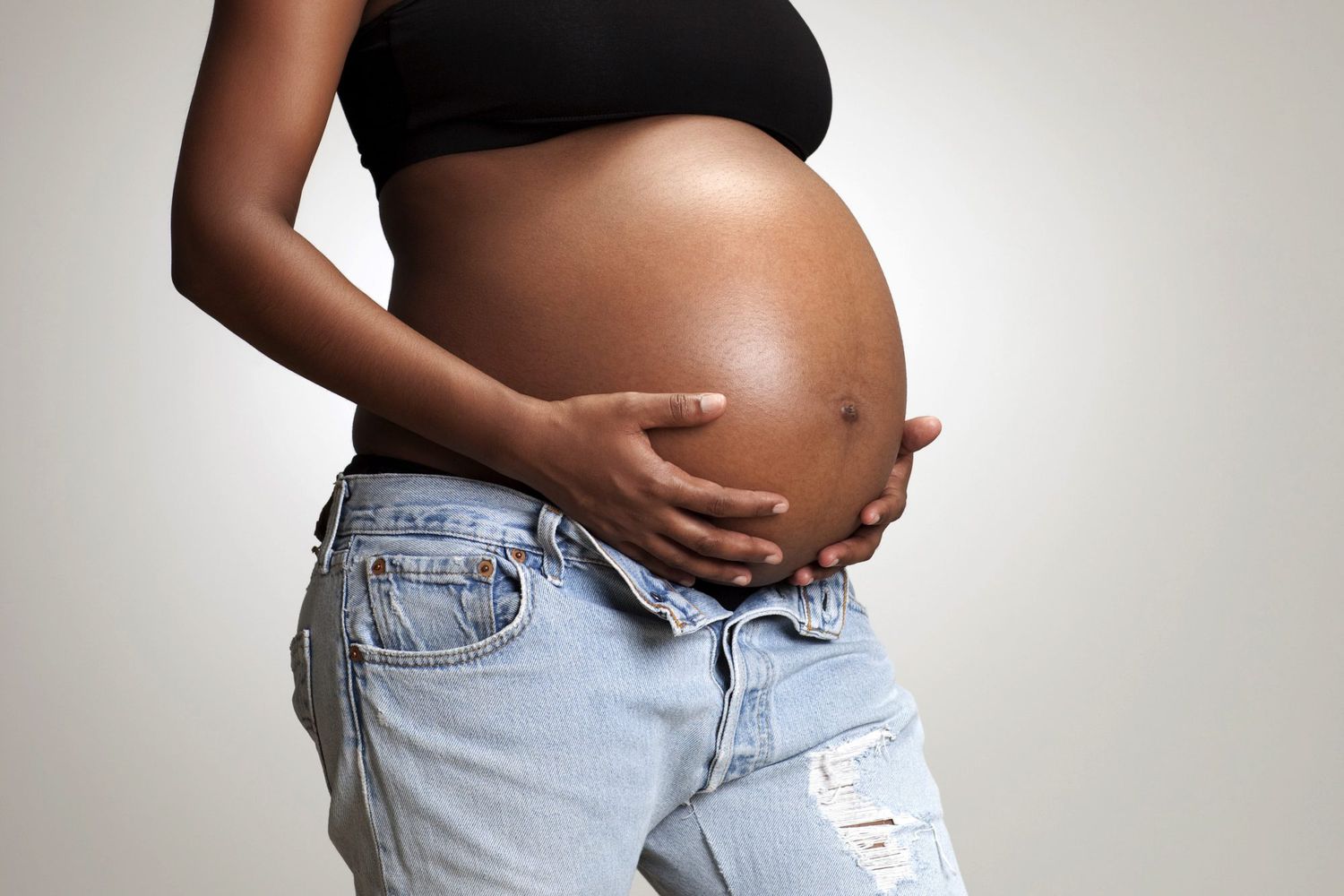
Fertility specialists have outlined key considerations for women planning to freeze their eggs to increase the likelihood of a successful pregnancy when they wish to have children later.

They stressed that while egg freezing can expand reproductive options, it does not guarantee future pregnancy.

However, they noted that factors such as age, overall reproductive health, cost, and the chances of future success of the procedure must be carefully evaluated before making the decision.

They explained that egg freezing offers women an opportunity to preserve their fertility for future use, particularly for those who wish to delay childbearing due to career, education, medical, or personal reasons.

Egg freezing, known as oocyte cryopreservation, is one form of assisted reproductive technology, according to a medical website, Healthline.

It added that during the procedure, medications are used to stimulate eggs to grow.

“Those eggs are then harvested from the ovaries and frozen for storage. At a later date, the eggs can be thawed and combined with sperm to create an embryo. The embryo can then be implanted into the uterus during an embryo transfer cycle.

“Although this won’t guarantee a pregnancy, it can improve the chances of successfully conceiving later in life,” the website said.

In Nigeria, conversations around egg freezing have begun gaining traction among the younger generation on social media, with many considering the idea based on personal, economic, or relationship factors.

Aside from the above-listed factors, other women are also considering the option as a viable clinical technique to preserve their fertility, based on concerns around rising infertility among young couples.

See also  PHOTOS: Razaq Akanni Okoya CON (born 12 January 1940)

The Association for Fertility and Reproductive Health says there are about 12 million infertile persons in Nigeria, which is almost 10 per cent of the total population.

Speaking exclusively to PUNCH Healthwise, the President of the Association for Fertility and Reproductive Health, Prof. Preye Fiebai, urged women to develop realistic expectations about egg freezing.

He explained that the procedure allows women to preserve higher-quality eggs at a younger age.

The fertility specialist said while it could be a lifestyle or elective choice for some women, it could be a medical necessity for others.

“It is medically necessary for patients facing fertility-threatening conditions such as cancer treatment like chemotherapy/radiation, certain autoimmune diseases, or genetic conditions that accelerate ovarian failure,” he said.

Fiebia, who is a professor of Obstetrics and Gynaecology at the University of Port Harcourt, also clarified that egg freezing does not guarantee future pregnancy.

“It improves the odds compared to using older eggs later, but it does not guarantee a pregnancy or live birth.

“Success depends on age at freezing, number and quality of eggs retrieved, thawing survival rates, fertilization success, embryo quality, and the recipient’s uterine health at the time of transfer. Many women who freeze eggs never use them,” he said.

On what every woman should know before deciding to freeze her eggs, he said:

“Best results are achieved in the late 20s to mid-30s; success drops after age 37–38. It is expensive and often requires multiple cycles.

“Also, there are no guarantees; it provides options, not certainty. And the individual involved will likely need IVF later to use the eggs.”

See also  PHOTOS: The issue of Deborah Samuel Yakubu is one of the most tragic and controversial religious-related incidents in recent Nigerian history.

Fiebai added, “The procedure does not improve women’s natural fertility, prevent menopause, or harm their ability to conceive naturally in the future.”

He, however, urged women to get personalised testing and realistic success estimates from reproductive specialists.

Aside from personalised testing, he urged women to consider emotional readiness and total costs, which include egg retrieval, storage, and future IVF.

Also speaking, the Second Vice President of the Society of Gynaecology and Obstetrics of Nigeria, Prof Christopher Aimakhu, said advances in reproductive technology have made egg freezing an option for many women.

“Women may choose to freeze their eggs because they want to preserve their fertility and extend their reproductive window in response to social, professional, or medical circumstances.

“Socially, a woman may not be ready for marriage or may not have found a compatible partner. Professionally, she may wish to focus on her career or education before starting a family. Medically, women undergoing cancer treatment, those with endometriosis, or those facing other fertility-threatening conditions may opt for egg freezing to preserve their chances of having children in the future,” he said.

Corroborating Fiebai, Aimakhu noted that the procedures do not guarantee pregnancy in the future.

“No, egg freezing does not guarantee a future pregnancy. The success of a future pregnancy depends on several factors beyond simply freezing the eggs,” he said.

The fertility specialist listed factors influencing the success of future pregnancy after the procedure that women should know to include:

“The woman’s age at the time the eggs are frozen. Younger eggs generally have better quality and a higher chance of resulting in a successful pregnancy.

See also  Professor Bolaji Akinyemi: Nigerian Diplomat and Scholar of Global Influence

“The total number of eggs frozen. Not all eggs will survive thawing, so having more eggs stored can improve the chances of success.

“Also, the quality of the sperm used for fertilisation and the successful embryo development and implantation in the uterus,” he said.

punch.ng

FOLLOW US ON:

FACEBOOK

TWITTER

PINTEREST

TIKTOK

YOUTUBE

LINKEDIN

INSTAGRAM

Continue Reading
Click to comment

Leave a Reply

Your email address will not be published. Required fields are marked *

Lifestyle

Learn Bible before preaching, Pastor blasts Dolapo Lawal over salvation doctrine

Published

on

The lead pastor at Goodness Nation, Apostle Harrison Ayintete, has criticised Pastor of Zoe Household Global, Dolapo Lawal over his teaching against the “once saved, always saved” doctrine, urging the cleric to “learn the Bible before teaching.”

Ayintete, in a post on X, faulted Lawal’s interpretation of salvation, arguing that believers who have received eternal life through faith in Jesus Christ cannot lose their salvation.

The exchange followed Lawal’s recent sermon in which he rejected the “once saved, always saved” doctrine, arguing that salvation requires continued faith, repentance and holy living.

Lawal maintained that while believers can have assurance of salvation through faith in Christ, Scripture repeatedly warns Christians against falling away, abandoning the faith and living contrary to the gospel.

He cited the New Testament epistles and Jesus’ warnings to the seven churches in Revelation as evidence that believers must continue in obedience rather than assume salvation is irreversible regardless of their conduct.

He also argued that teaching unconditional eternal security encourages moral laxity within the church and downplays biblical calls to holiness, insisting that believers must read the whole of Scripture rather than rely solely on verses such as John 3:16.

Lead pastor at Goodness Nation, Apostle Harrison Ayintete…Photo Credit: X / Harrison Ayintete

Responding to Lawal’s sermon, Ayintete wrote, “Pastor Adedolapo Lawal, sir, I thought you knew better than this, though.

“According to your own John 3:16, the one who has believed has eternal life and will perish right?

“Eternal life is quality of life, it is God’s life, you said, so does God’s life see condemnation? Does God’s righteousness perish?”

See also  Seriki Williams Abass: From Captive to Contested Power in Badagry (PHOTOS)

He argued that New Testament epistles were written to guide believers towards spiritual growth and maturity rather than to determine whether they remained saved.

“The epistles are for revelation, development in ministry, maturity in that which we have received, warning against lifestyles that do not reflect our righteousness.

“Spiritual development and growth is never the same as spiritual birth,” he said.

Ayintete also rejected Lawal’s claim that the teaching of “hyper-grace” had contributed to increasing sin within the church.

“You even said Hypergrace is the reason sins are everywhere. Bro, how many churches preach Hypergrace? So all the sins in RCCG is sponsored by Hypergrace? All the lies in Deeper Life? They don’t tell lies in your own churches?

“You people talk like you produce some better saints than we do,” he wrote.

He further challenged Lawal to a public debate on the subject, insisting that the issue should be discussed openly.

“If he sure for you say Hypergrace nor dey Bible, set up a proper debate on the subject, I will meet you there because at this point, we need that conversation,” he added.

In a follow-up video, Ayintete accused some ministers of deliberately portraying hyper-grace preachers negatively.

He maintained that Jesus’ promise of eternal life in John 3:16 and John 10 guaranteed permanent salvation for believers.

“The Lord Jesus said in John 3:16 that whosoever has believed in Him has eternal life and will not perish.

“Jesus said over and over, ‘I give them eternal life and they shall never perish.’ Ephesians 1 says we are sealed with the Spirit unto the day of our redemption,” he said.

See also  PHOTOS: The issue of Deborah Samuel Yakubu is one of the most tragic and controversial religious-related incidents in recent Nigerian history.

Ayintete argued that believers overcome sin through the Holy Spirit rather than fear of hell or losing salvation.

“We believe in hyper-grace, we preach it and we raise godly believers to the glory of God. We are not going to be silent anymore,” he said.

punch.ng

FOLLOW US ON:

FACEBOOK

TWITTER

PINTEREST

TIKTOK

YOUTUBE

LINKEDIN

Continue Reading

Lifestyle

‘I didn’t secretly sell my husband’s properties’ — Mr Ibu’s widow

Published

on

The widow of late Nollywood actor John Okafor, Stella Maris Okafor, has dismissed allegations that she secretly sold her late husband’s properties and kept the proceeds to herself.
Recall that the family of the late actor, popularly known as Mr Ibu, recently opened up about their struggles and financial situation.

In a recent video now making the rounds online, while speaking to content creator King Mitchy, Stella Maris explained that the sale of the properties was carried out in line with a court order and with the consent of Mr Ibu’s two sons, Valentine Okafor and Daniel Okafor.

She further backed her claim, stating that she has the relevant documents.

“I have to show you this document. This is a court order. We—I didn’t, not me alone. My husband’s two sons, Valentine Okafor and Daniel Okafor, and I did it according to the court order. Every evidence is here. We sold the house. I am not the one that sold the house,” she stated.

She also disclosed that she currently runs an online jewellery business, explaining that her late husband had initially discouraged her from venturing into it while she was still acting.

“I have a page online where I sell jewellery, and I am still selling my jewellery. When I wanted to start this business, my late husband stopped me because I was acting. My late husband was my colleague in the industry,” she said.

She further revealed that she is planning to move out of her current residence, describing it as too expensive and saying she only relocated there due to security concerns and public pressure following her husband’s death.

See also  PHOTOS: The issue of Deborah Samuel Yakubu is one of the most tragic and controversial religious-related incidents in recent Nigerian history.

“I did not intend to come to this place. It’s because of pressure and security, but I am packing out.”

Addressing claims by a young man who alleged online that he is one of Mr Ibu’s children and was denied financial support, Stella Maris said disagreements over money began shortly after the actor’s burial.

She alleged that some family members demanded that she share the money given to her during the burial for the upkeep of her children.

“Before they sold the land, we were still in the village, and they were dragging with me over the money that was given to me during the burial. They insisted that I should share the money with them. I told them that this was money given to me for my children. Why should I come and share it with you people?”

FOLLOW US ON:

FACEBOOK

TWITTER

PINTEREST

TIKTOK

YOUTUBE

LINKEDIN

INSTAGRAM

Continue Reading

Lifestyle

‘I was a thief in my younger years’ – Charly Boy

Published

on

Nigerian activist and entertainer, Charles Oputa, popularly known as Charly Boy, has admitted that he was involved in crime during his younger years in the United States.

Charly Boy made this confession on Friday when he appeared as a guest in an interview on Arise Television’s ‘Prime Time’.

The vocal social commentator said he made several poor decisions in his younger years and engaged in activities he now looks back on with regret.

“I’ve made mistakes in my life. I’ve been a thief. I’ve done very risky things. I’ve done very stupid things, very foolish things. In fact, I have no business being here with you tonight, but I guess there’s a purpose for my life,” he said.

According to the activist, his years in America were filled with reckless choices, including involvement in financial crimes.

“I was doing white-collar crime when I was in America. I was about 25 years old. I was doing a lot of stupid stuff. That’s why I say I’ve been there,” he added.

The social commentator pointed out that rather than hide those parts of his story, he chose to document them fully in his memoir to show his complete journey from rebellion and mistakes to transformation and self-discovery.

FOLLOW US ON:

FACEBOOK

TWITTER

PINTEREST

TIKTOK

YOUTUBE

LINKEDIN

INSTAGRAM

See also  Patricia Olubunmi Etteh: Nigeria’s First Female Speaker of the House of Representatives
Continue Reading

Trending