Connect with us

Business

DisCos earn N801bn despite persistent electricity blackouts

Published

on

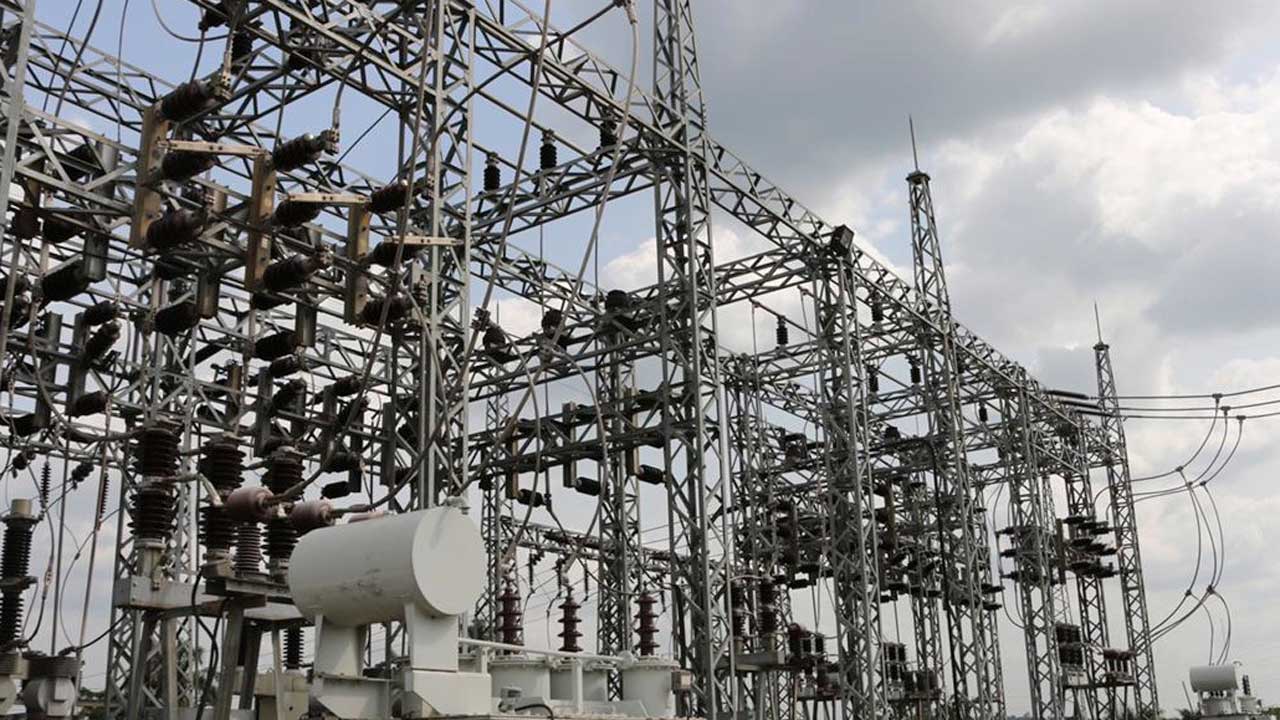
Electricity distribution companies collected a total of N801.16bn from electricity consumers between January and April 2026 despite persistent power outages and supply constraints across the country, data obtained from the Nigerian Electricity Regulatory Commission has shown.

The commercial performance factsheets released by the regulator showed that the 11 DisCos collected N204.74bn in January, N196.68bn in February, N196.13bn in March and N203.61bn in April, bringing total revenue for the four-month period to N801.16bn.

The collections came even as households and businesses endured months of unstable electricity supply caused largely by gas shortages that crippled power generation and forced widespread load shedding, especially in February and March.

According to the NERC data, the DisCos billed customers N1.01tn between January and April but recovered N801.16bn, leaving about N207.77bn in uncollected revenue during the period.

In January, the companies billed customers N268.20bn and collected N204.74bn, leaving N63.46bn outstanding. Billing efficiency stood at 79.72 per cent, while collection efficiency was 76.34 per cent.

In February, total billings fell to N242.29bn, with collections of N196.68bn, resulting in N45.61bn in uncollected revenue. Billing efficiency improved to 87.44 per cent, while collection efficiency rose to 81.17 per cent.

March recorded total billings of N246.43bn and collections of N196.13bn, leaving N50.30bn outstanding. Billing and collection efficiencies stood at 83.89 per cent and 79.59 per cent, respectively.

The latest NERC factsheet showed that in April, total billings increased to N252.43bn, while revenue collected stood at N203.61bn. This left another N48.82bn uncollected during the month. Billing efficiency was 83.32 per cent, while collection efficiency improved slightly to 80.66 per cent.

See also  Customs hand over seized N40.7m petrol to NMDPRA

The reports also showed that significant volumes of electricity supplied to the distribution companies were not billed during the four months, reflecting continued metering gaps and commercial losses in the sector.

Among the utilities, Eko Electricity Distribution Company remained one of the strongest performers in revenue recovery, posting a recovery efficiency of 102.09 per cent in April. Port Harcourt, Abuja, Ikeja and Benin DisCos also recorded recovery efficiencies above 85 per cent.

However, Kaduna, Kano, and Jos DisCos continued to lag behind. Kaduna posted a recovery efficiency of 43.15 per cent in April, while Kano and Jos recorded 51.87 per cent and 52.48 per cent respectively.

The revenue performance comes against the backdrop of prolonged electricity shortages experienced during the first quarter of the year.

During the period, electricity generation dropped sharply as inadequate gas supply forced several thermal power plants to shut down or reduce output. At some points, national generation fell from around 4,000 megawatts to below 2,000MW, prompting the Transmission Company of Nigeria to ration the limited electricity available to distribution companies.

Operational data released by the Nigerian Independent System Operator showed that thermal power plants require an estimated 1,629.75 million standard cubic feet of gas per day to operate optimally. However, as of February 23, actual gas supply was about 692 million standard cubic feet per day, representing less than 43 per cent of the requirement.


Throughout the period, distribution companies repeatedly informed customers that the widespread outages were caused by generation shortfalls arising from inadequate gas supply.

See also  PENGASSAN stops gas, crude supply to Dangote refinery

Although electricity supply began to recover gradually towards the end of April, consumers have continued to express concerns over high electricity tariffs, estimated billing, and poor service delivery.

Stakeholders have also continued to advocate improved metering, reduced energy theft, and stronger infrastructure investment to enhance the financial and operational performance of the electricity distribution companies.

Meanwhile, the Lagos State Electricity Regulatory Commission has said electricity supply licensees cannot recover charges that are more than 12 months old. The commission disclosed this in a consumer awareness message recently published on its official social media platform as part of efforts to enlighten electricity consumers on their rights.

According to LASERC, consumers should not be made to pay charges older than 12 months except in cases involving meter tampering, illegal use of electricity, or obstruction of meter reading.

β€œElectricity supply licensees cannot recover charges older than 12 months, except in cases of meter tampering, illegal use, and obstruction of meter reading,” LASERC said.

punch.ng

FOLLOW US ON:

FACEBOOK

TWITTER

PINTEREST

TIKTOK

YOUTUBE

LINKEDIN

Continue Reading
Click to comment

Leave a Reply

Your email address will not be published. Required fields are marked *

Business

Trump earned over $1bn from crypto ventures in 2025 β€” Report

Published

on

US President Donald Trump recorded around $1.2 billion in income from his cryptocurrency activities in 2025, according to documents released on Tuesday by the US Office of Government Ethics.

A 1978 law requires the president and vice president of the United States to declare their income as well as their assets.

According to the documents, which are more than 900 pages long, Trump received nearly $`550 million from his ties to the startup World Liberty Financial.

The Trump family lent its support and its name to this cryptocurrency platform, launched in September 2024.

World Liberty Financial issued its own cryptocurrency, WLFI, whose initial sale brought in `$550 million.

Trump and his three sons also obtained, via an intermediary company, DT Marks Defi, an additional 22.5 billion WLFI, currently worth around $`1.3 billion.

In April 2025, WLF also marketed its stablecoin β€” a digital currency whose value is pegged to a traditional currency, in this case the dollar.

Trump’s income disclosure also mentions $635 million in royalties received under a licensing agreement related to the $TRUMP cryptocurrency, launched just hours before his inauguration in January 2025.

The president’s activities in the cryptocurrency sector are the main reason for the near tripling of his personal fortune, which rose from `$2.3 billion to $6.5 billion between 2024 and 2026, according to Forbes.

The former real estate developer is regularly accused of conflicts of interest, in particular for having invested in the crypto-currency industry while as president taking several measures to deregulate the sector, causing asset prices to soar.

See also  Customs hand over seized N40.7m petrol to NMDPRA

Beyond the income derived from WLF and its cryptocurrency, Trump has also earned several million dollars from shares in various publicly listed companies active in cryptocurrencies, such as the Coinbase exchange platform.

The president’s assets are held in a trust managed by his son, Donald Trump Jr. But its bylaws stipulate that the entity can be dissolved at any time, which means the billionaire could regain control of it as soon as his second term ends.

AFP

punch.ng

FOLLOW US ON:

FACEBOOK

TWITTER

PINTEREST

TIKTOK

YOUTUBE

LINKEDIN

Continue Reading

Business

World Bank to stop lending to China by 2031; read why

Published

on

The World Bank will phase out its lending to China by 2031, according to the organisation’s new country partnership framework, a source familiar with the matter told AFP on Tuesday.

The source confirmed an earlier report of the development by the Financial Times.

β€œChina has made significant development advances over the past several decades β€” progress that the World Bank and others have supported,” said a World Bank official familiar with the matter, speaking on condition of anonymity.

β€œNow we are reaching a new phase of our relationship, reflecting that reality.”

World Bank lending to China β€” the world’s second-largest economy β€” has steadily declined in recent years as the Asian giant saw explosive growth and a reduction in poverty indicators.

In his first term in office, US President Donald Trump demanded that the World Bank stop lending to China entirely, as he adopted a more aggressive approach to Washington’s chief economic rival.

Trump has maintained that tone in his second term, but has not specifically repeated that demand.

World Bank lending to China peaked at 750 million in 2025.

China also contributes funds to the World Bank’s International Development Association (IDA) pool for the world’s least developed countries, with its $1.5 billion under the latest replenishment round making Beijing the fifth-largest donor.

β€œThe World Bank’s role is shifting from lender to knowledge partner, in line with China’s development trajectory,” said the World Bank official.

On June 16, the World Bank announced a similar plan for Poland, planning to reduce loans to zero by 2031 while maintaining technical assistance.

See also  Customs hand over seized N40.7m petrol to NMDPRA

AFP

punch.ng

FOLLOW US ON:

FACEBOOK

TWITTER

PINTEREST

TIKTOK

YOUTUBE

LINKEDIN

Continue Reading

Business

Average city bus fare rises 2.43% to N1,431 in May

Published

on

The average fare paid by commuters for bus journeys within Nigerian cities rose to N1,431.25 per trip in May 2026, highlighting continued pressure on transportation costs despite signs of easing inflation in other sectors of the economy.

This was contained in the National Bureau of Statistics’ latest Transport Fare Watch report, released on Tuesday.

According to the report, the average intra-city bus fare increased 2.43 per cent from N1,397.27 recorded in April 2026. On a year-on-year basis, the fare rose 38.63 per cent from N1,032.46 paid in May 2025.

The report also showed that transport costs increased across other major categories, including intercity bus travel, domestic air transport, motorcycle (okada) rides, and water transportation during the review period.

The NBS noted that transport fares continued to rise across virtually all categories in May, with motorcycle transportation recording the highest annual increase.

According to the data, the average fare for intercity bus travel increased to N9,699.55 in May, up 0.96 per cent from N9,607.41 in April. Compared with May 2025, the fare rose 21.89 per cent from N7,957.41.

Similarly, the average airfare for specified domestic routes stood at N157,552.19, reflecting a 0.12 per cent month-on-month increase and a 20.86 per cent rise from N130,361.85 recorded in May 2025.

Motorcycle transport recorded the sharpest increase among all transport categories, with the average fare rising to N1,072.51. This represented a 3.56 per cent increase from April and a 52.45 per cent year-on-year increase.

Water transport fares also increased to N2,276.48 during the month, up by 2.41 per cent from April and 30.88 per cent higher than the N1,739.32 recorded in May last year.

See also  EU Provides N320.5B Credit Line to Boost Nigeria’s Agricultural Sector

The bureau said the figures showed that transport costs remained elevated nationwide despite relatively modest monthly increases.

State-by-state analysis showed wide disparities in transport fares across the country.

Ondo State recorded the highest average intercity bus fare at N11,080, followed by Abia State at N11,066.13, while Kwara and Edo states posted the lowest average fares.

For intra-city bus transportation, Zamfara State recorded the highest average fare at N1,878.80, followed by Taraba State at N1,771.96. Abia and Adamawa states recorded the lowest city bus fares.

The report further showed that Kano State posted the highest average domestic airfare at N184,139.29, ahead of Lagos State at N176,971.65, while Gombe and Nasarawa states recorded the lowest airfares.

Kaduna State recorded the highest average fare for motorcycle transportation at N1,720.76, while Rivers State posted the highest average water transport fare at N6,893.55.

At the regional level, the South-West recorded the highest average fares for city bus services, intercity buses, and motorcycle transportation, while the South-South recorded the highest average water transport fares.

punch.ng

FOLLOW US ON:

FACEBOOK

TWITTER

PINTEREST

TIKTOK

YOUTUBE

LINKEDIN

Continue Reading

Trending