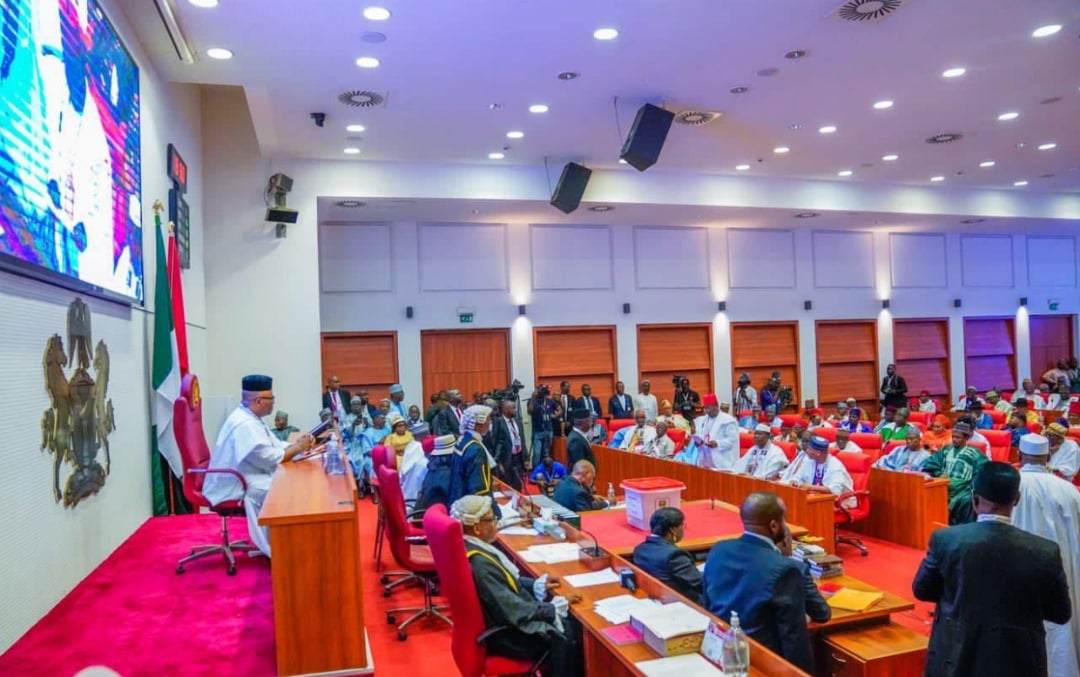
The Senate will on Tuesday (today) hold an emergency plenary session amid rising national outrage over its handling of amendments to the Electoral Act, particularly the controversial decision to drop the clause mandating real-time electronic transmission of election results.
The extraordinary sitting, convened less than a week after the passage of the Electoral Act Amendment Bill, 2026, comes as pressure mounts from civil society organisations, opposition figures, labour unions, professional bodies, regional leaders, and a swelling youth movement that has taken its anger to the gates of the National Assembly.
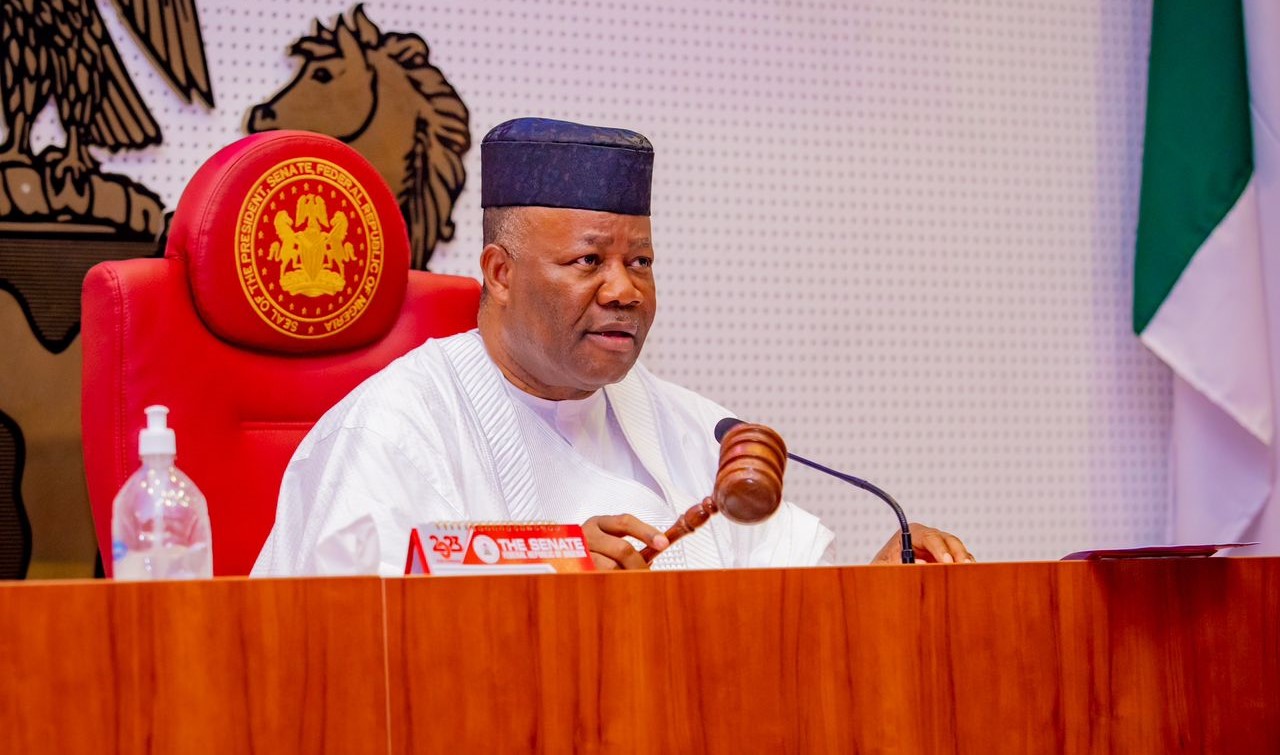
The President of the Senate, Senator Godswill Akpabio, is expected to preside over the plenary, which will be attended by the remaining 105 senators.
In the past six months, the Upper Chamber has lost two members — Senator Okechukwu Ezea of Enugu State and Senator Godiya Akwashiki of Nasarawa State — to death. A third lawmaker, Senator Jimoh Ibrahim, recently exited the chamber after being appointed an ambassador-designate by President Bola Tinubu. The development has reduced the number of senators from 109 to 106.
The emergency session was formally announced on Sunday in a statement signed by the Clerk of the Senate, Emmanuel Odo.
“The President of the Senate, Godswill Akpabio, has directed the reconvening of plenary for an emergency sitting on Tuesday, February 10, 2026,” the statement read.
Plenary is scheduled to commence at 12 noon.
Senators under siege
The decision to reconvene comes against the backdrop of intense public backlash since the Senate passed the Electoral Act 2022 (Repeal and Re-enactment) Amendment Bill, 2026, deleting the phrase “real-time” from provisions dealing with the electronic transmission of election results.
The PUNCH gathered that several senators, especially those appointed to the Harmonisation Committee, were forced into defensive mode after their personal phone numbers surfaced on social media, triggering a barrage of angry calls, threats, and verbal attacks from citizens accusing them of sabotaging democracy. Some reportedly switched off their phones altogether to avoid further harassment.
“The reactions were unpredictable. Many were laying curses and asking them, ‘how do you sleep at night after this action?’” a National Assembly source confided.
Despite repeated clarifications by Senate leaders that electronic transmission was not rejected outright, public distrust has continued to grow, with critics insisting that removing the words “real-time” creates loopholes for post-poll manipulation.
As the controversy deepened, the Nigeria Labour Congress warned of nationwide protests and possible election boycotts if the Senate failed to take a clear and unambiguous position on mandatory electronic transmission of results. The labour union accused the Senate of sowing confusion and undermining confidence in the electoral process through contradictory explanations of its actions.
Simultaneously, a newly formed coalition of political activists under the banner of the Movement for Credible Elections announced and executed a mass protest in Abuja on Monday, tagged “Occupy NASS.”
Obi joins protest
The protest gained fresh momentum when the former presidential candidate of the Labour Party, Mr. Peter Obi, joined hundreds of demonstrators at the National Assembly Complex.
The protesters, drawn largely from the Obidient Movement and other pro-democracy groups, accused lawmakers of deliberately weakening electoral safeguards ahead of the 2027 general elections. Chanting solidarity songs and waving placards bearing inscriptions such as “Our votes must count,” “No to electoral robbery,” and “Protect democracy now,” the protesters marched from the Federal Secretariat towards the National Assembly.
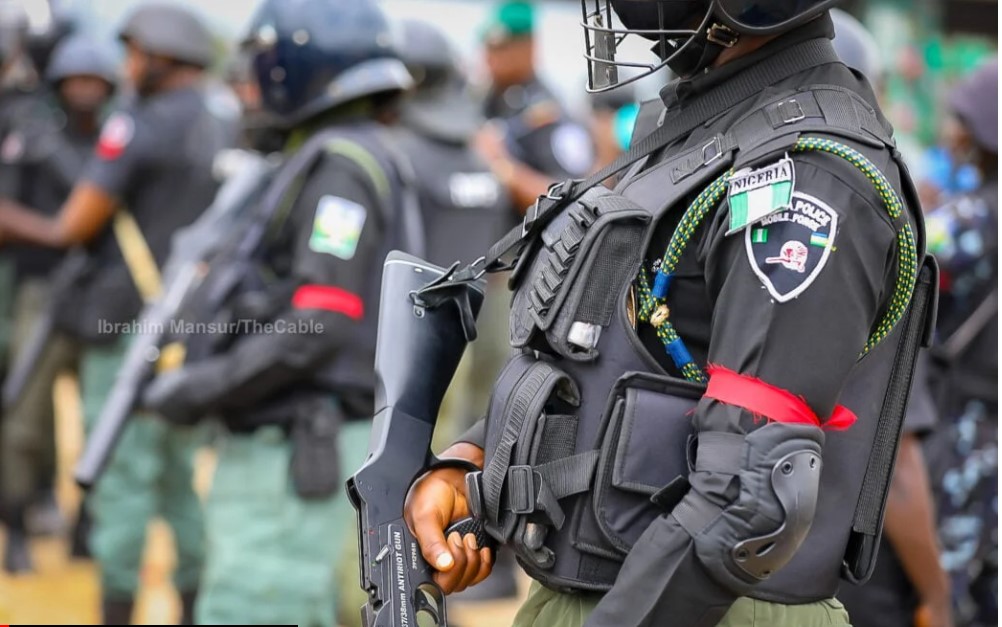
A heavy security presence, comprising personnel of the Nigeria Police Force, Nigerian Army, and the Nigeria Security and Civil Defence Corps, prevented them from entering the complex.
Addressing journalists outside the barricaded gates, Obi condemned what he described as a steady erosion of Nigeria’s democratic gains.
“We must dismantle this criminality and prove that we are now a nation that shows light in Africa,” he said.
Obi’s presence electrified the crowd, reinforcing his symbolic status among youths who see him as the face of the 2023 political awakening that challenged Nigeria’s entrenched political order.
The National Coordinator of the Obidient Movement Worldwide, Dr Yunusa Tanko, warned that protests would persist until lawmakers explicitly restored real-time electronic transmission of results.
“If there is no electronic transmission of results, there will be no election. Our elections must be credible,” Tanko said.
He argued that manual interference during result collation had long undermined elections and that electronic transmission was introduced precisely to address that problem following failures in earlier electoral cycles.
Popular activist Randy Peters also vowed sustained demonstrations.
“Tomorrow (today), we will be back here until the Senate does the right thing. The current administration supported the June 12 campaign. It was about free and fair elections,” he said.
Invoking the spirit of the June 12, 1993 election, Peters asked why elected leaders would resist reforms that guarantee credible outcomes.
“Do we have democrats who are afraid of losing elections? In 2027, our votes must count. The most important thing is that our votes must count. Tomorrow, they will meet us here again,” he added.
Two-week ultimatum
Even as protests raged outside the National Assembly, leading civil society organisations intensified pressure inside conference rooms. The Kukah Centre, Yiaga Africa, and allied groups gave the National Assembly two weeks to conclude amendments to the Electoral Act and retain mandatory real-time electronic transmission of election results. They also urged the Independent National Electoral Commission to immediately release the timetable for the 2027 general elections.
The demand was made at a press conference in Abuja organised by the International Press Centre, TAF Africa, Centre for Media and Society, Nigerian Women Trust Fund, and Elect Her.
Speaking for the coalition, TAF Africa’s Founder and CEO, Mr. Jake Epelle, urged members of the conference committee harmonising the bill to rise above partisan considerations.
“We call on the conference committee members to approach the harmonisation deliberations guided by national interest, institutional integrity, and democratic accountability rather than narrow partisan calculations,” Epelle said.
“We reiterate our recommendation that the National Assembly should expeditiously conclude the amendment process and transmit the final bill to the President within two weeks.”
He challenged lawmakers to use the emergency plenary to take a clear position.
“As key stakeholders in the electoral process, we urge all stakeholders to demand accountable representation from their legislators… by passing provisions on real-time electronic transmission of election results, curtailing the disenfranchisement of voters by introducing downloadable PVCs, and resisting any attempt to weaken established timelines,” Epelle added.
Yiaga Africa’s Director of Programmes, Ms. Cynthia Mbamalu, expressed concern over what she described as legislative backsliding.
“It is unfair that the Senate wants to take us back on an issue we had addressed in the last reform process. The commission has told us previously that it has the infrastructure to do that,” she said.
Editors, others warn
The Nigerian Guild of Editors also weighed in, warning that the controversy was already breeding mistrust.
In a statement signed by its President, Eze Anaba, the guild said the uncertainty created by the Senate’s position “is already creating room for doubt and mistrust in the electoral process among Nigerians.”
The editors warned that the Senate’s stance could discourage voter participation and undermine democratic consolidation.
“At a time when Nigerians are calling for mandatory and immediate transmission of election results, the Senate’s position leaves much to be desired. Nigerians are watching the National Assembly closely on this issue,” the statement said.
Regional leaders
The Southern and Middle Belt Leadership Forum demanded the retention of compulsory real-time electronic transmission, warning against alleged tampering with the bill.
In a statement signed by Oba Oladipo Olaitan, Dr. Bitrus Pogu, Senator John Azuta-Mbata, and Ambassador Godknows Igali, the forum described any weakening of the clause as an attack on Nigeria’s democracy.
“What later surfaced was not what the Senate approved,” the group quoted Senator Enyinnaya Abaribe as saying.
Describing the development as “unacceptable in a democratic legislature,” the forum warned Nigerians would resist any altered law.
Adegboruwa: Non-negotiable
Human rights lawyer and Senior Advocate of Nigeria, Mr. Ebun-Olu Adegboruwa, described electronic transmission as non-negotiable.
“In 21st-century Nigeria, it is surprising that the National Assembly is unable to summon the courage to do what Nigerians yearn for,” he said.
“At this stage of our political development, the issue of electronic transmission of election results should not be an issue for debate or controversy.”
In a related development, the Movement for Credible Elections (MCE) has thrown its weight behind calls for electoral reforms ahead of the 2027 general election.
The group, led by political activist and civil society leader Dr. Usman Bugaje, political economist and African Democratic Congress chieftain Prof. Pat Utomi, and former President of the Nigerian Labour Congress, Ayuba Wabba, backed the move at a press conference in Lagos. A former presidential candidate of the Social Democratic Party, Adewole Adebayo, was also present.
The MCE said the protest at the National Assembly was part of a nationwide push to compel lawmakers to halt what it described as the weakening and stalling of key electoral reform bills critical to restoring public confidence in Nigeria’s democratic process.
Speaking at the briefing, Prof. Pat Utomi painted a grim picture of the state of the nation and warned of dire consequences if electoral accountability was not urgently addressed.
“Our nation is in a deep crisis. The state of our nation is unsound and pushing dangerously to the brink. It is time for citizens, true citizens, to arise and draw a line in the sand. Before us is collapse versus progress; life and death. We must choose life that we may live,” Utomi said.
The MCE steering council, which includes Wabba, Bugaje, and several labour and civil society leaders, described Monday’s protest at the National Assembly as a peaceful defence of the popular will.
What began as a routine clause-by-clause consideration quickly escalated into a national crisis. At the heart of the dispute is Section 60 of the Electoral Act Amendment Bill. The Senate rejected a proposal compelling presiding officers to upload results to INEC’s IReV portal “in real time,” opting instead to retain the discretionary framework of the 2022 Act.
The Supreme Court’s 2023 ruling—affirming that electronic transmission was not mandatory under existing law—has only heightened demands for legislative clarity.
With the House of Representatives retaining mandatory real-time transmission and a joint conference committee set to meet this week, today’s emergency plenary is widely seen as a defining moment.
For many Nigerians, the question is no longer technical—it is existential. As one placard outside the National Assembly reads: “Democracy dies when votes are stolen.”
punch.ng
FOLLOW US ON: