




Connect with us

Business

FG unveils agric reforms, moves to create 21m jobs

Published

on

The Federal Government on Tuesday reeled out a slew of new incentives to attract agricultural investment, which it said could create 21 million jobs in the country.

It also pledged reforms to expand irrigation, improve access to credit and create millions of rural jobs under President Bola Tinubu’s economic agenda.

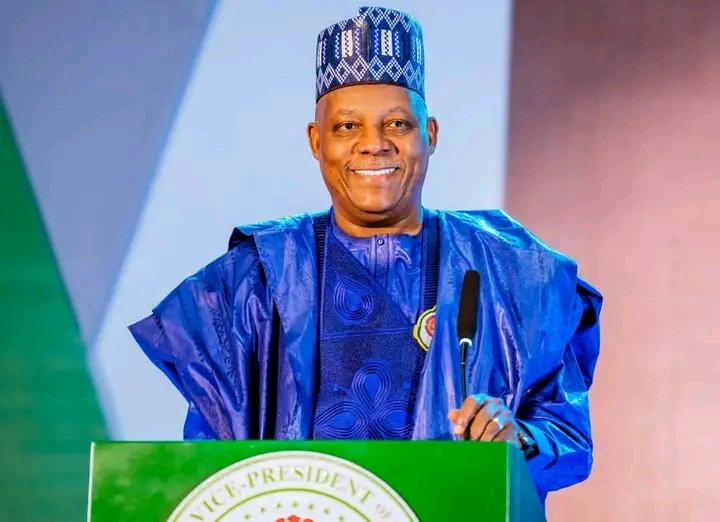
Vice President Kashim Shettima outlined the plans at the Food and Agriculture Organisation’s National and Subregional Hand-in-Hand Investment Forum in Abuja, calling hunger “the great equaliser that reveals our vulnerabilities and the shared fragility of our existence.”

Senior Special Assistant to the Vice President on Media and Communications, Stanley Nkwocha, revealed details of Tuesday’s meeting in a statement titled, ‘More incentives farmers as FG unveils new agric investment incentives.’

The measures include single-window platforms for land registration, strengthened agricultural credit systems, large-scale mechanisation, and strategic irrigation projects.

Tuesday’s unveiling comes as rising food prices and climate shocks have intensified calls for long-term investment in the sector.

Nigeria has been under pressure to cut its reliance on imports and address food insecurity, which worsened after fuel subsidy removal and currency reforms deepened inflation in 2023.

Shettima said Nigeria had the capacity to irrigate more than three million hectares of farmland but currently uses less than 10 percent of that potential.

“Strategic investment in irrigation alone could triple yields, free us from seasonal dependency, and fortify our resilience against climate shocks,” he stated.

“Nothing unifies humanity as much as hunger. It is the great equaliser that reveals our vulnerabilities and the shared fragility of our existence.

“Food is not merely a matter of survival, it is a matter of global security,” Shettima added.

The Vice President noted that Nigeria’s blueprint under the 2021–2025 National Development Plan aims to lift 35 million people out of poverty, create 21 million jobs in rural communities and secure food and nutrition sufficiency.

Shettima specifically observed that irrigation is a game-changer, noting that Nigeria has river basins and aquifers capable of irrigating over three million hectares but currently uses less than ten per cent.

“Strategic investment in irrigation alone could triple yields, free us from seasonal dependency, and fortify our resilience against climate shocks,” he added.

He assured investors that regulatory reforms, public-private partnerships and agri-tech innovations would make Nigeria “open for business.”

See also  Gunmen abduct UTME candidates, others in Benue

“Nigeria is open for business, and we are ready to partner with you. Let us work hand-in-hand to build Nigeria and a sub-region where no one goes to bed hungry, where rural communities are hubs of wealth creation, and where agriculture is the true foundation of our prosperity,” VP Shettima said.

Earlier, the Minister of Agriculture and Food Security, Abubakar Kyari, described Nigeria’s market, large arable land and growing digital economy as unique opportunities for investors.

He said a combination of Nigeria’s domestic market, large arable land, clement weather and fast-growing digital economy present unique opportunities for investment across the agribusiness ecosystem.

For his part, the Minister of Budget and Economic Planning, Senator Atiku Bagudu, said the economic potential of Nigeria remains largely untapped, especially in agriculture and irrigation, which hold significant promise for economic diversification and transformation.

He noted that agriculture, particularly agribusiness, remains a pivotal component of Nigeria’s national development plan in the medium and long term, as well as the Renewed Hope Agenda of President Tinubu.

For his part, the Minister of Agriculture, Livestock and Food Security of The Gambia, Dr Demba Sabally, commended the FAO for hosting the event and Nigeria’s leadership in agriculture, highlighting the country’s success stories in the rice and cassava value chains as worthy of emulation by countries in the sub-region and beyond.

Sabally emphasised the need for peer review among countries in the West African sub-region because of their common challenges and opportunities for growth and transformation.

In the same vein, the representative of the FAO in Nigeria and ECOWAS, Dr Hussein Gadain, said the Hand-in-Hand Initiative is FAO’s “evidence-based, country-led, and country-owned flagship programme, designed to accelerate agricultural transformation and sustainable rural development.”

Gadain said the programme is squarely aimed at eradicating poverty, ending hunger and all forms of malnutrition, and reducing inequalities. It is our vehicle for achieving the SDGs.

Commending Nigeria’s clear agricultural development priorities and describing them as catalysts for transformative and sustainable growth within Africa’s agri-food systems, Gadain hailed Vice President Shettima’s genuine commitment and visionary leadership in transforming Nigeria’s agri-food systems.

According to the FAO rep, the VP’s “passion for agriculture, food security, and nutrition is unmatched. He has been a driving force in attracting crucial investments and fostering innovation, and his continued engagement deserves our highest commendation.”

See also  Dangote official revealed that Nigeria’s petrol, diesel are subsidised

Also, the Head of the EU Delegation in Nigeria, Mr Gautier Mignot, said the Hand-in-Hand Initiative reflects Nigeria’s strong commitment to strengthen food security and deepen investment across the agribusiness value chain.

He declared that the EU remains Nigeria’s long term partner in Nigeria’s agricultural journey and is committed to investing in value chain development in the country, starting with the recent investment of over 80 million euros to unlock opportunities in key value chains across seven states.

Reacting to the announcement,  farmers urged the government to back the new farm incentives with action, pointing out that the initiatives would not yield results without implementation.

The National President of the All Farmers Association of Nigeria, Kabir Kebram, stressed the need for follow-through.

“Definitely, it will boost if they are implemented. Of course, you can have a policy but unless you implement it very well, you cannot see the results. So we call on the Vice President to actualize what he promised and then to follow it up and make sure that it is properly implemented. We are sure that that will make a difference in the food system,” Kebram said.

The Chairman of the Competitive African Rice Forum, Agric, Peter Dama, also cautioned against ‘’a cycle of promises without delivery.’’

“Pronouncements are different from implementation. While we welcome all these pronouncements, we  are still hoping that the pronunciations will be met with practicality, that it will be implemented the way they have said it.

“Somebody can come and read a speech, but then the actual implementation is something that might take some time. They made pronouncements about tractors.  Today we are in August. Have those tractors been given? Already, we are moving toward the dry season.

“Government can make statements, but the implementation might take quite some time. I believe that if pronouncements are going to be made, let the actuality be on ground, as you are making pronouncements, you are dishing them out.

“But when you make pronouncements and it takes about six months, you know the cycle of our farming session in this country. We await the implementation. We are happy if it is actually going to be done and going to be implemented or not.

See also  Greenwich Merchant Bank achieves N50bn capitalisation

We are happy, but unless we see it, and by the time we see it, we will complement and encourage the government,” Dama said.

The Small-Scale Women Farmers Organisation in Nigeria faulted the Federal Government’s agricultural interventions, saying they have failed to improve the country’s food production.

In a phone interview with The PUNCH, National Secretary of SWOFON, Chinasa Asonye, said government efforts have not translated into meaningful impact for smallholder women farmers who form the backbone of food supply in Nigeria.

Asonye said, “Coming from the angle of a small-scale woman farmer, we know that government interventions on single-digit loans, women-friendly machines, access to land and inclusion in policies have not yielded results. One-third of what we have been advocating for has not been implemented. After developing different policies like the Malabo policy, CADI policy and WSHADA policy, are we even implementing one-third of them? The answer is no.”

She decried the government’s inability to meet the 10 per cent budgetary allocation to agriculture recommended under the Malabo Declaration, stressing that Nigeria currently spends less than 1.9 per cent on the sector.

“If we keep waiting for the government, we will never do anything. Some states in the North are helping their farmers with grants and support. But in the South-West, including Lagos, farmers are not benefitting from these renewed initiatives,” she said.

The SWOFON secretary also questioned the transparency of the government’s agricultural spending, noting that billions of naira were being earmarked without visible results.

She added that the school feeding programme had previously helped farmers by off-taking their produce but lamented that such initiatives were no longer benefiting smallholders.

“We will continue to talk, we will continue to tell them our issues, and probably one day the government will listen. They know our problems, but if they fail to look into them, farmers will keep struggling by themselves,” Asonye said.

FOLLOW US ON:

FACEBOOK

TWITTER

PINTEREST

TIKTOK

YOUTUBE

LINKEDIN

TUMBLR

INSTAGRAM

Continue Reading
Click to comment

Leave a Reply

Your email address will not be published. Required fields are marked *

Business

NNPC urged to revive refineries after Dangote snub

Published

on

The National Publicity Secretary of the Independent Petroleum Marketers Association of Nigeria, Chinedu Ukadike, has tackled the Nigerian National Petroleum Company Limited (NNPC) over its attempt to increase its stake in the Dangote Petroleum Refinery despite the poor state of government-owned refineries.

Ukadike stated this while reacting to comments by the President of the Dangote Group, Aliko Dangote, that the refinery rejected requests by the NNPC to increase its 7.25 per cent stake in the $20bn facility.

Dangote had disclosed this during an interview with the Chief Executive Officer of the Norwegian Sovereign Wealth Fund, Nicolai Tangen, monitored by our correspondents on Wednesday.

Reacting to the development, Ukadike questioned why the national oil company was seeking to invest more funds in the privately-owned refinery when the Port Harcourt, Warri, and Kaduna refineries under its control had remained largely inactive despite billions of dollars spent on rehabilitation.

“Why is NNPC trying to invest money in the Dangote refinery when it has three refineries that are not working? Why is NNPC not investing that money in those ones?” Ukadike asked.

He added, “The NNPC did not revive our refineries, but they want to look for where the refinery is already working to put money into it. Does that make sense?”

The IPMAN spokesman said Dangote had the right to reject the offer from the NNPC if he considered it unsuitable for his business interests.

“If Dangote refused to sell more stakes to NNPC, he must have his reasons. Dangote is a businessman. He doesn’t want issues, unnecessary crises, and nepotism. He knows what he wants, and I also think he has enough cash to fund his business,” he stated.

See also  NewsL-PRES warns of public health risks from unhygienic abattoirs in Taraba

Ukadike further urged the national oil company to focus on reviving critical oil infrastructure across the country instead of pursuing additional ownership of the refinery. “The NNPC should repair the pipelines and revive the refineries instead of eyeing the Dangote refinery,” he said.

Dangote had stated during the interview that the NNPC was interested in acquiring more shares in the refinery after previously purchasing a 7.25 per cent stake for $1bn in 2021. According to him, the request was rejected because the company planned to list the refinery publicly and allow more Nigerians to own shares in the project.

“The other biggest risk is government inconsistencies in policies, and we are addressing that one because if you look at our refinery, the national oil company already owns 7.25 per cent, and they are trying to buy more. We are the ones that said no; we want to now spread it and have everybody be part of it,” Dangote said.

The NNPC had initially planned to acquire a 20 per cent stake in the refinery, but later reduced its ownership to 7.25 per cent after failing to pay the balance before the June 2024 deadline.

Dangote had explained this in 2024, saying, “The agreement was actually 20 per cent, which we had with NNPC, and they did not pay the balance of the money up until last year; then we gave them another extension up until June (2024), and they said that they would remain where they had already paid, which is 7.2 per cent. So NNPC owns only 7.2 per cent, not 20 per cent.”

See also  Nigeria targets 7% GDP growth, $14bn infrastructure — Edun

However, a stakeholder in the petroleum sector who pleaded for anonymity because of the sensitivity of the matter held that the interest of the nation is well served by NNPC having a 20 per cent stake in the Dangote refinery.

“I think Nigeria is better served by NNPC being a shareholder. If NNPC could have taken 20 per cent of that refinery, Nigeria as a country would be better served,” the stakeholder said.

According to him, the fact that the NNPC failed to get the 20 per cent take before does not mean it could not get it again. He said Dangote refused NNPC’s offer because he wants to remain in control.

“You know Dangote is planning to value his company at $50bn. I think he’s going to sell 10 per cent only, so he remains in control, making a lot of money for himself. Selling only 10 per cent means he has 90 per cent. If NNPC were there with 20 per cent, then NNPC would have two directors. These two directors would have some say,” he said.

The stakeholder added that such an important asset cannot exist in a country without the government’s involvement.

“You can’t have such a big asset in the country, and then the government or the government’s agent has no say in the decisions of that company. It can’t happen. It’s wrong. I’m not saying the government must have a say in all the big companies, but in a company that is so big that it can influence whether the sun rises or falls in that country, the government must have a say.

See also  Senate summons ex-NNPC boss Kyari over N210tn audit queries

“The refinery is big. In any case, NNPC is also the supplier of last resort. It’s the national oil company. That has some meaning. I think that in the best interest of the country, if we all agree that Dangote is too big to fail, then it means that Nigerians as a people need to be inside the Dangote refinery to make sure it does not fail,” the operator said.

Meanwhile, a senior official of the NNPC said the NNPC is proud of its current stake in the Dangote refinery.

“The NNPC is proud and happy that we own a 7.2 per cent stake in Dangote. And whatever we own as a stake in Dangote as a national oil company is on behalf of the entire Nigeria. So, when the opportunity presents itself in the long term, yes.

“But right now, we are proud of the 7.2 per cent stake we own in the Dangote refinery. Apart from that, the quality and level of collaboration that is currently going on between NNPC and Dangote is in the interest of the entire Nigeria,” the official said, begging not to be mentioned because he was not authorised to speak on the matter.

punch.ng

FOLLOW US ON:

FACEBOOK

TWITTER

PINTEREST

TIKTOK

YOUTUBE

LINKEDIN

INSTAGRAM

Continue Reading

Business

2027 poll spending may trigger inflation, MPC warns

Published

on

The Governor of the Central Bank of Nigeria and Members of the Monetary Policy Committee have warned that rising political and election-related spending ahead of the 2027 general elections could undermine the country’s disinflation gains and trigger fresh inflationary pressures.

The warnings were contained in the personal statements of MPC members released by the apex bank and obtained by The PUNCH on Thursday. The MPC, at its 304th meeting held on February 23 and 24, 2026, reduced the Monetary Policy Rate by 50 basis points from 27 per cent to 26.5 per cent, while retaining other key monetary parameters.

CBN Governor, Olayemi Cardoso, had earlier warned in the MPC communiqué that election-related fiscal spending could threaten the inflation outlook despite the current moderation in prices.

According to the communiqué signed by Cardoso, “The outlook indicates that the current momentum of domestic disinflation will continue in the near term. This is premised on the lagged impact of previous monetary policy tightening, sustained stability in the foreign exchange market and improved food supply. However, increased fiscal releases including election-related spending could pose upside risk to the outlook.”

Also, in his personal statement, he noted “Growing fiscal pressures, from reduced government fiscal headroom and the approaching 2027 election cycle, warrant particular attention given the well-established link between pre-election fiscal expansion and inflation.”

CBN Deputy Governor for Economic Policy, Dr Muhammad Abdullahi, also highlighted election-related spending as a major risk to the inflation outlook. He said, “As political activities intensify ahead of the 2027 elections, increased fiscal injections and consumption spending could elevate demand-side inflation.”

See also  Why I returned to Nigeria on Ivorian jet — Jonathan

Abdullahi added that “the fiscal deficit has already increased significantly, and election-related spending is likely to exacerbate this trend in 2026 and early 2027.” According to him, stronger fiscal-monetary coordination would be needed to manage the liquidity impact of rising government spending.

Similarly, the CBN Deputy Governor for Operations, Emem Usoro, warned that the pre-election environment could worsen liquidity conditions and inflation expectations. Usoro stated, “Crucially, the pre-election environment increases the risk of liquidity surges, higher FX demand and a drift in inflation expectations.”

She added that the risks justified maintaining tight liquidity conditions despite the moderate rate cut. According to her, “These considerations support small, cautious adjustments and the retention of strong liquidity and prudential buffers.”

Also raising concerns was the newly appointed Deputy Governor, Lamido Yuguda, who said increased fiscal releases and election spending could disrupt the disinflation trend.

Yuguda, who was a former Director General of the Securities and Exchange Commission, noted, “The 75 per cent CRR on non-TSA public deposits remains critical, particularly given the potential for increased fiscal releases as implementation of Executive Order 9 advances.”

He further warned that, “Potential increases in fiscal spending associated with the electoral cycle could generate demand pressures and disrupt the disinflation trajectory.”

A member of the MPC, Dr Aloysius Ordu, warned that political spending tied to the elections could put pressure on foreign exchange demand and test the resilience of the economy. He said, “Domestically, rising political spending and FX demand pressures associated with the 2027 elections will test the resilience of the economy.”

See also  Gunmen abduct UTME candidates, others in Benue

Ordu added that although reforms such as Executive Order 9 were expected to improve fiscal transparency and strengthen reserves, high debt servicing costs and political-cycle spending remained major concerns for macroeconomic management.

Another MPC member, Bandele Amoo, also expressed concern over excess liquidity from fiscal injections and early political activities ahead of the elections. He said, “My primary concern is the persistence of excess liquidity from fiscal injections, which could undermine disinflation gains and exchange rate stability.”

Amoo further noted that “fiscal spending pressures linked to the 2026 budget cycle, and early political activities ahead of the 2027 elections may heighten risks.”

Another committee member, Professor Murtala Sagagi, said the main domestic risks to inflation included fiscal slippages and election-related spending. He said, “Upside risks to the inflation outlook warrant monitoring, particularly increased fiscal releases including election-related spending and any pass-through from global oil price volatility to domestic fuel prices.”

Sagagi added that “the primary domestic risks are fiscal slippage and the possibility of election-related spending which are medium-term in nature.” He urged stronger fiscal discipline and closer coordination between monetary and fiscal authorities.

The next meeting of the Monetary Policy Committee is scheduled to hold on Tuesday, May 19 and Wednesday, May 20, 2026. This would be about four days after the National Bureau of Statistics is expected to release the country’s Consumer Price Index report for April 2026 on May 15.

Nigeria’s inflation rate rose to 15.38 per cent in March 2026, marking a reversal in the recent easing trend, as increases in food, transport, and accommodation costs pushed prices higher. The PUNCH observed that this was the first time the headline inflation rate had increased since March 2025.

See also  Under pressure: Tinubu may drop controversial names from pardon list

In its Inflation Forecast report for April 2026, the Financial Market Dealers Association projected that Nigeria’s headline inflation would rise to 16.42 per cent year-on-year in April 2026, as sustained pressure from food prices, higher energy costs and elevated global commodity prices continue to shape the domestic price environment.

punch.ng

FOLLOW US ON:

FACEBOOK

TWITTER

PINTEREST

TIKTOK

YOUTUBE

LINKEDIN

INSTAGRAM

Continue Reading

Business

Presidential fleet operations gulp N4.24bn in six months – Read report details

Published

on

The Presidential Air Fleet received at least N4.24bn in disbursements between June and December 2025, the latest updates on GovSpend, a civic technology platform that tracks and analyses Federal Government spending, have revealed.

Findings by The PUNCH also revealed that the disbursements, made into the Presidential Air Fleet naira transit account operated by the Presidential Air Fleets (State House), were recorded in eight separate transactions across three months of June, July and December 2025, with the bulk of the transfers concentrated in July, when four transactions totalling N2.43bn were made in the space of a week.

A breakdown of the transactions shows that N1.285bn was disbursed on June 12, followed by N430m on July 24, N1.28bn on July 25, N92m on July 29, and N626m on July 31.

In December, three further disbursements were recorded. They include N9m on December 18, described in the GovSpend database as “Presidential Air Fleet forex transit funds,” N343.9m on December 30 and N90.9m on December 31.

Four of the eight transactions carry no accompanying description, listed simply as “None,” a pattern consistent with previous disbursements to the transit account.

Most disbursements to the Presidential Air Fleet transit account are labelled “Forex Transit Funds,” typically funds allocated for foreign exchange requirements to facilitate international transactions, covering expenses related to operations outside the country, including fuel purchases, maintenance or services in foreign currencies.

The new figures add to a growing cumulative spend that has accelerated significantly since Tinubu assumed office.

At least N26.38bn was spent on the operations of the Presidential Air Fleet from July 2023 to December 2024, with N14.15bn disbursed in 2024 alone.

See also  Adeleke no longer interested in PDP gov ticket, see why

The Presidential Air Fleet’s total budget allocation stood at N17.32bn in 2025, declining to N14.70bn in 2026.

The reduction was driven mainly by decreased capital expenditure.

Engine overhaul projects across the fleet consumed N4.58bn in 2024, N8.65bn in 2025 and N6.05bn in 2026, bringing the three-year aggregate to N19.27bn.

Since 2017, under the Buhari administration, budgetary allocations for the fleet have shown a growing trend, with one exception in 2020, rising from N4.37bn in 2017 to N20.52bn in 2024, a 370 per cent increase in running costs over seven years.

In an interview with our correspondent, the General Secretary of the Aviation Round Table, Olumide Ohunayo, had blamed the meteoric rise on the age of some of the aircraft in the fleet and the declining value of the naira, as well as the “commercial use” of aircraft by the Nigerian Air Force.

Ohunayo explained, “The cost will definitely increase over the years because, for one, this issue of the naira against the dollar.

“As the naira keeps falling to the dollar, we will see a rise in cost because most of the costs of training crew and engineers and replacing aircraft parts are all in dollars.

“Also, some of these aircraft are not new. The older the aircraft, the higher the cost of maintenance and operation.

“Lastly, during these past years, terrorism and insecurity have increased in Nigeria, which has also affected the cost of insuring the aircraft.”

In late April 2024, Tinubu was compelled to charter a private jet to continue his journey to Saudi Arabia after the state-owned Gulfstream 550, which had been assigned to carry him, developed an unspecified technical fault in the Netherlands, forcing him to abandon the aircraft mid-tour.

See also  Senate summons ex-NNPC boss Kyari over N210tn audit queries

The episode had prompted the House of Representatives Committee on National Security and Intelligence to recommend the procurement of two new presidential aircraft.

In August 2024, the official Boeing 737 business jet for the President was replaced with an Airbus A330 purchased for $100m through service-wide votes.

The nearly 15-year-old plane, an ACJ330-200, VP-CAC (MSN 1053), is “spacious and furnished with state-of-the-art avionics, customised interior and communications system,” Tinubu’s Special Adviser on Information and Strategy, Mr Bayo Onanuga, said, adding “it will save Nigeria huge maintenance and fuel costs, running into millions of dollars yearly.”

From February through July 2025, the President flew a San Marino-registered BBJ (REG: T7-NAS).

Sources who spoke to one of our correspondents confirmed that the primary aircraft had been flown to South Africa to change its colours to reflect the office of the President. It was flown back in July 2025.

The Presidential Air Fleet comprises a fixed-wing fleet that includes the Airbus ACJ330-200, a Gulfstream G550, a Gulfstream G500, two Falcon 7Xs, a Hawker 4000 and a Challenger 605, three of which are reportedly unserviceable.

The rotor-wing fleet includes two Agusta 139s and two Agusta 101s, operated by the Nigerian Air Force under the supervision of the Office of the National Security Adviser.

The CEO of Centurion Security Limited, John Ojikutu, argued that the disbursements for the air fleet operations were justified considering all related expenses.

“That’s not a big deal. If they are going for repair, particularly for C-checks. It’s always around that range.

“They will fly it abroad, buy fuel, catering, and hotel bills are also involved; pilots will fly it back, and the figure likely includes far more than the direct cost of repairing the aircraft,” Ojikutu explained, adding that the figure likely includes far more than the direct cost of operating the aircraft.

See also  PHOTOS: Gov. Abiodun meets investors in China, seeks expansion of Ogun economic frontiers

The Presidency did not respond to inquiries on the nature of the specific disbursements captured in the recent data.

As of the time of filing this report, calls to the Special Adviser to the President on Information and Strategy, Bayo Onanuga, went unanswered.

In an earlier interview with our correspondent, Onanuga had argued that the costs of maintaining the air fleet are not for the President but in the interest of Nigerians.

“It’s not President Tinubu’s plane; it belongs to the people of Nigeria, it is our property…the President did not buy a new jet; what he has is a refurbished jet, but it is a much newer model than the one President Buhari used.

“Nigerians should try to prioritise the safety of the President. I’m not sure anybody wishes our President to go and crash in the air.

“We want his safety so that he can hand it over to whoever wants to take over from him,” Onanuga said.

punch.ng

FOLLOW US ON:

FACEBOOK

TWITTER

PINTEREST

TIKTOK

YOUTUBE

LINKEDIN

INSTAGRAM

Continue Reading

Trending