Connect with us

Business

Marketers reject fuel pricing curbs, threaten shutdown; read why

Published

on

Fuel marketers have declared that their filling stations will stop selling petrol should the Federal Government try to enforce price control.

The National Publicity Secretary of the Independent Petroleum Marketers Association of Nigeria, Chinedu Ukadike, issued the warning on Tuesday during an interview with our correspondent.

The Minister of State for Petroleum Resources (Oil), Heineken Lokpobiri, warned on Monday that the government would not tolerate profiteering and other practices that exploit fuel consumers. Lokpobiri said that, though the era of government-fixed petrol prices was over, deregulation did not mean regulators should abdicate their responsibility to protect consumers.

The minister spoke in Abuja at the opening ceremony of the 2026 General Counsel and Legal Advisers Forum organised by the Nigerian Midstream and Downstream Petroleum Regulatory Authority.

His remarks came amid renewed public concerns over the failure of refiners and importers to lower the gantry prices of petroleum products even as crude prices fell from a high of $120 during the US-Iran war to as low as $72 a barrel.

On Sunday, the Federal Competition and Consumer Protection Commission expressed concern over what it described as possible consumer exploitation in the downstream petroleum sector following the failure of fuel prices to decline significantly despite the sharp drop in global crude oil prices.

During the Monday engagement, the oil minister told the NMDPRA to ensure Nigerians are not exploited by fuel marketers. “As part of the requirements of deregulation, prices have to be determined by market forces. The NMDPRA has a unique responsibility, compounded by the PIA, to ensure not only that products are available but also that unnecessary profiteering is stopped.

“Yes, the market is definitely deregulated, but that doesn’t limit deregulation… What is important is the reality of the situation in the industry. Primarily, market forces have to determine prices. But we also have a responsibility as a government to ensure that there is no profiteering. The PIA specifically vested (that power in) government institutions, including the NMDPRA,” Lokpobiri said.

See also  CBN delists non-compliant BDCs

However, the IPMAN spokesman denied allegations of profiteering, saying many marketers are running into losses with the series of reductions carried out lately by the Dangote refinery.

Ukadike said the Federal Government should first investigate the root cause of the current high petrol prices and boost competition by making sure its refineries work, stressing that marketers will sell what they buy.

He warned, “Marketers will shut down if they try somehow to enforce price control. We are going to shut down our stations nationwide. You can’t be regulating a deregulated market. You can’t tell me how much to sell my product without trying to know how much I bought it.”

Recounting the ordeals of marketers, he said, “We, the independent marketers, are losing money. We bought petrol at a particular rate a few days ago; on our way to our filling stations, there was a reduction. We have been struggling with the price. We have been struggling against financial losses. We are also struggling against stagnation due to low patronage of our products. Because those marketers who are purchasing now are purchasing at a lower price, and they are selling cheaper.

“If you don’t bring down your price, you cannot see buyers. This is the beauty of deregulation. If you cannot compete, you will not survive in the market. And because most of us are trading on bank loans, the bank does not know when the price goes up or goes down. Their interest rate is fixed; their return on investment is fixed. So, you must pay them. This is the situation we find ourselves in.”

Ukadike maintained that the factors of demand and supply should determine price.

See also  Lagos bans movement of goods on public buses

“By the time more products come in, you will see that the prices will go down. What we, independent marketers, are asking for is not about regulation or trying to bring price control or trying to force marketers to sell below or trying to force Dangote to sell below its production cost. What we are asking is to open up the various channels, boost importation, and let local refineries start refining. This will push the competition to the peak. With this, prices will drastically go down,” he stated.

Ukadike said the Federal Government has to find out the remote cause of the high fuel prices before calling for price control.

“The primary cause of this is that there is no competition. If there should be competition, the refineries will be working. That is where the minister should put his energy to ensure that our local refineries or whatever partnership we have with the Chinese will work. It is not about going to filling stations to check who is selling at higher prices. Do you know how much I bought the fuel for? Can you have a regulated market in a deregulated economy? You can’t be blowing hot and cold at the same time. The PIA must be followed to the letter. If they try to enforce price control, we will shut down,” Ukadike said.

PETROAN speaks

The National President of the Petroleum Products Retail Outlet Owners Association of Nigeria, Billy Gillis-Harry, said the minister has the power to intervene in ensuring consumers are not exploited. However, he said this must be in consultation with major stakeholders in the sector.

See also  FG unveils poverty intelligence hub to target 140 million poor Nigerians

“The minister of petroleum has the power to intervene in ensuring that Nigerians are treated fairly. The NMDPRA has the power, and so does the FCCPC. However, these decisions to discipline or not to discipline should follow stakeholder practice.

“We have the petroleum stakeholder conference that is being headed by the minister. And I think that this is the time for the minister to convene a meeting of all the stakeholders to unravel what the scenario is and what the situation is and make a decision that is beneficial for Nigerians. That’s what I think we should do,” he said.

Gillis-Harry maintained that the government should act without the consent of the stakeholders. “They have the right to intervene, but if they do that and the stakeholders have a different view, that will be difficult. And that’s why the minister should mandate a meeting to speak to all stakeholders as fast as possible.

“The minister has the power to intervene in matters like this, and every stakeholder, including the refineries, must comply,” he submitted.

Meanwhile, the NMDPRA spokesman, George Ene-Ita, told our correspondent that he was yet to be briefed about the plans of the management as far as the matter is concerned. “I’ve not been briefed. I don’t know the action the management wants to take,” Ene-Ita replied.

The PUNCH reports that petrol currently sells at prices ranging between N1,140 and N1,210, depending on the location.

punch.ng

FOLLOW US ON:

FACEBOOK

TWITTER

PINTEREST

TIKTOK

YOUTUBE

LINKEDIN

Continue Reading
Click to comment

Leave a Reply

Your email address will not be published. Required fields are marked *

Business

Dangote stops petrol sales to fuel importers

Published

on

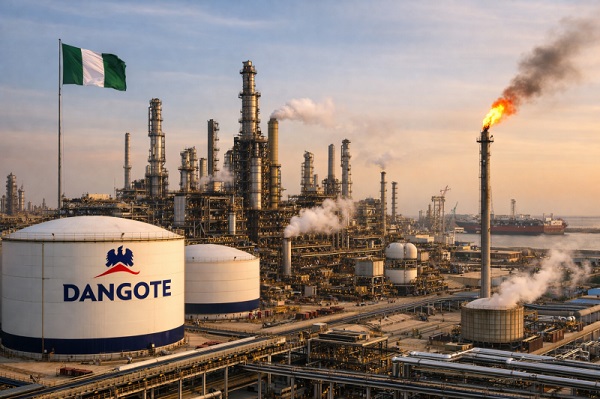
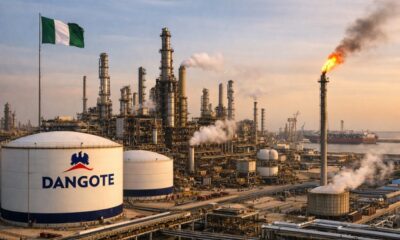
The Dangote Petroleum Refinery has finally stopped the sale of Premium Motor Spirit (petrol) to major marketers importing petroleum products into Nigeria.

An official of the refinery confirmed this to our correspondent, saying the refinery would no longer sell petrol to those blending Dangote fuel with imported grades.

“We are not selling petrol to those who are importing, since they are trying to blend our high-quality products with their ultra-low-quality imported products,” the source said, pleading for anonymity because he was not permitted to speak with the press.

Another source told our correspondent that the refinery now prefers to sell its petrol to members of the Independent Petroleum Marketers Association of Nigeria and others not known for importing. “We are selling to independent marketers and others who are not importing,” he stated.

It was learnt that the development informed why some marketers went to court to get an order that the Nigerian Midstream and Downstream Petroleum Regulatory Authority should continue to grant them import licences.

The marketers feared that they might be left stranded if they could not import fuel at a time when the Dangote refinery had halted petrol sales to them. Dangote had earlier threatened to stop transacting business with fuel importers, whom it accused of blending its Euro-5 petrol grade with imported grades.

It is concerned that such practices could make it difficult to distinguish between products supplied directly by the refinery and products subsequently blended or handled by third parties.

“It is difficult to understand why we would invest heavily in producing high-quality petroleum products for Nigerians, only for those products to be mixed with imported products of uncertain quality and the resulting product to be associated with the refinery,” the refinery said last month.

See also  FAAC bonanza: Govs face questions as payouts hit N47tn

Reacting, importers and petroleum marketers kicked against the restriction of petrol sales to marketers who import petrol, describing the move as an attempt to block imports. The marketers also challenged the refinery to provide evidence that imported petrol entering the Nigerian market is below the required quality standard.

The marketers, who preferred not to be mentioned, accused Dangote of trying to prevent the importation of petrol. “We know what Dangote is trying to do. He is just trying to block imports,” one of the marketers said. The marketer argued that a company that sells petrol could not dictate whether a consumer should combine its product with fuel purchased from another supplier.

Using the example of motorists buying petrol from different filling stations, the marketer said Dangote could not prevent consumers from combining products sourced from different suppliers.

“For example, when you buy petrol from a TotalEnergies station, and you go down the road, and your petrol is almost finished, you then buy from MRS. Can TotalEnergies say you should not mix its petrol with MRS petrol? No, it can’t. I don’t understand the game that the Dangote refinery is playing,” he stated.

Another marketer also argued that the Federal Government had a responsibility to ensure an adequate petrol supply and protect consumers, insisting that imports remain necessary when domestic production drops.

Speaking, the National Vice Chairman of the IPMAN, Hamed Fashola, stated that the Dangote refinery is selective about who it sells petrol to because not all major marketers import.

“I don’t know how far that is correct; Dangote now sells to only IPMAN. I think somehow the information I have is that Dangote is selective about it, say those that are involved in importing. I think it’s not everybody that is importing,” he said.

See also  Fraudsters rake in N134bn from banks, customers – CBN

Clarifying IPMAN’s purchasing position amid market competition, Fashola noted that independent marketers operate flexibly to secure the most competitive pricing, sourcing supply indiscriminately from both local refineries and importers.

“We buy our product anywhere we feel it is cheap. Anywhere we see the product, we go for it, both Dangote and the importers. We always go for the best price,” Fashola stated.

Meanwhile, the National Publicity Secretary of the IPMAN, Chinedu Ukadike, expressed the belief that the Dangote refinery is open to doing business with anyone.

Ukadike noted that independent marketers are ready to buy and sell petrol from all suppliers, stressing that they were not currently involved in importing the product.

While saying he would not know if importers truly blend Dangote’s petrol with imported petrol, he concluded that Dangote is in the best position to determine whatever it can do to discourage blending.

“I believe that the Dangote refinery is open for business and that it will continue to sell to marketers. The issue of blending, I cannot say yes or no, because I’m not part of those who are importing. Independent marketers are not importing yet; we are just marketers who buy and sell.

“So, if there is any measure to discourage adulteration of petroleum products by Dangote, I think the refinery and its experts know best. They know the best way to deal with that. But our own is to continue to buy and sell to marketers. If there is a way to discourage adulteration of petroleum products, I won’t stop Dangote from doing so,” Ukadike added.

See also  FG offers up to 16.54% yield on September savings bonds

Source: punchng.com

FOLLOW US ON:

FACEBOOK

TWITTER

PINTEREST

TIKTOK

YOUTUBE

LINKEDIN

INSTAGRAM

Continue Reading

Business

Report reveals petrol, diesel prices rise 86% in eight months

Published

on

The average prices of petrol and diesel have risen by 86 per cent in 2026, with the two products reaching their highest average price levels for the year by September 22, according to the latest fuel price trend report by priceandpromo.

The report stated that the average price of Premium Motor Spirit, popularly known as petrol, rose to N1,378 per litre by September 22, while automotive gas oil, commonly known as diesel, increased to N1,899/litre.

It puts the increase in the price of petrol at 80.8 per cent from the January 13 base, while diesel recorded a 91.8 per cent rise over the same period. The average increase of the two products is 86.3 per cent, which rounds to 86 per cent.

The report stated, “The latest priceandpromo fuel price trend shows renewed upward movement following the relative stability observed between April and July.

“Petrol rose to an average of N1,378 per litre by 22 September, while diesel increased to an average N1,899 per litre, the highest average price levels recorded for both products in the displayed 2026 series.”

According to the report, petrol prices had increased sharply in March before remaining relatively stable at elevated levels between April and July. “After the sharp March increase, fuel prices stabilised at higher levels through July before rising again in August and September,” it added

The renewed increase came amid heightened volatility in the international energy market, according to the report, which noted that the domestic market remained exposed to movements in global energy costs.

See also  FG unveils ‘fly now, pay later’ credit scheme for domestic flights

“The renewed increase comes amid heightened global energy-market volatility, highlighting the domestic market’s continued exposure to shifts in international energy costs,” the report added.

The report indicated that the latest movement in fuel prices could have wider implications for transportation, logistics and the cost of distributing goods, given the importance of petrol and diesel to economic activities.

The report noted that fuel prices remained an important channel through which changes in energy costs could feed into transportation and other consumer costs.

The report further warned that the renewed increase in both products is a development to monitor because of its potential implications for the movement of people and goods.

It said, “The renewed increase in both petrol and diesel is therefore an important market signal to watch, particularly for its potential implications for mobility, logistics costs and the wider cost of moving goods through the market.”

The report’s figures show that the increase in diesel prices has outpaced that of petrol, with AGO rising by 91.8 per cent compared with PMS’s 80.8 per cent increase.

Source: punchng.com

FOLLOW US ON:
FACEBOOK

TWITTER

PINTEREST

TIKTOK

YOUTUBE

LINKEDIN

INSTAGRAM

Continue Reading

Business

DisCos earn N603bn as power offtake drops

Published

on

Electricity distribution companies collected N603.64bn from customers in the second quarter of 2026, despite a decline in the volume of electricity they received from the power market.

The figure was contained in the Nigerian Electricity Regulatory Commission’s second-quarter 2026 report, which showed that the average energy offtake by the DisCos at their trading points fell to 3,197.03 megawatt-hours per hour in the quarter.

The Q2 figure represented a 112.45MWh/h, or 3.40 per cent, decline from the 3,309.48MWh/h average recorded in the first quarter. Despite the decline in offtake, the DisCos recorded an overall offtake performance of 94.07 per cent during the quarter, against available partially contracted capacity of 3,398.41MWh/h.

According to the report, the DisCos received a total of 6,982.32 gigawatt-hours of electricity during the quarter but billed customers for only 5,812.31GWh. It stated, “This translates to an overall energy accounting efficiency of 83.24 per cent and represents a 0.24pp decrease compared to 2026/Q1 (83.48 per cent).”

The report further revealed that the naira value of electricity off-taken by the DisCos stood at N946.57bn, while the total value of energy billed to customers was N744.67bn.

This translated to a billing efficiency of 78.67 per cent, representing a decline of 0.57 percentage points from the 79.24 per cent recorded in the first quarter. At the collection stage, the DisCos recovered N603.64bn from the N744.67bn billed to customers, translating to a collection efficiency of 81.06 per cent.

The report said this represented an improvement of 2.11 percentage points from the 78.95 per cent recorded in Q1. However, the difference between the amount billed and the amount collected stood at N141.03bn during the quarter.

See also  Fraudsters rake in N134bn from banks, customers – CBN

The report also disclosed that the weighted average Aggregate Technical, Commercial and Collection losses across the 11 DisCos stood at 36.23 per cent in Q2.

It stated, “The ATC&C loss of 36.23 per cent is 19.31pp higher than the 2026 MYTO target (16.92 per cent) and translates to a cumulative revenue loss of N129.07 billion across all DisCos.”

The 36.23 per cent loss, however, represented a 1.21 percentage-point improvement from the 37.44 per cent recorded in Q1.

The report noted that all the DisCos failed to meet their ATC&C targets during the quarter, with “Kaduna DisCo recording the worst underperformance relative to the target (Actual – 67.70 per cent vs target – 18.18 per cent),” it stated.

On market obligations, the report said the cumulative upstream invoice payable by the DisCos stood at N410.38bn in Q2.

The amount comprised N326.46bn for generation costs from the Nigerian Bulk Electricity Trading Company and N83.92bn for transmission and administrative services provided by the market operator.

The DisCos collectively remitted N385.44bn, comprising N306.62bn to NBET and N78.82bn to the market operator, leaving an outstanding balance of N24.94bn. This represented a market remittance performance of 93.92 per cent, slightly lower than the 94.08 per cent recorded in Q1.

The report added that the Federal Government had taken responsibility for about 50 per cent, or N321.26bn, of the total generation costs through subsidies arising from the freezing of end-use customer tariffs at the rates applicable in July 2024.

Meanwhile, three international bilateral customers purchasing electricity from grid-connected generating companies paid $8.67m against an $18.84m invoice issued by the market operator during the quarter.

See also  I don’t see the hunger Nigerians complain about — Tinubu’s aide

This represented a remittance rate of 46.02 per cent. Domestic bilateral customers, on the other hand, paid N6.91bn against an invoice of N7.55bn, representing a remittance rate of 91.54 per cent.

Source: punchng.com

FOLLOW US ON:

FACEBOOK

TWITTER

PINTEREST

TIKTOK

YOUTUBE

LINKEDIN

INSTAGRAM

Continue Reading

Trending