Connect with us

Business

IMF reveals that rising prices threaten Nigeria’s poverty reduction gains

Published

on

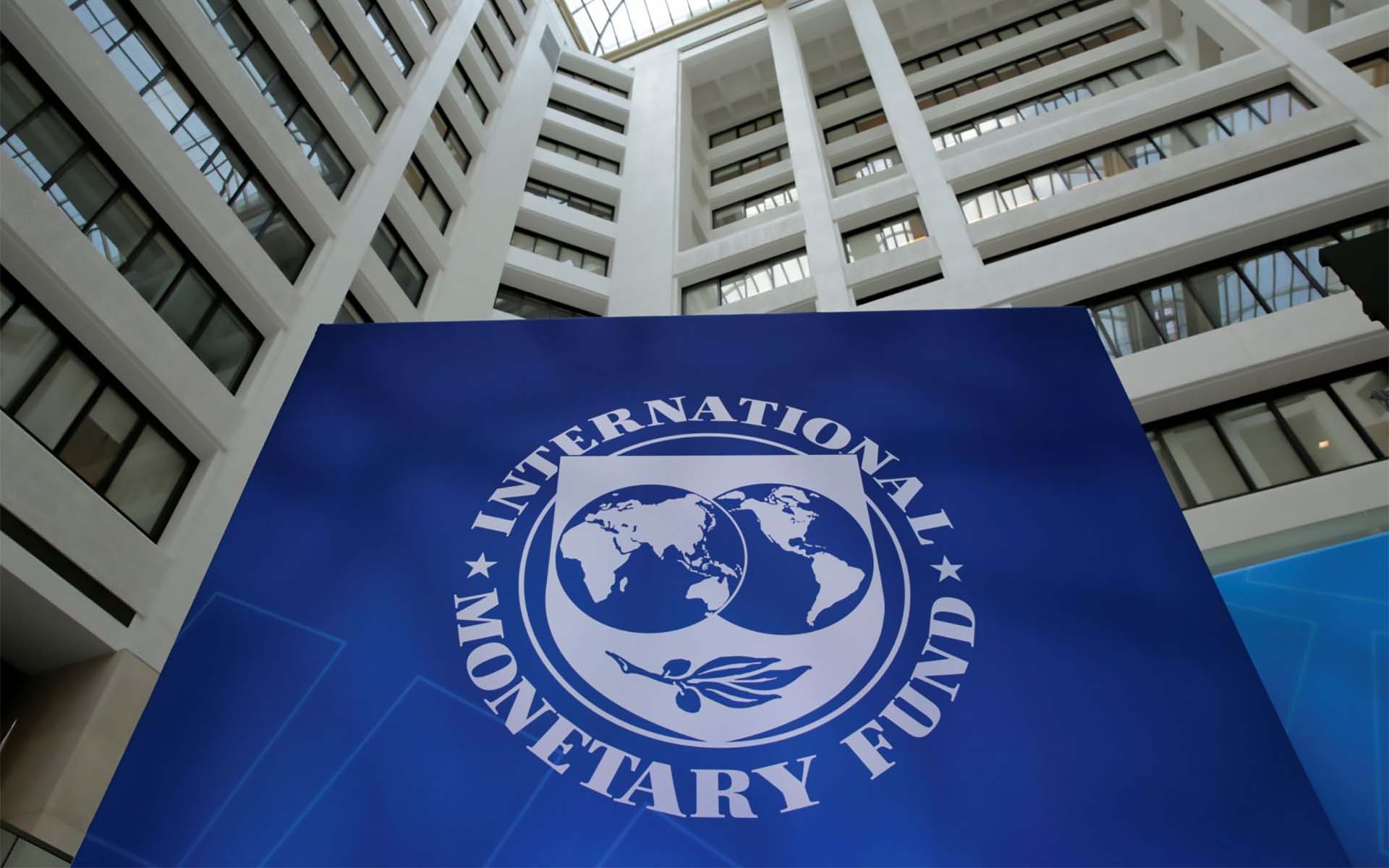
The International Monetary Fund (IMF) has warned that rising prices of essential goods could deepen poverty and worsen food insecurity in Nigeria despite recent improvements in the country’s macroeconomic stability.

The warning was contained in the IMF’s July 2026 World Economic Outlook Update, which projected that Nigeria’s economy would grow by 4.1 per cent in 2026 and 4.3 per cent in 2027, while cautioning that higher prices for basic necessities could offset some of the gains from ongoing economic reforms.

According to the Fund’s report released on Wednesday, Nigeria has continued to benefit from improved macroeconomic stability and stronger terms of trade, but households remain vulnerable to rising living costs.

The report read, “Nigeria is supported by improved macroeconomic stability and favourable terms-of-trade effects, though higher prices for essentials are expected to further aggravate poverty and food insecurity.”

The IMF noted that growth across sub-Saharan Africa was expected to remain broadly stable at 4.3 per cent in 2026, although performance would vary widely among countries depending on policy choices, reform implementation and exposure to external shocks.

It said oil-importing and non-resource-intensive economies in the region were likely to suffer more from rising energy and food prices, while some larger economies had benefited from earlier stabilisation efforts despite facing weaker official development assistance and missing out on much of the artificial intelligence-driven global technology boom.

The Fund retained its forecast for Nigeria’s economic growth at 4.1 per cent in 2026, unchanged from its April outlook, before projecting a further increase to 4.3 per cent in 2027.

See also  Lagos bans petroleum tankers from transporting edible oil

Globally, the IMF projected economic growth of 3.0 per cent in 2026 and 3.4 per cent in 2027, compared with an average of 3.5 per cent in 2024 and 2025. It attributed the slowdown to the economic fallout from the war in the Middle East, although stronger technology investment driven by advances in artificial intelligence was expected to partly offset the impact.

The Fund also warned that inflationary pressures had intensified following higher energy prices. It said, “Global headline inflation is expected to increase from 4.1 percent in 2025 to 4.7 percent in 2026 before declining to 3.9 percent in 2027,” adding that the recent projections suggested “the disinflation trend in place since the beginning of 2024 has stalled.”

According to the IMF, renewed geopolitical tensions remain the biggest downside risk to the global economy. It warned, “The possibility of renewed Middle East conflict looms large and could extend commodity price volatility, further threaten supply chains, raise prices, and weigh on financial conditions.”

The report projected that higher energy costs would continue to feed into food prices. The report estimated that crude oil prices would rise by 32 per cent in 2026 compared with 2025 levels, while natural gas prices would increase by 22 per cent. Fertiliser prices were forecast to rise by 26 per cent, with food prices expected to increase by eight per cent because of higher energy, transport and fertiliser costs.

The IMF further cautioned that food insecurity could deteriorate if disruptions in energy and fertiliser markets persisted. It said, “Food insecurity could worsen materially if disruptions in fertilizer and energy markets intensify or linger, especially in low-income countries in South Asia and sub-Saharan Africa, whose food supply is provided largely by smallholder farmers unable to outbid competitors from wealthier nations.”

See also  Dangote plans pan-African IPO for $20bn refinery

The Fund advised governments to avoid broad-based fuel subsidies, tax cuts and price controls, arguing that such measures are expensive and often poorly targeted. Instead, it recommended temporary and targeted support for vulnerable households while maintaining policies aimed at restoring price stability.

The report stated, “Fiscal policy should avoid broad-based subsidies, tax cuts, and price controls, which are typically poorly targeted, fiscally costly, and politically difficult to unwind. If support is deemed necessary, it should be temporary, tightly targeted to vulnerable households, and embedded in a macroeconomic policy mix consistent with price stability.”

The IMF also urged countries to rebuild fiscal buffers, strengthen tax administration, improve spending efficiency and expand well-targeted social protection programmes to cushion the impact of rising living costs while preserving debt sustainability.

The PUNCH recently reported that Nigeria’s headline inflation rate rose to 15.93 per cent in May 2026, marking the third consecutive monthly increase in the annual inflation rate, as the organised private sector blamed geopolitical tensions in the Middle East, rising energy costs, insecurity and import bottlenecks for the worsening inflation.

The Consumer Price Index report released by the National Bureau of Statistics showed that inflation increased from 15.69 per cent in April to 15.93 per cent in May, extending a rebound that began in March after inflation fell slightly to 15.06 per cent in February.

punch.ng

FOLLOW US ON:

FACEBOOK

TWITTER

PINTEREST

TIKTOK

YOUTUBE

LINKEDIN

Continue Reading
Click to comment

Leave a Reply

Your email address will not be published. Required fields are marked *

Business

N100 notes still legal tender, says CBN

Published

on

The Central Bank of Nigeria has ordered members of the public, businesses, and commercial banks to immediately cease the rejection of the standard N100 banknote, declaring that the currency remains a valid medium of exchange across the country.

The directive follows growing reports that sections of the public, informal traders, and various economic stakeholders were refusing to accept the standard N100 note. The apex bank attributed the trend to widespread, unfounded rumours that the older design had expired or been phased out.

Clarifying the situation in an official statement released in Abuja, the CBN Acting Director of Corporate Communications, Mrs Hakama Sidi-Ali, addressed the root of the public’s confusion.

She said, “The attention of the Central Bank of Nigeria has been drawn to reports of the rejection of the standard N100 banknote by some members of the public, businesses, and other stakeholders, apparently due to doubts about its continued legal tender status.”

Sidi-Ali explained that much of the anxiety stemmed from the introduction of the commemorative N100 note, which was launched over a decade ago to celebrate Nigeria’s centennial. According to the apex bank, the commemorative design was never intended to push the original note out of circulation.

“For the avoidance of doubt, the CBN hereby reiterates that both the commemorative N100 banknote and the standard N100 banknote remain legal tender in Nigeria and must be accepted for all transactions nationwide.

The commemorative N100 banknote, which was introduced to mark Nigeria’s centenary, did not replace the existing standard N100 banknote,” she added.

See also  Nigeria exits global money-laundering watchlist

Moving beyond mere clarification, the financial regulator issued a stern warning to anyone found breaking currency laws. The bank noted that rejecting any duly issued national currency constitutes a clear violation of federal legislation.

Sidi-Ali warned, “The CBN strongly cautions individuals, businesses, financial institutions, and other economic agents against rejecting the standard N100 banknote. Such rejection constitutes a violation of the provisions of the CBN Act and undermines confidence in the national currency.”

The apex bank further emphasised that it would actively police compliance and penalise any defaulting market agents, shops, or banks.

“The Bank will not hesitate to apply appropriate enforcement measures against any person or entity found to be in breach,” the statement read.

Concluding the briefing, the CBN reassured the public of its commitment to ensure a steady supply of cash, urging citizens to confidently use all legally issued notes in their daily commerce.

The statement further read, “The Bank remains committed to safeguarding the integrity of the Naira, ensuring confidence in all duly issued banknotes, and promoting smooth currency circulation across the country. Accordingly, members of the public are urged to accept and transact with all banknotes legally issued by the Central Bank of Nigeria.”

punch.ng

FOLLOW US ON:

FACEBOOK

TWITTER

PINTEREST

TIKTOK

YOUTUBE

LINKEDIN

Continue Reading

Business

Oil tops $80 as Trump reignites Iran tensions

Published

on

Oil prices surged to $80 per barrel after the United States President, Donald Trump, declared that the interim ceasefire agreement with Iran was officially over.

According to data from oilprice.com, Brent crude rose from $72 to $74 on Tuesday before hitting $80 on Wednesday.

Trump on Wednesday dismissed the recently signed memorandum of understanding with Iran, declaring the MoU a “waste of time” following Iran’s attack on vessels transiting the Strait of Hormuz.

Brent crude for September delivery spiked 7.6 per cent to trade at $80 per barrel, while WTI crude for August delivery jumped to $75.40 per barrel.

Iran attacked three commercial vessels transiting the Strait of Hormuz on Tuesday, prompting retaliatory attacks by the United States.

An LNG tanker was struck on its port side, causing an engine room fire, while a Saudi-flagged supertanker suffered minor damage off the coast of Oman.

In response, the US Central Command conducted massive offensive airstrikes, hitting more than 80 military targets inside Iran.

According to CENTCOM, the operation utilised precision-guided 5,000-pound deep-penetrator munitions against multiple coastal areas, including Qeshm Island and Sirik, as well as the major port city of Bandar Abbas.

The Trump administration also revoked a temporary sanctions waiver that allowed Iran to sell oil and petrochemicals, cutting off a key revenue stream for Tehran.

The Khatam al-Anbiya Central Headquarters in Tehran, on the other hand, announced the formal closure of the Strait of Hormuz, warning all international commercial shipping that any further attempts to transit the waterway would face direct military intervention.

See also  World Bank dismisses Nigeria’s single-digit inflation target

The scale of the assault, much larger than previous reprisal actions, marked the effective collapse of the fragile interim ceasefire signed in June.

It was reported that freight rates for tankers operating in the Gulf have surged as shipowners demand higher risk premiums, while refiners in Asia are scrambling to secure alternative cargoes from West Africa, the United States and Latin America in case the Strait of Hormuz remains closed.

The renewed tension came at a time when Nigerians were awaiting significant reductions in fuel prices following the recent crash in oil prices from a high of $120 to $71 per barrel in recent days.

There are concerns that fuel prices may rise again if the renewed tension in the Middle East is not curtailed, to prevent oil prices from returning to the April level.

punch.ng

FOLLOW US ON:

FACEBOOK

TWITTER

PINTEREST

TIKTOK

YOUTUBE

LINKEDIN

Continue Reading

Business

Dangote breaks ground on $17bn Kenya refinery

Published

on

Dangote Industries Limited has commenced preliminary works on its proposed $17bn, 700,000-barrels-per-day refinery in Kenya, marking the first major step towards what is expected to become East Africa’s largest refining project.

The company said the project has advanced beyond the planning stage, with the site already selected, soil tests ongoing and engineering and design work underway ahead of construction.

According to Reuters, the refinery, which will be located on Lamu Island off the Kenyan coast, is expected to take about three years to complete and will supply refined petroleum products to Kenya and neighbouring countries, reducing East Africa’s dependence on imported fuels.

The development comes as Bloomberg reported on Tuesday that President of the Dangote Group, Aliko Dangote, plans to build the refinery at an estimated cost of up to $17bn as part of efforts to expand his refining empire into East Africa.

Citing a spokesman for Dangote Industries Ltd., Bloomberg reported that the proposed refinery would replicate the company’s refinery in Lagos and process about 700,000 barrels of crude oil per day when completed.

The report read, “A new mega-refinery to be built at the Kenyan coast by Africa’s richest person will cost as much as $17bn, a spokesman for Dangote Industries Ltd. has confirmed.

“Billionaire Aliko Dangote personally pledged to the leaders of Kenya and Uganda that he would set up a replica of his 700,000-barrel-a-day refinery outside Lagos in East Africa. The refinery would take about five years to build.”

According to the report, Dangote personally assured the Presidents of Kenya and Uganda that he would establish the refinery in East Africa. The report recalled that Kenyan President William Ruto announced in May that Dangote would commence construction of the refinery this year.

See also  OPay named The Sun’s first-ever Fintech/Digital Bank of the Year 2025

Speaking to Reuters, Dangote Industries’ Vice President for Oil and Gas, Devakumar Edwin, said the company had made significant progress on the project. “The site has been selected, soil tests are underway, and design and engineering work has commenced. Kenya was the choice from the beginning,” he told Reuters.

According to Bloomberg, Dangote said the coastal town of Lamu in southeastern Kenya was selected as the preferred location “for commercial and technical reasons,” although he did not provide further details.

The report added that Tanzania had initially been considered as a possible location for the refinery before Kenya emerged as the preferred destination.

The project represents Dangote Group’s biggest refining investment outside Nigeria and forms part of the company’s ambition to expand refining capacity across Africa following the commencement of operations at its 650,000-barrels-per-day refinery in Lagos.

Devakumar disclosed that the refinery would be financed through a combination of internally generated cash, bonds, and proceeds from the company’s planned initial public offering.

He, however, declined to state the exact cost of the project, saying it would be comparable to that of the Lagos refinery. The Lagos refinery, built by Aliko Dangote, eventually cost more than $20bn before commencing operations in 2024.


Reuters reported that the project was initially estimated at about $9bn in 2013, but costs escalated following the relocation of the site, engineering challenges, currency weakness, the COVID-19 pandemic and global inflation.

The investment comes as Dangote is simultaneously pursuing another ambitious expansion programme in Nigeria, where the capacity of the Lagos refinery is being doubled from 700,000 barrels per day to 1.4 million barrels per day by 2028. Once completed, the Nigerian complex is expected to become one of the world’s largest refining facilities.

Dangote Industries Limited has also unveiled plans to increase its combined refining capacity to 2.1 million barrels per day across Nigeria and Kenya as part of its long-term strategy to expand its footprint across Africa.

See also  Dangote plans pan-African IPO for $20bn refinery

Edwin disclosed this during a recent visit by a delegation from the Republic of the Congo’s national oil company, Société Nationale des Pétroles du Congo, to the Dangote Petroleum Refinery in Lagos.

He said the expansion would raise the group’s total refining capacity to 2.1 million barrels per day, comprising 1.4 million barrels per day in Nigeria and the planned 700,000-barrels-per-day refining complex in Kenya to serve East African markets.

He also disclosed plans by the group to invest an additional $46bn between 2026 and 2028 across its refining, cement and fertiliser businesses as part of its drive to accelerate industrialisation across Africa.

The proposed Kenyan refinery reflects a growing recognition across Africa that local refining has become increasingly critical to energy security, foreign exchange conservation, and industrial development.

For decades, despite producing millions of barrels of crude oil daily, Africa has remained heavily dependent on imported refined petroleum products because of inadequate refining capacity.

Data show that while Africa contributes about seven per cent of global crude oil production, refining capacity across the continent declined by roughly one-third over the past two decades as ageing refineries suffered years of underinvestment, operational inefficiencies and poor maintenance.

The commissioning of the Dangote refinery has begun to reverse that trend. The refinery reached full operational capacity shortly before the recent Middle East tensions involving Iran, helping Nigeria significantly reduce its dependence on imported petrol and other refined products while improving domestic fuel availability.

Its success has renewed interest among African governments and private investors seeking to replicate the model in other parts of the continent. Beyond Kenya, several countries are now pursuing similar projects to strengthen their domestic refining industries.

See also  FG, FAO to combat bird flu with $350,000 project

In Mozambique, Nigerian businessman Benedict Peters has indicated interest in developing a proposed 200,000-barrel-per-day refinery, while Uganda is advancing plans to construct a 60,000-barrel-per-day refinery to meet domestic demand and supply neighbouring markets in Kenya and Tanzania.

According to the African Petroleum Producers’ Organisation, Africa currently exports about three-quarters of the crude oil it produces while importing approximately 70 per cent of the refined petroleum products consumed across the continent.

This imbalance has continued to expose African economies to volatile international fuel prices, high transportation costs, and foreign exchange pressures.


The proposed Kenyan refinery is therefore expected not only to strengthen East Africa’s energy security but also to deepen regional trade in refined petroleum products, reduce import dependence and stimulate industrialisation across the region.

Africa possesses abundant crude oil reserves but has historically lacked sufficient refining infrastructure to process its production locally. As a result, many oil-producing countries export crude oil and import expensive refined petroleum products, exposing their economies to global supply disruptions and price volatility.

The commissioning of the 650,000-barrel-per-day Dangote Petroleum Refinery in Nigeria marked a major shift in the continent’s refining landscape, boosting local fuel production and encouraging governments across Africa to prioritise investments in domestic refining capacity.

The proposed Kenyan refinery represents one of the continent’s most ambitious downstream projects and could significantly reshape fuel supply dynamics in East Africa while advancing the African Union’s broader agenda of industrialisation and regional energy integration.

punch.ng

FOLLOW US ON:

FACEBOOK

TWITTER

PINTEREST

TIKTOK

YOUTUBE

LINKEDIN

Continue Reading

Trending