Connect with us

News

Read how House of Reps dump own state police bill, adopt Tinubu’s version

Published

on

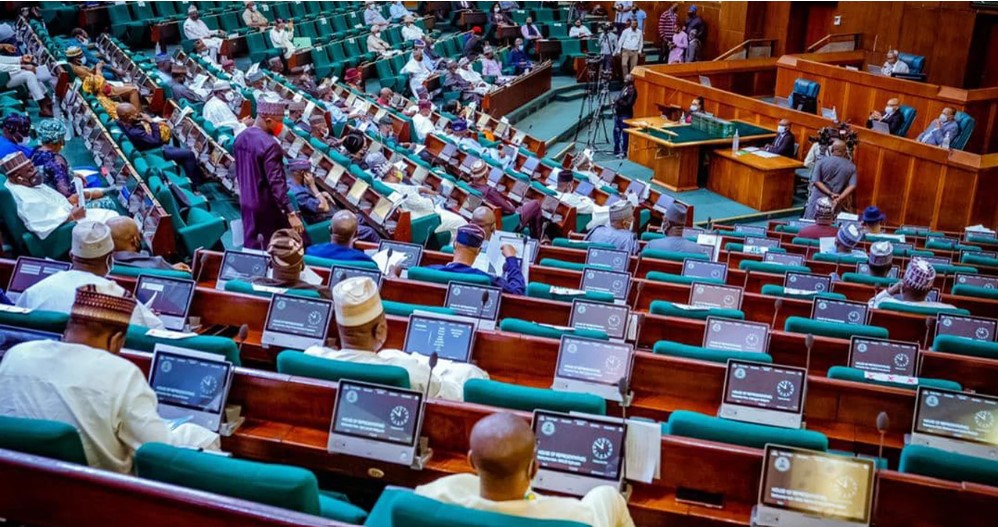
The House of Representatives has resolved to withdraw its earlier State Police Bill and adopt the Executive Bill transmitted by President Bola Tinubu, signalling a major shift in the National Assembly’s ongoing constitutional amendment process on one of Nigeria’s most consequential security reforms.

The Speaker of the House, Tajudeen Abbas, announced the decision on Tuesday at the opening of the 2026 National Assembly Open Week in Abuja, saying the Executive Bill was “more robust and more comprehensive” than the version previously passed by the Green Chamber.

The decision effectively halted plans to harmonise the House and Senate versions of the earlier proposal, with lawmakers now set to begin fresh legislative work on the President’s proposal.

Explaining the decision, Abbas said the executive proposal incorporated additional safeguards developed by a presidential committee chaired by the Chief of Staff to the President and former Speaker of the House, Mr Femi Gbajabiamila.

“The deeper lesson of Oyo is that a nation of this magnitude cannot be policed in perpetuity from a single command in Abuja. On this question, this House has already acted.

“In the course of the constitutional reform ably led by our Deputy Speaker, this House passed a State Police Bill and placed the matter squarely before the nation. Tomorrow’s roundtable carries that work forward, in the open and before you.

“I am, indeed, able to share a development that speaks to the seriousness with which this administration regards the safety of Nigerians.

“His Excellency the President has now transmitted to the National Assembly an executive version of the state police bill, one that is more robust and more comprehensive than the version this House earlier passed.

“That bill is the product of a dedicated committee inaugurated by the President and chaired by a distinguished former Speaker of this House, Rt Hon Femi Gbajabiamila,” he said.

Abbas pledged the readiness of lawmakers to consider the president ‘s proposals.

“The House will therefore recall the version it earlier passed, and accord the executive bill the expedited consideration that a matter of this urgency deserves,” he said.

See also  FG votes N19bn for VP’s aircraft engine, others

The Speaker also dismissed concerns that the legislation was being hurried through the National Assembly without public input, assuring Nigerians that the bill would undergo full legislative scrutiny.

“To the thoughtful citizens and to the members who have observed that they are yet to see the draft bills and who fear that this matter is being settled beyond public view, I offer this reassurance: nothing here is concealed. The bill will pass through a public hearing and open scrutiny.

“And I give this assurance to every Nigerian: the framework will carry robust safeguards. A state must satisfy clear and demanding standards and safeguards before it may be entrusted with a police service.

“There will be accountability, the protection of fundamental human rights, and firm boundaries between federal and state authority, so that no state police force may ever be reduced to the private instrument of a governor,” he assured.

According to him, the parliament was aware of how power conducted itself in the absence of restraint, stressing that lawmakers “have no intention of repeating that error.”

He said, “This roundtable is our invitation to examine the draft and to submit your memoranda before it becomes law. Your security is far too grave a matter to be designed behind closed doors.”

President Tinubu had formally transmitted the Constitution of the Federal Republic of Nigeria (Alteration) (State Police) Bill, 2026, to the House in a letter dated June 15, urging lawmakers to accord it expedited consideration as part of his administration’s efforts to restructure the country’s security architecture.

According to the President, the legislation seeks to create “a constitutional pathway for the establishment of State Police Services” capable of complementing the Nigeria Police Force in addressing the country’s growing security challenges.

“This bill builds on the significant work already done in this regard by the House of Representatives and incorporates additional safeguards to ensure that the creation of a dual policing structure to address our nation’s evolving national security challenges can be achieved quickly and effectively to the benefit of all Nigerians,” Tinubu wrote.

See also  FG revokes 5% telecom tax on voice, data services

He added, “The proposed legislation is a critical component of our administration’s strategy to reorganise Nigeria’s security architecture to better protect our citizens, and I am confident that the House of Representatives will act quickly to consider and pass this bill.”

Before the President’s intervention, both chambers of the National Assembly had independently advanced constitutional amendment bills seeking to establish a state police.

The House version, sponsored through the Constitution Review Committee chaired by Deputy Speaker Benjamin Kalu, proposed constitutional recognition of state police while retaining the Nigeria Police Force as the federal policing institution.

Among its key provisions were the establishment of State Police Services by state governments, creation of State Police Service Commissions responsible for recruitment, discipline and promotions, and constitutional delineation of the responsibilities of federal and state police authorities.

The proposal also sought to provide mechanisms for cooperation between federal and state police formations, while preserving the overriding constitutional responsibility of the Federal Government for national security, defence, border protection, terrorism and other offences with national implications.

Similarly, the Senate’s version of the amendment endorsed the creation of state police but proposed elaborate safeguards to prevent abuse.

The Red Chamber recommended constitutional limits on the deployment of state police officers outside their territorial jurisdiction, strengthened oversight by State Police Service Commissions, federal supervisory mechanisms where constitutional order is threatened, and clear procedures governing funding, recruitment, discipline and operational accountability.

Both chambers also recognised the need for coordination between federal and state policing institutions to avoid jurisdictional conflicts and ensure seamless intelligence sharing.

The executive bill is expected to consolidate these proposals while introducing additional constitutional safeguards recommended by the presidential committee established to review the framework for decentralised policing.

Although details of the executive draft have yet to be made public, Abbas disclosed that it contains stronger accountability measures and stricter conditions that states must satisfy before establishing their own police services.

See also  Disu declares total war on police corruption, impunity

The proposed legislation represents the most significant attempt to decentralise Nigeria’s policing system since the country’s return to democratic rule in 1999.

Nigeria currently operates a single, centrally controlled police structure under the Nigeria Police Force, with operational authority vested in the Federal Government.

For more than two decades, state governors, security experts, constitutional scholars and civil society organisations have argued that the existing centralised model has become increasingly overstretched in responding to terrorism, banditry, kidnapping, communal conflicts and other violent crimes.

Those calls intensified with the establishment of regional security outfits such as the Western Nigeria Security Network (Amotekun), Ebube Agu in parts of the South-East and numerous state-backed vigilante organisations created to complement federal security agencies.

Supporters of state police argue that decentralised policing would strengthen intelligence gathering, improve response time, deepen community policing and enhance local ownership of security.

Critics, however, have consistently warned that state police could be manipulated by governors to intimidate political opponents, interfere in elections and undermine civil liberties if adequate constitutional safeguards are not entrenched.

Under Section 9 of the 1999 Constitution, the proposed amendment must secure the approval of two-thirds of members of both the Senate and the House of Representatives before being transmitted to the 36 State Houses of Assembly, where it must be ratified by at least 24 legislatures before it can become part of the Constitution.

With the House now aligning with the Executive proposal, attention is expected to shift to public hearings and stakeholder consultations as lawmakers begin consideration of what could become the most far-reaching reform of Nigeria’s internal security architecture in more than two decades.

punch.ng

FOLLOW US ON:

FACEBOOK

TWITTER

PINTEREST

TIKTOK

YOUTUBE

LINKEDIN

Continue Reading
Click to comment

Leave a Reply

Your email address will not be published. Required fields are marked *

News

Trump dismisses report China gave Iran intel before US base attack

Published

on

US President Donald Trump on Sunday downplayed reports that Chinese entities supplied Tehran with satellite images of a military base in Jordan before and after an Iranian strike killed three US soldiers.

“You know, when they say that China spies on us, I say you’re right, and we spy on them too,” Trump told reporters aboard Air Force One a day after The Wall Street Journal reported Beijing’s intelligence sharing.

“That’s what we do. They basically do what we do,” Trump said.

The incident could deepen tensions between Washington and Beijing ahead of a planned state visit by Chinese President Xi Jinping to the White House on September 24.

On July 17, Iran launched missile strikes on the Muwaffaq Salti Air Base in Jordan, which houses US forces. Three US Army soldiers were killed.

Unnamed American officials cited in the Journal’s reporting did not name the Chinese entities involved, and did not suggest that Beijing was directly to blame.

Chinese officials asked for proof of the transfer of satellite imagery when prodded by the US officials, and refused to acknowledge that Chinese companies were involved in providing Tehran with satellite images, the Journal reported late Friday.

Trump has warned Beijing not to sell weapons to Iran, and in May, Washington sanctioned three China-based satellite companies for enabling Iran’s military operations.

China is a top economic partner of Iran, buying much of its oil output, and also an important diplomatic backer.

Still, Trump said of Xi on Sunday that “he’s behaved reasonably well, and we behave reasonably well.”

See also  ₦39 Billion: ‘Renovation At Bola Tinubu ICC Cannot Be Called Anything Else Other Than Scam’ – Deji Adeyanju

Asked if he would ever allow Chinese cars to be sold in the United States, Trump said, “I haven’t. I’m the one that kept them out. The tariffs kept them out.”

AFP

Source: punchng.com

FOLLOW US ON:

FACEBOOK

TWITTER

PINTEREST

TIKTOK

YOUTUBE

LINKEDIN

INSTAGRAM

Continue Reading

News

Fani-Kayode demands justice as two more Nigerians killed in South Africa

Published

on

Nigerian High Commissioner-designate to South Africa, Chief Femi Fani-Kayode, has demanded urgent action by the South African Government to protect Nigerians and bring perpetrators of killings involving Nigerian nationals to justice.

Fani-Kayode, reacting to the recent killings of Bishop Michael Taiwo Fakunle and James Uchechukwu Nwankwo in Johannesburg in a statement made available to Tribune, said he was “mortified and deeply shocked” by the developments, warning that Nigeria’s patience over the situation was wearing thin.

Fakunle was allegedly shot dead at his home in Johannesburg on September 4 after receiving a series of threats, while Nwankwo reportedly died on September 5 following what Fani-Kayode described as “gruesome interrogation techniques” by officers of the South African Police Service (SAPS).

According to the High Commissioner-designate, the two deaths bring to eight the number of Nigerians allegedly murdered in South Africa this year, with four of the cases involving South African police officers.

“Bishop Fakunle and Mr. Nwankwo are the seventh and eighth Nigerians to have been murdered in South Africa this year alone. No less than four amongst the eight were murdered by South African police officers,” he said.

Fani-Kayode further claimed that more than 100 Nigerians had been killed in South Africa since 2022, including over 30 allegedly killed by personnel of the SAPS and the South African Defence Force.

He expressed concern that, despite repeated complaints by the Nigerian authorities, no person had been arrested, detained, prosecuted or brought to justice in connection with the alleged killings.

“What is most disturbing is the fact that in spite of our constant expressions of concern about this disturbing state of affairs, not one person has been arrested, detained, prosecuted or brought to justice for any of these heinous crimes,” he said.

See also  FG votes N19bn for VP’s aircraft engine, others

“This is unacceptable.”

Fani-Kayode called on the South African Government to intensify efforts to protect Nigerian nationals and ensure that those responsible for their deaths were prosecuted.

“We call on the South African Government to do far more to protect our nationals and to bring those that have killed or are planning to kill them to justice,” he said.

“No-one deserves to be targeted and murdered simply because they are Nigerian.”

He said the Nigerian community in South Africa was “deeply disturbed” by the developments and living in fear over what could happen next, adding that the Nigerian Mission in the country was equally concerned.

The High Commissioner-designate also condemned what he described as a fresh deadline issued to African nationals, including Nigerians, to leave South Africa by September 30.

According to him, the deadline was issued by South African non-governmental organisations which he accused of being “brazenly racist, xenophobic and Afrophobic” and of threatening Nigerian and other African nationals who failed to comply.

“We call on the South African Government to protect our people from the excesses of these racist organisations and their misguided members and to apply the full weight of the law against them for their lawless behaviour,” he said.

He also urged the South African authorities to prosecute individuals responsible for allegedly “traumatising, terrorising, torturing and killing” Nigerians.

Fani-Kayode said Nigeria remained committed to strengthening relations with South Africa but warned that continued killings and discrimination against Nigerians could undermine bilateral ties.

“Whilst we seek to establish stronger and deeper ties with the South African Government, one thing remains clear. If this vicious cycle of discrimination against and killing of our nationals does not stop, there will be consequences,” he said.

See also  ₦39 Billion: ‘Renovation At Bola Tinubu ICC Cannot Be Called Anything Else Other Than Scam’ – Deji Adeyanju

“Simply put, our patience is wearing thin.”

He added: “South Africans are not targeted and killed in Nigeria by our people or our security forces. The least the South African Government can do is to reciprocate this gesture, protect our nationals and address our legitimate concerns.”

Fani-Kayode condoled with the families and associates of the two deceased Nigerians, praying that the souls of Fakunle and Nwankwo would rest in peace.

Source: tribuneonlineng.com

FOLLOW US ON:

FACEBOOK

TWITTER

PINTEREST

TIKTOK

YOUTUBE

LINKEDIN

INSTAGRAM

Continue Reading

News

My Feelings Toward Nigeria Have Changed, I Do Not Want To Go Back – Chimamanda

Published

on

Nigerian author, Chimamanda Ngozi Adichie, has said her feelings toward Nigeria have changed.

It was reports that the renowned author stated this during an interview with The New York Times while speaking on the loss of her 21-month-old son, Nkanu.

According to her, the loss has changed how she feels about her home country.

Asked whether Nigeria still felt like somewhere close to her heart, the author gave a blunt response.

“My feelings toward Nigeria have changed.

“I do not want to go back to Nigeria,” she said.

Nkanu, one of Adichie’s twin boys, died in December 2025 following a medical emergency at Euracare in Nigeria.

Recalling the incident, Adichie said a doctor approached her in a state of panic after the procedure.

“He was very calm, and he said to me, ‘Well, look, they gave him too much Propofol.’ Those were his exact words, which I will never forget until the day I die,” she recalled.

Adichie had in June publicly raised allegations of medical negligence concerning the treatment her son received at the hospital.

Speaking about the possibility of returning to Nigeria, Adichie said her children could be the only reason she would consider doing so.

She said her daughter still regarded Nigeria as her “happy place”.

Before her son’s death, Adichie said Nigeria remained deeply connected to her identity and writing, describing it as the place where she received “everything” that enabled her to become a writer.

However, the pain of losing her son has altered that connection.

See also  ₦39 Billion: ‘Renovation At Bola Tinubu ICC Cannot Be Called Anything Else Other Than Scam’ – Deji Adeyanju

“I mean, it is so surreal, all of this. I still can’t believe we’re talking about my son who died.

“You’re going through something, but you also feel like you’re outside of it,” she said.

FOLLOW US ON:

FACEBOOK

TWITTER

PINTEREST

TIKTOK

YOUTUBE

LINKEDIN

INSTAGRAM

Continue Reading

Trending