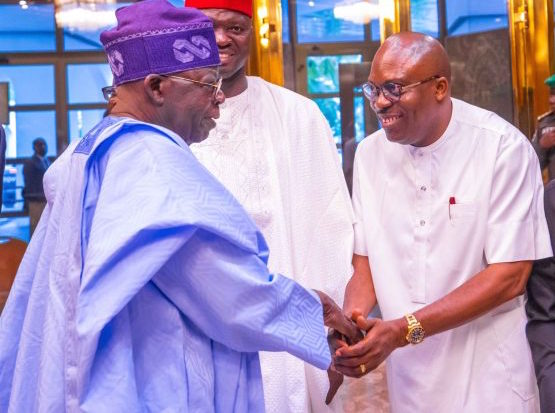
Siminalayi Fubara will today resume duties as Governor of Rivers State, following the end of the six-month emergency rule imposed on the state by President Bola Tinubu.
The President, on Wednesday, announced an end to the emergency rule he declared in Rivers State on March 18, 2025.
In a statement on the cessation of the emergency rule, made available by the Presidency, the President said, “The Governor, His Excellency Siminalayi Fubara, the deputy governor, Her Excellency Ngozi Odu, and members of the Rivers State House of Assembly and the speaker, Martins Amaewhule, will resume work in their offices from September 18, 2025…
“It, therefore, gives me great pleasure to declare that the emergency in Rivers State of Nigeria shall end with effect from midnight today.”
He added, “I am happy today that, from the intelligence available to me, there is a groundswell of a new spirit of understanding, a robust readiness, and potent enthusiasm on the part of all the stakeholders in Rivers State for an immediate return to democratic governance.
“This is undoubtedly a welcome development for me and a remarkable achievement for us. I, therefore, do not see why the state of emergency should exist a day longer than the six months I had pronounced at the beginning of it.”
To restore democracy, which he suspended by appointing Vice Admiral Ibok-Ete Ibas as Sole Administrator, the President asked all elected officials to resume their offices effective from midnight of September 18.
The political crisis in Rivers State has been one of Nigeria’s fiercest power struggles in recent years, rooted in a battle between Fubara and his predecessor-turned-political godfather, Nyesom Wike, now Minister of the Federal Capital Territory.
When Fubara emerged as governor in May 2023, he was widely seen as Wike’s protégé. The relationship, however, turned sour over control of political structures, state resources, and loyalty ahead of the 2027 elections.
By late 2023, the crisis escalated as the state House of Assembly split, with the majority siding with Wike, while a minority remained loyal to Fubara.
Moves to impeach the governor triggered street protests, legal battles, and even violence as the Assembly building was set ablaze during the height of tensions, symbolising the depth of the political breakdown.
President Tinubu brokered a peace deal in December 2023, compelling Fubara to recognise the Amaewhule-led lawmakers who had declared their defection to the All Progressives Congress. The Abuja controversial agreement was criticised by many gladiators, describing it as unconstitutional.
Despite the truce, parallel legislative sessions, disputed budgets, and allegations of intimidation persisted. Both camps entrenched themselves further, drawing in national political forces and destabilising governance in the oil-rich state.
The height of the tensions was the February 28, 2025, judgment of the Supreme Court, which recognised the Amaewhule-led Assembly as the authentic in the state.
Hitherto, Fubara had recognised and given validity to the Victor Oko-Jumbo-led assembly.
The apex court also ordered the embattled governor to re-present the 2024 budget, while halting the release of funds by the Federal Government to the state.
It also declared the controversial local government election conducted by Fubara on October 5, 2024, as invalid and sacked the elected council chairmen.
The battle line was then drawn between Fubara and the Amaewhule-led Assembly, leading to heightened tension in the state.
The assembly, playing hide-and-seek, asked the governor to present the 2024 budget, even after the 2025 budget had been passed by the Oko-Jumbo three-man faction, though attempts by the governor to meet with the members failed.
As the tempers rose, locals and ex-agitators threatened to tamper with oil installations should Fubara be impeached, as threatened by the Amaewhule-led assembly in a notice sent to the governor.
A day before Tinubu imposed emergency rule, an explosion rocked a section of the Trans Niger Pipeline in the Bodo Community of Gonna Local Government Area in Rivers State. The following day, another explosion severed a pipeline manifold in the Omwawriwa axis of Ogba-Egbema-Ndoni Local Government Area of the State.
The President expressed concern over vandalism by militants, allegedly acting in support of Fubara. The attacks occurred amid desperate efforts by the Tinubu administration to increase Nigeria’s lagging crude oil output and curb leaks.
To forestall a breakdown of law and order and protect vital oil installations essential to uninterrupted production and the economy, President Tinubu, on March 18, 2025, declared a state of emergency in Rivers State and suspended all democratic institutions.
The declaration was faulted by civil society groups, opposition political parties, Rivers indigenes, especially women, but the President justified his intervention, saying he was constitutionally empowered to intervene to prevent breakdown of law and order.
In his Wednesday statement, Tinubu said, “You will recall that on March 18, 2025, I proclaimed a state of emergency in the State. The summary of it for context is that there was a total paralysis of governance in Rivers State, which had led to the Governor of Rivers State and the House of Assembly being unable to work together.”
He cited vandalism of “critical economic assets of the State, including oil pipelines,” and a split legislature in which “four members worked with the Governor, while 27 members opposed the Governor…As a result, the Governor could not present any Appropriation Bill to the House, to enable him to access funds to run Rivers State’s affairs.”
Tinubu said attempts by himself and “other well-meaning Nigerians” to broker peace failed, prompting him “to invoke the powers conferred on me by Section 305 of the 1999 Constitution, as amended, to proclaim the state of emergency.”
He noted that “the offices of the Governor, Deputy Governor, and elected members of the State House of Assembly were suspended for six months in the first instance. The six months expire today, September 17, 2025.”
Thanking lawmakers for approving the proclamation, Tinubu added: “I thank the National Assembly, which, after critically evaluating the justification for the proclamation, took steps immediately, as required by the Constitution, to approve the declaration in the interest of peace and order in Rivers State. I also thank our traditional rulers and the good people of Rivers State for their support from the date of the declaration of the State of emergency until now.”
He acknowledged some legal challenges, saying, “I am not unaware that there were a few voices of dissent against the proclamation, which led to their instituting over 40 cases in the courts in Abuja, Port Harcourt, and Yenagoa, to invalidate the declaration…But what needs to be said is that the power to declare a state of emergency is an inbuilt constitutional tool to address situations of actual or threatened breakdown of public order and public safety, which require extraordinary measures to return the State to peace, order and security.”
Referencing court proceedings, the President said, “Considering objectively, we had reached that situation of total breakdown of public order and public safety in Rivers State, as shown in the judgment of the Supreme Court on the disputes between the Executive and the Legislative arm of Rivers State. It would have been a colossal failure on my part as President not to have made that proclamation.”
Tinubu urged cooperation between branches of government, advising, “As a stakeholder in democratic governance, I believe that the need for a harmonious existence and relationship between the executive and the legislature is key to a successful government, whether at the state or national level.
“However, that expectation will remain unrealisable in an atmosphere of violence, anarchy, and insecurity borne by misguided political activism and Machiavellian manipulations among the stakeholders.”
The President acknowledged that the conditions had improved after reconciliation between rival factions, which he described as “a groundswell of a new spirit of understanding.”
“I am happy today that, from the intelligence available to me, there is a groundswell of a new spirit of understanding, a robust readiness, and potent enthusiasm on the part of all the stakeholders in Rivers State for an immediate return to democratic governance.
“I therefore do not see why the State of emergency should exist a day longer than the six months I had pronounced at the beginning of it. It therefore gives me great pleasure to declare that the emergency in Rivers State of Nigeria shall end with effect from midnight today.
“I take this opportunity to remind the Governors and the Houses of Assembly of all the States of our country to continue to appreciate that it is only in an atmosphere of peace, order, and good government that we can deliver the dividends of democracy to our people. I implore all of you to let this realisation drive your actions at all times.”
Winners
President Tinubu emerges as the ultimate winner. Justifying his intervention in a statement on Wednesday, the President declared: “It would have been a colossal failure on my part as President not to have made that proclamation.”
For an administration striving to revive the economy from a comatose state, Tinubu was unwilling to risk anything that could cripple its mainstay—oil. His greatest concern was that critical national assets in Rivers, particularly oil pipelines, had come under repeated vandalism amid the heightened political tension.
The emergency declaration not only quelled the unrest but also brought swift restoration of order. Within days, the vandalised pipelines were repaired and reactivated, averting what could have become a deeper economic crisis.
Beyond economic stability, the President also gained significant political ground in Rivers, a state previously dominated by the opposition. Before the emergency declaration, the Peoples Democratic Party held sway in the state. But as the crisis deepened, some loyalists of the governor defected to the All People’s Party ahead of the October 5, 2024, local government election, which they won.
The rescheduled poll, conducted by the state’s sole administrator on August 30, 2025, further cemented APC’s foothold, as its candidates emerged victorious in 20 out of 23 local government areas.
The outcome not only marked the APC’s long-sought grassroots penetration in Rivers but also positioned the party strongly ahead of the 2027 general elections.
Another clear winner is the FCT Minister, Nyesom Wike. Since December 2023, the minister had been locked in a fierce struggle to reclaim political control of Rivers. His loyalists had lost out in key positions—commissioners, local government chairmen, and other strategic offices—leaving him politically stranded.
The Supreme Court judgment that restored the Amaewhule-led Assembly gave Wike fresh leverage to tighten his grip on Governor Fubara. Determined to unseat him, Wike pressed hard until President Tinubu’s emergency rule intervened, halting the showdown. In one of his interviews, Wike even admitted that the President’s intervention had spared Fubara from the “sledgehammer.”
During the political lull that followed, the President reconciled the two rivals for a second time. Since then, Wike has bounced back to political relevance, successfully repositioning his loyalists in local government offices across the state.
In a statement by his Senior Special Assistant on Public Communications and Social Media, Lere Olayinka, on Wednesday, the FCT minister said the President’s intervention had further restored the confidence of the people of Rivers State in his leadership.
He commended the people of the state for their belief in the President and continuous support for him in his tireless efforts to return the country to the path of progress and development.
The minister, who cautioned troublemakers, especially fifth columnists who are always seeking to benefit from the crisis, to stay away from the state, added that, “From Rivers State going forward, the only news that will emanate will be that of peace, progress and development.”
Though he lost out politically and was suspended from office for six months, Fubara will also count himself among the winners of the emergency rule. Speaking with a group of supporters who had visited him, the governor had said the declaration of the emergency rule by President Tinubu saved his job and gave him the hope of returning to the Government House.
Armed by the Supreme Court judgment, the Amaewhule-led Assembly was determined to oust Fubara by all means until the declaration of the emergency rule on March 18 by President Tinubu.
Also on the winning side are the members of the Amaewhule-led faction of the Rivers Assembly. Though they were affected by the emergency rule, as the President suspended them from office, they regained their political relevance in their various constituencies and are now certain of electoral values in the 2027 election in the state.
The APC gained massively as well. The party, which was in opposition until the emergency rule, is now holding a major position in the political scheme in the state. Having won 20 out of the 23 local government areas in the August 30 election, the Tony Okocha-led state chapter of the party is now a beautiful bride.
The party is reportedly offering the governor the leadership of the party in the state, a move seen as part of wider political realignments following his reconciliation with Wike.
Elected local government chairmen on the APC platform can also count themselves among the winners of the emergency rule. The political situation created the opening for the opposition party to take control of key positions and sweep the polls—an advantage that strengthens its footing ahead of the 2027 elections.
Another clear winner is the Sole Administrator, Vice Admiral Ibok-Ete Ibas (retd). Pulled out of retirement after serving as Chief of Naval Staff under the late President Muhammadu Buhari, Ibas was entrusted with overseeing Rivers during its most turbulent period. His appointment not only restored stability but also gave him a high-profile platform to demonstrate administrative and crisis-management skills.
Successfully steering the state through the emergency rule adds a new feather to his cap, bolstering his public profile. Many now believe he may leverage this national exposure as a launchpad for a future political adventure in his home state of Cross River, where his name already commands respect.
Losers
One of the losers of the development in Rivers is the former governor and now chieftain of the African Democratic Congress, Rotimi Amaechi.
The former transport minister during the administration of the late President Muhammadu Buhari had lost political relevance in the state since Wike took over in 2015. He had lost to Wike in the successive elections since then, as his political machine weakened considerably after leaving office. A loss for Wike in the crisis could have provided leverage for Amaechi to reassert his political dominance in the state.
Amaechi was a vocal critic of the emergency rule. He publicly condemned the move, arguing that Tinubu’s actions were unconstitutional, a “brazen power grab,” and a threat to democracy.
For the emergency rule, many of Fubara’s loyalists lost their relevance in the scheme of things in the state. Though some of them may gain political appointments, that may not suffice for the opportunities they lost in the local government election. Some of them were reportedly angry that the governor had subjected himself to the authority of Wike, ruling them out of contention and political relevance.
Another set of losers are some of the political leaders, stakeholders, and statesmen who had cheered Fubara on during the crisis. Among them are a former governor, Celestine Omehia; former national chairman of the PDP, Prince Uche Secondus, and Senator Lee Maeba.
Wike had serially accused both Omehia and Secondus of lacking political strength in the state, and they were visible throughout the crisis. Fubara’s return may, however, lock them out of relevance in the state.
Also on the losing end is the factional speaker, Oko-Jumbo, and his two members. With the authority firmly in control of the Amaewhule faction, Oko-Jumbo and his men would have to realign to retain their membership of the assembly.
Anticipating Fubara’s return
In the meantime, nothing was heard about Fubara’s return as of 8:00 pm on Wednesday. However, one of his aides, who did not want to be named, said the Governor is expected back on Thursday to resume his duties.
“The Governor will be back tomorrow (Thursday),” the aide said in a terse response.
The streets of Port Harcourt, the state capital, have remained eerily calm despite the news of Fubara’s reinstatement. One of our correspondents spotted many residents discussing the development in small groups initially, and thereafter went about their everyday activities. In the Governor’s hometown of Opobo-Nkoro Local Government Area, the situation was no different, as many of the natives were still expecting the Governor’s return.
An indigene of Opobo-Nkoro who simply identified herself as Ibifuro expressed mixed feelings, saying Fubara will no longer wield the influence he is known for.
“I’m happy, but nothing much will change because, as it is now, the Governor’s hands are tied. He can’t do things on his own. He is like an infant now who will wait for instructions,” she stated with disdain.
There are indications that Fubara’s supporters, especially members of the Rivers Women Unite for Sim, are gearing up to welcome the Governor on Thursday. There is also palpable tension in Port Harcourt, as it remains unclear whether the reconciliation between Wike’s supporters and Fubara’s will hold for long.
Stakeholders in Rivers State also shared their views on the developments, with some calling for greater synergy between the executive and legislature.
Elder statesman and convener of the Coalition of Rivers State Leaders of Thought, Sunny Chukumele, said he and the CRSLT were not excited about the news.
In an interview with The PUNCH on Wednesday, Chukumele noted that although the emergency rule has ended, Fubara is no longer in charge as his predecessor, Wike, has successfully captured the State.
“The so-called emergency rule had a timeline, and that timeline seems to have elapsed today. So we are not excited. The coalition of Rivers State and the leaders of thought that I lead are not excited. Rivers people are not excited either.
“You know, we are not excited because I keep maintaining that it is like going back to Egypt. It’s a journey back to Egypt.
“So, House of Assembly, I don’t know what to tell them. I wish them luck. I wish the Governor and the so-called House of Assembly luck. For me and us, it is predictable. It is predictable that the Governor of Rivers State, once so loved, has been lost to the capturers of the state,” he stated.
He expressed worry over the fate of three lawmakers who supported the governor during the political crisis in the state, saying they may be sanctioned by the Speaker, Martin Amaewhule.
A former federal lawmaker and Commissioner for Information and Communications in the State, Ogbonna Nwuke, said he hoped for the return of good governance, saying all projects stalled due to the emergency rule will continue.
Nwuke, who represented Etche-Omuma Federal Constituency in the Red Chamber of the National Assembly, said, “Our expectation is that going forward we will have a united Rivers State on the basis of the best norms of good governance. That all of those projects that made the Fubara government very progressive, months before it was thrown out on suspension, will be revisited quickly.
“All those projects are tied to the future development of Rivers State. Above all, we expect that the legislature and the executive will collaborate and that their collaboration will bring about good governance as well. Above all, the expectations of the Rivers people who have prayed for their return, who have fought for their return, will be satisfied in the days to come.”
For his part, the Chancellor, International for Social Justice Human Rights, Dr Omenazu Jackson, stressed the need for the peace to be sustained, as well as cooperation between the Governor and the legislators. He warned that the office of the Governor must be respected to enable him to concentrate on the task of governance.
Jackson explained, “All hands must be on deck to ensure peace in Rivers State. There should be executive synergy for the development of the State, but nobody should bully the Governor anymore. The Governor should work in consonance with the mandate of the people of the State.
“Those promises he made to the people during his electioneering campaign, he should keep to them, and all the political gladiators should sheathe their swords. There should be genuine reconciliation, and everybody should maintain their lane.
“There should be no encroachment or interference on the rights of the legislators, and there should be no encroachment on the rights of the Executive Governor of the State. We are not happy with the waste of six months in Rivers State’s democratic experience. Rivers people are not happy about it, and we don’t want to hear such experiences anymore.”
Security details faceoff
Earlier on Wednesday, there was a mild standoff in the Rivers State Government House as some security details attached to the seat of power protested alleged poor welfare and six-month unpaid allowances since the sole Administrator assumed office.
The security aides, mainly operatives of the Nigeria Security and Civil Defence Corps, claimed that they had served Ibas dutifully since he assumed office, but their welfare had been neglected.
The standoff occurred at about 10:00 am as the security operatives demanded a parting gift from the administrator. They also threatened to hold his convoy as he departed for Port Harcourt Airport.
A viral video spotted by The PUNCH showed the moment when the angry operatives threatened to lock the government house, insisting that the interim administration must appreciate their hard work and dedication.
“For what? They have made billions. We are not doing it again. Imagine for six months we have been suffering, working hard here. We will not agree. We will lock this place and nobody will go out. For what?” one operative screamed. Although an official arrived at the scene to calm the operatives, the outcry continued as the operatives accused the official of being ignorant of their plight.
“Do you know how much has been going out of this place (Government House), and they didn’t give us anything. We will not accept it again. They should give us our own. If it is politicians, they will give, so they should also dash (gift) us,” another detail said bluntly.
Our correspondent gathered that the situation was later brought under control by some senior security officials at the Government House.
Ibas’ convoy later drove off to the airport and departed for Abuja.
When contacted for comments, the media aide to the Administrator, Hector Igbikiowubo, stated that he would issue a statement on the issue. However, he had yet to do so as of press time.
Lawyers demand litigation
Meanwhile, senior legal practitioners insist that the Supreme Court must still hear the constitutional challenge to President Bola Tinubu’s emergency rule in Rivers State, even though the six months have lapsed today.
The Managing Partner and Founder of PLATINUM & TAYLOR HILL, Olalekan Ojo, SAN, called on the Supreme Court to deliver a ruling on the legality of President Bola Tinubu’s emergency declaration in Rivers state, even though the six-month measure expired on Tuesday.
“By reason of the expiration of the six-month duration of the emergency rule declared by Mr President in Rivers State, has the suit become academic?” Ojo asked.
He added, “In law, we must realise that this suit raises fundamental constitutional issues that are of great recondite. The Supreme Court, being a policy court, and for the purpose of this suit, a constitutional court, should seize the opportunity placed before it by that suit to make relevant decisions or pronouncements on the legality or otherwise of the declaration of emergency rule in River State by Mr. President, about six months ago.”
Ojo argued that the case remains “fit for adjudication” because its determination would carry legal and financial consequences for office holders suspended during the emergency.
“Should the Supreme Court decide to nullify the declaration, then it follows that those political office holders who are suspended, during the period of the emergency, where they were not receiving salaries, should be entitled to have it back,” he stated.
He also cited a precedent from 2004, when then-President Olusegun Obasanjo imposed emergency rule in Plateau State and appointed retired Major Chris Ali as the sole Administrator. Although the measure ended in November of that year, the Supreme Court still heard arguments on its validity.
“The Supreme Court was of the opinion that the suit had not become academic just because the emergency rule had come to an end,” Ojo recalled, noting the case was struck out on technical grounds rather than lack of live issues.
Beyond salaries or restitution, Ojo said a decision would “bring legal clarity as to the scope of the powers of the President as far as the declaration of emergency rule is concerned. It will constitute a precedent, a guide for the exercise of the Presidential power as far as the declaration of emergency is concerned.”
He urged lawyers to press ahead with the suit, saying, “I plead with the lawyers to approach the Supreme Court for a date so that the suit can be determined once and for all. It raises constitutional issues. The court and Nigeria should not miss this opportunity.”
PDP National Legal Adviser, Kamaldeen Ajibade (SAN), said the case was deliberately framed to test the Constitution, not to defend Governor Siminalayi Fubara, who was suspended along with other office holders during the emergency.
“We will still wait until we are given a date because that case is not about Fubara; that case is purely about the interpretation of the constitution of Nigeria,” Ajibade told one of our correspondents on Wednesday.
He added, “You know Fubara is not a party, Rivers State was not made a party in that case, so we were very careful when we filed that matter because we know this kind of thing can happen. So they cannot because of the resumption of Fubara now say the matter is spent, No! If they try to raise that, we will be very forceful about it. The case has to be heard because of the future’s sake.”
For his part, Counsel for the Attorney-General of the Federation, Akin Olujinmi (SAN), cited a precedent from Plateau State under former President Olusegun Obasanjo, where an emergency rule declared in 2004 was litigated even after it expired.
“Just as it happened in the case of Joseph Leto when the emergency rule was invoked there in 2004. Even after the period had expired, the Supreme Court still sat on the case. The court, in other words, can still sit on the case. It doesn’t matter that the period of emergency has run out,” Olujinmi said.
Punch.ng
FOLLOW US ON:
FACEBOOK
TWITTER
PINTEREST
TIKTOK
YOUTUBE
LINKEDIN
TUMBLR
INSTAGRAM

















 News1 hour ago