Connect with us

Business

China extends trade boom as global AI tech demand surges

Published

on

Chinese exports and imports soared in July, official data showed Friday, as the manufacturing powerhouse benefits from a global AI boom lifting overseas demand for its tech products.

The world’s second-largest economy last year achieved a historic trade surplus of nearly $1.2 trillion, helping its manufacturing sector through a prolonged slump in domestic consumption.

The export boom has been propelled further this year by increased demand for Chinese data-processing equipment and related components, as companies rush to build artificial intelligence capacity.

Exports climbed 23.9 percent year-on-year last month, the General Administration of Customs (GAC) reported, compared with a 23.0 percent forecast by Bloomberg.

Overseas shipments of computers and related parts jumped 45.2 percent on year in the first seven months, the data showed.

“Export and import values remain elevated, helped by soaring global demand for electronics and green tech products,” wrote Julian Evans-Pritchard of Capital Economics.

China’s trade surplus appears to be on pace to match that of last year, reaching $687 billion through the end of July, the data showed Friday.

The yawning gap has increasingly raised eyebrows abroad — particularly in Europe, where leaders worry about floods of Chinese exports squeezing out local manufacturers.

Beijing has insisted it never deliberately pursued a trade surplus.

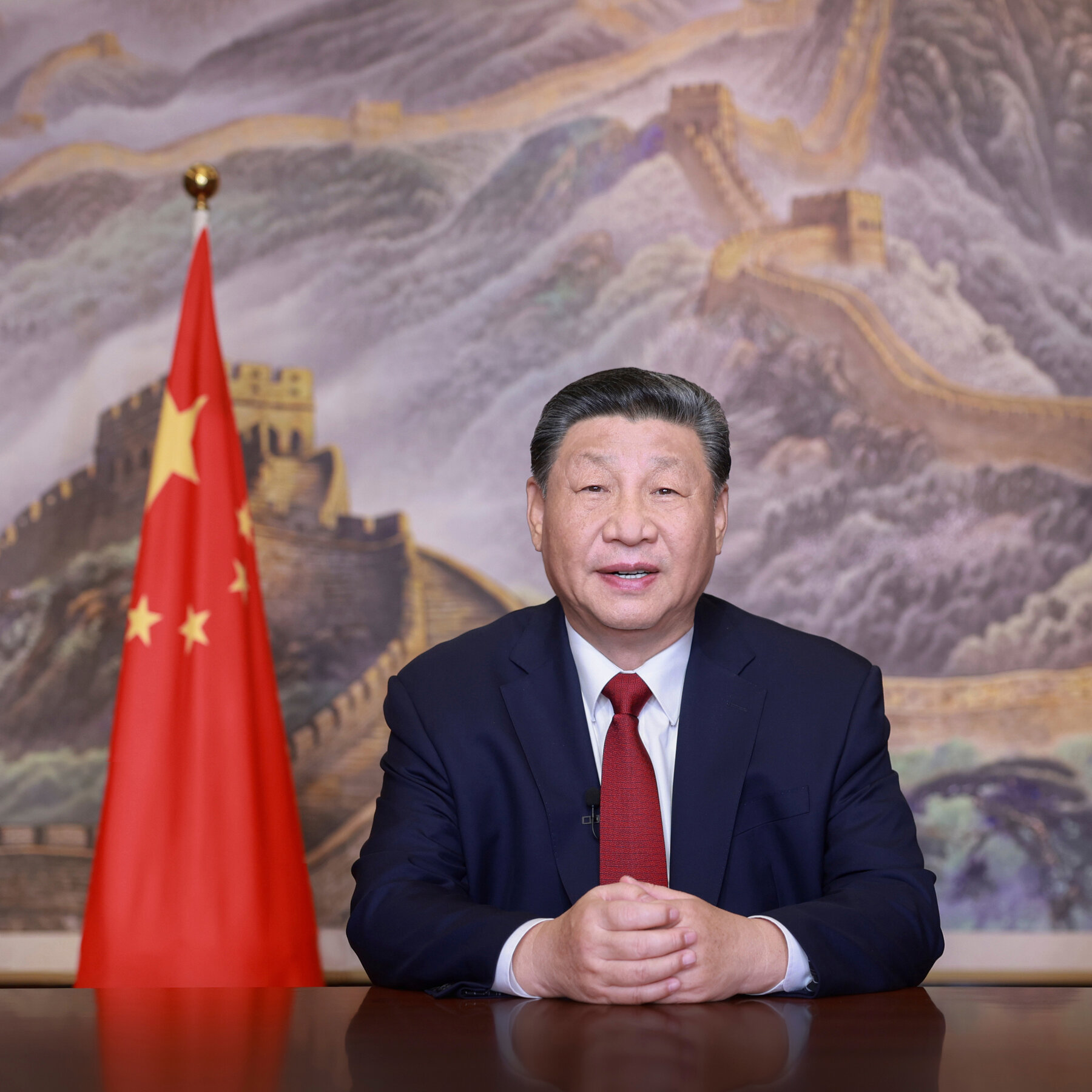
The Communist Party’s Politburo — the decision-making body headed by President Xi Jinping — urged a more “balanced” trade development at a key meeting late last month.

– China-US flare-up –

“Export growth continued to support the economy in July,” Zhiwei Zhang, president and chief economist at Pinpoint Asset Management, wrote in a note after Friday’s data.

“I expect intense negotiations between China and (its) major trading partners in coming months on what can be done to make trade more balanced,” he added.

See also  NNPC’s oil security claims rise to N11.2tn

Imports increased 27.5 percent in July, extending this year’s strong performance even as main indicators of domestic demand have remained weak.

However, that was slower than the 36 percent surge seen in June, and also missed a Bloomberg forecast of 29.5 percent growth.

The growth has been achieved despite considerable pressure on the global trading system from the war in the Middle East and simmering trade frictions between Beijing and Washington.

China’s shipments to the United States rose 17 percent year-on-year last month, Friday’s data showed, as the countries remain locked in a trade war despite efforts to ease tensions.

That brought China’s surplus with its superpower rival this year to nearly $171 billion through the end of July, according to the official data.

The latest figures come days after a fresh flare-up in trade tensions between the world’s top two economies.

Following sanctions imposed by Washington over forced labour and national security concerns, Beijing on Wednesday announced restrictions on drone exports to the United States and blacklisted six firms.

China and the United States spent much of last year embroiled in an escalating trade war but reached a truce when US President Donald Trump met Xi in October.

The relationship will undergo further scrutiny in coming weeks as officials prepare for a scheduled state visit by Xi to the United States in late September.

AFP

punch.ng

FOLLOW US ON:

FACEBOOK

TWITTER

PINTEREST

TIKTOK

YOUTUBE

LINKEDIN

Continue Reading
Click to comment

Leave a Reply

Your email address will not be published. Required fields are marked *

Business

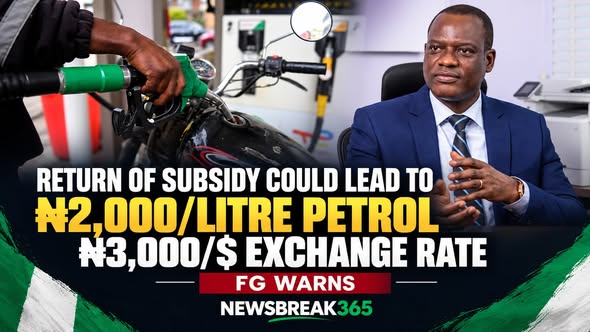
Return of subsidy could lead to ₦2,000/Litre Petrol, ₦3,000/$ exchange rate, FG warns

Published

on

The Federal Government has strongly defended its decision to eliminate fuel subsidies, warning that reinstating the policy would trigger severe economic instability, driving petrol prices above ₦2,000 per litre and pushing the exchange rate toward ₦3,000 per US dollar.

Speaking at a press briefing in Abuja on Thursday, October 8, addressing fuel pricing and growing public calls for subsidy reinstatement, the Minister of Finance and Coordinating Minister of the Economy, Taiwo Oyedele, cautioned that returning to subsidies would destabilize fiscal progress.

“Return subsidy, and the sequence is familiar. Weaker revenues invite a sovereign credit downgrade. As the rating agencies themselves have already signalled, and you can read all their reports, that would put at risk the upgrade we have recently earned, including our first from S&P in 14 years,” Oyedele stated.

“Borrowing becomes costlier, capital leaves, reserves fall, naira weakens. The progress on inflation, which has allowed the central bank to begin lowering interest rates, will be put at risk. Our estimate is that the exchange rate could approach ₦3,000 per dollar within months. And the so-called subsidised petrol will cost at least ₦2,000 per litre. This is well above what Nigerians pay today.”

Oyedele emphasized that a reinstated subsidy would ultimately be funded through inflationary fiscal measures, delayed public earnings, or increased taxation.

“However, it is described, a subsidy must be financed through salaries and pensions not paid on time, through higher taxes, or through the printing of money, like we saw before this current administration. Over 30 trillion naira was printed. That’s inflation we’re dealing with. It wasn’t even just about the reform. Each of these has done great harm before,” Oyedele added. “Short-term relief, but with long-term fragility, is the most expensive money a government can spend.”

See also  Agency presents new regulatory laws to boost electricity

Addressing critics demanding a return to subsidized pricing over three years after President Bola Tinubu announced the end of the regime, the minister challenged proponents to provide viable, mathematically sound alternatives.

“We remain open to ideas, but any credible proposer should answer three questions. Number one, what will it cost? Number two, how will it be funded sustainably? Number three, what pump price will it deliver? We will engage in good faith with any proposer that shows its arithmetic,” Oyedele declared.

FOLLOW US ON:

FACEBOOK

TWITTER

PINTEREST

TIKTOK

YOUTUBE

LINKEDIN

INSTAGRAM

Continue Reading

Business

TUC reveals how FG can raise workers’ salaries without new minimum wage, read details

Published

on

The Trade Union Congress of Nigeria (TUC) has told the Federal Government that it does not need to wait for the next review of the national minimum wage before improving the salaries of its workers.

TUC President, Comrade Festus Osifo, said the government could independently increase the salaries of federal workers or raise the pay of the least-paid employees without waiting for a new Minimum Wage Act.

Osifo made the position known Wednesday evening while speaking at a press briefing in Abuja after the National Administrative Council (NAC) meeting of the labour centre.

According to him, the minimum wage should be regarded as a statutory wage floor and not a ceiling that prevents government or employers from paying workers substantially above the prescribed minimum.

He said, “Government does not even need to wait for a new Minimum Wage Act to be signed before government will take care of its workers.

“Government can wake up today and say, ‘Okay, I want to pay the least-paid worker in the Federal Government payroll N200,000,’ for example. They could say, ‘Let the least-paid worker be N400,000,’ for example, and graduate it upwards.

“Is that only the minimum wage for government to do that? No. That is not really the function of a minimum wage.”

Osifo argued that employers in several sectors already pay considerably above the statutory minimum, noting that the salaries of university graduates employed by banks, food and beverage companies and oil and gas firms are generally determined by the value of the jobs rather than the national minimum wage.

See also  CNG: States race to cut transport fares, read details

“If you are a university graduate and you are to be employed in a bank, are they going to start you from the minimum wage? The answer is no. The pay you will earn is much above minimum wage,” he said.

He added that the same principle applied to major companies in the food and beverage sector.

“If you are a university graduate and you are to be employed in the food and beverage industry, if you are to be employed by Nestlé, if you are to be employed by Cadbury, they are not going to look at minimum wage,” he said.

The TUC president also cited the oil and gas sector, where he said companies such as Shell, Chevron and TotalEnergies would ordinarily negotiate remuneration based on the nature and value of the jobs rather than the statutory wage floor.

“They are going to be talking about living wage,” he said.

Osifo therefore urged the Federal Government to take immediate steps to improve workers’ incomes rather than leaving employees to wait for the next statutory minimum wage review.

He said TUC had already engaged government officials on the issue, including the Minister of Finance and the Secretary to the Government of the Federation, as part of efforts to push for measures that would improve workers’ welfare.

“For us, you don’t really need a new minimum wage to take care of your employees in several sectors. That is not how it is done,” he said.

The labour leader also maintained that allowances could be reviewed independently of the minimum wage, stressing that workers should not be left to bear the full weight of economic reforms until 2027.

See also  Nigeria imports N1tn steel despite N7.2bn Ajaokuta spend

He said, “Allowances don’t need a minimum wage conversation, and even salaries, government on its own can actually push the salaries of workers up, even without minimum wage conversation.”

The current national minimum wage of N70,000 was signed into law in 2024 for a three-year period. Osifo said organised labour was already preparing for the next review, but stressed that government had options for improving workers’ welfare before then.

He further cited Ghana as an example of a country where government does not necessarily wait for a new minimum wage before taking measures to improve workers’ pay.

“Government can decide to pay whatever it takes to take care of its employees. Employers can decide to do way above what is there at the minimum threshold,” he said.

Source: tribuneonlineng.com

Follow Politics

FOLLOW US ON:

FACEBOOK

TWITTER

PINTEREST

TIKTOK

YOUTUBE

LINKEDIN

INSTAGRAM

Continue Reading

Business

Customs explains why shortlisted candidates await training invitations

Published

on

The Nigeria Customs Service has said candidates whose names appeared on its published recruitment list are not automatically guaranteed appointment, explaining that final screening is still ongoing before successful applicants are admitted for training.

The clarification followed complaints by some candidates who claimed they successfully completed the Computer-Based Test, physical examinations and initial screening, accepted their appointments through the official recruitment portal and saw their names published as successful candidates, but had yet to receive invitations for training scheduled to commence on Friday.

The affected candidates, according to a report by SaharaReporters, include more than 500 applicants who said they had been left uncertain about their status after invitations to the training reportedly stopped on Monday.

Some of the candidates claimed they had resigned from their previous jobs and incurred other expenses after believing that their appointments had been secured.

However, the Customs spokesman and Deputy Comptroller of Customs, Abdullahi Maiwada, told The PUNCH exclusively on Wednesday that the publication of a candidate’s name did not amount to a final appointment into the service.

Maiwada said candidates must pass the physical screening and other requirements before they can be admitted into the training college and eventually commissioned as officers.

“I will start my response first with a question. Did anyone who complained to you inform you that they have been issued an appointment letter? So that means the process is still ongoing. Secondly, the essence of screening is to have a physical examination of successful candidates.

“Let me explain so that you would have proper context. The essence of screening is either for candidates to be screened in or screened out, and they are just simple issues. It is either you have not met the criteria to be offered an appointment letter into Customs or to be ushered into training college. If anyone fails this, they will be dropped,” he said.

See also  Businesses expect CBN to hold rates as MPC meets today

The spokesman said age, academic credentials, medical fitness and drug use were among the requirements that could determine whether a candidate progressed to the next stage.

He explained, “Those criteria are simple. Age is very important. If your age is above the threshold, you will be disqualified. If there are inconsistencies in your credentials, you will be disqualified. If there are forgeries detected, you will be disqualified.

“If we see you with drugs, any element of drugs except tobacco and beer, you will be disqualified. If you have medical issues that wouldn’t warrant you to undergo that rigour, you would also be disqualified.”

Maiwada stressed that even admission into the training college would not make a candidate a Customs officer, saying applicants must successfully complete the training and satisfy academic, physical and character requirements before commissioning.

He said, “The fact that your name came out and you are invited for screening doesn’t qualify you to be a Customs officer. Even with that, you are going for training. And you will go for the training. It is when you pass the requirements that you will be commissioned as an officer. Anything before that, you are still not an officer.

“Someone can go to the Nigerian Defence Academy and still fail. It is not everyone who comes out who passes or is a flying lieutenant. And even if you find yourself in training college, you are still not a Customs officer. Until the day you pass out successfully and you are able to withstand all the rigours.

See also  Tax law: VAT hits record N1tn as new sharing era begins

“Academic exercises will be done, and you must come out well in character and learning. Exams will be conducted.”

The spokesman said the service could not justify spending public resources to train candidates who had already failed basic eligibility requirements. He said drug screening was particularly important because the Customs Service conducts annual drug tests for serving officers, regardless of rank.

“If someone is into drugs and he is disqualified, do we have to waste our resources taking him to training college before disqualifying him? No! These are criteria that are so simple. You have forgery and the like, and you want to be allowed into the system.

“If you see what we saw with medical records, you will be scared for this country. The rate at which boys are into drugs, you will be scared. Is this the future? The service runs drug tests for every officer every year, no matter your ranking. So if we can do that to persons in the system, what do you think we would do to persons outside it?” Maiwada said.

The ongoing controversy is linked to the Nigeria Customs Service’s 2024/2025 recruitment exercise, which began with an advertisement published on December 27, 2024.

The Service declared 3,927 vacancies across the Superintendent, Inspectorate and Customs Assistant cadres and received 573,680 applications.

After several stages of screening and verification, 3,852 candidates were selected, representing only 0.67 per cent of the applicants, or about one successful candidate for every 148 applicants.

The successful candidates comprised 1,275 Superintendents, 367 Inspectors and 2,210 Customs Assistants. The Service later conducted medical documentation and physical screening before inviting candidates who passed the subsequent stage for basic training scheduled to begin on October 9, 2026, at the Customs Training College.

See also  Dangote stops petrol sales to fuel importers

Maiwada’s explanation means that candidates whose names appeared in the published list may still be subject to further verification before they receive final appointment letters, proceed through training and are eventually commissioned as Customs officers.

Source: punchng.com

FOLLOW US ON:

FACEBOOK

TWITTER

PINTEREST

TIKTOK

YOUTUBE

LINKEDIN

INSTAGRAM

Continue Reading

Trending