Connect with us

News

Anthropic flags five Claude AI uses linked to biological weapons research

Published

on

Anthropic, the company behind Claude AI, says it identified five cases in which users employed its artificial intelligence models in ways that could support biological weapons development.

The company disclosed this in its latest threat intelligence report published on Thursday, saying the cases were among a range of malicious or potentially harmful activities detected and disrupted on its platform between December 2025 and August 2026.

Anthropic particularly flagged five Claude AI use cases that involved research into areas including chikungunya virus, highly pathogenic avian influenza, orthopoxviruses, venom peptides and toxins.

The company said it had banned the accounts involved and incorporated information from its investigations into its safeguards, enforcement and threat intelligence systems.

However, Anthropic stressed that it was not asserting that the scientists involved intended to cause harm.

“We do not assert that they intended harm, and identifying them or their labs could expose them to harm,” the company said, adding that it would withhold the names of the research institutions, countries and specific biological agents or techniques involved.

Anthropic said the cases demonstrated the difficulty of distinguishing between legitimate scientific research and activities that could be used for harmful purposes.

“Biological misuse is one of the most serious risks of frontier AI models,” the company said, warning that AI could potentially be used to make existing pathogens more dangerous or create new ones.

“The same information that can be used to develop a biological weapon could also be used to develop, for example, a vaccine or a cure for a disease,” the AI giant added.

See also  Soludo’s wife unveils Oluremi Tinubu’s empowerment programme in Anambra

In the first case, Anthropic said its biological safety classifier blocked a request to help prepare a grant application involving gain-of-function research on chikungunya virus.

The company said its subsequent investigation found that a reseller platform was being used to provide access to Claude to researchers in regions where Anthropic does not offer its services.

The platform also allegedly routed requests rejected by Claude to other AI models with more permissive safeguards.

Anthropic said it banned the associated accounts, worked with partners to take down the relay networks and shared its findings with AI companies and government authorities.

In a second case, the company said a researcher outside the US used Claude over several weeks while planning research involving highly pathogenic avian influenza and its adaptation to mammals.

According to Anthropic, the researcher used Claude for study planning, data analysis, interpretation and prioritisation of experiments, as well as editorial assistance.

The company said its safeguards restricted the researcher to weaker Claude models and that the AI’s contribution was primarily limited to clerical assistance, study ideation and design.

Anthropic said the case nevertheless provided evidence of active research programmes involving pathogens with enhanced pandemic potential.

A third case involved a grant application for orthopoxvirus research at a state-associated infectious disease laboratory. Anthropic said a reseller relay serving more than a dozen customers used Claude to draft the application.

The company said the application involved research into how orthopoxviruses interact with the immune system and was produced using Claude Opus 5 in about an hour.

The fourth and fifth cases involved research into venoms and toxins.

See also  Electoral Act Amendment: Opposition protests as senators back manual results transmission

Anthropic said one researcher used Claude to develop an atlas of venom toxin peptides and a generative system for optimising toxin characteristics, with the stated goal of developing therapeutic molecules.

In another case, a researcher used Claude in projects involving the computational redesign of toxins under a national public research programme. Anthropic said the researcher deliberately obscured the identities of some toxins and viral proteins in progress reports.

The company said both accounts were banned in May 2026 for violating its Supported Regions Policy.

Anthropic said the cases highlighted the challenge of regulating AI-assisted biological research because many applications are “dual use”, meaning they can have both beneficial and harmful applications.

Anthropic, however, cautioned against interpreting its findings as evidence that Claude was currently enabling imminent biological threats.

“We take these cases as evidence not of the imminence of biological threats currently uplifted by Claude, but rather as evidence that significant dual-use research efforts are associated with state actors of concern,” the company said.

The report is part of a wider disclosure by Anthropic on the misuse of its AI systems.

The company said its investigations over the past eight months also uncovered cyber operations, surveillance, influence operations, scams and fraud, conventional weapons development and attempts to illicitly distil its models.

The report comes shortly after concerns raised publicly by former Anthropic researcher Jacob Coxon about the risks posed by increasingly capable AI systems.

PUNCH Online previously reported that Coxon resigned from Anthropic and said “people building AI earnestly believe that it could kill us all by the end of the decade.”

See also  Tenure countdown: States owe N5.3tn as 12 govs near exit

Anthropic’s latest report also said it had identified a Russia-linked cyber espionage operation in which Claude was used to automate parts of attacks against organisations in Ukraine and Europe.

Source: punchng.com

FOLLOW US ON:

FACEBOOK

TWITTER

PINTEREST

TIKTOK

YOUTUBE

LINKEDIN

INSTAGRAM

Continue Reading
Click to comment

Leave a Reply

Your email address will not be published. Required fields are marked *

News

Ukraine sets age requirements for foreigners seeking citizenship

Published

on

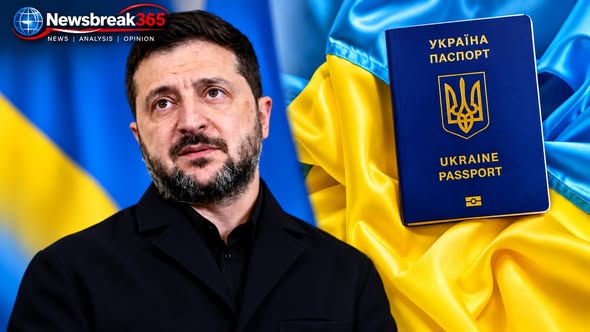
Ukraine has outlined age-based requirements for foreigners and stateless persons seeking citizenship, specifying who can apply and when minors must consent in person.

The State Migration Service of Ukraine published the guidelines in accordance with the Law of Ukraine on Ukrainian Citizenship and Presidential Decree No. 215 of March 27, 2001.

Under the requirements, as obtained by PUNCH Online on Wednesday from the state’s migration service of Ukraine’s website, foreigners and stateless persons aged 18 and above must personally submit their applications for Ukrainian citizenship.

For children below 18, applications must generally be submitted by their parents or legal representatives. However, minors aged between 14 and 17 must personally consent to acquiring Ukrainian citizenship.

This means parents or legal guardians cannot independently secure citizenship for teenagers within that age bracket without their consent.

The guidelines divide applicants into three categories based on age.

Children below 14 must have applications submitted on their behalf by a parent or legal representative, while those aged 14 to 17 must provide personal consent even though an adult handles the application.

Applicants aged 18 and above are required to submit their naturalisation applications independently.

The Ukrainian authorities have also outlined requirements for applicants who already hold citizenship of another country.

“Foreign nationals seeking Ukrainian citizenship under the procedure described by the migration authority must pledge to terminate their existing citizenship within two years of being registered as Ukrainian citizens.

“Applicants who make the required pledge are issued temporary Ukrainian identity cards valid for two years rather than full passports during the transitional period,” the migration service added.

See also  PHOTOS: Bridge collapses on Katsina–Batsari road after heavy rainfall – FRSC

A Ukrainian passport is issued after the individual has formally terminated their previous citizenship or submitted a written declaration renouncing it, in accordance with the applicable procedure.

However, stateless persons are exempt from the requirement to pledge to terminate another country’s citizenship and are not subject to the same two-year transitional arrangement.

The migration authority advised foreigners and stateless persons interested in acquiring Ukrainian citizenship to familiarise themselves with the relevant legal provisions and documentation requirements before commencing the application process.

Further information on citizenship applications and the required procedures is available through the official website of Ukraine’s State Migration Service.

FOLLOW US ON:

FACEBOOK

WHATSAPP CHANNEL

TWITTER

PINTEREST

TIKTOK

YOUTUBE

LINKEDIN

INSTAGRAM

Continue Reading

News

PHOTOS: LAGOS ADVANCES GREEN MOBILITY AS LAMATA, OANDO UNVEIL 11 NEW ELECTRIC BUSES

Published

on

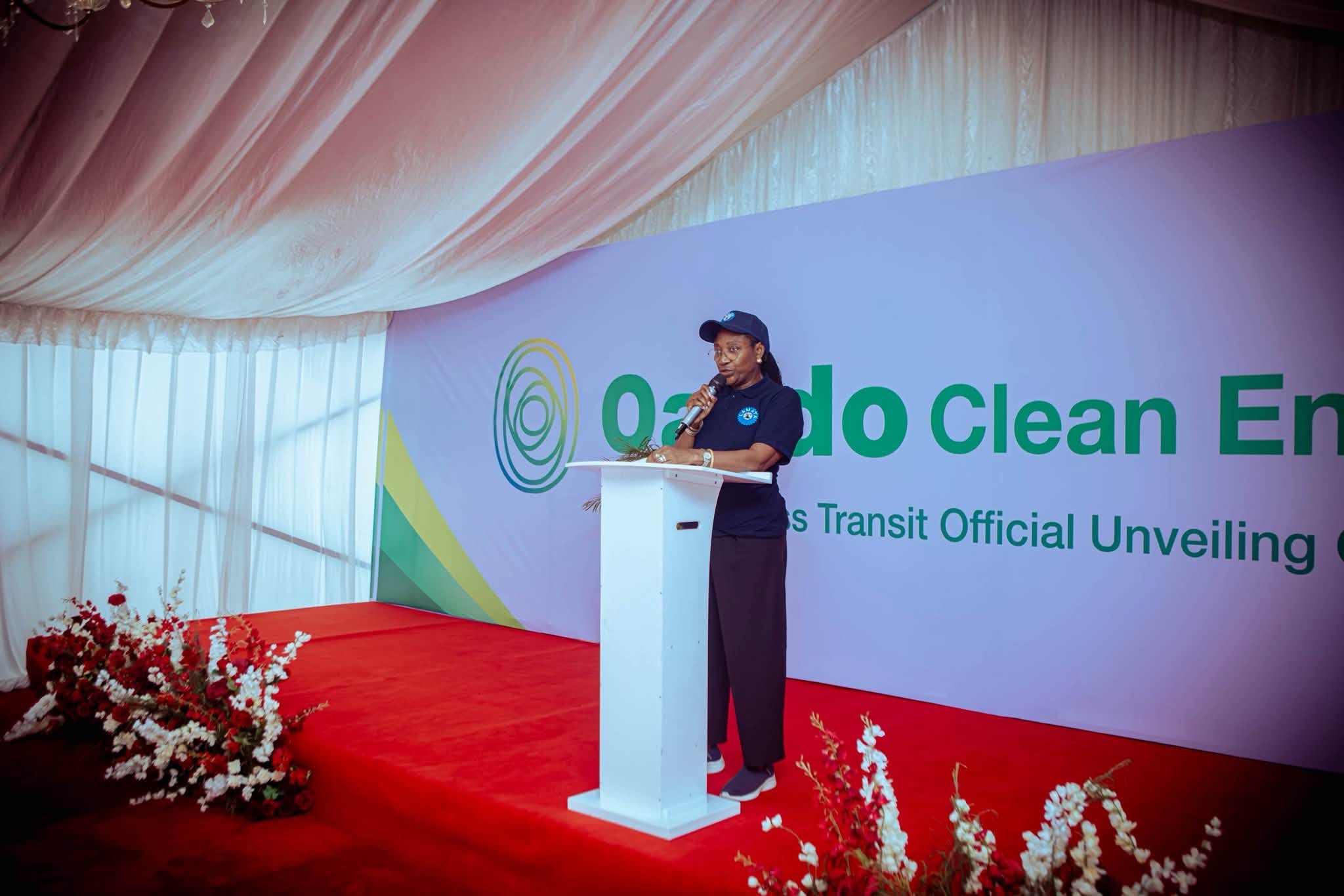
The Lagos State Government has taken another significant step towards transitioning to cleaner and more sustainable public transportation with the addition of 11 new electric buses (EVs) by Oando Clean Energy Limited (OCEL) under the regulation of the Lagos Metropolitan Area Transport Authority (LAMATA).

The presentation of the buses, the first batch of a set of 50-bus commitment under the current phase by Oando, represents a major expansion of the electric bus initiative, which began with two pioneer buses deployed for proof-of-concept operations in 2023.

The initiative is expected to pave the way for the eventual deployment of 552 electric buses across Lagos public transport corridors, reinforcing the state’s ambition to develop an environmentally sustainable and energy-efficient mass transit system.

Speaking at the event, the Commissioner for Transportation, Mr. Oluwaseun Osiyemi, said the transition to cleaner energy was essential to meeting the transportation needs of Lagos as its population and economic activities continue to expand.

He noted that the state government recognises that the future of transportation must be anchored on sustainability, energy efficiency, innovation and environmental responsibility.

According to him, Lagos is pursuing a progressive reduction in carbon emissions in line with the State Government’s net-zero ambitions by 2050.

The Managing Director of LAMATA, Engr. Mrs. Abimbola Akinajo, described the presentation as evidence of the progress achieved through sustained collaboration between the state government and its private-sector partners.

She said electric buses offer significant environmental advantages, including reduced greenhouse gas emissions, improved air quality and lower noise pollution, while supporting the development of a more sustainable urban transport system.

See also  Tenure countdown: States owe N5.3tn as 12 govs near exit

Akinajo noted that the partnership with Oando was translating a shared vision for cleaner transportation into practical results, adding that the deployment would strengthen Lagos’ efforts to modernise public transport operations.

In his remarks, the President and Chief Executive Officer of Oando Clean Energy Limited, Mr. Ademola Ogunbanjo, described the initiative as a defining moment in the evolution of electric mobility in Nigeria and Africa.

He said the project went beyond the introduction of electric buses, representing the foundation of a cleaner, more efficient and sustainable transportation ecosystem that could be replicated across the country and the continent.

Ogunbanjo recalled that the partnership between LAMATA and Oando began with the signing of a Memorandum of Understanding in April 2022, followed by the deployment of two pioneer electric buses in 2023.

He explained that the intervening years had been devoted to testing the technology, evaluating its operational resilience, assessing environmental impact and gauging public acceptance.

According to him, the experience and data gathered over the period provided the necessary foundation for moving from proof-of-concept operations to a larger-scale deployment.

Beyond the supply of electric buses, Ogunbanjo said Oando’s ambition was to establish a comprehensive domestic electric mobility ecosystem comprising charging infrastructure, maintenance facilities, technical manpower development, spare-parts supply chains and, ultimately, local vehicle assembly.

He added that the initiative was being supported by financial and technical partners, including the Bank of Industry, Wema Bank and Yutong, with prospective funding partnerships involving the Africa Finance Corporation (AFC) and the International Finance Corporation (IFC).

The partnership reflects the growing importance of public-private collaboration in mobilising the investment, technology and expertise required to transform urban transportation.

See also  Project Focus: Kano-Maradi Railway

The deployment of the additional buses is expected to provide further operational experience for the expansion of electric mobility across Lagos, while supporting the state’s broader climate action and sustainable development objectives.

Ogunbanjo expressed confidence in the scalability of the initiative, declaring that the success of electric mobility in Lagos could provide a model for other Nigerian cities.

“If it can work in Lagos, it can work anywhere in Nigeria. The future of mobility is electric, and that future is already taking shape here in Lagos,” he said.

The latest presentation reinforces Lagos State’s determination to position itself at the forefront of Africa’s transition to cleaner urban transportation, with electric mobility emerging as a critical component of its long-term public transport development strategy.

default

FOLLOW US ON:

FACEBOOK

WHATSAPP CHANNEL

TWITTER

PINTEREST

TIKTOK

YOUTUBE

LINKEDIN

INSTAGRAM

Continue Reading

News

Ebola updates: 28 contacts still under surveillance, 34 cleared, says NCDC

Published

on

The Nigeria Centre for Disease Control and Prevention has said 28 people linked to the country’s imported Ebola case are still being monitored, while 34 others have completed the mandatory 21-day follow-up.

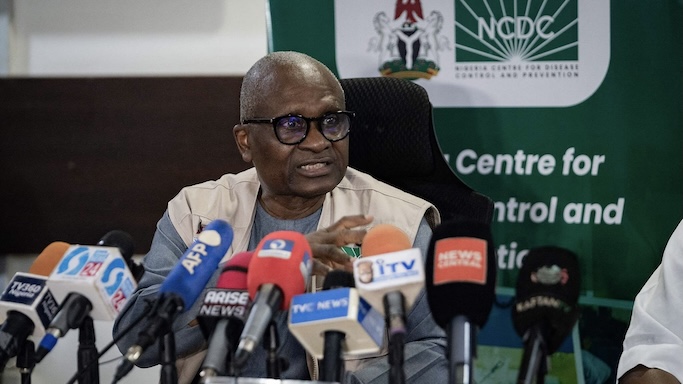
The Director-General of the NCDC, Dr. Jide Idris, disclosed this in the agency’s national health security update released on Tuesday.

He said Nigeria had continued to strengthen its response to the outbreak through coordinated efforts involving the Federal Ministry of Health and Social Welfare, the Federal Capital Territory Administration, state authorities and development partners.

According to Idris, the response measures include contact tracing, investigation of reported alerts, laboratory testing, infection prevention and control, safe clinical care and surveillance at points of entry.

“As of 9 November 2026, Nigeria had confirmed only one imported case of Bundibugyo virus disease, with no additional confirmed cases,” he said.

“We continue to investigate reported alerts and maintain heightened surveillance across the country to ensure that suspected cases are promptly identified and investigated.

“A total of 62 contacts have been identified. Of these, 34 have completed their individual 21-day follow-up, while the remaining 28 are still under monitoring.”

The NCDC chief clarified that being identified as a contact did not automatically mean that an individual had contracted the virus.

He explained that the 21-day monitoring period was designed to enable health officials to detect possible symptoms early and initiate appropriate medical interventions.

Idris also cautioned against confusing the monitoring period for individual contacts with the total number of days since the index case was confirmed.

See also  Collapsed Lagos building occupants ignored distress signs – Residents

Earlier in November, the NCDC projected that surveillance of all 62 contacts traced to the imported Ebola case would be concluded by November 13.

The agency had said, “Contacts are expected to complete follow-up by November. Expected completion dates range from 31 Oct to 13 Nov 2026.”

The Federal Government announced the confirmation of an Ebola case in the FCT in October.

The Coordinating Minister of Health and Social Welfare, Ali Pate, said 44 close contacts had initially been identified for tracing as part of efforts to prevent further transmission.


Pate disclosed that the index patient, a woman who recently arrived in Nigeria aboard an international flight from Uganda, was admitted to a private hospital in the FCT, where she received treatment for several days before the disease was confirmed.

The patient was subsequently evacuated to Switzerland for further medical care.

On October 31, the NCDC also announced the identification of two suspected Ebola cases in the North-East, prompting further surveillance and investigation.

Source: punchng.com

FOLLOW US ON:

FACEBOOK

WHATSAPP CHANNEL

TWITTER

PINTEREST

TIKTOK

YOUTUBE

LINKEDIN

INSTAGRAM

Continue Reading

Trending