Connect with us

Business

Nigeria’s petrol exports surge sixfold, near N1tn

Published

on

Nigeria earned N998.50bn from petrol exports, known as motor spirit (ordinary) or Premium Motor Spirit, in the first six months of 2026. Analysts say the Dangote Petroleum Refinery’s ramp-up and the war in Iran turned a commodity that once topped the import bill into one of the country’s leading exports.

The National Bureau of Statistics’ trade statistics report, released in the second quarter of 2026, showed that N621.72bn of earnings came from African trading partners.

In Q2 2026, PMS ranked seventh among Nigeria’s top exports with N546.02bn, a 2.02 per cent share of total exports. Crude oil led with N12.91tn (47.79 per cent), followed by kerosene-type jet fuel at N2.94tn, natural gas at N2.82tn, urea at N2.12tn, other petroleum gases at N1.89tn and gas oil at N1.32tn.

Nigeria’s fuel export story was different a year earlier. PMS did not rank among the top exports in Q1 2025 but featured among the top imports, as Nigeria spent N1.76tn buying the product. It resurfaced on the export list in Q2 2025 with earnings of N85.83bn, meaning Q2 2026 receipts were more than six times higher.

In separate interviews with The PUNCH, experts explained how Dangote Refinery eased the need to import PMS and powered the export drive. Investment research analyst Abeeblahi Rufai said the limited exports in Q1 2025 reflected a lack of surplus product.

Rufai said, “The limited PMS exports in Q1’25 reflected the absence of an exportable refined product surplus. Nigeria remained a heavy importer of petrol, spending N1.76trn on PMS imports in the quarter, which indicates that domestic demand was still absorbing Dangote Refinery’s output.”

See also  NNPC remits N7.9tn to Federation Account in seven months

He noted that outages and maintenance at the refinery’s Residue Fluid Catalytic Cracking unit also constrained gasoline production. An RFCC unit is an advanced secondary conversion unit in an oil refinery that breaks down extremely heavy, low-value residual oils into high-value products like gasoline, diesel, and liquefied petroleum gas.

The analyst added that domestic supply obligations under the naira-for-crude arrangement and political pressure to prioritise the local market further limited export opportunities.

He explained that the export surge that followed had two causes: the ramp-up of the Dangote Refinery and the impact of the Iran war on global refined-product availability.

According to the analyst, African countries had depended heavily on refined products from suppliers in the Middle East, Asia and Europe. These included the United Arab Emirates through ADNOC, Saudi Arabia through Saudi Aramco, Oman and India, which supplied East African markets such as Kenya and Tanzania.

Rufai said the Dangote Refinery’s proximity to African markets gave it a logistical edge, as shorter shipping distances cut freight and logistics costs.

Explaining how the Iran war catalysed the fuel export surge, he said, “The Iran war of H1’26 was a second catalyst. Disruptions to energy flows via the Middle East, including the closure of the Strait of Hormuz, have constrained supplies to key Asian and European markets, prompting some countries to curb refined-product exports.”

He said sanctions limited Russia’s ability to fill the gap, while Ukrainian attacks on its refining infrastructure reduced the availability of its products. This tightened global refined-product markets and raised demand for supplies from refineries outside the conflict area.

See also  Oil Price Hits $120 As OPEC+ Raises Output By 206,000 Bpd

“In this respect, Dangote became an emerging alternative source of PMS to the African markets. Its geographic proximity also lowered the logistics premium compared with supplies from Europe and the Middle East, making Nigerian-origin refined products more attractive to regional buyers,” Rufai said.

Similarly, a Senior Analyst at CardinalStone Securities, Tomiwa Adeniji, said Nigeria’s decades-long reliance on imported fuel, despite being a crude producer, reflected inadequate refining capacity and low utilisation.

She said the country’s refining capacity had moved from about 400,000 barrels per day at roughly one per cent utilisation before the Dangote Refinery began operations to 1.1 million barrels per day at about 62 per cent utilisation.

Adeniji said the refinery began PMS production in September 2024, but low capacity utilisation during its ramp-up constrained availability. “Nigeria has now transitioned to being a net exporter of refined petroleum products,” Adeniji said.

An economist and Chief Executive Officer of Economic Associates, Dr Ayo Teriba, affirmed that the trend followed the refinery’s initial focus on the domestic market.

“Dangote Refinery started with import substitution. So you find that it is now supplying at least more than 50 per cent of local requirements. It is now therefore easing the need to import PMS and in the medium term eliminates importation of PMS,” Teriba said.

He said the refinery then began exporting PMS, diesel and aviation fuel, all of which Nigeria previously imported. “Such that an item that had dominated our import list is now beginning to diminish in our import list and is now emerging as a dominant commodity in our export story,” Teriba said.

See also  Nigeria crude output misses OPEC quota eighth straight month

Teriba said the energy and petroleum resources refining story was evolving and would not differ across PMS, diesel, aviation fuel and urea.

The surge may expand further as the Federal Government deepens oil exploration to increase supply, which in turn feeds the refineries. The Minister of State for Petroleum Resources (Oil), Heineken Lokpobiri, said policies under President Bola Tinubu had increased local participation in Nigeria’s hydrocarbon production. He spoke to journalists in Abuja on Monday.

Lokpobiri said indigenous companies now account for 60 per cent of oil production, against the 80 to 90 per cent once held by international oil companies. “Before now, it used to be 90 per cent IOCs. Right now, we have 60 per cent indigenous companies accounting for the production we have in Nigeria. That means 60 per cent retention of value in the country,” Lokpobiri said.

He said the international oil companies had not left Nigeria but had divested from onshore, swamp and shallow-water assets to focus on deep offshore operations, with Nigerian firms taking over the divested assets.

The minister said active drilling rigs had risen from between 10 and 14 to over 65, and that the country aims to produce at least three million barrels of crude oil per day in the coming years.

Source: punchng.com

FOLLOW US ON:

FACEBOOK

TWITTER

PINTEREST

TIKTOK

YOUTUBE

LINKEDIN

INSTAGRAM

Continue Reading
Click to comment

Leave a Reply

Your email address will not be published. Required fields are marked *

Business

State police will tackle food inflation – Lagos Food Bank founder reveals

Published

on

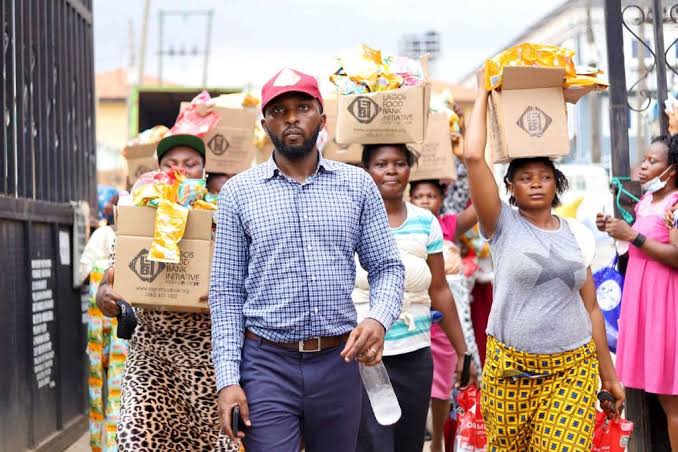
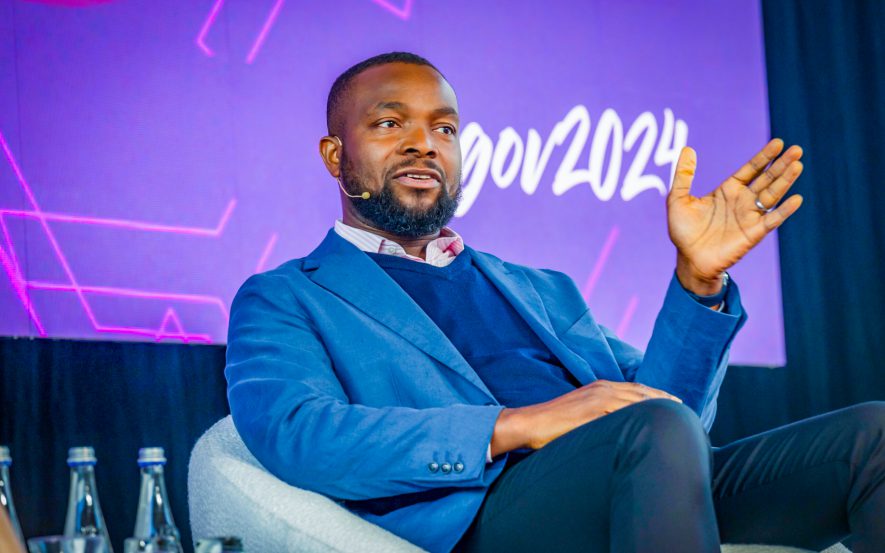
Founder/Executive Director of Lagos Food Bank Initiative, Dr Michael Sunbola, tells FELIX OLOYEDE how the not-for-profit organisation is helping Lagos residents overcome hunger

What inspired the Green Harvest Agri-food Initiative?

Green Harvest, of course, is an additional layer of the solution to hunger and malnutrition in Nigeria. On the broad spectrum, I’ve had a journey of being a humanitarian and a food system activist. That journey spans over 10 years already. What brought me to the development and humanitarian space still boils down to my childhood experience. And, of course, experiencing food insecurity, going to school, and not having lunch in school. And, of course, that kind of had an impact. In the sense that I was not interested in school; I felt I should be somewhere else rather than school. And I look at what impact that might actually be having on several families right now, several children. And, of course, that gave birth to the Lagos Food Bank, which then translated into serving families. And thereafter, the Green Harvest Agri-Food Initiative started to create a more sustainable pathway for beneficiaries to fend for themselves. Because we realise that the truth is we cannot distribute our way out of hunger. There has to be a more sustainable pathway for beneficiaries to fend for themselves, earn a decent income, become more economically viable, and grow healthy food by themselves while improving their income. So, that is what Green Harvest is about. I must also mention that Green Harvest focuses on curbing food waste.

Through the Agricultural Recovery Programme under Green Harvest, we partner with local farmers to recover surplus post-harvest produce. And then we, of course, have that redistributed to beneficiaries who are mostly in need of their daily meals. So instead of having a whole lot of food go to waste on the farms, what we do is partner with these local farmers and recover surpluses from them.

Do the farmers from whom you collect waste give it to you for free, or do you pay them?

We collect these items from them for a stipend. For instance, they might have sold a bunch of farm produce for maybe N500,000, and we pay them N50,000. Because instead of it going to waste, they could use that money to buy seedlings. So, it’s a stipend. It can’t be compared to the value. But if they don’t even get that, the entire produce goes to waste.

We see it as a way of supporting the farmers. So at least, it won’t be a total loss for them.

So, they can still buy seedlings; they can still do some basic things while we capture the rest and redistribute them.

How does this initiative plug into the initial objectives you had when you started the Lagos Food Bank 10 years ago?

The Green Harvest Agri-food initiative is the future of what we are doing at the Lagos Food Bank. Because we are now looking at food production, we are looking at empowerment for beneficiaries and getting them out of the hunger line. We are looking at also using the initiative to empower more families on a large scale. Also going to large-scale food production. So, most of what we are doing currently, while we understand it, still kind of focuses on interventions that are more into consumption. This focuses more on production, covering food waste and empowerment. We are also looking at smart agriculture. And some other innovations that are still coming in agriculture, like the Black Soldier Fly and all of that. All of it comes under Green Harvest Africa, Green Harvest Agri-Food Initiative.

In the short term, like five years, how much are you thinking of investing in this initiative?

In the next five years, I might not be able to give a specific figure for what would go into an investment. Because it is not a limited liability company, it is still a non-profit. But in terms of investment, we are still looking at how we are going to work with other development partners and how they can plug into investing. We might not be able to project value accurately, but we know we’ll be working with a lot of development partners.

See also  Nigeria’s eight-month debt service bill hits $2.86bn – CBN

What size of farm are you targeting?

We, of course, are looking at having farms. Right now, we are starting in the South-West.

Oyo State, Ogun State and the like. And the idea is for us to kind of control the supply chain for Lagos Food Bank. And we call that backward integration, where instead of getting some of this food, buying it, we could actually be producing it and then also serving it. It’s more like an initiative that helps us control our supply chain and helps improve income for beneficiaries. Because we are controlling our own supply chain through backward integration, we are also going to work with beneficiaries to empower them to grow their own food through backyard farming. There’s one for Lagos Food Bank, and there’s one for beneficiaries, like decentralised kind of farming where beneficiaries have their own farm in their backyards. It’s all part of the Green Harvest Aagri-food Initiative.

The United Nations, one of its agencies, said about 35 million Nigerians are facing hunger. What do you think is responsible for this large number of hungry people in the country? And how do you think we can tackle it holistically?

Hunger in Nigeria is widespread. It boils down to economic policies, the high cost of living, and the cost of fuel and other essential commodities. And when people can barely earn enough to make a living and sustain themselves, it, of course, leads to hunger and poverty. The NBS report, I think in 2023 or 2024, corroborates the fact that more than 60 per cent of our population are multidimensionally poor. Poverty breeds hunger and hunger breeds malnutrition.

I know there are short-term plans and there are long-term plans. We still have to look, in the short term, at how we can create more economic opportunities for people to earn a decent living. And how can the government look at some of its policies that would, of course, have a long-term impact on reducing the economic burden on the average person? And then we need to invest more in agriculture. We need to look at opening the borders, reducing the cost of food, and empowering more farmers to produce more food. It’s a matter of demand and supply. Food inflation is around 25 per cent or so. And we have the overall food inflation and headline inflation basically. So, if we are looking at all of this put together, they are major drivers of the high cost of food basically. Food prices should be reduced so the average person can afford food and, of course, eat decently and nutritiously.

The Family Farming Programme, under the Green Harvest Agri-food Initiative, focuses on training households in farming techniques. What successes have you recorded so far?

So far, we’ve empowered close to 6,000 families, women and youth. Families or households? Women, basically women and youth.  Because women, of course, empower the family. They produce and help the families in the long run. We’ve done direct beneficiaries over 6,000. And as we speak, they have their farms in their backyards; they have livestock; they are growing vegetables. But mainly, much of the income they make comes from livestock. Chickens, snails and the impact of our backyard farming is widespread as we speak.

And we are able to partner with a number of corporate organisations and institutional developments and institutions as well to kind of scale the Backyard Farming Programme. This is one of the most impactful programmes we currently run under the Green Harvest Agri-Food Initiative. And of course, you can look it up where you see the impacts are there.

See also  Dangote Cement begins Ivory Coast operations

The country still faces high post-harvest loss. How is the Agricultural Recovery Company of the Green Harvest working to rescue these losses?

So, essentially, we work with local farmers, smallholder farmers. And we also work with large-scale commercial farms to recover their surpluses, to cut food waste and to reduce the impact of the amount of food that goes into landfills. This, of course, drives climate change. But the most important thing is: how do we reduce food waste across the entire agricultural value chain? From the farmers, from the food processing companies, or from the entire value chain, basically. Food loss and waste happen across the value chain. And what we do is we partner with these farms. They call us, “We have excess; come and pick it up.” We do the cleaning, we do the harvesting, we do everything. Because we have the manpower to work with over 45,000 volunteers to achieve some of these recoveries from the farms.

We also work with corporates in large-scale food processing. They also call on us, and we can recover a lot of kilos.

Like last year, can you give me a figure of tonnes of food you were able to recover through this initiative?

Last year, working across the entire value chain with farmers and food processing companies, we were able to recover at least 45,000 kg. Yeah. No, kg. Could you convert this to tonnes and let’s see what we have? 45, to be small.

What is the black soldier fly all about?

Black soldier fly farming helps convert organic waste into livestock feed, using one of the most innovative agricultural practices. And working with smallholder farmers to support them with livestock feed. For us, it is still in the early stages. In the next two to three years, we ought to have scaled this black soldier fly farming so we can produce more livestock feed and convert more organic waste, helping farmers with livestock feed.

You once said there is a need for government to give tax incentives to corporates who support food, who make food available for people. Why do you think government should give incentive to them?

What the government can do basically is to provide as much incentive for corporates who have taken it upon themselves to provide through their corporate social responsibilities, some form of support for vulnerable people. And the way it is done in other climes, when the corporate organisations put their resources together, they get incentive, they get tax returns, and such support is not treated as an income or expense, and you don’t tax expenses. But here, a whole lot of corporates that still do corporate social responsibility, they struggle to get such incentive from the government and tax bodies do not exempt that expense. So, if it’s not exempted, it’s part of profit which will be taxed. But if it’s an exempted expense, then it will not be, that way, they can get their returns. They won’t bear the burden.

So, that is even the least we’re expecting that the government could do or work with an organisation like ours to give such relief or exemptions to corporates that are supporting. But just to kind of give a bit of context to what I said earlier, the government creates the enabling environment; it creates support for farmers; it creates economic opportunities for people to fend for themselves. And then gives enough incentive to those who support.

How is insecurity threatening some of your agricultural initiatives?

It means that our current production cannot meet the demands of our population. So, what that implies is that it becomes a major driver of high food costs or food inflation. Because I think our issue here in Nigeria is kind of complex, in the sense that we are not just looking at how to increase yields or farmers’ production; we are dealing with a calculated effort as a result of insecurity towards farmers. When they attack farmers, they are not just afraid to go to the farm; production drops, and demand rises. So, it’s a major driver, and I believe one of the things I feel I think is high time the government implement is the state police. They’ve been on it for more than, for over a decade; in fact, more than two decades. The conversation around state police, I think, is that it’s high time it should be implemented.

See also  Nigeria crude output misses OPEC quota eighth straight month

It was part of the current government’s campaign promises, and I think we are overripe for it. Honestly, state police should be implemented and fully actioned so that people’s lives, property and farmers can be protected across borders. And the state should take responsibility for its security.

So, you are saying that state police will help curb insecurity among farmers?

Yes. There’s nothing the Federal Government has done unilaterally that it does as efficiently as it does when it is decentralised. Look at NITEL, look at electricity, etc. If it’s centralised, they don’t have the bandwidth to carry it because of our population. The same point applies to the police. Decentralise it; let the state take responsibility, and that will reduce and depopulate what we have on the exclusive legislative list and move it more to the concurrent list. Let the state take responsibility; let the Federal Government take responsibility. And then decentralise it; the effort is better felt that way.

What are the biggest opportunities and challenges for scaling up Green Harvest Agri-food Initiative nationwide?

The biggest opportunity for us still remains the partnerships we could leverage to scale our intervention across the country. The number of partnerships and how many, of course, people come on board, because we are not a business. We are a non-profit, so the only way we can scale is through partnerships, and because many people still need this empowerment and intervention, and the amount of food that still goes to waste across the entire value chain is massive. So, the opportunities are there.

What are the challenges?

The challenges are mainly limited funding, which still holds back how far we can go. As a non-profit, we can only work with partnerships. If there are no partnerships, there is limited funding. There is no funding, there is no impact. And another challenge could possibly be the fact that if we tend to kind of scale, if the issue of security is not addressed, we are still challenged in that; we are still in that particular pool of challenges that other farmers are facing.

How much support do you get from the government?

Currently, what we are doing is 100 per cent private-sector-driven. The government provides us much more support, but not in any financial terms. And to an extent, maybe personnel support. But finances, I can say categorically, not for now, but we are not foreclosing the possibility of working with the government in the future.

We believe we complement the government’s efforts to bring relief to people. And at the right time, we feel that if the government deems it fits, I think we should come on board. Of course, we have built enough capacity to help the government address the immediate and long-term needs of those in the line of work.

What is your vision for the Green Harvest Agri-food Initiative over the next decade?

Food production, empowerment on a large scale. So, we are looking at having at least a presence in all 36 states in Nigeria. And not just serving people directly, but empowering them and creating economic opportunities for families, for farmers. We also want to become a major player in Nigeria’s entire food system and ecosystem. We also want to be a major player in food production and humanitarian relief.

Source: punchng.com

FOLLOW US ON:

FACEBOOK

TWITTER

PINTEREST

TIKTOK

YOUTUBE

LINKEDIN

INSTAGRAM

Continue Reading

Business

FG targets $1.2bn private funding for fibre project

Published

on

The Federal Government is seeking about $1.2bn in private capital for its planned 90,000-kilometre nationwide fibre network, as the project moves towards physical deployment in October with a newly incorporated company set up to drive its implementation.

Official records from the government and global financial institutions reviewed by The PUNCH show that $800m of the estimated $2bn cost of the Federal Government’s planned fibre network has so far been covered by sovereign financing commitments, leaving about $1.2bn of the project cost outstanding.

The $800m comprises a $500m World Bank facility approved in October 2025, a $100m loan from the European Bank for Reconstruction and Development approved in February 2026, and a $200m African Development Bank loan approved in April, the records show.

The private capital is not a funding requirement that must be met before implementation can start. Rather, it forms the larger remaining portion of the project’s estimated $2bn capital envelope, which the Minister of Communications, Innovation and Digital Economy, Bosun Tijani, pitched in 2024.

Strategic Communications Adviser to the Minister, Osibo Imhoitsike, told The PUNCH that Project BRIDGE had attracted substantial support from international development finance institutions and private-sector mobilisation through the transaction structure.

He confirmed that the sovereign financing secured to date included $500m from the World Bank, $200m from the African Development Bank and $100m from the European Bank for Reconstruction and Development. The European Union also provided a €22m grant for Project BRIDGE.

“The government has received a significant private sector investment offer as part of the PPP structure, and that process is currently being concluded,” Imhoitsike said.

See also  Automation is not tax hike, Abia govt defends reforms

The minister, Tijani, confirmed in August that physical rollout was expected to begin in October. The October date follows the incorporation of Bridge Open Access, or Bridge OA, in August as the special-purpose vehicle for the project.

“The establishment of the company signalled that the project was moving into its implementation phase, with the industry now expecting the October rollout,” Telecom consultant Ejike Onyeaso told The PUNCH.

“The industry is really looking forward to that because it will help reduce costs for not just mobile network operators but also internet service providers that rely on fibre, particularly in the hinterlands and underserved areas.”

In March 2025, his ministry formally opened an investor consultation process, inviting private-sector players to express interest in the Special Purpose Vehicle for the rollout under a public-private partnership model.

In April 2026, Tijani stated, “We’re now mobilising the private sector to plug the remaining gap,” after noting that over $800m had been raised from the government and World Bank for the project. The project is designed to take the national network from the current 35,000km to roughly 125,000km.

The World Bank said the programme would help close the country’s digital divide by expanding affordable, high-speed broadband to communities that remain unserved or underserved.

“The BRIDGE project puts into action the bold and ambitious vision to unlock the potential of the digital economy in Nigeria, working alongside the private sector,” World Bank Country Director for Nigeria, Mathew Verghis, said.

“Access to fast and reliable internet will help to create more quality jobs for millions of Nigerians across all 774 LGAs in addition to improving the quality of essential services like education and healthcare.”

See also  Nigeria crude output misses OPEC quota eighth straight month

Documents from the ministry show that investors are expected to hold a majority stake in Bridge OA, with equity ownership ranging from 51 per cent to 75 per cent and operational control of the company. The Federal Government, through the Ministry of Finance Incorporated, or MoFI, is expected to retain between 25 per cent and 49 per cent.

The structure is intended to bring private capital and operating expertise into a project in which the government is providing part of the financing while retaining a minority position.

Bridge OA will handle the financing and construction of the network and operate it as a wholesale open-access infrastructure company rather than a retail internet provider. It is expected to sell fibre capacity on equal and non-discriminatory terms to qualified operators, including telecommunications companies, internet service providers, banks and cloud providers, rather than directly serving end users.

The rollout had previously been targeted for the fourth quarter of 2025 or the first quarter of 2026, but large-scale construction was deferred as the government worked to establish the special-purpose vehicle, onboard private investors and complete the necessary procurement and implementation arrangements.

The project was initially expected to be implemented over about five years, with an initial target of roughly 30,000km in the first year before the pace increased as private capital and construction capacity were brought into the programme. Tijani has since revised the overall delivery period to three years, bringing forward the expected completion of the 90,000km network.

Source: punchng.com

FOLLOW US ON:

FACEBOOK

TWITTER

PINTEREST

TIKTOK

YOUTUBE

LINKEDIN

INSTAGRAM

Continue Reading

Business

FG woos Diaspora Nigerians for investments, knowledge transfer

Published

on

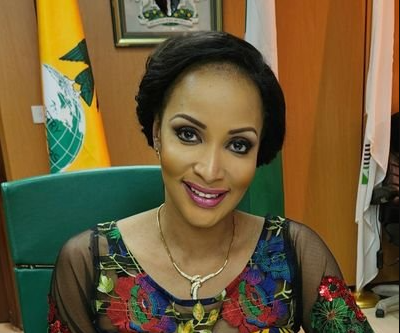
The Minister of Foreign Affairs, Amb Bianca Odumegwu-Ojukwu, has urged Nigerians in the Diaspora to deploy their expertise, investments, networks and global experience towards advancing Nigeria’s development.

Odumegwu-Ojukwu made the call at a town hall meeting with Nigerians in the Diaspora in New York on Wednesday evening, held on the sidelines of the United Nations General Assembly and attended by Vice President Kashim Shettima.

This was disclosed in a statement issued on Thursday in Abuja and signed by the Special Assistant on Communication and New Media to the minister, Magnus Eze.

According to the statement, the minister said the presence of the Vice President at the engagement underscored the importance the Federal Government attaches to Nigerians living abroad, their welfare, concerns and contributions to national development.

Odumegwu-Ojukwu described the Diaspora as an important pillar of Nigeria’s foreign policy, stressing that Nigerians abroad should be regarded as strategic partners rather than solely as contributors to the country’s economy through remittances.

“Nigerians abroad are more than a source of remittances. You are professionals, entrepreneurs, academics, innovators and important bridges between Nigeria and the international community,” the minister said.

She reaffirmed the Ministry of Foreign Affairs’ commitment to citizens diplomacy, which places the Nigerian citizen at the centre of the country’s diplomatic engagements.

She also directed Nigeria’s embassies, high commissions and consulates to remain accessible and responsive to Nigerians within their respective jurisdictions, particularly when citizens require legitimate consular assistance.

“The welfare of Nigerians abroad must remain a priority. Our missions must listen, engage and assist our citizens within the limits of international law and the laws of host countries,” she stated.

See also  Nigeria crude output misses OPEC quota eighth straight month

The minister, however, urged Nigerians in the Diaspora to respect the laws of their host countries and conduct themselves in ways that uphold the dignity and good name of Nigeria.

She called for stronger collaboration between the Federal Government and the Nigerian Diaspora in investment, innovation, knowledge transfer, mentorship and international business linkages.

“Your knowledge and international exposure are invaluable assets to our country. We want a stronger partnership with our Diaspora,” Odumegwu-Ojukwu said.

She encouraged Nigerians abroad to mentor young Nigerians, support innovation, establish partnerships with Nigerian institutions and connect Nigerian businesses and entrepreneurs to opportunities in international markets.

The minister described the town hall meeting as an important component of the government’s continuing dialogue with Nigerians abroad, noting that effective Diaspora engagement must be based on trust, openness and sustained communication.

She assured the gathering that the Ministry of Foreign Affairs would continue to work closely with the Nigerians in Diaspora Commission, Nigeria’s diplomatic missions and other relevant institutions to strengthen engagement with Nigerians overseas and advance their legitimate interests.

“Wherever you may reside, Nigeria remains our common heritage. Distance does not diminish citizenship. Where there are challenges, let us work together to address them; where there are opportunities, let us seize them together,” she said.

Odumegwu-Ojukwu further noted that Nigeria’s representation on the international stage extended beyond its diplomats, pointing to the millions of Nigerians whose achievements, professionalism and conduct contribute to the country’s global standing.

“Nigeria is represented internationally not only by its diplomats, but also by millions of Nigerians whose achievements, professionalism and character speak for our nation every day,” she said.

See also  FG weighs policy tweaks as Middle East war lingers

The minister assured Nigerians in the Diaspora that the Federal Government would continue to strengthen mechanisms for engagement, consular support and collaboration while creating opportunities for them to contribute meaningfully to national development.

“You are an important part of Nigeria’s story, and you are indispensable to Nigeria’s future,” the Minister told the gathering.

Source: punchng.com

FOLLOW US ON:

FACEBOOK

TWITTER

PINTEREST

TIKTOK

YOUTUBE

LINKEDIN

INSTAGRAM

Continue Reading

Trending