Connect with us

Business

FG seeks fresh $1.5bn World Bank loan

Published

on

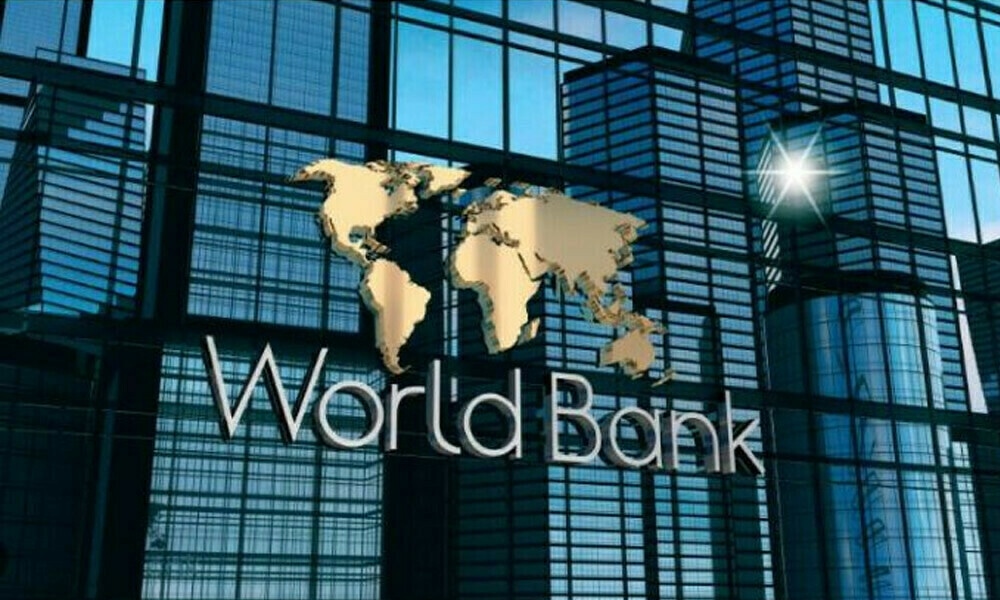
The Federal Government has opened discussions with the World Bank for three new loans totalling $1.5bn, even as Nigeria’s public debt climbed to a record N166.79tn at the end of June 2026.

Documents obtained from the World Bank show that the proposed financing comprises three separate $500m facilities for climate resilience, social protection and early childhood development.

The most immediate is a proposed $500m additional financing for the Agro-Climatic Resilience in Semi-Arid Landscapes project, known as ACReSAL. The World Bank has fixed October 29, 2026, as the estimated date for consideration by its board. The borrower is the Federal Republic of Nigeria, while the Federal Ministry of Environment is the implementing agency.

The financing would raise the size of ACReSAL from its previously approved $700m to $1.2bn, entirely financed through the International Development Association, the World Bank’s concessional financing arm.

The document said, “The Government of Nigeria has requested AF of $500m to scale up demonstrated project results and strengthen the institutional, operational and financing arrangements needed to sustain integrated landscape management.”

The additional financing is expected to support landscape restoration, watershed rehabilitation, erosion and flood management, irrigation and drainage, water harvesting and storage, reforestation and other climate-resilient interventions.

Of the additional $500m, $310m is proposed for dryland management, $165m for community climate resilience and $25m for institutional strengthening and project management.

ACReSAL currently operates across 19 northern states and the Federal Capital Territory and is targeted at land degradation, water insecurity, climate vulnerability and declining agricultural productivity.

The World Bank said desertification and land degradation affected an estimated 43 per cent of Nigeria’s land area, while failure to address climate change could reduce gross domestic product by about 2.6 per cent annually by 2030 and as much as 6.7 per cent by 2050.

The second proposed loan is another $500m IDA credit for the Household Prosperity and Empowerment-Social Protection Project.

Unlike the ACReSAL facility, the HOPE-SP project is at an earlier stage of preparation. Its technical design review is expected on October 30, 2026, while the World Bank has tentatively fixed March 16, 2027, as its approval date. The Federal Ministry of Finance is listed as the borrower, while the Federal Ministry of Humanitarian Affairs and Poverty Reduction will implement the programme.

The project has an estimated cost of $500m, comprising a $420m results-based programme and an $80m investment project financing component, with the entire financing expected from IDA.

It is designed to establish regular social assistance for poor and vulnerable households, while gradually shifting financing responsibility towards federal and state budgets.

The World Bank document said the programme would establish “a sustainable social assistance to poor and vulnerable households, financed increasingly from federal and state budgets and delivered through strengthened state and local government systems.”

The proposed programme would finance targeted unconditional and conditional cash transfers, modernise the social registry, integrate the National Identification Number into the social protection information system and strengthen implementation at federal, state and local government levels.

The lender said Nigeria spent only 0.14 per cent of GDP on social safety-net programmes in 2021, compared with a global average of 1.5 per cent and 1.2 per cent among lower-middle-income countries.

See also  U.S terminates all trade talks with Canada

The bank also painted a grim picture of household welfare, estimating that the proportion of Nigerians living in poverty had increased from 40 per cent in 2019 to 56 per cent in 2023 and could reach 62.5 per cent in 2026. It attributed the deterioration to several factors, including the pandemic, inflation, natural disasters and conflict, while noting that fuel subsidy removal and exchange-rate reforms worsened living costs in the short term.

The third proposed $500m facility is for the Nigeria Early Childhood Development programme, with an estimated approval date of March 15, 2027, a day before the proposed HOPE-SP approval. Its technical design review is also scheduled for October 30, 2026.

The Federal Ministry of Finance is the borrower, while the Federal Ministry of Budget and Economic Planning is expected to implement the programme.

The project would cover all 36 states and the FCT and seek to improve access to an integrated package of health, nutrition, early learning, childcare, water and sanitation, and other services for children aged zero to five.

It would be financed through $500m IDA credit, consisting of a $400m programme-for-results component and $100m investment project financing component.

The World Bank said the intervention had become necessary because “40 percent of children under five are stunted, fewer than half are developmentally on track, 36 percent of children aged 36 to 59 months attend organised early learning,” with poor rural households carrying much of the burden.

Debt jumps

The proposed borrowing comes as fresh figures from the Debt Management Office show that Nigeria’s total public debt rose by N14.39tn within one year, from N152.40tn in June 2025 to N166.79tn at the end of June 2026.

That represented an increase of 9.44 per cent year-on-year. Measured in dollars, however, the expansion was considerably larger. Public debt jumped by $21.27bn, or 21.35 per cent, from $99.66bn to $120.93bn over the same period.

The divergence reflects, among other factors, the stronger naira used in valuing the June 2026 external debt. The DMO applied an official exchange rate of N1,379.1842/$ in June 2026 compared with N1,529.2105/$ a year earlier. Consequently, dollar-denominated debt rose much faster than its naira equivalent.

On a quarterly basis, the debt stock increased by N7.44tn, or 4.67 per cent, from N159.35tn in March 2026 to N166.79tn in June.

In dollar terms, it rose by $5.98bn, or 5.20 per cent, from $114.95bn at the end of March. The June figures show that domestic liabilities remained the larger component of the debt portfolio.

Domestic debt stood at N91.59tn, representing 54.91 per cent of total public debt, while external debt amounted to N75.20tn, or 45.09 per cent. Domestic debt increased by N11.04tn, or 13.70 per cent, from N80.55tn in June 2025. In dollar terms, it climbed 26.07 per cent from $52.67bn to $66.41bn.

Between March and June 2026 alone, domestic debt rose by N4.19tn, or 4.79 per cent, from N87.40tn.

External debt moved from $46.98bn in June 2025 to $54.52bn in June 2026, an increase of $7.54bn or 16.05 per cent. Its naira value, however, rose by only N3.35tn or 4.66 per cent, from N71.85tn to N75.20tn because of the exchange-rate effect.

Quarter-on-quarter, external debt increased by $2.62bn or 5.05 per cent from $51.90bn in March to $54.52bn in June. Its naira equivalent increased by N3.25tn or 4.51 per cent.

See also  Food security fears mount as UK farmers battle drought

The Federal Government remained responsible for the overwhelming majority of the portfolio. Its domestic debt stood at N87tn in June, while states and the FCT owed N4.59tn domestically. Federal Government external liabilities were N65.77tn, compared with N9.42tn owed externally by states and the FCT.

Treasury bills

A closer examination of the Federal Government’s domestic liabilities shows that the growth was increasingly driven by Treasury bills and conventional naira bonds.

FGN domestic debt rose from N76.59tn in June 2025 to N87tn in June 2026, an increase of N10.41tn or 13.60 per cent. It also increased by N4.12tn or 4.97 per cent in the second quarter alone.

FGN bonds remained the dominant instrument at N64.84tn, accounting for 74.53 per cent of Federal Government domestic debt. The figure included N41.47tn in conventional naira bonds, N22.11tn in securitised Ways and Means advances and N1.27tn in domestic dollar bonds.

But Treasury bills recorded the sharpest absolute expansion. Outstanding Nigerian Treasury Bills jumped from N12.76tn in June 2025 to N19.48tn in June 2026, an increase of N6.72tn or 52.64 per cent within one year. Their share of Federal Government domestic debt consequently rose from 16.67 per cent to 22.39 per cent.

The increase was also concentrated in the second quarter. Treasury bills rose by N2.92tn, or 17.60 per cent, from N16.57tn in March to N19.48tn in June. Conventional FGN naira bonds increased by N4.94tn or 13.54 per cent year-on-year to N41.47tn and by N2tn or 5.08 per cent between March and June.

In contrast, the securitised Ways and Means balance declined from N22.72tn in March to N22.11tn in June, a reduction of N613.34bn or 2.70 per cent. Promissory notes also fell substantially, dropping from N1.73tn in June 2025 to N1.22tn in June 2026, a 29.81 per cent reduction.

FGN Savings Bonds, by contrast, rose 33.78 per cent from N91.53bn to N122.45bn, although they still represented just 0.14 per cent of domestic Federal Government debt.

Loans hit $20.73bn

The DMO figures further show why the proposed $1.5bn facilities are significant for Nigeria’s creditor profile. Nigeria’s outstanding debt to the World Bank Group reached $20.73bn at the end of June 2026, comprising $19.12bn owed to IDA and $1.61bn to the International Bank for Reconstruction and Development.

The combined exposure increased by $1.34bn or 6.93 per cent from $19.39bn in June 2025, when IDA debt stood at $18.04bn and IBRD debt at $1.35bn.

The rise accelerated during the second quarter of 2026. World Bank exposure increased by $907.09m, or 4.58 per cent, from $19.82bn in March to $20.73bn in June. IDA alone increased by $733.08m during the quarter, while IBRD exposure rose by $174.01m.

At $20.73bn, the World Bank Group accounted for about 38 per cent of Nigeria’s entire $54.52bn external debt stock at the end of June. IDA was by far Nigeria’s single largest identified external creditor, with its $19.12bn exposure alone equivalent to roughly 35 per cent of the country’s external debt.

Nigeria’s overall multilateral debt stood at $24.76bn, or 45.42 per cent of external debt. This means World Bank obligations accounted for roughly 84 per cent of the country’s multilateral debt.

See also  NAFDAC bans sachet and small-bottle alcohol in Nigeria

The remainder included $2.17bn owed to the African Development Bank, $1.01bn to the African Development Fund, $406.41m to the Islamic Development Bank and $314.98m to the International Fund for Agricultural Development, among others.

Commercial debt was almost as large as multilateral borrowing, reaching $23.16bn and representing 42.47 per cent of external liabilities. Eurobonds alone accounted for $18.55bn.

Other commercial obligations included $1.87bn owed to First Abu Dhabi Bank, $835.78m to Afreximbank and a $1.5bn First Abu Dhabi Bank total return swap.

Bilateral debt was considerably smaller at $6.61bn, representing 12.12 per cent of the external portfolio. China remained the largest bilateral source, with $4.91bn owed to the Export-Import Bank of China and another $573.53m to the China Development Bank. France accounted for $906.23m.

The creditor mix has shifted over the past year. In June 2025, multilateral institutions accounted for 49.36 per cent of Nigeria’s external debt, compared with 45.42 per cent in June 2026, despite an increase in their nominal exposure.

This reflects faster growth elsewhere in the external portfolio, particularly commercial borrowing. Eurobond liabilities increased from $17.32bn in June 2025 to $18.55bn in June 2026, while Nigeria also accumulated sizeable syndicated and other commercial obligations during the period.

The PUNCH earlier reported that former Vice-President Atiku Abubakar demanded a full reconciliation of Nigeria’s public debt, including new borrowings, Treasury Bills and controversial charges contained in the latest external debt-service records, as the country’s debt stock climbed to N166.79tn.

Atiku also demanded an apology from the President Bola Tinubu administration over the hardship Nigerians have experienced since the removal of the petrol subsidy and other economic reforms introduced in 2023.

The demands were contained in a statement on Saturday by Phrank Shaibu, Director of Strategic Communications of the African Democratic Congress Presidential Campaign Council.

“A government that says more money is coming in must explain why it keeps borrowing and why the people paying for its policies cannot see the promised gains,” Atiku said.

He urged the government to “identify the old debt newly recorded, the foreign debt whose naira value rose with the exchange rate, and every new loan contracted since he assumed office.”

Atiku also questioned the cost of servicing the country’s debt, arguing that rising obligations were limiting resources available for public services and development.

Reacting to the rising World Bank commitments to Nigeria, Lagos-based economist Adewale Abimbola said loans from multilateral institutions such as the World Bank are largely concessionary, with interest rates typically below market levels and longer repayment tenors.

He noted that the critical question is not whether Nigeria should be borrowing, but whether the loans are structured and deployed effectively. “If it’s concessionary and tied to viable projects with medium-term revenue prospects, I don’t think it’s a bad idea,” Abimbola explained. “Borrowing isn’t bad; what matters is utilisation.”

He stressed that the economic impact of such loans depends on how well they are channelled into projects that can generate sustainable growth, strengthen revenue, and improve public services over time.

Source: punchng.com

FOLLOW US ON:

FACEBOOK

TWITTER

PINTEREST

TIKTOK

YOUTUBE

LINKEDIN

INSTAGRAM

Continue Reading
Click to comment

Leave a Reply

Your email address will not be published. Required fields are marked *

Business

Crude hits $107 as Qatar brokers fresh Iran talks

Published

on

Crude oil prices rose to $107 per barrel on Monday from $104, before retreating to $105 as Qatar planned fresh talks between the United States and Iran in a renewed effort to end the war and reopen the Strait of Hormuz.

According to Reuters, the proposed diplomatic engagement comes amid continued disruptions to oil shipments through the strategic waterway, raising concerns about global energy supplies and contributing to volatility in crude oil prices.

Qatari mediators were expected to hold separate talks with Iranian Foreign Minister Abbas Araqchi in New York and the United States side on Monday or Tuesday, according to an official briefed on the negotiations, Reuters reported on Monday.

The discussions were expected to focus on an amended version of a seven-day proposal presented by Iran last week on the sidelines of the United Nations General Assembly.

Iran’s semi-official ISNA news agency confirmed that Araqchi would meet the mediators in New York to discuss the latest proposals for resolving the conflict. The talks are expected to “examine the latest proposals and views regarding the current situation”, ISNA reported.

Iran’s seven-day proposal envisages an end to hostilities in Iran and Lebanon, the unfreezing of billions of dollars in Iranian assets, the removal of sanctions on Iranian oil and the lifting of the US blockade on Iranian ports.

In return, Tehran would allow the reopening of the Strait of Hormuz, while both countries would resume negotiations on Iran’s nuclear programme.

US President Donald Trump rejected the initial proposal on Saturday, arguing that Iran was seeking a quick agreement because of the economic pressure it was facing.

However, Trump told Axios on Sunday that he expected US negotiators to hold further talks with Tehran this week, leaving the door open for renewed diplomatic efforts.

See also  Class of 99: Create cottage industries, not N5,000 palliative – Former Govs tell Tinubu

Araqchi had earlier said Iran was yet to receive an official communication from mediators conveying Washington’s rejection of the proposal, adding that Tehran was awaiting the US position before deciding its next steps.

The Iranian government, meanwhile, has maintained that it is prepared to negotiate an end to the conflict but will not accept coercion.

The Strait of Hormuz, a major route for global oil shipments, has been severely disrupted by the conflict, which began on February 28 following US and Israeli strikes on Iran.

The disruption has heightened concerns over global crude supplies, with the latest price movement reflecting continued uncertainty surrounding the conflict and prospects for reopening the waterway.

As of press time, it could not be confirmed whether the talks had taken place, owing to the time difference between Nigeria and New York.

Source: punchng.com

FOLLOW US ON:

FACEBOOK

TWITTER

PINTEREST

TIKTOK

YOUTUBE

LINKEDIN

INSTAGRAM

Continue Reading

Business

Abuja court ruling opens fresh battle on Fuel import, read details

Published

on

The Federal High Court in Abuja’s order directing the Nigerian Midstream and Downstream Petroleum Regulatory Authority to continue granting and renewing petroleum products import licences has opened a fresh battle over fuel imports as domestic refining capacity expands.

The ruling has put the court’s decision in Abuja alongside a pending suit by Dangote Petroleum Refinery at the Federal High Court in Lagos, where the refinery is challenging the continued issuance and renewal of petroleum product import licences.

While petroleum marketers have welcomed the Abuja judgment and called for continued access to import licences, the development has also renewed debate over whether domestic refineries should be protected from import competition and whether the Petroleum Industry Act provides an adequate framework for the changing market.

The marketers, under the Petroleum Products Retail Outlets Owners Association of Nigeria and the Independent Petroleum Marketers Association of Nigeria, said competition between local refiners and importers could improve petrol availability and affordability for Nigerians.

This follows the issuance of import licences that have allowed the importation of an average of 95.7 million litres of petrol per day, translating to a total of 23.2 billion litres between January and August 2026.

Abuja ruling

The PUNCH reports that a Federal High Court in Abuja, presided over by Justice Inyang Ekwo, ordered the NMDPRA to continue granting, issuing, extending, renewing or reissuing petroleum products import licences to Matrix Energy, A.A. Rano Nigeria Limited and AYM Shafa Limited.

Justice Ekwo, in his judgment, held that the regulator’s refusal to issue or renew the import licences of the three oil marketers was in “direct non-compliance” with the Petroleum Industry Act, 2021.

The judge held that the NMDPRA had acted beyond the provisions of the law in its handling of the companies’ applications for import licences. He said the consequence of non-compliance with the PIA and other relevant laws was that any exercise by the regulator in respect of the import licences would be “null and void.”

The three oil marketers had approached the court seeking declarations that the PIA did not prohibit the importation of petroleum products into Nigeria or prevent the NMDPRA from granting or renewing licences for eligible importers.

They also argued that the regulator was required to promote competition in the midstream and downstream petroleum sectors.

Justice Ekwo agreed with the plaintiffs, holding that relevant provisions of the PIA, read together with Section 72 of the Federal Competition and Consumer Protection Act, imposed an obligation on the NMDPRA to promote a competitive market and prevent abuse of dominant positions and restrictive business practices.

The judge declared that the three companies were entitled to the issuance, extension or renewal of petroleum products import licences upon fulfilling the conditions stipulated by the NMDPRA.

Specifically, the court ordered the regulator to “continue to grant, issue, extend, renew, or reissue” licences, permits and authorisations for midstream and downstream petroleum operations, particularly those relating to the importation of petroleum products.

The order, however, was subject to the companies fulfilling all applicable statutory and regulatory preconditions. The plaintiffs’ case was based on the alleged refusal of the NMDPRA to regularly issue or renew their petroleum products import licences.

In an affidavit, the Executive Director of A.A. Rano Nigeria Limited, Sabiu Saidu Mahuta, alleged that since July 2025, the regulator had granted or renewed the companies’ import licences only sporadically.

He argued that the situation was contributing to market dominance and monopolisation of the downstream petroleum sector by local refineries. The companies also told the court that they had collectively invested more than $20bn in infrastructure, logistics and retail networks for their petroleum products businesses.

Their counsel, Raji Ahmed, SAN, argued that allowing both imports and local production would promote competition, check monopoly and price-fixing, and improve the midstream and downstream petroleum sector.

The Abuja ruling is coming even as the Dangote refinery has a pending suit praying the court to stop the NMDPRA from issuing import licences to the Nigerian National Petroleum Company Limited and other marketers.

Dangote’s pending suit

The Federal High Court in Lagos had in June fixed October 7 to hear a suit filed by the Dangote refinery challenging the Federal Government’s issuance of fuel import licences to NNPC and several petroleum marketers.

The Dangote refinery, in suit No. FHC/L/CS/857/2026, is requesting the court to nullify import licences allegedly issued or renewed around May 6, 2026, in favour of the NNPC and marketers, including NIPCO, AA Rano, Matrix, Shafa, Pinnacle, and Bono.

See also  NAFDAC bans sachet and small-bottle alcohol in Nigeria

The plaintiff further argued that the licences were granted in violation of an earlier court order made on 29 April 2026, which directed all parties to maintain the status quo pending the suit’s resolution.

With both cases before courts of coordinate jurisdiction, the Abuja ruling could complicate the refinery’s legal challenge, particularly as it was not a respondent in the Abuja suit and may therefore be unable to appeal the judgment directly.

The regulator recently approved 830,000 metric tonnes of petrol imports for the fourth quarter of 2026, with Matrix Energy, A.A. Rano and AYM Shafa among six companies issued permits.

Oil marketers speak

Reacting to the Abuja judgment, the National President of PETROAN, Billy Gillis-Harry, described it as a victory for Nigerians, arguing that diversifying supply sources would help address concerns over the availability and cost of petrol.

“The court ruling means a lot. It means victory for the Nigerian people. Once every stakeholder in the industry is focused on ensuring that there is availability of petroleum products, then affordability issues will become something that will be addressed,” he said.

He added, “So it is a victory for the Nigerian people, not just retail outlet owners or marketers. So we congratulate all those who have stood firm to face the tyranny of monopoly and get answers.”

Gillis-Harry also commended the petroleum regulator, saying the judgment reinforced its responsibility to serve consumers and maintain a competitive market. “We salute NMDPRA. It tells us that they are not ready to take sides with anybody. They are there to serve Nigerians, and we look forward to greater days ahead,” he said.

However, the PETROAN president called for the continued issuance of import licences to be extended beyond the three companies involved in the case.

He said, “However, the licensees should not be limited to only the three companies. It should be available to every company that has the capacity to import products and supply Nigerians at an affordable price and available to everyone.”

“In our opinion, supply diversification will guarantee affordability of petroleum products,” he added.

Similarly, the National Publicity Secretary of IPMAN, Chinedu Ukadike, said the judgment should be respected, adding that marketers would continue to purchase products from suppliers offering competitive prices.

“Well, the court is a court of justice, and I know that they have looked at the pros and cons. They also looked at the document submitted before it, and they reviewed the Petroleum Industry Act,” Ukadike said.

He added, “While the refinery can meet up with domestic demand, as I said before, it is a court ruling that must be obeyed.” Ukadike described the judgment as a win-win for marketers, saying their purchasing decisions would depend on the prices offered by domestic refineries and importers.

“If Dangote is producing and it’s cheap, we will look at it and buy from them as marketers. On the other hand, if products from importers are cheaper, we would also buy from them,” he said. “Our business is to ensure that we continue to service and buy products at the cheapest rate and sell to our numerous consumers.”

Different rulings

Speaking with our correspondent, a major marketer, who pleaded for anonymity because of the sensitivity of the matter, expressed concerns over the manner in which operators in the midstream and downstream sectors resorted to courts of coordinate jurisdiction to settle their disputes.

According to the operator, it is sad that the courts are being used as weapons to fight battles in an industry that is supposed to be peaceful. He stated that the marketers appeared to have proved a point that Nigeria belongs to everybody.

“It is sad that we found ourselves in this situation. We now have different courts giving rulings in favour of different groups. It is sad that a court in Lagos ruled that a company in a free zone is not under the regulator. How is that possible?

“It is also sad that a court in Abuja ruled in favour of these marketers without listening to other parties. I think the marketers just wanted to prove that nobody has a monopoly on the courts. But the issue is that Dangote still has a case challenging importation in court. Let’s see how it goes,” the operator said.

However, the Vice President of IPMAN, Hammed Fashola, maintained that the cases were necessary to test the position of the PIA in court.

Fashola advised all operating partners and regulatory bodies within the oil and gas downstream sector to resolve ongoing legal disputes without jeopardising the steady availability and distribution of petroleum products across the country.

See also  FG rolls out plans to lift 50 million Nigerians out of poverty by 2030

Speaking over parallel court cases involving major sector operators regarding petroleum importation regulations under the PIA, IPMAN Vice President, Fashola, emphasised that testing legal frameworks in court remains a legitimate avenue for clarifying ambiguous statutory provisions.

“First of all, if there is any dispute, I think the right place to go is the court. Don’t forget that we have the PIA, and if there is any issue that is controversial, the best place is to approach the court for interpretation,” Fashola said, adding that stakeholders should await judicial outcomes or pursue an amicable round-table dialogue to align market operations.

Fashola maintained that litigation should not spark alarm or trigger product scarcity, expressing confidence that higher courts remain accessible to resolve any conflicting judicial interpretations that may arise during initial proceedings.

“They are in the high courts now. I think the Appeal Court is still there and the Supreme Court is also there. So, they will explore all the legal avenues that are available. So, I think the case will be resolved,” he stated.

He urged all parties to prioritise consumer supply and maintain current distribution stability while legal and regulatory clarifications are finalised.

“Dangote, the importers, and every stakeholder—we should just appeal to them that we should not do anything that will interrupt the peace that we are enjoying now, especially the availability of products in the country,” he urged.

“It’s good they subject the PIA to a test. I think that’s what they are doing. At the end of the day, they will still come back to the round table and resolve it. And if they cannot do that, I think the court will resolve everything, and everybody will know how the game should be played as far as oil and gas is concerned and in relationship with the PIA,” Fashola submitted.

Experts react

Reacting, an energy sector expert, Mr Dan Kunle, called for an immediate amendment of the PIA, warning that its current provisions regarding petroleum product importation are outdated and economically unviable for the country.

Kunle noted that while recent judicial interpretations upholding import permissions may align strictly with the written letter of the PIA, the law itself no longer reflects Nigeria’s prevailing economic reality.

According to him, the PIA was enacted at a time when the country relied solely on inefficient, state-owned refineries, long before mega private refining infrastructure such as the Dangote refinery became operational.

“If you go by the provisions of the Petroleum Industry Act, the court is just trying to align with the law. But at the time the PIA was passed, lawmakers did not foresee that a refinery of this magnitude would come on stream to meet all our domestic needs. The law is no longer current; it is completely out of tune,” Kunle stated.

He argued that legal provisions must align with economic rationality, stressing that continuing to allow unchecked importation of refined products when domestic refining capacity exists undermines national interest and state protection.

Kunle advised the Federal Government and regulatory bodies, including the NMDPRA, to transmit an executive bill to the National Assembly to review the Act.

He proposed that under an amended PIA, the power to permit fuel imports should be discretionary and strictly tied to national strategic needs, such as mitigating supply shortages, rather than serving as a default market mechanism.

“At times, certain actions are legal by law, but they are not economically rational. You cannot justify importing inferior products when you have superior local production capacity, simply under the guise of preventing a monopoly. The state must protect its economy against foreign importation while retaining a strictly regulated window for contingency imports,” he added.

Gradual end to imports

The Crude Oil Refinery-Owners Association of Nigeria has called for a gradual end to petrol imports, lamenting that some domestic refineries are struggling to obtain crude oil on commercially viable terms despite the country’s abundant resources.

The Chairman of CORAN, Momoh Oyarekhua, made the call on Monday at the third Nigeria Oil Refining Summit organised by the association in Lagos.

Oyarekhua said the difficulties faced by some local refineries in securing crude had contributed to the continued importation of petroleum products, despite the availability of domestic refining capacity.

He said, “We acknowledge the remarkable progress made in domestic refining. Local refining is increasingly transforming Nigeria’s fuel supply landscape, demonstrating what is possible when investment, policy, and industry align.

See also  U.S terminates all trade talks with Canada

“However, significant challenges remain. Despite our abundant crude resources, some domestic refineries continue to face difficulties accessing crude oil on commercially viable terms. At the same time, fuel imports persist while local refining capacity remains underutilised.”

To address the challenges, the CORAN chairman called for the full institutionalisation of the naira-for-crude policy, with transparent access for qualifying domestic refineries, including modular plants.

He also urged the Federal Government to strengthen enforcement of the Domestic Crude Supply Obligation under Section 109 of the Petroleum Industry Act, while preserving commercial arrangements between crude producers and refiners.

Oyarekhua proposed a domestic crude pricing framework that would reflect crude quality, delivery points, international logistics costs avoided, and actual domestic transportation expenses.

He also advocated crude swaps and proximity-based supply arrangements to enable oil-producing assets close to refineries to supply them without transporting crude through distant export terminals.

On petroleum product imports, he called for a progressive reduction, with imports restricted to objectively determined domestic supply shortfalls and strategic stock requirements.

“Refining for value means more than producing fuel. It means retaining foreign exchange, creating jobs, developing local expertise, supporting petrochemicals and manufacturing, and capturing greater economic value within Nigeria,” he said.

The chairman said the continued importation of petroleum products despite available local refining capacity represented a major challenge to Nigeria’s efforts to derive greater economic value from its crude resources.

Oyarekhua said, “Nigeria should not continue exporting crude, exporting jobs and importing the same petroleum products at considerable economic cost.”

The CORAN chairman also called for a dedicated financing framework to support the construction of new refineries and the expansion of existing facilities.

He said the proposed framework should provide long-term financing, guarantees and refinancing mechanisms to address the funding challenges facing refinery operators.

Meanwhile, economist Mustafa Chike-Obi has argued that domestic refineries should not receive indefinite protection from import competition.

Speaking on the Policy without Politics podcast with development economist Dr Ken Ikpe, the former Chairman of Fidelity Bank Nigeria said, “I am an opponent of refineries having an unlimited period of time while their products are banned from competition.

“For protection, I think there should be a time. But once you are insisting on protection, it just tells me that you don’t think you can compete with imports. Now what it will tell you is that the quality is not the same.

“Look, when we’re importing fuel, no Nigerians are going to complain about the quality. We’re not interested in higher quality for sure. We just want petrol that can work.”

On the continued rehabilitation of the government-owned refineries in Port Harcourt, Warri and Kaduna, the former banker questioned the rationale for committing more public funds to facilities he described as old and inefficient.

“Talking about this turnaround stuff, I find this very curious. Should the Federal Government, which owns refineries in Port Harcourt, Warri and Kaduna, deserve another round of turnaround? They should not be involved in that business at all.

“So they shouldn’t go there. If we go there, it’s a runaround; it’s not a turnaround. It may be more than a runaround. It may be a runaround with devious intentions.”

Asked what he meant by “devious intentions,” Obi replied, “Diversion of funds. Because it’s a good way to divert funds.

“You say you’re turning it around, and then the money disappears and nothing happens. We’ve seen this many, many times. And this is not an attack on this government, but we’ve seen it through successive governments.”

He said the government should instead acknowledge that the refineries had become technologically outdated and redirect investment towards more efficient facilities and industries.

“It’s going to work next week. There’s fire in Port Harcourt. So I think the whole idea of the emotional investment is that those refineries are old.

“They are old technology. They will never be as efficient as the Dangote refinery. They will certainly not be as efficient as the foreign equivalent.

“And it’s just a waste of time, and it’s an emotional thing. And so we should stay away from those kinds of things and focus on industries and refineries that are efficient. And these ones will never be efficient.

“So yes, I subscribe to the theory that it’s a runaround, and that’s the best you can say about it. It could be worse than that.”

Source: punchng.com

FOLLOW US ON:

FACEBOOK

TWITTER

PINTEREST

TIKTOK

YOUTUBE

LINKEDIN

INSTAGRAM

Continue Reading

Business

Oil prices spike after Trump rejects Iran truce offer

Published

on

Oil prices spiked with bond yields Monday as Donald Trump’s rejection of an Iranian offer of a seven-day truce stoked inflation concerns, while stocks were mixed as traders look ahead to the release of key US data.

Tehran last week set out a plan at the UN General Assembly for a halt in hostilities that would see the Strait of Hormuz reopened, which would ease a crippling supply crisis that has jacked up costs around the world.

The waterway is key to the world’s energy supply and is now central to the conflict between the US and Iran, particularly with Houthis seizing Yemen’s entire Red Sea coast, including the Bab al-Mandab Strait, a vital shipping lane.

However, the US president told reporters outside the White House, “I reject their proposal.”

Still, he told Axios that he expects negotiations to resume.

“They want to make a deal, but it is not the deal that I want to make,” he told the news platform. “It is what we would have maybe agreed to a year ago.”

“They overplayed their hand,” Trump added in the interview published Sunday.

Citing sources familiar with the matter, Axios reported that indirect talks between Washington and Tehran could take place as early as Monday.

Iran was still standing by its conditions for reopening the Strait, including the release of frozen assets, the lifting of sanctions on its oil and an end to the US naval blockade.

Oil prices, which fell more than two per cent Friday on news of the offer, bounced back at the start of the new week, with Brent surging more than three per cent back above $107 a barrel.

See also  Debt dispute: Drama as Max Air pilot refuses to fly

That stoked inflation concerns again, and weighed on stock markets.

Seoul fell 2.7 per cent as it reopened after a long break, while Tokyo, Shanghai, Manila, Mumbai, Bangkok and Jakarta also dropped.

There were gains in Hong Kong, Sydney, Singapore and Wellington, while London, Paris and Frankfurt were also on the front foot.

Bond yields climbed, with the average on a gauge of world bonds topping four per cent last week for the first time since 2007, according to Bloomberg.

The rise in prices puts the focus back on the Federal Reserve ahead of its next policy meeting at the end of October, with CME’s FedWatch tool putting the chances of a second successive interest rate hike at more than 65 per cent.

Before that decision is made, investors will see the release of the bank’s preferred gauge of inflation this week as well as a key jobs report that could play a vital role in policymakers’ thinking.

“Middle East tensions have flared again after President Donald Trump rejected Iran’s latest proposal to reopen the Strait of Hormuz,” wrote Stephen Innes at Quintex Intel.

“Oil has pushed higher, Asian equities are softer, and suddenly the brief Friday reprieve in global fixed income looks more like an intermission than the end of the show.”

Still, he added: “The market is still pricing some probability that everyone eventually finds their way back to the table, even if they continue to spend the next few weeks shouting across it first.”

– Key figures at around 0810 GMT –

West Texas Intermediate: UP 2.2 per cent at $94.50 per barrel

See also  Shell’s $5bn Bonga S’West project gets presidential support

Brent North Sea Crude: UP 2.5 per cent at $106.96 per barrel

Tokyo – Nikkei 225: DOWN 0.7 per cent at 65,877.62 (close)

Hong Kong – Hang Seng Index: UP 0.5 per cent at 24,642.51 (close)

Shanghai – Composite: DOWN 1.7 per cent at 3,823.62 (close)

London – FTSE 100: UP 0.4 per cent at 10,736.87

Dollar/yen: DOWN at 156.78 yen from 157.20 yen on Friday

Euro/dollar: DOWN at $1.1382 from $1.1399

Pound/dollar: DOWN at $1.3266 from $1.3251

Euro/pound: DOWN to 85.80 pence from 86.03 pence

New York – Dow: UP 0.9 per cent to 51,828.62 (close)

AFP

Source: punchng.com

FOLLOW US ON:

FACEBOOK

TWITTER

PINTEREST

TIKTOK

YOUTUBE

LINKEDIN

INSTAGRAM

Continue Reading

Trending