Connect with us

Business

Pipeline outages delay 42.6m barrels of oil

Published

on

Nigeria’s oil and gas industry deferred approximately 42.55 million barrels of crude oil and condensate in 2025, with the affected production carrying an estimated market value of $2.97bn.

This was mainly caused by pipeline failures, terminal disruptions, equipment breakdowns and maintenance activities continued to constrain output.

The Nigerian Upstream Petroleum Regulatory Commission disclosed this in its 2025 annual report, which showed that an average of 116,563 barrels per day was deferred during the year, representing crude oil and condensate that operators could not produce as scheduled owing to operational and infrastructure challenges.

Deferred production is crude that could not be produced or evacuated at the planned time because of operational problems, pipeline outages, maintenance, terminal limitations and other disruptions. Some of the barrels may be recovered later, but prolonged deferment can reduce immediate export earnings and government revenue.

An analysis of the monthly figures showed that October recorded the highest daily deferment of 172,761 barrels, followed by December with 169,786 barrels and March with 169,856 barrels per day.

July recorded the lowest deferment at 25,780 barrels per day.

The October figure was 146,981 barrels, or 570.1 per cent, higher than July’s, indicating a significant deterioration in production performance during the period.

The estimated $2.97bn value was calculated by applying the monthly average prices of Nigeria’s Bonny Light crude grade to the corresponding deferred production volumes.

United Capital’s 2025 Economic Review and 2026 Outlook put the average Bonny Light price at $70.88 per barrel in 2025, down from $82.40 in 2024, representing a 14 per cent decline.

See also  FG, AFC ink $1.3bn mining investment deal

The estimate represents the indicative gross market value of the deferred barrels and not confirmed revenue lost by the Federal Government or oil companies, as some deferred production could be recovered later.

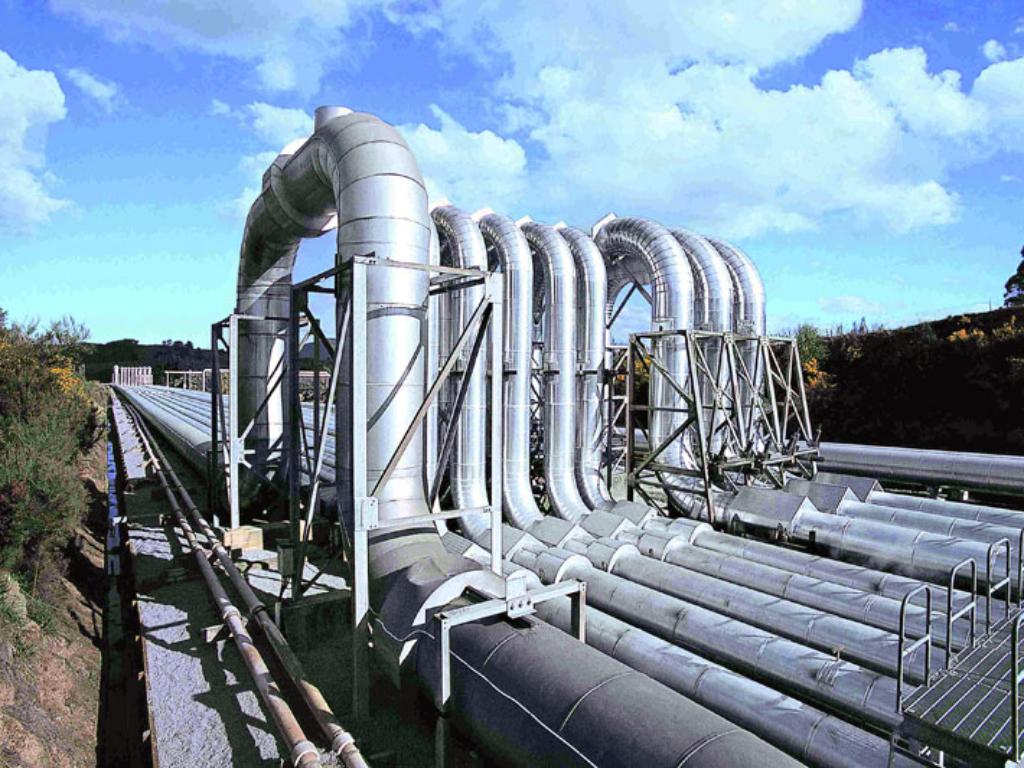
The NUPRC report identified pipeline outages, particularly on the Trans Niger Pipeline, Nembe Creek Trunk Line and Trans Forcados Pipeline, as the most prevalent causes of production deferment during the year.

It stated, “The most prevalent reason for deferment during the year was outage of key pipelines (TNP, NCTL & TFP), technical and operational challenges such as planned maintenance, vessel/tanker loading delay at terminal leading to shut-in of wells also contributed greatly to deferment.”

The report’s findings highlight how Nigeria’s efforts to increase crude oil production and maximise earnings from its petroleum resources continue to face challenges beyond oil theft and pipeline vandalism.

Production deferment occurs when an oil company is unable to produce or evacuate crude oil at the planned rate because of problems affecting wells, production facilities, pipelines, storage terminals or export infrastructure.

Unlike oil theft, which involves the illegal taking of crude, deferment refers to production that is delayed or temporarily shut in. Although some of the affected barrels may be produced later, prolonged disruptions can reduce immediate export volumes, foreign exchange inflows and government receipts.

The January figures showed that the industry deferred 76,002 barrels per day, valued at approximately $190.37m for the month, using the average Bonny Light price of $80.80 per barrel.

The situation worsened in February, when daily deferment increased to 134,793 barrels, representing a 77.4 per cent rise from January. The affected volume was valued at about $290.99m.

See also  Nigeria suffers nearly N1tn export loss after Trump tariff

In March, deferment climbed further to 169,856 barrels per day, a 26 per cent increase from February, with the estimated value reaching $391.76m, the highest monthly amount recorded during the year.

Although the figure declined to 113,132 barrels per day in April and 102,480 barrels in May, production disruptions persisted.

June recorded 55,445 barrels per day, while July dropped to 25,780 barrels before rising to 95,639 barrels in August and 115,081 barrels in September.

The October deferment of 172,761 barrels per day translated to approximately 5.36 million barrels for the month, with an estimated market value of $354.54m.

November and December also recorded elevated deferment levels of 169,340 and 169,786 barrels per day, respectively.

The December figure represented a 123.4 per cent increase over January’s 76,002 barrels per day, underscoring the persistence of production constraints towards the end of the year.

Pipeline and terminal problems featured prominently among the disruptions recorded by the commission.

Source: punchng.com

FOLLOW US ON:

FACEBOOK

WHATSAPP CHANNEL

TWITTER

PINTEREST

TIKTOK

YOUTUBE

LINKEDIN

INSTAGRAM

Continue Reading
Click to comment

Leave a Reply

Your email address will not be published. Required fields are marked *

Business

FG seeks fresh $500m World Bank loan, read details

Published

on

The Federal Government is seeking a fresh $500m loan from the World Bank to establish an infrastructure financing platform, with the proposed approval scheduled for 25 May, 2027, just four days before the inauguration of Nigeria’s next president.

The proposed borrowing comes as political activities intensify ahead of the 2027 general elections, raising questions about the timing of fresh financial commitments and their implications for the incoming administration.

According to the World Bank’s Initial Project Information Document, obtained by The PUNCH on Sunday, the facility forms part of a broader $3.85bn infrastructure financing initiative designed to attract private investment into critical sectors of the Nigerian economy.

The document, prepared and updated on 4 November, 2026, identifies the initiative as the Nigeria Infrastructure Financing and De-Risking Platform for Growth and Jobs, otherwise known as INFRAGROW.

The Federal Ministry of Finance is listed as the borrower, while the Nigeria Sovereign Investment Authority will serve as the implementing agency.

The bank has scheduled the project’s technical design review for 21 January, 2027, while its estimated approval date is 25 May, 2027.

Nigeria’s presidential inauguration is constitutionally scheduled for 29 May, 2027, following the expiration of the current four-year presidential term.

The timing means the proposed facility could receive World Bank approval in the final days of President Bola Tinubu’s current term, although approval would not necessarily mean immediate disbursement or implementation.

The proposed financing has not yet been approved, and the World Bank’s published timetable remains subject to change.

The document puts the country’s annual infrastructure financing shortfall at approximately $100bn, identifying inadequate investment and weak project preparation as major obstacles to economic growth.

See also  Top banks raise tech budget by 43% in Q1

It stated, “Nigeria’s infrastructure financing gap, estimated at approx. $100bn annually, remains a binding constraint on growth, fiscal sustainability, competitiveness, and job creation.”

The bank explained that the challenge extended beyond insufficient funding to the difficulty of converting available capital into commercially viable infrastructure investments.

It added, “Closing the financing gap therefore requires an integrated approach that combines rigorous project preparation, appropriately calibrated de-risking instruments tailored to each project’s residual risk profile, and targeted sectoral reforms to strengthen the operating environment.”

The proposed $500m World Bank financing comprises $400m from the International Bank for Reconstruction and Development and $100m from the International Development Association.

The wider $3.85bn financing structure also includes contributions from government, private investors, commercial lenders and guarantees intended to encourage additional investment.

Under the arrangement, the NSIA is expected to contribute $200m in equity as a founding shareholder, while private sector investors would provide another $200m.

Commercial debt financing is projected at $600m, alongside other financing and guarantee arrangements.

The World Bank document also identifies $100m in IDA payment guarantees and $2.25bn in guarantees from other international financial institutions, bringing the guarantee-related financing arrangements to $2.35bn.

The financing arrangement is expected to operate through four independently governed subsidiaries, each designed to address a particular obstacle to infrastructure investment.

The first, the Project Preparation Facility, will finance feasibility studies, transaction structuring, risk assessments and procurement support to help transform infrastructure proposals into projects capable of attracting investment.

The second, the Viability Gap Fund, will provide financial support for economically important projects that cannot generate sufficient commercial returns while maintaining affordable tariffs or sustainable government payments.

See also  NLC strike ultimatum fuels Labour-FG tension

The document explained, “Under the proposed endowment model, the VGF would preserve its capital base and finance viability-gap support primarily from investment returns.”

The third subsidiary, the Risk Capital Facility, will provide equity and other forms of patient capital to infrastructure projects that are commercially viable but struggle to attract investors willing to bear higher risks.

The fourth, the Credit Guarantee Vehicle, will provide guarantees against specified credit defaults, public-sector payment failures and political risks affecting eligible foreign investments.

According to the bank, these interventions are intended to encourage participation by commercial banks, pension funds, insurance companies and other institutional investors.

The project will also support reforms to strengthen public institutions responsible for identifying, preparing, procuring and supervising public-private partnership projects.

Its implementation will be divided into four components covering institutional development, project preparation, financing mobilisation and improvements to the regulatory environment.

The first component will finance staffing, professional advisory services, statutory fees and operational infrastructure, with disbursements linked to measurable institutional milestones.

The second will support project preparation and financial viability, while the third will activate the risk capital and credit guarantee facilities. The fourth will strengthen government capacity to manage infrastructure partnerships and their associated fiscal risks.

The World Bank said, “The proposed Nigeria INFRAGROW project is an institution-building and private capital mobilisation operation intended to expand sustainable infrastructure in Nigeria.”

The project will also involve the International Finance Corporation as a prospective co-investor, alongside the Multilateral Investment Guarantee Agency, which is expected to provide political risk insurance.

See also  Nigeria suffers nearly N1tn export loss after Trump tariff

The bank has classified the proposed project’s environmental and social risks as high, particularly because the financing platform could support major infrastructure developments in energy, transport and water.

It warned that such investments could involve land acquisition, displacement of communities, environmental damage, occupational hazards and other social consequences.

Source: punchng.com

FOLLOW US ON:

FACEBOOK

WHATSAPP CHANNEL

TWITTER

PINTEREST

TIKTOK

YOUTUBE

LINKEDIN

INSTAGRAM

Continue Reading

Business

PHOTOS: Yangwang Altior is China’s answer to the Rolls-Royce Ghost

Published

on

China’s BYD has announced its entry into the ultra-luxury sedan segment with the Yangwang Altior. The new flagship model has just been revealed at an event in Abu Dhabi. It is positioned to compete with high-end luxury limousines like the Rolls-Royce Ghost and Mercedes-Maybach S-Class.

The Altior measures around 5.5 meters in length and has a sleek, stately-looking exterior. The front fascia is derived from the Yangwang U8 SUV and features a large rectangular grille and unique LED lights. It even has rear-hinged doors. No points for guessing where the designers got their inspiration from.

The interior offers exactly what you would expect from an uber-luxury sedan. Almost every panel is wrapped in soft leather. The dashboard has a minimalistic look and houses a massive full-width touchscreen and a 2-spoke steering wheel. The Altior comes in a four-seater configuration.

Reports suggest that the Yangwang Altior could use BYD’s e4 platform with four electric motors and solid-state batteries.

BYD hasn’t announced the pricing for the Yangwang Altior. However, reports indicate that it might cost around 2 million yuan, which is approximately $280,000.

FOLLOW US ON:

FACEBOOK

WHATSAPP CHANNEL

TWITTER

PINTEREST

TIKTOK

YOUTUBE

LINKEDIN

INSTAGRAM

See also  NLC strike ultimatum fuels Labour-FG tension
Continue Reading

Business

Paraguay president resigns after digital bank collapse leaves millions without access to savings

Published

on

Paraguayan President Santiago Peña has resigned following the intervention of digital lender Ueno Bank, which left nearly three million customers unable to access their accounts and triggered widespread protests and calls for his removal.

Peña announced his resignation on Thursday, November 5, saying he was stepping down to protect national stability, social peace and the country’s democratic institutions.

“I do so with the stability of our country, social peace and the need to preserve our democratic institutions in mind,” he said in a recorded address.

The resignation came as pressure mounted on the president, with opposition lawmakers pushing for impeachment proceedings and members of his own conservative Colorado Party withdrawing their support.

The crisis erupted after Paraguay’s central bank intervened in Ueno Bank, initiating a resolution process after discovering that the digital lender’s solvency ratio had fallen below half the legally required minimum.

The intervention left approximately three million customers, representing a significant portion of Paraguay’s 6.5 million population, unable to access their savings and other funds.

Ueno had rapidly expanded into one of the country’s major financial institutions, reportedly holding between $800 million and $850 million in public-sector funds, including money linked to state pension and healthcare institutions.

The bank’s crisis also raised questions about Peña’s previous business connections to its parent company, Grupo Vázquez. The president had been a shareholder in the group until March 2025, prompting lawmakers to accuse his administration of conflicts of interest, misuse of pension funds and attempts to cover up irregularities.

See also  Counterfeit empire: Lagos electronics market where fake products sustain luxury

Peña denied wrongdoing, while promising that those responsible for financial irregularities would face justice. He also called for the recovery of depositors’ funds and the protection of public money.

The crisis has resulted in the detention of several Ueno executives as prosecutors investigate suspected financial misconduct. The central bank chief had also resigned earlier in the week following the controversy.

In a further political development, Paraguay’s lower house voted 78–0 to approve impeachment proceedings against Peña shortly after he announced his resignation. The matter was subsequently referred to the Senate.

Vice President Pedro Alliana is expected to succeed him, although the formal transition remains subject to the constitutional process surrounding Peña’s resignation and impeachment.

The banking crisis has shaken confidence in Paraguay’s financial system, with protesters demanding the return of their savings and accountability from officials connected to the bank’s intervention.

Source: tribuneonlineng.com

FOLLOW US ON:

FACEBOOK

WHATSAPP CHANNEL

TWITTER

PINTEREST

TIKTOK

YOUTUBE

LINKEDIN

INSTAGRAM

Continue Reading

Trending