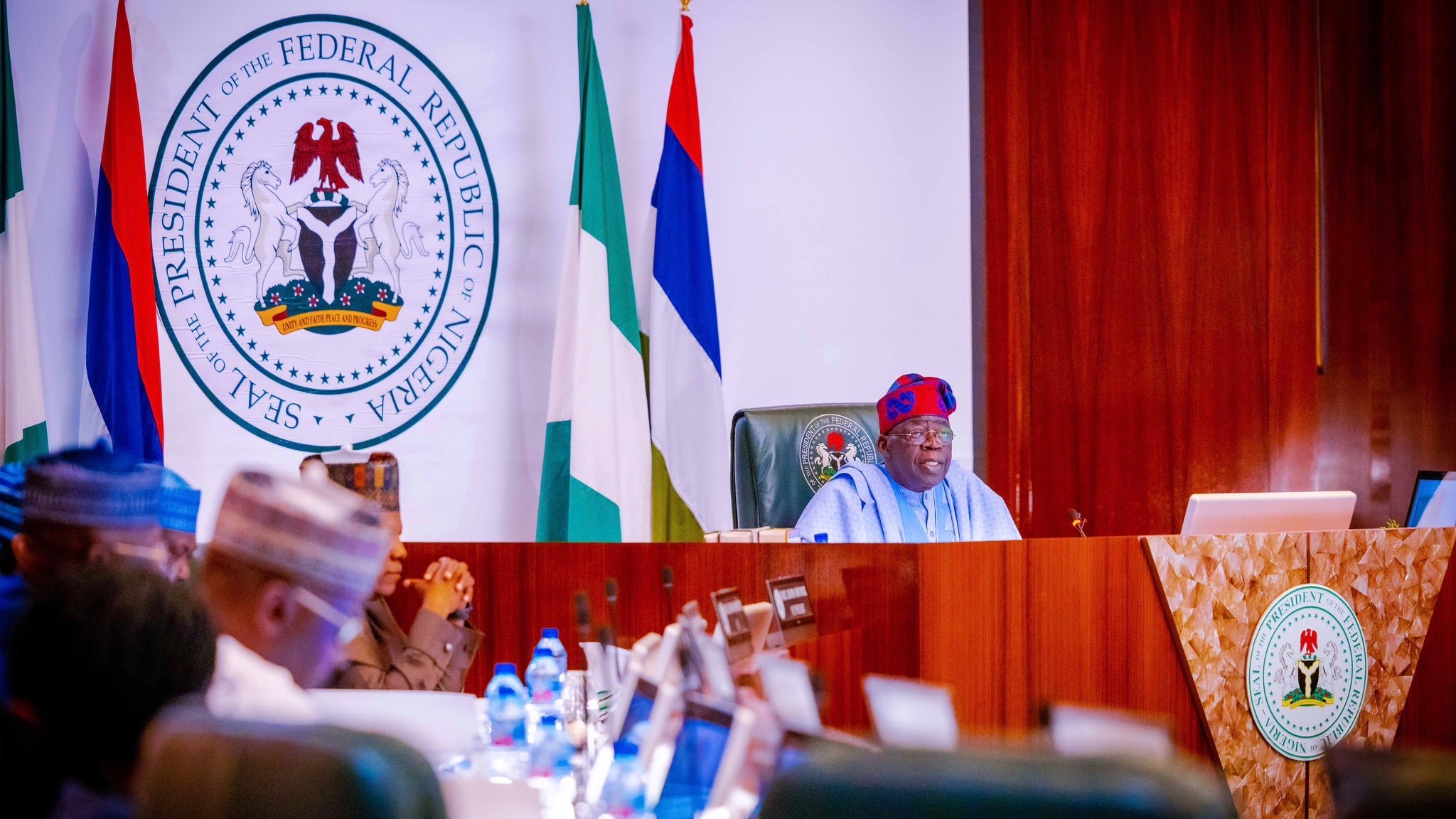
President Bola Tinubu has withdrawn the pardon earlier granted to 175 convicts, including drug traffickers, kidnappers and fraudsters, following public outrage that trailed the initial clemency list released on October 11.
This came as the President ordered a review of the pardon granted at the National Council of State meeting on October 9, 2025.
A statement issued Wednesday by the President’s Special Adviser on Information and Strategy, Bayo Onanuga, said, “Consequently, certain persons convicted of serious crimes such as kidnapping, drug-related offences, human trafficking, fraud, unlawful possession of firearms/arms dealing, etc., were deleted from the list. Others who had been hitherto pardoned in the old list had their sentences commuted.”
According to the Presidency, the decision followed consultations with the Council of State and public feedback, undertaken “in furtherance of the President’s discretionary powers under Section 175(1) and (2) of the 1999 Constitution (as amended).”
“This action became necessary in view of the seriousness and security implications of some of the offences, the need to be sensitive to the feelings of the victims of the crimes and society in general, the need to boost the morale of law-enforcement agencies, and adherence to bilateral obligations,” the statement continued.
It further noted that “the concept of justice as a three-way traffic for the Accused, the Victim, and the State/Society also guided the review.”
Tinubu’s reversal comes three weeks after a storm of criticism greeted the inclusion of Maryam Sanda, convicted in 2020 and sentenced to death for killing her husband, Bilyaminu Bello, the son of a former PDP national chairman, on the original pardon list.
About 29.2 per cent of those pardoned had been convicted of drug-related offences, the largest category. Another 24 per cent were sentenced for illegal mining, followed by homicide, corruption, and human trafficking.
The Nigerian Bar Association’s Section on Public Interest and Development Law had urged the President to rescind what it called “a grave error of judgment,” warning that “granting mercy to a convicted murderer sends the wrong signal about accountability and deterrence.”
The Federal Government, through the office of the Attorney-General of the Federation and Minister of Justice, Lateef Fagbemi (SAN), said the earlier is being re-evaluated.
In an official gazette dated October 23, 2025, released by the AGF on Wednesday, the Presidency announced a revised set of instruments reducing the number of beneficiaries from 175 to 120, with several high-profile names, including convicted killer Maryam Sanda, reclassified under reduced terms of imprisonment.
Fagbemi explained that the exercise followed the President’s approval after a due-process review of the initial recommendations presented to him earlier by the Presidential Advisory Committee on Prerogative of Mercy.
He said the review became necessary after the President, upon consultations with the Council of State, received concerns about the initial list of beneficiaries and ordered a reassessment to ensure strict adherence to legal and procedural standards.
“During this final review, a few persons earlier recommended were found not to have met the requirements and were accordingly delisted, while in some other cases, sentences were reviewed and reduced to reflect fairness, justice, and the spirit of the exercise,” Fagbemi stated.
The President also directed the relocation of the Secretariat of the Presidential Advisory Committee on Prerogative of Mercy from the Ministry of Special Duties to the Federal Ministry of Justice.
He also instructed the Attorney-General of the Federation to issue new guidelines for exercising the prerogative of mercy, mandating “compulsory consultation with relevant prosecuting agencies” before any list is approved.
“This will ensure that only persons who fully meet the stipulated legal and procedural requirements will henceforth benefit from the issuance of instruments of release,” the Presidency said, adding that the approved list of eligible beneficiaries has been transmitted to the Nigerian Correctional Service for implementation.
Tinubu, who appreciated the constructive feedback and engagement from stakeholders and the general public, reaffirmed his administration’s broader commitment to judicial reforms and improving the administration of justice in Nigeria.
The review, contained in four separate documents obtained by The PUNCH, Pardon, Clemency, Reduced Terms of Imprisonment, and Commutation of Death Sentences, delisted individuals convicted of serious crimes such as drug trafficking, kidnapping, human trafficking and armed robbery from the original roll, while retaining only 15 full pardons largely confined to historic or non-violent cases.
Among those removed are Maryam Sanda, previously marked for a full pardon but now listed under a reduced term of 12 years imprisonment, and several drug convicts whose clemency was withdrawn entirely.
The final Presidential Pardon list contains 15 names, down from 82 previously. It retained four contemporary corruption-related beneficiaries: Anastasia Nwaobia, Hussaini Umar, Ayinla Alanamu and Farouk Lawan, alongside the historic cases of Herbert Macaulay, Maj.-Gen. Mamman Vatsa and the Ogoni Nine activists were executed in 1995. However, at least 55 recipients, including Nweke Chibueze, Dr. Nwogu Peters, and Abiodun Elemero, no longer appear in any of the four final lists. The individuals had previously been marked for pardon despite convictions for cocaine importation and fraud.
Fifteen inmates serving various prison terms were granted clemency based on good conduct, remorse, and rehabilitation. They include Oroka Michael Chibueze, Adesanya Olufemi Paul, Daniel Bodunwa, Hamza Abubakar, Buhari Sani, Mohammed Musa, Muharazu Abubakar, Ibrahim Yusuf, Saad Ahmed Madaki, Ex-Corporal Michael Bawa, Richard Ayuba, Adam Abubakar, Emmanuel Yusuf, Chinedu Stanley, and Johnny Ntheru Udor. The Presidency said these individuals had either completed vocational training or demonstrated exceptional discipline during their incarceration, making them suitable for early release or reduced sentences.
In the category of death sentences commuted to life imprisonment, four inmates: Emmanuel Baba, Abubakar Usman, Khalifa Umar, and Mohammed Umar, were spared the death penalty. The Presidency explained that their sentences were reduced after a review of their records, which showed consistent good behaviour, remorse, and participation in rehabilitation programmes. This, it said, aligns with Nigeria’s gradual shift toward restorative justice rather than retributive punishment.
The Presidential Pardon (Grant of Pardon), 2025 category featured 15 names, including four living Nigerians and several posthumous cases regarded as symbolic redress for historical injustices. Among the living beneficiaries are former public officials Mrs. Anastasia Nwaobia, Hussaini Alhaji Umar, Ayinla Saadu Alanamu, and Farouk Lawan, all of whom were convicted for corruption-related offences but have served their sentences. Others on the pardon roll are Herbert Macaulay and Major-General Mamman Jiya Vatsa, both honoured posthumously, as well as the nine executed Ogoni activists: Ken Saro-Wiwa, Saturday Dobee, Nordu Eawo, Daniel Gbooko, Paul Levera, Felix Nuale, Baribor Bera, Barinem Kiobel, and John Kpuine.
Persons granted reduced terms of imprisonment and sentence include: Yusuf Owolabi, convicted of manslaughter and sentenced to life imprisonment, who had served 10 years. His sentence was reduced to 15 years based on educational improvement, remorsefulness, and the acquisition of vocational skills. Ifeanyi Eze, convicted for manslaughter and having served four years of a life sentence, had his term reduced to 15 years based on similar grounds. Malam Ibrahim Sulaiman, convicted of armed robbery and unlawful possession of a firearm, was sentenced to life imprisonment and had served two years and five months. His sentence was reduced to 15 years in recognition of his good conduct and remorse. Patrick Mensah, Obi Chukwu, Tunde Balogun, Lima Diego, Uchegbu Michael, Salawu Samsudeen, Napolo Osariemen, Odeyemi Omolara, and Dias Santos Christiana, all convicted for drug-related offences, had their sentences reduced on grounds of educational improvement, remorsefulness, acquisition of vocational skills, deportation consideration, and/or old age. Ibrahim Hameed, convicted for obtaining property under false pretence, was sentenced to seven years and had served three years. His sentence was reduced to five years based on remorsefulness and old age.
Isaac Justina, Aishat Kehinde, Helen Solomon, Okoye Tochukwu, and Ugwu Eze Paul, convicted for offences related to cannabis sativa, had their sentences reduced on grounds of remorsefulness and vocational training. Mustapha Ahmed, convicted of criminal breach of trust and sentenced to seven years without an option of fine, had served two years and ten months. His sentence was reduced to five years based on good conduct and remorsefulness.
Abubakar Mamman, sentenced to ten years for possession of firearms (AK-47), had served five years. His sentence was reduced to seven years for good conduct and remorsefulness. Muhammed Bello Musa, sentenced to ten years for possession of firearms, had served five years. His sentence was also reduced to seven years for good conduct. Nnamdi Anene, convicted for illegal dealing in firearms and sentenced to life imprisonment, had served 15 years. His sentence was reduced to 20 years based on remorsefulness, good conduct, and vocational skill acquisition. Abubakar Tanko, convicted of culpable homicide and sentenced to 30 years, had served seven years. His sentence was reduced to 20 years for good conduct and remorsefulness.
Innocent Brown Idiong, convicted for possession of 700 grams of Indian hemp, was sentenced to ten years and had served four years and three months. His sentence was reduced to six years due to remorse and old age. Iniobong Nuikidem, convicted for obtaining money by false pretence and sentenced to eight years, had served three years and four months. Her sentence was reduced to five years in recognition of her remorse. Ada Audu, convicted of fraud and sentenced to seven years, had served two years and seven months. Her sentence was reduced to four years on account of old age and remorsefulness.
Bula Adamu, convicted for advance fee fraud and sentenced to 20 years, had served five years and two months. His sentence was reduced to nine years based on good conduct and remorsefulness. Chukwuelu Sunday Calistus, convicted for drug offences and sentenced to life imprisonment, had his sentence reduced to 20 years for good conduct and remorsefulness. Markus Yusuf, convicted of culpable homicide and sentenced to 13 years, had his sentence reduced to nine years based on ill health. Samson Ajayi, convicted for drug offences and sentenced to 15 years, had his term reduced to ten years based on remorsefulness, vocational training, and good conduct.
Rakiya Bleida, convicted of theft and cheating, was sentenced to seven years without an option of a fine. Her sentence was reduced to five years for good conduct. Jonathan Alatoru, convicted of conspiracy to cheat and sentenced to seven years, will now serve six years due to remorse and age. Seventy-year-old Umana Ekaette Umana, convicted of forgery, was sentenced to ten years. Utom Udoaka, convicted of obtaining money by false pretence and sentenced to seven years, had served four years and two months. Her sentence was reduced to six years on account of remorsefulness and old age. Frank Inshort Abaka, Sluna Aolo, David Akinseye, Ahmed Toyin, Shobojo Saheed, Adamoje Philip, Mathew Masi, Bright Ayedegyi, and Babangida Saliu were all convicted of conspiracy to hijack a fishing vessel and sentenced to 12 years and a N4m fine. Their sentences were reduced to eight years, and the fines were waived in recognition of their remorse and impecuniosity.
Thirty-nine-year-old Adamu Sanni was sentenced to three years’ imprisonment for unlawful misappropriation and had served one year of that sentence. His sentence was reduced to two years based on remorsefulness, good conduct, and an undertaking signed on 2 April 2025 by Senator Ikran Bilbis for rehabilitation and empowerment after release. Thirty-year-old Abdulkareem Salisu was sentenced to three years for unlawful misappropriation and had served one year of that sentence. His term was also reduced to two years on similar grounds.
Abdulaziz Lawal, Abdulrahman Babangida, Muharazu Alidu, Zaharadeen Baliue, Babangida Usman, Zayyanu Abdullahi, Imam Suleman, Abbeeb Amisu, Lawani Lurwanu, Yusuf Alhassan, Abdullahi Isah, Zayanu Bello, Habeeb Suleman, Shefiu Umar, Seidu Abubakar, Haruna Abubakar, Rabiu Seidu, Macha Kuru, Zahraadeen Aminu, Nazipi Musa, Abdullahi Musa, Habibu Safiu, Husseini Sani, Musa Lawali, Suleiman Lawale, Yusuf Iliyasu, Sabiyu Aliyu, Haliru Sani, Shittu Aliyu, Sanusi Aminu, Isiaka Adamu, Mamman Ibrahim, Shaibu Abdullahi, Sanusi Adamu, Sadi Musa, and Haruna Isa, all convicted for unlawful mining, had their sentences reduced on grounds of remorsefulness, good conduct, and undertakings signed on 2 April 2025 by Senator Ikran Bilbis for rehabilitation and empowerment after release.
‘Tinubu encouraging criminals’
Reacting to Wednesday’s announcement, the Peoples Democratic Party accused President Tinubu of promoting impunity by favouring individuals with questionable records while neglecting patriotic Nigerians who have served the nation with integrity. It argued that the process exposes confusion within the administration.
The party’s Deputy National Youth Leader, Timothy Osadolor, told The PUNCH on Wednesday that the confusion over the list exposes the disorganisation within President Bola Tinubu’s administration.
Osadolor stated, “This back and forth over the list of pardoned offenders further amplifies the level of disorganisation within the ranks of the presidential aides and the government of President Bola Ahmed Tinubu in general. These policy somersaults, which have continued to affect and turn the lives of ordinary Nigerians upside down, are also evident in the handling of this particular list.
“It is as though, one moment a decision is made in the morning, another is reversed in the afternoon, and by evening, the same decision is reviewed again. This back and forth is unacceptable. A well-thought-out policy process should not be subjected to such public ridicule and confusion as we are witnessing now.
“Again, this situation reflects where the steadfast loyalty of the President and his aides lies. It appears misplaced. While the government should be focusing on identifying and punishing hardened criminals, it seems instead to be protecting or rehabilitating them.
“Meanwhile, millions of soldiers who lost their lives defending Nigeria, and those who fought during the civil war, as well as nationalists and patriots such as environmentalist and humanitarian activists like Ken Saro-Wiwa, remain unrecognised and uncelebrated. Yet, known gunrunners, drug peddlers, murderers, and assassins are being pardoned or having their convictions reduced. The President is pardoning individuals previously convicted of heinous crimes, after initially granting them amnesty. Even with the outcry from well-meaning Nigerians, this would have been a disaster and a slap in the face of justice and national integrity.”
“These trends and misplaced priorities reflect a troubling regionalisation of governance and a disregard for national cohesion. One wonders where the loyalty of the President, his aides, and his government truly lies, is it to serve the Nigerian people or to protect elements working against the nation’s progress?”
The PDP Deputy National Youth Leader urged President Tinubu to resign if he cannot effectively manage the country’s affairs.
He continued, “Some of these individuals, rumoured to be his friends or associates from past affiliations, appear to benefit unduly from government decisions.
Nigeria is too great a country to be subjected to this kind of endless experimentation with the lives, emotions, and livelihoods of its people.
“Just as the government has wavered in addressing insecurity, food scarcity, and economic instability, its policies have remained inconsistent and ill-conceived. I would advise the President: it is neither a crime nor a shame to step aside. Even if he completes only one term, he will still be respected globally as a former President of Nigeria.
“On this note, I urge President Bola Ahmed Tinubu to search his conscience. If he truly means well for Nigerians, this is the time to step aside honourably. Let him not wait for Nigerians to vote him out of power, because by then, he may not even be in full control of the process.”
MOSOP links presidential pardon to planned oil resumption in Ogoniland
However, the Movement for the Survival of the Ogoni People has rejected the gesture, describing it as “not something to celebrate.”
In a statement by its Publicity Secretary, Imeabe Saviour, MOSOP said while it acknowledged that the President did not rescind the posthumous pardon for the Ogoni Nine, the group remains “unimpressed” by what it called a political ploy tied to oil resumption in Ogoniland.
“Yes, we heard that the names of some persons granted presidential pardon were dropped. Since I appreciate that the President did not reject those of the Ogoni in light of the recent pardon, we say the pardon is not something to celebrate.
“The people of Ogoni are not interested in the pardon. Our message to the President is that, inasmuch as we see this as a kangaroo step by him to talk about oil resumption in Ogoniland, we insist that the $300m belonging to the people of Ogoni and currently with the NNPC must be released,” MOSOP said.
The group demanded that, before any discussion on oil resumption can take place, the Federal Government must consider the creation of Bori State from the present Rivers State and ensure the Ogoni Clean-Up Project runs its full 30-year course.
Saviour continued, “As we speak, they are not close to that because the Federal Government has refused to pay its counterpart funding. Mr President must know that oil resumption in Ogoni is not something he should consider now, except he wants to cause another crisis in Ogoniland, the same way it was orchestrated by the then-military administration of the late Gen. Sani Abacha, who killed many Ogoni people.
‘Act of shame’
Former Vice President Atiku Abubakar on berated President Tinubu over the controversial pardon and subsequent reversal granted to convicted husband-killer, Sanda, describing the move as “an act of shame” and evidence of a government that “thinks after it acts.”
In a statement signed by his aide, Phrank Shaibu, Atiku accused the administration of lacking foresight and moral consistency, following Tinubu’s decision to revoke the earlier pardon granted to Sanda and several other convicts.
“Once again, Nigerians have witnessed a government that doesn’t lead — it reacts,” Atiku said.
“President Bola Tinubu has ‘cancelled’ his own pardon for drug traffickers, kidnappers, and other hardened criminals — but only after Nigerians shouted loud enough to wake him from his moral slumber.
“Let’s be clear: this U-turn is not an act of wisdom, it’s an act of shame.”
He questioned the process that led to the initial inclusion of Sanda and other convicts on the list, demanding transparency from the presidency.
“Who compiled the list of beneficiaries? What criteria justified freeing kidnappers and drug offenders? Where was the Attorney-General when this absurdity was cooked up? And why does this government only ‘discover its conscience’ after Nigerians express outrage?” Atiku asked.
Describing the pardon saga as “a national embarrassment,” he added that the presidency’s frequent reversals on policy decisions showed Nigeria was being “governed without foresight, without empathy, and without shame.”
“If the President truly means well, let him publish the list of all those who were meant to benefit from this scandal. Until then, this cancellation is nothing but damage control — too little, too late,” he said.
The remarks came amid widespread reactions trailing Tinubu’s revocation of the earlier pardon granted to Sanda, who was sentenced to death in 2020 for murdering her husband, Bilyaminu Bello.
While the Labour Party commended the President for bowing to public pressure, the New Nigerian Peoples Party faulted the administration’s inconsistency.
NNPP spokesperson, Ladipo Johnson, said, “It is disgraceful that the President of the Federal Republic of Nigeria will announce pardons and then the presidency will say they want to vet and go over it again.
“Given public opinion, it’s not a surprise that they have reversed it, but it just shows that the presidency needs to get its act together.”
However, Labour Party interim National Publicity Secretary, Tony Akeni, commended Tinubu’s decision to listen to public sentiment, saying, “What Tinubu has demonstrated is that he listened to the people of Nigeria. We commend him for that.”
He urged the President to extend such responsiveness to “issues that affect Nigerians,” including the nation’s debt profile and policies that “promote hunger and hardship.”
punch.ng
FOLLOW US ON: