Connect with us

Education

Nigerian scholar wins China study tour

Published

on

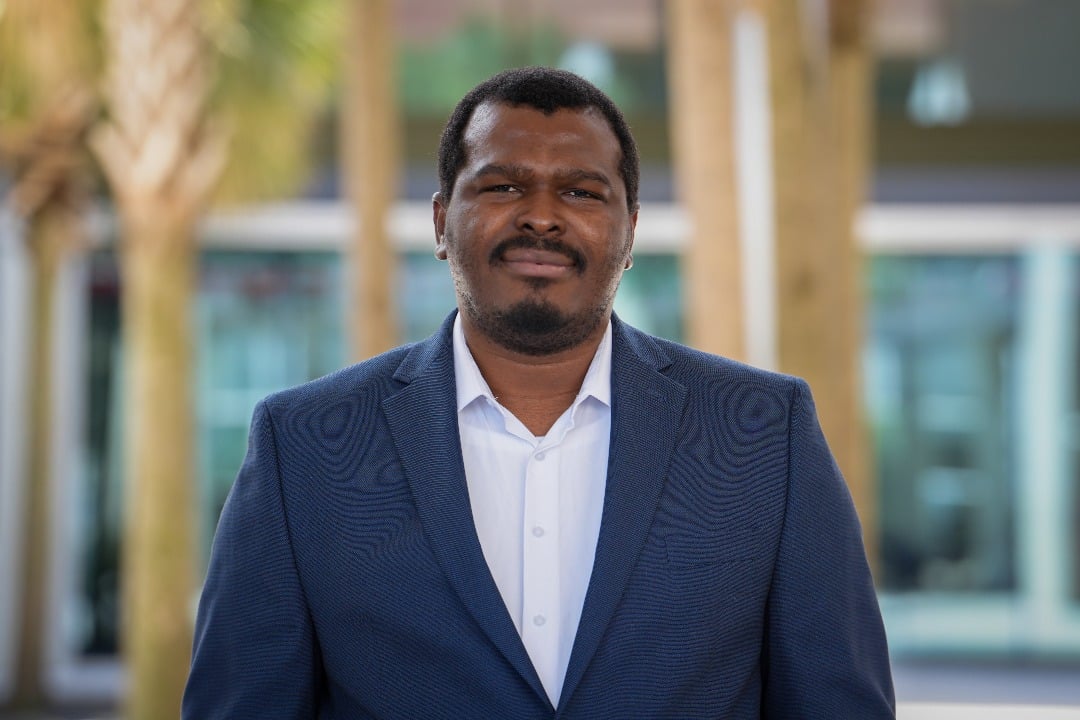
A United States-based Nigerian scholar, Collins Obidiagha, has emerged among twelve participants selected from over 100 applicants for the prestigious China Business Immersion Programme, a study and business tour aimed at exposing participants to China’s evolving economic and business ecosystem.

Obidiagha, an international MBA candidate at the Darla Moore School of Business, University of South Carolina, shared insights from the programme in a feedback publication titled, “Nigerian Scholar in the US Shares Lessons for Nigeria’s Economic Rebirth.”

He described engagements with major corporations, including Xiaomi and Syngenta, and interactions with students and leaders at Peking University and Jiaolong as providing valuable lessons on how infrastructure drives national growth.

He said, “China’s infrastructure operates like a well-oiled machine. It never ceases to amaze me that an order can be delivered almost anywhere in the country within thirty minutes. That’s the power of an efficient logistics network built on solid infrastructure.”

Obidiagha highlighted China’s sustained commitment to infrastructure-led development, noting that its supply chain smoothness index, which stood at 7.30 in 2010, remains strong at 6.10 in 2022. By contrast, he lamented that Nigeria’s infrastructure stock, estimated at just 30 per cent of GDP, falls far below the World Bank’s recommended benchmark of 70 per cent. He described the situation as a “metaphorical case of kwashiorkor,” warning that chronic underinvestment impedes productivity, poverty reduction, and sustainable growth.

“Only about 30 per cent of Nigeria’s 200,000 kilometres of roads are paved, while the rail network remains underdeveloped due to vandalism, poor maintenance, and funding gaps. Power generation still averages below 5,000 megawatts for a population exceeding 200 million,” he said.

Citing the World Bank’s Africa Infrastructure Country Diagnostic Report, Obidiagha argued that bridging Nigeria’s infrastructure gap would require a sustained annual expenditure of around $14.2 billion over the next decade, roughly 12 per cent of GDP.

See also  NELFUND opens student loan portal for 2025/2026 academic session

By comparison, he noted that China invested around 15 per cent of its GDP in infrastructure during the mid-2000s.

To address the challenge, he proposed that the Federal Government increase infrastructure spending to at least 10 per cent of the 2026 national budget, rising to 12 per cent in subsequent cycles, financed through “disciplined reprioritisation, blended finance, and targeted borrowing.”

Drawing parallels with China in the 1970s, when only 20 per cent of its roads were paved, Obidiagha expressed optimism that Nigeria could replicate China’s transformation. “Making infrastructure the engine of our economic revival is not just a strategy, it’s the key to unlocking Nigeria’s potential. With sustained investment and governance discipline, Nigeria can achieve the kind of modernisation that has defined China’s last two decades,” he concluded.

Nigerian scholars continue to make a global impact. In August, Deborah Agbakwuru won the prestigious Besancon Scholarship at the University of Montana, while Peter Ngene, a Nigerian-born researcher, secured a €2 million grant from the European Research Council for his work on ionic conductivity in nanocomposite solid-state electrolytes.

punch.ng

FOLLOW US ON:

FACEBOOK

TWITTER

PINTEREST

TIKTOK

YOUTUBE

LINKEDIN

TUMBLR

INSTAGRAM

Continue Reading
Click to comment

Leave a Reply

Your email address will not be published. Required fields are marked *

Education

School owners fear 700,000 Ogun students may miss WASSCE, see reason

Published

on

Private school proprietors in Ogun State have raised concerns over what they described as stringent conditions imposed by the state government before granting clearance for students to register for the May/June West African Senior School Certificate Examination.

The proprietors, who spoke on condition of anonymity, warned that over 70 per cent of students in private schools across the state could miss this year’s WASSCE if the issues are not urgently addressed.

They alleged that while schools in other states had largely completed registration with the West African Examinations Council, private schools in Ogun State were facing administrative challenges arising from new compliance requirements.

One of the proprietors said the dispute centres on the mandatory requirement for students to possess a Learner Identification Number before being registered for WASSCE.

“The issue we are having with the government revolves around making it mandatory for the students to be registered for the WASSCE to have a Learner Identification Number.

“Though the LIN is usually given to the students by the government once enrolled in any school in the state, be it public or private, there has been so much chaos, complaints and challenges with the online platform through which these numbers are generated.

“We were formerly on OGSERA, but recently we have migrated to DIPER. However, there have been so many problems with the platform; some students whose names were originally registered on the platform can no longer find their names.”

He further stated that the government had directed that Senior Secondary School 3 students who transferred from other states and did not have LIN must present additional documentation.

See also  VC seeks support as new medical varsity holds maiden matriculation

“The government has also demanded that the SS3 students who probably migrated from another state into the state and join our schools in SS2 and are without the LIN should produce their JSS3 certificates in addition to their first, second and third term results which they obtained in their former schools while they were in SS1 and SS2 before such students could be registered for WASSCE,” he added.

According to him, meeting the requirements within the limited timeframe is impractical.

“We are even wondering where all of these conditions are coming from because this is not the case in any state around us.

“And even if we say that we want to fulfil these conditions, the time is not just there. Some of these students may not even be able to produce their results because of some circumstances that may be beyond their control.

“We are saying that the government should allow us to register these children because the time they rolled out these policies and the time for implementation is too short.

“We therefore plead with the government to shelve this policy for now because if the government fails to shift ground, nothing less than 70 per cent of students in private schools in the state will not sit for the examination.”

Another proprietor corroborated the concerns, describing the implementation timeline as unrealistic.

“We also want the state to move forward, but our policies must wear a human face.

“Asking us to produce the SS1 and SS2 first, second and third term results of students who came from other states and are now in SS3 before we can register them for WASSCE within the time frame is not just realistic.

“The WAEC registration schedule has been extended for about two or three times; the registration can close anytime from now, and that is why we are begging for Governor Dapo Abiodun’s intervention.

See also  Ekiti schools to resume Monday – Commissioner

“The governor should please prevail on the Commissioner for Education, Science and Technology, Prof Abayomi Arigbabu, to put on hold this policy until we are given sufficient notice, maybe against next year for the implementation of this policy,” he said.

In a separate statement, another school owner warned that more than 70 per cent of private school SS3 students risk being unable to sit for the examination if the matter was not resolved.

“The major concern is that students who previously had valid LIN (Learners Identity Numbers) on the system are now unable to retrieve or verify them.

“Despite these technical inconsistencies, the state has insisted that no student will be cleared for WAEC registration unless properly validated on the platforms.

“Public policy must always wear a human face. In seeking to correct irregularities within the system, care must be taken not to punish compliant schools and innocent students because of the misconduct of a few,” the school proprietor warned.

A viral message circulating on Sunday and addressed to the Speaker of the state House of Assembly also warned that not fewer than 700,000 private school students might miss the examination if the issues were not resolved.

Responding, the Ogun State Commissioner for Education, Science and Technology, Prof Arigbabu, said the government’s action was aimed at curbing examination malpractice.

He explained that the LIN, introduced about five years ago, was designed to enable the state to maintain comprehensive data on students in both public and private schools.

“Every student schooling in the state is supposed to have the Learner Identification Number. It is what every student is given once you are registered in any school in the state, and this is what we started five years ago, so it is not what you should be looking for when you are in SS3,” the commissioner said.

See also  PHOTOS: Makinde, Ex-Classmates To Raise N500m For Projects In Ibadan Alma Mater

He dismissed allegations that the policy was punitive.

“Many of these private schools will register all kinds of persons for WASSCE, and I don’t even have problems with that, but most of the candidates registered won’t be the ones sitting for the examination.

“So, if you cannot produce the LIN, we will definitely know that you have something up your sleeves. For those having genuine problems with their LIN as regards the technical glitches, we are addressing that genuinely,” he added.

Arigbabu maintained that while the government was willing to consider genuine complaints, it would not compromise on efforts to sanitise the examination process.

“We are just very keen to sanitise the entire process, and we shall definitely look at those with genuine complaints, but I can tell you that many of those complaining are actually feeling the heat.

“We have continued to block every leakage to fight these challenge and we won’t relent,” he said.

punch.ng

FOLLOW US ON:

FACEBOOK

TWITTER

PINTEREST

TIKTOK

YOUTUBE

LINKEDIN

TUMBLR

INSTAGRAM

Continue Reading

Education

At least five girls k!lled after missile strikes Iranian primary school

Published

on

At least five people have been killed in an airstrike on a girls’ school in southern Iran, according to local officials, with dozens more reported injured in what has become one of the deadliest incidents since the latest wave of regional attacks began.

The strike reportedly hit Minab Girl’s Primary School in Hormozgan province. Authorities in the area attributed the attack to Israeli forces, according to Sky News. One official said: “In today’s attacks by the Zionist regime on Minab city, a girls’ elementary school was targeted and so far 5 students have been martyred”.

Iran’s state-run IRNA news agency reported a significantly higher toll, claiming that more than 40 people were killed at the school. It added that a further 45 were wounded, though no additional details were provided about the nature or severity of their injuries.

Minab is believed to host a base linked to the Islamic Revolutionary Guard Corps (IRGC), the powerful military organisation at the centre of Iran’s security apparatus.

The strike came hours after US President Donald Trump issued a warning to the IRGC, telling the group to lay down its arms or “face certain death”. In a speech earlier in the day, Trump said he would “raze” Iran’s military sites to the ground and called on Iranian citizens to remove Supreme Leader Ali Khamenei’s government from power.

The Israel Defense Forces (IDF) said it had carried out strikes on multiple targets in western Iran as part of a joint military campaign with the United States, referred to as Operation Roaring Lion. An Israeli official told journalists that the operation had been planned for months and was intended to go beyond previous strikes conducted last year, when Trump said he had “obliterated” Iran’s nuclear facilities.

See also  International Day of Education: First Lady Advocates Investment In Inclusive Learning

In Tehran, highways became gridlocked as large numbers of residents attempted to leave the capital amid reports of incoming strikes. Witnesses described long queues forming at petrol stations and cash machines, while images circulating online showed charred vehicles and debris scattered across city streets. Many residents expressed fears that an internet blackout would leave them unable to contact family members abroad.

Maryam, a 54-year-old housewife in Tehran, told Reuters she was leaving the city with her family for northern Iran. “We are being killed by the regime and by Israel. We are the victims of this regime’s hostile policies,” she said.

In his address, Trump urged Iranian civilians to remain sheltered during the operation, saying they would later have an opportunity to “take over the government”.

Satellite imagery cited by the New York Times appeared to show extensive destruction at a compound in Tehran believed to be the residence of Supreme Leader Ali Khamenei. However, reports indicate he was not present in the capital at the time of the strike, having been moved to a “secure location”. He has not appeared publicly for several days.

Officials have said that several senior Revolutionary Guard commanders and political figures have been killed in the broader wave of attacks. The escalation has not been confined to Iran. Airstrikes have also been reported in neighbouring countries, including at a US air base in Bahrain.

Explosions were heard across the United Arab Emirates, including in Abu Dhabi and Dubai, prompting the suspension of flights from both cities. Doha airport in Qatar, a major hub for regional travel, was also affected as airlines responded to the growing instability across the Gulf.

See also  Joel Mokyr, Philippe Aghion, Peter Howitt win 2025 Nobel Economics Prize

FOLLOW US ON:

FACEBOOK

TWITTER

PINTEREST

TIKTOK

YOUTUBE

LINKEDIN

TUMBLR

INSTAGRAM

Continue Reading

Education

SSCE 2026: No NIN, no exam, NIMC insists

Published

on

The National Identity Management Commission (NIMC) has issued a final advisory to parents and guardians, reiterating the mandatory requirement of the National Identification Number for all candidates.

This, according to the commission, is coming in a move to ensure zero hitches during the upcoming 2026 Senior Secondary Certificate Examinations.

The advisory, posted on the commission’s official X platform on Friday, emphasised that the NIN is no longer just a luxury but a “critical academic tool” required for school registrations, scholarship applications, and other government-linked benefits.

“Dear Nigerian parent, your child needs an NIN. NIN is now important for school registrations, exams, scholarships, and many other government benefits,” the commission stated in its public alert.

To eliminate the burden of long-distance travel, NIMC has decentralised its operations through the newly launched “Ward Enrollment Strategy.”

The commission revealed that registration points have been moved closer to communities to capture students at the grassroots level before the examination registration deadlines.

“And NIMSE Word Enrollment is happening close to you. So locate the closest Word Enrollment Centre to you and get started,” the advisory urged.

Recognising the urgency, NIMC has provided digital and telephonic tools to help parents find their nearest center without hassle.

This is part of the “Assured Identity” mandate aimed at providing every Nigerian child with a unique digital footprint.

“To know the closest Word Enrollment Centre to you, you can check our website www.nimse.gov.ng or you can call the toll-free line on the screen. NIMSE, providing assured identity”, the NIMC added.

See also  International Day of Education: First Lady Advocates Investment In Inclusive Learning

According to the commission’s guidelines for 2026, minors (children under 16) must be accompanied by a parent or guardian who already possesses a valid NIN.

Parents are encouraged to bring original birth certificates or statutory declarations of age to the ward centers.

The commission further clarified that the process remains free of charge at all official centres, warning the public against patronising unauthorised agents.

Continue Reading

Trending