Connect with us

Education

Nigerian scholar wins China study tour

Published

on

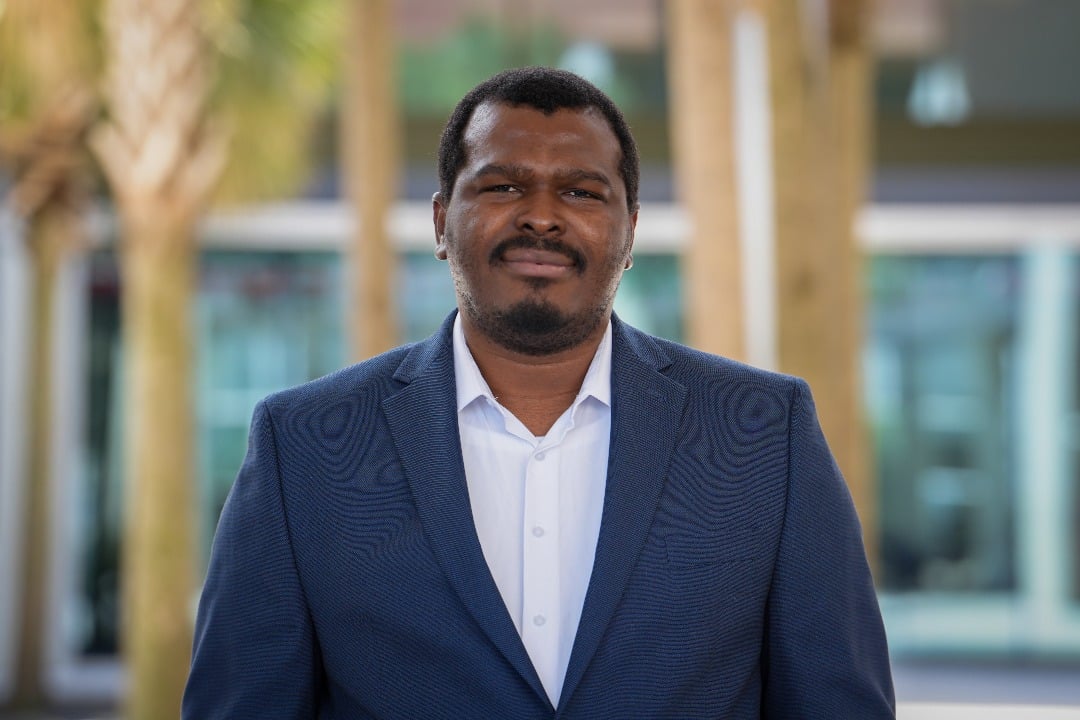
A United States-based Nigerian scholar, Collins Obidiagha, has emerged among twelve participants selected from over 100 applicants for the prestigious China Business Immersion Programme, a study and business tour aimed at exposing participants to China’s evolving economic and business ecosystem.

Obidiagha, an international MBA candidate at the Darla Moore School of Business, University of South Carolina, shared insights from the programme in a feedback publication titled, “Nigerian Scholar in the US Shares Lessons for Nigeria’s Economic Rebirth.”

He described engagements with major corporations, including Xiaomi and Syngenta, and interactions with students and leaders at Peking University and Jiaolong as providing valuable lessons on how infrastructure drives national growth.

He said, “China’s infrastructure operates like a well-oiled machine. It never ceases to amaze me that an order can be delivered almost anywhere in the country within thirty minutes. That’s the power of an efficient logistics network built on solid infrastructure.”

Obidiagha highlighted China’s sustained commitment to infrastructure-led development, noting that its supply chain smoothness index, which stood at 7.30 in 2010, remains strong at 6.10 in 2022. By contrast, he lamented that Nigeria’s infrastructure stock, estimated at just 30 per cent of GDP, falls far below the World Bank’s recommended benchmark of 70 per cent. He described the situation as a “metaphorical case of kwashiorkor,” warning that chronic underinvestment impedes productivity, poverty reduction, and sustainable growth.

“Only about 30 per cent of Nigeria’s 200,000 kilometres of roads are paved, while the rail network remains underdeveloped due to vandalism, poor maintenance, and funding gaps. Power generation still averages below 5,000 megawatts for a population exceeding 200 million,” he said.

Citing the World Bank’s Africa Infrastructure Country Diagnostic Report, Obidiagha argued that bridging Nigeria’s infrastructure gap would require a sustained annual expenditure of around $14.2 billion over the next decade, roughly 12 per cent of GDP.

See also  JSS1 minimum age not raised to 12 – Nigerian Govt refutes report

By comparison, he noted that China invested around 15 per cent of its GDP in infrastructure during the mid-2000s.

To address the challenge, he proposed that the Federal Government increase infrastructure spending to at least 10 per cent of the 2026 national budget, rising to 12 per cent in subsequent cycles, financed through “disciplined reprioritisation, blended finance, and targeted borrowing.”

Drawing parallels with China in the 1970s, when only 20 per cent of its roads were paved, Obidiagha expressed optimism that Nigeria could replicate China’s transformation. “Making infrastructure the engine of our economic revival is not just a strategy, it’s the key to unlocking Nigeria’s potential. With sustained investment and governance discipline, Nigeria can achieve the kind of modernisation that has defined China’s last two decades,” he concluded.

Nigerian scholars continue to make a global impact. In August, Deborah Agbakwuru won the prestigious Besancon Scholarship at the University of Montana, while Peter Ngene, a Nigerian-born researcher, secured a €2 million grant from the European Research Council for his work on ionic conductivity in nanocomposite solid-state electrolytes.

punch.ng

FOLLOW US ON:

FACEBOOK

TWITTER

PINTEREST

TIKTOK

YOUTUBE

LINKEDIN

TUMBLR

INSTAGRAM

Continue Reading
Click to comment

Leave a Reply

Your email address will not be published. Required fields are marked *

Education

FG bans admission and transfer into SS3 nationwide from 2026/27 session

Published

on

The Federal Government has announced a nationwide ban on admission and transfer of students into Senior Secondary School Three (SS3), effective from the 2026/27 academic session.

The directive applies to both public and private secondary schools across Nigeria, Punch reported.

According to a statement signed by Boriowo Folasade, Director of Press and Public Relations at the Federal Ministry of Education, the decision is part of efforts to curb examination malpractice and restore credibility to the country’s education system.

The ministry explained that only admissions and transfers into SS1 and SS2 will now be allowed, stressing that no student will be permitted to enter SS3 under any circumstance.

Officials said the move is aimed at stopping last-minute transfers often linked to so-called “special centres” during external examinations, as well as ensuring proper academic monitoring and continuity in teaching and learning.

School owners, principals, and administrators have been directed to comply strictly with the new policy, with the Federal Government warning that any violation will attract sanctions in line with existing education regulations.

The ministry added that the policy reflects its commitment to fairness, improved academic standards, and rebuilding public confidence in national examinations.

FOLLOW US ON:

FACEBOOK

TWITTER

PINTEREST

TIKTOK

YOUTUBE

LINKEDIN

TUMBLR

INSTAGRAM

See also  NELFUND closes 2024/2025 loan portal, sets timeline for next application
Continue Reading

Education

NDLEA, HEPPWAS warn students against drug abuse

Published

on

A non-governmental organisation, Health Promotion for People With Addiction and Suicide, has partnered the National Drug Law Enforcement Agency, Rotary Club of Yenagoa City Centre and Damaris Hotel and Suites to sensitise students on the harmful effects of drug abuse.

Over 100 senior secondary school students of the Government Secondary School, Obogoro on Tuesday benefited from the sensitisation programme with the theme, ‘Sensitisation On Substance Uses And Its Impacts On Youths’ Brain.’

The President and Chief Executive Officer of HEPPWAS, Prof Izebeloko Jack Ibe, a professor of Mental Health and Psychiatric Nursing at the Niger Delta University spoke on the harmful effects of drugs on the human brain.

Ibe, who hails from Obogoro community in the Yenagoa Local Government Area of Bayelsa State, said she shared the same background with the students and enjoined them to strive for the top.

The Prof added, “Don’t let circumstances make you a stumbling block to others. You can be what you want to be, you can strive for the top.”

She, however, warned that while some organs of the body can regenerate, the brain does not regenerate, and “when we take substance in this brain that cannot expand, they excite the brain cells which cannot regenerate, and they damage the brain.”

According to her, some of the social ills among children such as stubbornness and lack of respect for elders are traceable to substance abuse and cautioned the students against engaging in it

Mr. Godwin Erepa, NDLEA Assistant State Commander, Drug Demand Reduction Unit, enumerated some harmful drugs including ice, fentanyl, cannabis and local gin (ogogoro).

See also  FG drops mother tongue policy

Erepa said such substance abuse leads to crime and criminality, adding that many cases of domestic violence are caused by substance abuse.

Another native of Obogoro community, Dr. Pawei Igodo, warned the students to shun drugs and focus on their studies and also highlighted the harmful effects of drugs on the human brain.

HEPPWAS Executive Secretary, Mr. Ben Ibe, said, “An estimated 14.3 million Nigerians are using drugs and could be responsible for the growing cases of insecurity in the country.”

Earlier, the owner of Damaris Hotel and Suites, Dr. Boma Spero-Jack, an Obogoro indigene who is serving as security adviser to Bayelsa State Governor, Senator Douye Diri, urged the students to listen to the various speakers.

The Principal of Government Secondary School, Obogoro, Mrs. Dick Agbeyen, expressed appreciation to the organisers of the sensitisation programme and said it will be beneficial if government would incorporate teachings on drug abuse in the school curriculum.

A student of the school, Awake Dufaye Daniel, said the programme was helpful as he has learned about the effects of drug abuse and misuse on the brain.

Continue Reading

Education

Law student Ayomiposi Ojajuni kills self over failure to write final exam

Published

on

A student in the Yola Campus of the Nigeria Law School, identified as Ayomiposi Ojajuni, has allegedly taken his own life over failure to sit for his final examination.

The news broke Sunday that he killed himself on Saturday, December 6, because he was barred from doing the bar final examination at the Yola Campus.

People close to the deceased allege that he became distressed in the morning of Saturday on finding that he was indeed not going to be allowed to take the professional examination that commenced that morning.

He reportedly swallowed a deadly substance on receiving the news and died Sunday morning even after he was rushed to nearby Modibbo Adama University Teaching Hospital, Yola.

Sources have explained that the authorities came to the decision to stop him from taking his examination because he did not respond to multiple queries previously issued to him by the school authorities.

The Police Public Relations Officer in Adamawa State, SP Sulaiman Nguroje could not be reached for comment Sunday afternoon when this report was being concluded, but a different police source confirmed Ayomiposi Ojajuni’s suicide story.

FOLLOW US ON:

FACEBOOK

TWITTER

PINTEREST

TIKTOK

YOUTUBE

LINKEDIN

TUMBLR

INSTAGRAM

See also  Foundation empowers 400 Kaduna students
Continue Reading

Trending