Connect with us

News

LASU professor reveals how to stabilize governance in Nigeria

Published

on

Professor of International Relations and Strategic Studies at Lagos State University, Adewunmi Falode, has called for a review of Nigeria’s constitution to allow a single, non-renewable term of seven years for elected public office holders.

Falode made the call on Tuesday while delivering LASU’s 115th inaugural lecture titled, “Bespoke Solutions: Reimagining, Reifying and Realigning the Wheels of the Nigerian State,” at the Buba Marwa Auditorium of the university.

His call aligned with those of Governor Seyi Makinde, former Governor Peter Obi, economist Pat Utomi, ex-President of the Nigerian Bar Association Wole Olanipekun (SAN), and ex-Deputy President of the Senate Ike Ekweremadu, who have advocated for a single term of between five and six years.

The scholar argued that Nigeria’s current two-term, four-year arrangement is “wasteful” and contributes to an “unstable, combustible and misaligned” political environment.

According to him, the system had consistently failed to deliver the dividends of democracy because elected officials barely enjoyed five months of undistracted governance before becoming entangled in post-election litigation and preparations for another election cycle.

Falode drew parallels with countries such as Mexico and the Philippines, which operate a single six-year term.

With a seven-year single tenure, he said, Nigerian political office holders would have at least four years of stable governance, while the remaining three years could accommodate campaigns and the resolution of election petitions.

He described Nigeria’s democracy as “elitist, exclusionary and divisive,” noting the huge sums budgeted for elections, aside from expenditure on post-election litigations.

He said, “Democracy has always been expensive in Nigeria. That of the 1983 federal elections frittered away N2bn, and at the end of the day, the military derailed the whole process! In 1999, Nigeria budgeted N1.5bn; N42bn for 2011; N108.8bn in 2015; and N242.2bn in 2022. The monies for post-election litigations and other incidentals are not factored into this.

“The shocking thing was that at the end of such elections, where humongous money had been expended, with countless lives lost and businesses destroyed, it would still take the intervention of the judiciary for the wheel of democracy to be realigned and readjusted”

See also  Ooni Visits Olubadan-designate, Ladoja In Ibadan

According to him, the current cycle leaves office holders with two years spent fending off petitions, about five months for effective governance, and the rest of the term preparing for re-election.

“This has been the unhappy circle of every federal election in Nigeria since 1960.

“Nigeria will have to tweak its constitution to allow for a single term of seven years. A variant of this is what is obtainable in Israel, the Philippines, Singapore, Armenia, Ireland, Mexico, Japan, Burundi, Ethiopia, Egypt and Liberia. Those of Liberia, Egypt and Burundi are instructive. They also had nearly identical colonial baggage as Nigeria, but went ahead to domesticate or customise their democracy.”

Falode argued that Nigeria could not continue to borrow wholesale from the United States, insisting that the country lacked the resources to sustain the same model.

“The two four-year term limit is wasteful and makes the country’s political development unstable, volatile, combustible and misaligned,” he said.

“Nigeria should make it a single six- or seven-year term: I have already removed two years to resolve post-elections petitions, four stable years for governance, and the remaining one year to campaign for the next election cycle,” he said.

The professor also canvassed for what he described as “competitive federalism,” urging Nigeria to domesticate its federal structure to correct long-standing fractures in the nation’s governance system.

Citing former President Olusegun Obasanjo’s inclusion of the Federal Character Principle in the 1979 Constitution as an example of innovation, Falode said the country needed similar creativity to strengthen its federal structure.

He said, “Nigeria must customise or domesticate its federalism if it hopes to correct the obvious fractures in the nation’s seams. And what form will this take? I call this competitive federalism. This means a weak or decentralised centre with strong states.”

He stressed that his proposal was not regionalism, adding, “I am against anything that will fracture Nigeria into different parts or that champions the idea that states should be developed in silos and independently with minimal interactions with other units in the federation.

See also  Trump’s military intervention threat illegal — SANs

“States in the country should be allowed to co-exist, but based on clearly spelt-out and agreed terms. Historically, the different constitutional conferences and constituent assemblies had done the job of creating a White Paper of those things that can promote unity, peace and equitable development among the disparate groups in Nigeria.

“What is needed is the political will to implement those decisions. The Nigerian Constitution is the best wheel to correct all the punctures, wear and tear Nigeria is experiencing.”

Falode applauded President Bola Tinubu for steps toward fiscal federalism through the 2025 Tax Reforms Bill, which he said would “promote equitable and competitive distribution of revenue and allow states to think outside the box on revenue generation, deepen taxation and have funds for construction, maintenance and rehabilitation of public facilities.”

On persistent ethnic and religious agitations, Falode recommended education as a central tool for national integration and political development.

He argued that compulsory education up to secondary level would create enlightened citizens resistant to extremist ideologies.

“I consider education to be the most important wheel,” he said. “Education is key to national integration and political development. I specifically picked China because it has a large Muslim minority – the Uyghurs – unknown to most people. Yet, we hardly ever hear of religious extremism or large-scale terrorist attacks in the country. Education made this possible.”

According to him, China’s deployment of a unified national language and tailored education model has fostered literacy, national identity and economic competitiveness.

Nigeria, he said, must adopt a similar approach.

“It is not just education but tailored or domesticated education. This is the way to go for Nigeria to realign its economy, reduce unemployment, promote unity and peace and spur development.

“Nigeria must make universal primary and secondary education free. Sending children to school must be made compulsory up to the secondary level. This will allow the state to shape the students into responsible citizens who will contribute to the development of the state. “Importantly, it will be difficult for religious and ethnic extremism to flourish in a society that has deployed adequate resources to combat ignorance through quality education,” he said.

See also  Marketers drop petrol prices below Dangote’s cost

Falode traced the disruption of Nigeria’s social harmony and political development to British colonialism and the indirect rule system.

He noted that despite various attempts since independence, the nation continued to grapple with governance challenges, ethnic and religious tensions, minority rights issues, political instability and uneven economic growth.

He argued that Nigeria might have made substantial progress had it continued on the path laid by its nationalists, who opted for federalism, regionalism, parliamentarianism, multiparty politics and a written constitution.

“At the point of independence, the state was confronted with multiple challenges: governance, ethnic and religious tensions, minority rights, political participation, and economic development,” he said.

“With three dominant ethnic groups: the Hausa/Fulani (North), Yoruba (West), and Igbo (East), alongside over 250 other minorities such as the Ijaw, Nupe, and Tiv, Nigerian nationalists opted for federalism, regionalism, parliamentarianism, a multi-party political system and a written constitution as mechanisms to steer the country toward economic growth, political stability and democratic development.

“In hindsight, this arrangement would have provided the perfect framework for realigning the already faltering tyres of the state. Federalism, in particular, is well-suited to multi-ethnic societies like Nigeria.”

“Had Nigeria’s post-independence leaders adhered to the principles of federalism, adjusting and refining the system to meet local realities, the malalignments and maladjustments that later derailed the country’s journey toward democratic stability might well have been avoided,” he argued.

Among dignitaries at the lecture were the Olota of Ota, Oba Abdulkabir Obalanlege; LASU Vice-Chancellor, Prof Ibiyemi Olatunji-Bello, represented by the Deputy Vice Chancellor (Academics), Prof Taiwo Afisi; LASU Registrar, Emmanuel Fanu; and the Managing Director/Editor-in-Chief of PUNCH Newspapers, Mr Joseph Adeyeye.

punch.ng

FOLLOW US ON:

FACEBOOK

TWITTER

PINTEREST

TIKTOK

YOUTUBE

LINKEDIN

TUMBLR

INSTAGRAM

Continue Reading
Click to comment

Leave a Reply

Your email address will not be published. Required fields are marked *

News

Naija no dey carry last, nine things King Charles said about Nigeria

Published

on

King Charles III on Wednesday hosted President Bola Tinubu and First Lady, Oluremi Tinubu, at a state banquet in Windsor Castle.

The event was part of activities marking Tinubu’s two-day state visit to the United Kingdom, which is expected to boost bilateral cooperation between the two nations.

The British monarch, delivering his speech in St George’s Hall, expressed his admiration for Nigeria’s rise, its people, and the nation’s influence in the UK.

He even closed with a flourish in Nigerian Pidgin that drew smiles from guests, saying, “Naija No Dey Carry Last!” (Nigerians Never Come Last), as he proposed a toast to the President and people of Nigeria.

Here are 10 highlights from his speech:

Nigeria has arrived

Reflecting on his 2018 visit and earlier trips, the King said Nigeria “hasn’t merely changed… it has arrived.”

He described Nigeria as a nation of over 230 million people, half under 18, full of “energy, ingenuity, ambition and resolve” to tackle global challenges.

Afrobeats, Nollywood, and Premier League stars

King Charles highlighted how Nigerian culture has enriched Britain, from Afrobeats in concert halls to Nollywood on screens.

He also mentioned Nigerian stars competing in the Premier League and adjudicating in courts.

The monarch said, “From Afrobeats filling our concert halls and Nollywood captivating our screens, to stars competing in our Premier League and adjudicating our highest courts, so much of Britain’s culture is, in truth, profoundly enriched by Nigeria.”

Nigeria as interfaith example and global leader

Praising Nigeria’s model of peaceful coexistence among faiths, he referenced support for Nigeria’s Quick Reaction Forces and aid in Northern Nigeria.

See also  Opposition leaders urge N’Assembly to begin fresh electoral act amendment

“This afternoon, I witnessed one such example of how we are learning from one another when we met leaders of the British Christian and Muslim communities.

“The gathering was a deeply meaningful symbol of what Nigeria has long shown: that people of different faiths can, do, and must live alongside one another, in peace, in harmony and in shared purpose,” King Charles said.

He described Nigeria as an “economic powerhouse, a cultural force and an influential diplomatic voice.”

Painful history between the two nations

The King addressed the “shadow” of shared colonial history.

“There are chapters in our shared history that I know have left some painful marks. I do not seek to offer words that dissolve the past, for no words can.”

He, however, emphasised learning from history to build a better future.

Jollof rice

King Charles might have admitted Nigerians make the best Jollof rice in Africa, but he was diplomatic.

He shared a light-hearted anecdote about hosting a “rather lively group” of young Nigerians for a “Jollof and Tea” party at St. James’s Palace last week, joking diplomatically about the eternal Jollof debate.

“I was firmly assured that the Jollof was only the best: Nigerian, of course… or perhaps Ghanaian or Senegalese. Diplomatically, I cannot remember!”

Economic ties — Nigeria as UK’s biggest export market in Africa

The King highlighted growing investments, including Nigerian banks operating in the City of London, companies listing on the London Stock Exchange, and expanding tech partnerships.

He noted Nigeria became the UK’s biggest export market in Africa in January 2026, with mutual tourism spending hitting £178 million each way in 2024.

See also  Police begin enforcement of tinted glass, siren regulations in Edo, Delta

“I was pleased to see that visitors from Nigeria spent £178 million in Britain in 2024, and 251,000 people from Britain travelled to Nigeria and spent just as much, in return.

“In January of this year, Nigeria became the United Kingdom’s biggest export market in Africa and whilst I hear that in Nigeria the phrase ‘Made in U.K.’ has always symbolised the highest quality, it evidently now has a distinctively Nigerian flavour,” he said.

Commonwealth pride and Yoruba, Hausa, Igbo wisdom

Quoting Yoruba (“rain does not fall on one roof alone”), Hausa (“when the music changes, so does the dance”), and Igbo (“Knowledge is never complete; two heads are better than one”) proverbs, the King endorsed expanding intra-Commonwealth trade and Nigeria’s central role.

He agreed with President Tinubu that the Commonwealth’s time “has come.”

Partnership of equals with deep spiritual bonds

The King described UK-Nigeria relations as a “partnership of equals” and a “deeply spiritual connection, beyond churches and mosques.”

He said the ties strengthen shared security, prosperity, and hope for the future.

Living bridge of Nigerians in the UK

He celebrated over half a million Nigerians and people of Nigerian heritage thriving in Britain.

He described them as a “living bridge,” enriching UK culture across sectors including business, technology, academia, law, science, sport, literature, arts, and public service.

‘Naija no dey carry last’

King Charles ended his speech with the popular Pidgin phrase, declaring, “Naija No Dey Carry Last!” to applause and laughter.

punch.ng

FOLLOW US ON:
FACEBOOK

TWITTER

PINTEREST

TIKTOK

YOUTUBE

LINKEDIN

Continue Reading

News

Nigeria, Britain set for fresh security alliance

Published

on

President Bola Tinubu on Wednesday stated that the country’s collaboration with the United Kingdom in addressing insecurity remained crucial, adding that he planned to discuss Nigeria’s counter-terrorism initiatives and challenges to regional stability during his meeting with British Prime Minister Keir Starmer on Thursday (today).

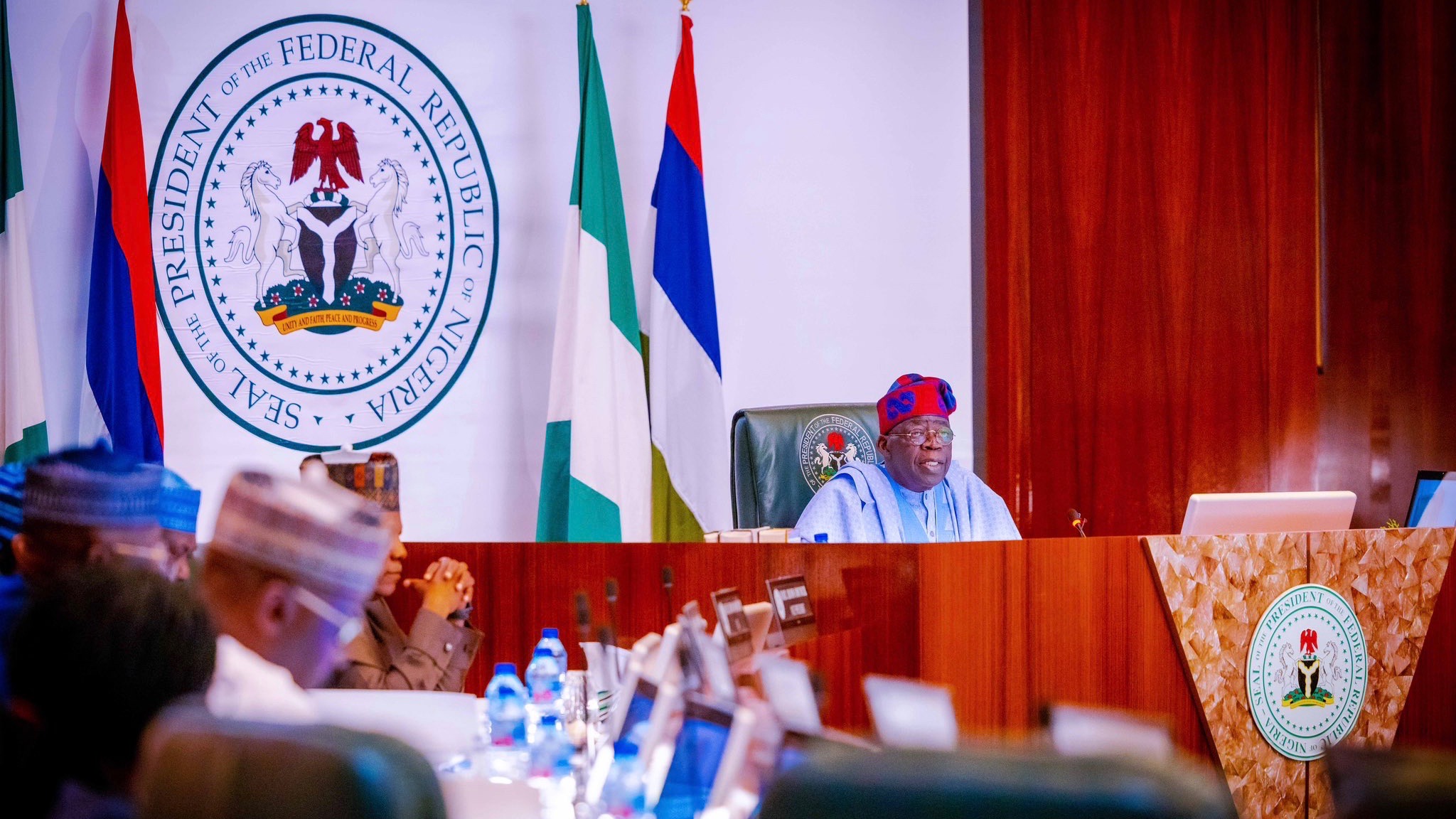
The President made the disclosure on Wednesday night at a state banquet hosted by King Charles III at Windsor Castle, marking the first time a Nigerian leader has addressed a gathering at the historic British royal residence.

Wednesday’s dinner which began at 09:00pm (local time) was part of activities lined up for Tinubu’s ongoing state visit to the United Kingdom.

On security cooperation, the President disclosed that he would discuss Nigeria’s counter-terrorism efforts and regional stability challenges during his meeting with Prime Minister Keir Starmer on Wednesday.

“Our West African region faces complex terrorism challenges with roots in the Sahel. Nigeria carries an enormous responsibility to help safeguard regional stability.

“In confronting these threats, partnership with the United Kingdom remains essential and I look forward to my meeting with Prime Minister Keir Starmer tomorrow (today),” Tinubu said.

The President added that the United Kingdom provided him refuge during the military dictatorship of former head of state, Gen. Sani Abacha.

He said the Metropolitan Police placed his residence under surveillance for protection following threats from agents of the military junta.

In an expression of gratitude, Tinubu described the UK’s support during what he called “the dark years of military dictatorship” as deeply humbling, noting that the solidarity remains etched in Nigeria’s collective memory.

See also  PHOTOS: US arrests nine illegal immigrants from Africa during raid of NYC’s Chinatown

He said, “Your Majesty, I wish to express Nigeria’s deep gratitude to this great nation for the refuge and support it extended during the dark years of military dictatorship.

“Like many Nigerians involved in the pro-democracy struggle, I found safety here, and I recall that my residence was placed under Metropolitan Police surveillance for protection following threats from agents of the junta.

“That solidarity remains etched in our collective memory, and it is deeply humbling for me to stand before Your Majesty today as the President of a democratic Nigeria.”

The President’s comments refer to his years in exile during the military regime of General Sani Abacha in the 1990s, when he fled Nigeria as a pro-democracy activist and member of the National Democratic Coalition, which campaigned against military rule.

Tinubu was among several Nigerian pro-democracy activists who sought refuge in Western countries during the period, which was marked by severe human rights violations, including the execution of environmental activist Ken Saro-Wiwa and eight other Ogoni leaders in 1995.

In his speech at the banquet, which was attended by King Charles III, Queen Camilla, Prince William, the Prince of Wales, and Catherine, the Princess of Wales, Tinubu emphasised the enduring bonds between Nigeria and the United Kingdom.

He described his appearance at Windsor Castle, which has served the British Crown for nearly a millennium, as particularly historic, noting that he is the first Nigerian leader to speak at the venue.

“As the first Nigerian leader to speak here at Windsor Castle, which has served the British Crown for nearly a millennium, is particularly historic,” he stated.

See also  Police begin enforcement of tinted glass, siren regulations in Edo, Delta

The President traced the historical and institutional connections between both nations, noting that Nigeria’s courts draw upon legal traditions rooted in English common law, while parliamentary institutions reflect constitutional practices that evolved in Britain over centuries.

“In Nigeria, elements of these traditions continue to inform the institutional foundations of our own republic.

“Our courts draw upon legal traditions rooted in English common law.

“Our parliamentary institutions reflect constitutional practices that evolved here over centuries,” he said.

Tinubu also highlighted the significant contributions of the Nigerian diaspora community in the United Kingdom, particularly in the National Health Service.

“Within the National Health Service, Nigerian doctors and nurses play an indispensable role in delivering healthcare.

“Nigerian-trained doctors are among the largest groups of international medical professionals serving the NHS,” he stated.

He cited sports personalities of Nigerian heritage who have excelled in the UK, including rugby player Maro Itoje, footballers Bukayo Saka and Eberechi Eze, and champion boxer Anthony Joshua, as illustrations of the “remarkable human connection” between both countries.

He emphasised Nigeria’s role within the Commonwealth of Nations, describing the country as one of the largest nations within the 56-member organisation under King Charles III’s leadership.

“As one of the largest nations within the Commonwealth, Nigeria looks forward to contributing constructively to the continued growth and vitality of this global community,” he stated.

Despite security challenges, the President expressed optimism about Nigeria’s future, describing the nation as one of “diverse and vibrant people, of young people dreaming big, of entrepreneurs with a global outlook, and of a hopeful people determined to realise their full potential.”

See also  Disu declares total war on police corruption, impunity

He proposed a toast “to the special bond between Nigeria and the United Kingdom, and to the bright future that we shall build together.”

The state visit, which runs from March 18 to 19, is the first by a Nigerian President to the UK in 37 years, with the last being in 1989 when former military President Ibrahim Babangida was hosted by Queen Elizabeth II.

The visit is expected to result in several memoranda of understanding and agreements covering trade, investment, defence, and cultural cooperation, including a £746m financing deal for the refurbishment of Lagos Port Complex and Tin Can Island Port.​​​​​​​​​​​​​​​​

punch.ng

FOLLOW US ON:

FACEBOOK

TWITTER

PINTEREST

TIKTOK

YOUTUBE

LINKEDIN

Continue Reading

News

Eid-el-Fitr: Security on high alert nationwide after Borno blasts

Published

on

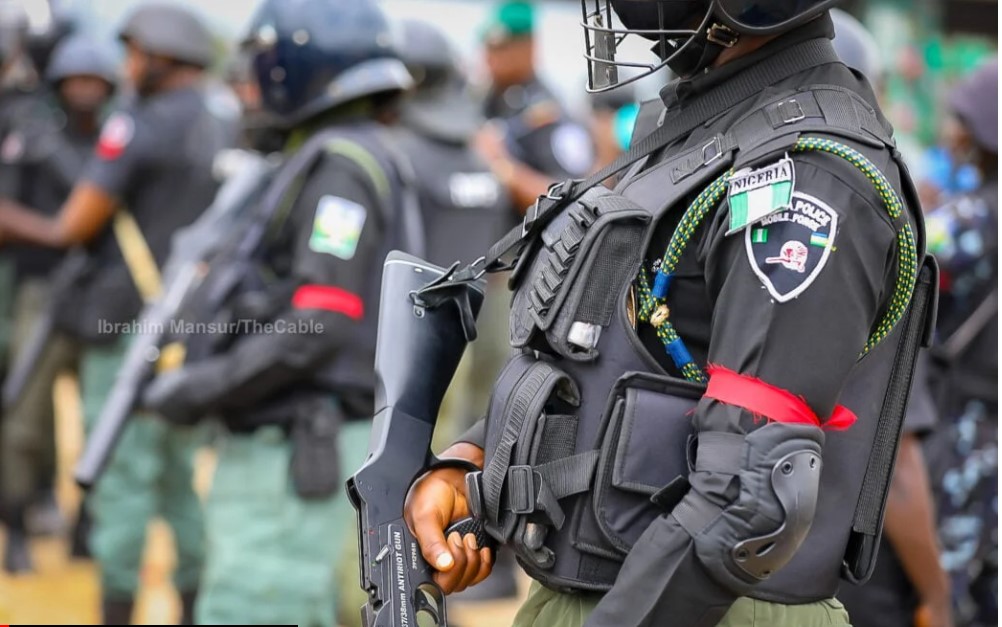
Security agencies have heightened security, mobilising thousands of personnel across the nation ahead of this weekend’s Eid-el-Fitr celebration.

Personnel are to be stationed at Eid prayer grounds, mosques, shopping malls, recreational centres, markets, motor parks, amusement parks, and areas housing critical national infrastructure.

The massive mobilisation of security personnel, especially in Northern states and the Federal Capital Territory, comes on the back of Monday’s multiple bomb explosions in Maiduguri, the Borno State capital, which killed 23 people while 108 others were injured.

This comes as the Sultan of Sokoto asked Muslims to look out for the crescent that would mark the end of Ramadan, while the Federal Government declared Thursday, March 19, and Friday, March 20, 2026, as public holidays to mark the celebration of Eid el Fitr and signal the beginning of Shawwal.

A statement released by the Nigerian Supreme Council for Islamic Affairs and signed by its Secretary General, Prof Emeritus Is-haq Oloyede, said Wednesday, March 18, 2026, corresponding to the 29th day of Ramadan 1447AH, has been set aside for the sighting of the new moon of Shawwal.

It added that any Muslim who sights the crescent should report the sighting to the nearest District or Village Head for onward communication to the Sultanate Council for confirmation.

“Muslims who sight the new moon should report the sighting to the nearest district or village head, who will in turn communicate the information to His Eminence, the Sultan of Sokoto, for further announcement,” the statement said.

The statement added, “If the crescent is sighted, His Eminence, the Sultan of Sokoto and President-General of NSCIA, would be informed either directly or through the already advertised Muslim traditional rulers or members of the National Moon Sighting Committee (NMSC) for further action.

“If the crescent is not sighted on Wednesday, the ‘Id shall be observed on Friday. Therefore, all Muslims are enjoined to discharge their religious obligations, including paying Zakatul Fitr on behalf of all their family members and dependants.”

The NSCIA also condemned what it termed unprovoked attacks by the United States and Israel on the sovereign Islamic Republic of Iran on February 28, 2026.

“It is clear to all that the attacks were a flagrant violation of Article 2(4) of the United Nations Charter.

“Apart from targeting and killing the Supreme Leader of the country, Ayatollah Ali Khamenei, and a number of his family members, the attacks also resulted in the death of close to 200 innocent school girls in the Southern part of the country,” it said.

See also  Banks sent pretty ladies to woo me for deposits – Otedola

The massive deployment ahead of the Eid-el-Fitr saw the Nigeria Security and Civil Defence Corps deploy 4,000 personnel across the Federal Capital Territory, Abuja.

The corps also deployed personnel across its commands in Kano, Kwara, Jigawa, among others.

Commander of the NSCDC, in a statement by the command’s spokesperson, Monica Ojobi, said apart from deployment of personnel to vulnerable locations, undercover officers had also been deployed for covert operations and surveillance.

The statement read, “The Commandant of the Nigeria Security and Civil Defence Corps Federal Capital Territory Command, Olusola Odumosu, has ordered the deployment of 4,000 personnel across the nooks and crannies of the FCT to enforce law and order as well as ensure a peaceful Eid-el-Fitr.

“The deployment, which covers specialised units including the Arms Squad, Female Strike Force, Crack Squad, Chemical Biological Radiological Nuclear Explosive Counter-Terrorism Unit, and Agro Rangers, aims to secure the lives and property of residents, as well as Critical National Assets and Infrastructure before, during, and after the festival.”

Odumosu instructed all area commanders and divisional officers to ensure a strong security presence in their respective councils.

“All hands must be on deck. I will not tolerate any form of breaches; ensure your personnel comply adequately,” he said.

He further charged officers to maintain discipline, uphold good conduct, and work in coordination with other security agencies.

In Jigawa, the NSCDC deployed 1,450 personnel to ensure a peaceful Salah celebration in the state.

According to a statement on Tuesday, the command’s Public Relations Officer, Badaruddeen Tijjani, said, “The deployment is part of efforts to forestall security breaches. We will ensure a secure environment before, during, and after Salah.

“We will be vigilant to prevent any incidents. The deployment aims to strengthen security presence and prevent criminal activities.

“Special teams, including Anti-Vandal and Disaster Management Units, are on high alert to protect national assets and public facilities,” it added.

The NSCDC Commandant in the state, Kabiru Ingawa, further directed officers to intensify patrols and surveillance.

“The deployment is aimed at safeguarding lives and property throughout the celebrations,” Ingawa said.

He stressed that the NSCDC would protect critical national assets and farmlands, emphasising that “our Agro-Rangers Squad is on standby to prevent any attacks on farms.”

See also  Ooni Visits Olubadan-designate, Ladoja In Ibadan

The Kano State command of the NSCDC deployed over 3,400 personnel across the state to ensure security before, during, and after the Eid-el-Fitr.

The State Commandant, Hassan Agalama, in a statement on Tuesday, by the command’s PRO, Ibrahim Abdullahi, noted that the deployment was part of proactive measures to guarantee peaceful festivities and protect critical national assets.

According to him, operatives had been strategically positioned at Eid praying grounds, recreational centres, markets, motor parks, and other vulnerable public locations across Kano State.

“We have deployed over 3,400 personnel across the state as part of proactive measures to ensure a peaceful and hitch-free Eid-el-Fitr celebration,” Agalama said.

He added that special attention had been given to the protection of critical infrastructure, including power installations, water facilities, telecommunication masts, and other government assets.

Agalama said intelligence and surveillance units had been strengthened, while rapid response teams were placed on high alert to address emergencies.

“Our operatives have been strategically stationed at Eid grounds, markets, motor parks, and other public places, while rapid response teams are on standby to respond promptly to any security threat,” he added.

He urged residents to remain vigilant, cooperate with security operatives, and report any suspicious movements to the appropriate authorities.

He also advised parents and guardians to caution their wards against engaging in unlawful acts during the celebrations.

A sister agency, the Federal Road Safety Corps, Kano Sector Command, deployed no fewer than 1,889 personnel and operational logistics for the 2026 Eid-el-Fitri Special Patrol Operations.

This was revealed in a statement on Tuesday by the Sector Command’s PRO, Abdullahi Labaran.

Labaran said the operation was expected to commence from Tuesday, 17th to 22nd March 2026.

Also, the Kwara State command of the NSCDC deployed 2,350 operatives across the state to ensure a safe and peaceful Eid-el-Fitr celebration.

A statement by the command’s PRO, Ayoola Shola, said the State Commandant of the force, Bala Bodinga, approved the deployment as part of proactive measures to protect critical national assets, prevent crime, and safeguard residents before, during, and after the celebrations.

“The Kwara State Commandant of the NSCDC, Bala Bawa Bodinga, has approved the deployment of 2,350 operatives to provide robust protection of critical national assets and the safety of residents throughout the Eid celebration,” the statement read.

“The deployment covers all sixteen (16) local government areas of the state, with personnel drawn from specialised units, including the Armed Squad, Operational Harmony, Counter-Terrorism Unit, Anti-Vandal Unit, and the Chemical, Biological, Radiological, Nuclear and Explosive Unit,” it added.

See also  ‘I will kill any terrorist who enters P’Harcourt,’ says Asari-Dokubo

The statement explained that the operation was intelligence-driven and anchored on detailed threat assessments to identify flashpoints, high-risk corridors, and other vulnerable locations across the state.

“The operation is underpinned by credible intelligence and detailed threat mapping, with priority attention accorded to flashpoints, high-risk corridors and other sensitive locations to ensure maximum effectiveness and public safety.

“Area Commanders and Divisional Officers have been mandated to sustain aggressive patrols, strengthen surveillance and implement proactive response measures within their Areas of Responsibility.”

The NSCDC also reaffirmed its commitment to inter-agency collaboration, noting that it would work closely with other security outfits, local vigilantes, and community stakeholders to enhance security coordination.

“The NSCDC will coordinate closely with other security agencies, local vigilantes, and community members to ensure comprehensive coverage, rapid response, and uninterrupted public safety during the festive period.”

In Edo, the NSCDC deployed more than 2,000 personnel across the state to ensure security before, during and after the Eid-el-Fitr celebration.

The state Commandant of the corps, Mr Saidi Akintayo, disclosed this on Tuesday while addressing journalists in Benin.

Akintayo described the move as part of proactive measures to guarantee a peaceful and hitch-free celebration.

“We have deployed more than 2,000 personnel drawn from our specialised units across the three senatorial districts to ensure a hitch-free Eid-el-Fitr celebration,

“These units include the Armed Squad, Female Special Squad, Counter Terrorism, Disaster Management, and the Commandant’s Monitoring Team,” he said.

He added that the personnel had been strategically positioned across the state to adequately secure public places such as markets, recreational centres, prayer grounds, highways and other vulnerable points.

Akintayo revealed that the command would work closely with other security agencies to ensure comprehensive coverage and rapid response to emergencies.

“We are working in synergy with other security agencies to guarantee public safety and ensure a peaceful festive period for all residents.

”Area Commanders and Divisional Officers have been directed to intensify patrols, strengthen intelligence gathering, step up surveillance, and adopt proactive security measures within their jurisdictions,” he further said.

punch.ng

FOLLOW US ON:

FACEBOOK

TWITTER

PINTEREST

TIKTOK

YOUTUBE

LINKEDIN

Continue Reading

Trending