Connect with us

News

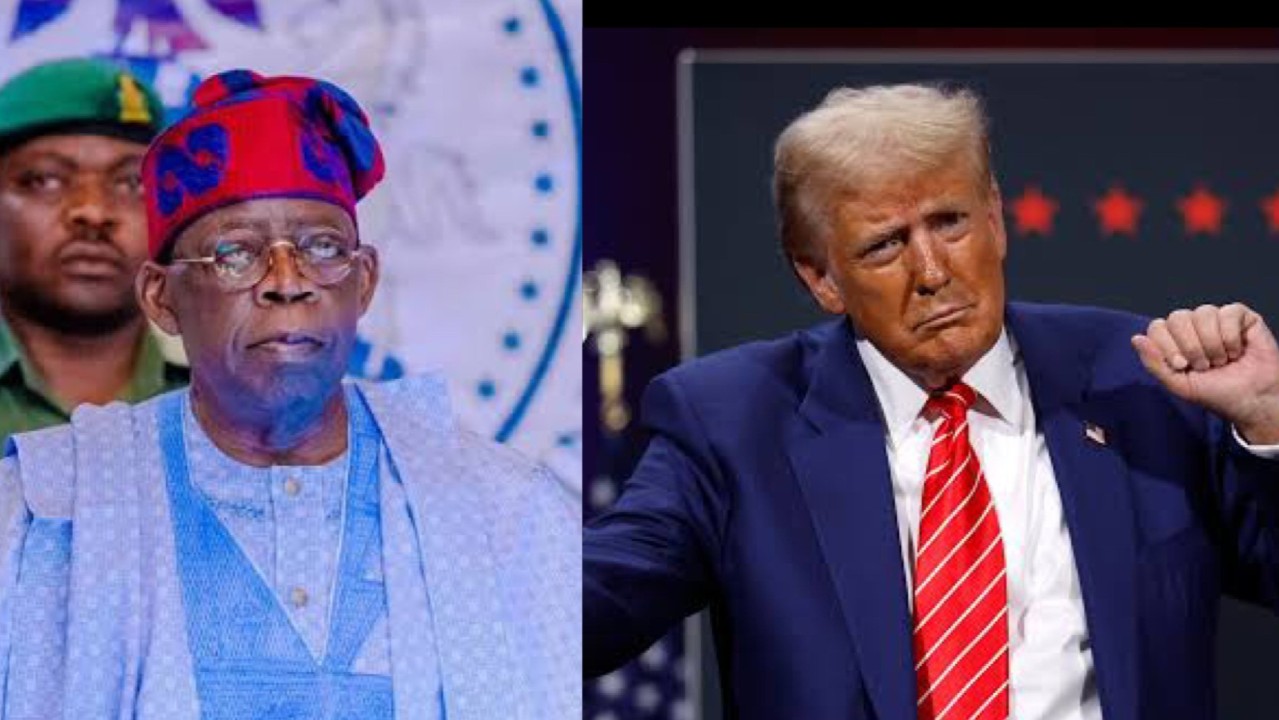
Is Trump correct on Nigeria?

Published

on

The United States of America has been the world’s only superpower since the fall of the Berlin Wall, the end of the Cold War and the demise of the Soviet empire by the dawn of the 1990s. Also, the US is the largest economy in the world, notwithstanding the economic surge of China in recent decades. Most crucially, America boasts the strongest military in the world today. Like it or not, the US calls the shots in global governance!

Given its global preeminence, the US is respected, if not feared, all over the world, even by its fiercest adversaries. As a result, whatever foreign policy statement an American president issues is taken with utmost gravity by all rational countries and their leaders. It is even more serious when that American president is none other than President Donald J. Trump!

President Trump is known for being an effective leader who is not afraid of taking tough decisions, even if those decisions are controversial or seen to be so. In fact, Trump does not take decisions if they are not tough. His track records as a leader, whether in business or in politics (first and second term presidency), show him forth as a tough man. Coupled with his resolve to back his positions with capacity, the man who is hardly seen laughing in public, hardly bluffs. And anybody calling Trump’s bluff does so at his or her own peril.

Its is precisely because of the forgoing that the Nigerian government has threaded cautiously in its official reaction to the recent designation of Nigeria as a Country of Particular Concern, primarily due to concerns over what America sees as the persecution of Christians and issues of religious freedom. The most concerning part of the American charge against Nigeria is that there is an ongoing Christian genocide in the country. And Trump has warned of impending US action against Nigeria to protect Christians, including imposing crippling sanctions and possibly taking military action against perpetrators of genocide in the country. Nigeria has done well by pushing back against the charge of Christian genocide and has decided to adopt diplomatic measures to work closely with the US toward improving domestic security.

Outside government circles, there appears to be a cacophony of voices over the US designation and threatened intervention in Nigeria. A combination of misunderstanding, anger, primordial suspicion along conflict fault lines and fear is fueling a heightened sense of disunity. For instance, the Muslim Rights Concern has blamed the Christian Association of Nigeria for the US listing of the country as a CPC, accusing the Christian leaders of “betraying President Bola Tinubu” by submitting petitions to US authorities on frivolous claims of targeted persecution. Also, the Nigerian Supreme Council for Islamic Affairs has pointed the finger at some “Islamophobic and unpatriotic Nigerians”, including evangelical groups and separatists, for selling the dummy of Christian genocide to the highest levels of the US government. On its part, CAN has pushed back on “a deliberate attempt to silence legitimate concerns about religious persecution”, insisting that raising its voice for justice was not betrayal, but “responsibility”.

Beyond the religious turf, various observers and commentators have taken antagonistic positions on this burning issue, some for, others against our political leaders, depending on where they find themselves across the political divide. However, this is a time when we need to be most sober to confront our lived experience of disgraceful national security and resolve to forge ahead as a united country where the life of every citizen matters. In doing so, we need to collectively ask ourselves some questions and find the answers. I have asked a few questions here:

US perception: Is Mr Trump correct on the issue? Is a Christian genocide going on in Nigeria? Are the killings genocidal? Is Trump’s view of the Nigerian State in relation to the decades of constant mass murder, correct?

The threat of US action: Is the threatened US action appropriate? Should the US directly attack terrorist groups in Nigeria? Should the US impose crippling sanctions against terrorist groups operating in Nigeria?

Nigeria’s only reasonable response: What should be Nigeria’s appropriate and effective response to the threat of US Action?

While these questions are relevant to the various manifestations of terrorism and mass murder across Nigeria, I have focused the responses below on the unique security predicaments faced by the people of North-Central Nigeria, with particular emphasis on Benue State.

There seems to be a national consensus on the American charge of a Christian genocide in Nigeria. We are all gratified to observe the reality that, while all the groups currently perpetrating large-scale violence and collective massacre in Nigeria profess Islam as their faith, the victims cut across all religions. Truly, an untold number of Muslims have been massacred by the terrorists operating in the North-East (Boko Haram and Islamic State in West Africa Province), North-West (the so-called bandits) and the North-Central (the Fulani herdsmen militias) states of Nigeria. Similarly, outrageous numbers of Christians and non-Christians have been murdered by these groups for more than a decade, particularly in the North-Central States of Plateau and Benue.

Consequently, we can say that the Islamist/Islamic terrorists do not massacre Nigerian Christians as an exclusive target group.  Yet, because the preponderance of residents of Plateau and Benue States in Central Nigeria are Christians, it is valid to observe that Christians are being wiped out in those parts of the country by armed groups that profess Islam as their faith, even if not for religious reasons.

See also  Nigeria seeks $2bn China loan for new ‘super grid’ — Adelabu

A look at the definition of the concept of genocide may help us here. The definition of the crime of genocide is contained in Article II of the United Nations Genocide Convention, and reads as:

“…any of the following acts committed with intent to destroy, in whole or in part, a national, ethnical, racial or religious group, as such:

Killing members of the group;

Causing serious bodily or mental harm to members of the group;

Deliberately inflicting on the group conditions of life calculated to bring about its physical destruction in whole or in part;

Imposing measures intended to prevent births within the group;

Forcibly transferring children of the group to another group.”

Given the above universally accepted definition, we can categorically accept that genocide has been and, is still, going on in Nigeria. The abduction of hundreds of schoolgirls from Chibok (North-East) in 2014 by Islamist Boko Haram and their subsequent rape and forcible marriage to terrorist commanders in the forest of Sambisa fall squarely within the definitions of genocide. In the same breath, the ongoing and non-stop killing of non-Fulani farmers in rural communities across Benue and Plateau states (North-Central) by Fulani herder militias eminently qualify as genocide. In the particular cases of Benue and Plateau killings, the perpetrators belong to a distinct ethnic group, religion and occupation, completely different from those of the victims. More particularly in the plains of Benue, the constant and ongoing unprovoked invasion, land grabbing, senseless killing, maiming, arson, looting, uprooting of whole communities and occupation of farmlands by Fulani herder militias are copiously documented and well known to Nigeria’s military and security authorities. In brazen defiance of the American warning, barely days after the Trump tweets, fighters from the same militia invaded Anwule community in Ohimini Local Government Area of Benue State and launched a deadly attack on the night of Tuesday, November 4, 2025, killing three residents, including a local pastor, Mr Simon, and leaving one person missing. This is just one of many instances.

The horrific massacre in Yelewata, Benue State, on June 13-14 only helped to bring the phenomenon to global consciousness. In that single overnight attack by Fulani herder militants, over 200 residents were killed, homes were burned while thousands were displaced. According to well documented reports:

“Victims were burned alive, shot, or hacked with machetes as they fled; entire families were trapped in their homes and set ablaze. Among the survivors, 98 vulnerable women and children now face starvation and trauma with no shelter, while threats of renewed attacks loom.”[i]

The Yelewata massacre made it to the global headlines; not so with other ongoing killings in Central Nigeria by the same Fulani herder militia. In the Apa and Agatu areas of Benue State, killings go on intermittently in rural communities. Some of the incidents make it to the local news, other do not. Some communities are completely displaced and evicted, while their residents live as refugees in larger, safer towns, driven from their only occupation of farming and surviving on handouts from their hosts. Vast farmlands are vacated indefinitely by owners for fear of being killed, raped and kidnapped in the farm by the roaming armed herders. Is this not genocide?

Is Trump’s view of the Nigerian State correct in relation to decades of mass murder?

In his explosive outburst against Nigeria, Trump charged that the country ‘continues to allow killing of Christians’. Popular US Senator Ted Cruz went further to accuse Nigerian officials of “ignoring and even facilitating the mass murder of Christians…” While Christians are not the only ones killed, we should all agree that nobody should be allowed to be killed, Christians or not. Between Trump and Cruz, the most active words are ‘allow’ and ‘ignore’.  Does the Nigerian state allow and/or ignore mass murder by extremist groups? Does Nigeria treat life as sacrosanct? Does the government take effective and dissuasive actions against the perpetrators of mass killing? Do perpetrators kill with impunity, or do they face arrest, prosecution, conviction and deterrent punishment? Do security forces respond promptly to protect communities when they are subjected to mass murder? Do security forces have a durable presence in the hotspots of mass murder to forestall reoccurrence? Are survivors of mass murder catered for and rehabilitated?

We all know the answers. We know that massacre occurs with impunity in Nigeria, including what could qualify as genocide. We know that the decades of wanton killing in the plains og Benue and Plateau have never seen any perpetrator brought to justice. In particular, the Fulani herder militias have killed so many villagers in Apa and Agatu, and no single perpetrator has ever faced justice for those atrocities. Not even a Commission of Inquiry has been set up to investigate the senseless killings and mete out justice. We know that security forces occasionally undertake light deployment to major towns, but never conduct operations deep inside the bushes and forests where the militias have their bases.

Thus, apart from mere verbal condemnation by political authorities and official condolence visits to State capitals, the brutalized communities have only experienced inaction from the Nigerian central government during or after mass murder episodes. The overall understanding of the people of Benue is that the Federal Government of Nigeria is complacent in what appears to be their extermination by the militias.  Now, this perceived complacency, is closely aligned with Ted Cruz’ accusation against Nigeria of ‘ignoring the mass murder. Benue residents see the Federal Government as not paying attention, thus ignoring the existential threat they face perennially. Consequentially, by ignoring these real threats, the Government is ‘allowing’ it to continue, inadvertently or knowingly. And if Government allowing the mass murder through complacency, it puts itself up for being accused of indirectly facilitating it by its sheer absence or inaction. Thus, the American position that Nigeria ignores, allows and facilitates mass murder may hold.

See also  Dangote to donate one-third of wealth to charity, daughter reveals

This position is even reinforced by the tactics used by security forces occasionally in the flashpoints in Benue: The deployments are very light on the ground compared to the scale of the attacks; the troops deployed remain only in the towns, but do not launch combat  operations into the bushes to confront the militias and their bases; troops have a habit of acting tough against the communities and soft towards the militias. Community self-help youths who seek to defend their communities by confronting the invaders are constantly disarmed, arrested and sent to Abuja for permanent detention. In response to the Ohimini invasion of early November, troops responded by only arresting a few armed residents, while the invaders remained in the bush unengaged. Costly defeats suffered by troops in previous incidents may have deterred the security forces from confrontation with Fulani militias in the bush. In very recent confrontations, where few troops had been deployed in Apa and Agatu communities, they have been hopelessly outnumbered and outgunned, leading to loss of men and material, and eventual retreat, leaving the communities to evacuate.

There seems to be no deliberate humanitarian policy to address the aftermaths of mass murder in Benue State. There are no official camps for internally displaced persons across the entire land of Apa and Agatu, notwithstanding the high frequency of attacks and displacements, particularly during he dry season. In addition, there is no sufficient troop presence to deter recurrent aggression in the communities prone to such attacks. The troops that were deployed to those flashpoints have been too few to make a difference and have only stayed for short periods, allowing the militias to continue to plan and mount massacres from the bush. What appears to us in Benue is that the Nigerian state is either unwilling or unable to protect rural communities from constant massacre by the Fulani herder militia.

Is the threatened US action appropriate?

Protecting and providing for citizens are the fundamental objectives of the State, according to the Constitution of the Federal Republic of Nigeria. However, if it is evident that the same State is unwilling and/or unable to protect citizens from existential threat, a humanitarian intervention from outside, within the bounds of international law, and in collaboration with Nigeria, may become appropriate. If the people of Benue cannot live free as citizens without the fear of extermination and eviction from their ancestral land by the Fulani herder militia, they will gladly welcome such a measured intervention as divine emancipation. A combination of tools such as targeted sanctions (travels bans, asset freezes, etc.) and surgical strikes (without collateral damage), as being considered by Trump, would be in furtherance of Nigeria’s national security.

Should the US apply sanctions or directly attack armed groups in Nigeria?

This question appears to be the most contentious. We all seem to be comfortable with the non-lethal measure of sanctions. Sanctions usually take some time to take effect on targets, and the agents of mass murder in Nigeria may not immediately feel the pain of asset freeze and travel ban. They may not be frequent travelers through the airports and their assets many not easily be identifiable. They roam through forests and if they have to cross the border to neigbouring countries to raise money or import arms, they could easily do so through informal crossing routes and points that litter our highly porous borders. Further still, given the informality of our economic system and the dominance of cash in financial transactions, it could be extremely difficult to trace, locate and freeze the assets of these criminal targets. As stated above, precision strikes that limit collateral damage, with the approval and collaboration of the Government of Nigeria, would be the unavoidable necessity.

This is not an unpatriotic call for invasion or violation of the territorial integrity of Nigeria, as some fear or are misreading. It is a call for targeted strikes to permanently take out an existential threat in support of the fundamental objective of the Nigerian State to protect citizens and preserve their lives and properties. Such American strikes to disarm, disable and dislodge (D DD) the militias operating in the bushes and forests of Benue, in collaboration with Nigerian troops, would be conscientious, lawful (under international humanitarian law) and expedient in helping Nigeria achieve what it should but has not!

  1. J. Trump would be forever celebrated by the people of Benue as the Moses of our time!

What should be Nigeria’s appropriate and effective response to the threat of US Action?

The Americans do not trust us enough to transfer the highest-grade capabilities for counter-insurgency operations due to concerns about human rights and potential misuse of those weapons. But they are offering to enter into the theatre directly and deploy those capabilities against our own threats. This is a big opportunity that should be warmly welcomed!

To be honest, it is disgraceful that we have had to wait until Trump’s rage before realizing that we needed to take urgent action against the threats to our existence as a nation! Our national complacence allows threats to fester for too long, forcing us into knee-jerk reaction when they snowball into wildfires that are so costly and time consuming to put out. We treated Boko Haram with kids gloves when it started in 2009, and after 16 years of fighting we can count the cost – high number of military officers and men who have paid the ultimate price, and still counting; innumerable civilian deaths, financial cost of counterinsurgency; etc.

See also  States pile up N1.06tn debt despite record allocations

In the same vein, we treated the new terrorists in the northwest as mere bandits until they were allowed to build capacity into a full-fledged cluster of domestic terrorists that we are now struggling to contain. Just a few days after the Trump CPC listing of Nigeria, the heavily armed bandits, who had seized and occupied the Kainji National Park – a national asset in Niger State, North Central Nigeria – for the past two years unchallenged, ambushed a member of the Federal House of Representatives, killing six (6) soldiers in his convoy. What a national disgrace! Where were we when the terrorists were seizing such an important national asset; and what have we done to dislodge them from the park they have occupied over the last two years? Are we claiming ignorance of the seizure and occupation, or are we admitting that we have been too weak to dislodge them? And if combat-trained and armed soldiers could be so easily sacrificed, what is the value of civilian life in Nigeria? Why did we have to wait for the Trump accusations before being told that President Bola Tinubu was expected to receive the report of the House of Representatives ad hoc committee investigating the recurring killings in Plateau State – a committee set up since end of March 2025? With these questions begging for answers, Why shouldn’t President Trump call us a ‘disgraced country’?

Thus, instead of seeing the US threat of action as foreign interference, the Federal Government of Nigeria should be the one calling for help from Trump to support its military operations against the overwhelming array of domestic threats, chiefly terrorists, bandits and Fulani herder militias. We have lost so many military/security officers and men to terrorists since 2009 that we should pause the counter insurgency and ask: how many more commanders, officers and men do we have to lose before we succeed in effectively dislodging all armed groups from our country by ourselves? If it is looking like mission impossible, we should own up and call for external help!

The brazen abduction of another 25 schoolgirls in Kebbi on 17 November 2025 lends credence to the fear that we cannot do the job alone. This fear has forced even the Nigerian Senate to call for a massive expansion of our military manpower with the recruitment of 100,000 fresh personnel. How long do we have to wait before we own up? And how much more civilian and military casualty do we have to take before we admit that we are inching dangerously close to the edge of the precipice?

If I hear Trump correctly, he is not saying he wants to invade Nigeria. What I hear him say is ‘I want to help a helpless country’! What would the US invade Nigeria for? What would be in it for the US? We are a traditional ally of the US, which counts on us to advance its interests in Africa. Yet, we have serious problems that we do not wish to admit; we are in a strait and in dire need of help, but too proud to say so! That is not national pride; it is self-delusion!

And if we do not want America’s help, let us show capacity and effectiveness in addressing our security predicaments by doing the following:

  • Immediately create, equip and deploy a massive and effective forest force. This force should enabled and empowered to deploy into the forests and bushes to destroy the terrorists, bandits and herdsmen militias. This force should work with, not against, community self-protection initiatives for intelligence gathering, terrain guidance and other essential support.
  • Commence the use of unmanned aerial vehicles (UAVs) for effective 24-hour surveillance and interdiction. Drones are now relatively cheap to acquire and have become a potent feature of recent battlefields. The use of UAVs will drastically minimize the risk of losing our vital officers (including generals) and men, as is currently happening in Borno and Niger States. It will help detect predict enemy locations, track their movement and cripple their operations with preemptive strikes before they are able to launch attacks.
  • Embed intelligence capabilities in flashpoint communities to gather real time intelligence on the activities of armed groups and act upon them in a timely manner. The Department of State Service (DSS) should transit from a reactive to a preventive approach to community security. Stop waiting until a major incident occurs and then we deploy after the perpetrators had exited from the scene – if it is a question of manpower, can our security forces work closely with vetted civilian youths as volunteers to bolster their capability?
  • Maintain a long-term, visible military or security presence in attack-prone communities.

Dr  Isima writes from Benue

punch.ng

FOLLOW US ON:

FACEBOOK

TWITTER

PINTEREST

TIKTOK

YOUTUBE

LINKEDIN

TUMBLR

INSTAGRAM

Continue Reading
Click to comment

Leave a Reply

Your email address will not be published. Required fields are marked *

News

Suicide bill: Akpabio defends remarks as psychiatrists demand apology

Published

on

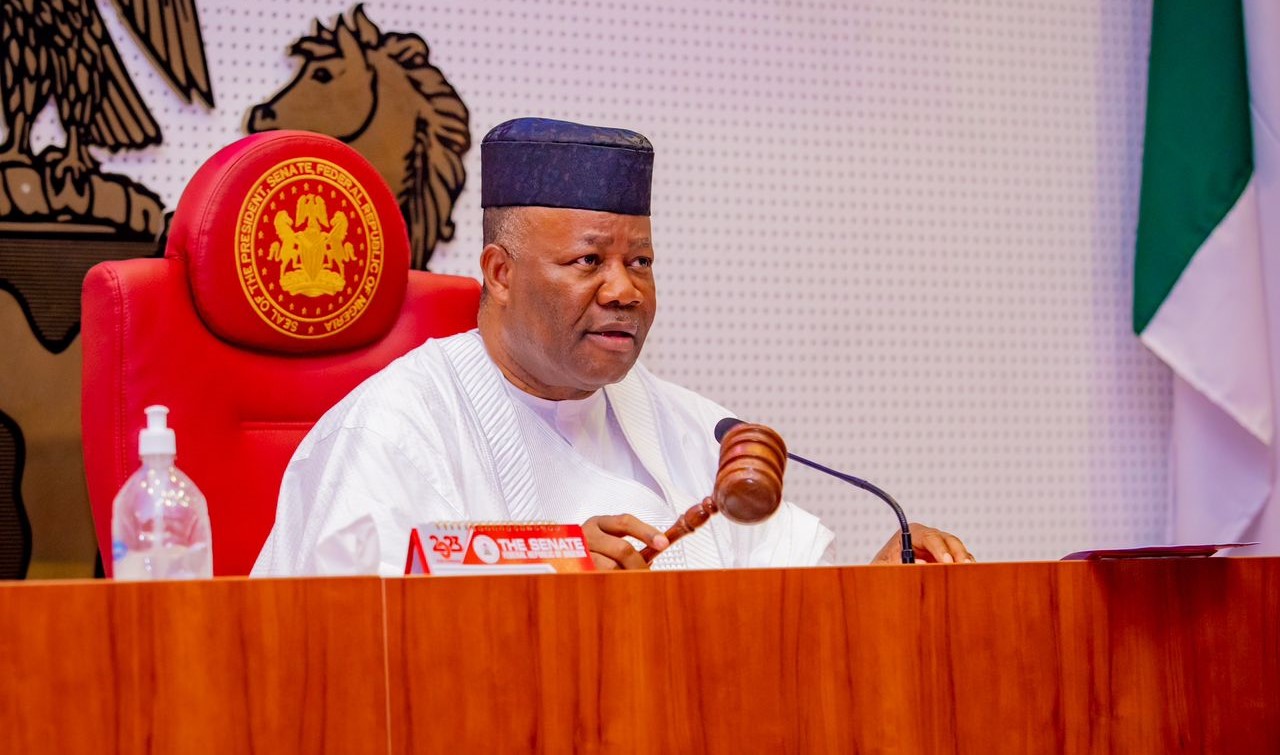
Senate President Godswill Akpabio has defended his remarks on the proposed suicide bill, insisting on his position amid growing criticism from psychiatrists, who have demanded an apology.

The psychiatrists faulted Akpabio’s comments, warning that they could reinforce stigma against people experiencing suicidal thoughts and discourage those struggling with mental health challenges from seeking professional help.

Akpabio was quoted as saying during the Senate debate on October 13, 2026, that, “If you attempt it [suicide], you better succeed. If you don’t succeed, we will send you to prison.”

However, the Association of Psychiatrists in Nigeria, in a statement signed by its President, Dr Veronica Nyamali, and Secretary, Prof Mayowa Okonoda, said its statement was prompted by reports that the Senate was considering a bill by Senator Asuquo Ekpenyong seeking to establish a framework for suicide prevention, decriminalise attempted suicide, and provide support for survivors, with Sections 327 and 231 of Nigeria’s Criminal Code and Penal Code, respectively, identified as provisions currently used to criminalise attempted suicide.

The association maintained that a person who survived a suicide attempt should be regarded first and foremost as an individual experiencing severe psychological distress, and that the appropriate response was urgent medical care, compassionate assessment, treatment, safety planning, and follow-up care, not a threat of imprisonment.

“APN respectfully but firmly rejects the proposition that a person who survives a suicide attempt should be punished for surviving. Public officials have a particular responsibility to communicate in ways that protect life, reduce stigma and encourage people at risk to seek help.

“The association acknowledges that suicide and attempted suicide are serious public health concerns requiring urgent and comprehensive intervention.

“However, a person who survives a suicide attempt should be regarded first and foremost as an individual experiencing severe psychological distress.

“The appropriate response is urgent medical care, compassionate assessment, treatment, safety planning and follow-up—not a threat of imprisonment,” the association said.

Continuing, the APN warned that threatening imprisonment for surviving a suicide attempt could deter people from seeking help, discourage families from disclosing attempts, delay access to emergency medical and psychiatric care, and intensify the stigma that already made help-seeking difficult in Nigeria, all of which would undermine rather than strengthen suicide prevention.

“The APN respectfully calls upon the National Assembly to give careful consideration to the evidence and international public-health guidance concerning the criminalisation of attempted suicide and to engage mental health professionals, people with lived experience, human-rights experts and other stakeholders in the legislative process,” the statement noted.

See also  Dangote to donate one-third of wealth to charity, daughter reveals

The association called on the National Assembly to enact legislation removing criminal penalties for attempted suicide and called on the Senate President to retract and apologise for the reported statement.

It added, “The National Assembly should enact legislation that removes criminal penalties for attempted suicide and establishes a clear, funded framework for prevention, care, rehabilitation and continuing support.

“The Senate President and all public office holders should use language that protects life, avoids stigma and encourages people in distress to seek help; APN calls for a clarification or retraction of the reported statement by the Senate President and an apology to Nigerians.”

The APN said public officials had a particular responsibility to use language that protected lives, reduced stigma and encouraged people at risk to seek help.

The association cited a landmark 2008 study by Omigbodun, Dogra, Esan and Adeodun, which studied 1,429 adolescents aged 10 to 17 years attending secondary schools in south-west Nigeria and found that more than one in five reported suicidal ideation, with approximately 12 per cent reporting a suicide attempt in the preceding year.

It said the study associated suicidal behaviour in adolescents with sexual abuse, exposure to physical violence, hunger, parental divorce, and living in a polygamous family, and that the authors had called on Nigerian policymakers and health providers to address the problem urgently.

The APN also cited global data showing that suicide was responsible for approximately 727,000 deaths worldwide in 2021 and remained among the leading causes of death for young people.

It said the World Health Organisation’s 2023 Policy Brief on the Health Aspects of Decriminalisation of Suicide and Suicide Attempts recommended that countries identify and repeal legislation and policies that criminalised suicide and suicide attempts, noting that decriminalisation was not the same as endorsing suicide but was intended to reduce barriers to help-seeking and enable a person in crisis to receive care rather than punishment.

The association further said children and adolescents required particular protection because their mental health and coping skills were still developing.

The statement said, “A child or young person who survives an attempt should be supported and assessed, with safeguarding measures where abuse, exploitation or other risks are suspected.”

Among its specific recommendations, the association called on the National Assembly to enact legislation establishing a clear, funded framework for prevention, care, rehabilitation, and continuing support for survivors.

See also  NAFDAC destroys N15bn fake, expired drugs in Oyo

It also called on federal and state authorities to strengthen access to mental health care in primary care, emergency departments, schools, and communities; and on families, schools, faith leaders, community organisations, the media, and civil society to be supported to recognise warning signs, respond without blame, and connect people at risk with professional help.

Speaking on the development, Akpabio warned Nigerians against taking lawmakers’ contributions during plenary out of context, insisting that individual opinions expressed during debates should not be mistaken for the Senate’s final position.

His response followed public reactions to his opposition to a bill seeking to decriminalise attempted suicide and replace imprisonment with medical treatment, rehabilitation and psychological support.

The bill, sponsored by Ekpenyong, scaled second reading during Tuesday’s plenary, triggering debate over whether survivors of suicide attempts should be prosecuted or treated as people requiring medical and mental health intervention.

Akpabio had opposed the proposed decriminalisation, insisting that attempted suicide should remain a criminal offence, a position that drew attention and criticism following his remarks that survivors should be jailed.

Addressing the issue during Thursday’s plenary, the Senate President said legislative debates were characterised by opposing views, adding that public commentators should wait for the chamber’s final decisions before concluding.

“When we discuss here, we discuss for and against, and in the course of our discussions, whatever we say should not anger anybody outside this chamber, because at the end, what matters is our final decision,” he said.

He added that lawmakers must be allowed to disagree during deliberations without their contributions being misrepresented or used to damage their reputations.

“We want to make the best laws, so we are bound to oppose each other, and we are also bound to support each other,” he said.

Akpabio specifically cautioned television panellists and other public commentators against interpreting legislative proceedings through political considerations rather than the substance of the issues under consideration.

“No matter the discussion, please consider the final decision of the Senate. Don’t go and sit down in panels and try to do politically motivated discussions,” he added.

The Senate President also addressed the relationship between terrorism and religion, rejecting attempts to associate violent acts with any particular faith.

See also  Dangote-NNPC deal hits great turbulence, see details

“Terrorists are not Muslims. Terrorists are not Christians. Terrorists are human beings who believe in taking their lives and the lives of others,” he said.

Akpabio maintained that Islam prohibits suicide and killing, arguing that claims about suicide bombers expecting rewards in paradise should not be used to misrepresent the religion.

He further argued that discussions on suicide legislation should distinguish between people experiencing mental health challenges and those who deliberately take their own lives or kill others.

“You have to distinguish between suicide committed by people who are mentally disturbed and suicide intentionally committed by people who are physically sound,” Akpabio said.

He said the Senate’s responsibility was to make laws that addressed societal challenges while taking relevant circumstances into account.

To reinforce his position on religious tolerance, Akpabio cited his record of supporting both Muslim and Christian pilgrims during his tenure as governor, saying he had sponsored 5,800 Muslims to the Holy Land and more than 10,000 Christians to Rome and Jerusalem.

He also referred to his longstanding relationship with Muslim members of his staff, saying he regarded them as family rather than defining them by their religious affiliations.

“My ADC for 19 years is a Muslim. I don’t recognise him as a Muslim. I recognise him as a brother,” he said.

Akpabio added that more than 65 per cent of his staff were Muslims, insisting that he had no reason to speak disparagingly of Islam.

“There’s no way I will talk down on Muslim religion,” he said.

The Suicide Prevention Bill 2026 seeks to address what its sponsor described as inconsistencies in Nigeria’s legal framework, under which the National Mental Health Act recognises attempted suicide as a psychiatric emergency requiring intervention, while provisions of the Criminal Code and Penal Code continue to criminalise the act.

Presenting the bill, Ekpenyong argued that survivors should receive medical assessment, treatment, rehabilitation and follow-up support rather than face imprisonment.

The proposed legislation also seeks to establish crisis helplines, promote public awareness, train police officers, teachers and health workers, and create a national data system to strengthen suicide prevention efforts.

The bill has been referred to the Senate Committees on Judiciary and Health for further legislative action, including a public hearing.

Source: punchng.com

FOLLOW US ON:

FACEBOOK

WHATSAPP CHANNEL

TWITTER

PINTEREST

TIKTOK

YOUTUBE

LINKEDIN

INSTAGRAM

Continue Reading

News

Tinubu orders rescue of kidnap victims, safe 2027 polls

Published

on

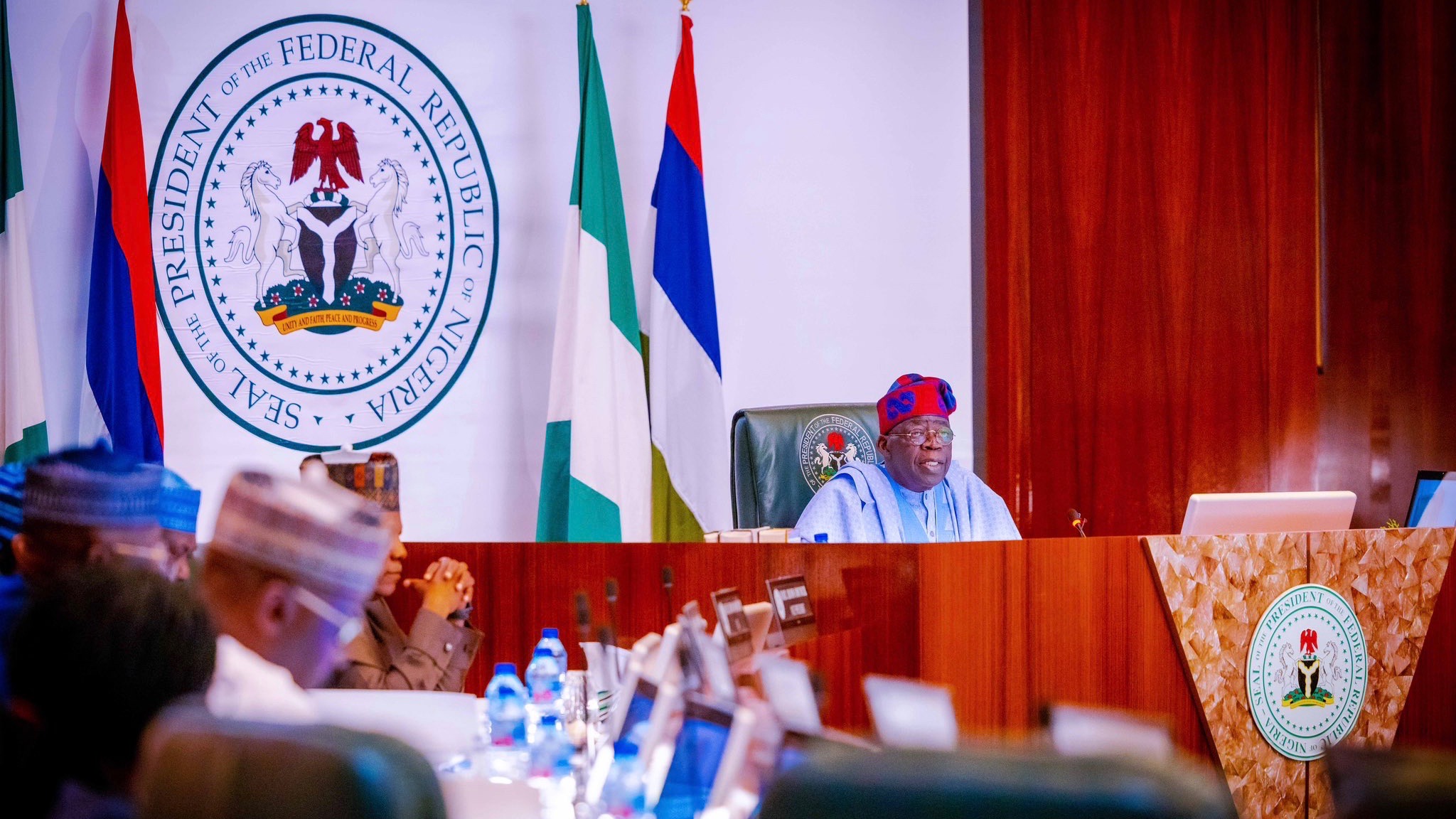
President Bola Tinubu has directed heads of security agencies to rescue all abducted persons and ensure that no terrorist or bandit camp remains anywhere in Nigeria, the Minister of Defence, Gen. Christopher Musa (retd.), said on Thursday.

Musa, who spoke to State House correspondents after a security meeting presided over by the President at the Presidential Villa, Abuja, said Tinubu also asked the service chiefs and other security heads to guarantee a safe environment for Nigerians to vote in the elections scheduled for January.

The minister said the meeting was convened to brief the President on the security situation ahead of the polls, with all heads of security agencies in attendance.

“The directive from the President is: all of us must go all out to fish out and rescue all those that have been abducted, kidnapped, wherever they are.

“There shouldn’t be any camp of any terrorists or bandits anywhere in Nigeria,” he stated.

Musa said Tinubu made it clear that he wanted a free, fair and credible election, and assured political parties that the security forces would not take sides.

Musa stated, “Mr President made it very clear he wants a free, fair and credible election. We must do everything possible to ensure that the country is safe and secure for the citizens to go out and vote.

“We are going to ensure that we give everybody the opportunity to go and serve, so they have nothing to worry about, nothing to be afraid of, and nobody is going to intimidate them for whatever reasons.”

He added that it was “important for all other political parties to understand that the security forces are going to be neutral.”

The minister rejected suggestions that underage persons were being recruited into the armed forces, saying the concern related to the use of children by terrorists.

According to Musa, “There is nobody that is underage that is being brought here. I think the discussion that was made was that the accusation was on the terrorists using underage.

“We know that we don’t have control over what they do, and that’s why we need to understand that we must not allow them to remain wherever they are.”

On efforts to boost the capacity of the security forces, Musa cited increased recruitment, training and procurement.

See also  Nigeria seeks $2bn China loan for new ‘super grid’ — Adelabu

He said Tinubu would soon inaugurate about 10 newly acquired aircraft and helicopters.

“Mr President is coming to commission a set of new aircraft and helicopters that have been bought.

“I think almost about 10 of them in number, and to show Nigerians that despite the economic issue, the issue of security is on the front burner of Mr President’s view,” he announced.

He pointed to the recent salary increase for members of the armed forces and said improvements for the police, other agencies and pensioners were being addressed.

“Nobody is going to be left behind,” he said.

On August 4, Tinubu approved salary increases of between 30 and 80 per cent for about 250,000 armed forces personnel, effective September 1.

Privates to staff sergeants got the highest rise, at 80 per cent, while officers above the rank of colonel got 30 per cent. The yearly salary bill rose from N660bn to N924bn.

In October 2025, the Defence Ministry said 24 aircraft, including 10 AW109 Trekker attack helicopters and M-346 fighter jets, were being built for Nigeria by Leonardo in Italy, for delivery in four batches.

The minister urged Nigerians to support the security agencies, including by reporting wrongdoing by security personnel.

He argued, “Security is everybody’s responsibility. It’s not only for members of security forces. Everyone has a role to play.

“Whatever you see that is going wrong, even with our members that are not doing what is right, please don’t hesitate to report. Action will be taken.”

The meeting was attended by the National Security Adviser, Nuhu Ribadu; the Minister of Police Affairs, Ibrahim Gaidam; the Minister of State for Defence, Bello Matawalle; and the Special Adviser to the President on Homeland Security, Maj Gen Adeyinka Famadewa (retd.).

Others present were the Chief of Army Staff, Lt Gen Waidi Shaibu; the Chief of Naval Staff, Vice Adm Idi Abbas; the Chief of Air Staff, Air Marshal Sunday Aneke; the Chief of Defence Intelligence, Lt Gen Emmanuel Undiandeye; the Inspector-General of Police, Olatunji Disu; the Director-General of the National Intelligence Agency, Mohammed Mohammed; and the Director-General of the Department of State Services, Adeola Ajayi.

Thursday’s meeting comes 90 days before Nigerians head into the January 2027 general elections, with the presidential poll scheduled for January 16.

See also  See why it’s hard tracking bandits with technology — Presidential aide

Impeccable sources familiar with the discussions held at the meeting told our correspondent that the President ordered the deployment of forest guards in all reclaimed territories from terrorists and bandits, to prevent them from reoccupying areas from where the military had dislodged them.

The sources also said the council discussed the designation of power facilities as critical national assets, following repeated vandalism, and that the President asked for a review of possible restrictions to stem the risk of Ebola entering Nigeria.

One of the sources said the military, by the nature of its operations, clears areas and moves on, often leaving retaken swaths of land open for reoccupation by terrorists.

“The President has directed that we deploy forest guards to hold the grounds that the military has taken. The military does not hold ground. They simply clear the place and move.

“When the military clears the place, these insurgents, they run. And once we take it, we can’t stay there, so they come back.

“The plan now is to deploy forest guards to hold some of these territories,” one high-ranking official stated.

However, the official did not say how many guards would be deployed, in which states, or when.

The Presidential Forest Guards Initiative, coordinated by the Office of the National Security Adviser, was launched in May 2025.

It was conceived in February 2024 after a meeting with state governors, who were asked to recruit between 2,000 and 5,000 guards each.

On December 10, 2025, Tinubu directed the NSA, Nuhu Ribadu, to begin the “immediate training, arming, and deployment of additional forest guards nationwide.”

The President said, “We need all the forces we can utilise.”

On December 27, 2025, more than 7,000 guards graduated after three months of training and were deployed in seven states including Borno, Sokoto, Yobe, Adamawa, Niger, Kwara and Kebbi.

Ribadu described them as a “force multiplier” and said they would “identify hot spots” in forests.

He stated that the Department of State Services and the National Park Service will handle operational coordination.

After the May 15, 2026 abduction of pupils and teachers in Oriire Local Government Area of Oyo State, the Federal Government said Tinubu had approved the recruitment of 1,000 more guards for the state.

See also  NAFDAC destroys N15bn fake, expired drugs in Oyo

In August, the programme grew to 10 states, with over 2,000 more trained in Kaduna, Edo and Kogi, reportedly bringing the total to about 9,000.

On February 19, 2016, the Chief of Defence Staff, Gen Olufemi Oluyede, inaugurated Operation Savannah Shield in Kwara, vowing that forests and ungoverned spaces “will no longer serve as safe havens” for terrorists.

Another official familiar with Thursday’s deliberations said the council discussed attacks on electricity infrastructure.

“Because of the problems of vandalism of power facilities, we are already working to designate it as a critical national asset. It was brought up at the meeting to be designated.

“It has to be designated before we can now take appropriate action on it,” the official said.

On June 24, 2024, Tinubu signed the Critical National Information Infrastructure Order, which listed power generation and distribution among 13 sectors and tasked the NSA with protecting them.

In October 2024, vandalism of the Shiroro–Kaduna line plunged about 17 northern states into darkness.

Tinubu at the time said the government would no longer tolerate sabotage of public utilities and ordered security cover for repair crews.

A third source said the council also reviewed the Ebola outbreak in Central Africa, which he said was rising.

According to the official, “We looked into this Ebola crisis. We have to look at it because it’s rising. Beyond what we’re doing now, the President said we have to look at it and see whatever restrictions we might need to make to safeguard Nigerians. We cannot afford to fold our arms.”

When pressed for specific measures to be taken by the Federal Government, the official declined to speak.

The recent Bundibugyo strain outbreak was first reported in the Democratic Republic of Congo on May 15, 2026.

The World Health Organisation declared a public health emergency of international concern.

The DRC said it recorded 9,066 confirmed cases and 4,381 deaths, according to the DRC, making it the world’s second-deadliest Ebola outbreak.

On October 6, Kenya confirmed an imported fatal case on October 6.

The Nigeria Centre for Disease Control and Prevention said that, as of that day, Nigeria had no confirmed case.

Source: punchng.com

FOLLOW US ON:

FACEBOOK

WHATSAPP CHANNEL

TWITTER

PINTEREST

TIKTOK

YOUTUBE

LINKEDIN

INSTAGRAM

Continue Reading

News

Five Assemblies say yes, 31 yet to decide on state police bill, read details

Published

on

The proposed constitutional amendment to establish State Police has suffered a setback, with only five of the 36 State Houses of Assembly having approved the bill as of Thursday, October 15, despite a 30-day deadline set by the National Assembly for the state legislatures to communicate their positions.

The Assemblies of Edo, Osun, Oyo, Rivers and Zamfara have passed the proposed amendment, which seeks to decentralise Nigeria’s policing system and provides a constitutional framework for the establishment and operation of state police services.

However, several other state legislatures are still studying the bill, consulting stakeholders or waiting to begin deliberations, leaving the proposed reform far short of the constitutional requirement for approval by at least 24 state Houses of Assembly.

The bill was transmitted to the state legislatures on September 16, 2026, following its passage by the Senate on June 24 and the House of Representatives on July 23. The 30-day period given to the Assemblies was due to expire on October 16 (today).

Despite the deadline, the leadership of the House of Representatives has yet to make a formal statement on the status of the exercise or explain the next steps following the limited number of approvals.

The development raises questions about the pace of the constitutional amendment process, which requires broad support from state legislatures before the proposed changes can take effect.

Section 9(2) of the 1999 Constitution requires a constitutional alteration to be approved by resolutions of at least two-thirds of all state Houses of Assembly, representing 24 of the 36 states, before it can be presented for presidential assent.

With only five states having approved the proposal, the bill remains a considerable distance from the required threshold.

The establishment of state police has featured prominently in Nigeria’s security debate amid persistent challenges involving banditry, kidnapping, terrorism, communal violence and other criminal activities.

However, supporters argue that decentralised policing would enable states to respond more effectively to local security threats, while concerns have been raised over the possible political misuse of state-controlled security agencies.

The proposed amendment provides for a Federal Police Service alongside state police services, with each state empowered to establish its own service through legislation. It also outlines arrangements for the administration, oversight and accountability of state police personnel.

States back Bill

Zamfara State House of Assembly confirmed passing the bill, joining the legislatures of Osun, Oyo, Rivers and Edo in supporting the proposed constitutional amendment.

The spokesperson for the Zamfara Assembly, Malam Nasiru Biya-Buki, told The PUNCH that the House had completed the process and forwarded the bill to the National Assembly.

“The Zamfara State House of Assembly has since passed the bill regarding the creation of the state police,” he said.

“The bill has been sent to the National Assembly, Abuja, as requested. So, we are waiting for the next line of action to take.”

The Speaker of the Osun State House of Assembly, Adewale Egbedun, similarly, read a letter from the National Assembly requesting state legislatures to consider and approve the proposed constitutional alteration.

During deliberations, lawmakers, including Lawrence Adeoti, representing Ife South State Constituency, and Taofeek Olayiwola, representing Ede South, supported the proposal, arguing that state police would improve security across the country.

Adewumi Adeyemi, representing Obokun State Constituency, and Jeremiah Awoyeye, representing Ife Central, also described the proposal as timely.

They argued that the establishment of state police would strengthen security at state and local government levels by enabling authorities to respond more effectively to threats within their jurisdictions.

The motion supporting the amendment was moved by the Majority Leader, Babajide Kofoworola, representing Ede North, and seconded by Tajudeen Adeyemi, representing Ifelodun.

In Oyo, the House of Assembly passed the Constitution of the Federal Republic of Nigeria (Sixth Alteration) Bill, 2026 on September 29 after clause-by-clause consideration.

The session was presided over by the Speaker, Adebo Ogundoyin, following the receipt of a letter from the Clerk to the National Assembly, Kamoru Ogunlana, transmitting the bill for consideration and approval.

See also  Federal roads spending soars 489% to N3.23tn

Ogundoyin said the passage of the amendment would have significant legislative implications for the state, particularly the need to enact a comprehensive law to guide the operation of its police service if the constitutional alteration is completed.

He explained that the proposed framework would provide for a Federal Police Service alongside state police services, with each state empowered to establish its own service through legislation.

According to him, state police would be responsible for enforcing state laws, maintaining public safety and order, preventing and detecting offences, protecting lives and property, and performing other local policing functions prescribed by state law.

The proposal also provides for State Police Service Commissions to oversee appointments, promotions, transfers, discipline, complaints and accountability.

A State Commander of Police would head each state service, with the governor appointing the commander on the recommendation of the National Police Council, subject to confirmation by the State House of Assembly.

The framework would also empower the National Assembly to prescribe minimum policing standards for federal and state police services, while allowing states to establish higher or additional standards.

Others undecided

While five states have approved the proposed amendment, several others are yet to take a definitive position, with some still examining the bill and others planning consultations or public hearings before voting.

In Ogun State, the former Speaker of the House of Assembly and Chairman of the House Committee on Constitutional Amendment, Olakunle Oluomo, said the legislature was considering holding a public hearing on the proposed changes.

Oluomo said he had proposed a public hearing to familiarise residents with the contents of the bill and allow them to contribute before the Assembly reached a decision.

“The Speaker is working round the clock to ensure success of everything. As the House Committee Chairman on Constitution Amendment, I have proposed that we should have public hearing about it.

“I look forward to meeting the Speaker this week so that we can fix a date for public hearing about it, so that our people can get familiarised with the content of the bill and then we take it up from there,” he said.

The Speaker, Oludaisi Elemide, also confirmed that the Assembly was still working on the proposal.

In Delta, the House of Assembly received the bill but has yet to announce whether it will support or reject it.

The Chief Press Secretary to the Speaker, Nkem Nwaeke, confirmed this to The PUNCH, saying that the Assembly was following due legislative process.

“I can confirm that the bill has been received by the House and due legislative process is being followed,” he said.

Nwaeke said the Speaker, Emomotimi Guwor, who also chairs the Conference of Speakers of State Legislatures of Nigeria, would announce the House’s position after consultations with relevant stakeholders.

“The interest of Delta people remains uppermost to the Assembly, hence the need for due diligence,” he added.

However, he did not disclose when the bill would be debated or voted on.

In Abia, the Speaker, Emmanuel Emeruwa, confirmed that the House had received the constitutional amendment proposal and that it had been brought before members.

“We have this on the floor,” Emeruwa said.

Asked whether a public hearing had been scheduled and when the Assembly would vote, the Speaker said, “I don’t have a position yet on the matter.”

In Anambra, the Clerk of the House of Assembly, Tony Ughenu, said the bill had been communicated to lawmakers but had not been formally listed for consideration.

“It has been communicated on the floor that Anambra State House of Assembly is in receipt from the National Assembly a Bill on State Police Constitution Amendment. It was announced two sessions ago,” Ughenu said.

He noted that the Assembly could not alter the provisions of the proposed constitutional amendment but was required to vote in support of or against it.

“The House normally is expected to vote ‘yes’ or ‘no’ on it,” he said.

Ughenu attributed part of the delay to ongoing deliberations at the Speakers’ Forum, adding that the position of the Assembly would become clearer in the coming weeks.

In Imo, the Chairman of the House Committee on Information and Judiciary, Dominic Ezerioha, said the bill arrived as lawmakers were proceeding on recess.

See also  Kwara, Kebbi abductions: FG blames US as kidnap outrage spreads

He said the House was expected to resume on Thursday, expressing hope that the proposal would be listed for consideration.

“The bill came when we were going for recess. But we resumed on Thursday and it was presented,” Ezerioha said.

He explained that lawmakers would examine the provisions and deliberate on their implications before reaching a decision.

Also, the Kaduna State House of Assembly has begun examining the proposed amendment and plans to organise a public hearing before taking a final position.

The Chairman of the House Committee on Information, Henry Marah, said lawmakers were reviewing the provisions to determine how they would apply to the state’s security situation.

“We are still studying the bill. We are looking at the underlying clauses and everything that is peculiar, in particular, to Kaduna State,” Marah said.

He said the Assembly would bring the bill to the floor after completing its review and would subsequently engage members of the public and other stakeholders.

“The public hearing is important because we need to hear from the people and stakeholders. Their contributions will also guide us when we consider the bill further,” he added.

Reps mum

The leadership of the House of Representatives has declined to comment on the status of the state police bill as the deadline for the state legislatures to communicate their decisions elapsed on Thursday.

In a telephone conversation with our correspondent, spokesperson for the House, Akin Rotimi, told our correspondent that not picking his calls was an indication that he was not interested in speaking on the subject matter.

“If you asked me a question and you did not get an answer, it means I don’t want to answer. You cannot be pressurising me like this,” he said, adding, “You know that question is not for me.”

The insistence of our reporter for an official comment notwithstanding, Rotimi stood his ground and subsequently ended the call.

The silence leaves unresolved questions about whether the National Assembly will extend its deadline, issue a fresh directive or take any other step to advance the constitutional amendment process.

Senate pledges passage

However, the Senate was more accommodating as it assured Nigerians that the proposed establishment of state police would be completed before the tenure of the 10th National Assembly elapsed, despite delays in securing the approval of state legislatures for the constitutional amendment.

The Chairman of the Senate Committee on Media and Public Affairs, Senator Yemi Adaramodu, gave the assurance in an exclusive interview with The PUNCH, dismissing fears that the process could be prolonged until the inauguration of the 11th National Assembly.

Despite the slow pace of approvals, Adaramodu said the Senate was not under pressure, noting that the constitutional amendment required the consent of at least 24 state Houses of Assembly, representing two-thirds of the 36 states.

He said, “We are still waiting after transmitting to the states. We only need 24 State Houses of Assembly to consent. That’s two-thirds of 36. So, once we get that, we will go ahead and promulgate.”

The senator also allayed fears that the constitutional amendment could be delayed until the 11th National Assembly, insisting that the current 10th Senate would complete the process before the next legislature takes over before the end of July 2027.

“There is no need for fear. This is the 10th Senate, isn’t it? I can assure you that it will be done in the life of this 10th Senate before the next one comes on board,” he assured.

Asked whether the National Assembly had set another deadline for the state legislatures to approve or reject the bill, Adaramodu said the federal lawmakers expected their responses soon.

See also  Disu declares total war on police corruption, impunity

The proposed amendment comes amid persistent security challenges and growing calls for the decentralisation of policing, with proponents arguing that state-controlled police formations would enable authorities to respond more effectively to local security threats.

The National Assembly had, on September 16, 2026, transmitted the Constitution of the Federal Republic of Nigeria 1999 (Sixth Alteration) Bill, 2026, titled, “A Bill for an Act to Alter the Constitution of the Federal Republic of Nigeria, 1999 to Provide for the Establishment of State Police Services; and for Related Matters,” to the 36 state Houses of Assembly.

The transmission followed widespread demands for a review of the country’s centralised policing structure to address insecurity across the federation.

The Clerk to the National Assembly, Kamoru Ogunlana, subsequently clarified that the State Police Bill was the only constitutional amendment proposal that had so far been transmitted to the state legislatures.

The bill’s prospects ultimately depend on securing approval from at least 24 state Houses of Assembly, as required by the Constitution.

Until that threshold is met and the remaining constitutional procedures are completed, the proposed establishment of state police will remain a proposal rather than an operative constitutional arrangement.

National Policing Bill

Meanwhile, the Presidency said on Thursday that the National Policing Bill, the proposed law to give effect to the planned state police system, is 90 per cent ready and would be transmitted to the National Assembly within two weeks, on October 29.

The Chief of Staff to the President and Chairman of the Presidential Working Group, Femi Gbajabiamila, disclosed this while speaking to State House correspondents after a steering committee meeting at the Aso Rock Villa, Abuja.

He said, “The National Policing Bill is more or less ready for transmission to the National Assembly. We will probably have one more meeting after this to cross the t’s and dot the i’s and make sure every area is covered. So, we are 90 per cent ready.

“The governors have one or two observations, and we should be ready in about a week or so.”

Gbajabiamila described the proposal as “the most consequential Bill of the administration so far”.

He said it had gone through intense deliberation in the weeks since the steering committee began work on August 3.

Asked whether states might delay approving the constitution amendment on state police, particularly as only five states had passed it, Gbajabiamila said there was a national consensus among Nigerians on the need for the change.

“I see no reason why anyone will want to have a rethink on it,” he stated.

The meeting was attended by the Chairman of the Nigeria Governors’ Forum and Governor of Kwara State, AbdulRahman AbdulRazaq; Governors Dapo Abiodun (Ogun) and Uba Sani (Kaduna); and the Inspector-General of Police, Tunji Disu.

The Attorney-General of the Federation was represented by the Solicitor-General and Permanent Secretary, Federal Ministry of Justice, Beatrice Jedy-Agba.

Other members present included the Chairman of the Policy Advisory Committee, Justice Abdullahi Liman (retd); the Head of the Nigeria Police Reform Secretariat, Prof. Olu Ogunsakin; the Special Adviser to the President on National Assembly Matters (House of Representatives), Lanre Smart; the committee secretary, Nnadubem Moghalu; and a representative of the Nigerian Bar Association president.

President Bola Tinubu inaugurated the seven-member Presidential Working Group on July 7, with Gbajabiamila presiding on his behalf.

It was mandated to produce a “technically robust, implementation-ready draft National Policing Bill.”

Tinubu said the bill would cover minimum policing standards, state readiness certification, federal-state coordination, accountability, human rights safeguards and fiscal conditions.

“The Constitution Amendment Bill establishes the framework for dual policing, but it does not operationalise it,” Tinubu said, according to a speech read on his behalf.

On Wednesday, at the inauguration of the APC Presidential Campaign Council, Tinubu told the gathering that state police “will be a reality.”

Source: punchng.com

FOLLOW US ON:
FACEBOOK

WHATSAPP CHANNEL

TWITTER

PINTEREST

TIKTOK

YOUTUBE

LINKEDIN

INSTAGRAM

Continue Reading

Trending