Connect with us

Education

Nigerian professors should earn N2.5m monthly, says ex-NAL president

Published

on

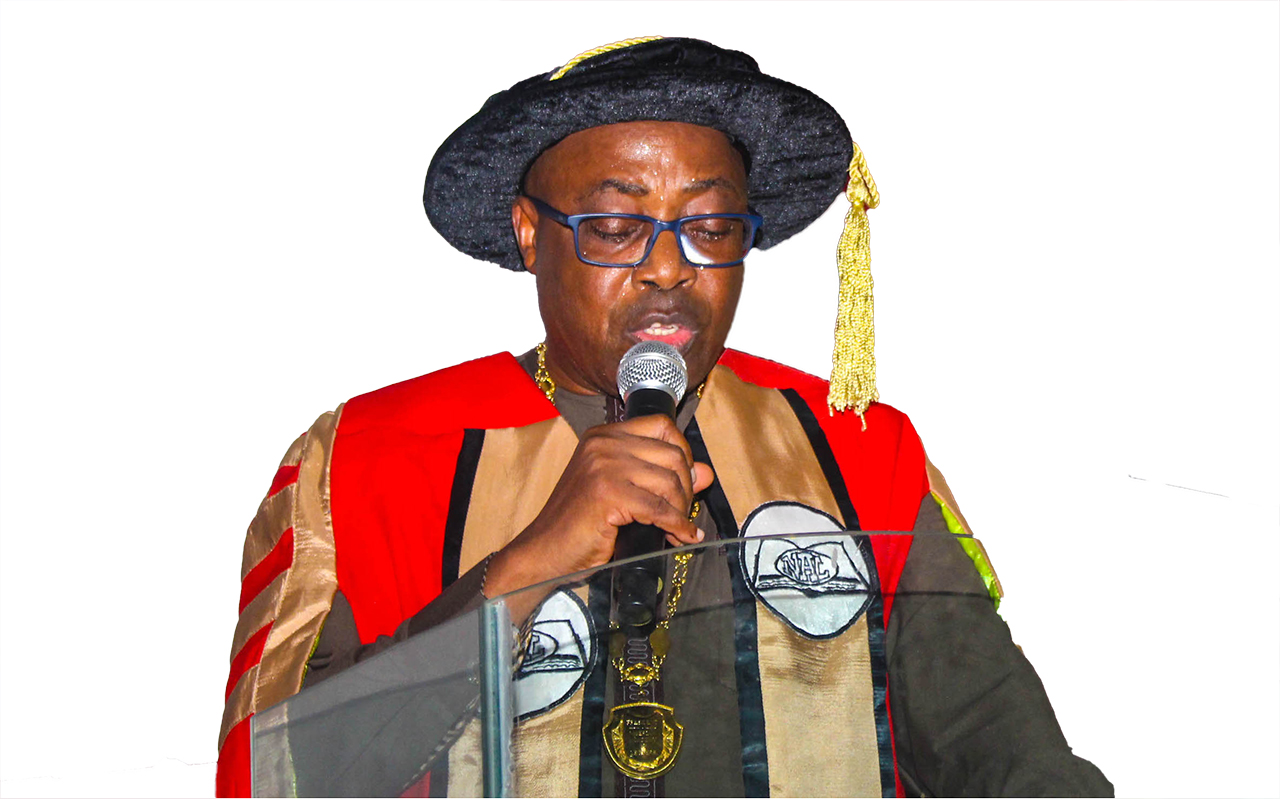
The immediate past president of the Nigerian Academy of Letters, Prof. Sola Akinrinade, has demanded that no university professor in Nigeria should earn less than N2.5 million monthly.

Speaking with The PUNCH on Monday, Akinrinade said lecturers were currently receiving “slave wages, noting that salaries of Nigerian lecturers, particularly professors, were far below their contemporaries on the African continent and among the worst in the world.

He said, “I became a full professor on October 1, 1999. What we earn is a net salary of N584,000, with gross pay around N700,000. “It is one of the lowest-paid in the world. Professors are being paid slave wages,” he said.

“For me, no professor should earn less than N1.5 million a month, and that was before the current devaluation. If someone in 2017 said no professor should earn less than N1 million, you can now calculate what it should be by now, given currency devaluation and economic realities.

“For me, a professor should not earn less than N2.5 million monthly,” he said.

Akinrinade recalled that in 2017, a director at the Federal Ministry of Finance had said no professor should earn less than N1 million monthly.

According to Nigeria’s Consolidated University Academic Salary Structure, graduate assistants earn between N125,000 and N138,020 monthly, assistant lecturers between N150,000 and N171,487, Lecturer II between N186,543 and N209,693, Lecturer I between N239,292 and N281,956, Senior Lecturers between N386,101 and N480,780, Readers between N436,392 and N522,212, and professors between N525,010 and N633,333 before deductions.

Recall that findings by The PUNCH last year affirmed that Nigerian university lecturers are among the worst paid in Africa, as professors earn an average of $366 (about N500,000) monthly, far behind their counterparts in other African countries.

See also  Why my family started school for traditional worshippers – Coordinator

While Nigerian professors earn about $4,400 annually, their counterparts in South Africa earn over $57,471 per year; Kenyan $48,000, Eswatini $41,389, Lesotho $32,455, Gabon $29,907, Sierra Leone $18,000, Zambia $14,949, and Comoros $12,960.

He lamented that poor pay discourages academic productivity and weakens the capacity of Nigerian lecturers to negotiate internationally.

“The Executive Secretary of TETFund once said he was ashamed to admit how much lecturers are paid in Nigeria. The dollar equivalent of the salary of graduate assistants and younger lecturers is about $100. How do you explain that?” he asked.

Akinrinade described the current remuneration of lecturers in Nigeria as “slave wages,” adding that most citizens fail to understand the importance of the agitation for better salaries.

“People are always up in arms against lecturers because they fail to appreciate what academics do or fail to understand what the agitation is about,” he said.

“Within Nigeria itself, in Rivers State, no professor earns less than N1 million a month. If Rivers State can pay, why not the Federal Government or other states? Some would say they don’t have oil money. A current Vice-Chancellor was on sabbatical at one of the universities in Rivers State and went to contest for VC in her own university. She asked that her position be kept in Rivers State in case she didn’t get the VC job. That is how bad things are,” he said.

Akinrinade stressed that poor pay hinders lecturers’ negotiating power abroad.

“You apply for a job even in Botswana, and they ask for your current pay slip. If your salary comes to $300–$400 a month, they think they are doing you a favour. The least paid in their system is about $5,000. We undermine ourselves,” he said.

See also  FG releases approved subjects for basic, senior secondary education

Recall that a former Vice-Chancellor of the University of Lagos, Prof. Oluwatoyin Ogundipe, also warned that low remuneration erodes lecturers’ commitment, just as Prof. Tunde Adeoye, Senior Lecturer, Department of Economics, University of Lagos, urged the Federal Government to urgently review salaries to avert industrial action.

The call for higher pay comes as the Federal Government prepares to implement a proposed 40 per cent salary increase for academic staff.

A formal agreement with the Academic Staff Union of Universities is scheduled for Wednesday at the Tertiary Education Trust Fund, Conference Hall, Abuja.

The agreement, effective from January 1, 2026, will include a pension for professors equivalent to their annual salary at retirement age of 70, and funding for research through a National Research Council with at least 1 per cent of Nigeria’s Gross Domestic Product. Other provisions include a better university funding model, dedicated allocations for research, libraries, labs, equipment and staff development, stronger university autonomy, elected academic leadership (limited to professors), and protection against victimisation for staff involved in the struggle.

punch.ng

FOLLOW US ON:

FACEBOOK

TWITTER

PINTEREST

TIKTOK

YOUTUBE

LINKEDIN

TUMBLR

INSTAGRAM

Continue Reading
Click to comment

Leave a Reply

Your email address will not be published. Required fields are marked *

Education

FG approves N4bn take-off grants for Tinubu poly, Epe varsity

Published

on

The Federal Government has approved N2bn each as take-off grants for the Bola Ahmed Tinubu Federal Polytechnic in Abuja and the Federal University of Science and Technology, Epe in Epe, Lagos State, as part of efforts to support their early operations.

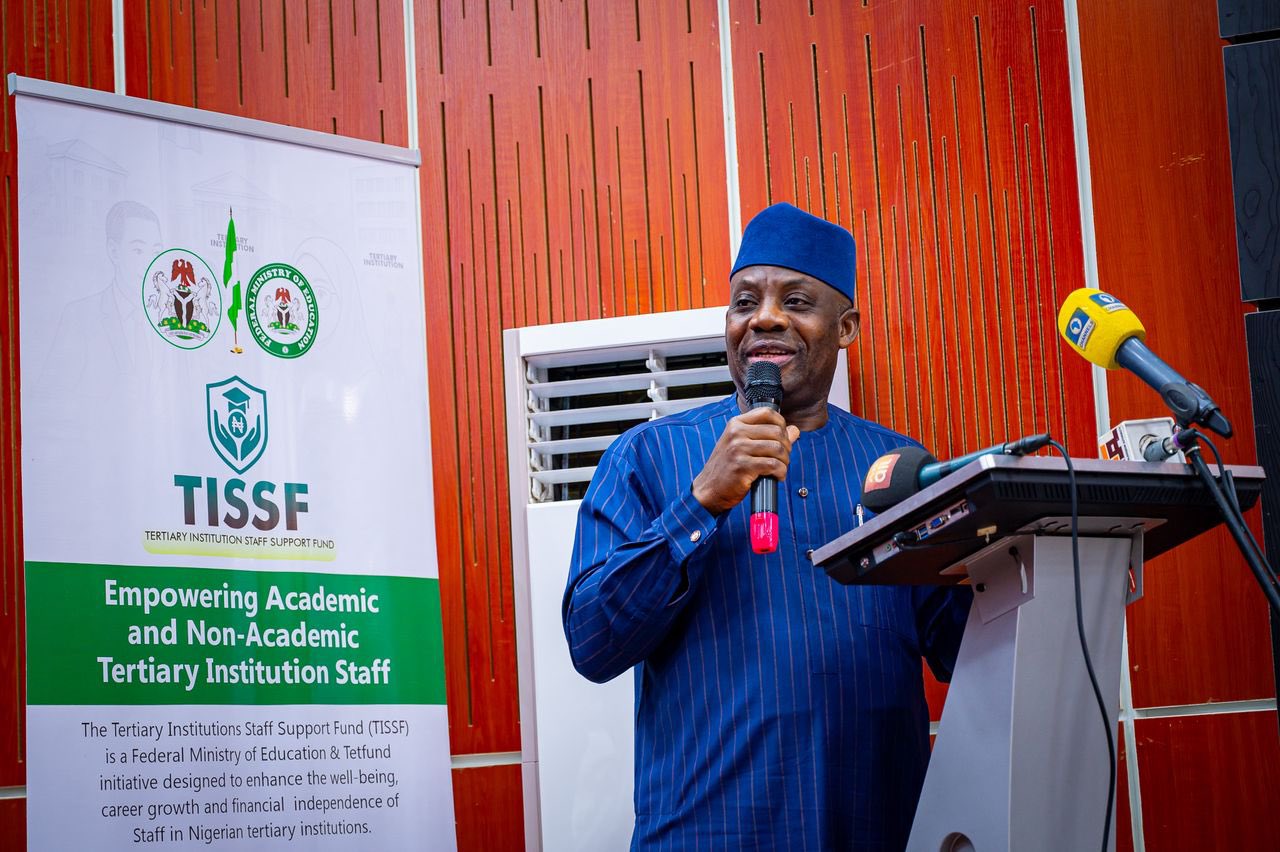
The Minister of Education, Dr Tunji Alausa, disclosed this on Thursday during the inauguration of key officials appointed to lead the two institutions, according to Arise News.

Among those inaugurated were Prof. Nosiru Onibon, who will serve as the pioneer Rector of the Bola Ahmed Tinubu Federal Polytechnic, Abuja; Prof. Adeola Oshikoya, appointed Vice-Chancellor of the Federal University of Science and Technology, Epe; and Dr Angela Ajala, who assumed office as Executive Secretary of the National Commission for Colleges of Education.

Presenting the letters of appointment in Abuja, Alausa said the newly created institutions were part of the Federal Government’s efforts to expand access to higher education and strengthen Nigeria’s capacity in science, technology and innovation.

“Every child in this country deserves access to the highest quality education comparable to global standards. The appointees were carefully selected based on their record of service and achievements across Nigeria’s educational institutions.

“To whom much is given, much is expected. You have been chosen from millions of Nigerians to serve your country, and this recognition extends to your families as well,” the minister said.

He noted that the administration of President Bola Tinubu was focused on building a stronger education system capable of producing skilled manpower needed for national development.

See also  FG, ASUU unveil agreement to end strikes, varsities closures

According to the minister, the N2bn take-off grants approved for each institution are meant to help the schools establish basic administrative and academic structures as they commence operations.

Alausa urged the newly appointed officials to provide strong leadership that would shape the identity and long-term development of the institutions.

He said the Federal University of Science and Technology in Epe and the polytechnic in Abuja were strategically located to harness the economic potential and human resources available in the two regions.

The minister added that the institutions are expected to focus on areas such as technological innovation, renewable energy, climate change response, disaster risk management and other research fields relevant to national development.

He also congratulated Ajala on her appointment as NCCE Executive Secretary, stressing the importance of teacher education to the development of the country’s education system.

punch.ng

FOLLOW US ON:

FACEBOOK

TWITTER

PINTEREST

TIKTOK

YOUTUBE

LINKEDIN

Continue Reading

Education

Ekiti approves N165m for rehabilitation of two schools

Published

on

Ekiti State Government has approved about N165m for reconstruction works at two special schools in the state.

The Commissioner for Information, Taiwo Olatunbosun, in a statement in Ado Ekiti on Thursday, listed the schools as Government Special School, Ido-Ekiti and Government Special School for the Deaf, Ikoro-Ekiti.

Speaking on decisions taken at the State Executive Council meeting on Wednesday, Olatunbosun said the council approved N85.73m for the Government Special School, Ido-Ekiti, covering the reconstruction of failed drainage systems and the concrete landscaping of driveways and walkways within the school premises.

Similarly, the government approved N88.94m for the Government Special School for the Deaf, Ikoro-Ekiti, where erosion had severely affected drainage channels, driveways, walkways, and parts of the school frontage.

He said, “The interventions are expected to restore critical infrastructure within the affected schools, improve the safety and accessibility of the facilities, and provide a more conducive learning environment for students, particularly those with special educational needs.

“The approval specifically covers the reconstruction of failed drainage systems and the concrete landscaping of driveways and walkways at the Government Special School, Ido-Ekiti, as well as the construction of a new culvert, drainage systems, and associated concrete works at the Government Special School for the Deaf, Ikoro-Ekiti.”

According to him, the interventions became necessary following the devastating impact of erosion on key infrastructure within the schools, including collapsed drainage channels, damaged walkways, compromised driveways, and in some cases, damaged perimeter fencing and assembly grounds.

These, he said, had significantly affected the learning environment and overall safety of students, particularly given the special needs of the pupils in the affected institutions.

See also  FG, ASUU unveil agreement to end strikes, varsities closures

The commissioner said the two projects “are to be executed within 16 weeks by the State Bureau of Special Projects through direct labour, given the urgency of the intervention and the need to minimise disruption to the learning activities of the students.”

punch.ng

FOLLOW US ON:

FACEBOOK

TWITTER

PINTEREST

TIKTOK

YOUTUBE

LINKEDIN

TUMBLR

INSTAGRAM

Continue Reading

Education

UNILAG faults ASUU strike, insists exams will hold

Published

on

The management of the University of Lagos UNILAG has chided the varsity’s chapter of the Academic Staff Union of Universities for declaring an industrial action without following due process.

PUNCH Online reports that the ASUU UNILAG, rising from a congress held on Tuesday, asked lecturers to withdraw their services from Wednesday over what they described as ‘amputated’ January and February salaries received.

The Chairman, ASUU, UNILAG chapter, Prof Idou Keinde, stated that the lecturers did not receive the full complement of their salaries: Consolidated Salary Structure for Academics, Consolidated Academic Tools Allowance and Professorial Allowance.

Keinde vowed that the lecturers would not resume work until their full salaries are paid.

But UNILAG, through its Head, Communication Unit, Adejoke Alaga-Ibraheem, on Wednesday, said the university would continue to engage with the ASUU executive to address the issues, especially the unpaid Consolidated Academic Teaching Allowances.

The statement read, “The Management of the University of Lagos has noted reports circulating in the media that the Academic Staff Union of Universities, UNILAG Chapter, at its Congress held on Tuesday, March 10, 2026, directed its members to suspend their services over alleged unpaid Consolidated Academic Teaching Allowances.

“Management observes that due process was not followed in making this declaration. Nevertheless, in its commitment to the welfare of staff and students, the university has continued to engage with the ASUU Executive to address all issues.”

While noting that engagement with the ASUU would continue, the UNILAG management said the ongoing students’ examinations scheduled for Wednesday will proceed as planned.

See also  School owners fear 700,000 Ogun students may miss WASSCE, see reason

“The university is particularly mindful that students are currently at a critical stage of the academic session, with semester examinations already underway.

“Any disruption at this time would adversely affect students, especially those scheduled to commence the Students’ Industrial Work Experience Scheme, internships, and those preparing to proceed to the Law School,” the statement added.

It, however, noted that courses for which students have been informed by their Deans or Heads of Department that examinations will not be held will be rescheduled.

“All examinations will continue as scheduled from Thursday, March 12, 2026, and deans are to ensure that necessary arrangements are put in place for the smooth and successful conduct of the examinations.

“Management appeals to all members of the university community to remain calm and continue to go about their lawful academic activities as discussions with ASUU executive continue toward an amicable resolution of the issues raised,” the statement concluded.

Continue Reading

Trending