Connect with us

Education

Cross River gov mourns UNICROSS students, staffer killed in crash

Published

on

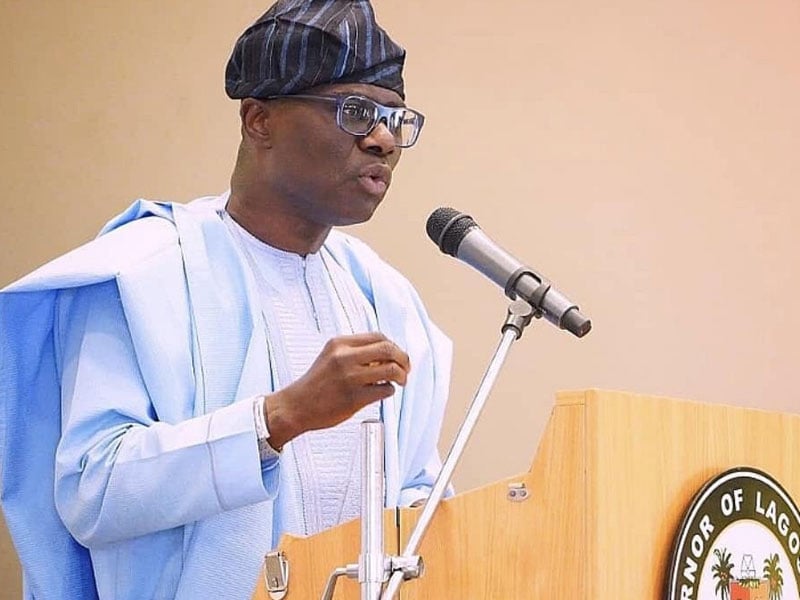
Governor Bassey Otu has expressed grief over the death of students and a staff member of the University of Cross River State (UNICROSS) who died in a road accident along the Calabar–Itu Highway.

In a statement shared on Facebook on Sunday, the governor described the incident as devastating, noting that it had plunged the state into mourning.

“I received with a deeply broken heart the devastating news of the tragic road accident involving students and a staff member of the University of Cross River State. This painful incident has cast a heavy shadow over our dear state and brought immense sorrow to us all,” he said.

He lamented the loss of young lives, describing the victims as promising individuals whose futures had been cut short.

“In one heartbreaking moment, we have lost some of our brightest young minds, full of promise, hope, and potential, alongside a committed staff member whose service reflected dedication and sacrifice,” he added.

“These were not just students; they were the future of Cross River State, dreams alive with purpose and possibility, now painfully cut short,” he added.

The governor also sympathised with the families of the victims and members of the university community affected by the tragedy.

“As a father, I cannot begin to imagine the depth of pain the families are going through at this time. My heart goes out to the parents who must now bear this unimaginable loss, to friends and classmates left in grief, and to the entire UNICROSS community weighed down by this tragedy.

See also  ASUU - Hold FG responsible for varsity shutdown

“Please know that you are not alone. Cross River stands with you,” he said.

He offered prayers for the deceased and wished injured victims a speedy recovery.

“I pray that Almighty God grants eternal rest to the departed and comforts every grieving heart. In this moment of sorrow, I also extend my thoughts and prayers to those currently receiving treatment, trusting God for their speedy and full recovery,” he stated.

The governor added that his administration would continue to engage relevant authorities in response to the incident.

“As your Governor, I stand in solemn solidarity with all affected, and my administration will continue to engage with relevant authorities as we respond to this tragic incident,” he said.

“This is a painful time for us as a people. The pain of UNICROSS is my pain, and it is the pain of every Cross Riverian.”

PUNCH Metro had reported that at least three students and a staff member of the university died after a coaster bus conveying students collided with a container truck in Odukpani Local Government Area.

The accident occurred on Friday night as the students were returning from an official assignment in Uyo, Akwa Ibom State.

The university confirmed that 24 students, mostly members of the Students’ Union Government executive, were involved in the crash.

Among those who died were the SUG Director of Sports, Solomon Uya; Lucky Erim, a Chemistry student and faculty president; Favour Darlington of the Department of Educational Management; and Mr. Anthony Arikpo, a staff member who drove the vehicle.

Survivors are currently receiving treatment in hospitals, while the police said investigations are ongoing to determine the cause of the crash and locate the truck driver who fled the scene.

See also  How UNILAG final year student drowned in Lagos beach

punch.ng

FOLLOW US ON:

FACEBOOK

TWITTER

PINTEREST

TIKTOK

YOUTUBE

LINKEDIN

INSTAGRAM

Continue Reading
Click to comment

Leave a Reply

Your email address will not be published. Required fields are marked *

Education

JAMB to decide UTME cut-off marks May 11

Published

on

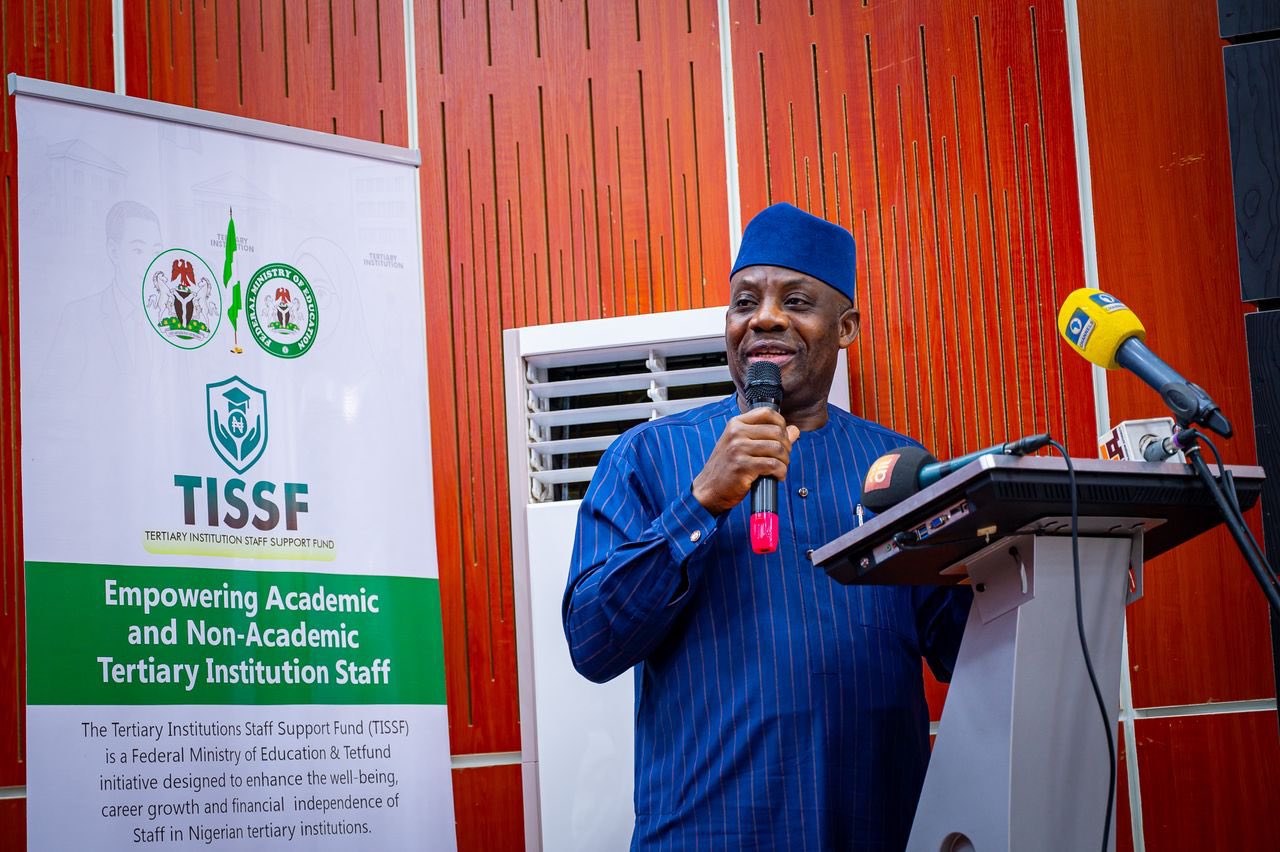
The Joint Admissions and Matriculation Board (JAMB) will convene its 2026 Policy Meeting on Admissions on Monday, May 11, where critical decisions, including the minimum Unified Tertiary Matriculation Examination cut-off marks for the 2026/2027 academic session, are expected to be determined.

This was disclosed in a statement issued on Sunday by the board’s spokesperson, Fabian Benjamin.

According to Benjamin, the meeting will take place at the Body of Benchers Auditorium, Plot 688, Institute and Research District, FCC Phase III, Jabi, Abuja.

It will bring together key stakeholders in Nigeria’s tertiary education sector.

He noted that major policy directions would be unveiled by the Minister of Education, Dr Tunji Alausa.

The statement read, “The board’s annual policy meeting on admissions is a crucial annual gathering where stakeholders decide minimum tolerable UTME marks, admission guidelines, and policies for tertiary institutions.

“Furthermore, the meeting is expected to, in particular, formally set the tone for the 2026/2027 admission exercise while impressing on attendees the need to adhere strictly to stipulated guidelines.

“Attendees at the 2026 meeting would include critical stakeholders such as vice-chancellors, rectors, provosts, registrars and their admission officers.

“Others are regulatory bodies ranging from the National Universities Commission, National Commission for Colleges of Education, to the National Board for Technical Education, among others.”

The board added that goodwill messages are expected from agencies, including the Nigerian Education Loan Fund, the National Youth Service Corps, and other stakeholders.

Benjamin further disclosed that the event will feature the 6th edition of the National Tertiary Admissions Performance-Merit Awards, aimed at promoting compliance with admission guidelines and improving standards in tertiary education across the country.

Continue Reading

Education

12 Chibok girls set to graduate from Yola varsity

Published

on

Twelve years after 276 schoolgirls were abducted from Government Girls Secondary School, Chibok, Borno State, by Boko Haram militants, 12 of the survivors are set to graduate from the American University of Nigeria, Yola.

Addressing journalists on Wednesday on the university campus, the President of AUN, Prof Dewayne Frazier, described the graduation of the Chibok survivors as a global success story.

“The graduation of several students who were formerly held captive in the Sambisa Forest symbolises more than academic achievement; it is a global testament to resilience, hope, and the indomitable human spirit.

“Their journey from captivity to a university degree has captured worldwide attention as a victory over adversity,” he said.

Frazier said the milestone validated AUN’s mission as a development-focused institution and demonstrated that it is possible to bridge the gap between trauma and higher education success.

“These graduates now stand as beacons of light for the North-East and the world. Their success sends a powerful message: education is the most proven tool for healing and transformation, capable of reclaiming lives and building a brighter, more secure future for Nigeria,” he added.

He also commended the Federal Ministry of Women Affairs for sponsoring the girls’ education at the university.

A total of 276 girls were abducted on April 14, 2014.

While 57 escaped on the night of the attack, and many others have been released or escaped over the years, more than 80 remain unaccounted for as of recent reports.

The incident also triggered the global #BringBackOurGirls campaign.

punch.ng

FOLLOW US ON:

FACEBOOK

TWITTER

PINTEREST

TIKTOK

YOUTUBE

LINKEDIN

INSTAGRAM

See also  NANS denies involvement in #FreeNnamdiKanu protest
Continue Reading

Education

How I bagged PhD at 27, won UT Dallas’ Outstanding Graduate Student award — Nigeria’s Muneer Yaqub

Published

on

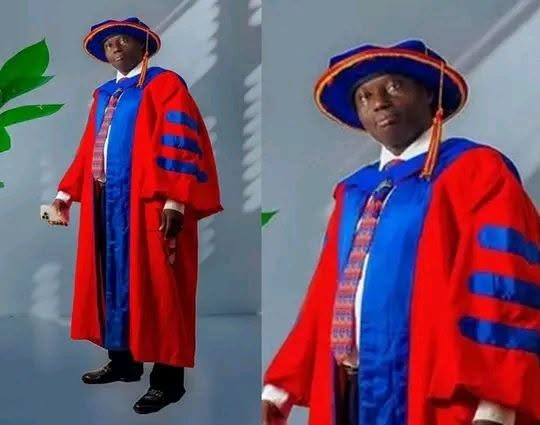
Muneer Yaqub, a Nigerian researcher and PhD graduate of the University of Texas at Dallas, United States, recently earned recognition as the Outstanding Graduate Student (PhD) selected from across six schools at the institution. He specialises in antimicrobial resistance, with research focused on highly drug-resistant, hospital-acquired pathogens at the Dillon Lab. In this interview with ADAM MOSADIOLUWA, he speaks on his academic journey from Usmanu Danfodiyo University, Sokoto (UDUS), to a fully funded doctoral programme in the United States, the challenges of adapting to a new academic and cultural environment, his leadership roles and mentorship initiatives for international students, and the perseverance required to complete a PhD at 27.

CAN you take us through your journey from studying Microbiology at Usmanu Danfodiyo University, Sokoto (UDUS), to becoming a PhD student at the University of Texas at Dallas in the United States? What drove that ambition, and what were the biggest hurdles along the way?

I studied Microbiology at Usmanu Danfodiyo University, Sokoto, and that was really where my interest in infectious diseases started to take shape. At the time, I didn’t have some grand, fully formed plan to do a PhD abroad. I was just curious especially about why some infections don’t respond to treatment the way we expect.

Over time, that curiosity turned into something more intentional. I started looking into opportunities outside Nigeria, partly because I wanted access to better research infrastructure, and partly because I wanted to challenge myself. The biggest hurdles were honestly information and access. It wasn’t always clear what the process looked like or what was required. You’re figuring things out as you go, often without guidance.

There were also structural limitations as an international student funding, eligibility, things like that. But once I understood the system better, it became more about positioning myself properly and staying consistent.

Immediately after your first degree at UDUS, you secured a fully funded fellowship to pursue your PhD in the US. What did that process look like, and how challenging was the transition from Nigeria to life as a doctoral student abroad?

Getting a fully funded PhD wasn’t a straight line. It was a lot of trial and error understanding how applications work, how to present your story, and what programs are actually looking for. Moving to the University of Texas at Dallas was a big shift. Academically, you’re expected to be much more independent. No one is holding your hand—you have to think critically, design experiments, defend your ideas. Outside the lab, it was also an adjustment new environment, new culture, building a support system from scratch. I think the hardest part was learning the “unwritten rules” how to communicate with professors, how to navigate opportunities, and how to advocate for yourself. That takes time.

See also  2026 CBT rollout on track, says WAEC

You were recently named the Outstanding Graduate Student (PhD) at UT Dallas, selected from among nominations across six schools. How challenging was it to finish your PhD at 27, and what does this recognition mean to you personally, and maybe as a Nigerian as well?

It means a lot, honestly. A PhD can be a very quiet journey most of the work happens behind the scenes, and progress is often slow and uncertain. So to have that work recognized at the level of the university is special. Finishing at 27 wasn’t easy. There’s pressure to perform, to produce results, to stay on track, even when things aren’t working. And in research, things often don’t work. As a Nigerian, it also means something more. You’re aware of where you’re coming from, and you know that there are many people back home with the same potential but fewer opportunities. So it feels like representation in a way.

The award recognises academic excellence, service, and perseverance in the face of challenges. Which of these would you say was the most demanding to demonstrate?

Perseverance, easily. Excellence is something you work towards. Service is a choice you make. But perseverance is tested when things are not going well when experiments fail, when results don’t make sense, when opportunities don’t come through. There were stretches where progress felt very slow. Staying consistent during those periods that was the hardest part.

Your research focuses on highly drug-resistant, hospital-acquired pathogens, a subject with serious real-world implications. What drew you to antimicrobial resistance, and what is your work at the Dillon Lab aiming to solve?

I work in the Dillon Lab, and my research focuses on antimicrobial resistance, particularly in Acinetobacter baumannii, which is a major hospital-acquired pathogen. What drew me to this field is how real the problem is. These are infections that are becoming harder to treat, even with our best antibiotics. A big part of my work looks at cases where bacteria appear susceptible in the lab but still survive during treatment. That gap between what we measure and what actually happens in patients is something we’re trying to understand better.

You have presented your research at major conferences, including ASM Microbe and Cold Spring Harbor Laboratory. How important has it been to take your work beyond the lab and into wider scientific conversations?

See also  FG approves N4bn take-off grants for Tinubu poly, Epe varsity

Presenting at conferences like those organized by the American Society for Microbiology and Cold Spring Harbor has been very important for me. It pushes you to explain your work clearly, and it exposes you to how others are thinking about similar problems. You get feedback, you refine your ideas, and sometimes you see your work from a completely different angle. It also reminds you that science is not just about your lab it’s a larger conversation.

You served as the first Graduate Student Representative for the Department of Biological Sciences and as the pioneer President of the UTD Global Ambassadors programme for international students. What motivated you to take on these roles alongside a demanding doctoral programme?

I took on those roles because I saw gaps that needed to be addressed. As an international student, I understood how confusing the system can be. Serving as Graduate Student Representative and leading the Global Ambassadors program gave me a chance to help improve that experience for others. It was definitely a balancing act with research, but it also gave me a sense of purpose beyond the lab.

I’m aware you founded Temple of Scholars to help international students secure funded graduate scholarships in the US. Where did that mission come from, and what impact has it had so far?

Temple of Scholars, now ScholarshipHQ, came directly from my own experience. When I was applying, I struggled to find clear, reliable information. There are many talented students, but they don’t always know how to navigate the process. I wanted to create something that makes that journey easier for others. Over time, it’s grown into a platform that has helped a lot of students secure funded opportunities, which has been really rewarding to see.

Greener Pasture: How to Secure a Fully Funded Master’s and PhD Scholarship in the US is a book you authored on securing fully funded scholarships. What do you think is the single most important misconception Nigerian and African students have about the scholarship application process?

That it’s just about grades. Grades matter, but they’re not enough. What really matters is how you present yourself your experiences, your goals, and how well you align with the program. A lot of strong students miss out because they don’t tell their story effectively.

Your writing has appeared in outlets such as The New York Times and Science Magazine, which is rare for a doctoral scientist. How did that aspect of your career develop, and how do you see journalism and research intersecting in your work?

See also  Firm offers two-year scholarship to rescued schoolchildren

Writing started as a way for me to process my experiences and communicate ideas beyond the lab. Publishing in The New York Times and Science came from engaging with topics that sit at the intersection of science and real life. I see writing and research as connected. Research answers questions, but writing helps bring those answers to people in a way they can understand and relate to.

Doctoral research is known to be mentally and emotionally demanding. Were there moments when you genuinely struggled to keep going, and how did you navigate those periods?

Yes, definitely. There were times when experiments failed repeatedly or when I wasn’t sure if I was on the right track. That’s a normal part of research, but it doesn’t feel normal when you’re in it. What helped was stepping back when needed, talking to mentors, and reminding myself that setbacks are part of the process not a sign that you’re not capable.

Who or what has kept you motivated over the years? Is there a person, a memory, or a belief that sustains you when things get difficult?

A mix of things. My background plays a role I’m aware of the opportunities I’ve had and the responsibility that comes with them. But also, I just genuinely enjoy understanding how things work. That curiosity has carried me through a lot.

What do you enjoy doing when you are not studying or writing papers?

I read a lot mostly books that go beyond science into philosophy, history, and storytelling. I also enjoy writing. It’s a different way of thinking and helps me make sense of my experiences.

You have built an impressive profile across research, leadership, writing, and mentorship. Where does Muneer Yaqub see himself after completing PhD?

I see myself continuing in research, but in a way that connects more directly to real-world applications. Whether that’s in academia or industry, I want to work on problems that translate into actual impact.

What would you say to a young Nigerian university student who envisions a future like yours but has no idea where to begin?

Start where you are. You don’t need to have everything figured out, but you need to be intentional. Look for information, build experience, and be consistent. And don’t count yourself out too early. A lot of opportunities feel out of reach until you actually understand how they work.

tribuneonlineng

FOLLOW US ON:

FACEBOOK

TWITTER

PINTEREST

TIKTOK

YOUTUBE

LINKEDIN

INSTAGRAM

Continue Reading

Trending