
Connect with us

News

Awujale: Candidate urges Ogun, kingmakers to uphold tradition in selection process

Published

on

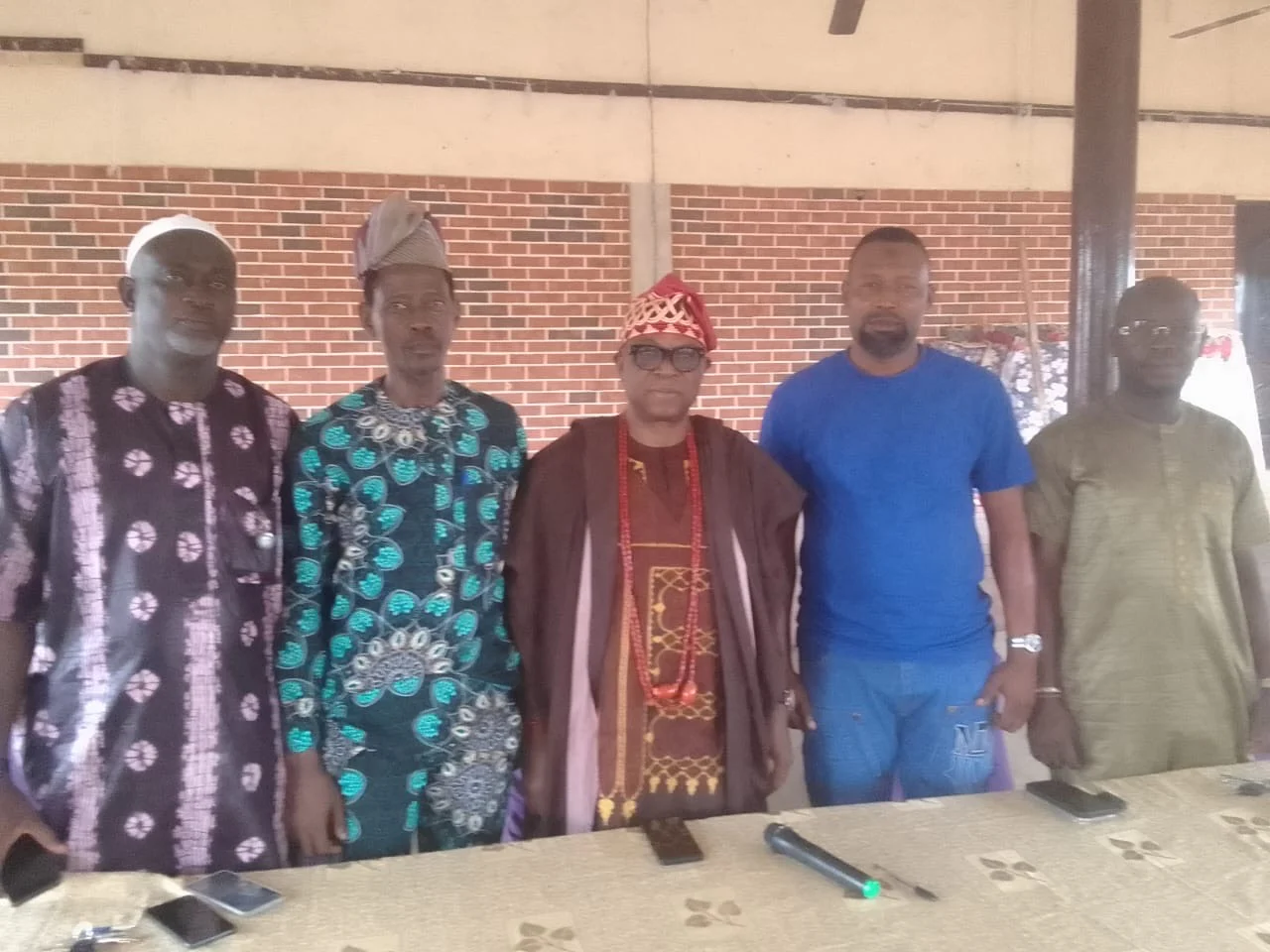
A candidate vying for the Awujale throne from the Fusengbuwa Ruling House, Adebowale Olufeko, has called on the Ogun State government, the Chieftaincy Council, the Afobajes, and all relevant stakeholders to ensure transparency, fairness, and adherence to tradition in the ongoing selection process for the next Awujale of Ijebuland.

According to a statement made available to PUNCH Online on Monday, Olufeko told journalists in Ijebu-Ode alongside other members of the Fusengbuwa Ruling House, that the Awujale stool represents not only leadership but the cultural soul, heritage, and identity of the Ijebu people.

“Indeed, we humbly appeal to your office concerning the ongoing process for the selection of the next Awujale of Ijebuland.

“This revered throne represents not only leadership but the soul, heritage, and identity of the Ijebu people,” Olufeko said.

He added that the people of Ijebuland are yearning for peace and unity and urged the government to act justly, avoiding actions that could trigger unnecessary tension or unrest.

“Our objective is to examine the process, aggregate our views where necessary, and articulate our collective position with decorum, wisdom, and unity — always mindful of tradition, law, and respect for constituted authority,” Olufeko said.

Olufeko commended Governor Dapo Abiodun for his developmental efforts in Ijebu-Ode, including the upgrade of TASUED to a Federal University.

“We acknowledge and appreciate the state governor, Prince Dapo Abiodun, for steps taken so far in ensuring that the Fusengbuwa Ruling House produces the next Awujale of Ijebuland. We also express our gratitude to the Kingmakers for their efforts to see that due process is followed,” he said.

See also  Firm bench, fiery defendant: Senior lawyers back judge’s sharp rebuke to Nnamdi Kanu

He also emphasised the sacred role of the Kingmakers in the process.

“All Fusengbuwa Ruling House members respectfully request that the Kingmakers should be allowed to present Ijebu-Ode and Ijebuland with ‘Omo Oye.’ Only one person will, at the end, emerge as ‘Omo Oye’ to ascend the stool of Awujale of Ijebuland,” Olufeko said.

Olufeko appreciated the guidance of the Olori Ebis, especially the Head of Fusengbuwa Ruling House, Alhaji Lateef Owoyemi, for his fatherly role in guiding the family through the process.

“We further implore the federal government, led by President Bola Ahmed Tinubu, to include Ijebuland in developmental priorities. The federal government’s attention is really needed in the development of Ijebuland as a whole,” he added.

The statement comes amid heightened debate over eligibility for the Awujale stool, following protests by members of the Fusengbuwa Ruling House last Friday over alleged attempts to impose a candidate.

Protesters carried placards reading,”Fusengbuwa says no to imposition,” “Let Ifa oracle determine the next Awujale,” and “Let the Kingmakers do their job.”

The Awujale stool became vacant in July 2025 after the death of Oba Sikiru Adetona, who reigned for 65 years and died at the age of 91.

Ogun State officials have denied claims of government interference in the process.

The Commissioner for Local Government and Chieftaincy Affairs, Ganiyu Hamzat, had temporarily halted the selection citing petitions from security agencies and stakeholders.

The Special Adviser on Information and Strategy, Kayode Akinmade, described claims of imposition as “baseless and false,” and reiterated the government’s commitment to due process and respect for traditional institutions.

See also  South West commission pushes revival of old rail corridors

The Regent and Head of the Awujale Interregnum Administration Committee, Sonny Kuku, said the Kingmakers are carefully scrutinising over 1,200 documents from at least 95 aspirants to ensure that only the most qualified candidate emerges.

FOLLOW US ON:

FACEBOOK

TWITTER

PINTEREST

TIKTOK

YOUTUBE

LINKEDIN

TUMBLR

INSTAGRAM

Continue Reading
Click to comment

Leave a Reply

Your email address will not be published. Required fields are marked *

News

Health workers’ strike grounds hospitals

Published

on

The ongoing strike by the Joint Health Sector Unions has entered the third month, crippling activities in government-owned hospitals across Nigeria, leaving patients stranded and forcing many to seek essential services outside public health facilities.

Now in its third month, the industrial action has grounded critical services, particularly in hospital pharmacies, laboratories, and other support departments, significantly disrupting healthcare delivery.

While the industrial action has severely disrupted federal health institutions, health workers in state-owned hospitals in Ekiti and Benue states have largely remained on duty, mitigating the impact on patients.

At the same time, resident doctors, nurses, and midwives in some state facilities, such as the Benue State University Teaching Hospital, Makurdi, have embarked on separate industrial actions, citing unpaid salaries, pension issues, and dilapidated infrastructure.

At the Federal Teaching Hospital, Ido Ekiti, medical doctors and nurses were seen at their posts; however, other health workers stayed away.

The Chairman of the Nigeria Union of Allied Health Professionals, Ekiti State Council, and the immediate past FETHI JOHESU Chairman, Ayodeji Ogunrinu, stated that the over two and a half months’ strike by the health workers was unfortunate.

Ogunrinu said, “It has deprived many, not just members of the communities, but also members of staff who ordinarily would have received medical services to save their lives. That is why I said it is very unfortunate.”

The JOHESU leader emphasised that the services of all workers in any health facility were important, adding that, “Even the cleaner, even a health assistant, they are all very important. I’m in Physiotherapy, so I know the roles they play.”

He lamented that FETHI now looked like a ghost town, without water, electricity, drugs, laboratories and other essential services, adding that it would be difficult for any person or medical officer to admit a patient.

Ogunrinu advised the Federal Government to implement the content of the 2018 circular from the Federal Ministry of Labour, which concerns the adjustment of the Consolidated Health Salary Scale for JOHESU members, the basis of the ongoing strike that began in late 2025.

Speaking on the strike, the JOHESU Acting Chairman at Ekiti State University Teaching Hospital, Ado Ekiti, Adewale Adeosun, said members at the facility were not on strike as a mark of honour for the Ekiti State Governor, Biodun Oyebanji.

Adeosun, addressing the impact of the JOHESU strike at federal health facilities on the state-owned tertiary health institution, said, “If you come to EKSUTH now, it is just like a market. Patients’ turnout has increased. All the other patients who were meant to go to the federal hospitals are now coming to EKSUTH.”

The EKSUTH JOHESU chairman said the Oyebanji administration in the state had done a lot for EKSUTH, and it would be unfair to join the strike.

The JOHESU State Chairman, Oluwafemi Ajoloko, expressed hope that the Federal Government would accede to members’ request for an upward adjustment of CONHESS within the next one or two weeks.

See also  Firm bench, fiery defendant: Senior lawyers back judge’s sharp rebuke to Nnamdi Kanu

Ajoloko, who said that while health workers in federal institutions were on strike, those at state-owned hospitals and primary health centres had remained at work, noted that the industrial action had increased the workload of personnel at the state-owned facilities.

At the Obafemi Awolowo University Teaching Hospital, Ile-Ife, The PUNCH observed obvious scaling down in activities, as some doctors, who preferred to remain anonymous as they were not authorised to comment on the matter, said no serious service was rendered since the commencement of the strike.

The doctors also revealed that the strike was having negative effects on the training of medical personnel, saying the patients slated for surgeries since early November 2025 had not been attended to.

Speaking on the effects of the industrial action on the hospital, the JOHESU chairman of the OAUTHC chapter, Abdullateef Adeyeni, said the facility had so far lost up to N1.5bn in internally generated revenue.

Adeyeni, speaking with one of our correspondents, also accused the Coordinating Minister of Health and Social Welfare, Prof Ai Pate, of being nonchalant regarding the demands of the union.

Apart from the loss of revenue, the labour leader said activities across the facility had been paralysed.

“Our Chief Medical Director was saying the hospital has lost a lot. He said the hospital has been losing a minimum of N500m per month. So, as a result of this strike, OAUTH has lost up to N1.5bn in three months.

“The most annoying part of it is that patients are suffering. The Federal Government has turned a deaf ear,” he said.

In Ondo State, The PUNCH observed that public hospitals experienced low patronage due to the ongoing strike.

A visit to the University of Medical Sciences Teaching Hospital, Akure, the state capital, revealed that the facility, which used to be a beehive of patients and their relatives, had significantly fewer patients following the strike.

Only doctors and consultants were seen working, while the offices of JOHESU staff, as well as the laboratory, pharmacy, and registry, were locked.

It was also gathered that many patients had switched to private hospitals for treatment after failing to receive satisfactory services at the government facility.

A patient, Mrs Remilekun Ayebo, said she had been patronising a private hospital for treatment and only visited the government hospital to consult her doctor.

Meanwhile, Dr Olufunmilayo Dada of the National Association of Resident Doctors at the Federal Medical Centre, Owo, said the strike had not significantly affected the services being rendered by the doctors at the hospital.

“The strike is indeed ongoing, but we are not being affected in our services. We are doing what we are supposed to do,” Dada stated.

See also  Sacking Of Service Chiefs: ‘This Is Not A Reaction To Any Rumour Of Coups’ – Presidency Clarifies

The chairman of the state chapter of the Nigerian Medical Association, Dr Olumuyiwa Alonge, confirmed that the industrial action by health workers affected the smooth operation of doctors’ services.

“Every health worker has a role at every stage of medical work. For instance, now, the laboratory workers are not working, which means one has to take blood samples elsewhere for examination. The same applies to pharmacists. Everybody’s role is important in the hospital.

“Though we are working, it is not as smooth as it used to be when everyone was at work,” Alonge added.

A visit to the University of Benin Teaching Hospital on Saturday showed that services were nearly paralysed.

The hospital was observed operating at minimum capacity, with pharmacies and laboratories closed.

A staff member, who requested anonymity, said, “Nothing is working.”

An officer of the Medical and Health Workers Union of Nigeria, UBTH chapel, Abdulazeez, expressed displeasure over the slow pace of government response.

He said the strike aimed to highlight the plight of JOHESU members, not to punish patients.

“As of today, we have not seen any sign that the strike will end. The President set up a committee headed by Governor Hope Uzodimma of Imo State to look into the matter. They were supposed to meet with the Nigeria Labour Congress and report back to the President.

“Last week, the President was in Turkey, and there has been no meeting between the NLC and the government. The NLC and the TUC got involved in December. Both bodies are also part of the negotiations.

“There were also different committees set up at different levels, but the one set up by the Federal Government supersedes everyone. Unfortunately, no meeting has taken place recently.

“The strike has affected hospital operations and patients, but it is not our intention to make them suffer. We have been addressing this issue for 12 years,” he said.

At Lagos State University Teaching Hospital, Ikeja, a visit on Friday showed the fee-paying pharmacy was shut, and the laboratory section was largely non-operational, with many patients seen purchasing drugs from private pharmacies due to the disruption.

A hospital staff member, speaking on condition of anonymity, explained that services had been drastically reduced since the strike began.

“Before the strike, the pharmacy operated 24 hours daily, including weekends. But now, they only open in the morning and close by 4 pm, and they don’t come at all on weekends,” the staff member said.

A relative of a patient lamented that the strike prevented him from donating blood for his cousin.

“I wanted to donate blood for my cousin who was admitted here, but when I got to the laboratory, there were no staff members to bleed me or screen the blood. I had no choice but to go outside to buy blood,” he said.

See also  Awujale stool: Family kicks over exclusion from royal lineage

Similar disruptions were observed at Alimosho General Hospital, where the pharmacy rendered only skeletal services.

The chairman of the Lagos University Teaching Hospital Association of Resident Doctors, Dr Gbolahan Adenuga, said much of the workload was now handled by local staff and interns in the absence of JOHESU members.

“Due to the strike, the workload is now being handled by local staff and interns.

“Of course, there are glitches and delays because of the strike. What 10 people were supposed to do, two people are now doing,” Adenuga added.

However, the JOHESU Benue State chapter chairman, Benjamin Ioryem, said the union was not on strike in the state.

Speaking to our correspondent over the weekend, Ioryem said while there were nine challenges in the state, eight were internal, and the remaining one, concerning the state government, was already receiving attention.

“In Benue State, we are not on strike because some of our challenges are with hospital management. Out of the nine issues, eight are internal, such as salary shortfalls, claims, and promotions, which management has resolved to address.

“The only serious issue with the government is 18 months of salary arrears for medical doctors and nurses, which is before the governor. We have reached an agreement with management and government, so in Benue, we are not on strike.”

However, health care in the state has been partially grounded due to ongoing strikes by nurses, midwives, and resident doctors at the State University Teaching Hospital, Makurdi.

The state chairman of the National Association of Nurses and Midwives, Mr Tahav Kershio, said members had been on strike for close to 10 weeks over issues such as removal from the contributory pension scheme, manpower shortages, delayed promotions, dilapidated structures, denial of leave grants, and salary arrears.

Similarly, the Association of Resident Doctors at the State University Teaching Hospital, Makurdi, had been on strike since November 1, 2025, due to unpaid salary arrears, pension deductions without remittance, and poor infrastructure, according to the chairman, Dr Pededoo Kawen.

When contacted, the Commissioner for Health, Dr Paul Ogwuche, said the government was already attending to some of the issues raised by the unions.

“As I speak now, I can tell you authoritatively that the affected unions will suspend the strike at any moment.

“We have been engaging them, and the major issue, which is the 18 months of increments owed by the government, has been addressed.

“We are about to sign an agreement so that they can return to work and provide maximum health care delivery,” he said.

punch.ng

FOLLOW US ON:

FACEBOOK

TWITTER

PINTEREST

TIKTOK

YOUTUBE

LINKEDIN

TUMBLR

INSTAGRAM

Continue Reading

News

FG, states, LGs shared N1.969trn in December 2025 revenue

Published

on

A total sum of N1.969 trillion, being the December 2025 Federation Account revenue, has been shared among the Federal Government, states and local government councils.

This was disclosed in a communiqué from the Federation Account Allocation Committee, made available on Monday by Director Press and Public Relations, Office of the Accountant-General of the Federation, Mr Bawa Mokwa.

The revenue was shared at the January FAAC meeting.

The communiqué stated that the N1.969 trillion total distributable revenue comprised statutory revenue of N1.084 trillion, Value Added Tax revenue of N846.507 billion and Electronic Money Transfer Levy revenue of N38.110 billion.

It added that total gross revenue of N2.585 trillion was available in December 2025.

“Total deduction for cost of collection was N104.697 billion, while total transfers, refunds and savings amounted to N511.585 billion,” it said.

According to the communiqué, gross statutory revenue of N1.631 trillion was received for December 2025.

“This was lower than the sum of N1.736 trillion received in the month of November 2025 by N105.202 billion.

“Gross revenue of N913.957 billion was available from VAT in December 2025. This was higher than the N563.042 billion available in the month of November 2025 by N350.915 billion,” it said.

The communiqué said that from the N1.969 trillion total distributable revenue, the Federal Government received N653.500 billion, while the state governments received N706.469 billion.

It said the LGs received N513.272 billion, while the sum of N96.083 billion, representing 13 per cent of mineral revenue, was shared to the benefiting states as derivation revenue.

See also  FBI offering $100,000 reward for information to arrest Charlie Kirk's k!ller

On the N1.084 trillion distributable statutory revenue, the communiqué said the Federal Government received N520.807 billion and the state governments received N264.160 billion.

“The LGs received N203.656 billion, while the sum of N96.083 billion, representing 13 per cent of mineral revenue, was shared to the benefiting states as derivation revenue.

“From the N846.507 billion distributable VAT revenue, the Federal Government received N126.976 billion, the state governments received N423.254 billion and the LGs received N296.277 billion,” it said.

The communiqué said a total sum of N5.717 billion was received by the Federal Government from the N38.110 billion EMTL, while the state governments received N19.055 billion and the LGs received N13.338 billion.

It added that in December 2025, Companies Income Tax, Import Duty and VAT increased significantly.

It said Oil and Gas Royalty, CET levies and fees increased marginally, while Excise Duty, Petroleum Profit Tax and EMTL recorded considerable decreases.

punch.ng

FOLLOW US ON:

FACEBOOK

TWITTER

PINTEREST

TIKTOK

YOUTUBE

LINKEDIN

TUMBLR

INSTAGRAM

Continue Reading

News

Ondo residents to enjoy regular power supply soon – Aiyedatiwa

Published

on

Ondo State Governor, Lucky Aiyedatiwa, has assured residents that his administration is intensifying efforts to ensure regular and improved electricity supply across the state.

Aiyedatiwa spoke on Monday while interacting with journalists as part of activities marking the ongoing 50th anniversary celebration of Ondo State.

His assurance comes amid the recent transfer of the electricity regulatory authority by the Federal Government to some states, including Ondo, Enugu, Ekiti and Imo, a move that empowers states to issue licences to private investors to operate mini-grids and power plants, thereby encouraging competition and improving electricity supply.

The governor said the state was taking full advantage of the opportunity to independently regulate electricity distribution for the benefit of residents.

According to him, the administration is currently focusing on strengthening regulation, improving distribution and collaborating with existing power distribution companies to enhance electricity supply in the state.

He said, “Yes, we are not generating power for now, but in terms of regulation and distribution, we are very active. We have been doing a lot in that sector.

“You can see that all the DISCOs operating in Ondo State, we are working together with them.

“We have the Ondo State Electricity Regulatory Commission. We regulate and interface with them, so we are in charge of our own electricity.”

Speaking on efforts to curb estimated billing, Aiyedatiwa highlighted the introduction of the ‘O’ Datiwa Meter’ initiative, describing it as a key intervention aimed at promoting transparency and fairness in electricity charges.

He said, “Don’t forget the O’ Datiwa meter that we took up when they were giving crazy bills to our people. We had to take it upon ourselves to subsidise the distribution of meters to our people.”

See also  Public Structures Named After Buhari In Borno [Full List]

The governor added that electricity supply had become more stable in some parts of the state since his administration assumed office, attributing the improvement to sustained engagement with power distribution companies.

He stated, “If you look at it, electricity has been very, very constant in some parts of Ondo State since we came on board. It is because of the engagement we have been having with the distribution company.”

While acknowledging that electricity tariffs remain high for many residents, Aiyedatiwa expressed optimism that costs would reduce over time as the system improves.

He said, “Over time, just like when GSM started, it was expensive, but today it is cheap. It is the same thing.

“So, with time, we are going to improve on our administration, and then it becomes cheaper for all.”

This is coming days after the governor promised that the deep seaport proposed for the state will be delivered before the end of his administration.

The seaport project was approved by the administration of former President Muhammadu Buhari and recently had its licence revalidated by the Federal Government.

punch.ng

FOLLOW US ON:

FACEBOOK

TWITTER

PINTEREST

TIKTOK

YOUTUBE

LINKEDIN

TUMBLR

INSTAGRAM

Continue Reading

Trending