Connect with us

Business

Customer sues bank over alleged unlawful account freeze

Published

on

A customer of Kuda Microfinance Bank, Abdulrahman Ekundayo, has dragged the bank before the Federal High Court in Lagos over alleged unlawful freezing of its Multibusiness Global Enterprise corporate account.

When the matter came up on Tuesday for hearing, counsel to the applicant, Olalekan Ogunbunmi, informed the court that all court processes had been served on the bank and that the respondent was aware of the day’s proceedings.

However, Justice Ambrose Lewis-Allagoa, after reviewing the court file, noted that there was no proof of service before the court.

“There is no evidence of service in the court record,” the judge observed.

The court consequently ordered that a hearing notice be issued and properly served on the bank, and adjourned the matter to March 24, 2026, for report of service.

The applicant, in the suit marked FHC/L/CS/2230/2025 and filed by its lawyer, Olalekan Ogunbunmi, accused the bank of violating its fundamental rights by placing restrictions on its account without a court order.

According to the originating application, the action was brought pursuant to Sections 34, 35, 36, 41, 43 and 46 of the 1999 Constitution (as amended), as well as the Fundamental Rights (Enforcement Procedure) Rules, 2009.

In the suit, the applicant urged the court to declare “that the unlawful freezing of the applicant’s account by the respondent without court order or lawful excuse is illegal, wrongful, unconstitutional and a violation of the applicant’s fundamental rights.”

The applicant also asked the court to order Kuda Microfinance Bank to immediately unfreeze its account.

See also  VIDEO: Chaos as last-minute shoppers overwhelm Lagos Balogun market

He prayed, “An order directing and mandating the respondent to unfreeze the corporate account of the applicant, maintained with Kuda Microfinance Bank Limited with account number 3001195269.”

The applicant further asked the court to compel the bank to release various sums allegedly placed under lien, including: “N4,444,540 held on July 5, 2025, till date;” “N502,100 held on July 8, 2025, till date;” and“N2,896,680 held on July 15, 2025, till date.”

The applicant also sought “an order directing the respondent to release all funds held under lien on the applicant’s corporate account.”

Explaining the grounds for the suit, the applicant stated that, “the applicant is a law-abiding citizen and did not commit any offence known to law.”

It added, “The respondent has no lawful excuse for any threat of arrest, humiliation or detention against the applicant. The only ‘offence’ of the applicant was that it engaged in legitimate transactions with proof of evidence.”

The applicant further maintained that “the restriction placed on the account without a court order was unlawful and unjustified, as the applicant has not committed any offence to warrant such treatment.”

punch.ng

FOLLOW US ON:

FACEBOOK

TWITTER

PINTEREST

TIKTOK

YOUTUBE

LINKEDIN

TUMBLR

INSTAGRAM

Continue Reading
Click to comment

Leave a Reply

Your email address will not be published. Required fields are marked *

Business

NNPC ran refineries at monumental loss — Ojulari

Published

on

The Group Chief Executive Officer of the Nigerian National Petroleum Company Limited, Bayo Ojulari, has disclosed that Nigeria’s state-owned refineries were operating at a “monumental loss” to the country, prompting his leadership team to halt operations to prevent further value erosion.

Ojulari disclosed this on Wednesday in Abuja during a fireside chat titled “Securing Nigeria’s Energy Future” at the Nigeria International Energy Summit 2026, where he offered rare insight into the commercial and operational realities confronting NNPC’s refining assets.

According to him, public anger over the refineries was justified, given the scale of public funds invested over the years and the high expectations placed on the facilities.

“On the refineries, Nigerians were angry. A lot of money has been spent, and expectations were very high. So we were under extreme pressure, extreme pressure,” Ojulari said.

He admitted that upon assuming office, refining was not his core area of expertise, having spent most of his career in the upstream sector, but said accountability demanded rapid learning.

“My background is upstream, so I was on a vertical learning curve. You are accountable, so you must learn very quickly. Otherwise, there is no escape,” he said.

Ojulari explained that once his management team began a detailed review of refinery operations, the financial reality became immediately clear.

“The first thing that became clear, and I want to say this very clearly, is that we were running at a monumental loss to Nigeria. We were just wasting money. I can say that confidently now,” he said.

He revealed that NNPC was consistently pumping crude cargoes into the refineries each month, yet utilisation levels hovered around 50-55 per cent, resulting in significant value leakage.

See also  FG urged to expand grazing reserves nationwide

“We were spending a lot of money on operations, a lot of money on contractors. But when you look at the net, we were just leaking away value,” Ojulari said.

More troubling, he noted, was the absence of any credible plan to turn the losses around.

“Sometimes you make a loss during investment, but you have a line of sight to recovery. That line of sight was not clear here,” he added.

As a result, Ojulari said the first major decision of his administration was to halt refinery operations to prevent further losses and allow for a rapid reassessment.

“We decided to stop the refinery and do a quick check. We planned that if things were lined up, we would reopen and work on them,” he said.

He disclosed that part of the value destruction stemmed from the quality of products being produced, citing the Port Harcourt Refinery as an example.

“The crude we were taking into Port Harcourt was producing mid-grade products. When you aggregate their value compared to what you put in, it was a waste,” he said.

Ojulari acknowledged that the decision to halt operations was politically sensitive, noting that NNPC had historically been pressured to keep refineries running to ensure fuel supply continuity.

“There were political pressures to keep the refinery product, lots of pressure. But when you have been trained for over 35 years to focus on commerciality and profitability, you can’t sleep with that,” he said.

Nigeria’s four state-owned refineries, Port Harcourt (two plants), Warri, and Kaduna, have for decades operated far below capacity despite repeated turnaround maintenance exercises costing billions of dollars.

See also  FG earmarks N1.7tn in 2026 budget for unpaid contractors

At various points, the plants have operated at single-digit capacity or been shut down entirely, forcing Africa’s largest oil producer to rely almost entirely on fuel imports.

Between 2015 and 2023 alone, successive administrations approved multiple rehabilitation contracts, yet domestic refining output remained negligible, intensifying public scrutiny of NNPC’s operational efficiency.

Ojulari’s comments mark one of the most candid acknowledgements by an NNPC chief executive that continued refinery operations, under prevailing conditions, were economically unjustifiable.

The remarks underscore a broader shift within NNPC, under the Petroleum Industry Act, toward commercial discipline, even in politically sensitive areas such as domestic refining.

punch.ng

FOLLOW US ON:

FACEBOOK

TWITTER

PINTEREST

TIKTOK

YOUTUBE

LINKEDIN

TUMBLR

INSTAGRAM

Continue Reading

Business

Thank God for Dangote refinery, Ojulari tells Nigerians

Published

on

The Group Chief Executive Officer of the Nigerian National Petroleum Company Limited, Mr Bayo Ojulari, has praised the Dangote Petroleum Refinery as a critical stabiliser of Nigeria’s energy system, amid the state-owned oil company’s challenges in operating its government-owned refineries and meeting domestic fuel demand.

Ojulari, who spoke during a fireside chat titled“Securing Nigeria’s Energy Future” at the Nigeria International Energy Summit 2026 on Wednesday in Abuja, said the existence of a functional local refinery provided NNPC with much-needed “breathing space” amid intense pressure to maintain fuel supply continuity.

He said the Dangote Refinery has been a major relief for Nigeria’s fuel supply, urging Nigerians to appreciate its impact regardless of personal views about its owner, noting that the plant’s operations had drawn applause from participants at the event.

“Thank God for Dangote Refinery. Thank God. Whether you love Dangote, you hate him, say whatever you want to say, Nigerians should thank God for Dangote,” Ojulari said, drawing applause from the audience.

According to him, the coming on stream of the 650,000 barrels-per-day refinery marked a major relief for Nigeria at a time when legacy state-owned refineries were still struggling to deliver at scale.

Ojulari stressed that beyond capacity, the refinery’s local ownership was equally significant for national energy security.

“Thank God he’s a Nigerian. He’s not someone from another continent or another planet. Despite everything, that gave us an opportunity because we have a refinery that is working,” he said.

While acknowledging that the refinery does not yet meet Nigeria’s full domestic fuel demand, the NNPC boss said its operations have significantly reduced vulnerability in the supply chain.

“Yes, it may not meet our full needs, but it gives us a breathing space. And luckily, we are shareholders in that refinery as well,” he noted.

See also  Lagos Reopens Ferry Terminal After Clearing Water Hyacinth

Ojulari’s remarks signal a notable shift from years of tension between NNPC and the Dangote Group, which had previously clashed over issues ranging from crude supply terms and regulatory approvals to pricing and market-dominance concerns.

Under past leadership, the relationship was often characterised by public disagreements and mutual suspicion, with Dangote accusing state institutions of frustrating the refinery project. At the same time, regulators insisted on enforcing market and quality standards.

However, Ojulari said the current NNPC leadership has adopted a more pragmatic approach anchored on collaboration rather than confrontation.

“So we said, what’s the hurry? We have a refinery that is working. It’s not owned by NNPC, but it’s a Nigerian refinery, built in Nigeria, working in Nigeria,” he said.

He disclosed that NNPC has since engaged directly with Dangote to develop a framework for cooperation aligned with the Petroleum Industry Act.

punch.ng

FOLLOW US ON:
FACEBOOK

TWITTER

PINTEREST

TIKTOK

YOUTUBE

LINKEDIN

TUMBLR

INSTAGRAM

Continue Reading

Business

Nigeria to partner global allies on clean energy – Tinubu

Published

on

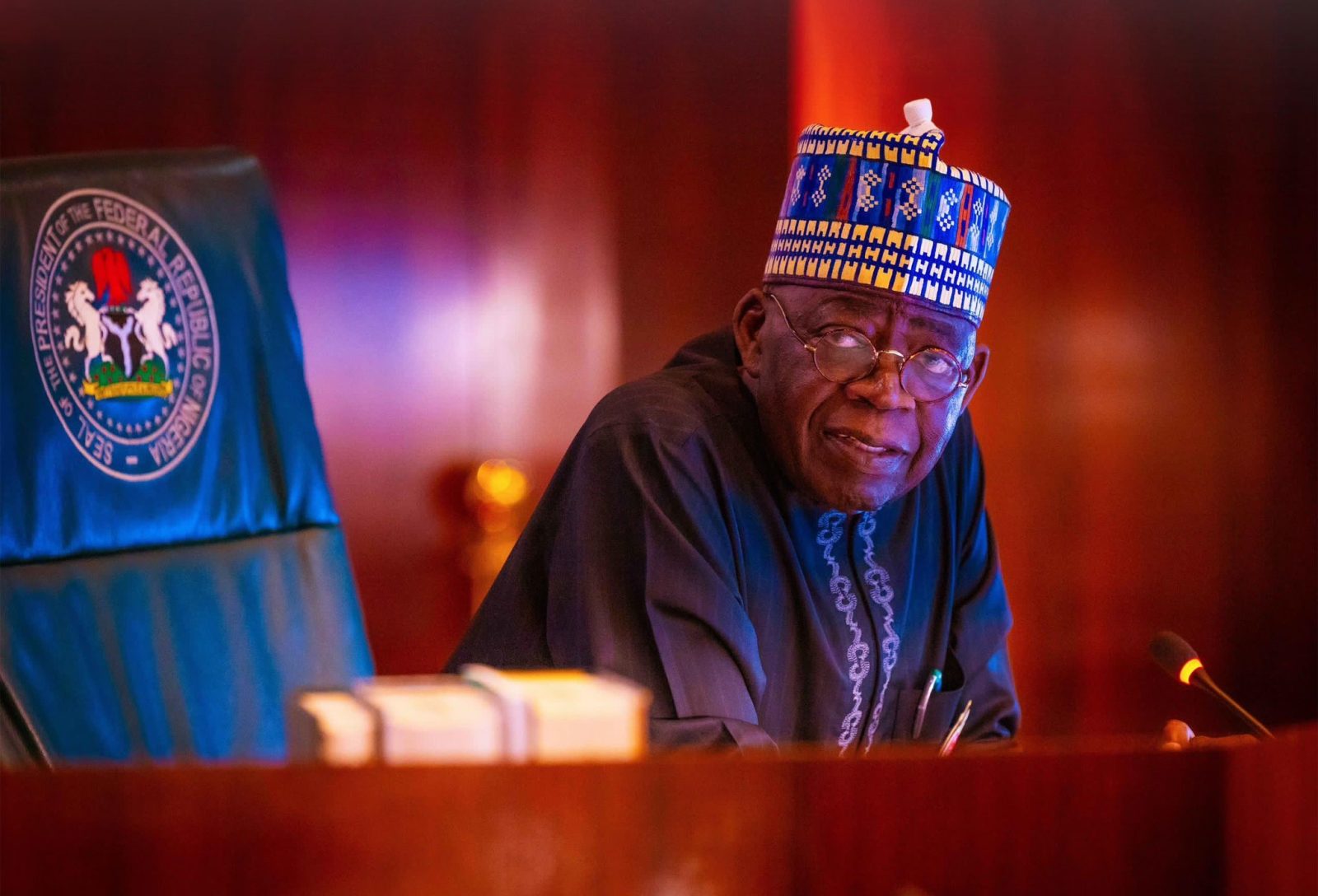
President Bola Tinubu on Tuesday said Nigeria is ready to collaborate with African nations, global partners, and the private sector to deliver cleaner, affordable, inclusive, and more secure energy.

He said energy plays a critical role as the invisible force holding the modern world together, as well as the quiet architecture of balance among nations, and as the unseen hand that steadies economies and sustains societies.

The President stated this when he declared open the 9th Nigeria International Energy Summit held at the State House Banquet Hall, Abuja. The summit was attended by heads of delegation and senior government officials from across the globe, as well as leaders of international energy organisations, chief executives of global and indigenous energy companies, development finance institutions, and representatives of host communities.

Tinubu, who was represented at the summit by his deputy, Vice President Kashim Shettima, observed that while energy remains central to peace, prosperity, and global stability, Nigeria is focusing heavily on utilising its vast gas reserves as a transition fuel and expanding renewable energy capacity.

“Energy must unite communities, stabilise economies, and secure futures. It must power factories, illuminate homes, fuel innovation, and build trust between government, investors, and citizens. Nigeria stands ready to collaborate with Africa, global partners, and the private sector to deliver energy that is secure, affordable, cleaner, and inclusive,” he declared.

The President recalled that even though his administration inherited an energy sector that was rich in potential in 2023, the sector was “constrained by inefficiencies, uncertainty, and prolonged underinvestment.”

See also  Lagos Reopens Ferry Terminal After Clearing Water Hyacinth

“We set to work without fanfare, guided by the clear understanding that energy cannot be treated simply as an economic commodity if stability is our goal.

“Energy is a catalyst for national security, industrial growth, social inclusion, and regional cooperation,” he noted.

Tinubu assured that his government was fully committed to “building an energy system that delivers reliability, transparency, sustainability, and shared prosperity.”

Outlining efforts by his administration to boost the energy sector, the President said his administration sustained and deepened the full implementation of the Petroleum Industry Act, consolidating its role as the linchpin of sector reform and strengthening regulatory institutions to ensure clarity of roles, transparency, and investor confidence.

He continued: “Under our watch, Nigeria’s upstream activity recorded a historic rebound. Rig counts rose from eight rigs in 2021 to 69 rigs by late 2025, reflecting renewed exploration and drilling momentum.

“The sector secured Final Investment Decisions exceeding $8bn, including major offshore gas developments involving global energy companies. Foreign direct investment into the oil and gas subsector rebounded strongly, driven by regulatory certainty, fiscal reforms, and improved operating conditions.”

Under his watch, Tinubu said crude oil theft, which had been a major constraint on production and revenue, declined significantly due to enhanced security coordination, surveillance, and regulatory enforcement, adding that the efforts paid off, restoring operational stability and improving Nigeria’s production reliability in international markets.

Earlier, Gambian President Adama Barrow observed that Nigeria’s policies have implications far beyond its borders, noting that working together through strategic partnerships is key to regional solutions and energy security.

See also  FG earmarks N1.7tn in 2026 budget for unpaid contractors

President of the Republic of Equatorial Guinea, Teodoro Obiang Nguema Mbasogo, maintained that Africa must cease to be merely an exporter of raw materials and focus on processing them for the betterment of future generations.

The Senate President, Godswill Akpabio, in a speech that was read on his behalf, averred that in Africa, energy is not just about resources but about inclusive and sustainable prosperity.

He assured that the National Assembly is ready to work with relevant stakeholders through legislative backing, agreeing that when the energy system works, the economy grows more resilient.

punch.ng

FOLLOW US ON:
FACEBOOK

TWITTER

PINTEREST

TIKTOK

YOUTUBE

LINKEDIN

TUMBLR

INSTAGRAM

Continue Reading

Trending