
Connect with us

News

US civil rights leader Rev. Jesse Jackson dies aged 84

Published

on

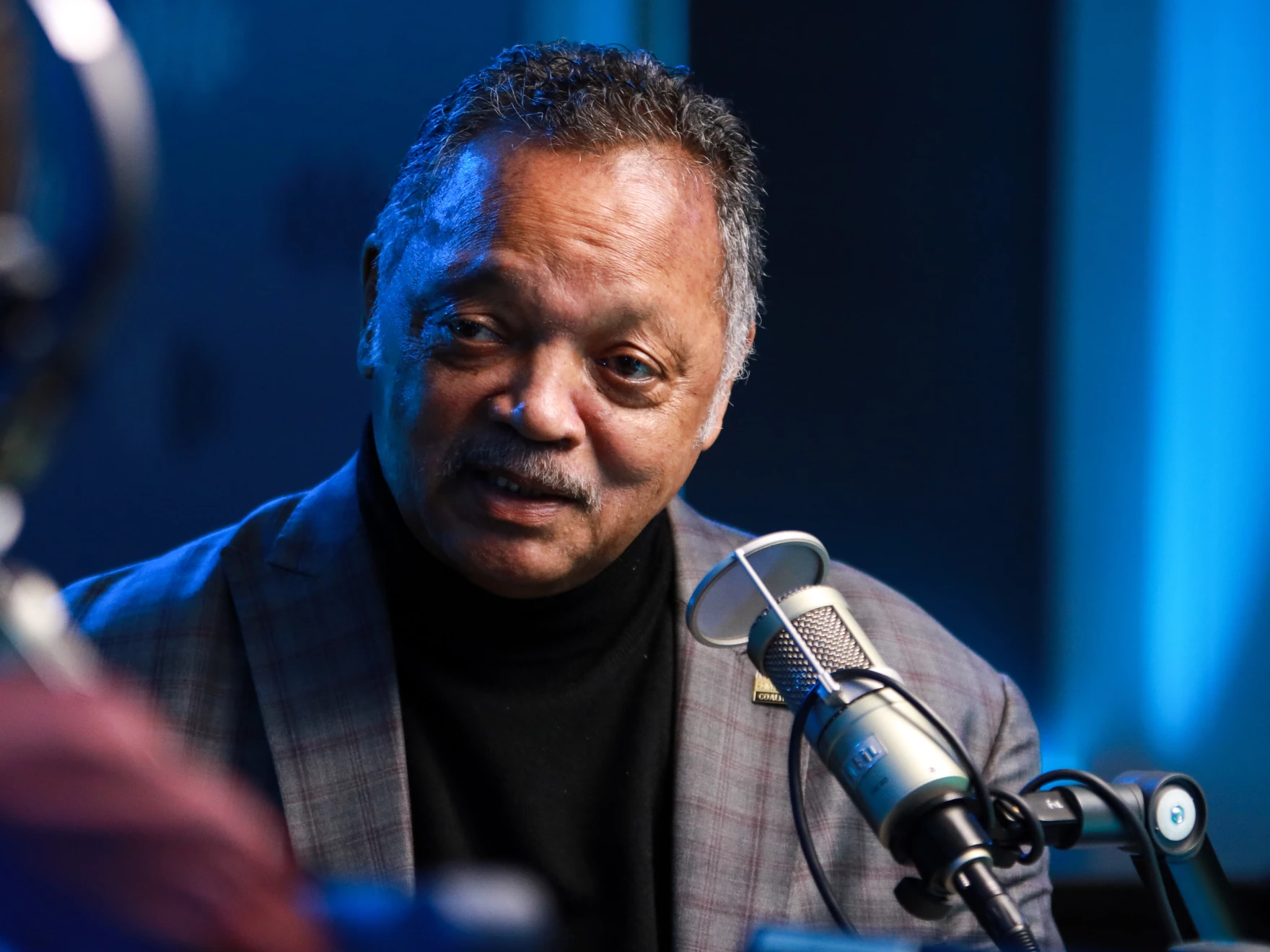
US civil rights leader Jesse Jackson died aged 84 on Tuesday morning surrounded by relatives, according to a statement released by his family.

“It is with profound sadness that we announce the passing of Civil Rights leader and founder of the Rainbow PUSH Coalition, the Honorable Reverend Jesse Louis Jackson, Sr,” the family said, adding he died “peacefully.”

His cause of death has not been released, but Jackson had been diagnosed with progressive supranuclear palsy and was in hospital late last year.

Tributes poured in for the prominent activist who twice ran to be Democrats’ presidential nominee, including from the first black US president, Barack Obama.

Jackson is survived by his wife Jacqueline and their children: Santita, Jesse Jr, Jonathan, Yusef, Jacqueline and Ashley.

In their statement, Jackson’s family said his “unwavering commitment to justice, equality, and human rights helped shape a global movement for freedom and dignity”.

“A tireless change agent, he elevated the voices of the voiceless from his Presidential campaigns in the 1980s to mobilising millions to register to vote – leaving an indelible mark on history,” they added.

Along with working with Martin Luther King, Jr, and running for president in 1984 and 1988, Jackson is remembered as the founder of a nonprofit organisation focused on social justice and civil rights, the Rainbow PUSH coalition.

Calling Jackson a “true giant”, Obama said in a statement that Jackson’s “two historic runs for president” had “laid the foundation for my own campaign to the highest office of the land”. Obama added that his wife Michelle “got her first glimpse of political organizing at the Jacksons’ kitchen table when she was a teenager”.

See also  I predicted mass US visa, green card revocations – Soyinka

“For more than 60 years, Reverend Jackson helped lead some of the most significant movements for change in human history,” the Obamas also said in the statement.

“From organizing boycotts and sit-ins, to registering millions of voters, to advocating for freedom and democracy around the world, he was relentless in his belief that we are all children of God, deserving of dignity and respect.”

Jackson was admitted to hospital last November, and doctors said he had been diagnosed with a rare degenerative condition called progressive supranuclear palsy (PSP) in April 2025, revising an earlier diagnosis of Parkinson’s Disease that Jackson had said was made in 2015.

Both diseases affect the brain, nervous system, and muscle control and, according to the American Parkinson Disease Association and the group CurePSP, many people with PSP are initially diagnosed with Parkinson’s because a number of the symptoms overlap.

Born in 1941 in Greenville, South Carolina, Jackson became involved in politics at an early age. He rose to prominence in the 1960s as a leader in Martin Luther King, Jr ‘s Southern Christian Leadership Conference and was with King when he was assassinated in Memphis, Tennessee, in 1968.

Over the course of his career, Jackson built a movement to bring America’s increasingly diverse population together, with a message that centred on poor and working-class Americans.

After his presidential runs, Jackson later positioned himself as an elder statesman within the Democratic Party.

His son Jesse Jackson, Jr is a former US congressman.

Shortly after his death was announced, politicians and other public figures took to social media to mourn the loss of Jackson.

See also  Delayed Electoral Act amendment could disrupt 2027 poll timetable – INEC

US President Donald Trump said he knew Jackson “long before becoming president”.

“He was a good man, with lots of personality, grit, and ‘street smarts,'” Trump said. “He was very gregarious – Someone who truly loved people!”

Former President Bill Clinton and his wife Hillary, a former secretary of state, also shared tributes, saying they were friends with Jackson for “almost fifty years”.

“Reverend Jackson championed human dignity and helped create opportunities for countless people to live better lives,” they said in a statement.

House of Representatives Minority Leader Hakeem Jeffries said Jackson “was a legendary voice for the voiceless,” in a tribute to the late civil rights leader posted on X.

“For decades, while laboring in the vineyards of the community, he inspired us to keep hope alive in the struggle for liberty and justice for all,” the Democrat said.

New York City Mayor Zohran Mamdani said the civil rights leader “never stopped demanding that America live up to its promise”.

“He marched, he ran, he organized and he preached justice without apology,” Mamdani said.

King’s daughter Bernice said Jackson had “devoted his life to lifting people in poverty, the marginalized, and those pushed to society’s edges”.

Civil rights leader Reverend Al Sharpton, who worked closely with Jackson during the civil rights movement, said Jackson was a “consequential and transformative leader who changed this nation and the world”.

“He told us we were somebody and made us believe. I will always cherish him taking me under his wing, and I will forever try to do my part to keep hope alive,” Sharpton said.

See also  One killed, eight injured in Lagos-Ibadan Expressway crash

FOLLOW US ON:

FACEBOOK

TWITTER

PINTEREST

TIKTOK

YOUTUBE

LINKEDIN

TUMBLR

INSTAGRAM

Continue Reading
Click to comment

Leave a Reply

Your email address will not be published. Required fields are marked *

News

Health ministry orders immediate retirement of longstanding directors

Published

on

The Federal Ministry of Health has ordered an immediate disengagement of Directors who have spent at least eight years in the directorate cadre with immediate effect.

The directors affected include those in the ministry, federal hospitals, agencies, among others, according to a memo sighted by our correspondent in Abuja on Tuesday morning.

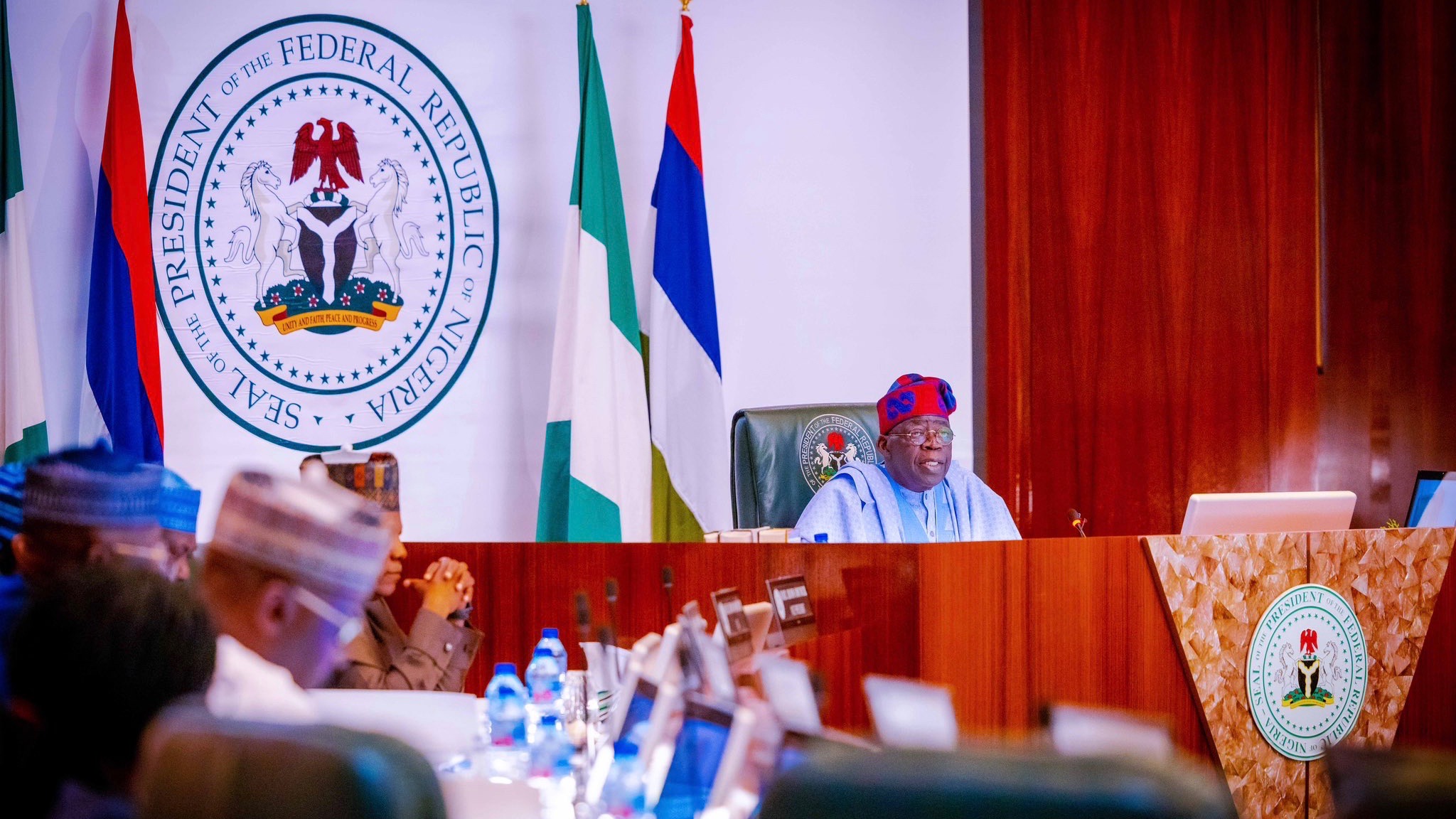
On Monday, The PUNCH exclusively reported that the Federal Government directed all Ministries, Departments, and Agencies to enforce the eight-year tenure limit for directors and permanent secretaries, following a new deadline set through the Office of the Head of Civil Service of the Federation.

The memo announcing the enforcement of the order at the FMOH signed by the Director overseeing the Office of the Permanent Secretary at the Federal Ministry of Health, Tetshoma Dafeta, reads, “Further to the Eight (8)-Year Tenure Policy of the Federal Public Service, which mandates the compulsory retirement of Directors after eight years in that rank, as provided in the Revised Public Service Rules 2021(PSR 020909) copy attached, I am directed to remind you to take necessary action to ensure that all affected officers who have spent eight years as Directors, effective 31st December, 2025, are disengaged from Service immediately.

“Accordingly, all Heads of Agencies and Parastatals are by this circular, to ensure that the affected staff hand over all official documents/possessions with immediate effect, their salaries are stopped by the IPPIS Unit and mandate the officers to refund to the treasury all emoluments paid after their effective date of disengagement.

See also  Spiritual cleansing: Parents defending Rivers pastor who flogged children need counselling – NAPTIP

“This is reiterated in a circular recently issued by the Office of the Head of the Civil Service of the Federation, Ref. No. HSCF/3065/Vol.I/225, dated 10″ February 2026. A copy is herewith attached for guidance, please.

“In addition, you are to forward the nominal roll of all directorate officers
(CONMESS 07/CONHESS 15/CONRAISS 15) In your institution, send to DHRM@health.gov.ng and Agudosi.obinna@health.gov.ng. You may please note that officials from the Office of the Head of the Civil Service of the Federation and the Ministry will conduct a monitoring exercise to ensure compliance.

“Failure to adhere to paragraph 2 above shall be met with stiff sanctions.”

Recall that in July 2023, the former Head of Civil Service of the Federation, Folasade Yemi-Esan, announced the commencement of the revised Public Service Rules.

Speaking at a lecture at the State House, Abuja, to mark the 2023 Civil Service Week, Yemi-Esan stated that the revised PSR took effect from July 27, 2023.

The Head of Service issued a circular addressed to Permanent Secretaries, the Accountant-General of the Federation, the Auditor-General for the Federation, and heads of extra-ministerial departments, informing them of the revised rules.

“Following the approval of the revised Public Service Rules (PSR) by the Federal Executive Council (FEC) on September 27, 2021, and its subsequent unveiling during the public service lecture in commemoration of the 2023 Civil Service Week, the PSR has become operational with effect from July 27, 2023,” the circular read.

According to Section 020909 of the revised PSR, the tenure limit for permanent secretaries is four years, with a possible renewal based only on satisfactory performance.

See also  Delayed Electoral Act amendment could disrupt 2027 poll timetable – INEC

The rules also stipulate that a director (GL 17) or their equivalent shall compulsorily retire after eight years in that position.

punch.ng

FOLLOW US ON:

FACEBOOK

TWITTER

PINTEREST

TIKTOK

YOUTUBE

LINKEDIN

TUMBLR

INSTAGRAM

Continue Reading

News

Idris mourns 14 wedding guests killed in Kebbi boat crash

Published

on

The Kebbi State Government has expressed deep sorrow over a tragic boat accident in Yauri Local Government Area that claimed the lives of 14 people, mostly women, shortly after a wedding ceremony.

Governor Nasir Idris, popularly known as Kauran Gwandu, commiserated with the bereaved families, the Yauri Emirate and residents of the area, describing the incident as a painful tragedy that has thrown the state into mourning.

The accident occurred at Gumbi village in Yauri LGA. The victims were among a large group that had escorted a bride to her husband’s home in Gwarzo village, Ngaski Local Government Area. The boat conveying them back reportedly capsized mid-journey.

Represented by the Yauri Local Government Chairman, Abubakar Shu’aibu, at the funeral prayers, the governor urged the affected families and communities to remain steadfast and accept the incident as the will of Almighty Allah.

“I appeal to you to accept this incident in good faith, bearing in mind that nothing happens without the knowledge of our Creator,” Idris said.

“God does what He wants at the time He wants, and nobody has the right to question Him.”

Providing details of the crash, Shu’aibu explained that the victims were returning from the wedding escort when the overloaded boat overturned, throwing passengers into the river.

“Over 100 people were on the boat when the accident occurred. Sadly, 14 people — 13 women and a child — lost their lives,” he said.

He added that the deceased had been buried in accordance with Islamic rites, with prayers offered for the repose of their souls.

See also  One killed, eight injured in Lagos-Ibadan Expressway crash

“We pray Allah (SWT) to forgive their shortcomings and grant them Jannatul Firdaus. May He also grant the families and the entire Yauri Emirate the fortitude to bear this irreparable loss,” he said.

The tragedy has once again highlighted recurring boat accidents in riverine communities of Kebbi State, where water transportation remains a major means of travel, particularly during social and economic activities.

The state government reiterated its sympathy with the people of Yauri and assured them of its support as they mourn one of the deadliest boat mishaps recorded in the area in recent times.

punch.ng

FOLLOW US ON:

FACEBOOK

TWITTER

PINTEREST

TIKTOK

YOUTUBE

LINKEDIN

TUMBLR

INSTAGRAM

Continue Reading

News

2027: N’Assembly eyes Jan 16 for presidential poll, suspends Electoral Bill harmonisation

Published

on

There are strong indications that the Independent National Electoral Commission and the National Assembly have agreed to move the 2027 presidential election to January 16, 2027, in a dramatic reversal of the earlier February 20 date, The PUNCH gathered.

Similarly, the governorship elections are also set to be brought forward to January 30, 2027, multiple sources within the electoral body and the legislature confirmed on Monday.

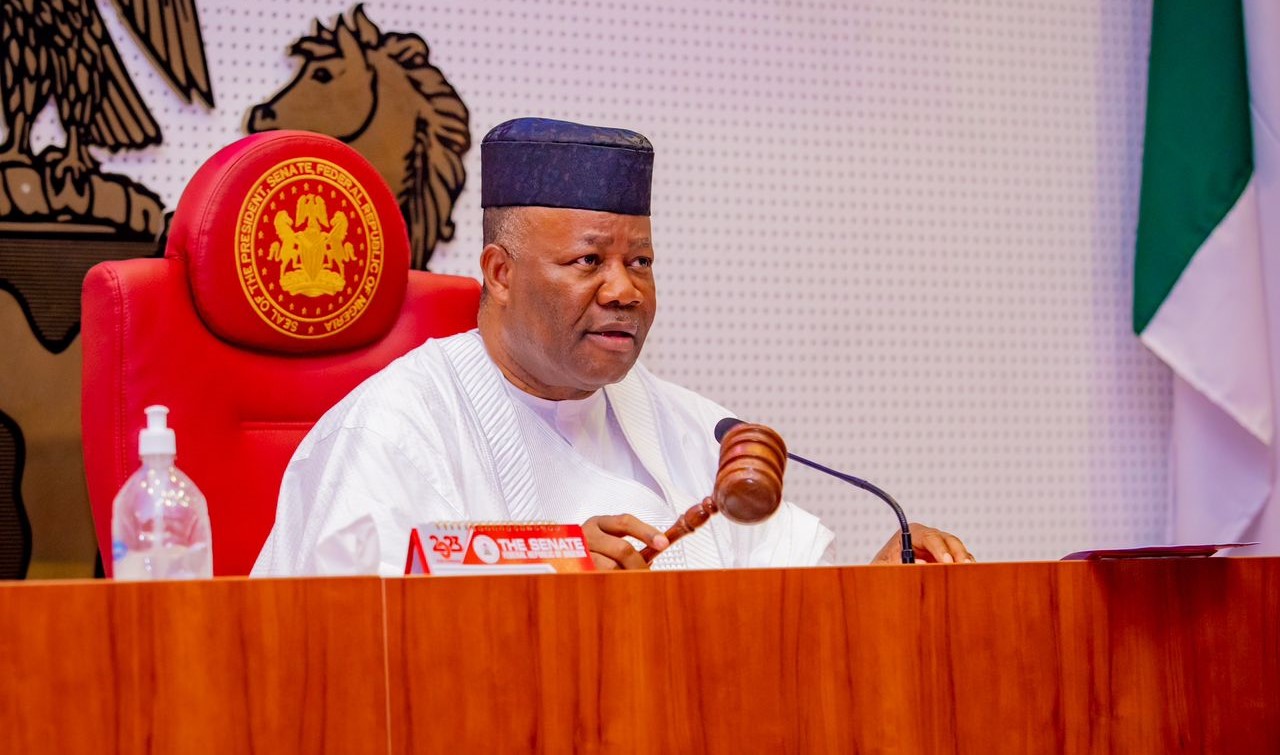
The development comes a few hours after the Senate and House of Representatives suspended the planned harmonisation of the Electoral Act (Amendment) Bill to focus on an emergency plenary session convened for Tuesday, where the new dates are expected to top deliberations.

“After several consultations and meetings, INEC and the leadership of the National Assembly have now agreed on a new date for next year’s election,” a senior INEC official who requested anonymity because he was not authorised to speak on the matter, told The PUNCH.

“The new dates will now be January 16 and 30 for presidential and governorship elections, respectively,” the source added.

A ranking senator also corroborated the development, though he cautioned that the proposal was still subject to debate on the floor.

“Whoever hinted to you about the new dates is correct. That is the proposal currently on the table. However, that doesn’t mean it can’t change tomorrow,” he said.

The shift marks a significant turning point in the evolving electoral calendar for 2027 and underscores the mounting political, religious and logistical pressures surrounding Nigeria’s next general elections.

INEC had initially fixed Saturday, February 20, 2027, for the presidential and National Assembly elections, with governorship and state Houses of Assembly polls scheduled for March 6, 2027.

However, the February 20 date drew sharp criticism from Muslim groups and political stakeholders who argued that it coincided with the holy month of Ramadan, projected to run from February 7 to March 8, 2027.

For many observers, the controversy quickly transformed from a scheduling matter into a broader debate about inclusivity, religious sensitivity and voter participation in a multi-faith nation.

Over the weekend, there were indications that lawmakers were considering February 13 as a compromise date to address concerns raised by Muslim faithful who frowned at the idea of voting during fasting.

But fresh information obtained by The PUNCH indicated that consultations between INEC and the National Assembly leadership had produced a more drastic option, moving the polls into January.

If adopted, the January 16 date would make the 2027 presidential election one of the earliest in Nigeria’s Fourth Republic calendar, effectively compressing campaign timelines and administrative preparations.

See also  Delayed Electoral Act amendment could disrupt 2027 poll timetable – INEC

Emergency plenary

The National Assembly had on Sunday announced that it would reconvene plenary on Tuesday, February 17, 2026, cutting short its recess amid what it described as the need to take “very crucial decisions.”

In a notice signed by the Clerk to the National Assembly, Kamoru Ogunlana, senators and members of the House of Representatives were directed to resume sitting at 11:00 a.m.

“I am directed to inform all Distinguished Senators and Honourable Members of the National Assembly that the Senate and House of Representatives shall reconvene Plenary session at 11:00 am on Tuesday, 17th February 2026, respectively,” the notice read.

“Consequently, all Distinguished Senators and Honourable Members are kindly requested to take note and reschedule their engagements accordingly to enable them attend the session, as very crucial decisions shall be taken by each Chamber during the session,” Ogunlana added.

While the official communication did not specify the agenda, insiders told The PUNCH that the reconsideration of the 2027 election timetable was the primary trigger for the abrupt resumption.

“It is more of an extraordinary plenary session to review the 2027 presidential election date as stipulated in the Electoral Act amendment.

“That is why our recess has been cut short through the announcement made by the Clerk of the National Assembly,” a senator confided earlier.

Another Senate source had disclosed that “If all goes according to plan, the presidential poll date may be brought forward to February 13 from the previously announced February 20 by INEC.”

The latest proposal, however, appears to have gone further, with January 16 now emerging as the frontrunner.

Electoral bill harmonisation suspended

Meanwhile, the much-anticipated meeting of the Senate and House of Representatives conference committees to harmonise differences in the Electoral Act Amendment Bill has been put on hold.

The joint committee had been scheduled to meet on Monday, February 16, to reconcile contentious provisions in the versions passed by both chambers.

But members confirmed that the emergency plenary disrupted the timetable.

“The meeting is put on hold until after the sitting of both chambers tomorrow,” Sada Soli, a member of the House  conference committee representing Jibia/Kaita Federal Constituency of Katsina State, said.

Another member of the committee and Deputy Chairman of the House Committee on Appropriation, Iduma Igariwey, also confirmed the postponement.

“It is not holding because of the emergency National Assembly meeting scheduled for tomorrow,” the Ebonyi lawmaker said when asked if the harmonisation meeting would proceed as planned.

A senator familiar with the development added, “It has been suspended for now until we finish tomorrow’s (today) emergency meeting. It is only then that we can decide on the next move and a new date for the conference committee.”

See also  Police revealed why Sowore was arrested in court

The suspension suggests that lawmakers may first settle the politically sensitive issue of election dates before finalising other amendments, including provisions on electronic transmission of results and dispute resolution timelines.

INEC’s balancing act

INEC had earlier acknowledged public concerns over the February 20 date and hinted that it could seek legislative intervention if necessary.

In a statement issued last Friday by the National Commissioner and Chairman of the Information and Voter Education Committee, Mohammed Haruna, the commission said the timetable was initially drawn in strict compliance with constitutional and statutory requirements.

“Notwithstanding the foregoing, the commission has taken due notice of concerns expressed by stakeholders regarding the coincidence of the scheduled dates with certain nationally recognised holidays and observances.

“The commission wishes to assure the public that it remains sensitive to all legitimate concerns that may impact electoral participation and the overall conduct of elections.

“In view of these representations, the commission is currently undertaking consultations and may, where necessary, seek appropriate legislative intervention to address the concerns raised, while ensuring that any adjustment remains consistent with constitutional and statutory requirements,” the statement read.

The statement followed calls by several stakeholders, including former Vice President Atiku Abubakar, who wrote on his official X handle that the February 20 date falls “squarely within the Ramadan period (February 7 – March 8, 2027), a sacred season of fasting, reflection, and spiritual devotion for millions of Nigerian Muslims.”

Former presidential aide Bashir Ahmad also urged INEC to reconsider the dates.

“If the intention is to encourage full and inclusive participation in the electoral process, scheduling such a critical national exercise during Ramadan may present challenges for a large segment of the population.

“Many Muslims tend to reduce engagement in demanding worldly activities during this period to focus on religious obligations.

“Given the significant Muslim population in this country, it may be worthwhile to reconsider the timing to ensure broader participation and convenience for all citizens. I do hope this observation will be taken in the spirit of inclusiveness and national cohesion,” he wrote.

Technology debate deepens

The date controversy comes on the heels of intense debate over the electronic transmission of results in the Electoral Act Amendment Bill.

See also  Sack of service chiefs has sent mixed feelings to North – HRC Director, Adamu

Last week, the Senate approved electronic transmission of results to INEC’s Result Viewing Portal but stopped short of making real-time uploads compulsory, retaining manual collation as a backup.

Defending the decision, Senate Leader Opeyemi Bamidele cited infrastructural challenges.

“By global standards, the real-time electronic transmission of election results may not be practicable at this stage of our development.

“To avoid a situation that compounds our country’s woes, we should make it discretionary since Section 62(2) of the Electoral Act, 2022 has already established the National Electronic Register of Election Results,” he said.

On power supply, he added, “Even though our generation capacity hovers roughly between 12,000 and 13,500 megawatts, our distribution and transmission capacity is acutely limited. As we all know, it can only deliver 4,500 megawatts to households nationwide.

“But with the Electricity Act, 2025, our power sector will record significant growth from this financial year.”

Bamidele insisted that “The data speak directly to the stark realities of our federation and not emotion or sentiment.”

The decision to shift the 2027 presidential poll, if ratified, could significantly alter the political calculations of parties and aspirants.

Campaign timelines would be shortened, party primaries may be brought forward, and INEC would need to recalibrate its logistics, procurement and training schedules.

Analysts say the move could enhance voter participation among Muslims and reduce the risk of low turnout in northern states, where Ramadan observance is intense.

However, the compressed schedule may also test INEC’s administrative capacity and the readiness of political parties to mobilise nationwide structures earlier than anticipated.

Beyond dates, lawmakers are also considering broader reforms aimed at concluding election petitions before inauguration on May 29, 2027.

Earlier proposals included conducting elections at least 185 days before the expiration of incumbents’ tenure and shortening timelines for tribunal and appellate decisions.

As plenary resumes under extraordinary circumstances, the convergence of religious considerations, technological limitations and constitutional mandates has placed the National Assembly and INEC at the centre of one of the most consequential electoral recalibrations in recent history.

A Senate source told The PUNCH, “This session is crucial. It is about more than dates; it is about ensuring that every Nigerian, regardless of faith, has a fair opportunity to participate in the electoral process. The decisions we take here could define the credibility of the 2027 elections.”

Continue Reading

Trending