
Connect with us

News

Sack of service chiefs has sent mixed feelings to North – HRC Director, Adamu

Published

on

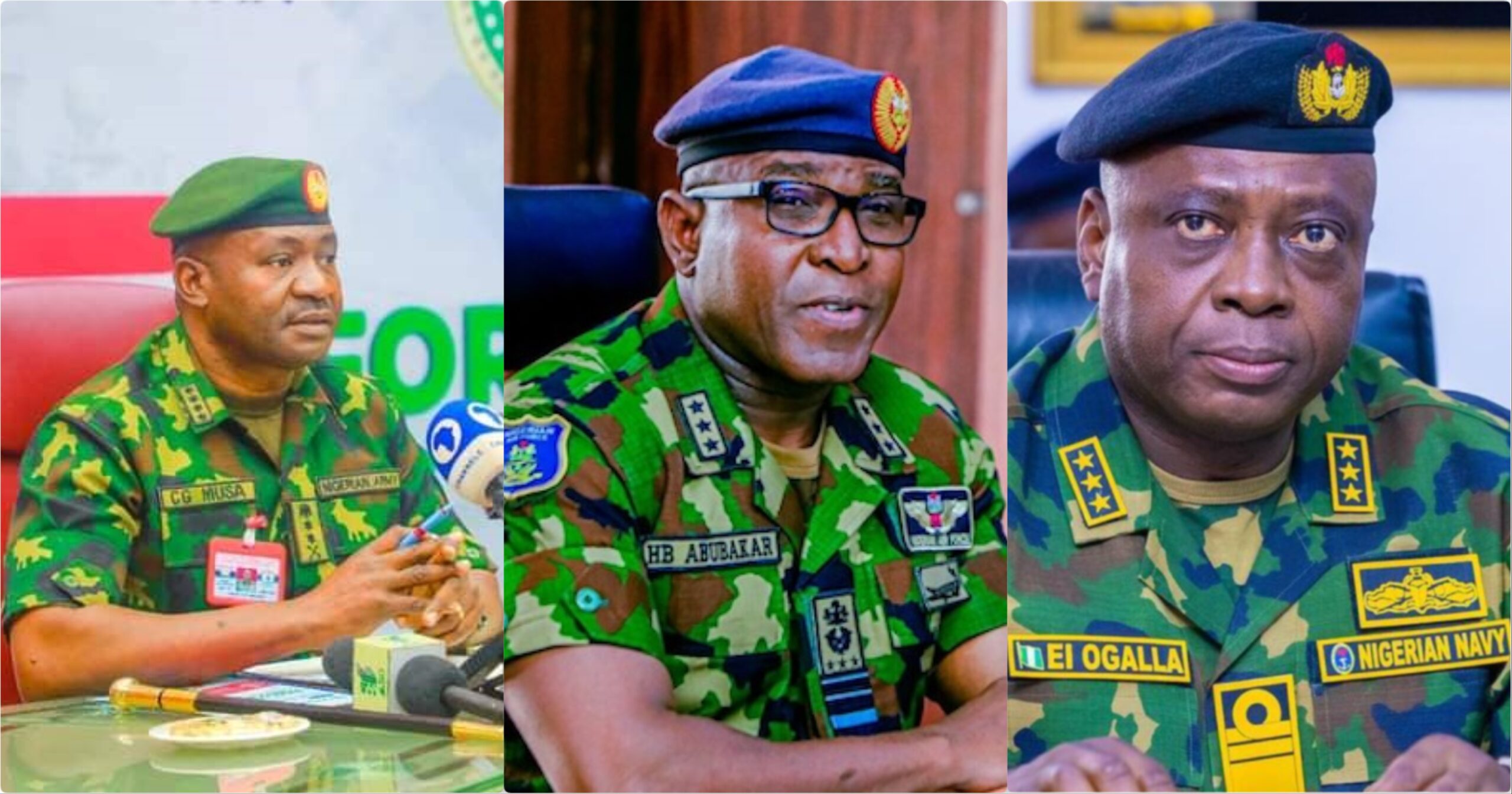
The Country Director of the International Human Rights Commission (IHRC) and Retired Army Captain, Ambassador Abdullahi Bokaji Adamu, has said that the recent sack of Nigeria’s service chiefs has sent mixed feelings across the North, as many people in the region are watching closely to see whether the replacements will reflect fairness and balance.

In an exclusive interview  on Sunday, Adamu who is also a retired captain described the President’s decision as both political and strategic, noting that while it signals readiness to make tough decisions, it also raises deeper questions about political motives and internal power struggles.

“In my opinion, the recent sack of the security chiefs may have been influenced by several factors. Officially, it could be linked to the government’s desire for improved performance and new strategies to address persistent insecurity,” he said.

“However, behind the scenes, there may also be political undertones or internal power struggles within the system.”

According to him, some Nigerians believe the decision might be connected to a suspected attempted coup or internal realignments within the military hierarchy.

Although such claims remain unconfirmed, he said they reflect the level of mistrust and political complexity surrounding security leadership in the country.

“In Nigeria, politics is deeply rooted in every major decision, including security appointments. It has almost become a tradition that each administration prefers to work with people from its own region or political circle,” he noted.

“Unfortunately, this practice often undermines fairness and merit, as the most qualified or experienced officers are sometimes overlooked in favor of political loyalty or regional interests.”

See also  Court halts Willie Obiano’s N4bn money laundering trial indefinitely

Ambassador Adamu said while the sack of the service chiefs shows that the President is ready to act decisively, it has created mixed emotions in the North.

“Many in the region are watching closely to see if the replacements will reflect fairness and balance,” he said.

“Fortunately, the new appointments appear regionally balanced, with two out of the four new service chiefs coming from the North. This has helped to reduce tension and suspicion.”

He added that the North is now waiting to see results, not promises.

“The North’s confidence in the federal government will depend largely on results. For years, northern communities have borne the brunt of banditry, insurgency, and kidnappings. People are no longer moved by speeches, they want peace, stability, and safe roads.”

The IHRC Director also noted that Nigerians have long observed that the government reacts quickly only when the elite are affected.

“There have been many occasions when innocent citizens were killed, but no decisive action was taken. Now that the leadership itself has been directly affected, the sack came immediately. This makes people feel that the government only acts fast when the powerful are touched,” he said.

“This perception must change if the government truly wants to earn public trust.”

Ambassador Adamu acknowledged that the former Army Chief and his team did their best under difficult conditions but were limited by systemic problems.

“It’s important to remember that even the Chief of Defence Staff once said that a significant percentage of the security solution lies in the hands of the government, not just the military,” he recalled.

See also  Ooni Is Too Focused On Important Issues, Has Not Appointed Anyone As Okanlomo Of Yorubaland – Oore Of Moba

“That statement alone highlights the challenges faced by the security chiefs, limited political will, inadequate funding, and weak inter-agency cooperation.”

The human rights advocate urged the newly appointed service chiefs to adopt a broader and more people-focused strategy.

“The new security chiefs must understand that military force alone cannot end insecurity. They need to combine force with intelligence, dialogue, and community participation,” he advised.

“They should work closely with state governments, traditional rulers, and local vigilantes to build trust and cooperation.”

He, however, warned that true change would take time unless the government supports them with freedom and resources to act effectively.

“As long as Nigeria continues to face indirect forms of political and economic control, our security system will remain limited in effectiveness,” he said.

“Their success will depend on how much support and cooperation they receive from the federal government.”

Ambassador Adamu concluded that while the sack of the security chiefs is commendable, the government must prove that such actions are not driven by politics.

“What the North and indeed all Nigerians want is peace, justice, and inclusion, not favoritism or hidden agendas,” he said.

“If handled with sincerity and fairness, these changes could bring the positive results Nigerians are yearning for. But if politics continues to overshadow merit, the cycle of insecurity will persist.”

Recall that President Bola Tinubu sacked the service chiefs in a sweeping overhaul of the country’s military leadership.

The presidency said on Friday, that it is part of efforts to strengthen national security.

FOLLOW US ON:

See also  Malami, son face new terrorism-linked firearms charges

FACEBOOK

TWITTER

PINTEREST

TIKTOK

YOUTUBE

LINKEDIN

TUMBLR

INSTAGRAM

Continue Reading
Click to comment

Leave a Reply

Your email address will not be published. Required fields are marked *

News

El-Rufai backtracks on Ribadu phone-tapping claim, read details

Published

on

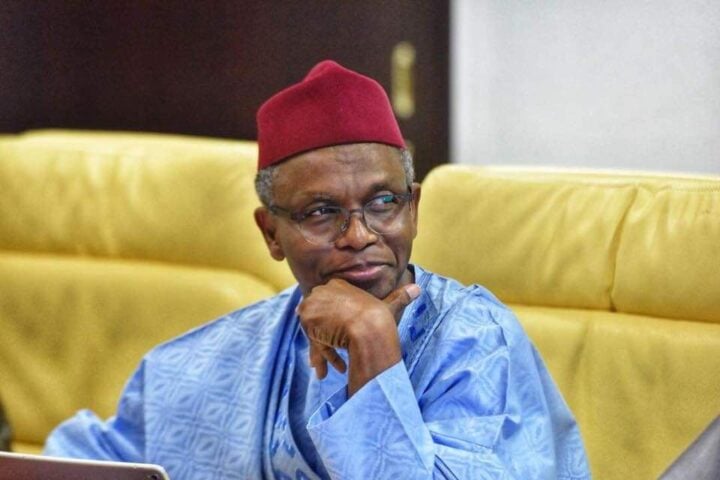
Detained former Kaduna State Governor, Nasir El-Rufai, on Wednesday told the Federal High Court in Abuja that his claim that the telephone of the National Security Adviser, Nuhu Ribadu, was tapped was false, saying he made the statement to scare the government and make its officials uncomfortable.

El-Rufai, who made the admission before the trial judge, Justice Joyce Abdulmalik, described the claim as political rhetoric rather than a factual statement, insisting that neither he nor other opposition figures intercepted Ribadu’s telephone conversations.

The former governor spoke while testifying as the first defence witness in his ongoing prosecution by the Department of State Services over allegations that he intercepted the NSA’s telephone conversations, among other offences.

El-Rufai, who governed Kaduna State between 2015 and 2023, is facing trial over comments he made during an appearance on Arise Television’s Prime Time programme on February 13.

According to court documents, El-Rufai allegedly admitted during the interview that he knew and was associated with an individual who had illegally intercepted the NSA’s telephone communications.

The former Minister of the Federal Capital Territory, who served under former President Olusegun Obasanjo, is accused of breaching national security and public safety through his actions, an offence punishable under Section 12(1) of the Cybercrimes (Prohibition, Prevention, etc.) (Amendment) Act, 2024. He was also charged with failing to report the alleged crime to the relevant security agencies.

During the television interview, El-Rufai had alleged that DSS operatives attempted to abduct him at the Nnamdi Azikiwe International Airport, Abuja, on February 12, 2026, upon his return from Cairo.

He further alleged that the security agency was acting on the instigation of the Independent Corrupt Practices and Other Related Offences Commission, which he claimed had received a directive from Ribadu to detain him.

See also  Ooni Is Too Focused On Important Issues, Has Not Appointed Anyone As Okanlomo Of Yorubaland – Oore Of Moba

The court had, on October 26, ordered the former governor to open his defence to the allegations after dismissing his no-case submission seeking to be discharged and acquitted of the charges.

Justice Abdulmalik held that the application lacked merit and declined to terminate the trial.

At the continuation of proceedings on Wednesday, El-Rufai’s lawyer, Paul Erokoro (SAN), played a recording of the interview his client granted Arise TV on February 13, in which he claimed that someone tapped Ribadu’s phone and relayed his conversations to him and other opposition figures.

After listening to the recording, Erokoro asked his client to clarify what he meant by the statement.

Responding, El-Rufai acknowledged making the claim but said it was not intended to be understood literally.

He explained that his intention was to draw attention to what he described as the government’s surveillance of opposition figures and other prominent Nigerians, including former presidents and senior judges.

El-Rufai said, “What I wanted to say was that the government was monitoring opposition figures and that we knew what they were doing.

“I used the word ‘tap’ as political rhetoric to make them uncomfortable. It was rhetorical, not literal. It was linguistic flourish, just to make the government uncomfortable.”

When reminded by Erokoro that the interviewer had told him that tapping someone’s phone was illegal, the former governor said he intended to expose what he described as the government’s secret monitoring of opposition figures without lawful court orders.

He said, “I was referring to the government violating the law and not someone else doing it.”

Asked who he meant by “we” when he claimed that “we are listening to their conversations…”, El-Rufai said he was referring to himself and other prominent opposition figures.

He, however, denied that they tapped Ribadu’s phone, explaining that he learnt of an alleged plan to abduct and detain him through a mutual friend.

See also  Oyo school attack: Senate, Yoruba leaders demand action as distress videos emerge

The former governor declined to disclose the identity of the person, saying he did not want to jeopardise the interest of his source.

He told the court that after returning home from the television interview, the said friend visited him and clarified that he had not tapped the NSA’s phone.

According to El-Rufai, he told the person that he already knew but had deliberately made the claim to make government officials uncomfortable.

Earlier in his testimony, the former governor said he had known Ribadu since 2003, when he, as head of the Bureau of Public Enterprises, assisted him in establishing the Economic and Financial Crimes Commission by providing office accommodation and funding.

He attributed the breakdown in their relationship to the 2011 presidential election, when Ribadu contested for the presidency, and he supported the late former President Muhammadu Buhari, whom he considered a better candidate.

El-Rufai further alleged that the NSA was opposed to him because of his opposition to President Bola Tinubu’s re-election bid.

He denied involvement in telephone interception, insisting that he neither possessed the knowledge nor the equipment required to tap phone conversations.

However, during cross-examination by the prosecuting counsel, Oluwole Aladedoye (SAN), El-Rufai, who said he obtained a law degree from the University of London, maintained that he would not disclose the identities of those he referred to as “we” in the television interview.

He also refused to name the person who allegedly informed him that Ribadu, Kaduna State Governor, Uba Sani, and the ICPC chairman had met and agreed to ensure his arrest.

See also  Sowore cannot rely on statements I withdrew — Omokri 

The former governor said he learnt of the alleged plan before returning from Cairo on February 12. He explained that he resisted attempts by DSS operatives to arrest him at the airport upon his arrival because they failed to produce a valid arrest warrant.

El-Rufai also maintained that his claims during the Arise TV interview that he had never stolen public funds and knew nothing about the disappearance of activist Dadiyata while he was governor of Kaduna State were factual.

He insisted that all other statements he made during the interview were true, except the claim relating to the tapping of Ribadu’s phone.

The former governor, who said he instituted fundamental rights suits over the alleged search of his residence with a defective warrant, admitted that the cases had been dismissed by both the High Court of the Federal Capital Territory and the Federal High Court.

Towards the end of the cross-examination, Aladedoye informed the court that Erokoro had approached him before the commencement of proceedings to seek his assistance in the defence’s plan to invite Ribadu and the ICPC chairman as witnesses.

The prosecuting counsel said he declined the request, explaining that the matter was beyond his control.

Erokoro, however, said he would file the necessary applications to secure their attendance.

Justice Abdulmalik subsequently adjourned the case until February 15 and 16 for the continuation of El-Rufai’s defence.

Source: punchng.com

FOLLOW US ON:
FACEBOOK

WHATSAPP CHANNEL

TWITTER

PINTEREST

TIKTOK

YOUTUBE

LINKEDIN

INSTAGRAM

Continue Reading

News

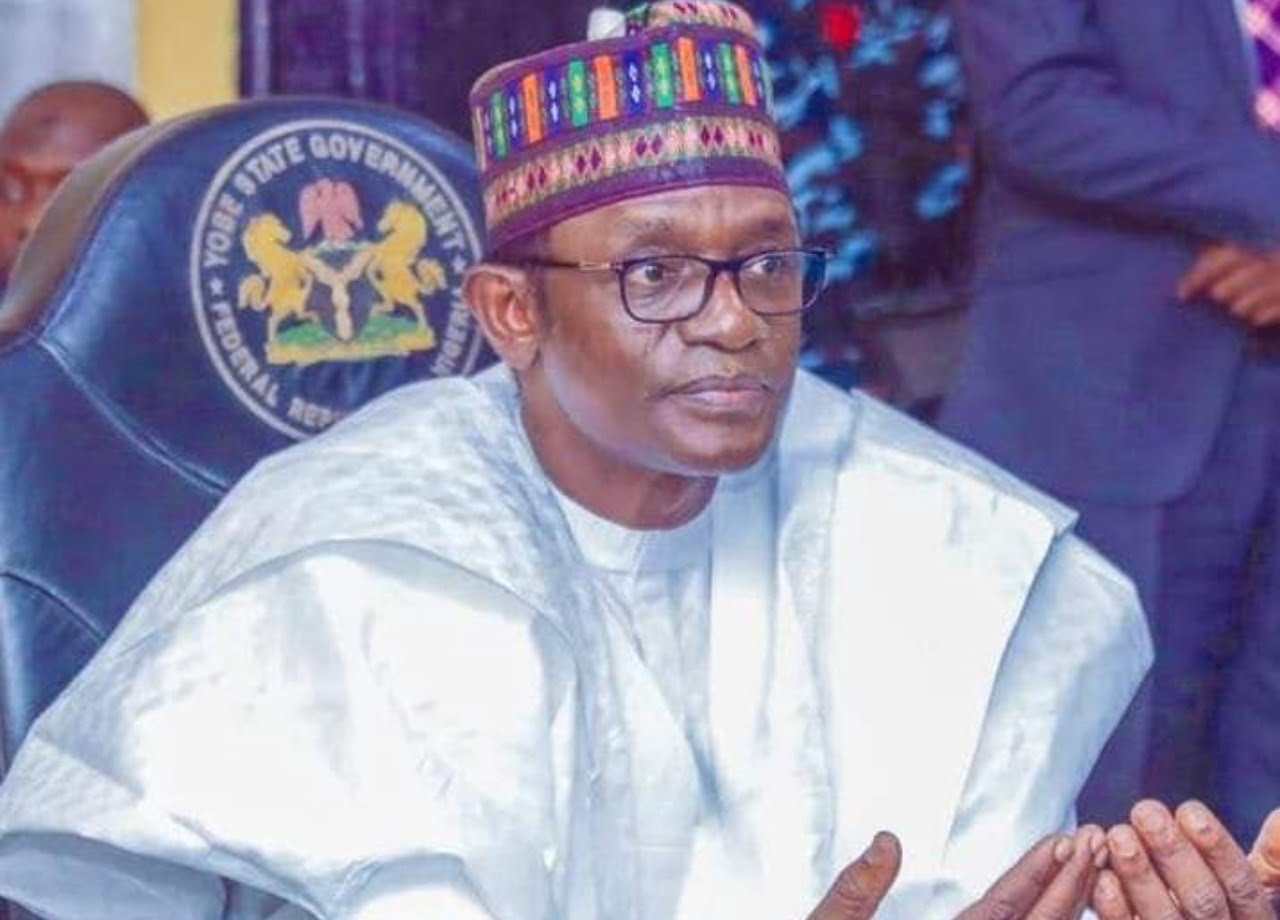
Buni presents N532bn 2027 budget to Yobe assembly

Published

on

Yobe State Governor, Mai Mala Buni, has presented a proposed budget of N532.27bn for the 2027 fiscal year, with recurrent expenditure taking the largest share of the estimates.

Buni presented the 2027 Appropriation and Finance Bills before the Yobe State House of Assembly in Damaturu on Tuesday, describing the proposal as the final budget of his administration.

Tagged the Budget of Consolidation, Sustainability and Inclusive Growth, the proposed budget represents an increase of N16.739bn, or 3.2 per cent, over the N515.532bn approved for the 2026 fiscal year.

A breakdown of the estimates shows that N288.426bn, representing 54.2 per cent, is allocated to recurrent expenditure, while N243.845bn, representing 45.8 per cent, is earmarked for capital projects.

Presenting the budget, Buni said it was designed to consolidate the achievements of his administration, complete ongoing projects and ensure the sustainability of existing investments.

He said, “Today, with a sense of humility and fulfilment, and in accordance with Section 121(1) of the 1999 Constitution of the Federal Republic of Nigeria (as amended), I once again stand before this Honourable House of Assembly to present the Eighth and last Finance and Appropriation Bills by this administration for your kind consideration and approval for the 2027 fiscal year.”

The governor said the administration would prioritise project completion, improved service delivery and prudent management of public resources.

“The 2027 budget is therefore designed to balance immediate service delivery with the long-term development interest of the state,” he said.

Buni disclosed that the education sector would receive N99.792bn, while N80.543bn was allocated to healthcare.

See also  El-Rufai returns to ICPC custody

He said the education allocation would support the completion of ongoing school construction and rehabilitation projects, the provision of teaching materials, assistance to tertiary institutions and scholarship programmes.

On healthcare, the governor said the government would sustain investments in hospital upgrades, maternity and emergency services, medical equipment and healthcare training institutions.

He also identified the establishment of a modern kidney centre in Gashua as one of the administration’s priority projects.

“We are equally committed to advancing the ongoing establishment of a modern Kidney Centre in Gashua, with emphasis on a safe, accessible, patient-centred treatment environment, appropriate dialysis equipment and the clinical and operational arrangements required for sustainable service delivery,” Buni said.

The governor said infrastructure development would remain a major priority, with emphasis on completing ongoing road, drainage, electricity and commercial infrastructure projects.

He specifically mentioned the Gashua-Masaba, Balanguwa-Kumagannam and Dumbulwa-Lailai roads among the projects requiring attention.

Other priority areas include agricultural development, livestock production, water supply, environmental protection, peacebuilding and the rehabilitation of communities affected by insurgency.

Reviewing the performance of the 2026 budget as of September 30, Buni said the state recorded revenue receipts of N347.078bn, representing 67.3 per cent of the annual projection.

He said the approved 2026 budget stood at N515.532bn, comprising N291.904bn for capital expenditure and N223.628bn for recurrent expenditure.

According to him, recurrent expenditure during the first nine months amounted to N139.346bn, while capital expenditure stood at N94.280bn.

The governor said the administration remained committed to the payment of salaries, pensions and gratuities despite prevailing economic challenges and the demands of post-insurgency recovery.

See also  Malami, son face new terrorism-linked firearms charges

Buni, who described the 2027 proposal as the final budget of his administration, said the government would ensure an orderly transition and preserve ongoing development projects.

“Development must not depend entirely on the presence of any individual in public office. It must be supported by strong institutions, competent public servants, credible planning frameworks and effective systems of accountability,” he said.

The governor assured residents that his administration would continue to discharge its responsibilities until the final day of its tenure.

“We shall continue to work, supervise, deliver and remain accountable until the final day of our mandate. There will be no abandonment of our responsibilities and projects,” he said.

He urged the House of Assembly to give the proposed budget timely consideration and passage.

In a political appeal towards the end of his address, Buni urged the people of Yobe to support President Bola Tinubu’s second-term ambition, arguing that the state’s membership of the ruling All Progressives Congress had created opportunities for it to benefit from the Federal Government.

He also commended Tinubu for approving the Federal Government’s takeover and reimbursement of the Muhammadu Buhari International Cargo Airport project in Damaturu, saying the intervention would free up resources for other development projects.

Source: punchng.com

FOLLOW US ON:

FACEBOOK

WHATSAPP CHANNEL

TWITTER

PINTEREST

TIKTOK

YOUTUBE

LINKEDIN

INSTAGRAM

Continue Reading

News

US military base shooter seeks halt to firing squad execution

Published

on

Nidal Hasan, who is set to be executed by firing squad next month for his 2009 massacre at a US military base, asked a court on Tuesday to halt his execution, according to documents obtained by AFP.

The former US Army major and military psychiatrist asked a federal court to delay his execution, which is set for December 3, while he prepares a case to challenge it on constitutional grounds.

If the execution goes ahead, Hasan will be the first person killed by a US military firing squad since 1945.

A furore over plans to livestream the killing erupted in early October.

US Defence Secretary Pete Hegseth initially said the execution would be “public” before a Pentagon spokesperson added it would be available online.

Concerns mounted far and wide about making the execution into a spectacle and turning Hasan into a martyr.

After days of debate and condemnation, US President Donald Trump cancelled the plans to broadcast the killing, while allowing some witnesses to observe it in person.

Hasan killed 13 people, including 12 soldiers, and wounded 30 others in his November 2009 rampage.

He was shot by a civilian police officer and is paralysed from the waist down.

During his trial, Hasan chose to conduct his own defence, and court-appointed attorneys raised concerns that he was seeking to be executed.

Ultimately, he was sentenced to death by a military jury in 2013.

AFP

Source: punchng.com

FOLLOW US ON:

FACEBOOK

WHATSAPP CHANNEL

TWITTER

PINTEREST

TIKTOK

YOUTUBE

LINKEDIN

INSTAGRAM

See also  Full list of those pardoned by President Tinubu
Continue Reading

Trending