Connect with us

Business

Recapitalisation: Banks raise N4tn ahead of March deadline

Published

on

Banks have raised N4.05tn in verified and approved capital ahead of the March 31, 2026, recapitalisation deadline set by the Central Bank of Nigeria.

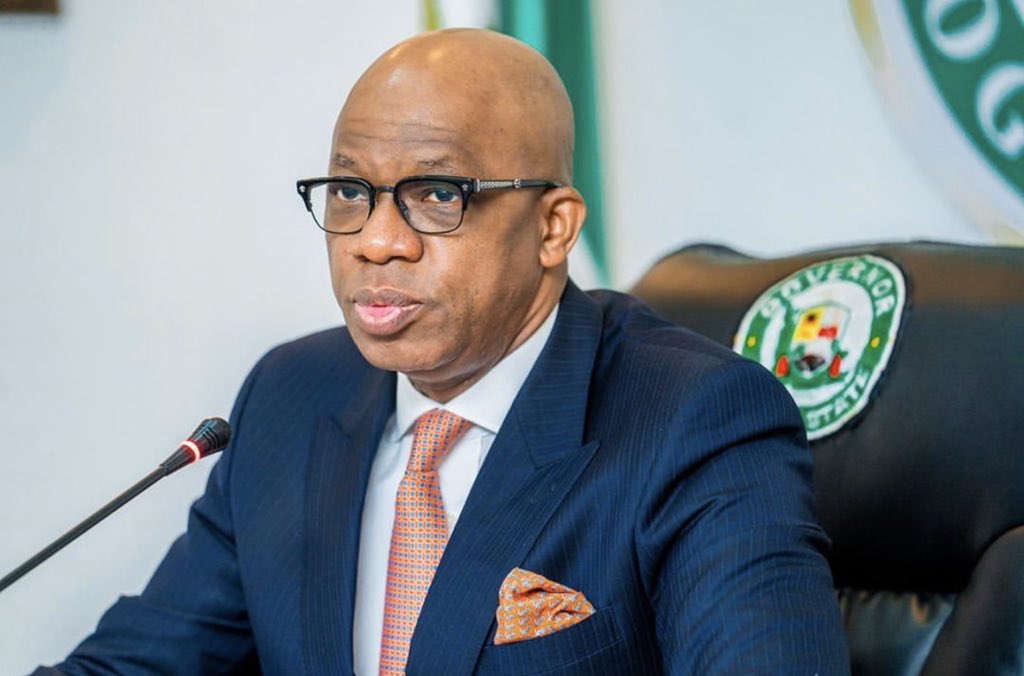
The CBN Governor, Olayemi Cardoso, disclosed this on Tuesday during the Monetary Policy Committee briefing in Abuja, saying, “As of February 19, 2026, total verified and approved capital raise stands at N4.05tn.”

The PUNCH observed that this figure was nearly double the N2.4tn reportedly raised as of April 2025. Cardoso said N2.90tn of the amount, representing 71.6 per cent, was mobilised domestically, while N1.15tn, equivalent to 28.33 per cent, came from foreign participation.

“In summary, 71.67 per cent is domestic mobilisation and 28.33 per cent is foreign participation. This balance, in my view, represents a mix of domestic and foreign, which signals broad investor engagement and confidence in the sector,” Cardoso said.

He recalled that he had earlier hinted at strong foreign investor appetite for Nigerian banks. “Several MPCs ago, I did mention that when I went abroad, and I met with some of the investor community, they had a very, very strong interest in investing in banks. So, I’m glad that that has come out in a very positive way,” he added.

On compliance status, the governor said, “To date, 20 banks have fully met the new minimum capital requirements, and a further 13 are at the advanced stage of their capital raising processes.”

He expressed optimism that the banks still raising capital would conclude within the stipulated timeframe. Cardoso noted that some institutions under regulatory intervention were operating under specific legal and structural considerations that influenced the sequence of their recapitalisation actions.

“We remain, as a Central Bank of Nigeria, actively engaged with all relevant stakeholders to ensure that they have an orderly and credible outcome while maintaining financial stability,” he said.

He assured depositors that “Depositor funds in these institutions remain secure, and operations continue under close supervisory and regulatory oversight of the central bank.”

In March 2024, the CBN directed banks with international licences to raise their minimum paid-up capital to N500bn, while those with national authorisation are required to meet a N200bn threshold before the March 31, 2026, deadline.

Regional commercial banks and merchant banks are expected to have a minimum capital base of N50bn, while non-interest banks must hold N20bn for national licences and N10bn for regional licences.

See also  Price of a bag of rice has crashed - Finance Minister, Wale Edun

The recapitalisation policy is aimed at strengthening the resilience of the banking sector and positioning lenders to better support economic growth and absorb potential shocks.

Beyond recapitalisation, Cardoso highlighted developments in the external sector, stating that Nigeria’s gross external reserves rose to about $50.4bn as of mid-February 2026. “Just a point of correction. These aren’t net reserves, it’s gross reserves. And the gross reserves, as of the middle of February, is about $50.4bn, which is the highest figure that we’ve had in 13 years,” he said.

According to him, the reserve build-up was supported by favourable trade developments, a healthy current account surplus, rising non-oil exports, and increased diaspora remittances.

“There’ll be favourable trade developments. The current account is in a healthy surplus, and of course, the non-oil exports have also gone up. It’s something I talk about all the time, which is the issue of diaspora remittances, which again is going up very strongly indeed,” he said.

He attributed the gains to improved market confidence. “Underpinning all this, quite frankly, is market confidence. Without market confidence, no matter what you do, you’ll find you will significantly sub-optimise,” Cardoso stated.

He added that the CBN had engaged widely with international investors, made commitments, and ensured policy consistency to engender positive market sentiment.

On sustainability, the governor cautioned that risks remained. “There will always be risks to any outlook. We cannot underestimate the potential global shocks that could come our way,” he said, citing uncertainties around oil prices and global tensions.

He also warned that pre-election spending and fiscal deficits could pose risks if not properly managed. “Importantly, pre-election spending, if not properly contained, can destabilise the stability we’ve accomplished,” he said. Nevertheless, Cardoso expressed confidence in the current direction of policy.

On inflation, he dismissed suggestions that the CBN could relax its guard following the Monetary Policy Committee’s decision to cut the Monetary Policy Rate by 50 basis points to 26.5 per cent. “That hasn’t changed, to be frank. Caution is our watchword in the central bank,” he said, stressing that the apex bank remained conservative in order to protect the economy.

He noted that headline inflation, which was about 34 per cent when the current management assumed office, had declined to slightly above 15 per cent. “Inflation at that time, 34 per cent, we’ve brought it down to where it is slightly over 15 per cent. We’re encouraged by that,” Cardoso said, adding that tight monetary policy had been necessary.

See also  FG begins N4tn debt settlement, captures five GenCos

He emphasised that sustaining the gains would require collaboration across fiscal and monetary authorities. “It will take a lot of discipline from all the stakeholders. This is not something that will be central bank alone,” he said.

On digital finance, the governor said the CBN recognised the importance of innovation but would ensure that risks to financial stability were properly managed. “We are advancing work already on a very comprehensive framework for digital assets,” he said, noting that the process would involve consultation and scrutiny to ensure transparency and long-term resilience.

He disclosed that there are over 430 licensed fintech operators in Nigeria and described the segment as systemically important, adding that the CBN was strengthening supervisory oversight to address cyber threats and other emerging risks.

The Group Chief Economist and Managing Director of Research and Trade Intelligence at Afreximbank, Dr Yemi Kale, earlier said that the ongoing bank recapitalisation exercise is a critical engine required to bridge Africa’s staggering $80 to $120bn annual trade finance gap.

Speaking at the Ecobank Customer Forum, Kale, who was Nigeria’s former Statistician General, highlighted that Nigeria’s journey toward a $1tn economy hinges on its ability to transform from a raw material exporter into a competitive industrial hub. However, this transition requires “muscle” in the financial sector that currently does not meet the scale of the continent’s ambitions.

He said, “Recapitalisation of the banks is important.” You cannot lend to businesses to grow, expand or import machinery if you do not have enough capital to do so. How do Nigerian banks support deepening intra-African trade if they do not have enough capital?

“By increasing recapitalisation, you increase the ability of banks to lend more to domestic businesses and exporters. There are significant benefits for the Nigerian economy, especially in improving intra-African trade.”

The PUNCH in April 2025 reported that the Securities and Exchange Commission said that the ongoing banking sector recapitalisation exercise is a testament to the strength and resilience of Nigeria’s capital market.

SEC Director-General Dr Emomotimi Agama disclosed this in Abuja while highlighting key provisions of the Investments and Securities Act 2025, describing it as a transformative law that will further deepen market activities and drive economic growth.

See also  Here Are Top Companies That Sustain Lagos Economy.

He said, “The capital market is strong enough to provide the much-needed funding for various sectors of the economy. It is one of the strongest you can think about; our ROI was one of the best in the world for last year. When you look at what the capital market has already done with the bank recapitalisation, which is still ongoing, you can agree with me that our market is strong.”

Also, the Deputy Governor, Economic Policy, CBN, Dr Muhammad Abdullahi, while speaking on a panel at the launch of the 2026 Macroeconomic Outlook of the Nigerian Economic Summit Group in Lagos, said that the recapitalisation programme was designed to build stronger banks capable of supporting Nigeria’s ambition of becoming a trillion-dollar economy.

“I think that even at the inception of the capitalisation programme, the major focus is on how to ensure that we have stronger banks that can support our drive towards a trillion-dollar economy? And the only way to get there is through the credit-review sector, to SMEs, to businesses that require funding at good rates. So as we close up towards March, I mean, the efforts have been quite impressive. We have about 20 banks that have already met it. A number of banks are meeting it every day.

They’re huge. It’s very busy within CBN today, tomorrow, and through to March, as you can imagine.”

However, he stressed that recapitalisation alone was not sufficient, warning that the focus must now shift from bigger balance sheets to productive and sustainable lending.

“The focus that we really are turning our attention to, especially from the financial system stability side, is that we ensure that a strengthened capital base translates into credit that is productive, that is well-targeted, and that is sustainable,” he said.

He said the CBN has spent the past year strengthening its regulatory capacity through technology to ensure that the benefits of recapitalisation are transmitted to priority sectors of the economy.

punch.ng

FOLLOW US ON:

FACEBOOK

TWITTER

PINTEREST

TIKTOK

YOUTUBE

LINKEDIN

TUMBLR

INSTAGRAM

Continue Reading
Click to comment

Leave a Reply

Your email address will not be published. Required fields are marked *

Business

Tax reforms will modernise, boost economy – G24 chief

Published

on

Director of the Intergovernmental Group of Twenty-Four on International Monetary Affairs and Development, Iyabo Masha, has said the new tax laws will support Nigeria’s transition into a modern and more efficient economy.

Masha, who is the first African to occupy the position since the establishment of the G- 24 over five decades ago, spoke at a press conference in Abuja ahead of the meeting of the group.

She explained that tax and domestic resource mobilisation remained central to development, stressing that Nigeria’s reform drive could deepen formalisation and strengthen public finances over time.

“Tax and domestic resource mobilisation are fundamental to economic development,” she said, noting that taxation enables governments to provide infrastructure, education, healthcare, and maintain law and order.

According to her, governments generally finance development through taxation, borrowing, or asset sales, but “out of all of these, taxation is the most efficient one that leads to the least macroeconomic destabilisation”.

Masha observed that developing countries often recorded weak tax mobilisation, “in some cases as low as seven per cent of GDP”, compared to others that generate “25, 30 per cent of GDP”.

Speaking on Nigeria’s reforms, the group director added that in her previous role, she had examined the country’s tax framework and found it “very fragmented”, with inadequate implementation contributing to low revenue mobilisation.

See also  Price Of Refilling Cooking Gas Per Kg In Nigeria
Continue Reading

Business

Dangote signs deal to distribute 65m litres petrol

Published

on

The Dangote Petroleum Refinery has concluded an offtake agreement with 12 major petroleum marketing companies to distribute between 60 million and 65 million litres of Premium Motor Spirit (petrol) daily across the country, in a move expected to stabilise supply and deepen Nigeria’s fuel self-sufficiency.

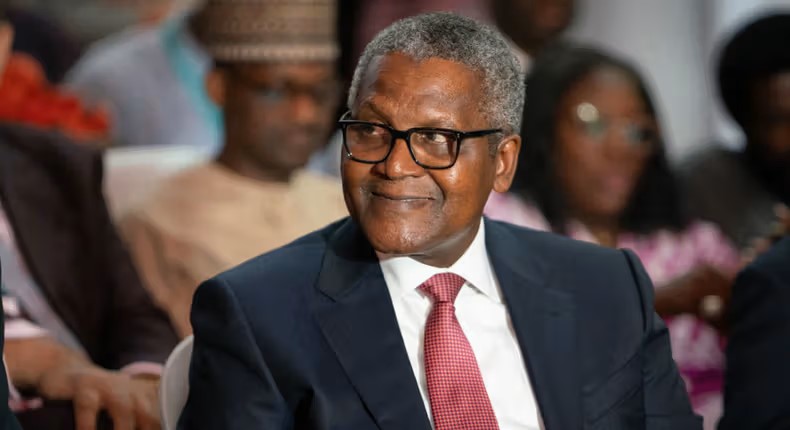
President of the Dangote Group, Aliko Dangote, disclosed this in Lagos, noting that the structured framework would guarantee nationwide availability of petrol while exporting surplus volumes.

According to a statement issued, Dangote said, “We have agreed an offtake framework to supply up to 65 million litres daily for the domestic market. Any surplus, estimated at between 15 and 20 million litres, will be exported.”

Dangote stated that the initiative marks a major shift in the country’s downstream petroleum sector, as Nigeria’s daily consumption currently ranges between 50 million and 60 million litres.

This means the refinery is expected to supply about 1.8 billion to over 2 billion litres of petrol monthly, depending on daily output and the number of days in the month.

The latest offtake and distribution arrangement follows an earlier agreement reached in October 2025 between the Dangote Petroleum Refinery and downstream operators aimed at stabilising fuel supply and curbing volatility in pump prices.

At the time, independent petroleum marketers disclosed that the refinery had set a target to release up to 600 million litres of Premium Motor Spirit monthly to the domestic market as part of efforts to address supply disruptions and rising costs across the country.

Under the arrangement endorsed by the Nigerian Midstream and Downstream Petroleum Regulatory Authority, selected marketers will handle nationwide distribution to prevent supply disruptions and eliminate speculative practices.

See also  FG defers 70% of 2025 capital budget to 2026

The marketers include MRS Oil Nigeria Plc, Nigerian National Petroleum Company Limited Retail, 11 Plc, TotalEnergies Marketing Nigeria, Rainoil Limited, Northwest Petroleum & Gas Company Limited, Ardova Plc, Bovas & Company Limited, AA Rano Nigeria Limited, AYM Shafa Limited, Conoil Plc, and Masters Energy.

The statement noted that the structured offtake model is designed to ensure efficient logistics, reduce hoarding, and support price stability. It added that the refinery would export between 15 million and 20 million litres daily once domestic supply obligations were met.

“This would conserve foreign exchange, improve the country’s trade balance and strengthen external reserves, as Nigeria will no longer rely heavily on imported fuel,” the statement explained.

For decades, Africa’s largest oil producer depended on imported refined products, exposing the economy to exchange rate volatility, global supply disruptions and recurring shortages.

The Group Chief Executive Officer of the Nigerian National Petroleum Company Limited, Bayo Bashir Ojulari, recently described the refinery as a transformative national asset capable of redefining the country’s energy security architecture.

He said, “This plant was designed for 650,000 barrels per day. None of us thought it would even touch 550,000. What we saw live today was 661,000. These are live parameters, not reports or photographs.”

Ojulari added that the refinery represents a new era of industrial capability and technological advancement for Nigeria.

Nigeria has intensified reforms in the oil and gas sector following the deregulation of the downstream market and removal of fuel subsidy under President Bola Tinubu.

The Dangote refinery, Africa’s largest, is expected to play a central role in ending decades of petrol importation, stabilising prices, and positioning Nigeria as a net exporter of refined petroleum products across West and Central Africa.

See also  FG begins N4tn debt settlement, captures five GenCos

The success of the structured offtake model could usher in a more stable fuel supply chain and reduce the risk of shortages that have plagued the country for years.

punch.ng

FOLLOW US ON:
FACEBOOK

TWITTER

PINTEREST

TIKTOK

YOUTUBE

LINKEDIN

TUMBLR

INSTAGRAM

Continue Reading

Business

Oil revenue row: Presidency defends Tinubu as legal titans split over Executive Order

Published

on

The Presidency has defended President Bola Tinubu’s Executive Order, which halted revenue deductions by the Nigerian National Petroleum Company Limited and other agencies.

It said the Petroleum Industry Act violates and is not superior to the Nigerian Constitution.

The Special Adviser to the President on Information and Strategy, Bayo Onanuga, stated that criticism of the directive by the Petroleum and Natural Gas Senior Staff Association of Nigeria demonstrated a lack of understanding of the constitutional supremacy over ordinary legislation.

“PENGASSAN is focusing on PIA alone. The President’s action is based on the Nigerian Constitution, which PIA violates in allowing the deductions that the President has now stopped. PIA is not superior to our constitution,” Onanuga stated in a response to inquiries by The PUNCH on Monday.

The Petroleum and Natural Gas Senior Staff Association of Nigeria had on Friday opposed the presidential fiat, accusing the President of violating the PIA with his revenue retention order.

But the presidential spokesman insisted the union made a “knee-jerk reaction” without studying the constitutional provisions underpinning the directive.

“PENGASSAN should have read the constitution before making its knee-jerk reaction,” he said.

Onanuga explained that the Executive Order derives its authority from section 5 of the 1999 Constitution, which vests executive powers of the Federation in the President, including the maintenance of the Constitution and implementation of federal laws.

He said the directive is further anchored on section 44(3) of the Constitution, which vests ownership, control, and derivative rights in all minerals, mineral oils, and natural gas in Nigeria in the Government of the Federation.

According to the presidential aide, the Executive Order seeks to restore constitutional revenue entitlements of the Federal, State, and Local Governments, which were “taken away in 2021 by the Petroleum Industry Act.”

“The PIA created structural and legal channels through which substantial Federation revenues are lost through deductions, sundry charges, and fees,” Onanuga stated.

But the union argued that the directive would cripple the company’s ability to fund operations and fulfil its statutory obligations, including contributions to the Frontier Exploration Fund, critical for hydrocarbon exploration in 2026.

The PUNCH reported that the directive has sparked deep concerns within the Nigerian Upstream Petroleum Regulatory Commission, the Nigerian National Petroleum Company Limited, and the board and management of the Midstream and Downstream Gas Infrastructure Fund.

However, the Presidency maintained that the order is necessary to plug revenue leakages and ensure that funds constitutionally due to all tiers of government are not diverted through statutory deductions.

Also, Presidential media aide Sunday Dare defended the Order in a post on X, stating that section 80(1) of the Constitution mandates that all revenues raised or received by the Federation must be paid into the Consolidated Revenue Fund.

He said Executive Order 9 does not create new law or amend the PIA but operationalises constitutional provisions by directing the remittance of petroleum revenues — including royalties, taxes, profit oil and gas, penalties, and related receipts — into constitutionally recognised accounts.

“EO9 does not intrude into legislative competence,” Dare stated, adding that if its validity is disputed, the Judiciary remains the proper forum.

Pending any judicial determination, he said, the Executive is duty-bound to protect Federation revenues and uphold constitutional supremacy.

The PIA, signed into law in August 2021 by former President Muhammadu Buhari, granted NNPCL significant operational and financial autonomy, including the right to retain revenues for reinvestment before remitting proceeds to the Federation Account.

Section 54 of the Act specifically exempts NNPCL from the Fiscal Responsibility Act and allows it to operate on commercial terms without certain government financial regulations.

However, protests have continued o mount over the executive order, with a cross-section of senior advocates faulting the President’s decision.

The senior lawyers raised constitutional concerns over the legality of Executive Order 9, arguing that President Tinubu lacks the authority to override or set aside an Act of the National Assembly through an executive instrument.

Eight SANs, including Lekan Ojo, Adeola Adedipe, Paul Obi, Wale Balogun, Dr Wahab Shittu, Dr Abiodun Layonu, Isiaka Olagunju and Mofesomo Tayo-Oyetibo, asserted the President cannot set aside an Act of the National Assembly through an Executive Order, insisting that only the judiciary can declare a law unconstitutional.

Speaking in a separate interview with The PUNCH on Monday, President of the Nigerian Bar Association, Afam Osigwe (SAN), maintained that while executive orders may guide administrative actions, they cannot supplant or contradict existing laws duly enacted by the National Assembly.

Osigwe was emphatic in his position that the President has no powers to modify the law. ‘’No, he does not. A president cannot, by executive order, modify or alter a law. A president doesn’t have the power.”

Ojo similarly stressed that the Petroleum Industry Act is an Act of the National Assembly, “hence the President cannot by any form of executive order, amend, alter or abrogate or nullify any provisions of that act.”

Speaking further, he explained that the executive powers of the President are as prescribed by law and the Constitution, and where there is no enabling power or Act, the President does not have any power.

“Executive order is like instruments to give effect to executive decisions and laws. Where the law has prescribed a particular thing, the President cannot, by executive order, do the opposite. So, the President does not have the power and cannot use an executive order to amend provisions of the Petroleum Industry Act,” Ojo said.

He noted that it is only the National Assembly that can amend or repeal the Act and that if there are justifiable reasons, assuming there are, as to why certain sections of that Act should be nullified or should not be followed for whatever reasons, the best thing is for the National Assembly to take necessary steps towards effecting necessary amendments to the Act.

See also  Price Of Refilling Cooking Gas Per Kg In Nigeria

‘’That is the only legitimate way by which it can be done. Not via an executive order,” he stressed.

He added, “In other words, an amendment to any act of the National Assembly cannot be effected via an executive order. As a matter of fact, the court itself does not have the power to amend. That will amount to judicial legislation.”

He noted that, as such, having executive legislation is not allowed.

“We can also not have executive legislation. Neither judicial legislation nor executive legislation is permitted under the Constitution of the Federal Republic of Nigeria. So any attempt to amend an executive order is nothing but a nullity, and it is to that extent ineffective. It is an exercise in futility,” Ojo said.

Also, Adedipe explained that executive orders are limited to administrative convenience and cannot replace the constitutional law-making process.

“Executive Orders help with functions and administrative convenience.  Law making process is set out in the Constitution, and the same cannot be substituted by an executive fiat,” Adedipe said.

“Any Executive Order that derogates from administrative implementation of an existing law is likely to be annulled when challenged in court.”

On his part, Obi flatly rejected the notion that a president could overreach the legislature through executive directives.

“No, the president does not have the power to overrule or overreach an Act of Parliament through executive orders. No,” he said.

He further noted that the Constitution clearly separates the powers of the executive, legislature and judiciary.

“He is the president in the first place because the constitution gives him powers to act as the head of the executive after the election.

‘’The parliament, under the same constitution, gives them powers to make laws and even gives them powers to override a presidential assent to a bill. The same way it gives the judiciary judicial powers, in section six of the constitution,” he argued.

He further elaborated on the legislative process, noting that where a president withholds assent to a bill, the National Assembly retains the power to override that decision.

He added that the only lawful route open to a president dissatisfied with an existing Act is to initiate an amendment or propose a new law.

“What he can do is either to sponsor a bill to amend that act or sponsor a fresh executive bill for a new law that would repeal the one already made. As long as that act of parliament is valid and is extant and in operation. Presidential executive orders cannot override an act of the national assembly.’’

Drawing a parallel with the United States, Obi cited a recent decision of the US Supreme Court, which nullified President Donald Trump’s trade tariffs.

Balogun underscored the supremacy of substantive legislation over subsidiary instruments, stressing that executive orders must derive their authority from existing laws or the Constitution.

“It is without any doubt that an inferior and or subsidiary legislation cannot override a substantive Act of Parliament.  An Executive Order is indeed a directive exercisable by the Executive e.g. the President, which, however, must be traceable to the law at all times,” Balogun said.

Shittu, in a statement titled, ‘’Scope of Executive Power,’ pointed out that the issue raises “profound constitutional questions regarding the scope and limits of executive power,” particularly in relation to constitutional supremacy, separation of powers and judicial review.

Citing section 1(1) of the Constitution, he noted that the Constitution is supreme and binding on all authorities and persons throughout the country.

He added that while section 1(3) provides that any law inconsistent with the Constitution shall be void to the extent of the inconsistency, the determination of such inconsistency does not lie with the executive.

“Although the Constitution declares inconsistent laws void, the determination of such inconsistency is not left to the subjective discretion of the executive,” he said. “It is a matter that falls within the constitutional competence of the judiciary.”

Shittu stressed that the doctrine of separation of powers clearly delineates responsibilities among the three arms of government.

He explained that section 4 of the Constitution vests legislative powers in the National Assembly, while section 5 vests executive powers in the President for the “execution and maintenance” of the Constitution and laws made by the National Assembly.

“The operative words are ‘execution and maintenance,’” he said. “The President’s constitutional role is to implement and enforce laws, not to alter, suspend or nullify them.”

According to him, executive power is expressly made subject to the provisions of the Constitution and laws enacted by the National Assembly, making it subordinate to legislative authority within the constitutional framework.

Shittu described Executive Orders as administrative instruments used to direct the operations of the executive branch and facilitate the implementation of laws and policies. However, he maintained that they do not possess legislative character.

“They are inherently subordinate instruments and cannot override, amend or repeal provisions of an Act of the National Assembly,” he said. “Their purpose is to facilitate implementation, not to create or invalidate substantive law.”

He further argued that the constitutional hierarchy of norms places the Constitution at the apex, followed by Acts of the National Assembly, and then subsidiary legislation and executive instruments.

“Where an Executive Order conflicts with a valid Act of the National Assembly, the Act prevails,” Shittu stated. “Allowing Executive Orders to override Acts would effectively transfer legislative authority to the Executive and undermine democratic governance.”

See also  Sahara Group eyes 7,000MW in major power sector push

Relying on judicial authorities, Shittu cited the Supreme Court’s decision in Attorney-General of the Federation v. Abubakar, where the court held that the President must act strictly within constitutional limits.

He also referenced Attorney-General of Lagos State v. Attorney-General of the Federation, in which the apex court reaffirmed the supremacy of the Constitution and the duty of all arms of government to operate within their assigned constitutional boundaries.

On the question of whether the President can unilaterally set aside provisions of a duly enacted law on grounds of alleged constitutional inconsistency, Shittu was unequivocal.

“The power to determine constitutional validity is vested exclusively in the judiciary,” he said.

He cited the Supreme Court’s decision in INEC v. Musa, where the court struck down provisions of the Electoral Act that were inconsistent with the Constitution, affirming that only the courts can declare a law unconstitutional.

Similarly, he referred to Military Governor of Lagos State v. Ojukwu, where the Supreme Court warned against executive lawlessness and stressed that government must operate within the confines of the law.

“These authorities establish beyond doubt that the President cannot unilaterally suspend, invalidate or set aside provisions of a duly enacted law,” Shittu said.

He added that where the executive believes a statutory provision violates the Constitution, “the appropriate course of action is to challenge the provision in court and seek a declaratory judgment.”

“Until a competent court declares the provision unconstitutional, it remains valid and binding on all persons and authorities, including the President,” he stated.

Shittu warned that permitting the Executive to invalidate statutory provisions without judicial pronouncement would erode the system of checks and balances.

“It would effectively concentrate legislative, executive and judicial powers in one office,” he said. “Such concentration of power would be incompatible with democratic governance and would undermine the rule of law.”

He concluded that under the 1999 Constitution, “an Executive Order cannot override or supersede an Act of the National Assembly,” adding that the constitutional arrangement preserves the supremacy of the Constitution, maintains separation of powers and safeguards the rule of law.

Similarly, Dr Layonu maintained that an Executive Order cannot legally supersede an Act of Parliament.

“An Executive Order is never meant to contradict the law but to further it and make the law workable.”

According to him, any Executive Order that contradicts an existing statute would be invalid.

“The moment an Executive Order contradicts the law, it becomes null and void to the extent of the inconsistency with the law,” he stated.

Layonu further stressed that the Executive cannot unilaterally set aside a duly enacted law on grounds of alleged constitutional inconsistency.

“The Executive as a body cannot constitutionally set aside provisions of a duly enacted law on unilaterally alleged grounds of constitutional inconsistency,” he said.

He noted that the President would ordinarily have assented to the law before it came into force.

“Remember the President assented to the law before it became law, unless in a situation where the Executive had declined assent and that decision was overridden by the National Assembly,” Layonu added.

Layonu emphasised that once a law has been duly passed and has come into force, only the Judiciary has the authority to pronounce on its constitutionality.

“Once a law is duly passed, it is only the Judiciary that can declare it unconstitutional,” he said.

The Chairman of Egbe Amofin Oodua, Isiaka Olagunju (SAN), said the Constitution clearly separates governmental powers among the three arms-  the Legislature, the Executive and the Judiciary.

He explained that legislative powers are vested in the National Assembly, while executive powers are vested in the President, Vice President and Ministers, but do not extend to lawmaking.

Olagunju added that where the President believes a law is inconsistent with the Constitution, the proper course is to seek judicial interpretation or legislative amendment.

“What he ought to do is to approach the court for judicial interpretation of the law and for the setting aside of that law on the ground of inconsistency,” he said. “Or draw the attention of the National Assembly to the alleged inconsistent provision and seek its amendment.”

Prof. Sam Erugo, SAN, cautioned that the Presidency cannot rely on an Executive Order to override provisions of the PIA, even when it perceives it as inconsistent with the Constitution.

“Any statutory provision inconsistent with the Constitution is null and void to the extent of its inconsistency. It cannot be remedied or amended by Executive Order. An Executive Order cannot take the place of legislation, which is the exclusive reserve of the legislature in a constitutional democracy such as we pretend to be running.”

But Mofesomo Tayo-Oyetibo (SAN) observed that Executive Order 9, issued by the Presidency, is defensible as an assertion of constitutional supremacy in the administration of petroleum revenues and does not override or repeal the Petroleum Industry Act.

Reacting to the ongoing debate over the scope of executive powers under the 1999 Constitution (as amended), Tayo-Oyetibo said the controversy must be understood within the proper constitutional framework.

“The starting point is section 1(1) and (3) of the Constitution: the Constitution is supreme, and any law inconsistent with it is void to the extent of the inconsistency,” he said.

“An Act of the National Assembly derives its validity from the Constitution and cannot stand above it,” Tayo-Oyetibo said.

See also  Here Are Top Companies That Sustain Lagos Economy.

He argued that it is therefore inaccurate to frame the issue as whether an Executive Order can “override” an Act of the National Assembly. “An Executive Order cannot repeal or amend an Act; only the legislature can do that,” Tayo-Oyetibo said.

However, he noted that where the Executive forms a considered view, especially on the advice of the Attorney-General of the Federation, that certain statutory provisions conflict with the Constitution, “the President is constitutionally bound to align executive conduct with the Constitution, not with the inconsistent statute.”

According to the senior lawyer, section 5(1) of the Constitution vests executive powers in the President for the execution and maintenance of the Constitution and all laws.

“That provision does not reduce the President to a mechanical enforcer of every statutory text regardless of constitutional implications,” he said. “His oath of office requires him to preserve, protect and defend the Constitution.”

He emphasised that if, in the course of administering the PIA, constitutional concerns arise, particularly relating to section 162 and the mandatory structure of the Federation Account, the President cannot knowingly supervise an unconstitutional fiscal arrangement pending future litigation.

“The supremacy clause in section 1(3) operates automatically. Courts declare inconsistency, which exists ab initio; they do not create it,” he said.

“While judicial pronouncement is final and authoritative, prior judicial validation is not a constitutional precondition for executive fidelity to the Constitution. To insist otherwise would mean the President must implement what he reasonably believes to be unconstitutional until a court declares otherwise. That would invert the logic of constitutional governance,” he added.

Tayo-Oyetibo clarified that Executive Order 9 does not repeal the Petroleum Industry Act and does not purport to legislate.

“Rather, it directs executive agencies on how to administer petroleum revenues in a manner the President considers consistent with constitutional requirements,” he said. “I think that is permissible within the framework of Section 5 of the Constitution.”

He described the Order as an effort to prevent constitutional breaches in the management of public revenues, adding that those who hold a different view remain free to seek judicial interpretation.

Members of the Organised Private Sector have said that Executive Order No.9 of 2026 will not scare investors away but will instead enhance transparency and reposition the Nigerian National Petroleum Company Limited for greater efficiency and growth.

In separate telephone interviews with The PUNCH, private sector leaders played down fears of investor flight, describing the administration’s decision as a step towards improved transparency and policy consistency.

The Director-General of the Nigeria Employers’ Consultative Association, Adewale Oyerinde, said the order aligns with global investor expectations.

He said, “The Executive Order will, among other things, enhance transparency and operational integrity of the revenue accrued. If there’s one thing that foreign investors desire, it is transparency and predictability of any process. In our opinion, the Executive Order is in the right order.”

Oyerinde maintained that clarity in revenue management would strengthen investor confidence rather than weaken it.

“If there’s one thing that foreign investors desire, it is transparency and predictability of any process,” NECA’s DG remarked. “In our opinion, the Executive Order is in the right order.”

Similarly, President of the Lagos Chamber of Commerce and Industry, Leye Kupoluyi, called for calm among the business community, stressing that honesty and transparency remain critical to attracting and retaining international investors.

“I don’t think this executive order will scare investors away because, like every other operational thing, honesty and transparency are the key words there. In a country, as I’ve seen, that’s been spelt out by the president, it’s honestly implemented as the executive order is. That is exactly what the international community expected,” Kupoluyi said.

He added, “They actually want transparency and consistency of policy. That is what it is. We know our experience in the recent past, when the revenue went to NNPC, was not fully accounted for. We noticed further in the last 10 or 15 years, when they are asked to disclose what is coming in, they have not been clear.”

Kupoluyi described the development as largely an internal restructuring between the government and its oil company and not a threat to joint venture partners or private investors.

“Since for joint ventures, it does not affect them. I think this is an internal thing between the government and NNPC, which is an organ created by the government,” he said.

On concerns that the directive could affect the proposed public listing of the oil firm, Kupoluyi said the order could, in fact, strengthen its corporate structure.

“I think it will even give NNPC a more robust way of being able to organise itself as a private entity. Presently, there are so many business opportunities for NNPC, which we all know. It’s quite big, and they are very robust, and it’s an opportunity,” Kupoluyi said.

He added, “I think it will be a better challenge for NNPC to go to a greater height. They have a lot of similar organisations that they can learn from. To me, it is an opportunity for NNPC to move to a greater height.”

The OPS leaders insisted that consistent implementation of the order, alongside reforms under the Petroleum Industry Act, would reinforce Nigeria’s commitment to transparency and strengthen investor confidence in the oil and gas sector. 

Continue Reading

Trending