Connect with us

Lifestyle

I won’t die anytime soon, Obasanjo declares at 89

Published

on

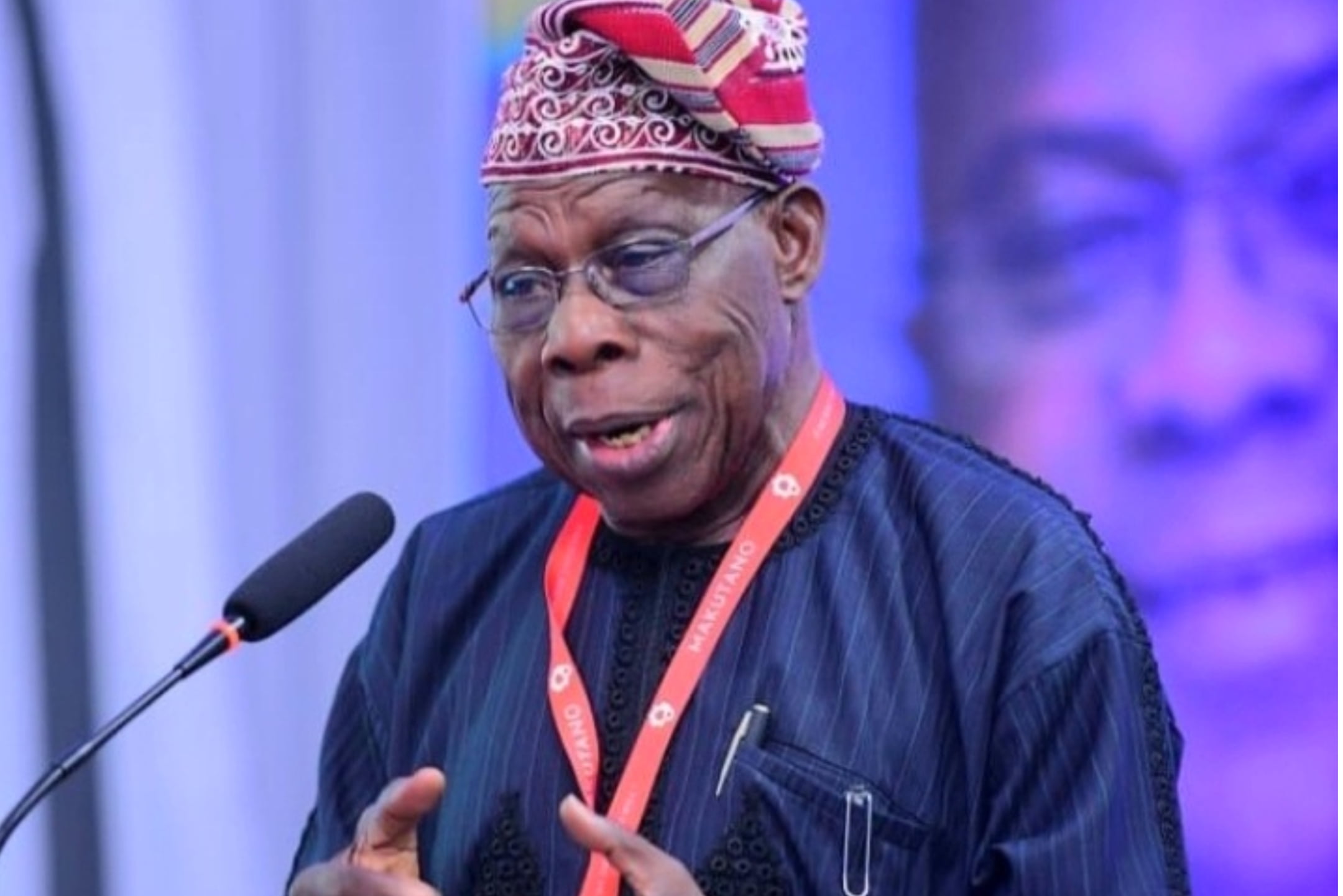
Former President, Chief Olusegun Obasanjo, has said that at 89 years, he won’t die anytime soon.

He condemned those circulating a fake letter in which he was purportedly speaking about his death, saying they were only wasting their time because “I dey Kampe.”

The former president disclosed this on Wednesday while delivering a colloquium titled “Burden and Blessing of Leadership: Reflections from Global Africa to the World” held as part of the ceremonies lined up to mark his 89th birthday in Abeokuta.

Obasanjo was born on March 6, 1937.

The former president said at 89 years he had no doubt that God did not make a mistake to keep him alive and reasonably healthy at his age.

He slammed those wishing him dead, saying he would remain on the earth surface agile and healthy for as long as his Creator wanted.

“For my final note in this address, I want to point your attention to the work of some never-do-well.

“They publish and circulate a fake paper credited to me that I am writing, giving notice of my death, pafuka.

“That is their wish and surely not God’s wish for me. God has assured me that He has more for me to do on earth, and He has given me the wherewithal to do it.

“And those who wish otherwise are going to be dealt with by God Himself. I dey kampe as usual,” the former President said.

Earlier, the former President had lamented the leadership crisis that he said had, for decades, stifled Africa’s development, growth, and economic prosperity.

“Africa is not a problem to be managed but a promise to be fulfilled through honest, courageous, selfless, incorruptible and transformational leadership,” he said.

See also  Post-NEC meetings: APC, PDP set stage for epic 2027 face-off

He explained that genuine leadership carried immense burdens, citing his own incarceration and near execution under the military junta of the late Gen Sani Abacha as part of that burden.

Highlighting Africa’s unrealised potential, he said, “By every measure of natural endowment, Africa should be a continent of prosperity, stability, peace, security and global influence.

“Instead, a major part of the continent remains a theatre of preventable disease and suffering, starvation, conflict, insecurity and poverty.”

Obasanjo identified leadership failure, not geography or history, as the primary cause.

“The primary cause is the failure of those entrusted with power to lead for the people and serve them rather than against them; to build institutions rather than subvert them; to welcome accountability rather than flee from it, to ensure equity and justice rather than enthrone injustice, inequality and inequity.”

He warned that many leaders arrive with promises but soon govern for personal or familial gain, undermine democracy, and erode institutions.

“The same young reformer who promised accountability begins to silence the press, harass the judiciary, and intimidate civil society.

“All institutions become perverted only to serve the interest of the leader, his family, political accomplices and business interests,” he said.

To close the leadership gap, Obasanjo stressed the need for leadership formation, not just training.

“We must invest not only in teaching leaders what to do, but in forming leaders who are constituted and imbued with attributes and values to do the job the right way,” he said.

The former President urged young Africans to take democracy seriously and commit to governance that is accountable, transformational, transparent, and oriented toward the common good.

See also  Jim Iyke - Divorce doesn’t stop me from being a good father

“A continent that fails its youth does not merely waste a generation; it plants the seeds of instability that will haunt the next several generations,” he said.

Reflecting on personal leadership experiences, Obasanjo described the loneliness and moral weight of decision-making, from commanding troops in the Nigerian Civil War to serving as Nigeria’s President from 1999 to 2007.

“The loneliness I speak of is the loneliness of final decision… your decision will affect millions of lives. That weight settles on one pair of shoulders – the leader’s shoulders,” he explained.

“I remember a few days before the Nigerian Civil War ended in January 1970. I was commanding the Third Marine Commando Division.

“My troops were positioned for the final push. Hundreds of thousands of Igbo civilians were trapped, starving, dying. On one side was the imperative of ending the war quickly to stop further suffering.

“On the other was the risk that a military advance would deepen the humanitarian catastrophe. No textbook told me what to do. No senior officer was going to make that call. It was mine alone. I made it. We saved lives by not shelling Owerri.  History has rendered its verdict,” he said.

He stated that a leader also carried the burden of being the repository of other people’s hopes — hopes that are often larger than any human being can satisfy.

Obasanjo said that “When I was elected President in 1999, the Nigerian people had endured years of military dictatorship, economic stagnation, and institutional decay.

“They did not elect a president, some of them thought; they elected a miracle performer. And when the miracle did not arrive in full measure overnight — as it never can — I could hear the murmurs of some of them. This is the burden: to be elevated by hope and measured by time, often simultaneously.

See also  Sir Mobolaji Bank-Anthony: Nigeria’s Pioneer Industrialist and Philanthropist (PHOTOS)

The former President said that with leadership also comes the burden of principle, adding that “True leadership requires the willingness to hold a position when it is unpopular, to say no when yes would be more convenient, to name a truth that powerful interests wish suppressed.

“This costs friendships. It costs alliances. It sometimes costs your freedom — as I learned in the prison under Sani Abacha, where I was held for three and a half years, tried before a kangaroo tribunal, and very nearly executed.”

He also highlighted the blessings of leadership, citing achievements such as Paris Club debt relief and the establishment of the Economic and Financial Crimes Commission to recover stolen public funds.

“The blessing of having done the right thing when doing the wrong thing would have been easier. That is the first blessing of leadership: the opportunity for moral self-definition. Not who others say you are,” he said.

On his personal well-being, Obasanjo affirmed that he remained strong at 89 and condemned those spreading false news of his death.

“God has assured me He has more for me to do on earth, and He has given me the wherewithal to do it. I dey kampe as usual,” he added.

punch.ng

FOLLOW US ON:

FACEBOOK

TWITTER

PINTEREST

TIKTOK

YOUTUBE

LINKEDIN

TUMBLR

INSTAGRAM

Continue Reading
Click to comment

Leave a Reply

Your email address will not be published. Required fields are marked *

Lifestyle

Niger laments inadequate data for women’s health research

Published

on

The Niger State Government has decried the paucity of data to aid research in health conditions affecting women.

It urged health-related agencies and the federal government to deploy resources as well as funds to build up a database to enhance research into the health conditions of the black woman.

The Niger State Commissioner for Health, Murtala Bagana, made this known during a stakeholders’ engagement and media interaction on the need to prioritise women’s menstrual and reproductive health through evidence-based research and policy leadership put together by Youterus Health in collaboration with White Ribbon Alliance Nigeria

In a chat with newsmen, Bagana lamented what he termed “years of inadequate attention to women’s health by policymakers and government institutions”, and stressed that the research conducted by White Ribbon Alliance Nigeria would help policymakers better understand and address long-standing health challenges faced by women.

“Niger State will be part of the entire exercise of the White Ribbon Alliance Nigeria. As a commissioner and with my team, we want to be involved in field research because we are the ones who will ultimately implement the findings.

“The state will advocate for the adoption of the research findings at the National Council on Health meeting scheduled for November 2026. I hope to champion discussions on the outcome of the study,” he said

The Commissioner commended Youterus Health and White Ribbon for their engagement with the state and for raising awareness on women’s reproductive health challenges.

The Chief Executive Officer of Youtherus Health, Dr Fatou Wurie and the Executive Director of White Ribbon Alliance Nigeria, Chief Tonte Ibraye, in their remarks, noted that issues related to African Women’s health are being shrouded in secrecy due to inadequate data.

See also  Under Buhari, Tinubu: 500 Military Generals forced out despite rising insurgency

“Because of the inadequate data on African Women’s Uterine health burden, issues related to African Women’s health have been shrouded in secrecy,

“However, an African-led company, Youterus Health and civil society White Ribbon Alliance Nigeria are calling for tailored research on African women’s womb health. It is past time to unmute the womb, they said.

The Youtherus Health boss added that women’s health should be given priority as it concerns developing data to aid research

“Nigerian women tend to develop fibroids at a younger age compared to women in Western countries. While the average age range in Western populations is between 40 and 46 years, Nigerian women develop fibroids much earlier, between 35 and 37 years.

“57.4 per cent of Nigerian adolescent girls experience heavy menstrual bleeding, and the average delay between the onset of symptoms and seeking medical care exceeds 20 years.

“The absence of a national screening programme, patient registries to track outcomes, and dedicated research funding for uterine health in Nigeria, women’s health remains under-prioritised, under-researched and under-measured,” Wurie stressed.

Continue Reading

Lifestyle

Popular Nigerian biker dies in lone Lagos crash

Published

on

Popular Nigerian photographer and biker, Orowole Kolapoz, widely known as Kola Onifoto, has died following a lone motorcycle accident in Lagos.

The 32-year-old travel enthusiast and brand influencer was reportedly involved in the crash on Sunday during what he described as his first solo motorcycle trip outside Lagos.

Just hours before the accident, Kola had shared on his official Facebook page that he was heading to Akure on his bike. “Big shout out to those who have ridden their bikes to every state in this country, to Africa, and across the world, especially women. My eye see wheeen,” he wrote on Sunday, March 1, 2026.

Friends later disclosed online that he had been involved in the accident and was initially rushed to the emergency unit of the Federal Road Safety Corps at 7UP, Ojota. He was subsequently transferred to the Lagos University Teaching Hospital, Idi-Araba, where well-wishers continued to pray for his recovery on social media.

Tragically, Kola succumbed to his injuries in the early hours of Monday, March 2.

News of his death sparked an outpouring of tributes and emotional reactions from friends, colleagues, and followers. Facebook user Georgiana Onyinye wrote, “We prayed, we cried, and hoped to hear better news, but unfortunately, death had other plans. Kola fought so hard. You tried to stay alive, but death had other plans. You will be greatly remembered. Rest easy, K.”

Details surrounding the exact cause of the crash remain sketchy. In January, Kola had celebrated achieving his dream of becoming a biker, sharing a photo of himself posing beside his new motorcycle.

See also  Under Buhari, Tinubu: 500 Military Generals forced out despite rising insurgency

Victoria Ayagwu also mourned his passing while reacting to the news of his death on Facebook.

“All the posts was just me keeping my hopes up and hoping on miracle..oooooooo because I heard from his closest friend yesterday night that he’s gone, he died on the spot. I don’t know why we are here at all. Kola spoilt my night and my whole day,” she wrote.

“Hot tears rolled down my cheeks. Haven’t had any encounter with him, but the way he fights for people drew me closer to his page. Goodnight Mr Kola,” Emmanuel Collins wrote.

Naomi Balogun, who claimed to have just started showing interest in his write-up, also wrote: “I have never felt so bad about a stranger’s death like I felt for you. I hope it’s not true. I just started having an interest in your writeups. This breaks my heart. I’m not a close relation, and I am already physically down, how much more people close to you. Oh! What is life?”

The spokesperson for the Lagos Sector Command of the Federal Road Safety Corps, Oluwadamilola Jayeola, did not respond to calls made to her telephone line.  A text message sent to her had yet to be replied to as of the time this report was filed.

Continue Reading

Lifestyle

Who Is Ayatollah Arafi? 10 Key Things To Know About Iranian Supreme Leader

Published

on

Iran’s interim leadership council has appointed Ayatollah Alireza Arafi as the clerical member of the body now exercising the powers of the late Supreme Leader, Ayatollah Ali Khamenei.

Arafi officially assumed the role on March 1, 2026, in accordance with Article 111 of the Iranian Constitution, which provides for a temporary leadership structure pending the selection of a new Supreme Leader by the Assembly of Experts.

Article 111 stipulates that in the event of the death or incapacitation of a Supreme Leader, a temporary leadership council assumes the responsibilities of the office until a permanent successor is chosen.

With Khamenei’s death, the interim council has now begun overseeing the functions traditionally exercised by Iran’s highest political and religious authority.

Arafi’s appointment places him at the centre of this sensitive transition, as the country navigates a period of political uncertainty.

As a senior Shi’a cleric, Arafi is widely regarded as a figure with influence across Iran’s major institutions, including the military establishment, the judiciary and the religious seminaries.

Until the Assembly of Experts concludes its deliberations and selects a permanent Supreme Leader, Arafi and other members of the interim council will collectively exercise the constitutional powers attached to the office.

Ten key facts about the acting Iranian leader:

1. Born in 1959 in Meybod, Yazd Province, Arafi rose through Iran’s clerical ranks over several decades.

2. Ayatollah Alireza Arafi practices Islam, follows the Twelver Shi’a denomination, adheres to Ja‘fari jurisprudence, and upholds the Usuli creed.

3. In Qom, he completed his primary school education. At the same time, he began his seminary courses and preliminary courses. Later, he also attended seminary courses and learned Arabic and English. Furthermore, he studied mathematics and philosophy. (Qom is widely regarded as Iran’s religious capital and a major centre of Shi’a scholarship).

See also  Chief Abraham Salako (Afilaka) and the Peugeot 404 in 1960s Nigeria

4. Arafi has attained the rank of mujtahid because of his expertise in Islamic jurisprudence and philosophy, and he has authored and co‑authored numerous works on these subjects — including the book Education Jurisprudence (Al‑Fiqh Al‑Tarbawi). Some of his academic articles, published in Iranian journals, cover topics such as Islamic jurisprudence, educational law, and social issues.

5. Between 2008 and 2018, he was President of Al-Mustafa International University, an institution that trains clerics and religious scholars from Iran and abroad.

6. He has served as the Friday Prayer Imam of Qom since 2015.

7. Since 2016, Arafi has headed Iran’s nationwide seminary system, overseeing religious education nationwide.

8. Arafi holds the religious title of Ayatollah, a rank accorded to high-level Shi’a clerics with advanced theological scholarship.

9. He has served as a member of the Guardian Council since 2019, a powerful constitutional body responsible for vetting legislation and supervising elections in Iran.

10. He has also been a member of the Assembly of Experts since 2022, a clerical institution constitutionally mandated to appoint and oversee the Supreme Leader.

FOLLOW US ON:

FACEBOOK

TWITTER

PINTEREST

TIKTOK

YOUTUBE

LINKEDIN

TUMBLR

INSTAGRAM

Continue Reading

Trending