Connect with us

Lifestyle

Coronation of Eze Ndigbo in foreign lands embarrassing – FG

Published

on

The Federal Government has criticised the coronation and activities of individuals styled as Eze Ndigbo (Igbo traditional rulers) in foreign countries, describing the practice as embarrassing.

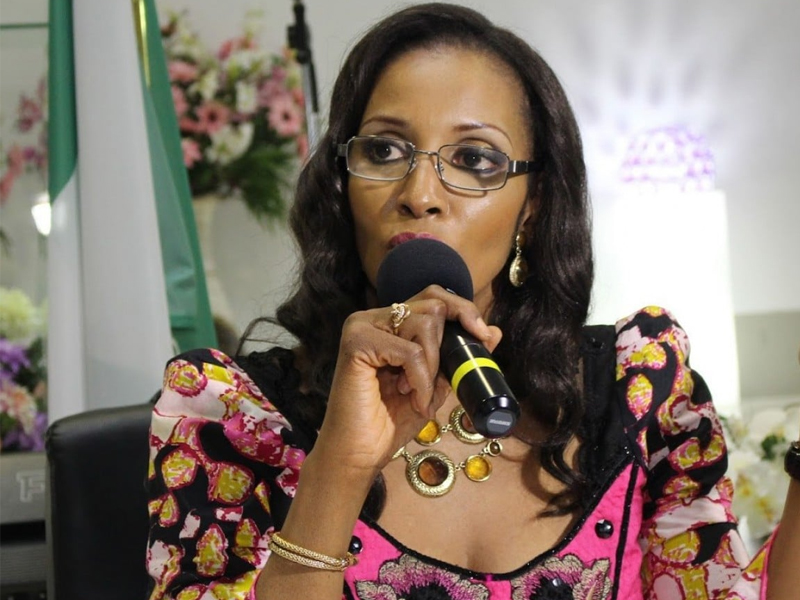
The Minister of State for Foreign Affairs, Ambassador Bianca Odumegwu-Ojukwu, stated this while presenting the position of the government at a meeting of Imeobi, the highest decision-making body of Ohanaeze Ndigbo Worldwide, held in Enugu on Thursday.

In a statement signed by her Special Assistant on Communication and New Media, Magnus Eze, the minister said, “The situation has become a major embarrassment to the government, Ndigbo, Nigerians, and citizens of host countries where such titles are conferred.”

Recently, violent protests erupted in South Africa’s Eastern Cape following the controversial coronation of a Nigerian Igbo leader, Solomon Ogbonna Eziko, as “Eze Ndigbo na East London” (Igbo King in East London).

The development sparked outrage among local residents, traditional leaders, and political groups, leading to unrest, the burning of foreign-owned vehicles, and looting.

Addressing the Ohanaeze Imeobi/General Assembly, the minister recalled that a similar incident occurred in Ghana in July 2025 over the Eze Ndigbo issue.

She said she had led a delegation to Accra to ease tensions following protests in which some Ghanaian groups demanded that Nigerians leave the country.

Odumegwu-Ojukwu stressed that cultural expression should not create conflict with host communities, noting that the Ministry of Foreign Affairs had continued to deploy diplomatic channels to address the situation in South Africa.

She said, “Aggrieved Ghanaians issued our people with a quit notice, insisting that Nigerians must leave.”

See also  Fear May Explain Our Choices, But It Should Never Justify Deception

According to her, the delegation met with President John Mahama of Ghana, ministers, the Inspector-General of Police, traditional authorities across regions, and representatives of the Nigerian community.

She added that tensions eased following the intervention of President Mahama, who maintained that there was no place for xenophobia in Ghana.

Receiving President Bola Tinubu’s special envoy, led by Odumegwu-Ojukwu, at the Presidential Palace in Accra, the Ghanaian leader reaffirmed his commitment to the Economic Community of West African States protocols, particularly on the free movement of persons and goods within the region.

He also noted that the circulation of an old video made by a Nigerian resident in Ghana more than 10 years ago contributed to the tension, but said the situation was swiftly managed.

Odumegwu-Ojukwu reiterated that the safety of Nigerians, their businesses, and property in Ghana could have been threatened but for the intervention of President Mahama.

The minister urged Ohanaeze Ndigbo to prescribe sanctions for individuals who violate its directive abolishing Igbo traditional rulership titles outside Igboland.

She also assured all that the Ministry of Foreign Affairs would assist in disseminating the Ohanaeze communiqué on the issue through Nigeria’s missions and high commissions abroad.

The President-General of Ohanaeze Ndigbo Worldwide, Senator Azuta Mbata, who presented the decision of the apex Igbo socio-cultural organisation, said the group had adopted the position of traditional rulers abolishing the Eze Ndigbo title in the diaspora.

He said, “Anybody who is awarded such a title anywhere outside Igboland does so on his own. It is not recognised by the Igbo people. We will correspond with state governors and embassies worldwide to inform them of the position of Ndigbo.

See also  Three nights Nigeria will not forget

“The position of Eze Ndigbo anywhere outside Igboland is hereby declared alien and proscribed. We will determine, in consultation with traditional rulers in Igboland, the appropriate sanctions for anyone who violates this position, and such sanctions will be implemented at the community level,” he said.

On March 14, 2026, Eziko was crowned as a traditional leader in the Gompo area of East London, a move widely interpreted by South Africans as an unlawful challenge to established traditional leadership structures.

Protests began on March 30, 2026, with demonstrations organised by groups including ActionSA, which later escalated into violence.

Protesters targeted foreign-owned businesses and vehicles, with reports indicating that no fewer than 13 vehicles were destroyed.

At least one stabbing incident was also reported, while police deployed stun grenades and tear gas to restore order.

The Eastern Cape House of Traditional and Khoi-San Leaders condemned the coronation as a “flagrant violation” of customary protocols. The South African Department of Cooperative Governance and Traditional Affairs also declared the installation illegal and inconsistent with the country’s constitutional provisions.

Meanwhile, the National Executive Committee of Ohanaeze Ndigbo Worldwide, in collaboration with the South-East Council of Traditional Rulers, has abolished the practice of conferring the title of Eze Igbo outside Igboland.

Igbo associations in the diaspora often organise cultural activities to promote their heritage.

However, the installation of traditional rulers by some of these groups has repeatedly generated friction, not only within Igbo communities abroad but also between Nigerians and their host communities.

The Nigerian High Commission in South Africa distanced itself from the coronation, describing it as a cultural event that was misinterpreted and not a formally recognised monarchy.

See also  PHOTOS: Dakakari Terracotta Sculptures: Guardians of Memory and Prestige

The Nigerian Consulate in Pretoria also appealed for calm, urging Nigerians in South Africa to maintain a low profile and avoid actions that could escalate tensions.

The Deputy High Commissioner, Olajide Ogunmadeji, who addressed some protesters, explained that the situation had been misconstrued, noting that the coronation was largely ceremonial and not intended to undermine existing traditional authorities.

punch.ng

FOLLOW US ON:

FACEBOOK

TWITTER

PINTEREST

TIKTOK

YOUTUBE

LINKEDIN

Continue Reading
Click to comment

Leave a Reply

Your email address will not be published. Required fields are marked *

Lifestyle

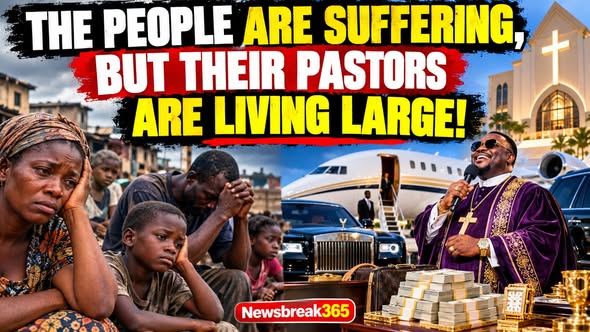
The People Are Suffering, But Their Pastors Are Living Large! Questions About Wealth, Faith and Accountability

Published

on

As many Africans struggle with poverty and rising living costs, the luxurious lifestyles of some religious leaders are raising questions about faith, financial transparency and accountability.

When the People Struggle to Survive, Who Is Looking After Them?

Across Africa, millions of families face the daily challenge of making ends meet. The cost of food, housing, education and healthcare puts pressure on household budgets, leaving many people wondering how they will provide for their families.

For many, religious institutions remain a source of hope, spiritual comfort and community support. People attend services seeking encouragement, healing, direction and the strength to overcome life’s difficulties.

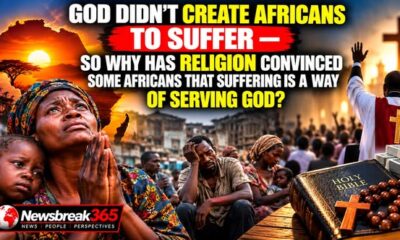
However, a difficult question continues to arise in public discussions about religion: **Why are some religious leaders associated with extravagant lifestyles while members of their congregations struggle to meet their basic needs?**

From luxury vehicles and expensive mansions to private jets and lavish public appearances, the wealth displayed by some prominent religious leaders has prompted debate about the relationship between religious ministry, personal prosperity and social responsibility.

The issue is not whether a pastor should be wealthy. The deeper question is whether religious institutions are fulfilling their responsibilities to the people who trust them.

The Financial Sacrifices of Ordinary Worshippers

Many worshippers make financial contributions to their religious communities through offerings, tithes, donations and special fundraising campaigns.

Some contribute willingly because they believe in the mission of their church and want to support its activities. Others give because they hope to receive spiritual encouragement or because they feel a strong sense of responsibility towards their faith community.

For low-income families, however, financial contributions can represent a significant sacrifice.

Consider a parent struggling to pay school fees, a worker who can barely afford rent or a family trying to pay medical bills. When such people contribute to a religious institution, they should reasonably expect responsible stewardship of those funds.

See also  Singer Niniola loses husband

This raises important questions.

Are donations being used to support genuine religious and community activities? Are the institution’s finances managed transparently? Do members have access to appropriate financial reports? And how much assistance reaches vulnerable people within the congregation?

These questions deserve serious consideration, without assuming that every church or pastor misuses donations.

Should Religious Leaders Live in Luxury?

There is no universal rule that a religious leader must live in poverty. Pastors, like other professionals, may receive legitimate compensation for their work, own property and enjoy the rewards of their careers.

Some religious institutions also operate large organisations with substantial expenses, including staff salaries, buildings, media operations and charitable programmes.

Nevertheless, wealth can become a matter of legitimate public concern when an institution relies heavily on donations from financially vulnerable people and provides little information about how those funds are used.

The central issue is not wealth itself, but transparency, responsibility and the treatment of people who provide financial support.**

If a religious leader lives comfortably while the institution also provides meaningful support to vulnerable families, that situation deserves to be assessed on its actual merits.

But when extravagant displays of wealth appear alongside persistent appeals for money, members have every reason to ask reasonable questions about priorities and accountability.

Faith Should Not Be Used to Exploit Vulnerability

People experiencing poverty, illness, unemployment or family difficulties may be especially vulnerable to promises of a dramatic change in their circumstances.

Religious teachings can provide genuine comfort and hope. However, problems arise when spiritual authority is used to pressure people into giving money they cannot afford, or when financial contributions are presented as a guaranteed route to wealth, healing or divine favour.

See also  LACK OF TRUST IN MARRIAGE

No person should have to choose between feeding their children and feeling accepted by their religious community.

Religious leaders have an important responsibility to communicate honestly, avoid exploiting people’s desperation and recognise the financial realities facing their congregations.

Faith should encourage compassion and dignity, not shame people who cannot afford to give.

What About the Pastors Who Help the Poor?

A balanced discussion must recognise that many religious leaders and faith-based organisations provide valuable services.

Some support orphanages, distribute food, assist struggling families, fund scholarships, operate schools and clinics, and help people facing emergencies. Many religious workers serve their communities without enjoying extraordinary wealth or public recognition.

These contributions matter and should not be dismissed.

The concern is directed at practices that lack transparency, encourage financially harmful behaviour or place personal enrichment above the welfare of the congregation.

Criticism should focus on documented conduct and institutional practices rather than treating all pastors as if they were the same.

What Should Change?

Religious institutions can strengthen public trust by adopting practical measures, including:

– **Financial transparency:** Provide appropriate reports explaining how donations and other income are spent.
– **Independent oversight:** Use suitable financial controls and independent audits where appropriate.
– **Responsible fundraising:** Avoid pressuring financially vulnerable members to give beyond their means.
– **Community support:** Consider food assistance, education, healthcare support and other programmes that address local needs.
– **Accountable leadership:** Establish clear processes through which members can raise concerns and seek answers.

These measures can help ensure that religious institutions remain places of trust, service and genuine community support.

See also  Actor Odunlade Adekola has sadly lost his father

The Bigger Question: Who Benefits From Religion?

Religion is deeply important to many people, offering meaning, identity, moral guidance and a sense of belonging. It should be possible to respect people’s beliefs while also questioning how religious institutions exercise financial and spiritual authority.

As economic hardship continues to affect many households, conversations about charitable giving, religious wealth and accountability are worth having openly and respectfully.

The question is not whether people should stop praying, attending church or supporting their faith communities.

The question is whether religious institutions can demonstrate that they take the welfare of their members seriously.

**When ordinary people make sacrifices to support a ministry, should that ministry’s success be measured only by the size of its buildings and the wealth of its leader, or also by the lives it improves?**

That is a conversation worth having.

—

### Join the Conversation

Do you believe religious leaders should publicly account for how church donations are spent?

Should churches do more to support members who are struggling with poverty, school fees, rent and medical bills?

Share your views respectfully in the comments.

**Newsbreak365 — Bringing important conversations to the public.**

*Editorial note: This article discusses a general social concern. It does not accuse any specific religious leader or institution of wrongdoing.*

**Suggested SEO keywords:** pastors and wealth in Africa, church financial transparency, religious accountability, poverty in Africa, church donations, faith and social responsibility.

FOLLOW US ON:

FACEBOOK

TWITTER

PINTEREST

TIKTOK

YOUTUBE

LINKEDIN

INSTAGRAM


Continue Reading

Lifestyle

10-year-old twins set to launch first book

Published

on

Ten-year-old Nigerian twins, Jason and Jaden Ojo, will launch their first book, titled “JJ The Sloth and the Twins,” in Lagos on October 24.

The book, co-authored by the twins and their mother, Gina Ehikodi-Ojo, narrates how the character named JJ The Sloth helps the twins navigate their everyday activities, such as preparing for school, learning, eating, playing and resting.

The inspiration for the book came after Jason and Jaden were asked to write down their daily routine from memory, and their responses closely reflected the routine their mother had established at home.

Ehikodi-Ojo said the project combines structure with creativity and play.

She said, “As a mother, I have always believed that children need structure, but I also believe that routines should leave room for fun, creativity, and simply being children.

“What began as our everyday family routine eventually became a story that Jason and Jaden could call their own. Seeing them become authors at 10 is incredibly special, and we hope JJ The Sloth will remind families that there really is time for everything.”

The book will be launched as part of Jason and Jaden’s 10th birthday celebration.

The event will feature a book signing by the young authors, family-focused activities, media engagements and the premiere of the first episode of the series.

The book is part of a wider children’s entertainment and learning project built around JJ The Sloth, with plans spanning books, digital content, a plush character, and a television and online series.

The first phase of the series will comprise 13 episodes, with new episodes scheduled for weekly release on YouTube through JJ The Sloth Adventures.

See also  🚨 WIVES, YOUR HUSBAND IS NOT IN A COMPETITION WITH ANOTHER WOMAN’S HUSBAND!

The series will explore themes drawn from children’s everyday lives, including dressing, breakfast, tidying up, screen time, science, arts, play and other routines.

The creators said the project seeks to make conversations about healthy habits and children’s routines more engaging through storytelling, play and relatable characters rather than presenting them solely as lessons.

The project is also expected to expand into school, library and book-club storytelling activities as the JJ The Sloth series develops.

Source: punchng.com

FOLLOW US ON:

FACEBOOK

WHATSAPP CHANNEL

TWITTER

PINTEREST

TIKTOK

YOUTUBE

LINKEDIN

INSTAGRAM

Continue Reading

Lifestyle

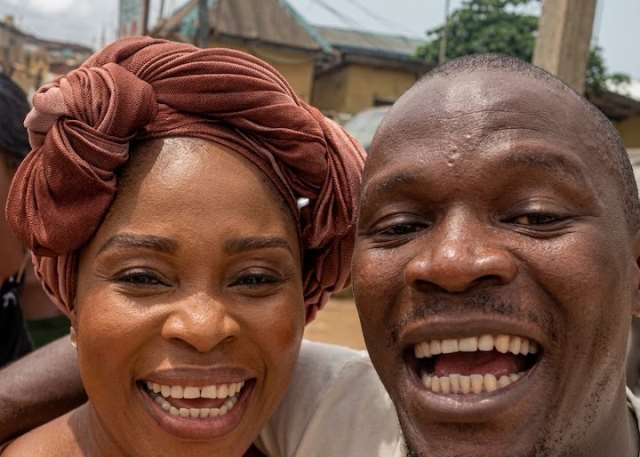
Tope Alabi mourns gospel singer Toluwanisings, read what she said about him

Published

on

Nigerian gospel singer Tope Alabi has expressed shock and sadness over the death of fellow gospel artiste Toluwanisings.

Alabi, in a heartfelt tribute on her Instagram on Thursday, described the news of his death as a major shock, admitting that she was still struggling to come to terms with the loss.

“It hurts!” the gospel singer lamented, expressing the pain she felt over the passing of her colleague.

Despite the grief, Alabi said her Christian faith remained a source of hope and comfort during the difficult moment.

She also expressed her belief that the late singer was now with the Lord, drawing strength from her faith in the promise of eternal life.

The death of Toluwanisings has brought sadness to members of the gospel music community, with Alabi’s tribute reflecting the emotional impact of the loss.

The singer’s expression of grief also underscores the bond shared among gospel artistes, whose music and ministry have continued to inspire audiences across Nigeria and beyond.

Source: punchng.com

FOLLOW US ON:

FACEBOOK

WHATSAPP CHANNEL

TWITTER

PINTEREST

TIKTOK

YOUTUBE

LINKEDIN

INSTAGRAM

See also  Fear May Explain Our Choices, But It Should Never Justify Deception
Continue Reading

Trending