Connect with us

Business

Airlines plan Thursday shut down; see why

Published

on

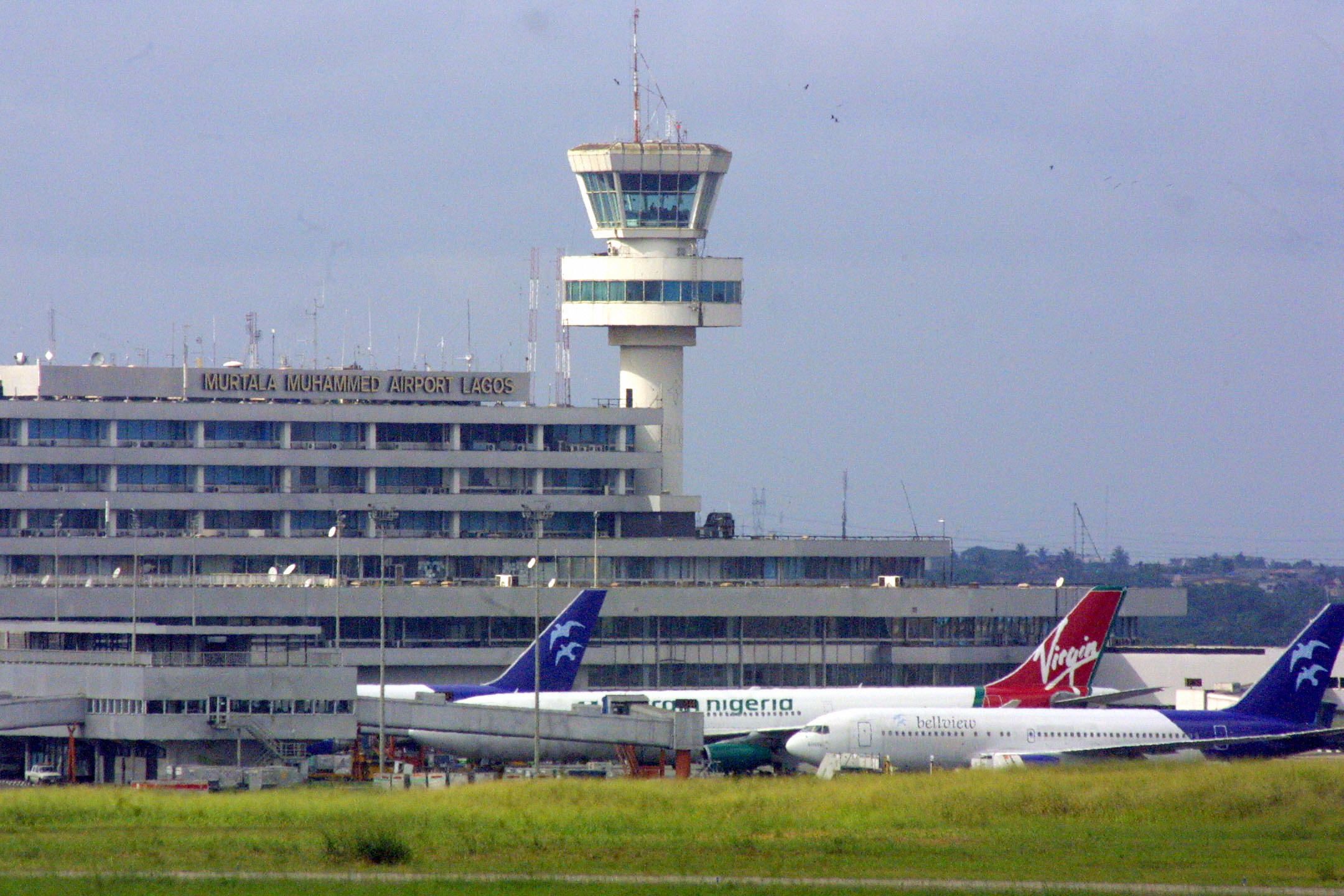
There are strong indications that domestic airlines in Nigeria may halt operations from Thursday, April 30, 2026, over what operators described as unbearable and unsustainable aviation fuel prices, raising fresh fears of widespread travel disruption across the country.

Industry insiders say the airlines, having engaged both the Federal Government and oil marketers without a breakthrough, may be left with no option but to ground flights by Thursday.

The looming shutdown comes after several complaints by operators, who have watched the price of Jet A1 surge by over 300 per cent compared to February levels, pushing operating costs to the brink.

Passengers, many of whom rely on domestic flights for business and urgent travel, now face uncertainty.

In a bid to avert the crisis, the Minister of Aviation and Aerospace Development, Festus Keyamo, convened a meeting with airline operators and fuel marketers in Abuja last week. However, findings indicate that the tripartite talks ended in a deadlock, with operators unwilling to shift their stance unless decisive action is taken.

At the end of the two-day meeting, the minister announced a 30 per cent reduction in aviation-related taxes as part of efforts to ease the burden on airlines. While the gesture was acknowledged, operators insist it falls short of addressing the root problem.

Speaking on the first day of the meeting, Vice President of the Airline Operators of Nigeria, Allen Onyema, welcomed the government’s intervention but maintained that fuel marketers must account for the sharp rise in prices.

Onyema said, “This government has helped the industry more than anyone since 1999, and the President is even willing to waive 30 per cent of the debts airlines are owing.

See also  Banditry crisis: FG rejects northern govs’ call to suspend mining

“But the truth is that the marketers must be brought to book to explain how they came about the 300 per cent increase when even Dangote is surprised because what he is selling to us is still the cheapest.”

At the end of the second day, Onyema issued a stark warning, giving a seven-day ultimatum from midnight last Thursday for action to be taken. “Since the advent of the US-Iran war, there has been a spike in aviation fuel in Nigeria, which we, the Airline Operators of Nigeria, feel is not proportionate to the hike internationally.

“We expect that in the next 48 hours something drastic should be done because no airline will fly in this country in the next seven days if nothing is done, not because they don’t want to fly, but because fuel may not be available to us at sustainable pricing.”

Providing further insight into the financial strain, Onyema disclosed that fuel prices have skyrocketed from about N900 per litre before the crisis to between N2,700 and N2,900, with some marketers selling as high as N3,500.

“Before the crisis, we were buying fuel at about N900 per litre. Now it has risen to between N2,700 and N2,900, with some selling as high as N3,300 to N3,500,” he said.

According to him, airlines are now operating primarily to service fuel costs. “All the airlines in Nigeria have been flying to pay fuel marketers only, and you don’t want to compromise safety,” he added.

Despite speculations about indebtedness, senior airline officials who spoke to our correspondent in confidence on Sunday, due to the sensitive nature of the matter, insisted that operators are up to date with payments to key aviation agencies, including the Federal Airports Authority of Nigeria and the Nigerian Airspace Management Agency.

See also  CBN Projects 12.94% Inflation Rate In 2026 On Lower Fuel, Food Prices

The PUNCH further gathered that in a document, the Airline Operators of Nigeria have formally requested additional relief measures from the government. In the letter dated April 21 and signed by AON President Abdulmunaf Sarina, the group called for the immediate suspension of aviation taxes, fees, and charges for at least six months.

The operators argued that the unprecedented rise in fuel costs threatens not only airline operations but also jobs and the stability of the aviation sector. Among other demands, the AON proposed the introduction of a non-taxable fuel surcharge, a standard practice in international aviation to help airlines manage rising costs.

They also urged the government to direct oil marketers to issue credit notes to airlines affected by what they described as excessive and arbitrary price hikes. In addition, the group called for the establishment of an industry tax reform committee to review existing charges, assess their relevance, and align them with global standards.

As the deadline approaches, uncertainty hangs over Nigeria’s aviation sector. Another airline executive, who spoke anonymously on Sunday because he was not authorised to comment publicly, warned that the shutdown threat remains real. “If nothing is done, no airline will be flying by Thursday,” he said.

punch.ng

FOLLOW US ON:

FACEBOOK

TWITTER

PINTEREST

TIKTOK

YOUTUBE

LINKEDIN

INSTAGRAM

Continue Reading
Click to comment

Leave a Reply

Your email address will not be published. Required fields are marked *

Business

Dangote refinery expansion to create 95,000 jobs

Published

on

The President of the Dangote Group, Aliko Dangote, has announced that the expansion of the Dangote Petroleum Refinery to a production capacity of 1.4 million barrels per day will generate employment for no fewer than 95,000 skilled workers at peak construction.

According to a statement by the firm, Dangote disclosed this on Saturday in Lagos during his induction as an honorary fellow of the Nigerian Academy of Engineering, describing the project as a major milestone in Nigeria’s industrial transformation.

According to him, the expansion underscores the group’s continued commitment to engineering excellence, job creation, and sustainable economic growth.

“This award is particularly meaningful because it recognises what we are doing in the industry, especially our commitment to employing engineers and skilled professionals. At the peak of construction for this expansion, we expect to have about 95,000 skilled workers on site, and we will continue to grow,” Dangote said.

Upon completion, Dangote said the expanded refinery will surpass the Jamnagar refinery in India to become the largest refinery in the world, significantly strengthening Nigeria’s refining capacity.

Dangote noted that the project would rely heavily on Nigerian expertise, creating substantial opportunities for engineers, technicians, artisans, and other skilled professionals. He added that the expansion reflects the group’s long-term vision for industrialisation in Nigeria and across Africa.

Beyond employment generation, the refinery said the expansion is expected to stimulate local manufacturing, enhance technology transfer, and deepen Nigeria’s oil and gas value chain.

It will also improve fuel security, reduce dependence on imported petroleum products, and deliver significant foreign exchange savings for the Nigerian economy.

See also  Nigeria imports 15bn litres of petrol despite Dangote refinery output

“The scale of this expansion reflects our confidence in Nigerian capacity and our belief that Africa has the ability to build world-class infrastructure that meets global standards,” Dangote stated.

In his remarks, the President of the Nigerian Academy of Engineering, Prof Rahamon Bello, described the honour as well-deserved, noting that Dangote’s impact transcends physical infrastructure.

“What makes this recognition fitting is not only what has been built but also what has been inspired. Alhaji Aliko Dangote’s journey continues to motivate a new generation of engineers, entrepreneurs, and innovators to think boldly, act decisively, and believe in the immense possibilities within our continent,” Bello said.

From the current 650,000 bpd, Dangote plans to scale up the refinery in three years.

Continue Reading

Business

Obasanjo reveals why NNPC refineries will never work again; read details

Published

on

As the Nigerian National Petroleum Company Limited continues its search for technical partners to operate the Port Harcourt, Warri, and Kaduna refineries, former President Olusegun Obasanjo has once again insisted that the facilities will never work.

Obasanjo spoke during a television interview aired on Saturday night by Sony Irabor Live, which was monitored by our correspondent.

He said, “One of the lessons that I learnt is that PPP (public-private partnership) works. Look, one project that has not been destroyed by the government in Nigeria is the NLNG (Nigeria Liquefied Natural Gas), where the private sector has 51 per cent, and the Nigerian government has 49 per cent.

“See what we did with Nigerian railways. See what we did with the national shipping company. See what we are doing now, even with the NNPC. The NNPC has refineries, and I said to people that it will never work. And a man had the audacity to say, ‘Am I a chemical engineer?”

Obasanjo spoke about his failed efforts to woo Shell, a global energy firm, into running the refineries. “Look, when I was there, I called Shell. I said, ‘Look, please, I beg you, come and take 10 per cent equity and run the refinery for us.’ They said no. I said, ‘Okay, if you don’t want to take equity, don’t take equity. Come and run the refineries. They said no,” he stated.

The former president narrated how he invited a top official of Shell for a one-on-one conversation to know why his offers were turned down.

“So, I called him, and I said, ‘Tell me, be honest with me. Why don’t you want to handle this?’ He said first, they want to let me know that they make most of their profits on the upstream, not the downstream.

See also  Voltage disturbance hits Gombe substation, triggered partial grid collapse — NISO 

He said they run their downstream without making a loss, but they don’t make a lot of profit from it. It’s more of a service than a major profit-making. So that’s number one.

“Number two: he said our refineries are too small. This was when I was an elected President. He said our refineries are too small. One is 60,000 barrels, and another is 100,000 barrels. He said refineries at that time were in the range of 250,000 barrels to 300,000 barrels. Number three: he said our refineries are not well-maintained. We call quacks and amateurs to come and maintain our refineries. The refineries are not in good order. He said, ‘Number four, there’s too much corruption around our refineries, and they don’t want to be part of that,” Obansanjo explained.

He recalled that he counted the country lucky then when the President of the Dangote Group, Alhaji Aliko Dangote, told him of the willingness to offer $750m to take 51 per cent of two of the facilities.

“Until one day, Aliko (Dangote) came and offered $750m to take two of the refineries; that will be 51 per cent. I said, ‘Wow, God, you are really a God of miracles.’ I told Aliko to bring the money quickly. They brought the money, and they paid,” he said.

However, the Balogun Owu explained further that his successor, the late Umar Yar’adua, reversed the deal after he left office, claiming he was under too much pressure from the NNPC.

He mentioned that only the current NNPC Group Chief Executive Officer, Bayo Ojulari, has said the truth about the state of the refineries so far.

See also  Gucci owner sells beauty division to L’Oreal for $4.6b

“When I left office, NNPC went to my successor and convinced him. So I got up. I went to Umar. I said, ‘Look, Umar, maybe you don’t know; this is why we did what we did.’ He said, ‘Well, NNPC came to me.’ I said, ‘But you know that NNPC cannot run this thing. He said he knew. I asked, ‘Then why did you give in? He said because of pressure. And I said, ‘Look, when you sell these refineries, you will not get 200 million (dollars) for them, because you will sell them as scrap.’

“Only the present NNPC head has told the country the truth. But in the meantime, I was told that they have spent about $16bn, which is only $4bn short of what Aliko used to build Africa’s largest refinery,” Obasanjo said.

In November 2025, the NNPC announced a fresh target of June 2026 to finalise the selection of technical partners for the refineries.

Ojulari said that despite the rehabilitation and reopening of the Port Harcourt and Warri refineries in 2024 before they were later reclosed, the facilities were operating “well below international standards”, making their products commercially uncompetitive, especially compared to the privately owned Dangote refinery.

Dangote said he built his refinery after the Yar’Adua administration reversed the sale of the NNPC refineries to him and his other associates. He is also of the opinion that the NNPC refineries may never work again.

The NNPC communications office has yet to respond to messages seeking reactions to the former president’s claims.

punch.ng

FOLLOW US ON:

FACEBOOK

TWITTER

PINTEREST

TIKTOK

YOUTUBE

LINKEDIN

INSTAGRAM

Continue Reading

Business

FG borrows N2.69tn from bond market in three months

Published

on

The Federal Government borrowed N2.69tn from the domestic bond market in the first quarter of 2026, as strong investor demand continued to drive subscriptions above offer levels despite tighter allotments, an analysis of Debt Management Office auction results has shown.

Data from the DMO for January, February, and March 2026 indicated that the total was raised through a combination of competitive and non-competitive allotments across the three months.

The figures showed that the government offered N2.45tn worth of bonds in the quarter, while investors submitted subscriptions totalling N5.88tn. Out of this, about 45.64 per cent was allotted, indicating that less than half of the total bids were accepted.

This also means that total subscriptions were about 240.14 per cent of the amount offered, reflecting a strong oversubscription level of more than two times the offer size. On a strictly competitive basis, the allotment ratio was slightly lower at about 43.42 per cent.

A year-on-year comparison showed that the government significantly increased its borrowing from the bond market. In the first quarter of 2025, total allotment stood at about N1.94tn, compared to N2.69tn in the same period of 2026, representing an increase of N750.08bn or 38.76 per cent.

Total subscriptions rose from N2.83tn in 2025 to N5.88tn in 2026, indicating a jump of N3.05tn or 107.71 per cent, while the amount offered increased from N1.10tn to N2.45tn.

Despite the stronger demand, the proportion of subscriptions accepted declined from about 68.32 per cent in the first quarter of 2025 to 45.64 per cent in 2026, suggesting a more cautious approach to borrowing.

See also  PHOTOS: BitMARTe Launches In Nigeria

A breakdown of the 2026 figures showed that the bulk of the borrowing occurred in January. In January 2026, the government offered N900bn and received subscriptions of N2.25tn, with total allotment, including non-competitive allotments, standing at N1.68tn. This represented about 74.37 per cent of subscriptions and about 186.16 per cent of the amount offered.

Compared to January 2025, when N601.04bn was allotted, the January 2026 figure was higher by N1.07tn, representing a 178.75 per cent increase. Subscriptions also rose significantly from N669.94bn in January 2025.

In February 2026, the government offered N800bn and recorded subscriptions of N2.70tn, the highest monthly subscription in the quarter. However, only N524.28bn was allotted.

This translated to a subscription rate of about 337.40 per cent, while only 19.42 per cent of bids were accepted, indicating a wide gap between investor demand and actual borrowing.

Year-on-year, February 2026 recorded stronger demand but lower borrowing compared to February 2025, when N910.39bn was allotted from subscriptions of N1.63tn. This represents a decline of N386.11bn or 42.41 per cent in allotment despite higher subscriptions.

In March 2026, the government offered N750bn, received subscriptions of N931.50bn, and allotted N485.50bn. This represented a subscription rate of about 124.20 per cent, with about 52.12 per cent of subscriptions accepted.

Compared to March 2025, when total allotment stood at N423.68bn, the March 2026 figure reflected an increase of N61.82bn or 14.59 per cent.

Month-on-month analysis showed that the offer size declined steadily from N900bn in January to N800bn in February and N750bn in March. However, subscriptions rose from N2.25tn in January to N2.70tn in February before dropping sharply to N931.50bn in March.

See also  OPay set to host Empowering Futures Conference 2025

Similarly, total allotment fell from N1.68tn in January to N524.28bn in February and further to N485.50bn in March, indicating that borrowing was heavily concentrated in the first month of the quarter.

The auction results also showed that marginal rates declined significantly compared to the corresponding period of 2025, although there was a slight increase in March 2026.

In January 2026, marginal rates ranged between 17.50 per cent and 17.62 per cent, compared to between 21.79 per cent and 22.60 per cent in January 2025, indicating a sharp drop in borrowing costs.

In February 2026, rates declined further to a range of 15.50 per cent to 15.74 per cent, compared to about 19.20 per cent to 19.33 per cent in February 2025, showing a reduction of about 3.5 to 3.8 percentage points.

However, in March 2026, marginal rates rose slightly to between 16.00 per cent and 16.64 per cent. Despite this increase, rates remained below March 2025 levels, which ranged from 19.00 per cent to 19.99 per cent.

Overall, the data showed that while borrowing costs increased slightly towards the end of the quarter, they remained significantly lower than the levels recorded in the same period of 2025.

The trend suggests that the Federal Government benefited from improved market conditions and strong investor demand, even as it maintained a conservative stance on the volume of bids accepted during the period.

The PUNCH earlier reported that the Federal Government planned to raise N700bn from the domestic bond market in April 2026, extending a gradual reduction in offer size as it continues to navigate elevated borrowing costs.

See also  Economy at risk without digital shift – Experts

Details from the April 2026 Federal Government of Nigeria Bond Offer Circular issued by the Debt Management Office showed that the auction is scheduled for April 27, with settlement on April 29.

The issuance will be executed through the re-opening of existing instruments across three maturities, a strategy aimed at improving liquidity in benchmark securities.

The PUNCH earlier reported that the Federal Government’s domestic borrowings from financial market operators rose sharply in 2025 despite high interest rates, widening the gap between public and private sector access to credit.

A renowned economist and Chief Executive Officer of the Centre for the Promotion of Private Enterprise, Dr Muda Yusuf, earlier warned that rising Federal Government borrowing from the domestic financial system is increasingly crowding out the private sector, as banks favour low-risk, high-yield government securities over lending to businesses.

“The increase in credit to the government can be attributed to a number of factors. The government has been raising money to finance the deficit. So this financing of the deficit has led to the issuance of bonds, treasury bills, and so on, which banks also buy. The rate is also very attractive, and it’s more attractive to them than lending to the real sector,” Yusuf said. He further urged the government to moderate its borrowing.

Continue Reading

Trending