Connect with us

Crime

Bandits’ attacks: Fed Govt raises N500bn emergency security fund

Published

on

About N500bn was deducted from the Federation Account Allocation Committee revenue for May 2026 to fund a national security emergency intervention, multiple sources familiar with the development told The PUNCH.

The deduction was made before the monthly revenue sharing exercise among the Federal Government, states and local government councils, according to senior officials privy to the FAAC proceedings.

Confirming the development, one of the sources said, “FAAC deducted N500bn for national security emergency fund this month.”

Another official added that the deduction accounted for a significant portion of the gap between the total revenue generated and the amount eventually distributed to the three tiers of government.

“That is where the FAAC windfall is going too,” the source said.

He further disclosed that commissioners of finance from the 36 states, who are members of the FAAC, were aware of the deduction.

“Commissioners are not talking about it, which means they are in the loop,” the official added.

However, an official FAAC allocation document obtained by The PUNCH on Thursday showed that substantial deductions from federation revenues were disclosed during the May 2026 FAAC meetings.

The document indicated that N250bn was set aside for a Military Intervention Fund, while another N252bn was allocated as an Infrastructure Development Fund to states.

It also showed a N450bn deduction to the Non-Oil Excess Revenue Account, bringing the combined value of the three major deductions to N952bn.

The revelation comes as the Federation Account Allocation Committee announced the distribution of N2.3tn to the Federal Government, state governments and the 774 local government councils as revenue allocation for May 2026.

According to a statement issued on Wednesday by the Director of Press and Public Relations in the Office of the Auditor-General of the Federation, Bawa Mokwa, the Federation Account Allocation Committee shared N2.30tn among the Federal Government, states and local government councils from May 2026 revenue, representing an increase of N43bn from the N2.26tn distributed in the previous month.

The allocation marks a 1.9 per cent month-on-month increase and continues the upward trend in federation revenues. The N2.257tn shared from April 2026 revenue had itself exceeded the N2.04tn distributed for March revenue by N217bn, while the March allocation was N150bn higher than the N1.89tn shared in February.

The statement said the N2.300tn distributable revenue comprised N1.611tn in statutory revenue and N688.785bn in Value Added Tax revenue.


A communiqué issued after the meeting showed that total gross revenue available in May stood at N3.395tn. From this amount, N123.546bn was deducted as the cost of collection, while N971.610bn was set aside for transfers and refunds.

A breakdown of the N2.300tn distributable revenue showed that the Federal Government received N818.680bn, while state governments received N759.141bn.

The 774 local government councils received N534.277bn, while oil-producing states shared N188.132bn as 13 per cent derivation revenue.

Although the official FAAC communiqué did not provide details of the individual items captured under transfers and refunds, sources said the N500bn security deduction formed part of the pre-distribution adjustments made to the federation revenue for the month.

The deduction comes against the backdrop of persistent security challenges across Nigeria, with federal and state governments facing mounting pressure to strengthen military and intelligence operations.

In recent years, the country has grappled with multiple security threats, including insurgency in the North-East, banditry and mass kidnappings in the North-West, violent clashes between farmers and herders in the North-Central, separatist agitations in the South-East and crude oil theft and pipeline vandalism in the Niger Delta.

Despite billions of naira budgeted annually for defence and security, attacks on communities, abductions for ransom and assaults on security formations have continued to stretch the country’s security architecture.

The administration of President Bola Tinubu has repeatedly pledged to prioritise national security, describing it as a prerequisite for economic growth and social stability.

See also  ISWAP leader jailed 20 years, Ansaru terrorists’ trial begins January

Since assuming office in May 2023, the Federal Government has approved increased funding for the armed forces, procured military hardware and intensified intelligence-driven operations aimed at combating insurgency, banditry and other forms of violent crimes.

Security analysts say the creation of a national security emergency fund, if sustained, could provide additional fiscal support for urgent security interventions, especially as the country continues to battle evolving threats across different regions.

Economists welcome move

Economists have welcomed the Federal Government’s plan to establish a N500bn national security emergency fund but urged authorities to ensure transparent and accountable spending that delivers improved security and protects investments across the country.

In separate phone interviews with The PUNCH, economists, including the Chief Executive Officer of Economic Associates, Dr Ayo Teriba, said no Nigerian would oppose increased funding for security because existing funding gaps remained obvious.

Teriba noted that the country required more resources for troop funding, equipment procurement, personnel remuneration, surveillance infrastructure and the recruitment of security personnel such as forest guards.


“Everybody agreed that not enough is being done on security, not enough is being spent on security, and the funding gaps on security are obvious,” Teriba said.

He noted that the government’s decision to source the fund from FAAC allocations rather than impose fresh levies on citizens would likely attract support, although Nigerians would expect transparency in the management of the resources.

“If the government wants to set aside a security fund, nobody will be opposed to it. They are saying they will take it from FAAC before sharing the money. If they want to sacrifice money that they need for security, that is the only way,” Teriba said.

The economist stressed that the success of the initiative would depend on the government’s willingness to operate transparently.

“It is up to them to reassure Nigerians that this time they mean well and that they can be transparent about what they want to use this funding for,” Teriba said.

He added that additional funding could support the recruitment of more police officers, military personnel and forest guards across the country.

Teriba also backed the opposition of the Department of State Services to foreign donations into the proposed trust fund.

“I am happy that the DSS is saying no foreign funding because some of the insurgents are being funded by some foreign interests. Some foreign countries might be complicit, and you shouldn’t take funding from such,” Teriba said.

Also speaking, Professor of Economics and Public Policy at the University of Uyo, Prof. Akpan Ekpo, described security as a critical requirement for economic growth and investment.

“Security is very crucial. Without security, all the investments coming in will not work. With security, you can develop a place. Without security, you can’t,” Ekpo stressed.

He argued that a dedicated emergency fund to strengthen security operations and procure modern equipment was a step in the right direction, provided the resources were managed efficiently.

“If you have an emergency fund to boost security, to get modern equipment and fight insurgency and terrorism, it is a step in the right direction, provided the money is used efficiently, and there is transparency,” Ekpo said.

However, he questioned the effectiveness of previous security allocations, noting that billions of naira had already been budgeted for security over the years.

He warned that without accountability, public confidence in the fund could be undermined, especially given persistent concerns about corruption.


‘No foreign funding’

The Department of State Services on Thursday urged the House of Representatives to remove provisions allowing international organisations to fund its proposed Security Trust Fund, warning that foreign contributions could expose sensitive intelligence operations to external influence and compromise Nigeria’s national security.

The Service made its position known at a public hearing organised by the House Committee on National Security and Intelligence on bills seeking to strengthen the operational capacity of the country’s domestic intelligence agency through dedicated funding, professional training and research development.

See also  Oyo, Borno abductions: Tough terrain, casualty fears stall rescue mission

Presenting its submission on the bill to establish the Department of State Services Trust Fund, the DSS, represented by Emmanuel Duabry, endorsed the legislation but proposed far-reaching amendments, including the deletion of provisions permitting grants, donations and endowments from international organisations.

The Service argued that accepting foreign funding for security operations could undermine institutional independence and expose intelligence activities to external scrutiny.

Duabry said, “Section 3(d), which permits grants, donations, and endowments from international organisations, should be expunged.

“Allowing foreign funding for a security-related Trust Fund raises serious concerns relating to sovereignty, operational confidentiality, and institutional independence. International funding arrangements may impose reporting and disclosure obligations capable of compromising sensitive security operations, including intelligence methods, procurement processes, and deployment strategies.

“There is also a risk that foreign funding may introduce external influence over domestic security priorities, which may not always align with Nigeria’s specific security realities, including insurgency, banditry, and kidnapping.”

The DSS consequently proposed that the Trust Fund should only receive grants, donations and endowments from local organisations.

Despite its reservations, the DSS described the proposed legislation as a major step towards strengthening intelligence and security operations through sustainable financing.

According to the Service, the Fund will provide dedicated resources for intelligence gathering, counterterrorism operations and rapid response to emerging security threats, while reducing delays associated with conventional budgetary processes.

It said, “The Bill for an Act to establish the Department of State Services Trust Fund proposes the creation of a dedicated DSS Security Trust Fund aimed at ensuring stable and flexible financing for intelligence gathering, counterterrorism efforts, and broader national security operations.

“The Fund is designed to facilitate the acquisition of modern operational equipment, enhance training, and enable swift responses to emerging security challenges, while also minimising delays often associated with conventional budgetary procedures and safeguarding the confidentiality required for sensitive activities.

“It is further intended to guarantee the availability of prompt funding during emergencies such as terrorism incidents, civil unrest, and other crises.”


The agency also proposed changes to the funding structure of the Trust Fund, arguing that the current bill leaves too much discretion to the National Assembly in determining annual allocations.

According to the DSS, a clearly defined funding formula or fixed percentage contribution would provide greater certainty and stability for long-term security planning.

The Service also recommended amendments to the composition of the proposed governing board.

It argued that the board should include mandatory legal representation and questioned the inclusion of the Nigerian Governors’ Forum, describing it as a voluntary association without statutory backing.

The DSS proposed that the Nigerian Bar Association should nominate a representative with expertise in national security and human rights matters.

It further recommended that the Board Secretary should be appointed by the President and must be a serving or retired DSS officer not below the rank of Assistant Director who is also a legal practitioner with at least 10 years post-call experience.

The agency additionally sought provisions allowing board members to resign through written notice to the President and empowering the President to remove members for misconduct, gross incompetence or inability to perform their duties.


Notwithstanding its recommendations, the DSS urged lawmakers to pass the bill.

The Service also raised concerns over another proposed legislation seeking to establish a Strategic Intelligence Management Institute.

According to Duabry, the proposed institute substantially overlaps with the National Institute for Security Studies established under the National Institute for Security Studies (Establishment) Act, 2019.

See also  ‘Nigerians must go,’ Ghanaians protest alleged prostitution, ritual killings

It noted that both institutions would perform similar functions by providing strategic and specialised training for intelligence personnel and public officials.

To avoid duplication, the DSS recommended that the proposed institute be redesigned to focus exclusively on external intelligence operations and international intelligence cooperation in line with the mandate of the National Intelligence Agency.

The DSS said such restructuring would eliminate institutional overlap, provide greater clarity of mandates and strengthen Nigeria’s external intelligence architecture.

The Chairman of the House Committee on National Security and Intelligence, Ahmed Satomi, said the three bills under consideration were designed to strengthen the operational effectiveness of the DSS through sustainable funding, professional intelligence training and indigenous technological development.


“These bills are interlinked. One addresses funding, the second addresses professional training and coordination, and the third addresses indigenous capacity and technology. Together, they aim to position our intelligence agencies to better protect Nigerians and Nigeria’s national interest,” he said.

Satomi said the public hearing was convened to obtain expert opinions and stakeholder input before the bills proceed to the next legislative stage.

“The bills before us seek to strengthen funding, build professional capacity, and enhance indigenous research capacity within our premier domestic security agency. No law made in isolation of the people it is meant to serve can stand the test of time. That is why you are here,” he noted.

The committee chairman assured participants that all credible recommendations would be reflected in the committee’s final report to the House.

In his contribution, Speaker of the House of Representatives, Abbas Tajudeen, represented by House Leader Prof Julius Ihonvbere, described national security as the most critical pillar for Nigeria’s survival and development.

According to him, challenges such as terrorism, banditry, kidnapping, cybercrime and transnational organised crime require greater investment in intelligence, innovation and institutional capacity.

Abbas urged stakeholders to make constructive contributions to enrich the legislative process, stressing that public participation remains vital to effective lawmaking.

DIGs relocated

In a related development, the Deputy Inspectors-General of Police deployed to the six geopolitical zones have relocated to their designated areas and resumed duties as part of efforts to strengthen security operations across the country.

The Force Public Relations Officer, Anthony Placid, confirmed the development on Thursday, saying the senior police officers had returned to their assigned zones and commenced work.

“Since last Friday, all the DIGs have been redeployed to their political zones. All these DIGs are back to their bases and have resumed work,” Placid said.

The redeployment follows a directive by the Inspector-General of Police, Olatunji Disu, who on June 15, 2026, assigned Deputy Inspectors-General of Police to the six geopolitical zones to address rising insecurity and improve operational effectiveness.

The initiative is aimed at bringing strategic police leadership closer to the field, enhancing intelligence-led policing, strengthening operational oversight, and improving coordination of security responses nationwide.

On his part, the Deputy Inspector-General of Police in charge of Information and Communication Technology and Supervising DIG for the South-West Geopolitical Zone, DIG Fayoade Adegoke, has commenced an official tour of duty across the South-West region.


His first stop was Oyo State, where he held a strategic engagement at the Oyo State Police Command Headquarters, Eleyele, Ibadan.

The meeting brought together police officers, stakeholders and community representatives to discuss measures for strengthening security, improving police-community relations and enhancing operational effectiveness across the region.

The deployment of the DIGs is part of ongoing efforts by the Nigeria Police Force to decentralise operational leadership and improve responses to emerging security challenges in different parts of the country.


Continue Reading
Click to comment

Leave a Reply

Your email address will not be published. Required fields are marked *

Crime

Police arrest 27-year-old drug trafficker in Katsina

Published

on

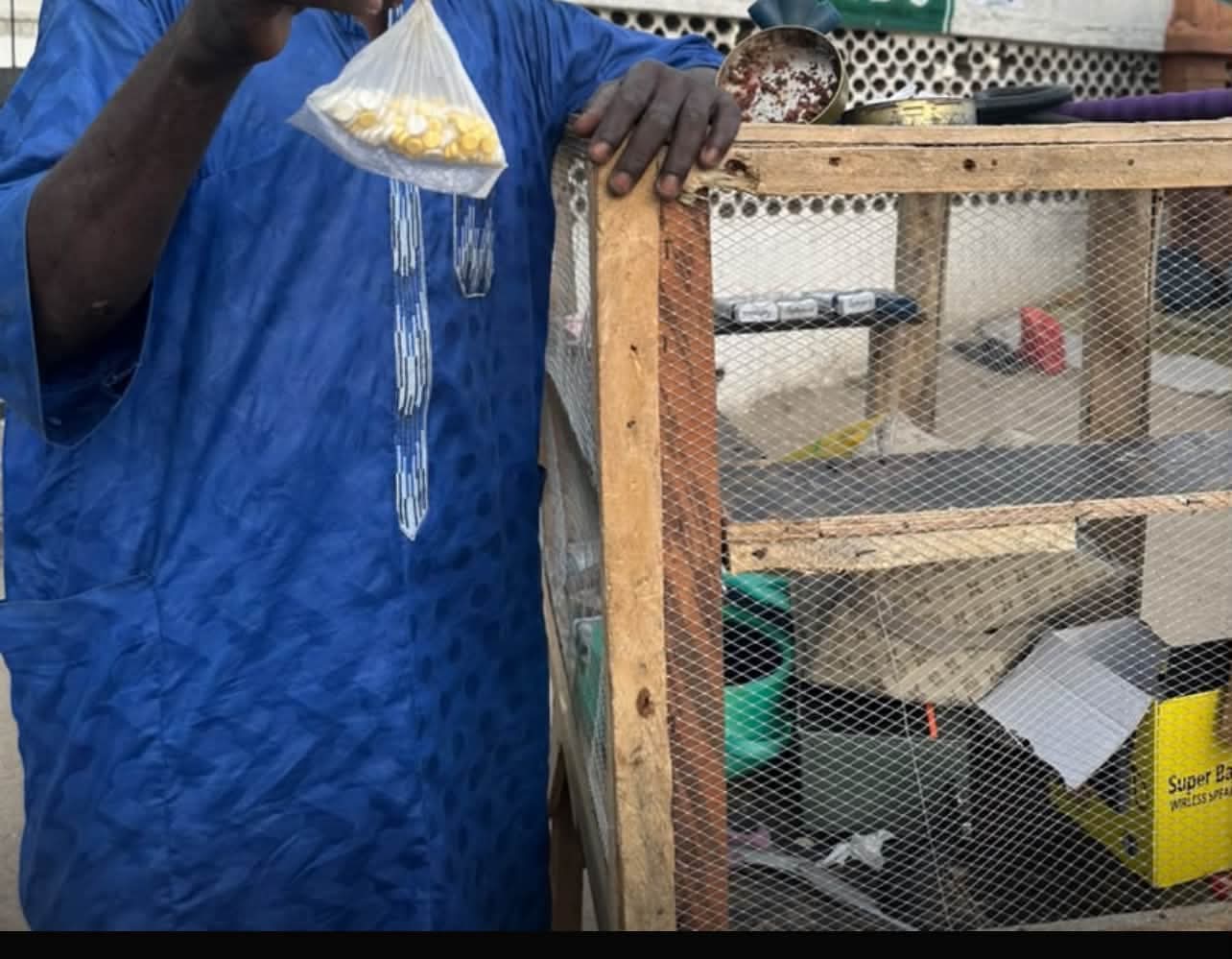
The Katsina State Police Command has arrested a 27-year-old suspected drug trafficker in Funtua Local Government Area of the state.

The command’s Public Relations Officer, DSP Abubakar Sadiq, disclosed this in a statement made available to journalists on Saturday in Katsina.

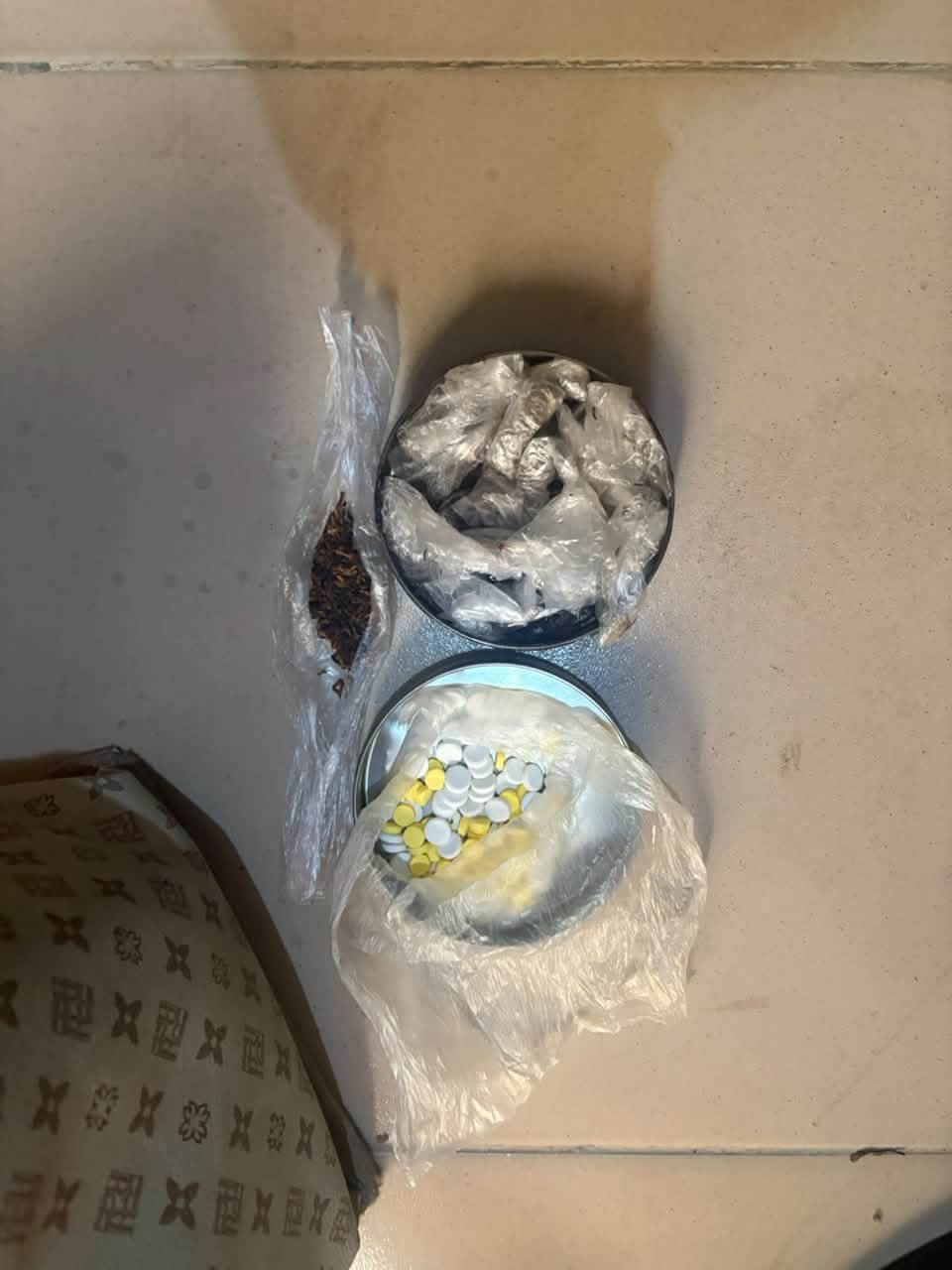
The statement read, “The Katsina State Police Command has successfully arrested one Jibrin Salisu, ‘m’, aged 27, a suspected notorious drug trafficker, in possession of illicit substances in Funtua Local Government Area.

“On June 15, 2026, at about 12:00 p.m., a team of policemen on anti-crime patrol attached to the Central Police Station (CPS), Funtua, intercepted the suspect while he was riding a motorcycle. A thorough search conducted on his person led to the discovery of two sachets containing 2,000 tablets suspected to be Diazepam.

“During the course of investigation, the suspect confessed to receiving the exhibits from one Faith Eze, ‘f’, aged 26, for delivery to an accomplice popularly known as ‘Gurgu’, ‘m’, who is currently at large. Following a diligent follow-up operation, police operatives successfully traced and arrested the said Faith Eze. The suspects confessed to the commission of the offence.

“Efforts are being sustained to ensure the arrest of the fleeing suspect. Further development will be communicated in due course.

“The Commissioner of Police, Katsina State Command, CP Ali Umar Fage, psc (+), mnips, reiterates the command’s zero-tolerance stance on drug trafficking and abuse.

“He warns all individuals involved in the sale and distribution of illicit drugs to desist forthwith or face the full wrath of the law. He further urged members of the public to continue supporting the command with timely and useful information to help rid the state of drug dealers and other criminal elements.”

See also  150 terrorists convicted in 48 hours, says AGF

punch.ng

FOLLOW US ON:

FACEBOOK

TWITTER

PINTEREST

TIKTOK

YOUTUBE

LINKEDIN

Continue Reading

Crime

Bandit’s mother, sister jailed 40 years for aiding terrorism

Published

on

A Federal High Court in Abuja on Friday sentenced Safiya Salihu and Halima Abdullahi, the mother and sister of slain terrorist kingpin, Ibrahim Battujo, to 40 years imprisonment each for aiding his terrorist operations.

Justice Hauwa Yilwa imposed the sentences after the two women admitted to terrorism-related offences filed against them by the Office of the Attorney General of the Federation.

Battujo was killed by security forces on June 10, 2026, following a failed mass abduction and attack on students writing the West African Senior School Certificate Examination in a forest near Iluke in Kabba/Bunu Local Government Area of Kogi State.

The two women were convicted on three of the five counts, including aiding and abetting Battujo’s activities by passing information to him through telephone conversations, contrary to Section 26 of the Terrorism (Prevention and Prohibition) Act, 2022.

Safiya, the mother, was additionally convicted for concealing information about her son’s activities after visiting his forest camp and seeing him in possession of firearms.

Halima, the sister, was convicted on a separate count of concealing information that could have aided his apprehension.

The counts partly read, “That you HALIMA ABDULLAHI and SAFIYA SALIHU, female adults of Dungun Muaza, Sabuwa LGA, Katsina State, sometime in 2026 at Katsina State, within the jurisdiction of this Honourable Court, did commit an offence when you received the sum of four hundred and ninety thousand, three hundred naira only (N490,300) from Battujo, a known terrorist, which sum you reasonably ought to know formed part of the proceeds of terrorism, and thereby committed an offence contrary to and punishable under Section 21 of the Terrorism (Prevention and Prohibition) Act, 2022.

See also  See the travails of Nigerian parents struggling to raise children abroad

“That you HALIMA ABDULLAHI and SAFIYA SALIHU, female adults of Dungun Muaza, Sabuwa LGA, Katsina State, sometime in 2026 at Katsina State, within the jurisdiction of this Honourable Court, did commit an offence when you aided and abetted the activities of Battujo, a known bandit kingpin, and passed information through telephone conversations to the said Battujo, and thereby committed an offence contrary to and punishable under Section 26 of the Terrorism (Prevention and Prohibition) Act, 2022.”

The defendants pleaded guilty to counts two, four and five of the five-count terrorism-related charge brought against them by the Office of the Attorney General of the Federation, for which they were convicted.

However, the court discharged them on counts one and three of the charge, which alleged that they had received N490,300 from Battujo while aware that the funds were proceeds of terrorism, following an application by the Director of Public Prosecutions, Oyedepo Rotimi, SAN.

Although each count carries a 20-year prison sentence, Justice Yilwa ordered the terms to run concurrently.

Both convicts are to undergo rehabilitation upon completion of their sentences.

Continue Reading

Crime

Oyo abduction: Inside terrorists’ plot to stall rescue

Published

on

Boko Haram terrorists who abducted pupils and teachers from three schools in Oriire Local Government Area of Oyo State have been trapped inside the Oyo National Park, 36 days after the May 15 attacks, Saturday PUNCH has learnt.

It was gathered that the terrorists, who are members of Jama’atu Ahlis-Sunna Lidda’Awati Wal-Jihad, which is the formal name of Boko Haram, have intensified efforts to frustrate the rescue operation by planting Improvised Explosive Devices and frequently changing locations within the forest.

Sources familiar with the operation disclosed that the terrorists have also orchestrated attacks in other parts of the country as a deliberate strategy to divert attention and stretch security resources deployed for the rescue of the abducted pupils and teachers.

Saturday PUNCH learnt that despite mounting pressure from troops and other security operatives deployed in the forest, the terrorists have continued to fiercely resist rescue efforts, with the operation already claiming the lives of some soldiers.

The pupils and teachers were abducted on May 15 from Baptist Nursery and Primary School, Yawota; L.A. Primary School; and Community Grammar School, Esiele.

No fewer than 42 pupils and teachers, including a principal, were taken during the attacks.

One of the abducted teachers, Michael Oyedokun, was killed the following day by the terrorists in a bid to deter security operatives from advancing closer.

Meanwhile, the terrorists have reportedly demanded the release of two of their commanders in exchange for the abducted pupils and teachers.

The terror commanders are Mahmud Usman, also known as Abu Bara’a or Abbas Mukhtar, and his deputy, Abubakar Abba, alias Isah Adam or Mahmud Al-Nigeri, also known as Mallam Mamuda.

However, the government has maintained that it will not negotiate with the terrorists and has vowed to rescue the abducted pupils and teachers.

Terrorists trapped, plant IEDs

However, security operatives familiar with the rescue operation told Saturday PUNCH that all possible exit routes from the forest had been manned by soldiers, making it difficult for the terrorists to move their victims out.

Saturday PUNCH also gathered that soldiers trying to flush out the terrorists have come under attack on two occasions, resulting in the deaths of at least three personnel.

One security source, who spoke on condition of anonymity because he was not authorised to speak on the matter, said the forest’s difficult terrain and the terrorists’ tactics had slowed down the operation.

“They have planted IEDs everywhere and our men are exploring professional methods to navigate the difficult areas,” the source said.

“Some soldiers have been killed in the operation. There have been shootouts on two occasions. The military lost three personnel in those shootouts. Just two weeks ago, two soldiers were killed in the forest. That has really slowed down the operation, but we are not relenting.”

The source added that the terrorists change location almost every day to evade capture.

“They know they are being monitored and that security operatives are everywhere. So, they move their victims from one place to another. But they can’t leave the forest. They have been surrounded,” he said.

See also  NSCDC foils bandit attack on Plateau farmers

Oyo State Governor, Seyi Makinde, had earlier confirmed that some soldiers died during the ongoing rescue efforts.

While addressing protesters on Tuesday, the governor said, “We have lost men, even soldiers and officers. I can confirm to you that a lieutenant in the Nigerian Army was killed two days ago.”

Terrorists step up attacks to stretch security, divert attention

A former lawmaker in the state who is knowledgeable about the rescue operation told Saturday PUNCH that the terrorists’ commanders had intensified attacks in the northern part of the country to reduce the concentration of security operatives focused on the Oyo abduction.

He said the terrorists, who he claimed had been caged in the forest, were trying to stretch security personnel and thin out their presence in the Oyo National Park in a bid to escape.

The ex-lawmaker, who spoke on condition of anonymity on Thursday, said, “From intelligence reports, we got to know that the terrorists deliberately increased the tempo of attacks on innocent citizens and communities just to distract the security operatives from forging ahead with the rescue operation.

“They have been surrounded and they know the soldiers in the forest are getting close to them. So, they and their commanders increased the scale of attacks so that the soldiers trailing them in the Oyo forest will be withdrawn or reduced. That is their tactic. But it will not work.

“Very soon, the children and teachers will be rescued. The security men have blocked all the paths they can escape through, and they are becoming weaker.”

Victims used as human shield

A security source privy to the operation told Saturday PUNCH that the abductors’ use of the victims as human shields remained the biggest obstacle to a decisive rescue.

“They’re using their victims as shields, and we don’t want a situation where they would begin to kill those children,” the source said.

“The political actors don’t want us to penetrate as much as possible, and truly, if we do and they kill one of the victims, the outcry would be too much. They would blame it on us.”

The source further disclosed that the abductors’ tactics differed from those of other criminal groups, complicating efforts to track and intercept them.

“They have reinforced and are over 200 in the location where they are keeping the victims,” the source said.

He warned that a forced penetration might result in catastrophic collateral damage.

“If we want to penetrate, and there is an exchange of fire, it could hit the victims, or they kill the victims themselves,” the source said.

Despite the operational constraints, the source indicated that the terrorists were stepping up attacks in Kwara and other areas as a deliberate distraction.

“Very soon we would go to one of the locations in Kwara to flush them out,” the source added.

Ex-general seeks consolidated efforts

A retired Brigadier-General in the Nigerian Army, John Sura, confirmed that the terrorists were stepping up attacks in other parts of the country to reduce pressure on those holding the Oyo pupils and teachers hostage.

See also  Nigeria, UK seal £746m deal to redevelop Tin Can, Apapa ports

He urged security personnel not to be distracted, saying the move was a deliberate attempt to divert attention.

“The issue of the sudden surge all over the place is to re-engage the thinking of the country, both the politicians and the military, from concentrating their efforts on these kidnappers of the schoolchildren.

“Diverting the attention of security agencies is a tactic by any military or terrorist group, so that you don’t concentrate all your efforts on one side. Therefore, I would advise that the military concentrate its efforts on the rescue of the schoolchildren, while every other commander should raise the stakes in the surge and also in the defence of the people.

“I think it is a tactic to stretch out the military and also stretch out the country as a whole and paint us as if we are in a state of war,” Sura told Saturday PUNCH.

He advocated giving community leaders more authority to manage their domains for better intelligence gathering and early response to threats.

“We must begin to devolve authority to village heads and community leaders, so that they will also be sanctioned if attackers passes through their community to another community,” he said.

Sura advised the military to be tactical and employ precise operations in the rescue mission.

“The plan to rescue them must be a close-circuit plan. They must also know the location, the strength of these people, what they are doing and when they are off their timing before they embark on the rescue,” he said.

Sura urged the military to collaborate with NIGCOMSAT to provide real-time aerial footage of the thick forest terrain.

“I think it is high time that we revisit the issue of NIGCOMSAT to see how it can assist in getting footage and images that will help the military. Outside this, it is guesswork,” he added.

Terrorists becoming sophisticated, expert warns

Another retired Brigadier-General, Bashir Adewinbi, noted that the terrorists had adopted new strategies to slow down the rescue operation.

He lamented that they were becoming more sophisticated and better equipped.

“The act of using explosives to slow down the activities of whoever is coming to attack them is very unfortunate. That is another dimension entirely. That means they are dominating the environment,” Adewinbi said.

He warned that innocent people would suffer from the IEDs planted by the terrorists, turning parts of the forest into no-go areas.

Adewinbi advised security agencies to reduce heavy deployment of land forces and focus more on aerial surveillance.

He also called on the Federal Government to ensure speedy trial and execution of convicted terrorists.

“What we are witnessing is a lesson that Nigeria should not keep terrorists in custody for long. Any terrorist caught should be made to go through a speedy trial and executed upon conviction,” Adewinbi added.

We’re discreet in rescue operations – Oyo govt

The Oyo State Government said it will not disclose any information on the rescue efforts other than what is officially authorised.

When contacted, the Commissioner for Information, Dotun Oyelade, said the government was being very careful with information so as not to jeopardise the lives of the abducted teachers and pupils.

See also  INEC RECs risk two-year jail term over rigging

“We stand by our initial comment that our information will come from only one source. We are being very discreet in what we say, so that we will not put the lives of the teachers and pupils in jeopardy,” he said.

A community leader in the area, who is closely following the rescue operation, disclosed that the soldiers were not permanently stationed inside the forest.

“The soldiers went back into the forest on Thursday. They are not permanently in the bush because the terrorists don’t stay in one location. The terrorists have not been able to leave the forest,” he said on condition of anonymity.

Scale of attacks

Saturday PUNCH findings revealed a surge in terrorist and bandit attacks across the country since the May 15 abduction of pupils and teachers in Oyo State.

On the same day as the Oyo attack, members of Jama’atu Ahlis-Sunna Lidda’Awati Wal-Jihad (Boko Haram) attacked Mussa Primary and Junior Secondary School in Askira-Uba Local Government Area of Borno State, abducting about 42 pupils.

On May 21, bandits attacked Kurmin Bongo in Kagarko Local Government Area of Kaduna State, killing five residents.

On May 30, the Katsina State Government announced the abduction of a former Army spokesperson, Maj. Gen. Rabe Abubakar (retd.), and his wife. Abubakar later died in the kidnappers’ den on June 13.

On June 5, Boko Haram terrorists attacked a Nigerian Army base in Mandaragirau under 25 Brigade, Sector 2, in Biu Local Government Area of Borno State, killing five soldiers and three members of the Civilian Joint Task Force.

On June 10, the Edo State Government ordered the immediate closure of three secondary schools in Akoko-Edo Local Government Area following intelligence reports of a planned kidnap attack by the same terror group responsible for the Oyo abduction.

Between June 13 and 14, terrorists killed at least 17 farmers in Maradun Local Government Area of Zamfara State.

On June 17, nine people were killed in an attack by bandits on Angwan Magaji community in Kamaru Ward of Kauru Local Government Area of Kaduna State.

In Katsina State, bandits blocked the Katsina-Kankara highway and intercepted a commercial vehicle carrying 11 passengers.

Police later rescued nine victims, while the driver and another passenger remained missing.

According to a police security report obtained by Saturday PUNCH, no fewer than 98 criminal incidents were recorded across the country within seven days last week.

The incidents, reported across Kaduna, Katsina, Zamfara, Kebbi and several other states, involved mass abductions, attacks on rural communities and kidnappings along major highways. They comprised 37 homicide cases, 27 banditry attacks, 24 kidnappings, eight armed robbery incidents and two terrorism-related attacks.

When contacted, the Director, Defence Media Operations, Maj. Gen. Michael Onoja, declined to comment.

He told Saturday PUNCH, “No comments, please.”

punch.ng

FOLLOW US ON:

FACEBOOK

TWITTER

PINTEREST

TIKTOK

YOUTUBE

LINKEDIN

Continue Reading

Trending